 Purdue University - Extension - Forestry and Natural Resources
Got Nature? Blog
Purdue Landscape Report: In the last newsletter, an article on triclopyr brought up much discussion on the Roundup brands now containing multiple active ingredients other than glyphosate. Professionals in the industry may encounter a client with herbicide damage symptoms that mimic growth-regulator injury instead of typical glyphosate damage symptoms. While the client may have used Roundup, they didn’t necessarily use glyphosate. Going forward, it’s important to keep in mind that Roundup no longer means glyphosate in the consumer market.
Roundup has been one of the most used herbicides for many different weed control applications. Roundup, with the active ingredient glyphosate, was first registered with the EPA in 1974. When Roundup went off patent in 2000, glyphosate started being sold under many different names. According to the National Pesticide Information Center there are currently over 750 products containing glyphosate. Formulations may differ with salt carriers, adjuvants, concentrations, and mixed with other herbicides.
Recently, Bayer announced glyphosate would be phased out of consumer Roundup products. In its place, consumer Roundup products include other active ingredients. This can lead to confusion in the consumer market. It’s important to note that professional-use Roundup (turf and ornamental, agronomic crops, etc.) still contains glyphosate.
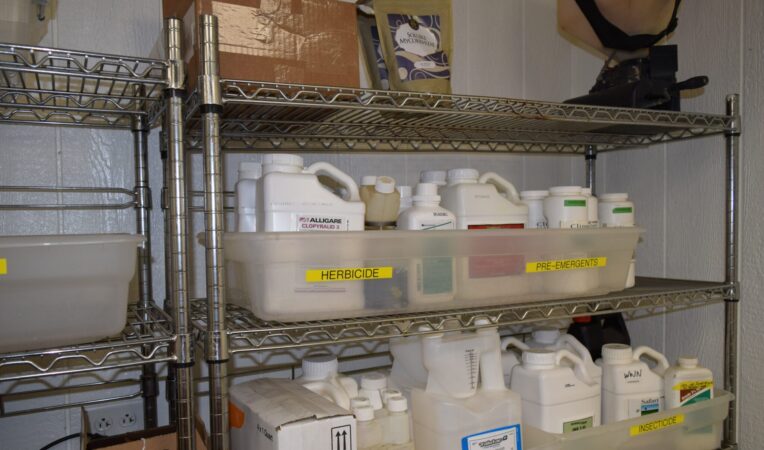
Figure 1. Consumer versions of Roundup are no longer glyphosate. Pay close attention to the active ingredients on labels to prevent unwanted plant injury.
Within the consumer Roundup product line, there are many different formulations designed for specific purposes, which include Roundup Weed and Grass Killer, Roundup for Lawns, Roundup for Lawns: Crabgrass Destroyer, Roundup Dual Action Weed and Grass Killer, Roundup Poison Ivy and Tough Brush Killer, among others. Each of these products contains distinct active ingredients that target different types of weeds.
Roundup Weed and Grass Killer: Glyphosate as the Active Ingredient
The original Roundup herbicide contains glyphosate as its primary active ingredient. Glyphosate is a systemic, non-selective herbicide, meaning it is absorbed by the plant and translocated throughout the vascular system, ultimately leading to the plant’s death. Glyphosate works by inhibiting the enzyme 5-enolpyruvylshikimate-3-phosphate synthase (EPSPS), which is a key component of the shikimic acid pathway—a pathway critical for the synthesis of aromatic amino acids in plants.
Active Ingredient:
- Glyphosate: The ‘traditional’ version of Roundup that controls many different weeds. Can take 10-14 days to kill weeds.
- Pelargonic Acid: A contact herbicide that quickly breaks down cell walls. This is added to provide a quick burndown of the weed.
Roundup Dual Action Weed and Grass Killer Plus 4 Month Preventer: Multiple modes of action
Round Dual Action is a formulation that includes four very different herbicides that is intended for use in areas with limited vegetation (i.e. sidewalks, driveways, mulched beds). In addition to postemergence herbicides, this product includes two preemergence active ingredients.
Active Ingredients:
- Triclopyr: Systemic herbicide that mimics auxins. Very effective herbicide for woody plants, which is used frequently in invasive species treatments.
- Fluazifop: Grass-specific herbicide (graminicide) that controls several annual and perennial grasses.
- Diquat: Contact herbicide that exhibit symptoms rapidly. Good for annual weeds.
- Imazapic: Pre- and Postemergence control of several grasses and broadleaf weeds.
Roundup for Lawns: A Combination of Selective Herbicides
Roundup for Lawns is a specialized formulation designed for residential use, particularly for controlling broadleaf weeds in lawns. Unlike traditional Roundup, which contains glyphosate, Roundup for Lawns contains a combination of selective herbicides, including MCPA, quinclorac, dicamba, and sulfentrazone. These ingredients are chosen for their ability to target broadleaf weeds and grassy weeds without harming most turfgrass species. This product is similar to the traditional ‘three-way’ herbicides that are commonly used in turf.
Active Ingredients:
- MCPA: MCPA is a selective herbicide that mimics the action of natural plant hormones known as auxins. When absorbed by broadleaf weeds, it causes uncontrolled growth, leading to the plant’s death.
- Quinclorac: Quinclorac is effective against grassy weeds, primarily used for crabgrass control in turf. It can be similar to auxin herbicides, causing epinasty, curling, and a change of color.
- Dicamba: Similar to MCPA, dicamba disrupts the growth of broadleaf weeds by mimicking natural plant hormones.
- Sulfentrazone: Pre- and postemergence activity in turf. Very effective on nutsedge.
Roundup for Lawns: Crabgrass Destroyer
Roundup for Lawns: Crabgrass Destroyer is a product designed to control grassy weeds and several broadleaf weeds in cool-season turf. In addition to crabgrass, other grassy weeds and some broadleaves can be controlled.
Active Ingredients:
- Topramezone: Very effective herbicide for several annual and perennial grassy weeds and some common broadleaf weeds.
Roundup Poison Ivy and Tough Brush Killer: Triclopyr for Tough Woody Plants
Roundup Brush Killer is formulated to tackle tough, woody plants, such as brush, brambles, and small trees. The active ingredient in this product is triclopyr, a selective herbicide that targets broadleaf plants with less damage to grasses. This product can be effective on invasive woody plants.

Figure 2. Glyphosate damage to sycamore.
Active Ingredients:
- Triclopyr: Systemic herbicide that mimics auxins. Very effective herbicide for woody plants, which is used frequently in invasive species treatments.
- Glyphosate: The ‘traditional’ version of Roundup that controls many different weeds. Can take 10-14 days to kill weeds.
Conclusion
All of the consumer Roundup products contain unique active ingredients tailored to specific weed control needs. There can be understandable confusion around these products due to the historical uses of glyphosate. The Green Industry needs to be aware of the confusion around these products to better inform their clients. Understanding the active ingredients and mechanisms of action of these herbicides is crucial for their effective and safe use in various settings.
View the original article here: When Roundup Isn’t Roundup: Clearing up the confusion between products
Subscribe and receive the newsletter: Purdue Landscape Report Newsletter.
Resources:
Beyond Roundup: Alternatives to consider adding to your weed management plan, Purdue Landscape Report
Diagnosing Herbicide Injury on Garden and Landscape Plants, The Education Store, Purdue Extension’s resource center
Herbicide Injury, Purdue Plant Doctor
Find an Arborist video, Trees are Good-International Society of Arboriculture (ISA)
ID That Tree, Playlist, Purdue Extension – FNR YouTube Channel
Invasive Species Playlist, Playlist, Purdue Extension – FNR YouTube Channel
A Woodland Management Moment, Playlist, Purdue Extension – FNR YouTube Channel (Against Invasives, Garlic Mustard, Autumn Olive)
Woodland Stewardship for Landowners, Playlist, Purdue Extension – FNR YouTube Channel (Common Buckthorn, Japanese Barberry)
Report Invasive Species, Purdue Invasive Species
The GLEDN Phone App – Great Lakes Early Detection Network
EDDMaps – Early Detection and Distribution Mapping System
Episode 11 – Exploring the challenges of Invasive Species, Habitat University-Natural Resource University
What Are Invasive Species and Why Should I Care?, Purdue Extension-FNR Got Nature? Blog
Emerald Ash Borer Information Network, Purdue University and Partners
Aquatic Invasive Species, Illinois-Indiana Sea Grant (IISG)
Invasive plants: impact on environment and people, The Education Store
Subscribe Purdue Extension-Forestry and Natural Resources YouTube Channel
Kyle Daniel, Commercial Landscape and Nursery Crops Extension Specialist
Purdue Horticulture & Landscape Architecture
Purdue Landscape Report: There have been a significant number of questions and problems regarding triclopyr that have come up this growing season.
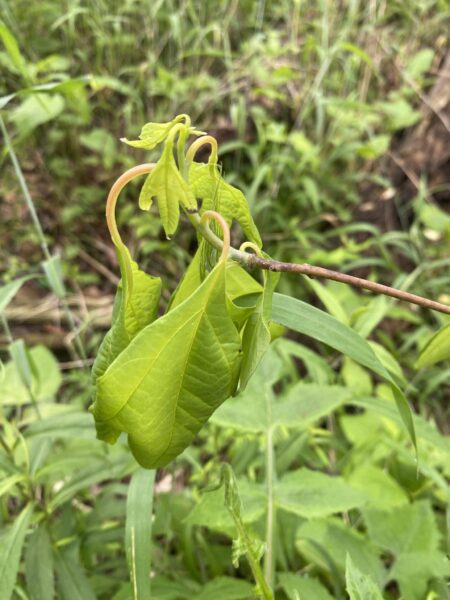
Figure 1. Confirmed damage from triclopyr on sassafras shows the growth regulator-type injury on leaves. Photo courtesy of the Office of the Indiana State Chemist.
Several of these problems have come through the Purdue Plant and Pest Diagnostic Laboratory from landscapers, nurseries, and property managers.
General Information about Triclopyr
Triclopyr is a selective systemic herbicide belonging to the pyridine class. It is primarily used to manage woody plants, vines, and some broadleaf weeds. Unlike glyphosate, a broad-spectrum herbicide, triclopyr specifically targets the growth hormones in dicotyledonous plants, making it effective in controlling species that are difficult to manage with other herbicides. It works by mimicking plant hormones, disrupting normal growth processes, and leading to the death of the treated plant (Fig. 1).
What Triclopyr Controls
Triclopyr is utilized in various settings to control unwanted vegetation. It is effective against species such as:
- Woody Plants: Includes trees like tree of heaven and callery pear and shrubs like autumn olive and honeysuckle (Fig. 2).
- Vines: Particularly those that can outcompete native flora, such as kudzu or English ivy (Fig. 3).
- Broadleaf Weeds: Some herbaceous plants that pose ecological or agricultural problems.

Figure 2. Invasive plants, such as, Pyrus calleryana (callery pear) can be controlled by triclopyr.

Figure 3. Invasive vines, such as Hedera helix (English ivy) can be controlled via multiple applications of triclopyr.
Where and When Triclopyr is Used
Triclopyr is applied in a range of environments, including:
- Forestry: To clear invasive species and manage forest regeneration.
- Agriculture: To control weeds and shrubs that interfere with crop production.
- Aquatic Areas: Formulations that are safe for aquatic environments help manage invasive species near water bodies.
- Rights-of-Way: To maintain clear paths and prevent the spread of invasive plants.
Timing of application is crucial. Triclopyr is most effective when applied during the growing season when plants are actively taking up nutrients and can transport the herbicide throughout their system.

Figure 4. Hack and squirt treatments with triclopyr is a common method to control invasive trees. Photo by Lenny Farlee.
Movement in the Plant
Triclopyr is absorbed through foliage and roots and is translocated systematically within the plant. Once inside, it moves upward through the xylem and downward through the phloem (ambimobile). This systemic movement allows triclopyr to affect not just the treated areas but also parts of the plant that are not directly sprayed. This attribute makes it effective for managing large, established plants, specifically through hack and squirt treatments (Fig. 4).
For the full article and conclusion sharing how Triclopyr is a valuable tool for managing invasive and woody plants view: The Summer of Triclopyr: Mounting evidence for off-target damage.
Subscribe and receive the newsletter: Purdue Landscape Report Newsletter.
Resources:
Find an Arborist video, Trees are Good-International Society of Arboriculture (ISA)
ID That Tree, Playlist, Purdue Extension – FNR YouTube Channel
Invasive Species Playlist, Playlist, Purdue Extension – FNR YouTube Channel
A Woodland Management Moment, Playlist, Purdue Extension – FNR YouTube Channel (Against Invasives, Garlic Mustard, Autumn Olive)
Woodland Stewardship for Landowners, Playlist, Purdue Extension – FNR YouTube Channel (Common Buckthorn, Japanese Barberry)
Report Invasive Species, Purdue Invasive Species
The GLEDN Phone App – Great Lakes Early Detection Network
Invasive Plants of the Eastern U.S.: An Introduction to the Problematic Non-Native Species, The Education Store, Purdue Extension’s resource center
EDDMaps – Early Detection and Distribution Mapping System
Episode 11 – Exploring the challenges of Invasive Species, Habitat University-Natural Resource University
What Are Invasive Species and Why Should I Care?, Purdue Extension-FNR Got Nature? Blog
Emerald Ash Borer Information Network, Purdue University and Partners
Aquatic Invasive Species, Illinois-Indiana Sea Grant (IISG)
Invasive plants: impact on environment and people, The Education Store, Purdue Extension’s resource center
Subscribe Purdue Extension-Forestry and Natural Resources YouTube Channel
Kyle Daniel, Commercial Landscape and Nursery Crops Extension Specialist
Purdue Horticulture & Landscape Architecture

Recent Posts
- Restoring Roots to Save the Salamanders, USDA – Natural Resources Conservation Service
Posted: May 6, 2026 in Aquaculture/Fish, Forestry, Wildlife - Spring Storms Are Coming: How to Reduce Tree Damage and Risk
Posted: May 1, 2026 in How To, Urban Forestry, Wildlife, Woodlands - Cryptocline Leaf Spot (Anthracnose) of Elm, Purdue Landscape Report
Posted: April 30, 2026 in Disease, Forestry, Woodlands - Mechanical Damage to Trees: Mowing and Maintenance Equipment
Posted: April 24, 2026 in Forestry, Forests and Street Trees, Urban Forestry - A Woodland Management Moment: Growing Quality Black Walnut in Openings
Posted: April 20, 2026 in Urban Forestry, Woodland Management Moment, Woodlands - Spring Into Bloom With ID That Tree
Posted: in Forests and Street Trees, Urban Forestry, Woodlands - Question: Have Whippoorwill Birds Declined in Numbers?
Posted: in Ask the Expert, Wildlife - Invasive Species in Eastern Forests, Webinar Series
Posted: in Invasive Insects, Invasive Plant Species, Urban Forestry, Wildlife - Tree Risk Management: What Every Property Owner Needs to Know
Posted: April 17, 2026 in Forests and Street Trees, Wildlife, Woodlands - As the spring wildflowers emerge, so do the woodland invaders
Posted: April 16, 2026 in Forestry, Forests and Street Trees, Invasive Plant Species
Archives
Categories
- Alert
- Aquaculture/Fish
- Aquatic/Aquaculture Resources
- Ask the Expert
- Christmas Trees
- Community Development
- Disease
- Drought
- Forestry
- Forests and Street Trees
- Gardening
- Got Nature for Kids
- Great Lakes
- How To
- Invasive Animal Species
- Invasive Insects
- Invasive Plant Species
- Land Use
- Natural Resource Planning
- Nature of Teaching
- Plants
- Podcasts
- Ponds
- Publication
- Safety
- Spiders
- Timber Marketing
- Urban Forestry
- Webinar
- Wildlife
- Wood Products/Manufacturing
- Woodland Management Moment
- Woodlands