 Purdue University - Extension - Forestry and Natural Resources
Got Nature? Blog
Purdue Landscape Report: I think white pines are beautiful trees, especially at maturity, and they have the added advantage that they are one of the few conifers that don’t try to kill you with their needles. Besides working with the foliage, have you ever had to “rescue” a child who climbed too high in a spike-infested deathtrap of an evergreen? Did you develop the rashes to prove it? Not with a white pine!
My kids haven’t had the chance to climb a mature white pine. Many seem to decline at about 15-20ft. We have been describing this issue as white pine decline, but it isn’t entirely easy to explain. There are a number of factors that influence overall plant health and that can contribute to plant decline, but let’s focus on white pines here. White pine decline is typically attributed to root stress that can be caused by or exacerbated by high soil pH (chemically unavailable nutrients), heavy soil texture (clays), compaction, and excessive soil moisture.
Anything that affects the roots can affect the overall health of the tree, so if the roots are compromised and they cannot uptake water or nutrients, the tree will decline due to lack of nutrients or even lack of water. Needles on an affected tree will turn yellow and eventually brown and fall off prematurely (Figure 1). A symptom of white pine decline includes stems that have shriveled or desiccated bark because roots are not functioning properly and cannot pull in enough water (Figure 2).
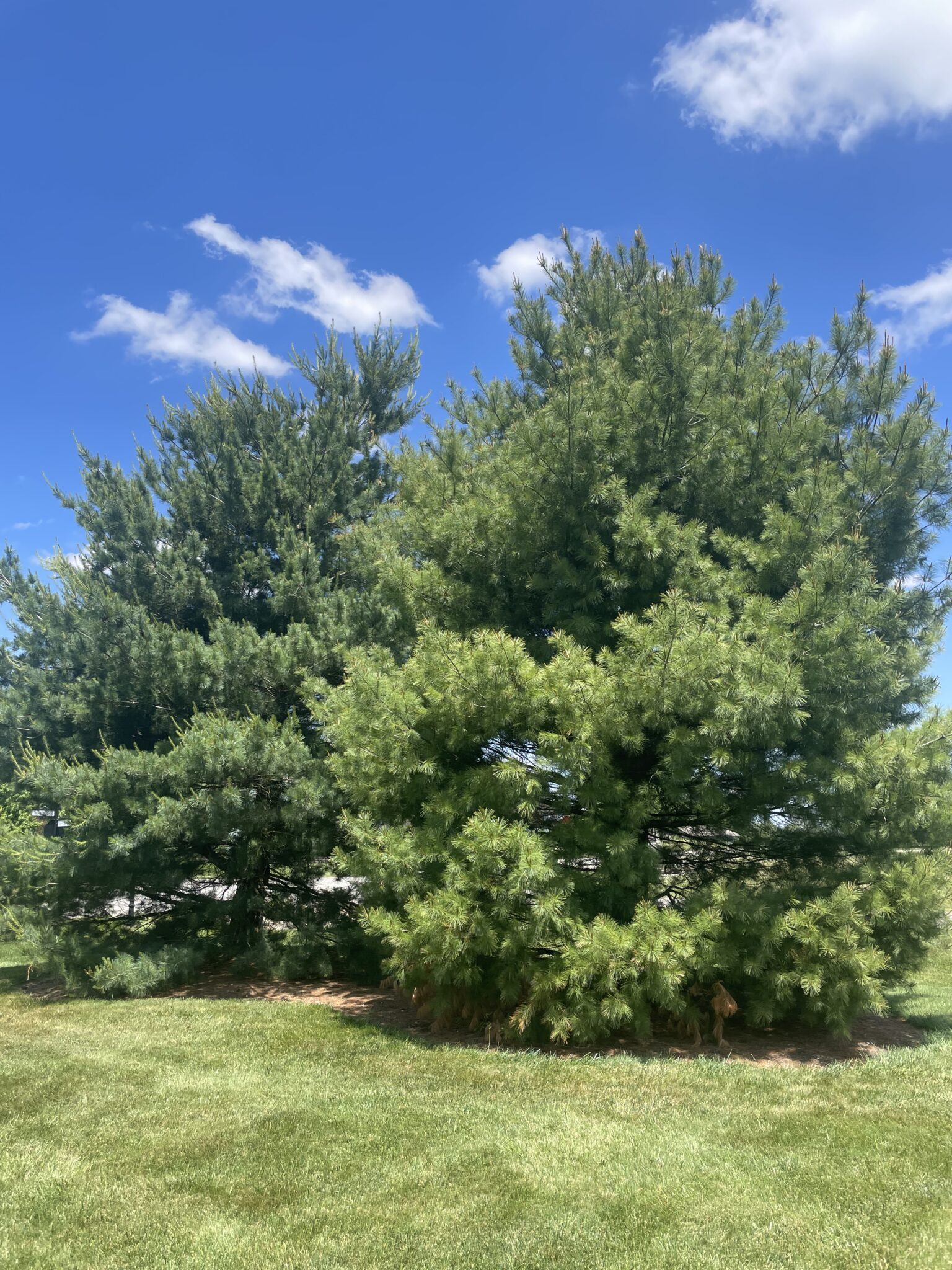
Two white pines planted in the landscape; one is developing a general chlorotic appearance.
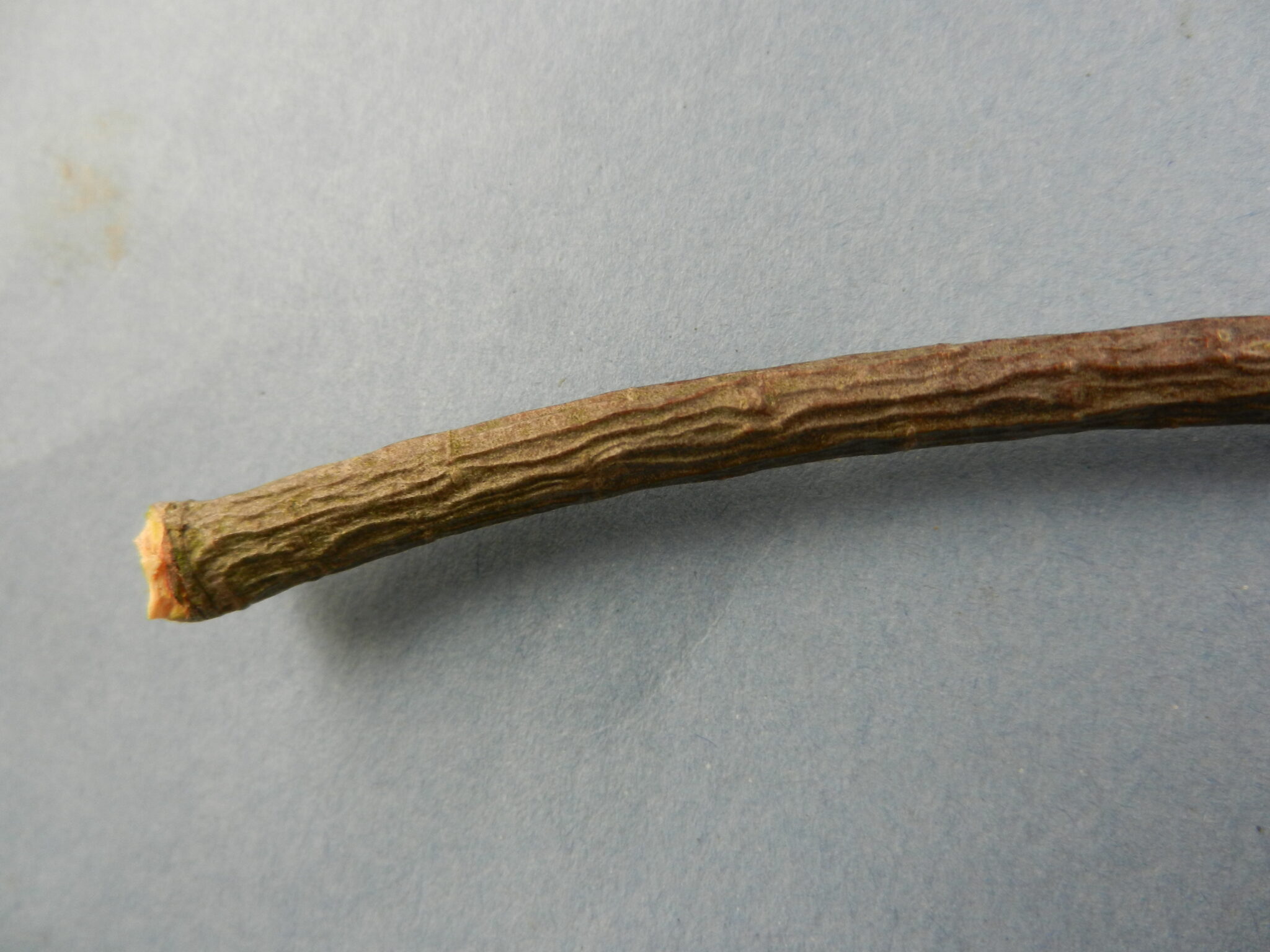
White pine showing symptoms of decline on branches where the bark is shriveled and sunken.
Depending on the severity of the root conditions, trees may take several years to decline and die, but with significant root stress, trees will decline faster. I have been seeing a lot of white pine yellowing around West Lafayette and in Indianapolis over the last year and a half and I think the odd environmental extremes have not been helping. Cycling between prolonged drought and torrential downpours lead to stress that can have lasting effects that could take years to recover from, or might be the final nail in the coffin.
There is nothing that can be done to recover from or stop decline once symptoms are observed in white pine. However, taking an approach to actively mitigate stress can help extend the life of white pine trees that are currently healthy. In many cases, one white pine will decline while other trees in the vicinity appear healthy (Fig 3, 4). Removal of symptomatic trees is important because stressed trees often attract bark beetles which can spread to the remaining healthy trees.
Another point: not every tree is going to respond the same way at the same location. Stress factors, such as a poor root system when planted, planting too deeply, or even Phytophthora root rot may have predisposed one tree to decline more than others. Just because one tree goes down doesn’t mean they all will, so keep an eye on the others and try to improve the site conditions where practical.

A singular white pine amidst a windbreak showing symptoms of white pine decline.
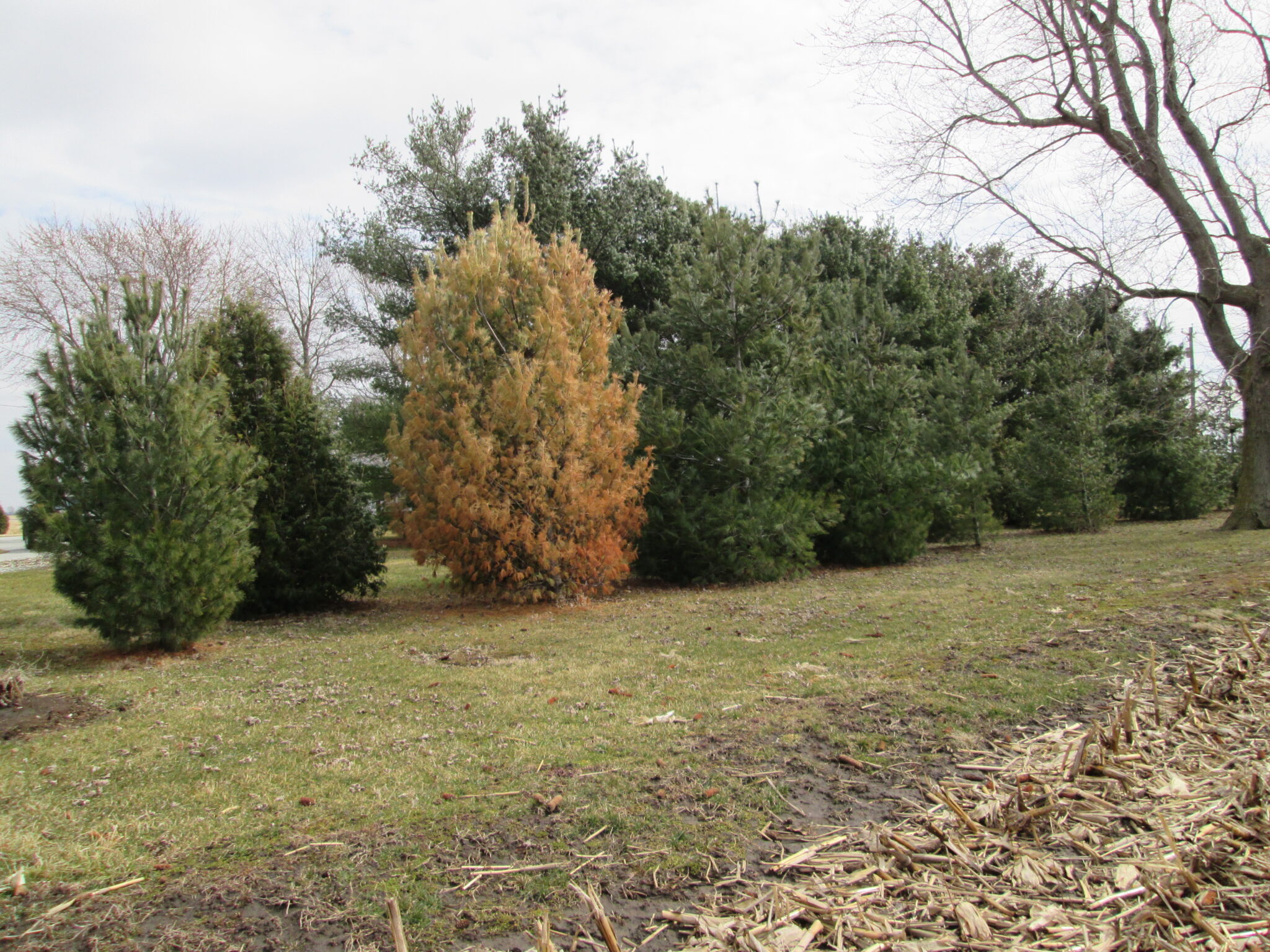
View same tree from the other side of the windbreak.
To view this full article and other Purdue Landscape Report articles, please visit Purdue Landscape Report.
Subscribe and receive the newsletter: Purdue Landscape Report Newsletter.
Resources:
Root Rot in Landscape Plants, The Education Store, Purdue Extension resource center
Dead Man’s Fingers, Purdue Landscape Report
ID That Tree Fall Color: Sugar Maple, Purdue Extension – Forestry and Natural Resources (FNR) YouTube Channel
ID That Tree Fall Color Edition: Black Gum, Purdue Extension – FNR YouTube Channel
An Introduction to Trees of Indiana, The Education Store
Autumn Highlights Tour – South Campus, Purdue Arboretum Explorer
Subscribe, Purdue Extension – FNR YouTube Channel
Tree Defect Identification, The Education Store
Tree Wound and Healing, Got Nature? Blog, Purdue Extension – FNR
Shrubs and Woody Vines of Indiana and the Midwest, The Education Store
Ask an Expert: Tree Selection and Planting, Purdue Extension – FNR YouTube playlist
ID That Tree, Purdue Extension – FNR YouTube playlist
Invasive Species, Playlist, Purdue Extension – FNR YouTube Channel
Report Invasive Species, Purdue Invasive Species
Find an Arborist, International Society of Arboriculture
John Bonkowski, Plant Disease Diagnostician
Departments of Botany & Plant Pathology
 Question: Can tree roots cause damage to a home’s foundation? I have a 3’ in diameter pin oak tree that is within 10 feet of my house. A certified arborist took a look at it and said that he would like to use an Air Knife to expose the roots near the foundation (a walkout basement) to determine if the roots are causing damage and/or need to be pruned, or whether the tree needs to be removed since it is situated too close to the house. Before I spend $500 for them to use the Air Knife, I wondered if you thought it would be worthwhile or not necessary.
Answer: Tree roots can damage a house foundation, with an invitation to do so. Tree roots are very opportunistic and will only grow and penetrate where it is easiest to grow such as friable soils and mulch. Typically, when roots encounter solid, impervious surfaces such as pipes, sidewalks, curbs and foundations, they are redirected laterally or up and over. However, if there is a breach or a crack nearby, they can and will exploit those voids in search of moisture. Such as sewer pipes aren’t damaged by the roots, they are just very capable of finding those leaks and moving into the moist and often nutrient-rich pipe.
Roots normally grow horizontally and not very far beneath the soil surface. Sometimes when roots encounter the looser backfill soil near the foundation, they can abruptly start growing down. You may be able to locate these roots, if they exist, by excavating a foot or two down within a few feet of the foundation. If you find a suspect root, cut it off. Unfortunately, in some cases excavation down to the base of the foundation may be necessary. This may have to be done anyway to repair and stabilize it. Cutting the roots should prevent future problems, especially if a root barrier is installed to prevent re-growth.
Resources
Surface Root Syndrome, The Education Store, Purdue Extension resource center
The Nature of Teaching: Trees of the Midwest, The Education Store
Tree Appraisal and the Value of Trees, The Education Store
Construction and Trees: Guidelines for Protection, The Education Store
Lindsey Purcell, Urban Forestry Specialist
Purdue University, Department of Forestry and Natural Resources

Recent Posts
- Spotted Lanternfly Feeds on Over 70 Plus Plant Species
Posted: May 20, 2026 in Alert, Forestry, Forests and Street Trees, Gardening, Invasive Insects, Urban Forestry, Wildlife - Painted Hickory Borer, Purdue Landscape Report
Posted: May 14, 2026 in Forestry, Invasive Insects, Wildlife - Saving Giants of the Blue River: Purdue Team Earns Statewide Recognition
Posted: in Aquaculture/Fish, Aquatic/Aquaculture Resources, Wildlife - Restoring Roots to Save the Salamanders, USDA – Natural Resources Conservation Service
Posted: May 6, 2026 in Aquaculture/Fish, Forestry, Wildlife - Spring Storms Are Coming: How to Reduce Tree Damage and Risk
Posted: May 1, 2026 in How To, Urban Forestry, Wildlife, Woodlands - Cryptocline Leaf Spot (Anthracnose) of Elm, Purdue Landscape Report
Posted: April 30, 2026 in Disease, Forestry, Woodlands - Mechanical Damage to Trees: Mowing and Maintenance Equipment
Posted: April 24, 2026 in Forestry, Forests and Street Trees, Urban Forestry - A Woodland Management Moment: Growing Quality Black Walnut in Openings
Posted: April 20, 2026 in Urban Forestry, Woodland Management Moment, Woodlands - Spring Into Bloom With ID That Tree
Posted: in Forests and Street Trees, Urban Forestry, Woodlands - Question: Have Whippoorwill Birds Declined in Numbers?
Posted: in Ask the Expert, Wildlife
Archives
Categories
- Alert
- Aquaculture/Fish
- Aquatic/Aquaculture Resources
- Ask the Expert
- Christmas Trees
- Community Development
- Disease
- Drought
- Forestry
- Forests and Street Trees
- Gardening
- Got Nature for Kids
- Great Lakes
- How To
- Invasive Animal Species
- Invasive Insects
- Invasive Plant Species
- Land Use
- Natural Resource Planning
- Nature of Teaching
- Plants
- Podcasts
- Ponds
- Publication
- Safety
- Spiders
- Timber Marketing
- Urban Forestry
- Webinar
- Wildlife
- Wood Products/Manufacturing
- Woodland Management Moment
- Woodlands