 Purdue University - Extension - Forestry and Natural Resources
Got Nature? Blog
 The classic and trusted book “Fifty Common Trees of Indiana” by T.E. Shaw was published in 1956 as a user-friendly guide to local species. Nearly 70 years later, the publication has been updated through a joint effort by the Purdue Department of Forestry and Natural Resources, Indiana 4-H, and the Indiana Department of Natural Resources, and reintroduced as “An Introduction to Trees of Indiana.”
The full publication is available for download for $7 in the Purdue Extension Education Store. The field guide helps identify common Indiana woodlot trees.
Each week, the Intro to Trees of Indiana web series will offer a sneak peek at one species from the book, paired with an ID That Tree video from Purdue Extension forester Lenny Farlee to help visualize each species as it stands in the woods. Threats to species health as well as also insight into the wood provided by the species, will be provided through additional resources as well as the Hardwoods of the Central Midwest exhibit of the Purdue Arboretum, if available.
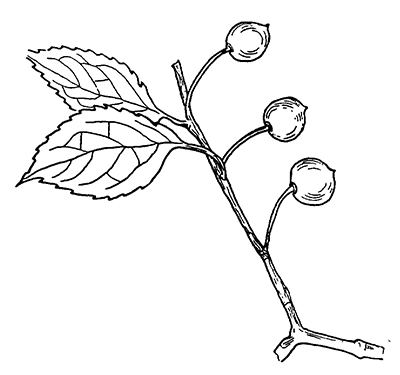
This week, we introduce the hackberry or Celtis occidentalis.
This species is easily identified by its single-tooth margined leaves, which are lopsided with one side slightly higher than the other at the base of the twig. The gray, ashy bark is often warty/bumpy with smooth spots in between, although it may be fairly smooth like beech with warts and ridges spaced throughout. Many hackberries have clumps of distorted twigs in their tops call witch’s brooms. The fruit of the hackberry are small hard black berries, which are favored by birds.
The leaves of hackberry may be confused with elm at first glance, due to their sandpapery texture, but elms have doubly toothed margins with smaller teeth on top of the large teeth, unlike the single tooth appearance of hackberry. The leaves are often deteriorating late in the growing season after being attacked by a variety of insects.
Hackberry is often found along fence rows and field edges, but also may be found in the interior woodlands. This species prefers moist, well-drained soils, but will row on limestone outcrops and other droughty areas. It is native to the Midwest and upper eastern United States, ranging from the Great Plains to the east coast and from the Great Lakes states to central Tennessee and Arkansas.
For full article with additional photos view: Intro to Trees of Indiana: Hackberry
Other Resources:
Hackberry in Hardwoods of the Midwest
Hackberry in the Hardwood Lumber and Veneer Series
Why is my hackberry tree losing leaves?
Fifty Common Trees of Indiana
An Introduction to Trees of Indiana
Native Trees of the Midwest
Shrubs and Woody Vines of Indiana and the Midwest
ID That Tree YouTube playlist
Woodland Management Moment YouTube playlist
Investing in Indiana Woodlands
Forest Improvement Handbook
Wendy Mayer, FNR Communications Coordinator
Purdue University Department of Forestry and Natural Resources
Lenny Farlee, Sustaining Hardwood Extension Specialist
Purdue University Department of Forestry and Natural Resources
Follow the hellbenders as they start their journey with the Purdue Forestry and Natural Resources husbandry program starting with eggs found in the wild. Learn how they become part of the breeding program with our partner zoos. Travel with our Help the Hellbender crew and see the fruit of their labor as the team releases adult hellbenders into the Blue River. Be sure to follow the Help the Hellbender Facebook page for more videos as there are several release dates scheduled for this summer.
Learn more about the hellbender program and a locally made documentary in the Purdue Forestry and Natural Resources News & Stories, Hellbender Research Featured in New Documentary.
Resources:
Help the Hellbender website
Help the Hellbender Facebook page
Ask the Expert: Learn All About Hellbenders and Take a Tour, Subscribe Purdue Extension – Forestry & Natural Resources (FNR) YouTube Channel
Ask the Expert video: Help the Hellbender – Dr. Stephen Spear of The Wilds, Purdue Extension – FNR YouTube Channel
Ask the Expert video: Live with Mesker Park Zoo and Botanical Gardens – Hellbenders, Purdue Extension – FNR YouTube Channel
A Moment in the Wild video: Hellbender Hide, Purdue Extension – FNR YouTube Channel
A Moment in the Wild video: Release Moment of Hellbenders,
How Anglers and Paddlers Can Help the Hellbender video, Purdue Extension – FNR YouTube Channel
Eastern Hellbender ID Video, Purdue Extension – FNR YouTube Channel
Hellbenders Rock!, The Education Store, Purdue Extension’s resource center
Help the Hellbender, North America’s Giant Salamander, The Education Store
How Our Zoos Help Hellbenders, The Education Store
The Nature of Teaching: Adaptations for Aquatic Amphibians, The Education Store
Healthy Water, Happy Home – Lesson Plan, The Education Store
FNR Assists in First Natural Breeding of Eastern Hellbender in Captivity, Purdue FNR News & Stories
Wendy Mayer, FNR Communications Coordinator
Purdue University Department of Forestry and Natural Resources
Zach Truelock, Hellbender Technician
Purdue Forestry and Natural Resources
Rod Williams, Assistant Provost for Engagement/Professor of Wildlife Science
Purdue University Department of Forestry and Natural Resources
The classic and trusted book “Fifty Common Trees of Indiana” by T.E. Shaw was published in 1956 as a user-friendly guide to local species. Nearly 70 years later, the publication has been updated through a joint effort by the Purdue Department of Forestry and Natural Resources, Indiana 4-H, and the Indiana Department of Natural Resources, and reintroduced as “An Introduction to Trees of Indiana.”
 The full publication is available for download for $7 in the Purdue Extension Education Store. The field guide helps identify common Indiana woodlot trees.
Each week, the Intro to Trees of Indiana web series will offer a sneak peek at one species from the book, paired with an ID That Tree video from Purdue Extension forester Lenny Farlee to help visualize each species as it stands in the woods. Threats to species health as well as also insight into the wood provided by the species will be provided through additional resources as well as the Hardwoods of the Central Midwest exhibit of the Purdue Arboretum, if available.
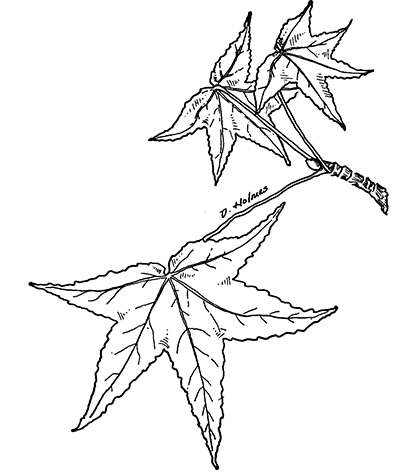
This week, we introduce the sweetgum or Liquidambar styraciflua.
This species is easily identified by its leaves, which are shaped like a five-pointed star and held alternately near the end of the twigs on long leaf stems. The leaves change from bright green in the summer to fall colors ranging from yellow to orange, red, and purple. The twigs of sweetgum may be smooth or feature corky winged projections. The fruit of the sweetgum are spiny spherical balls that hold tiny winged seeds inside, which are released in the fall.
Sweetgum is found natively in the low, wet bottomland woods of southern Indiana, but is planted ornamentally through the state. This species grows as far north as coastal New York, as far south as central Florida, as far west as eastern Texas as well as throughout the Midwest with the exception of the Appalachian Mountains.
For full article with additional photos view: Intro to Trees of Indiana: Sweet Gum
Other Resources:
Sweetgum in Hardwoods of the Midwest
Sweetgum in the Hardwood Lumber and Veneer Series
Fifty Common Trees of Indiana
An Introduction to Trees of Indiana
Native Trees of the Midwest
Shrubs and Woody Vines of Indiana and the Midwest
ID That Tree YouTube playlist
Woodland Management Moment YouTube playlist
Investing in Indiana Woodlands
Forest Improvement Handbook
Wendy Mayer, FNR Communications Coordinator
Purdue University Department of Forestry and Natural Resources
Lenny Farlee, Sustaining Hardwood Extension Specialist
Purdue University Department of Forestry and Natural Resources
 The classic and trusted book “Fifty Common Trees of Indiana” by T.E. Shaw was published in 1956 as a user-friendly guide to local species. Nearly 70 years later, the publication has been updated through a joint effort by the Purdue Department of Forestry and Natural Resources, Indiana 4-H, and the Indiana Department of Natural Resources, and reintroduced as “An Introduction to Trees of Indiana.”
The full publication is available for download for $7 in the Purdue Extension Education Store. The field guide helps identify common Indiana woodlot trees.
Each week, the Intro to Trees of Indiana web series will offer a sneak peek at one species from the book, paired with an ID That Tree video from Purdue Extension forester Lenny Farlee to help visualize each species as it stands in the woods. Threats to species health as well as also insight into the wood provided by the species, will be provided through additional resources as well as the Hardwoods of the Central Midwest exhibit of the Purdue Arboretum, if available.
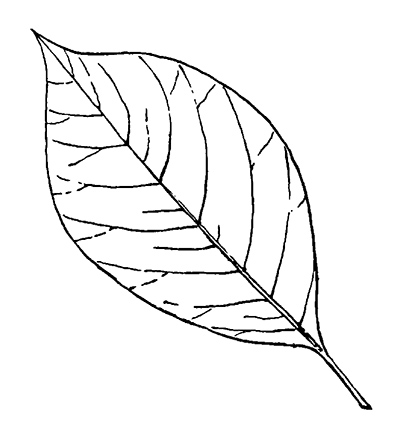
This week, we introduce the black gum or Nyssa sylvatica.
The black gum, also known as bee gum, sour gum, black tupelo or pepperidge, has glossy, green oblong leaves broader at the tip that at the base. The alternately held leaves are often found in clusters at the tips of the branches, which grow out of the trunk at nearly 90-degree angles. The bark, which can range from light gray to a dark grayish brown, resembles alligator hide or in some case features long running ridges.
Black gum produces a small dark-blue berry-like fruit which ripen in late September and are favored by birds. In the fall, this species also puts on quite a show with its striking red/maroon leaves, which begin to change in mid-September.
Black gum is a medium-sized tree that is found on moist, well-drained soils, but also grows on dry upland sites. This species can be found from southern Maine to nearly the tip of Florida. It also ranges from east Texas north across Missouri, southern Illinois, nearly all of Indiana and to central Michigan and back east, except in the lower Mississippi River bottom.
For full article with additional photos view: Intro to Trees of Indiana: Black Gum
Other Resources:
Black Gum in the Hardwood Lumber and Veneer Series
Black Gum/Tupelo, Native Trees of Indiana River Walk, Purdue Fort Wayne
Black Gum & Tupelo, Purdue Arboretum Explorer
Fifty Common Trees of Indiana
An Introduction to Trees of Indiana
Native Trees of the Midwest
Shrubs and Woody Vines of Indiana and the Midwest
ID That Tree YouTube playlist
Woodland Management Moment YouTube playlist
Investing in Indiana Woodlands
Forest Improvement Handbook
Wendy Mayer, FNR Communications Coordinator
Purdue University Department of Forestry and Natural Resources
Lenny Farlee, Sustaining Hardwood Extension Specialist
Purdue University Department of Forestry and Natural Resources
 The classic and trusted book “Fifty Common Trees of Indiana” by T.E. Shaw was published in 1956 as a user-friendly guide to local species. Nearly 70 years later, the publication has been updated through a joint effort by the Purdue Department of Forestry and Natural Resources, Indiana 4-H, and the Indiana Department of Natural Resources, and reintroduced as “An Introduction to Trees of Indiana.”
The full publication is available for download for $7 in the Purdue Extension Education Store. The field guide helps identify common Indiana woodlot trees.
Each week, the Intro to Trees of Indiana web series will offer a sneak peek at one species from the book, paired with an ID That Tree video from Purdue Extension forester Lenny Farlee to help visualize each species as it stands in the woods. Threats to species health as well as also insight into the wood provided by the species, will be provided through additional resources as well as the Hardwoods of the Central Midwest exhibit of the Purdue Arboretum, if available.
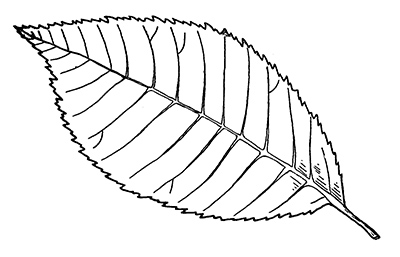
This week, we introduce the American elm or Ulmus americana.
The American elm, also called white elm, is easily identified by its simple doubly-serrated oval leaves, which feature a large tooth with small teeth like edges on top that. The leaves are held on fine twigs, which turn a medium brown over the summer. The bark of the American elm is spongy, with strong crisscrossing ridges. When sliced open, these ridges show distinct reddish brown and light tan/white colored layers inside the bark. This is different from the dark brown and reddish-brown layers found in the bark of red elm or slippery elm.
The American elm features an open, spreading crown and drooping limbs that form a vase shape.
American elm is a common tree in many riparian forest areas or moist soil forest areas. The species used to be a common street tree in Indiana, but that number has dwindled due to Dutch elm disease, a fungal diseased which ravaged the species in the second half of the 20th century.
American elm can be found throughout the northeastern United States south to central Florida and west to central Texas and north to southeastern Saskatchewan.
For full article with additional photos view: Intro to Trees of Indiana: American Elm
Resources:
Elm, The Education Store, Purdue Extension resource center
Slippery Elm, Native Trees of Indiana River Walk, Purdue – Fort Wayne
Top 5 List for Tree Selection and Planting, Purdue Extension-Forestry & Natural Resources (FNR) Got Nature? Blog
Fifty Common Trees of Indiana
An Introduction to Trees of Indiana
Native Trees of the Midwest, The Education Store, Purdue Extension’s resource center
Shrubs and Woody Vines of Indiana and the Midwest, The Education Store
ID That Tree, Purdue Extension-FNR’s YouTube playlist
Woodland Management Moment , Purdue Extension-FNR’s YouTube playlist
Investing in Indiana Woodlands, The Education Store
Forest Improvement Handbook, The Education Store
Wendy Mayer, FNR Communications Coordinator
Purdue University Department of Forestry and Natural Resources
Lenny Farlee, Sustaining Hardwood Extension Specialist
Purdue University Department of Forestry and Natural Resources
Purdue Landscape Report, Why are the Japanese beetles running late this year?: Nothing heralds summer like the hum of Japanese beetles ravenously descending on a flower garden. Cool weather this spring has slowed emergence of adults from the soil. Heavy spring rains early followed by relatively drier weather in late June, may have trapped adult Japanese beetles under a crusty layer of hardened soil. Due to their large numbers in many parts of Indiana last year, they are very likely just waiting for a good rain to soften the surface, so they can dig themselves into the light of day and on to your flowers. So, if we get a little more rain by the time this article comes out, we are likely to be awash in adult beetles.
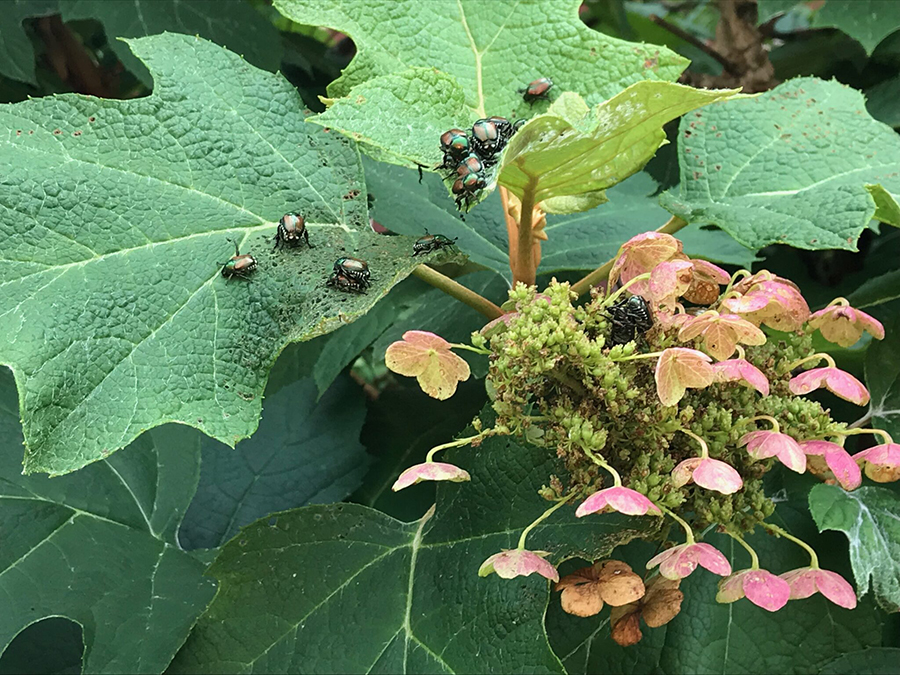 Weather is only part of what makes Japanese beetles predictably unpredictable. Beneficial organisms including fungi, microsporidia, and parasitic wasps also act different life stages of Japanese beetles. Japanese beetles have been the target of several national programs to release these beneficial organisms to reduce beetle populations. Favorable conditions for these beneficials can help reduce the local abundance of grubs and beetles.
Although killing grubs will reduce the number of beetles, the small size of lawns and the long flight range of makes it unlikely for your grub control program to reduce defoliation. In experiments conducted in my lab over 20 years ago, we found adult beetles can easily fly a kilometer (0.66 miles) in a single day. With adults living for several weeks, it is easy to image beetles traveling long distances from untreated lawns to plants on your property.
Life cycle of Japanese beetles: As the weather warms in the spring larvae (aka white grubs) move closer to the surface and begin feeding on turf roots. In May they enter a pupal stage and stop feeding. In June they typically emerge from the soil as adults. Adults fly in summer when they feed on flowers and leaves. In late July and early August adults lay eggs into the turfgrass. White grubs hatch from eggs and feed on the roots until frost when the larvae begin dig deeper into the soil to avoid killing temperatures.
To find out what you can do about Japanese beetles and view photos view: Why are the Japanese beetles running late this year?
Resources:
Report Invasive
Invasive Species, Got Nature?
Invasive Species, Playlist, Purdue Extension – FNR YouTube Channel
Indiana Department of Entomology and Plant Pathology
Spotted lanternfly: Everything You Need to Know in 30 Minutes, Video, Emerald Ash Borer University
Emerald Ash Borer, EAB Information Network
Invasive plants: impact on environment and people, The Education Store, Purdue Extension’s resource center
Woodland Management Moment: Invasive Species Control Process, Video, Purdue Extension – Forestry and Natural Resources (FNR) YouTube Channel
What are invasive species and why should I care?, Got Nature? Blog, Purdue Extension – Forestry and Natural Resources
Pest Management, The Education Store
Cliff Sadof, Professor Entomology/Extension Fellow
Purdue Entomology
The classic and trusted book “Fifty Common Trees of Indiana” by T.E. Shaw was published in 1956 as a user-friendly guide to local species. Nearly 70 years later, the publication has been updated through a joint effort by the Purdue Department of Forestry and Natural Resources, Indiana 4-H, and the Indiana Department of Natural Resources, and reintroduced as “An Introduction to Trees of Indiana.”
The full publication is available for download for $7 in the Purdue Extension Education Store. The field guide helps identify common Indiana woodlot trees.
Each week, the Intro to Trees of Indiana web series will offer a sneak peek at one species from the book, paired with an ID That Tree video from Purdue Extension forester Lenny Farlee to help visualize each species as it stands in the woods. Threats to species health as well as also insight into the wood provided by the species, will be provided through additional resources as well as the Hardwoods of the Central Midwest exhibit of the Purdue Arboretum, if available.
This week, we introduce the slippery elm or Ulmus rubra.
The slippery elm, also called red elm, is easily identified by its doubly-serrated simple leaves on short leaf stems, with a sandpapery upper surface. The bark features strong vertical ridges, which when sliced open feature alternating layers of tan and dark brown. The inner bark is slick, which gives the tree its name. The species also is called red elm due to its reddish heartwood.
Slippery elm has slightly larger leaves than its relative, the American elm, as well as a sandpapery texture on the leaves and twigs. The slippery elm is typically found more in upland areas, while the American elm is found in moist soil conditions such as valleys as well as river and creek bottoms.
Slippery elm can be found throughout much of the eastern and central United States, from Minnesota south into central Texas and as far west as central Kansas and Nebraska. Its range extends from northern Florida to Vermont along the east coast.
Like the American elm, which used to be a common street tree in Indiana, the number of slippery elms has dwindled due to Dutch elm disease, a fungal diseased which ravaged the species in the second half of the 20th century. Another disease called Elm Yellows (formerly phloem necrosis) also seriously affected slippery elms.
For full article with additional photos view: Intro to Trees of Indiana: Red Elm
Resources:
Elm, The Education Store, Purdue Extension resource center
Slippery Elm, Native Trees of Indiana River Walk, Purdue – Fort Wayne
Top 5 List for Tree Selection and Planting, Purdue Extension-Forestry & Natural Resources (FNR) Got Nature? Blog
Fifty Common Trees of Indiana
An Introduction to Trees of Indiana
Native Trees of the Midwest, The Education Store, Purdue Extension’s resource center
Shrubs and Woody Vines of Indiana and the Midwest, The Education Store
ID That Tree, Purdue Extension-FNR’s YouTube playlist
Woodland Management Moment , Purdue Extension-FNR’s YouTube playlist
Investing in Indiana Woodlands, The Education Store
Forest Improvement Handbook, The Education Store
Wendy Mayer, FNR Communications Coordinator
Purdue University Department of Forestry and Natural Resources
Lenny Farlee, Sustaining Hardwood Extension Specialist
Purdue University Department of Forestry and Natural Resources
Purdue Landscape Report, What is Happening to the Weeping Willows?: While recent temperatures have been moderate in many parts of the state, rainfall has been lacking. (See The Annual Drought Article). There are chasms in the clay of my backyard that will swallow my kids and dogs whole. While I am not truly worried about the safety of my smaller family members, a lot of the plants that are not in shade are stressed. At the Purdue Plant and Pest Diagnostic Laboratory, we have received quite a few calls, emails, and samples about trees in decline. Trees that are already stressed, infected by a pathogen, or are infested by wood-boring insects will be showing their true colors in these drought conditions: chlorosis, leaf loss, and limb dieback.
Willow showing yellowing of older leaves on lower branches.
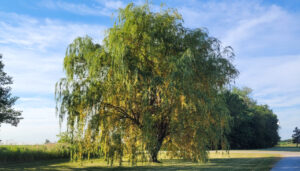 This month, one group of trees limps along to the top of our list of plants under stress due to lack of water: Willows. Salix spp. are not great landscape trees in general unless planted in locations that retain water. While they grow quickly and can appear beautiful for a number of years, when the soil becomes dry, these trees can very quickly develop limb dieback or cankers. In many cases, cankers become more obvious during these periods of stress because they were already present before the drought stress occurs. Damaged limbs die faster and multiple species of canker-causing fungi have been found to move faster in drought stressed wood of some tree species. We have found the fungi Cytospora, Botryosphaeria, and Colletotrichum associated with cankers on recent branch submissions to the lab.
Thinning of the branches, cracks/splits in the bark, and black lesions on green stems can indicate the presence of a canker which should be pruned out and destroyed, if at all possible. Supplemental irrigation may be required during dry spells for trees that are water loving or, at least, drought intolerant. Fungicides are not effective for these fungal pathogens that live inside the wood, where fungicides can’t penetrate. In most cases larger willow trees will not die because of these problems but they may suffer significant branch loss and may become disfigured. In some cases very young trees or shrub type willows may be killed.
For full article and photos view: What is Happening to the Weeping Willows?
Resources:
Summer Tree Care, Purdue Landscape Report
Drought? Don’t Forget the Trees!, The Education Store, Purdue Extension resource center
Extreme Heat, Purdue Extension – IN-PREPared
Drought Information, Indiana Department of Natural Resources
Planting Your Tree Part 1: Choosing Your Tree, Purdue Extension YouTube Channel
Tree Selection for the “Un-natural” Environment, The Education Store
Tree Pruning Essentials Video, Purdue Extension YouTube Channel
Tree Defect Identification, The Education Store
Tree Wound and Healing, Got Nature? Blog, Purdue Extension – Forestry and Natural Resources
Surface Root Syndrome, The Education Store
John Bonkowski, Plant Disease Diagnostician
Plant and Pest Diagnostic Laboratory
The classic and trusted book “Fifty Common Trees of Indiana” by T.E. Shaw was published in 1956 as a user-friendly guide to local species. Nearly 70 years later, the publication has been updated through a joint effort by the Purdue Department of Forestry and Natural Resources, Indiana 4-H, and the Indiana Department of Natural Resources, and reintroduced as “An Introduction to Trees of Indiana.”
The full publication is available for download for $7 in the Purdue Extension Education Store. The field guide helps identify common Indiana woodlot trees.
Each week, the Intro to Trees of Indiana web series will offer a sneak peek at one species from the book, paired with an ID That Tree video from Purdue Extension forester Lenny Farlee to help visualize each species as it stands in the woods. Threats to species health as well as also insight into the wood provided by the species, will be provided through additional resources as well as the Hardwoods of the Central Midwest exhibit of the Purdue Arboretum, if available.
This week, we introduce the flowering dogwood or Cornus florida.
This small native Indiana tree has beautiful white blossoms in the spring, and red to maroon foliage in the fall. It has opposite leaf arrangement with simple leaves featuring a venation pattern that sees the veins angle and sweep along the edges of the leaf and curve to the tip. The bark is a rough alligator hide texture that ranges from light to medium gray.
The showy white flowers, which appear in April or May, are followed by berry-like fruit clusters that are green at first, later turning red.
Flowering dogwood is the largest dogwood in the state of Indiana. It is shade tolerant, but it prefers good soil drainage and protection from the wind.
Flowering dogwood is a great alternative to the invasive callery pear.
According to Morton Arboretum, the flowering dogwood grows to 20 to 40 feet tall.
According to the Wood Database, flowering dogwood is commonly used in golf club heads, textile shuttles, bows for archery, mallets, pulleys and turned objects.
For full article with additional photos view: Intro to Trees of Indiana: Northern catalpa
Resources:
Flowering Dogwood, Native Trees of Indiana River Walk, Purdue Fort Wayne
Fifty Common Trees of Indiana
An Introduction to Trees of Indiana
Native Trees of the Midwest, The Education Store, Purdue Extension’s resource center
Shrubs and Woody Vines of Indiana and the Midwest, The Education Store
Investing in Indiana Woodlands, The Education Store
Forest Improvement Handbook, The Education Store
ID That Tree, Purdue Extension-Forestry and Natural Resources (FNR) YouTube Channel-playlist
Woodland Management Moment, Purdue Extension-FNR YouTube Channel-playlist
Wendy Mayer, FNR Communications Coordinator
Purdue University Department of Forestry and Natural Resources
Lenny Farlee, Sustaining Hardwood Extension Specialist
Purdue University Department of Forestry and Natural Resources
The classic and trusted book “Fifty Common Trees of Indiana” by T.E. Shaw was published in 1956 as a user-friendly guide to local species. Nearly 70 years later, the publication has been updated through a joint effort by the Purdue Department of Forestry and Natural Resources, Indiana 4-H, and the Indiana Department of Natural Resources, and reintroduced as “An Introduction to Trees of Indiana.”
The full publication is available for download for $7 in the Purdue Extension Education Store. The field guide helps identify common Indiana woodlot trees.
Each week, the Intro to Trees of Indiana web series will offer a sneak peek at one species from the book, paired with an ID That Tree video from Purdue Extension forester Lenny Farlee to help visualize each species as it stands in the woods. Threats to species health as well as also insight into the wood provided by the species, will be provided through additional resources as well as the Hardwoods of the Central Midwest exhibit of the Purdue Arboretum, if available.
This week, we introduce the Black cherry or Prunus serotina.
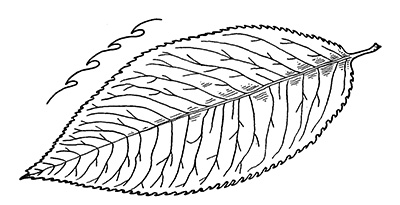 This species, also known as wild black cherry, is characterized by shiny, oblong leaves with finely toothed margins, arranged alternately on slender twigs, as well as very dark, flaky bark. The white flowers, which appear in early summer, develop into clusters of small cherries that ripen from red to black in July and August.
Black cherry, which is shade intolerant, is the only native, tree-sized cherry tree in Indiana. It is one of the quicker growing upland hardwood species in the state, and can grow to 60 to 80 feet tall and two to three feet in diameter.
The species is found from the Great Plains east and from Central Florida to the very southern portion of Ontario to New Brunswick. It also grows from central Arizona south through Mexico. Pennsylvania, parts of West Virginia and New York have developed a reputation for having the best veneer quality and relative gum free cherry.
Black cherry is susceptible to gummosis, or the depositing of resinous gum on the bark of the tree. Unfortunately, widespread gummosis caused by insect damage and other factors keeps many black cherry trees from reaching veneer quality, and reduces their value by as much as 90 percent (Cassens 2004). Black cherry trees are also susceptible to forest tent caterpillars and a variety of other insect attacks.
According to the Hardwoods of the Central Midwest exhibit, black cherry is most commonly used for fine furniture and cabinets. It is also used for high-end face veneer, furniture, molding, architectural millwork, wood paneling and toys. In the past, it was used for printer’s blocks, scientific instrument cases, pattern stock, and blocks for mounting electrotypes.
For full article with additional photos view: Intro to Trees of Indiana: Black Cherry
Resources:
Black Cherry, Hardwoods of the Central Midwest
Black Cherry, Hardwood Lumber and Veneer Series
Black Cherry, Native trees of Indiana River Walk, Purdue Fort Wayne
Case of Gummosis in Black Cherry, The Education Store, Purdue Extension’s resource center
Insects Affecting Hardwood Tree Plantings, The Education Store
Native Trees of the Midwest, The Education Store
Shrubs and Woody Vines of Indiana and the Midwest, The Education Store
Investing in Indiana Woodlands, The Education Store
Forest Improvement Handbook, The Education Store
Fifty Common Trees of Indiana
An Introduction to Trees of Indiana
ID That Tree, Purdue Extension-Forestry and Natural Resources (FNR) YouTube channel-playlist
Woodland Management Moment , Purdue Extension-FNR YouTube playlist
Wendy Mayer, FNR Communications Coordinator
Purdue University Department of Forestry and Natural Resources
Lenny Farlee, Sustaining Hardwood Extension Specialist
Purdue University Department of Forestry and Natural Resources

Recent Posts
- Celebrate Pollinator Week With Flowers of June Tour
Posted: June 15, 2026 in Forestry, Gardening, How To, Wildlife - Pruning Highlight-Pollarding Trees: A Traditional Pruning Practice with Modern Uses
Posted: June 11, 2026 in Forestry, Forests and Street Trees, Urban Forestry, Wildlife, Woodlands - Danielle Howard Hired as FNR Extension Prescribed Fire Specialist
Posted: June 10, 2026 in Forestry, Wildlife, Woodlands - Flat-Faced Longhorn Beetle Found in Hardwood Logs – IDNR Division of Entomology
Posted: June 8, 2026 in Alert, Forestry, Forests and Street Trees, Invasive Insects, Urban Forestry, Wildlife, Woodlands - Connecting Research to Practice: Natural Resources & Land Use Spring Training
Posted: June 5, 2026 in Forestry, Forests and Street Trees, How To, Invasive Animal Species, Invasive Plant Species, Land Use, Natural Resource Planning, Urban Forestry, Wildlife, Woodlands - Indiana Monarch and Pollinator Conservation
Posted: June 1, 2026 in Forestry, Forests and Street Trees, Gardening, How To, Natural Resource Planning, Plants, Urban Forestry, Wildlife - Box Tree Moth Range is Expanding
Posted: May 27, 2026 in Forestry, Invasive Animal Species, Invasive Insects, Wildlife - Spotted Lanternfly Feeds on Over 70 Plus Plant Species
Posted: May 20, 2026 in Alert, Forestry, Forests and Street Trees, Gardening, Invasive Insects, Urban Forestry, Wildlife - Painted Hickory Borer, Purdue Landscape Report
Posted: May 14, 2026 in Forestry, Invasive Insects, Wildlife - Saving Giants of the Blue River: Purdue Team Earns Statewide Recognition
Posted: in Aquaculture/Fish, Aquatic/Aquaculture Resources, Wildlife
Archives
Categories
- Alert
- Aquaculture/Fish
- Aquatic/Aquaculture Resources
- Ask the Expert
- Christmas Trees
- Community Development
- Disease
- Drought
- Forestry
- Forests and Street Trees
- Gardening
- Got Nature for Kids
- Great Lakes
- How To
- Invasive Animal Species
- Invasive Insects
- Invasive Plant Species
- Land Use
- Natural Resource Planning
- Nature of Teaching
- Plants
- Podcasts
- Ponds
- Publication
- Safety
- Spiders
- Timber Marketing
- Urban Forestry
- Webinar
- Wildlife
- Wood Products/Manufacturing
- Woodland Management Moment
- Woodlands