 Purdue University - Extension - Forestry and Natural Resources
Got Nature? Blog
 Discover the importance of thinning dense native warm-season grasses in conservation plantings to improve diversity. This guide explains methods to reduce tall native warm-season grasses to improve habitat for wildlife. Essential reading for conservationists and land managers interested in grassland ecosystems.
Learn when and how to thin these grasses effectively, and explore strategies that balance ecological health with long-term land management goals: Thinning Native Warm-Season Grasses
This publication is part of a seven publication series The Managing Conservation Plantings Series which include details on how to control invasive species and other problematic plants in Conservation Reserve Program (CRP) plantings and native warm-season grass and wildflower conservation plantings.
Publications in this series include:
- Golden Rod Control
- Thinning Native Warm-Season Grasses
- Sericea Lespedeza Control
- Woody Encroachment and Woody Invasives
- Johnson Grass Control
- Reed Canarygrass Control
- Teasel Control (Common and Cut Leaved)
- Controlling Introduced Cool-season Grasses
- Crownvetch, Sweetclover and Birdsfoot Trefoil Control
Resources:
Deer Impact Toolbox & Grassland Management, Purdue Extension Pond and Wildlife Management
Pond and Wildlife Management, Purdue Extension
Forestry for the Birds Virtual Tour and Pocket Guide, Got Nature? Blog, Purdue Extension – FNR
Frost Seeding to Establish Wildlife Food Plots and Native Grass and Forb Plantings – Purdue Extension – FNR YouTube channel
Wildlife Habitat Hint: Tips for Evaluating a First Year Native Grass and Forb Plantings, Purdue Extension – FNR YouTube Channel
Drone Seeding Native Grasses and Forbs: Project Overview & Drone Setup, Purdue Extension – FNR YouTube channel
Ask an Expert: Wildlife Food Plots, video, Purdue Extension – FNR YouTube Channel
Handling Harvested Game: Episode 1, Field Dressing, video, Purdue Extension – FNR YouTube Channel
Managing Your Woods for White-Tailed Deer, The Education Store
Forest Improvement Handbook, The Education Store
Forest Management for Reptiles and Amphibians: A Technical Guide for the Midwest, The Education Store
A Template for Your Wildlife Habitat Management Plan, The Education Store
Woodland Stewardship for Landowners, Playlist, Purdue Extension – FNR YouTube channel
Nature of Teaching Unit 1: Animal Diversity and Tracking, The Education Store
Nature of Teaching, Purdue College of Agriculture
Invasive Species Playlist, Playlist, Purdue Extension – FNR YouTube Channel
Report Invasive, Purdue Extension
Subscribe Purdue Extension – Forestry and Natural Resources YouTube Channel
Jarred Brooke, Wildlife Extension Specialist
Purdue Department of Forestry and Natural Resources
In a previous job, I helped landowners enroll in and implement private land conservation programs like the Conservation Reserve Program. Much of my job centered around talking with landowners about how to establish and manage native grass and forb (wildflower) plantings for wildlife. Even in my job today, I provide educational opportunities including seminars, field days, and workshops centered on this topic.
One of the most common emails, phone calls, and questions I get when talking about establishing these plantings revolves around evaluating the planting during the first year.
Typically, the inquires go like this “I planted native grasses and wildflowers for wildlife this spring, and now I just have a field of weeds! Did the planting fail?” or “Nothing I planted this spring is growing!”
Following these flustered phone calls and frantic emails, I usually do a site visit with the landowner to help them evaluate their planting. Below are the four things I look for when evaluating a new native grass and wildflower planting.
Before we get into the things I look for during an evaluation, it’s important to note that native grass and wildflower plantings for wildlife typically take 2-3 years to establish. So, what you see in year one, may not be what you get in year two, three, or four. But, there are a few signs you can use to monitor your planting’s progress.

This planting was full of “weeds” in year 1, but by year 2 planted wildflowers were abundant on the site.
1. Weed pressure
Inevitably when you plant these diverse mixes of native grasses and wildflowers you will get weeds. Even if you control weeds before planting (which you should), some weeds will still show up, especially annual weeds like foxtail, ragweed, and horseweed. In the past, we used herbicides like imazapic (Plateau) to help control weeds during the first growing season after planting – which is still an option in native grass only stands or with certain wildflowers. But, with more diverse plantings we do not have any herbicide options to control weeds without harming what we planted. Therefore, weeds may be more of an issue in diverse plantings like pollinator plantings.
Controlling these weeds may require mowing during the growing season before they produce seed, which can help planting success. But this mowing can come at a cost. Many of these weeds like common ragweed, provide cover and food for wildlife. Mowing the field may temporarily reduce its value to many wildlife species. When evaluating weed pressure, we need to decide if weeds are dense or thick enough to reduce the germination and growth of what we planted. Generally, if the weed pressure in the field is high and it is shading out the ground, you should think about mowing to control weeds. If weed pressure is not high and sunlight is still reaching the ground, you may want to consider skipping or delaying the mowing until later in the summer.
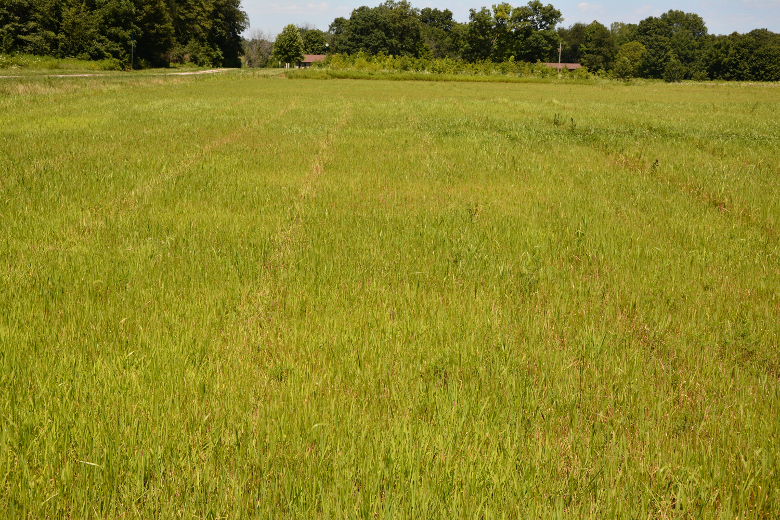
This field that was planting to native grasses and wildflowers is now dominated by foxtail. This would be a situation where mowing may improve the establishment of the what you planted.
2. Look for rows or drill marks
If you plant the field with a no-till drill, you may see rows of plants appear during the first growing season. This is a sure indication that what you planted has germinated and is growing. However, if you frost seeded the field by broadcasting the seed on top of the ground, you will not see rows. Sometimes the rows of plants will not be obvious at first, but will be very obvious later on.
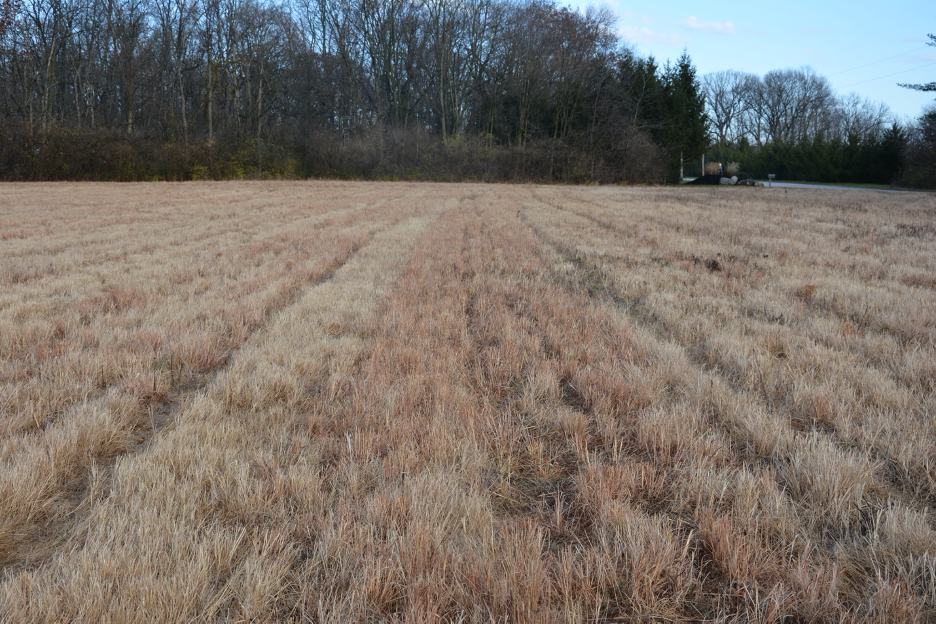
See the bronzish/orange grass in rows? That’s little bluestem. This landowner thought they had a failed planting, but it wasn’t until the following winter when the drilled rows of little bluestem were obvious.
3. Identify indicator plants
One the best ways I could calm the nerves of a landowner who thought they had a failed planting was by identifying species of wildflowers or grasses that they did indeed plant. Some of the annual or biennial wildflowers such as black-eyed susan or partridge pea will germinate quickly and may even flower during the first growing season. Learning how to identify some of the species you planted will help you determine if what you planted is indeed germinating and growing.
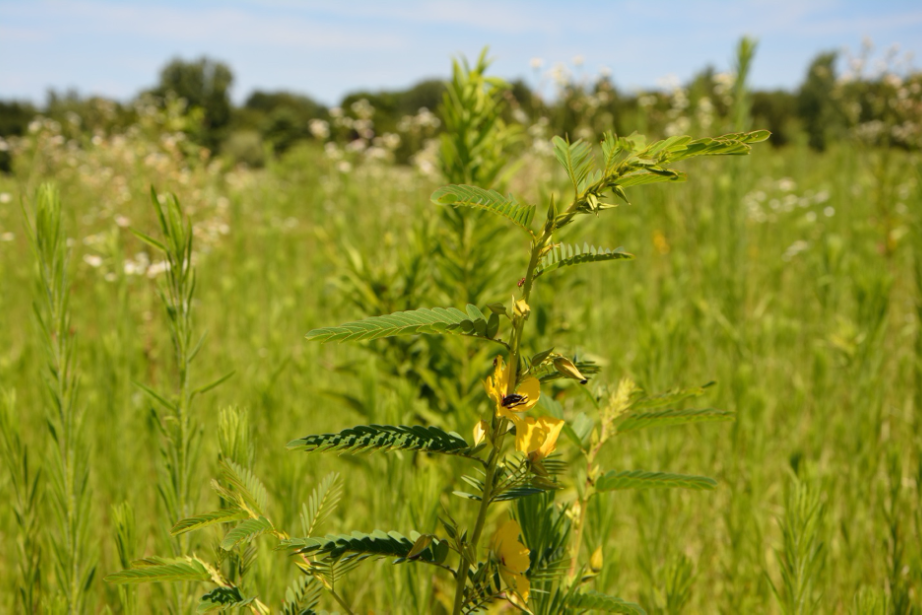
Partridge pea is a commonly planted species that grows and flowers during the first summer after planting. Their yellow flowers and compound leaves make them easy to identify.
4. Scout for invasives
Another topic of discussion on a site visit is invasive plants. It is important to catch invasive early in a planting so they do not cause problems later on. Some of the common invasive plants that show up early in the life of native grass and wildflower planting are Canada thistle, sericea lespedeza, and johnsongrass. Control of these species often requires herbicide. Catching them early when they can be spot-sprayed will save you time, money, and headaches.
Looking for these four signs when evaluating your newly established planting can help you determine if it’s on the right track and help you keep it there. But, many of the species you planted are perennials, and will not be very obvious the first growing season. They are putting most of their energy towards below ground (roots), not above ground (stems) growth. So, if you don’t see them during the first growing season, it doesn’t mean they are not there. Establishing a native grass and wildflower planting for wildlife takes a bit of patience and persistence.
Video: Tips for Evaluating a First Year Native Grass and Forb Planting expands even further regarding the tips on how to evaluate your first-year planting.
Resources
Purdue Extension Pond and Wildlife Management Website
Renovating Native Warm-Season Grass Stands for Wildlife: A Land Manager’s Guide, The Education Store, Purdue Extension resource center
Calibrating a No-Till Drill for Conservation Plantings and Wildlife Food Plots, Video
Habitat Help LIVE Q&A – Native Grasses and Forbs for Wildlife, Video, Purdue Extension – Forestry and Natural Resources Youtube channel
Jarred Brooke, Wildlife Extension Specialist
Purdue Department of Forestry and Natural Resources
Receive tips and tricks about establishing native grasses and forbs for wildlife. Don’t miss the question and answer time with our Purdue Extension Wildlife experts.
If you have any questions regarding wildlife, or other natural resource topics, feel free to contact us by using our Ask an Expert web page.
Resources
Natural Resources Conservation Service Indiana
Pheasant Forever
Quail Forever
Pure Live Seed: Calculations and Considerations for Wildlife Food Plots, Purdue Extension – Forestry and Natural Resources
Seed Fillers and Carriers for Planting Native Warm-season Grasses and Forbs, Purdue Extension – Forestry and Natural Resources
Calibrating a No-Till Drill for Conservation Plantings and Wildlife Food Plots, Purdue Extension
Purdue Extension – Forestry and Natural Resources Youtube channel
Jarred Brooke, Extension Wildlife Specialist
Purdue Department of Forestry and Natural Resources
When biologists and land managers talk about managing native warm-season grasses (NWSG) they are really talking about managing early-successional plant communities. Early-successional vegetation (i.e., stands of annual or perennial grasses and forbs [broadleaf plants]) provide benefits for a variety of game and non-game wildlife species. Songbirds, northern bobwhite, and ring-necked pheasants use these areas to build nests and raise broods in the summer and for escape and thermal cover in the winter. White-tailed deer also use these areas heavily for bedding, to hide fawns from predators, and the forbs provide deer with excellent nutrition during the summer.
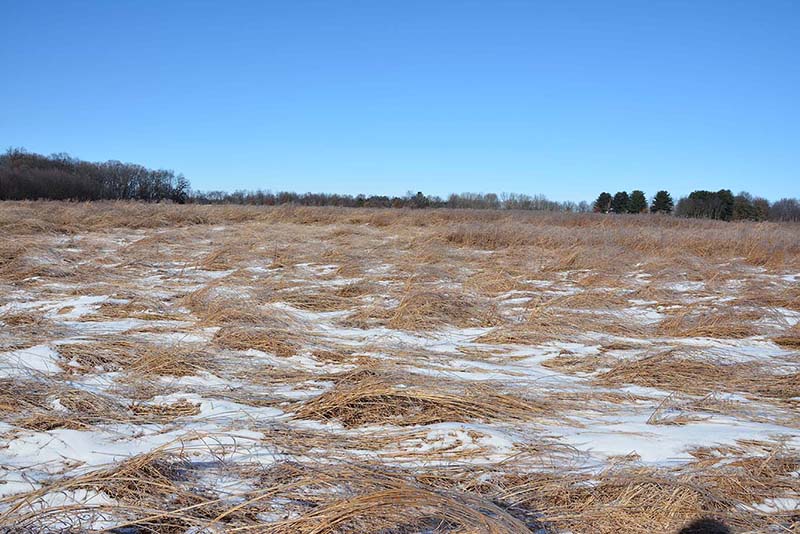
Forbs mixed with grasses help prevent the grasses from falling over and laying flat during the winter.
However, as these stands age their value to most wildlife species decreases drastically! Most stands of planted NWSG have little value, for species such as bobwhite, within 3-5 years of establishment. As the stands age, the tall perennial NWSGs (big bluestem and Indiangrass) become thicker; eventually crowding out all the forbs in the stand and creating a monoculture of grass. In the winter, the grasses fall over or “lodge”, as in the picture, and provide little to no cover.

Forbs mixed with grasses help prevent the grasses from falling over and laying flat during the winter.
This is why programs such as the Conservation Reserve Program require Mid-Contract Management (MCM) during years 4, 5, or 6 of the contract. MCM is aimed at maintaining or enhancing the wildlife value of NWSG stands by thinning the NWSGs providing room for planted and volunteering forbs to grow. These forbs act as supports for the grasses, helping them stand tall all winter, attract pollinators and insects important to foraging songbirds and game birds in the summer, and provide seed throughout the winter. Additionally, thinning the grasses and providing more room for weeds or forbs to grow will make it easier for ground dwelling wildlife to move and forage.
If your stand of NWSGs looks like the picture above, the time to manage them is not now but 2 years ago! However, managing them now can be effective and you have some options!
For most early successional wildlife species, you want the field to be from a 50/50 to 70/30 percent mix of forbs and grasses (favoring forbs). The field should be split into portions and managed on successive years. For larger fields, split the field into 4-5 acres sections. If you have multiple fields on your property you can manage the whole field. The key is to ensure that some cover is left on your farm throughout the winter.
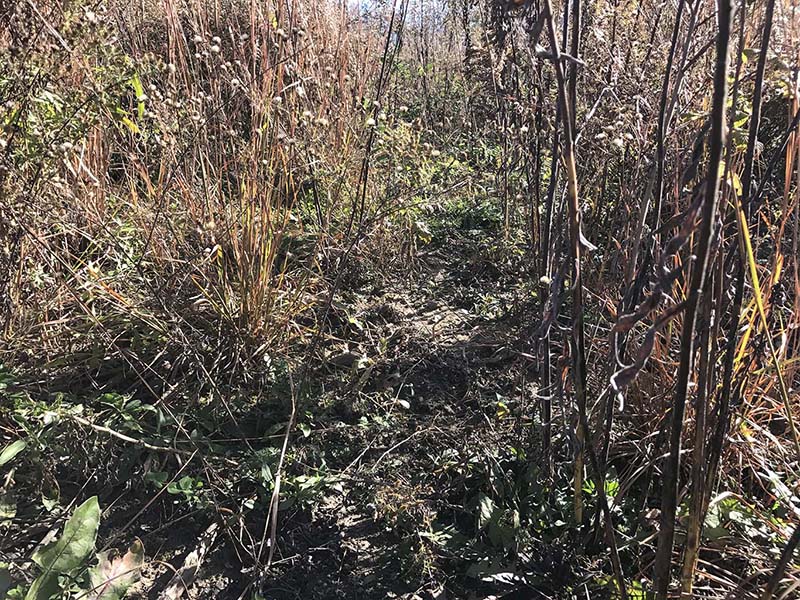
This picture gives you a “quail’s eye view” in a stand of native grasses and forbs with the ideal composition! Notice how the open space between plants and the bare ground would make it easy for a quail to maneuver and feed on insects or seed!
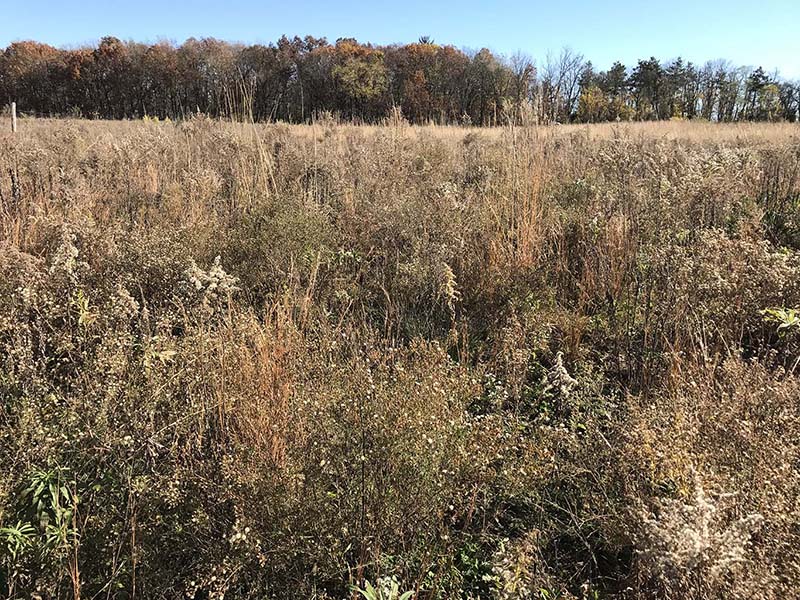
This picture represents the ideal composition of native grass stands; 50% or less of the stand is native grasses and 50% or greater of the stand is comprised of forbs.
September – March
Step 1. Burn or mow a portion of the field.
Step 2. Disk the same portion within a few weeks of burning or mowing the field.
By burning or mowing the field prior to disking, you make it easier for the disk to cut into the soil. The field should be disked so that a majority of the plant debris is worked into the soil and the soil is exposed.
Disking from September through March will result in a more beneficial plant composition than disking in the spring or summer.
May – June or August – September
Step 1. Just after winter and prior to spring green-up (late March or early April) the field should be burned to prepare the field for management. This step is not necessary but can improve the herbicide application. If applying herbicide in Aug-Sep, mowing or burning the field 2-3 weeks prior to application can be beneficial.
Step 2. Apply 2 quarts/acre of glyphosate OR 24 ounces/acre of imazapyr (53% active ingredient) to the field or portions of the field where native grasses are extremely thick.
NOTE: Spot spraying problematic areas are always better than whole field applications, but sometimes whole field applications are warranted.
CAUTION: Imazapyr can harm desirable trees; avoid spraying imazapyr within the drip line of desirable trees.
These management options will reduce or “thin” the native grasses enough to provide forbs from the seed bank with room to grow! The field may look “messy” or “weedy” the first summer or two after application but that’s okay! Actually, it’s what you want! Most of the “weeds” that come from the seed bank provide excellent cover and food for a variety of wildlife species. Just be sure to control undesirable weeds such as Canada thistle, if they appear.
For more information on how to manage NWSG or other early successional vegetation, contact your local IN-DNR wildlife biologist or NRCS office.
Additional Resources:
Herbicides to reduce NWSG density, SEAFWA
Landowner’s guide to NWSG management, TRACE
Quail Habitat – Putting the Numbers in Perspective, The Education Store
Control of Canada Thistle in CRP and Other Noncrop Acreage, The Education Store
Jarred Brooke, Extension Wildlife Specialist;
Purdue University Department of Forestry and Natural Resources

Recent Posts
- Restoring Roots to Save the Salamanders, USDA – Natural Resources Conservation Service
Posted: May 6, 2026 in Aquaculture/Fish, Forestry, Wildlife - Spring Storms Are Coming: How to Reduce Tree Damage and Risk
Posted: May 1, 2026 in How To, Urban Forestry, Wildlife, Woodlands - Cryptocline Leaf Spot (Anthracnose) of Elm, Purdue Landscape Report
Posted: April 30, 2026 in Disease, Forestry, Woodlands - Mechanical Damage to Trees: Mowing and Maintenance Equipment
Posted: April 24, 2026 in Forestry, Forests and Street Trees, Urban Forestry - A Woodland Management Moment: Growing Quality Black Walnut in Openings
Posted: April 20, 2026 in Urban Forestry, Woodland Management Moment, Woodlands - Spring Into Bloom With ID That Tree
Posted: in Forests and Street Trees, Urban Forestry, Woodlands - Question: Have Whippoorwill Birds Declined in Numbers?
Posted: in Ask the Expert, Wildlife - Invasive Species in Eastern Forests, Webinar Series
Posted: in Invasive Insects, Invasive Plant Species, Urban Forestry, Wildlife - Tree Risk Management: What Every Property Owner Needs to Know
Posted: April 17, 2026 in Forests and Street Trees, Wildlife, Woodlands - As the spring wildflowers emerge, so do the woodland invaders
Posted: April 16, 2026 in Forestry, Forests and Street Trees, Invasive Plant Species
Archives
Categories
- Alert
- Aquaculture/Fish
- Aquatic/Aquaculture Resources
- Ask the Expert
- Christmas Trees
- Community Development
- Disease
- Drought
- Forestry
- Forests and Street Trees
- Gardening
- Got Nature for Kids
- Great Lakes
- How To
- Invasive Animal Species
- Invasive Insects
- Invasive Plant Species
- Land Use
- Natural Resource Planning
- Nature of Teaching
- Plants
- Podcasts
- Ponds
- Publication
- Safety
- Spiders
- Timber Marketing
- Urban Forestry
- Webinar
- Wildlife
- Wood Products/Manufacturing
- Woodland Management Moment
- Woodlands