 Purdue University - Extension - Forestry and Natural Resources
Got Nature? Blog
In this episode of A Woodland Management Moment, Purdue Extension forester Lenny Farlee talks about the process of invasive species control in woodland areas from the combination of various treatments methods to the timing of those treatments.
If you have any questions regarding trees, forests, wildlife, wood products or other natural resource topics, feel free to contact us by using our Ask an Expert web page.
Resources:
A Woodland Management Moment, Playlist, Purdue Extension – Forestry and Natural Resources (FNR) Youtube Channel
Invasive Species, FNR Playlist
Report Invasive Species, Purdue Invasive Species
The GLEDN Phone App – Great Lakes Early Detection Network
EDDMaps – Early Detection and Distribution Mapping System
Indiana Department of Natural Resources: Invasive Species
Indiana Invasive Species Council
Cooperative Invasive Species Management Area (CISMA)
Woodland Stewardship for Landowners: Environmental Quality Incentives Program (EQIP) -helping with invasive species
Invasive plants: impact on environment and people, The Education Store
What are invasive species and why should I care?, Got Nature? Blog, Purdue Extension
Woodland Invaders, Got Nature? Blog
Lenny Farlee, Sustaining Hardwood Extension Specialist
Purdue University Department of Forestry and Natural Resources
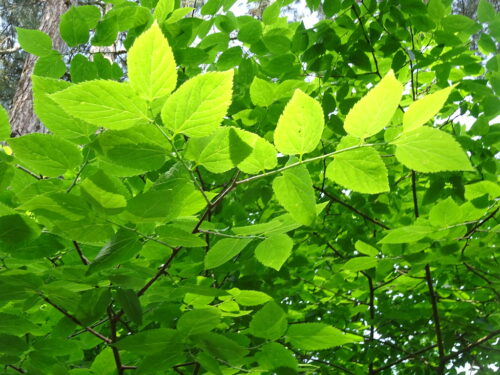 Question: My hackberry trees are dropping leaves for no apparent reason. The leaves look fine, no bugs or mold spots or discoloration of any kind. Do you have any idea what might be causing the leaf drop?
Answer: The loss of leaves on hackberries in spring is an occasional phenomenon in the Midwest. The exact cause has never been determined. In past years, no association was found between the leaf drop and insects or diseases. The most popular theory is that cold spring temperatures may have damaged the leaf buds or newly developing leaves, causing the leaf drop. Remember that blast of winter in April!? It’s likely the loss of leaves in spring is temporary. In past years, affected hackberries quickly developed new leaves and recovered completely. Just be patient and wait for the reflush of growth.
Leaves may be falling from your maple trees right now. This is a common spring issue caused by the maple petiole borer. Look closely at the fallen leaves for abnormally short petioles and examine the tree canopy for broken petioles that have remained attached. Although sugar maples are generally preferred, other maples may occasionally be infested. Fortunately, while the leaf drop may appear dramatic, the actual impact on the overall health of affected trees is minimal, so controls are not necessary. Also, a re-flush of leaves may be expected.
Resources:
Will My Tree Recover After Losing Their Leaves, Purdue Landscape Report
Planting Your Tree Part 1: Choosing Your Tree, Purdue Extension YouTube Channel
Planting Your Tree Part 2: Planting A Tree, Purdue Extension YouTube Channel
Tree Installation: Process and Practices, The Extension Store, Purdue Extension resource center
Ask an Expert: Tree Selection and Planting, Purdue FNR Extension YouTube Channel
Find a Certified Arborist, International Society of Arboriculture (ISA)-Trees Are Good
Lindsey Purcell, Urban Forestry Specialist
Purdue Department of Forestry and Natural Resources
Video series adds “spring bloom” to aid in the identification of different trees. With vivid pictures sharing what to look for regarding the leaves, bark and bloom, Purdue Extension Forester Lenny Farlee identifies these six trees and what to look for in the spring.
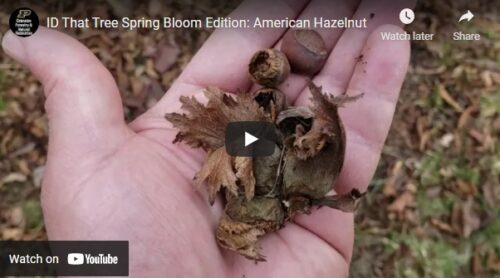 ID That Tree Spring Bloom: American Hazelnut
Did you know that the American hazelnut has male and female flowers? Learn about them and more about this Indiana shrub that produces a tasty treat for humans and wildlife alike in this edition of ID That Tree with Purdue Extension forester Lenny Farlee.
 ID That Tree Spring Bloom: American Plum
In this edition of ID That Tree, Purdue Extension forester Lenny Farlee introduces you to one of our beautiful spring bloomers, the American Plum. Learn how to identify this great alternative to the invasive callery pear by getting to know this species, which can be classified as a small tree or large shrub.
 ID That Tree Spring Bloom: Ohio Buckeye
On this edition of ID That Tree, learn about one of the first native trees to leaf out, the Ohio buckeye. This understory tree is know by its palmate leaves and clusters of yellow/green flowers. Learn more from Purdue Extension Lenny Farlee inside.
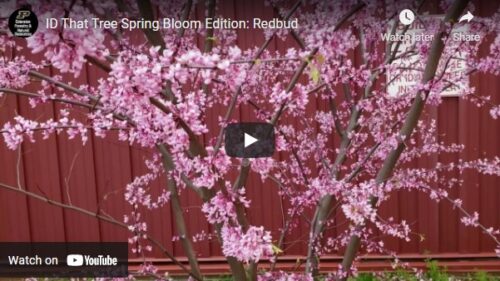 ID That Tree Spring Bloom: Redbud
In this edition of ID That Tree, Purdue Extension forester Lenny Farlee introduces you to the redbud in all of its spring glory. This native Indiana species is known for its pink, lavender and even red and white flowers, which bloom in early spring.
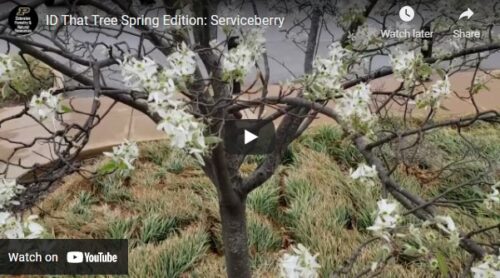 ID That Tree Spring Bloom: Serviceberry
In this spring edition of ID That Tree, Purdue Extension forester Lenny Farlee introduces you to the serviceberry, or juneberry tree. This small native tree is known by its tiny white, or pink, flowers and by its smooth gray bark. Learn more inside.
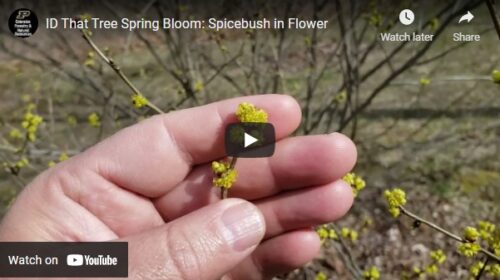 ID That Tree Spring Bloom: Spicebush in Flower
On this episode of ID That Tree, Purdue Extension forester Lenny Farlee introduces the Spicebush, a large native-Indiana shrub that brings early spring color with its clusters of small yellow flowers. This species prefers moist, high-quality soils and is common in forest understories, and brings an aromatic odor when its leaves are crushed or twigs are scraped.
If you have any questions regarding wildlife, trees, forest management, wood products, natural resource planning or other natural resource topics, feel free to contact us by using our Ask an Expert web page.
Resources:
The Education Store, Purdue Extension resource center for publications, videos and apps
The Purdue Arboretum Explorer
Shrubs and Woody Vines of Indiana and the Midwest, Purdue University Press
Native Trees of the Midwest, Purdue University Press
Investing in Indiana Woodlands, The Education Store
Forest Improvement Handbook, The Education Store
Lenny Farlee, Sustaining Hardwood Extension Specialist
Purdue University Department of Forestry and Natural Resources
In this Woodland Management Moment episode, Purdue Extension Forester Lenny Farlee talks about the importance of woodland management when it comes to invasive species. Without a management plan to weaken invasives, they can completely occupy the understory of our forests making it difficult for any of our native species to regenerate.
If you have any questions regarding trees, forests, wildlife, wood products or other natural resource topics, feel free to contact us by using our Ask an Expert web page.
Resources
A Woodland Management Moment, Playlist, Purdue Extension – Forestry and Natural Resources (FNR) Youtube Channel
Invasive Species, FNR Playlist
Woodland Stewardship for Landowners, FNR Playlist
Woodland Management Webinar: Healthy Woodlands, FNR Video
Woodland Managment Webinar: Selling Timber, FNR Video
Investing in Indiana Woodlands, The Education Store, Purdue Extension resource center
Forest Improvement Handbook, The Education Store
Invasive plants: impact on environment and people, The Education Store
What are invasive species and why should I care?, Got Nature? Blog, Purdue Extension
Woodland Invaders, Got Nature? Blog
Lenny Farlee, Sustaining Hardwood Extension Specialist
Purdue University Department of Forestry and Natural Resources
In this edition of ID That Tree, Purdue Extension forester Lenny Farlee introduces you to the American Sycamore, one of Indiana’s largest deciduous trees. You can identify the tree from the upper part of the canopy, which glows with smooth white/light green bark.
If you have any questions regarding trees/forests, or other natural resource topics, feel free to contact us by using our Ask an Expert web page.
Resources
Sycamore, The Education Store, Purdue Extension resource center
Investing in Indiana Woodlands, The Education Store
Tree Appraisal and the Value of Trees, The Education Store
Forest Improvement Handbook, The Education Store
American Sycamore, The Purdue Arboretum
What is happening to the local sycamore trees?, Purdue Extension
Sycamore Anthracnose, Purdue Extension
ID That Tree, Playlist, Purdue Extension – Forestry and Natural Resources Youtube Channel
A Woodland Management Moment, Playlist, Purdue Extension – Forestry and Natural Resources Youtube Channel
Lenny Farlee, Sustaining Hardwood Extension Specialist
Purdue University Department of Forestry and Natural Resources
It’s time for another dendrology lesson from Lenny Farlee. This time, he introduces you to one of the native coniferous trees in Indiana, the Eastern Red Cedar.
If you have any questions regarding trees/forests, or other natural resource topics, feel free to contact us by using our Ask an Expert web page.
Resources
Eastern Red Cedars Volunteer Way Too Often, Purdue Garden Articles
Orange ‘Koosh’ Galls on Eastern Red Cedar, Purdue Landscape Report
Investing in Indiana Woodlands, The Education Store
Tree Appraisal and the Value of Trees, The Education Store
Forest Improvement Handbook, The Education Store
ID That Tree, Playlist, Purdue Extension – Forestry and Natural Resources Youtube Channel
A Woodland Management Moment, Playlist, Purdue Extension – Forestry and Natural Resources Youtube Channel
Lenny Farlee, Sustaining Hardwood Extension Specialist
Purdue University Department of Forestry and Natural Resources
Purdue Landscape Report: Just as sure as you try to predict the weather, it is likely to change. But going out on a limb, I predict that we will have a bit of a dud for fall color display this year. Not a very risky prediction, considering that many plants already are starting to turn color and/or drop leaves in some areas of the state.
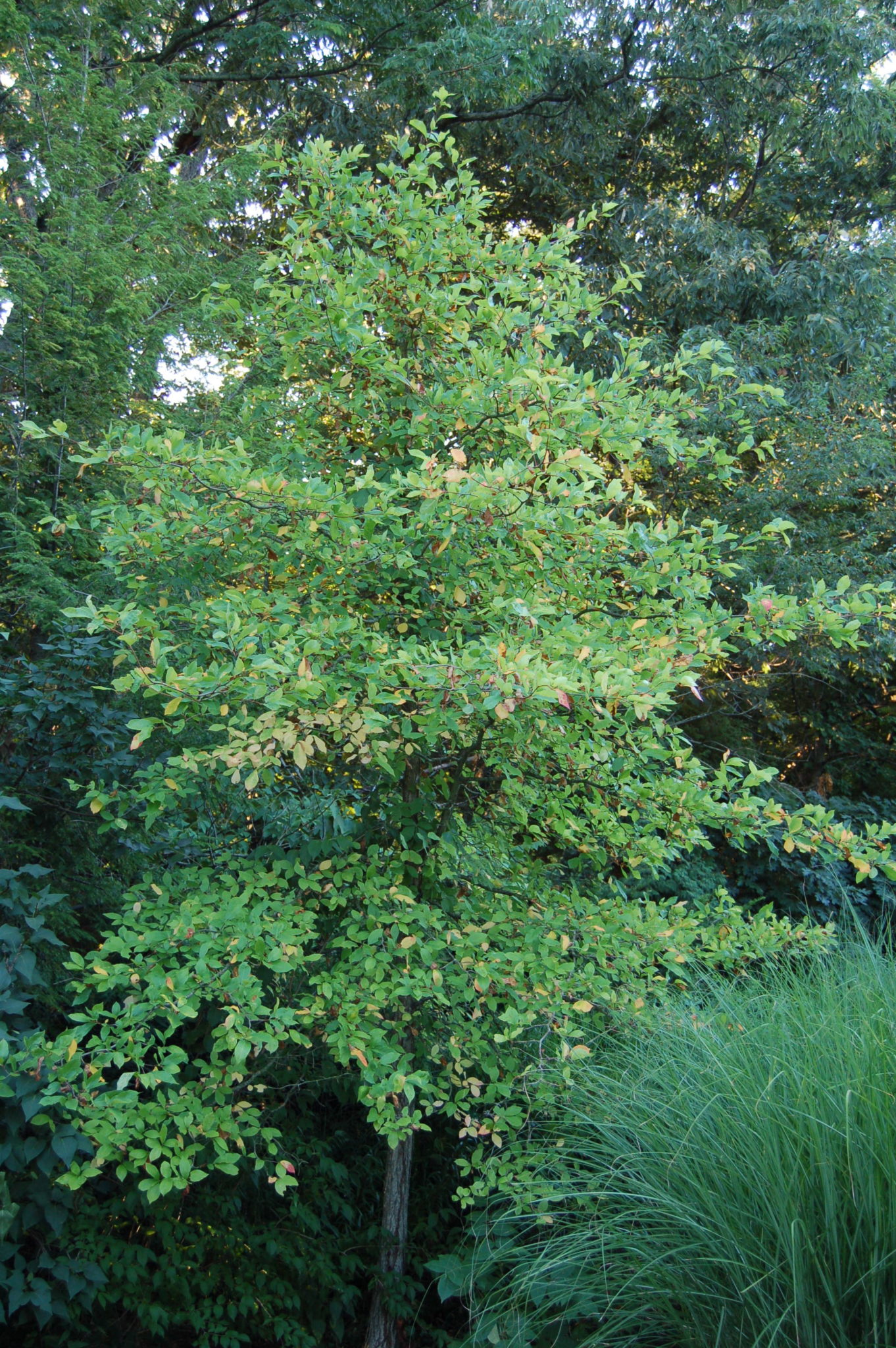
Nyssa sylvatica (black gum) showing early fall color due to drought stress. Source
So why would the colors be early and/or a bit duller than usual? Certainly, some of the reason why plants display fall colors has to do with the genetic makeup of the plant. That doesn’t change from year to year. But the timing and intensity of fall colors do vary, depending on factors such as availability of soil moisture and plant nutrients, as well as environmental signals such as temperature, sunlight, length of day, and cool nighttime temperatures.
The droughty conditions experienced during much of the second half of summer are likely to have decreased the amount of fall color pigment. Southern Indiana has been particularly parched. Despite recent rains in some areas, much of the state remains designated as abnormally dry to moderate drought. You can check your area’s conditions at the US Drought Monitor for Indiana. Additional maps and data is available at the Midwest Regional Climate Center.
Growing conditions throughout the season affect fall color as does current weather. Colors such as orange and yellow, which we see in the fall, are actually present in the leaf all summer. However, those colors are masked by the presence of chlorophyll, the substance responsible for green color in plants during the summer. Chlorophyll allows the plant to use sunlight and carbon dioxide from the air to produce carbohydrates (sugars and starch). Trees continually replenish their supply of chlorophyll during the growing season.
As the days grow shorter and (usually) temperatures cooler, the trees use chlorophyll faster than they can replace it. The green color fades as the level of chlorophyll decreases, allowing the other colored pigments to show through. Plants that are under stress–from conditions like prolonged dry spells–often will display early fall color because they are unable to produce as much chlorophyll.
Yellow, brown and orange colors, common to such trees as birch, some maples, hickory and aspen, come from pigments called carotenoids, the same pigments that are responsible for the color of carrots, corn and bananas.
Red and purple colors common to sweet gum, dogwoods and some maples and oaks are produced by another type of pigment called anthocyanin, the pigment responsible for the color of cherries, grapes, apples and blueberries. Unlike chlorophyll and carotenoids, anthocyanins are not always present in the leaf but are produced in late summer when environmental signals occur. Anthocyanins also combine with carotenoids to produce the fiery red, orange, and bronze colors found in sumac, oaks, and dogwoods.
Red colors tend to be most intense when days are warm and sunny, but nights are cool–below 45º F. The color intensifies because more sugars are produced during warm, sunny days; cool night temperatures cause the sugars to remain in the leaves. Pigments are formed from these sugars, so the more sugar in the leaf, the more pigment, and, thus, more intense colors. Warm, rainy fall weather decreases the amount of sugar and pigment production. Warm nights cause what sugars that are made to move out of the leaves, so that leaf colors are muted.
Leaf color also can vary from tree to tree and even from one side of a tree to another. Leaves that are more exposed to the sun tend to show more red coloration while those in the shade turn yellow. Stress such as drought, poor fertility, disease or insects may cause fall color to come on earlier, but usually results in less intense coloration, too. And stress or an abrupt hard freeze can cause leaves to drop before they have a chance to change color.
So far, weather conditions lead me to think this will be one of those not so showy fall color years. I hope I am proven wrong!
Resources
Why Leaves Change Color, The Education Store, Purdue Extension
Fifty Common Trees of Indiana
An Introduction to Trees of Indiana
Native Trees of the Midwest, Purdue University Press
Why Leaves Change Color, USDA Forest Service, Northeastern Area
B. Rosie Lerner, Retired Extension Consumer Horticulturist
Purdue Horticulture and Landscape Architecture
Purdue Landscape Report: When was the last time you really looked at your trees? It’s all too easy to just  enjoy their cool shade and the sound of their leaves, but if you don’t know what to look for you could miss deadly diseases or dastardly demons lurking in their leaves and branches. A quick check can help you stop a problem before it kills your tree or your local forest!
National Tree Check Month is the perfect time to make sure your tree is in tip-top shape! Our checklist will help you spot early warning signs of native pests and pathogens and invasive pests like Asian longhorned beetle, spotted lanternfly, and sudden oak death. You can stop invasive pests in their tracks by reporting them if you see them.
Is your tree healthy and normal?
Start by making sure you know the type of tree you have. Is it a deciduous tree like an oak or maple? Or is it an evergreen that like a spruce or a pine? Don’t worry about exactly what species it is. It’s enough for you to have a general sense of what the tree should look like when it’s healthy.
Check the leaves
- Are the leaves yellow, red or brown?
- Are they spotted or discolored?
- Do the leaves look distorted or disfigured?
- Is there a sticky liquid on the leaves?
- Do the leaves appear wet, or give off a foul odor?
- Are leaves missing?
- Are parts of the leaves chewed?
Check the trunk and branches
- Are there holes or splits in the trunk or branches?
- Is the bark peeling from a tree that shouldn’t shed its bark?
- Are there tunnels or unusual patterns under the bark?
- Is there sawdust on or under the tree?
- Is there sap oozing down the tree?
- Does the sap have a bad odor?
- Do sticky drops fall on you when you stand under the tree? You might have spotted lanternfly. Please report it right away!
Now what? If you answered YES to any of the questions above, there’s a good chance something is wrong. To decide if and how you should treat or report the problem, you’ll need to have a tentative diagnosis. Luckily, there are many ways to get one!
Know the tree species? Use the Purdue Tree Doctor to get a diagnosis and a recommendation on whether treating or reporting is needed. This app allows you to flip through photos of problem plagued leaves, branches and trunks to help you rapidly identify the problem. If you have an invasive pest, it will guide you how to report it.
Don’t know the tree species and still need help? Reach out to local experts. We’re happy to help!
- Purdue Cooperative Extension Service (https://extension.purdue.edu/) can answer your questions or direct you to a local tree care professional with the right expertise.
- Contact an arborist who can give you an assessment of your tree and specific treatment recommendations (https://www.treesaregood.org/findanarborist).
Confused but think something is TERRIBLY WRONG? Contact Purdue’s Exotic Forest Pest Educator, report online, or call 1-866-NOEXOTIC.
Resources:
Trees and Storms, The Education Store, Purdue Extension’s resource center
Why Is My Tree Dying?, The Education Store
Caring for storm-damaged trees/How to Acidify Soil in the Yard, In the Grow, Purdue Extension
Tree Risk Management, The Education Store
Mechanical Damage to Trees: Mowing and Maintenance Equipment, The Education Store
Tree Installation: Process and Practices, The Education Store
Tree Planting Part 1 & Tree Planting Part 2, videos, The Education Store
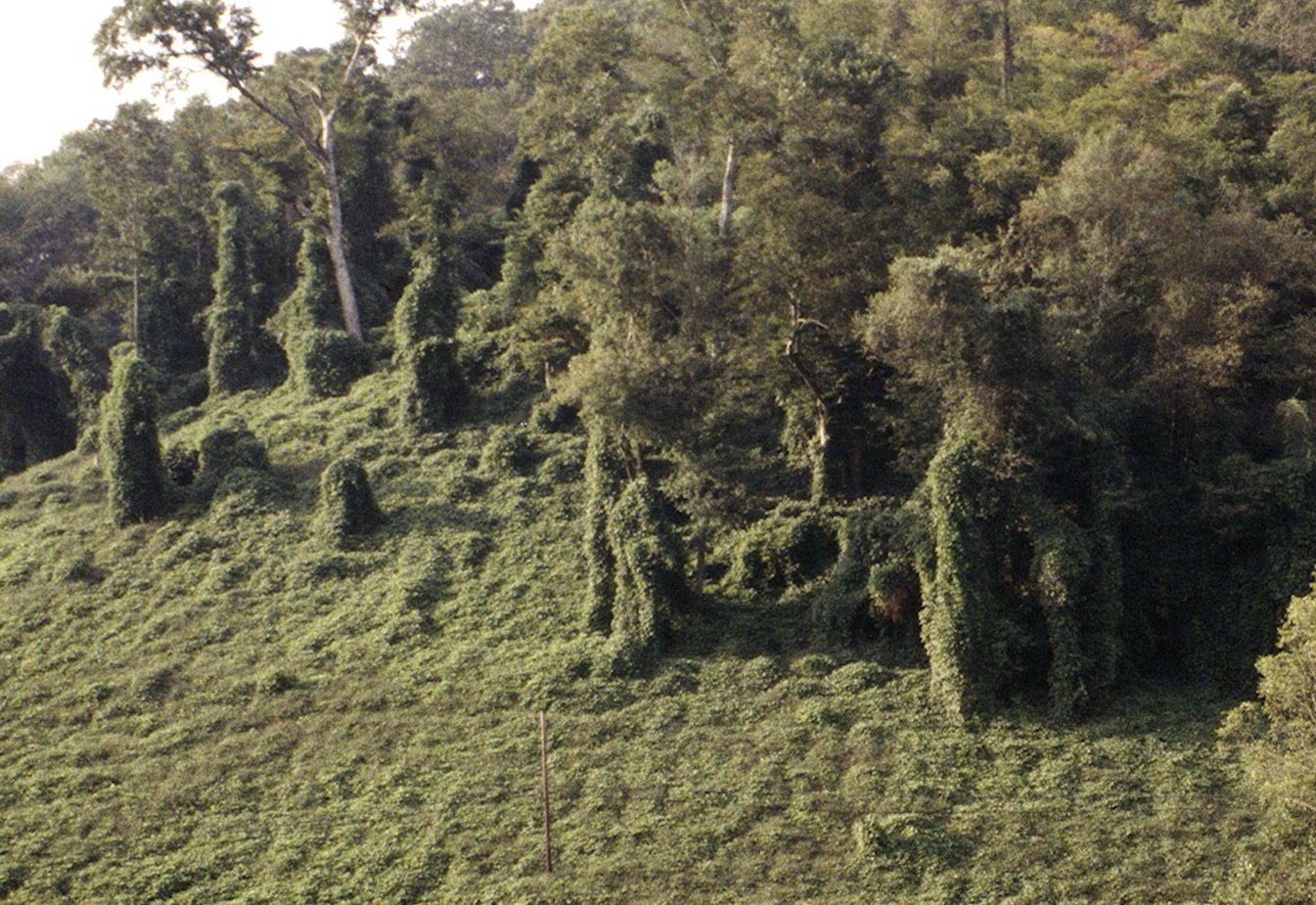
(Figure 1) Mile-a-minute vine grows more than 25 feet in height in one growing season, overtopping shrubs, small trees and growing up forest edges. Image by: USDA APHIS PPQ Archive, USDA APHIS PPQ, Bugwood.org
Preventing the establishment of new invasive species is priority number one and the best expenditure of limited resources in an invasive species management program. Next in priority is early detection of and rapid response (EDRR) to the first report of a new invasion. Stopping invasive species from entering or, next best, at their initial point of introduction saves the incalculable costs later-on associated with rapidly spreading, all-consuming invasive species populations. The verification of a report of mile-a-minute vine (Persicaria perfoliata) on a property in Monroe County, Indiana on May 14, 2018 sets a historical precedence demonstrating a growing capability of detecting and reporting new invaders. The population was very small at this spot and had apparently been sprayed by a homeowner with herbicide, not necessarily to kill the mile-a-minute, but likely to kill the companion multiflora rose.
Our hope is that this is the only instance of mile-a-minute vine in Indiana. There is a significant probability that it is not! In the coming months, a more thorough survey of this property and surrounding area will be conducted to look for more of the vine. But now Indiana stands on high alert as natural resource professionals keep a look out for more of this highly-invasive pest. However, there are too few professionals with eyes on the landscape. The more eyes trained to identify the very distinct characteristics of mile-a-minute, the higher the chance of us catching it before it explodes across the landscape, wreaking havoc and mayhem in our forests and fields, wildlife habitat and mushroom hunting and birding grounds.

(Figure 2) The leaves are simple, alternate, light green and a nearly perfect triangle shape. Image by: Leslie J. Mehrhoff, University of Connecticut, Bugwood.org
All landowners, land stewards, and nature lovers are needed to be additional eyes looking for this insidious threat this summer and in coming years. Please take a moment to learn its identifying characteristics. If you think you have found it, please report it on EDDMapS (Early Detection & Distribution Mapping System) or from your smart phone on the GLEDN (Great Lakes Early Detection Network) app. If you are unsure if you are correctly identifying it, please contact a forester or other natural resource professional for confirmation or just report it in EDDMapS or the GLEDN app, along with photos, and a professional in your area will verify its identification before it actually gets posted.
Mile-a-minute identification:
Mile-a-minute vine is a member of the buckwheat family, Polygonaceae. Although its common name exaggerates its growth potential, this annual vine can grow as much as 6 inches a day and can reach heights of more than 25 feet within the growing season. It forms very dense, tangled mats, growing over shrubs, small trees and up the sides of forest edges (Fig. 1). The leaves are simple, alternate, light green and a nearly perfect triangle shape (Fig. 2). The delicately narrow, green to red-tinted stems, and the petiole (leaf stem) and midrib on the underside of the leaves are armed with small, stiff, recurved barbs (Fig. 3). Small, cup- or saucer-shaped leaf structures, called ocreae, encircle the stem at each node (Fig. 4). Clusters of small white, rather inconspicuous, flowers emerge from the ocreae. Flowers develop into clusters of deep, iridescent blue berry-like fruits, approximately 5 mm in diameter, each fruit containing a single black or reddish-black hard seed, called an achene. Seeds are dispersed by birds and mammals, including chipmunks, squirrels and deer, which eat the fruit. Floodwaters facilitate long distance dispersal of seed.
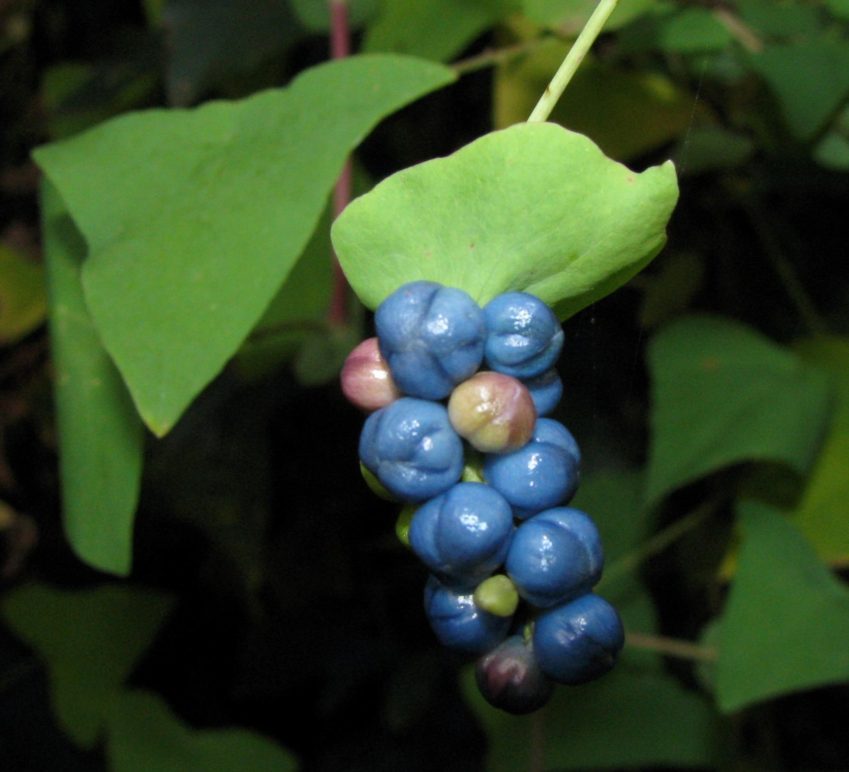
(Figure 4) Small, cup- or saucer-shaped leaf structures, called ocreae, encircle the stem at each node. Flowers emerge from the ocreae and develop into clusters of deep, iridescent blueberry like fruits. Image by: Leslie J. Mehrhoff, University of Connecticut, Bugwood.org
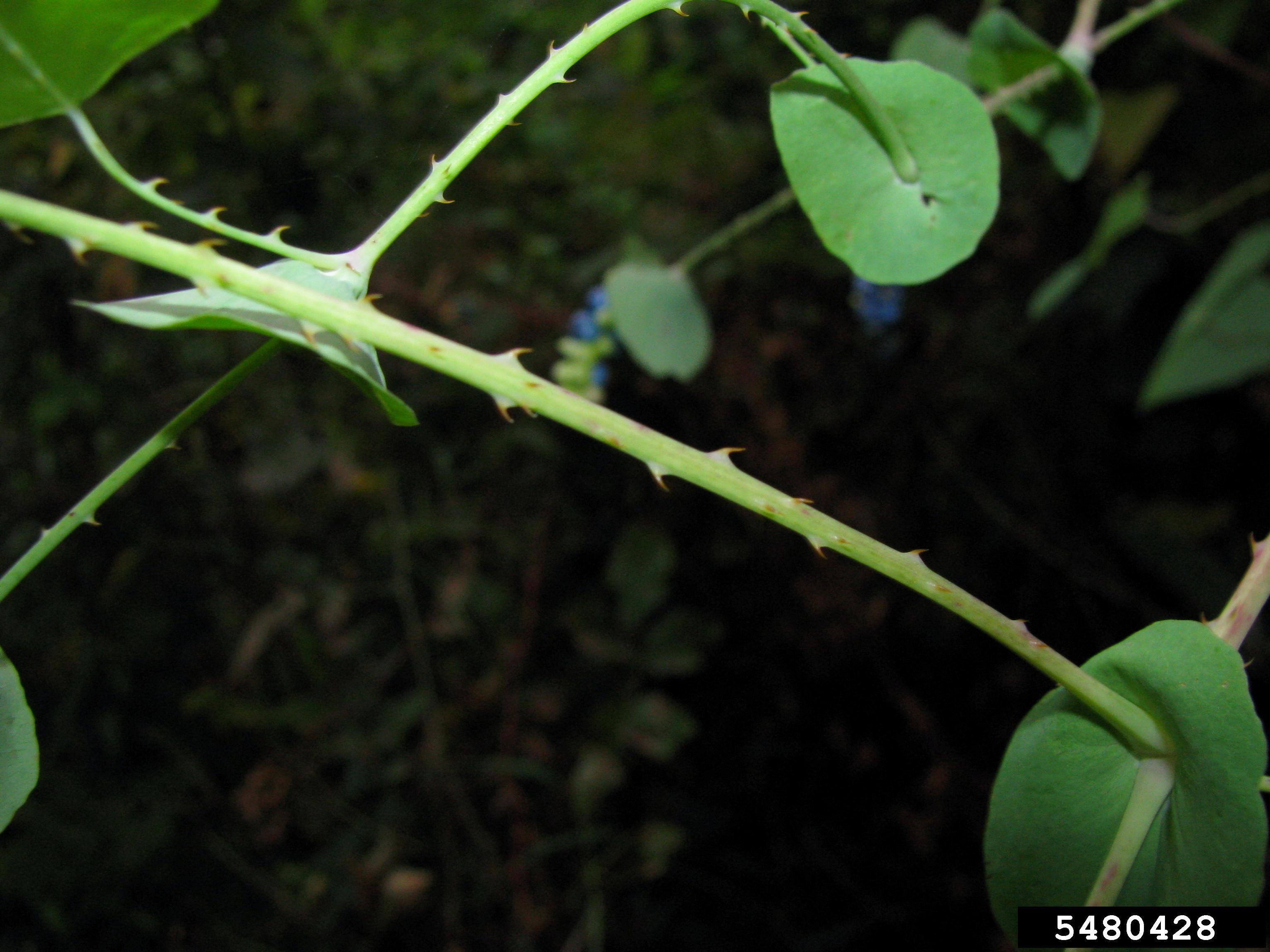
(Figure 3) The delicately narrow, green to red-tinted stems, and the petiole (leaf stem) and midrib on the underside of the leaves are armed with small, stiff, recurved barbs. Image by: Leslie J. Mehrhoff, University of Connecticut, Bugwood.org
Resources:
Mile-a-Minute Vine, FNR-481-W, The Education Store, Purdue Extension’s resource center
Mile-a-minute vine: What you need to know about the plant that can grow 6 inches a day, Indianapolis Star
Invasive Species – Indiana Department of Natural Resources (IDNR)
Ask an Expert – Purdue Extension-Forestry and Natural Resources
Indiana Invasive Species Council – Includes: IDNR, Purdue Department of Entomology and Professional Partners
EDDMaps – Early Detection and Distribution Mapping System
Report Invasives, College of Agriculture
Great Lakes Early Detection Network App (GLEDN) – The Center for Invasive Species & Ecosystem Health
Ron Rathfon, Regional Extension Forester SIPAC
Purdue Department of Forestry and Natural Resources
Prescribed fire is a great tool to improve the food and cover for a variety of wildlife species on your property. One of the most important aspects of using prescribed fire is making sure the fire is conducted safely. This point cannot be overstated, safe use of prescribed fire is paramount. Beyond taking the appropriate training courses or seeking help from a professional, one the most important aspects of safely conducting a prescribed fire is ensuring you have adequate firebreaks.
Firebreaks can serve multiple purposes related to the safe use of prescribed fire and can provide additional food and cover for wildlife. The main purpose of firebreaks is to stop the fire from escaping the burn unit, but they also can provide quick and easy movement around the burn unit, help reduce the amount of people required for the burn and can make igniting the fire safer. Here are a few examples of different types of firebreaks.
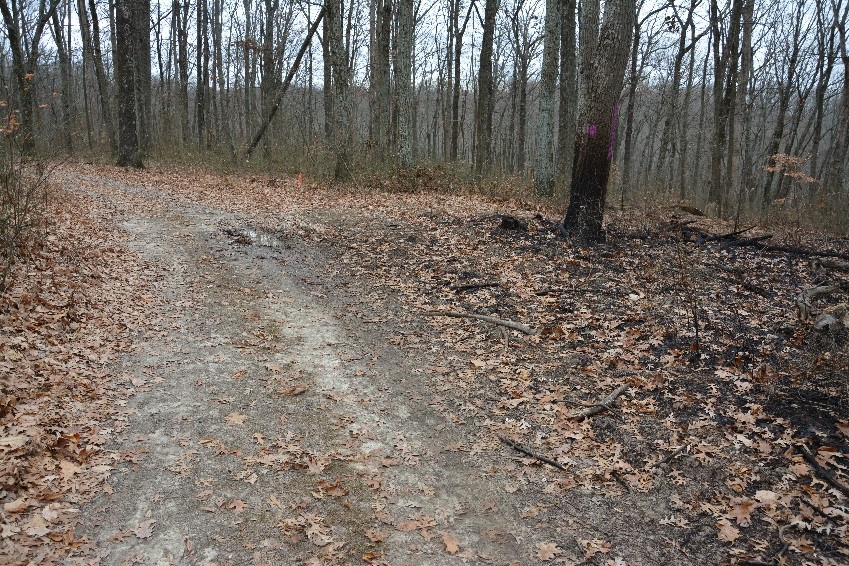
This logging road is a good example of an existing road that can be used as a firebreak.
Existing roads
Existing roads, whether they are paved, gravel, dirt, or logging roads, can serve as outstanding firebreaks, plus they require very little work to prepare prior to a burn. These are also one of the cheapest options for firebreaks. If you are using gravel, dirt, or logging roads as firebreaks, you need to make sure there is not excessive vegetation or leaf litter in the road. Too much vegetation
on the firebreak could lead to an escape.
Streams, creeks, or other bodies of water
Another cheap and easy option for firebreaks is to use existing streams, river, or bodies of water. If you are using water features as a firebreak, here are some things to consider: is the stream or river wide enough to stop the fire from escaping and can people helping with the fire move easily around, across, or through the stream or river to access various part of the burn unit or to stop an escaped fire?
Crop fields
Crop fields with cool-season grains (wheat, oats, rye) or cover crops can serve as a great firebreak. Crop fields with only soybean or corn stubble should be used with caution, as fire may creep through a field with excessive stubble. For fields with crop stubble, planting the edge of the field in a cool-season crop (wheat, clover, oats, etc.), disking the edge of the field, or wetting the crop stubble are all steps that can used to improve the field as a firebreak.
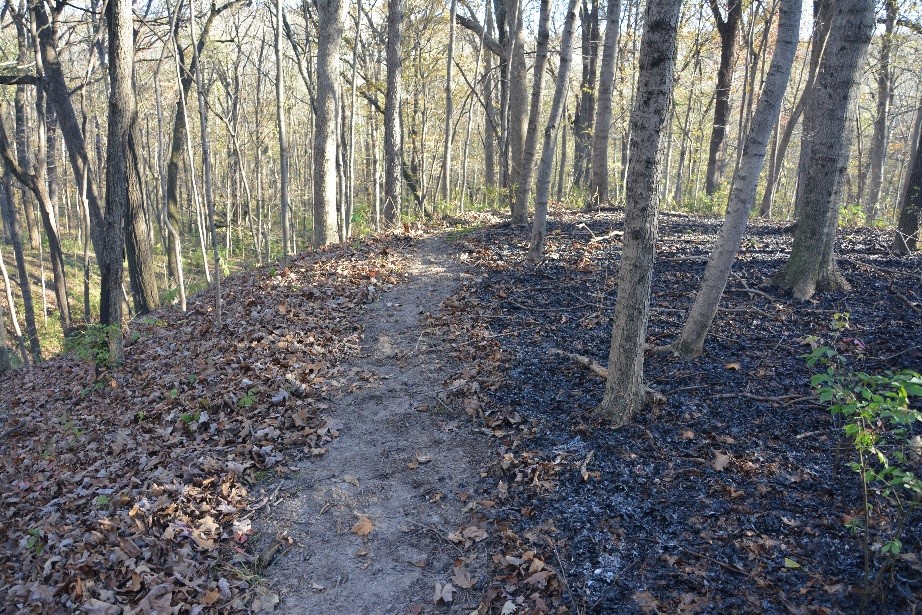
This leaf-blown firebreak was only 3-4 feet wide, but it easily stopped the fire in this situation.
Leaf-blown firebreaks
If you are burning in the woods, using a leaf blower to remove leaf litter and expose bare mineral soil is a quick and easy way to create a firebreak. These firebreaks do not need to be as wide as those in an old field or native grass stand because the flame length when burning in the woods is typically much shorter than burning in a field.
Disked firebreaks for multiple purposes
Disking or tilling to expose bare mineral soil is an extremely effective method of creating a firebreak. These breaks can also provide food and/or cover for various wildlife species if managed correctly. Disking the firebreak and then letting the firebreak remain fallow during the growing season creates outstanding cover for brooding turkeys, pheasants, and quail.
You can also plant the firebreaks after disking to create a food plot for various wildlife species. If you disk the firebreaks in the fall and plan to burn in the spring, you can plant the firebreaks with a mix of wheat and crimson clover or a mix of perennial clovers to create a great food plot for deer and turkey. You can also plant the firebreaks with millet, grain sorghum, or sunflowers after you have burned the field in the spring.

If you use mowed firebreaks you run the risk of fire creeping across the firebreak and escaping, especially if there is too much thatch in the firebreak.
My absolute favorite multiple purpose firebreak is one that is disked in Aug-Sep, planted to winter wheat (40-60 lbs/ac), and then left to remain fallow after the wheat has produced seed. This firebreak effectively stops fire, provide green browse from the fall through the spring, provides seed during the early summer, and provides excellent brood cover throughout the summer and early fall. This is truly an all-in-one firebreak.
Mowed grass firebreak
Mowed grass firebreaks are not ideal, but they can be used in certain situations. If mowed firebreaks are used, you must be sure that there is not excessive thatch built up in the break. Too much thatch will allow the fire to creep across the break and potentially escape. Even on firebreaks without excessive thatch, using water to create a “wet” firebreak is recommended.
No matter which type of firebreak you choose to use, taking the time to make sure the firebreak is adequately installed and is sufficient to stop the fire from escaping will help make the burn safer and will create less headaches for you when conducting the burn.
Additional Resources:
Firebreaks for Prescribed Burning, Oklahoma State University Extension
Prescribed fire: 6 things to consider before you ignite, Got Nature?, Purdue Extension-FNR,
On-line Basic Prescribed Fire Training, USDA, U.S. Forest Service
Publications Focus on Plan, Safety of Prescribed Burns, Iowa State Extension,
eFIRE, North Carolina State Extension
Renovating native warm-season grass stands for wildlife: A Land Manager’s Guide, The Education Store, Purdue Extension resource center
Calibrating a No-Till Drill for Conservation Plantings and Wildlife Food Plots, The Education Store
Jarred Brooke, Wildlife Extension Specialist
Purdue Department of Forestry and Natural Resources

Recent Posts
- Publication – Planting Forest Trees and Shrubs in Indiana
Posted: April 8, 2026 in Forests and Street Trees, Urban Forestry, Wildlife, Woodlands - ID That Tree: Virgin’s Bower Clematis
Posted: April 6, 2026 in Urban Forestry, Wildlife, Woodlands - It’s Timberdoodle Time!
Posted: April 3, 2026 in Got Nature for Kids, How To, Wildlife - Keep An Eye Out for Hammerhead Worms, Purdue Landscape Report
Posted: April 2, 2026 in Invasive Animal Species, Wildlife, Woodlands - When is the Peak Migration For Hummingbirds and How Can You Attract Them?
Posted: in How To, Wildlife - ID That Tree Featured in National Woodland Owners Association Newsletter
Posted: April 1, 2026 in Urban Forestry, Wildlife, Woodlands - New 2026 Indiana Woodland Steward Newsletter
Posted: March 30, 2026 in Urban Forestry, Wildlife, Woodlands - A Woodland Management Moment: Why Aspect Matters
Posted: in Urban Forestry, Woodland Management Moment, Woodlands - 2026 Winter Bat Survey In Progress, MyDNR
Posted: March 27, 2026 in How To, Wildlife - Fast-Growing Trees for the Landscape, Purdue Landscape Report
Posted: March 26, 2026 in Forestry, Urban Forestry, Woodlands
Archives
Categories
- Alert
- Aquaculture/Fish
- Aquatic/Aquaculture Resources
- Ask the Expert
- Christmas Trees
- Community Development
- Disease
- Drought
- Forestry
- Forests and Street Trees
- Gardening
- Got Nature for Kids
- Great Lakes
- How To
- Invasive Animal Species
- Invasive Insects
- Invasive Plant Species
- Land Use
- Natural Resource Planning
- Nature of Teaching
- Plants
- Podcasts
- Ponds
- Publication
- Safety
- Spiders
- Timber Marketing
- Uncategorized
- Urban Forestry
- Webinar
- Wildlife
- Wood Products/Manufacturing
- Woodland Management Moment
- Woodlands