 Purdue University - Extension - Forestry and Natural Resources
Got Nature? Blog
The Purdue Rainscaping Education Program introduces two new videos as they continue to provide training and resources on rainscaping practices that can be installed in residential settings or small-scale public spaces projects.
Rainscaping and Rain Gardens
Rainscaping is a combination of sustainable landscape design and management practices that prevents polluted runoff from reaching water bodies — directing stormwater to be absorbed by plants and soils.
Rainwater Harvesting with Cisterns
This video demonstrates how rainwater can be harvested with cisterns for future use in your landscaping and gardens.
Rainscaping is a combination of sustainable landscape design and management practices that prevents polluted runoff from reaching water bodies — directing stormwater to be absorbed by plants and soils. Learn more about rainscaping and demo rain gardens at: Purdue Rainscaping Education Program.
Resources:
What is Rainscaping? Purdue Rainscaping Education Program Video, Purdue Extension
Q&A About Drainage Water Recycling for the Midwest, The Education Store, Purdue Extension resource center
Rainscaping Playlist, Purdue Extension – Forestry and Natural Resources (FNR) YouTube Channel
Ask an Expert: Rainscaping, Purdue Extension – FNR YouTube Channel
Rain Gardens Go with the Flow, Indiana Yard and Garden, Purdue Horticulture
Become a Purdue Master Gardener, The Education Store
Master Gardeners Program
Plan Today For Tomorrow’s Flood, The Education Store
John Orick, Purdue Master Gardener State Program Coordinator
Department of Horticulture & Landscape Architecture
Kara Salazar, Assistant Program Leader and Extension Specialist for Sustainable Communities
Department of Forestry and Natural Resources
The classic and trusted book “Fifty Common Trees of Indiana” by T.E. Shaw was published in 1956 as a user-friendly guide to local species. Nearly 70 years later, the publication has been updated through a joint effort by the Purdue Department of Forestry and Natural Resources, Indiana 4-H, and the Indiana Department of Natural Resources, and reintroduced as “An Introduction to Trees of Indiana.”
The full publication is available for download for $7 in the Purdue Extension Education Store. The field guide helps identify common Indiana woodlot trees.
Each week, the Intro to Trees of Indiana web series will offer a sneak peek at one species from the book, paired with an ID That Tree video from Purdue Extension forester Lenny Farlee to help visualize each species as it stands in the woods. Threats to species health as well as also insight into the wood provided by the species, will be provided through additional resources as well as the Hardwoods of the Central Midwest exhibit of the Purdue Arboretum, if available. 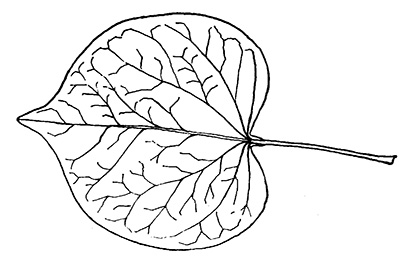
This week, we meet the Redbud or Cercis canadensis.
The alternately held leaves of this small tree are heart-shaped with smooth edges and that measure three to five inches long. Leaves changes from a dark green to a yellow or yellow green in the fall. The leaves are held on twigs that grow in a zig-zag pattern. The bark on redbud is reddish brown and flaky with the older, darker bark shedding to reveal the red inner bark.
The clusters of pink, lavender and even magenta flowers of this species appear in the early spring before the leaves open. The redbud is in the broad legume family and, as such, its fruit is a small pea-pod, approximately three inches long, which is flat with a very thin skin.
Redbud trees, which grow 20 to 30 feet tall, are often found along the edge of woodlands and open fields and brushy areas, but are also planted ornamentally for their beauty. This species grows best in partial sun and in moist, well-drained soils, but is tolerant of alkaline soil and clay. The natural range of the redbud is the central and eastern United States, from southern Iowa across to Pennsylvania to the north and south into northern Florida. It also extends west to Kansas, Oklahoma and Texas and east to Florida and up the Atlantic coast.
The Morton Arboretum states that redbud is susceptible to borers, canker disease and verticillium wilt. It also suffers in full sun or extreme summer heat. It is noted that the trees have a shallow root system, which must be protected, and the tree is relatively short-lived, with only a 20 to 25 year life span.
For full article with additional photos view: Intro to Trees of Indiana: Redbud, Forestry and Natural Resources’ News.
If you have any questions regarding wildlife, trees, forest management, wood products, natural resource planning or other natural resource topics, feel free to contact us by using our Ask an Expert web page.
Other Resources:
ID That Tree: Redbud
ID That Tree: Redbud Spring Bloom Edition
Morton Arboretum: Redbud
Eastern Redbud, Purdue Fort Wayne Native Trees of Indiana River Walk
ID That Tree Spring Bloom Editions, Got Nature Blog
The Woody Plant Seed Manual, U.S. Forest Service
Fifty Common Trees of Indiana
An Introduction to Trees of Indiana
Native Trees of the Midwest, The Education Store
Shrubs and Woody Vines of Indiana and the Midwest, The Education Store
Investing in Indiana Woodlands, The Education Store
Forest Improvement Handbook, The Education Store
ID That Tree, Purdue Extension-Forestry & Natural Resources (FNR) YouTube playlist
Woodland Management Moment , Purdue Extension-FNR YouTube playlist
Wendy Mayer, FNR Communications Coordinator
Purdue University Department of Forestry and Natural Resources
Lenny Farlee, Sustaining Hardwood Extension Specialist
Purdue University Department of Forestry and Natural Resources
Despite their name, Indiana bats are found in more than 20 states. The species was first found in southern Indiana’s Wyandotte Caves where they live in close, social groups. During the winter, up to 500 bats can huddle for warmth underground within a single square foot. Their scientific name, Myotis sodalis, is actually Latin for “mouse ear companion.” While that companionship has helped Indiana bats survive for generations, it is now facilitating the spread of a deadly disease that is devastating their population.
First documented in 2006, white-nose syndrome spreads rapidly. It has killed millions of North American bats over the past decade. Named after a powdery white fungus that grows on the hairless parts of bats, white-nose syndrome spreads on surfaces and through bat-to-bat contact.
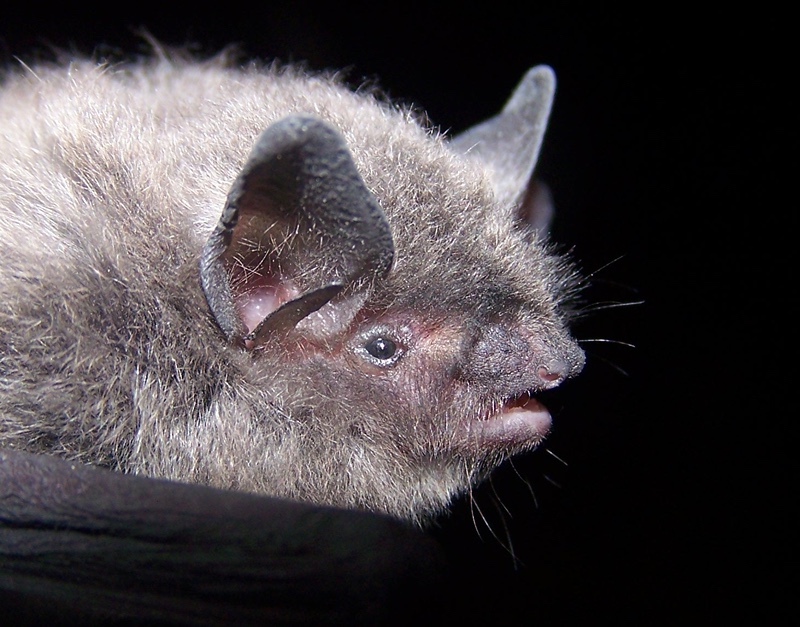
Photos provided by: Caroline Byrne, Bat Ecologist
“Bats spend a lot of time sleeping and really shut down when they hibernate in caves,” said Patrick Zollner, professor of quantitative ecology. During hibernation, bats lower their body temperature and metabolic rate, increasing their susceptibility to white-nose syndrome.
The fungus causes behavior changes in bats that make them more active than usual, burning the fat they need to survive and killing the vast majority of those infected.
“One reason bat populations are so sensitive is they are not prolific breeders like other small mammals,” said Zollner. Indiana bats give birth to a single pup each summer, making it hard for their numbers to rebound.
Though the effects of the population decline are visible, specifics are hard to determine. This fall, Sally Martinez, a graduate student in Zollner’s lab, began work to unravel the impact.
For full article please visit Unexpected Plants and Animals of Indiana: Indiana Bats.
If you have any questions regarding trees, forests, wildlife, wood products or other natural resource topics, feel free to contact us by using our Ask an Expert web page.
Resources:
Hardwood Ecosystem Experiment (HEE) Highlights: Bats, Video, Purdue Extension – Forestry and Natural Resources (FNR) YouTube Channel
Bats in the Belfry, Purdue Extension – FNR Got Nature? Blog
Ask An Expert: Bats on the Hardwood Ecosystem Experiment (HEE), Video, Purdue Extension – FNR Facebook
Bats in Indiana, Indiana Department of Natural Resources (IN DNR)
Bat Houses, Bat Conservation International
Creating a Wildlife Habitat Management Plan for Landowners, The Education Store, Purdue Extension’s resource center
The Hardwood Ecosystem Experiment (HEE): Indiana Forestry and Wildlife, The Education Store
HEE, YouTube Playlist, Purdue Extension – FNR
HEE – Wildlife Responses to Timber Harvesting, The Education Store
Pat Zollner, Professor Wildlife Science
Department of Forestry and Natural Resources
Robert Chad Campbell, Writer
College of Agriculture
The classic and trusted book “Fifty Common Trees of Indiana” by T.E. Shaw was published in 1956 as a user-friendly guide to local species. Nearly 70 years later, the publication has been updated through a joint effort by the Purdue Department of Forestry and Natural Resources, Indiana 4-H, and the Indiana Department of Natural Resources, and reintroduced as “An Introduction to Trees of Indiana.”
The full publication is available for download for $7 in the Purdue Extension Education Store. The field guide helps identify common Indiana woodlot trees.
Each week, the Intro to Trees of Indiana web series will offer a sneak peek at one species from the book, paired with an ID That Tree video from Purdue Extension forester Lenny Farlee to help visualize each species as it stands in the woods. Threats to species health as well as also insight into the wood provided by the species, will be provided through additional resources as well as the Hardwoods of the Central Midwest exhibit of the Purdue Arboretum, if available.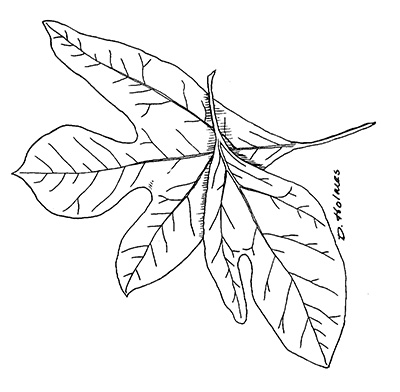
This week, we meet Sassafras or Sassafras albidum.
The alternately held leaves of this species can be tricky. While all have untoothed margins and smooth leaf surfaces, they may be variable in shape, ranging from no lobes or two or three lobes, and all three variations may even be found on the same branch. The leaves turn from a medium green in the spring to showy yellows, oranges and reds in the fall.
The bark is strongly ridged and brown or gray in color, but when sliced into, it has a brownish orange color underneath. When the leaves are crushed or the bright green twigs are scraped or the bark is sliced into, it produces a spicy aroma.
In the spring, the sassafras produces clusters of small yellow flowers. In the fall, the species produces a dark blue or purple berry-like fruit, which is held on bright red or orange stems.
Sassafras trees, which grow 30 to 60 feet tall, are often found along the edge of fields, waste areas and areas with a history of disturbance, but may often also be found as a larger tree in the rich woodland soils of forest interiors. This species prefers acidic and moist, well-drained soil, but can tolerate alkaline soil and dry sites.
The natural range of the sassafras is the central and eastern United States. It extends from eastern Texas and Oklahoma and Missouri west across Illinois, Indiana, Ohio and up into southern Michigan and parts of New York and Massachusetts. It extends down the Atlantic coast to northern Florida and across the Gulf coast to Louisiana.
The Morton Arboretum warns that sassafras is best planted in the spring and that the species is a thicket-forming plant that may require more maintenance due to suckering. Sassafras also is susceptible to Japanese beetles, powdery mildew, leaf spots and cankers.
Sassafras is known for the tea made from the bark on its roots, and also was a key ingredient in root beer historically.
The Morton Arboretum states that redbud is susceptible to borers, canker disease and verticillium wilt. It also suffers in full sun or extreme summer heat. It is noted that the trees have a shallow root system, which must be protected, and the tree is relatively short-lived, with only a 20 to 25 year life span.
For full article with additional photos view: Intro to Trees of Indiana: Sassafras, Forestry and Natural Resources’ News.
If you have any questions regarding wildlife, trees, forest management, wood products, natural resource planning or other natural resource topics, feel free to contact us by using our Ask an Expert web page.
Other Resources:
ID That Tree: Sassafras
ID That Tree: Sassafras Spring Bloom Edition
Morton Arboretum: Sassafras
Sassafras, Purdue Fort Wayne Native Trees of Indiana River Walk
ID That Tree Spring Bloom Editions, Got Nature Blog
Hardwood Lumber and Veneer Series: Sassafras, The Education Store
Purdue Arboretum Explorer
The Woody Plant Seed Manual, U.S. Forest Service
Fifty Common Trees of Indiana
An Introduction to Trees of Indiana
Native Trees of the Midwest, The Education Store
Shrubs and Woody Vines of Indiana and the Midwest, The Education Store
Investing in Indiana Woodlands, The Education Store
Forest Improvement Handbook, The Education Store
ID That Tree, Purdue Extension-Forestry & Natural Resources (FNR) YouTube playlist
Woodland Management Moment , Purdue Extension-FNR YouTube playlist
Wendy Mayer, FNR Communications Coordinator
Purdue University Department of Forestry and Natural Resources
Lenny Farlee, Sustaining Hardwood Extension Specialist
Purdue University Department of Forestry and Natural Resources
You may have many reasons why you want to plant trees on your land and this webinar Conservation Tree Planting will help you as you define your objectives and plan your planting. This webinar explains the difference between conservation tree planting and ornamental or landscape tree planting. The research based techniques and resources shared will help guide you as you work toward meeting your goals.
Lenny Farlee, Purdue extension forester, discusses topics including:
- reforestation
- tree species
- growth rates
- ordering seedlings
- weed control/herbicides
- equipment
- erosion control
- windbreaks
- soil health
- post-planting care/thinning
- fencing options
- wildlife habitat management
We Want to Hear From You:
After you have viewed the webinar please fill out the Qualtrics Survey and let us know if the video was helpful.
Resources:
Resources and Assistance Available for Planting Hardwood Seedlings, The Education Store, Purdue Extension’s resource center
Creating a Wildlife Habitat Management Plan for Landowners, The Education Store
Planting Forest Trees and Shrubs in Indiana, The Education Store
Forest Improvement Handbook, The Education Store
How to Build a Plastic Mesh Deer Exclusion Fence, The Education Store
Woodland Stewardship for Landowners Purdue Extension – Forestry & Natural Resources (FNR) Extension YouTube Playlist
Woodland Management Moment, Purdue Extension – FNR YouTube Playlist
Lenny Farlee, Sustaining Hardwood Extension Specialist
Purdue University Department of Forestry and Natural Resources
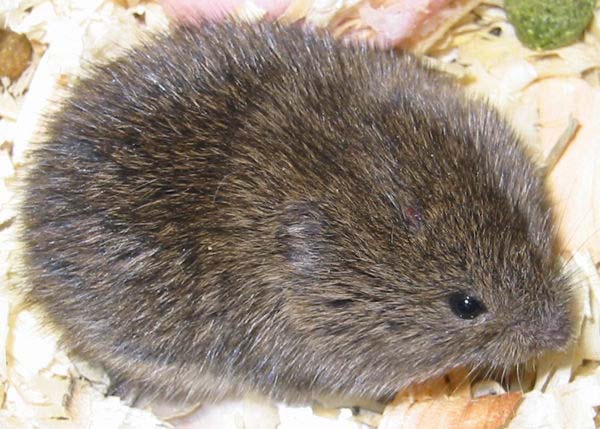 Question: I’m interested in doing regeneration planting of oaks and hickories on my property, and have made attempts with both direct seeding, as well as starting in Rootmaker containers and then planting the seedlings after one year of growth. I have been having a major problem with voles, despite my best attempts at barriers, and am wondering if there is anyone who would be able to advise me?
As an example, I had a black oak seedling, one year old, with great growth, about 18″ tall and with a root ball of comparable size, which I planted this fall. After 2-3 months, in December, the entire root system was eaten and all that remained of the seedling was the stalk, with clear gnaw-marks where it had been chewed off at the base. It was protected by a wire mesh enclosure that covered all sides plus the top, and was set about four inches into the ground. The mesh was finer than the standard chicken wire; the openings were about dime-size.
I would appreciate any guidance your experts can share.
Answer: Based on your description, it certainly sounds like pine (=woodland) voles, Microtus pinetorum, although trapping would be needed to confirm. I am no longer doing work on voles, but earlier work, Selective Feeding of Pine Voles on Roots of Seedlings, showed that they really do like roots of oak seedlings.
When I want to exclude small mammals, I use ¼ inch mesh size or smaller. One other approach I’ve used with success is to create an “apron” of hardware cloth underground and extending outward several inches from the cylinder. Since pine voles create tunnels below the ground surface, this isn’t a guarantee of exclusion, but it certainly should discourage them.
If the problem is too severe for you to tolerate, a rodenticide bait such as zinc phosphide is another option. Thiram is a repellent that could be used – like all repellents, it has variable and short-term effectiveness (but still tends to be better than other commercial products).
The following link offers some practical tips on voles and vole control, including trapping to verify that voles are present, and methods of scouting and treating with rodenticide to reduce exposure risk to other nontarget wildlife and pets, Controlling Voles in Horticulture Plantings and Orchards in Missouri, University of Missouri Extension.
Resources:
Voles!, Purdue Extension-Agronomy
Voles (remember the V), Turfgrass Science, Purdue Horticulture & Landscape Architecture
Dealing with Mole Damage in Your Yard video, Purdue Extension-Forestry & Natural Resources YouTube Channel
Orphaned Wildlife, Got Nature? blog
A Template for Your Wildlife Habitat Management Plan, The Education Store, Purdue Extension resource center
Forest Improvement Handbook, The Education Store
Wildlife Habitat Hint, Purdue Extension – Forestry & Natural Resources (FNR) YouTube Playlist
Conservation Tree Planting: Steps to Success, Purdue Extension – FNR YouTube Video
Woodland Stewardship for Landowners, Purdue Extension – FNR YouTube Playlist
Woodland Management Moment, Purdue Extension – FNR YouTube Playlist
Rob Swihart, Professor of Wildlife Ecology
Department of Forestry and Natural Resources, Purdue University
The classic and trusted book “Fifty Common Trees of Indiana” by T.E. Shaw was published in 1956 as a user-friendly guide to local species. Nearly 70 years later, the publication has been updated through a joint effort by the Purdue Department of Forestry and Natural Resources, Indiana 4-H, and the Indiana Department of Natural Resources, and reintroduced as “An Introduction to Trees of Indiana.”
The full publication is available for download for $7 in the Purdue Extension Education Store. The field guide helps identify common Indiana woodlot trees.
Each week, the Intro to Trees of Indiana web series will offer a sneak peek at one species from the book, paired with an ID That Tree video from Purdue Extension forester Lenny Farlee to help visualize each species as it stands in the woods. Threats to species health as well as also insight into the wood provided by the species, will be provided through additional resources as well as the Hardwoods of the Central Midwest exhibit of the Purdue Arboretum, if available. 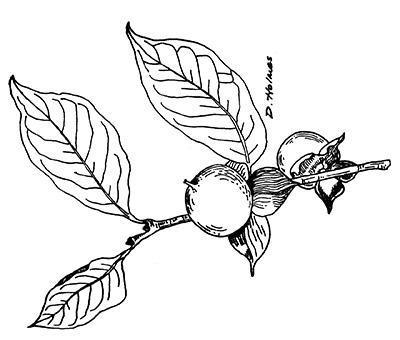
This week, we meet the persimmon or Diospyros virginiana, one of Indiana’s fruit producing trees.
The alternately held leaves of persimmon are oval shaped with smooth margins, with no lobes or teeth. The thick dark green leaves turn yellow or reddish-purple in the fall. The buds are dark colored, while leaf stems are light brown.
The bark resembles alligator hide with deep broken ridges, often with an orange coloring between the ridges.
The fruit, a pumpkin orange colored fleshy plum-like fruit, is a standout characteristic and is favored by both wildlife and humans. Once it ripens and falls from the tree, persimmon is soft and sweet. If picked from the tree, this fruit can be green, very hard, gummy in texture and acidic. The seed count in persimmon is variable with some seedless varieties and some with as many as 10 seeds.
Persimmon trees, which grow 35 to 60 feet tall, are native to southern Indiana but can be found planted across the state. This species grows best in full sun and in moist, well-drained soils, but are tolerant of alkaline soil, clay, dry sites, and occasional drought. The natural range of the persimmon is the lower Midwest and southeastern United States reaching up into southern Illinois.
For full article with additional photos view: Intro to Trees of Indiana: Persimmon, Forestry and Natural Resources’ News.
If you have any questions regarding wildlife, trees, forest management, wood products, natural resource planning or other natural resource topics, feel free to contact us by using our Ask an Expert web page.
Other Resources:
Hardwoods of the Central Midwest: Persimmon
ID That Tree: Persimmon
Morton Arboretum: Persimmon
Persimmons, The Education Store
Persimmon, Native Trees of Indiana River Walk, Purdue Fort Wayne
The Woody Plant Seed Manual, U.S. Forest Service
Fifty Common Trees of Indiana
An Introduction to Trees of Indiana
Native Trees of the Midwest, The Education Store
Shrubs and Woody Vines of Indiana and the Midwest, The Education Store
Investing in Indiana Woodlands, The Education Store
Forest Improvement Handbook, The Education Store
ID That Tree, Purdue Extension-Forestry & Natural Resources (FNR) YouTube playlist
Woodland Management Moment , Purdue Extension-FNR YouTube playlist
Wendy Mayer, FNR Communications Coordinator
Purdue University Department of Forestry and Natural Resources
Lenny Farlee, Sustaining Hardwood Extension Specialist
Purdue University Department of Forestry and Natural Resources
Wild Bulletin, IN DNR Fish and Wildlife: Bobcats, the only resident native wild cat in Indiana, are common in southern and parts of central Indiana, and increasing in northern Indiana. They are rarely seen because of their ability to blend into their surroundings and move silently.
Bobcats have been reported from almost every Indiana county but are most common in southern and west-central Indiana. A study conducted by the DNR in south-central Indiana revealed that bobcats are capable of dispersing up to 100 miles from where they were born. The DNR collects reports of bobcat sightings, trail-camera photos, and mortalities. Bobcat reports are also collected through the annual Archer’s Index, in which volunteer deer bow hunters report the number of hours they hunted and the species they saw while hunting. Snapshot Indiana, a citizen-science trail-camera survey, also helps document bobcat presence in some areas.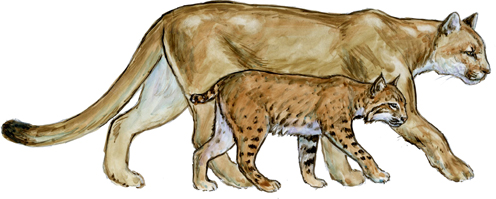
Bobcats prefer forested areas that have brushy areas, fields, or clear cuts that are beginning to regrow mixed in. Female bobcat home ranges may vary from 6–12 square miles, and male bobcat home ranges may vary from 30–75 square miles. Bobcats are primarily nocturnal, hunting and moving during early-morning and late-evening hours; however, seeing a bobcat during the day is not cause for concern.
To identify and learn more about Bobcat, please visit the Bobcat basics: Indiana’s Only Native Wild Cat.
Resources
A Template for Your Wildlife Habitat Management Plan, The Education Store, Purdue Extension resource center
Managing Your Woods for White-Tailed Deer, The Education Store
Woodland Stewardship for Landowners, Playlist, Purdue Extension – Forestry and Natural Resources YouTube channel
A Woodland Management Moment, Purdue Extension – FNR playlist
Wildlife Habitat Hint, Purdue Extension – FNR playlist
Ask an Expert: Wildlife Food Plots, Video, Purdue Extension – Forestry and Natural Resources YouTube channel
Indiana Department of Natural Resources
The classic and trusted book “Fifty Common Trees of Indiana” by T.E. Shaw was published in 1956 as a user-friendly guide to local species. Nearly 70 years later, the publication has been updated through a joint effort by the Purdue Department of Forestry and Natural Resources, Indiana 4-H, and the Indiana Department of Natural Resources, and reintroduced as “An Introduction to Trees of Indiana.”
The full publication is available for download for $7 in the Purdue Extension Education Store. The field guide helps identify common Indiana woodlot trees.
Each week, the Intro to Trees of Indiana web series will offer a sneak peek at one species from the book, paired with an ID That Tree video from Purdue Extension forester Lenny Farlee to help visualize each species as it stands in the woods. Threats to species health as well as also insight into the wood provided by the species, will be provided through additional resources as well as the Hardwoods of the Central Midwest exhibit of the Purdue Arboretum, if available.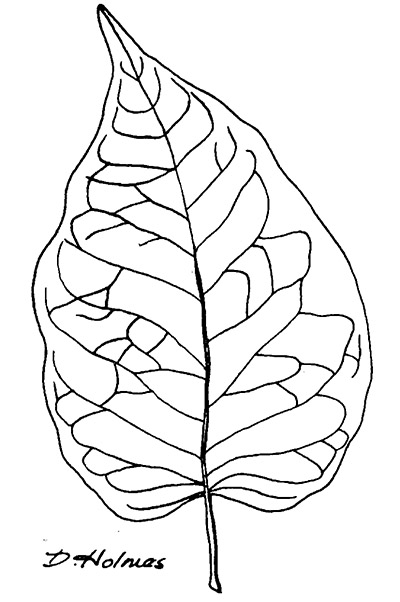
This week, we meet the Osage Orange or Maclura pomifera, also known as the hedge apple. While this species is not native to Indiana, it is found throughout the state, where it was planted for fence rows and fence post plantings due to its decay resistant wood.
The leaves of Osage orange are oval shaped with pointed tips held alternately on slender twigs. The dark, glossy green leaves have smooth margins and no lobes. The twigs will often have sharp thorns more than half an inch long that are found where the leaves emerge and where the buds are located.
The bark of this species has a light gray surface with an orange undercoloring, which is distinctly furrowed and has a somewhat fibrous appearance. Osage orange is often multi-stemmed and spreads out over a large area.
The fruit of Osage orange, produced by female trees, also is a key identifying characteristic, as it resembles a large yellow-green-colored bumpy orange or a bumpy green apple. The fruit is four to six inch in diameter and has many folds, bumps and crevices, which has led to the description of it looking like a brain. Osage oranges have a sticky, milky sap on the inside.
Osage orange trees, which grow to 20 to 40 feet tall, are found in moist, well-drained soils, but are tolerant of alkaline soil, clay, dry sites, occasional drought and flooding. The natural range of the Osage orange is Arkansas, Texas, Oklahoma and the region surrounding the Ozark mountains, although it has been planted in nearly every one of the lower 48 states.
For full article with additional photos view: Intro to Trees of Indiana: Osage Orange, Forestry and Natural Resources’ News.
If you have any questions regarding wildlife, trees, forest management, wood products, natural resource planning or other natural resource topics, feel free to contact us by using our Ask an Expert web page.
Other Resources:
Fruit Like a Brain and Wood Like Steel – Got Nature article
You Say Hedge-Apple, I Say Osage Orange!, Indiana Yard and Garden – Purdue Consumer Horticulture.
Osage Orange, The Wood Database
Hardwoods of the Central Midwest: Osage orange
ID That Tree: Osage orange
Morton Arboretum: Osage orange
The Woody Plant Seed Manual, U.S. Forest Service
Fifty Common Trees of Indiana
An Introduction to Trees of Indiana
Native Trees of the Midwest, The Education Store
Shrubs and Woody Vines of Indiana and the Midwest, The Education Store
Investing in Indiana Woodlands, The Education Store
Forest Improvement Handbook, The Education Store
ID That Tree, Purdue Extension-Forestry & Natural Resources (FNR) YouTube playlist
Woodland Management Moment , Purdue Extension-FNR YouTube playlist
Wendy Mayer, FNR Communications Coordinator
Purdue University Department of Forestry and Natural Resources
Lenny Farlee, Sustaining Hardwood Extension Specialist
Purdue University Department of Forestry and Natural Resources
The classic and trusted book “Fifty Common Trees of Indiana” by T.E. Shaw was published in 1956 as a user-friendly guide to local species. Nearly 70 years later, the publication has been updated through a joint effort by the Purdue Department of Forestry and Natural Resources, Indiana 4-H, and the Indiana Department of Natural Resources, and reintroduced as “An Introduction to Trees of Indiana.”
The full publication is available for download for $7 in the Purdue Extension Education Store. The field guide helps identify common Indiana woodlot trees.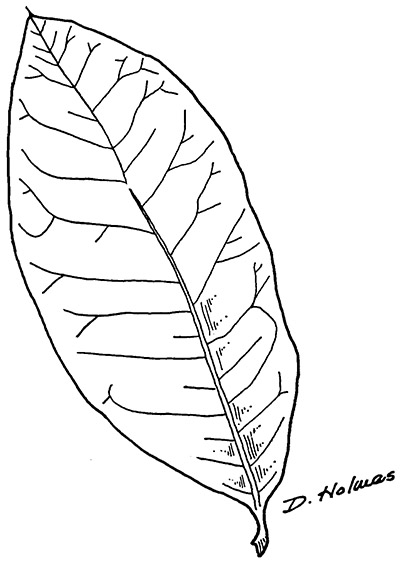
Each week, the Intro to Trees of Indiana web series will offer a sneak peek at one species from the book, paired with an ID That Tree video from Purdue Extension forester Lenny Farlee to help visualize each species as it stands in the woods. Threats to species health as well as also insight into the wood provided by the species, will be provided through additional resources as well as the Hardwoods of the Central Midwest exhibit of the Purdue Arboretum, if available.
This week, we take a look at the ninth and final of our featured oak varieties in Indiana, the Shingle Oak or Quercus imbricaria.
The leaves of shingle oak are oblong and have entire leaf margins, without lobes or teeth, unlike all other Indiana oaks. This species also retains its shiny, bristle-tipped leaves further into the winter than other oaks. The leaves turn from a dark green in the summer to yellow and brown in the fall.
The bark is dark gray and blocky, with long running ridges. Shingle oak tends to keep its lower dead limbs attached to the tree.
The fruit is a small, rounded acorn with a thin cap that covers a third to half of the acorn. The acorns turn dark in color before losing their caps, although some may drop off the tree with their caps in tact.
Shingle oaks, which grow to 50 to 60 feet tall and are found in moist, well-drained soil along streams and on hillsides, but can occasionally be found on dry sites. The natural range of the shingle oak is the midwestern United States, including the Appalachian mountain region, Ohio, and the central Mississippi River valley.
The Morton Arboretum states that shingle oak is fairly salt tolerant and tolerant of black walnut toxicity, and despite the fact that it has a taproot, this species can be easier to transplant than some other oaks.
Shingle oak, however, can be plagued with pests such as scale insects and two-lined chestnut borer. As with other oaks, the shingle oak should be pruned in the dormant season to avoid attracting beetles that may carry oak wilt, which can be a potential disease problem.
Shingle oaks get their name, because traditionally the species was sectioned out and made into wood shingles.
For full article with additional photos view: Intro to Trees of Indiana: Shingle Oak, Forestry and Natural Resources’ News.
If you have any questions regarding wildlife, trees, forest management, wood products, natural resource planning or other natural resource topics, feel free to contact us by using our Ask an Expert web page.
Other Resources:
ID That Tree: Shingle Oak
ID That Tree: Red Oak Group
Hardwood Lumber and Veneer Series: Red Oak Group
Morton Arboretum: Shingle Oak
Fifty Common Trees of Indiana
An Introduction to Trees of Indiana
Native Trees of the Midwest, The Education Store
Shrubs and Woody Vines of Indiana and the Midwest, The Education Store
Investing in Indiana Woodlands, The Education Store
Forest Improvement Handbook, The Education Store
ID That Tree, Purdue Extension-Forestry & Natural Resources (FNR) YouTube playlist
Woodland Management Moment , Purdue Extension-FNR YouTube playlist
Wendy Mayer, FNR Communications Coordinator
Purdue University Department of Forestry and Natural Resources
Lenny Farlee, Sustaining Hardwood Extension Specialist
Purdue University Department of Forestry and Natural Resources

Recent Posts
- Beetle that attacks Tree-of-Heaven found in Indiana, Purdue Landscape Report
Posted: March 20, 2026 in Invasive Insects, Wildlife, Woodlands - ID That Tree: Dwarf Chinkapin Oak
Posted: in Forestry, Urban Forestry, Wildlife, Woodlands - IN-PREPared: Essential Resources for Indiana’s Severe Weather Season
Posted: March 11, 2026 in How To, Safety - DNR Hiring for Indiana Conservation Officer Positions, MyDNR
Posted: March 9, 2026 in Urban Forestry, Wildlife, Woodlands - ID That Tree: Shumard Oak
Posted: in Plants, Urban Forestry, Wildlife, Woodlands - A Woodland Management Moment: Windbreak Around Walnut Plantings
Posted: March 3, 2026 in Forestry, Urban Forestry, Woodland Management Moment - Getting Certified as an Indiana Certified Prescribed Burn Manager
Posted: March 2, 2026 in How To, Urban Forestry, Woodlands - Uniting Indiana Residents Against Invasive Species
Posted: February 27, 2026 in Community Development, Invasive Insects, Wildlife - Have You Seen a Soaring Eagle Lately? Morning Ag Clips
Posted: February 25, 2026 in Urban Forestry, Wildlife - Register for Natural Resources Teacher Institute’s Class of 2026
Posted: February 19, 2026 in Forestry, Wildlife, Woodlands
Archives
Categories
- Alert
- Aquaculture/Fish
- Aquatic/Aquaculture Resources
- Ask the Expert
- Christmas Trees
- Community Development
- Disease
- Drought
- Forestry
- Forests and Street Trees
- Gardening
- Got Nature for Kids
- Great Lakes
- How To
- Invasive Animal Species
- Invasive Insects
- Invasive Plant Species
- Land Use
- Natural Resource Planning
- Nature of Teaching
- Plants
- Podcasts
- Ponds
- Publication
- Safety
- Spiders
- Timber Marketing
- Uncategorized
- Urban Forestry
- Webinar
- Wildlife
- Wood Products/Manufacturing
- Woodland Management Moment
- Woodlands