 Purdue University - Extension - Forestry and Natural Resources
Got Nature? Blog
Purdue Landscape Report: Early June, we received a white pine sample at the Purdue University Plant and Pest Diagnostic Lab that showed early season needle loss lower in the tree canopy (Figure 1, 2). The majority of conifers hold onto their needles for multiple years, so loss of needles, even in the fall, can come as a shock to homeowners. In this particular case, we found multiple fungi that could be contributing to needle blight or needlecast.


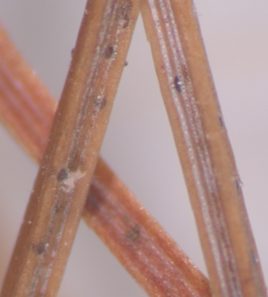
Figure 3: Black fungal structures developing on dead needles with white sporulation exuding from the top.
White pine needle damage/defoliation (WPND) was first observed in the state of Maine in 2010 and was attributed to three needle blight diseases, including Lecanosticta, and has since been observed throughout the Northeast US. However, researchers eventually determined that a new fungus, Septorioides strobi, was also found consistently in blighted needles and could be contributing to WPND.
This is the first time we have found this fungus in the state of Indiana, though it has been present for longer than a single season. We do not know how it will react to our climate nor if it will cause significant damage to affected trees. Like other needle blight pathogens, Septorioides has been observed to sporulate around the same time during humid, wet weather, but symptoms may not develop until the following year. White pines are the primary host for this needle cast disease, but it can also develop on 2, 3, and 5 needle pines. While we see white pine decline is a major problem, Septorioides will not likely be the final nail in the coffin for white pines in Indiana, though it certainly will not help us keep them healthy.
Original article posted: Septorioides Needle Blight of Pine.
Subscribe and receive the newsletter: Purdue Landscape Report Newsletter.
Resources:
ID That Tree: Virginia Pine
ID That Tree, Purdue Extension – FNR YouTube playlist
Borers of Pines and Other Needle Bearing Evergreens in Landscapes, The Education Store, Purdue Extension’s resource center
Tree Diseases: White Pine Decline in Indiana, The Education Store
Managing the Zimmerman Pine Moth, The Education Store
Purdue Arboretum Explorer
The Woody Plant Seed Manual, U.S. Forest Service
Native Trees of the Midwest, The Education Store
Root Rot in Landscape Plants, The Education Store, Purdue Extension resource center
Dead Man’s Fingers, Purdue Landscape Report
An Introduction to Trees of Indiana, The Education Store
Subscribe, Purdue Extension – FNR YouTube Channel
Tree Defect Identification, The Education Store
Tree Wound and Healing, Got Nature? Blog, Purdue Extension – FNR
Shrubs and Woody Vines of Indiana and the Midwest, The Education Store
Ask an Expert: Tree Selection and Planting, Purdue Extension – FNR YouTube playlist
Invasive Species, Playlist, Purdue Extension – FNR YouTube Channel
Report Invasive Species, Purdue Invasive Species
Find an Arborist, International Society of Arboriculture
John Bonkowski, Lead Extension Administrator
Purdue Department of Botany and Plant Pathology
MyDNR, Indiana’s Outdoor Newsletter: As a result of Indiana’s positive detection of chronic wasting disease (CWD) in LaGrange County in April, Indiana DNR has restricted moving deer from any CWD Positive Area for rehabilitation purposes.
With the change, an individual who finds an orphaned, sick, or injured deer in a CWD Positive Area may only surrender the deer to a DNR-permitted wild animal rehabilitator that is located within a CWD Positive Area. This restriction is to help minimize the spread of CWD to new parts of the state, as deer can carry this disease without appearing sick.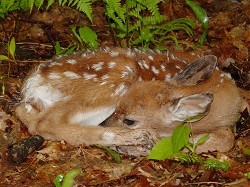
Currently, there is one CWD Positive Area in Indiana. It includes LaGrange, Steuben, Noble, and DeKalb counties. While no CWD positive deer have been documented in Steuben, Noble, or DeKalb counties, those counties are considered part of the CWD Positive Area because of their proximity to where the state’s first CWD-positive deer was found in LaGrange County.
During their first few weeks of life, fawns often hide by themselves and stay motionless to avoid predators while the mother is looking for food. If you find a fawn alone, you can help it by letting it be, giving it space, and leaving the area. Its mother is likely nearby.
For more information visit DNR: Chronic Wasting Disease (CWD).
To subscribe to the newsletter visit MyDNR Email Newsletter.
Resources:
Chronic Wasting Disease, USDA Animal and Plant Health Inspection Service (APHIS)
Bovine Tuberculosis in Wild White-tailed Deer, The Education Store, Purdue Extension resource center
Hunting & Trapping, Indiana Department of Natural Resources (DNR)
Designing Hardwood Tree Plantings for Wildlife , The Education Store
Wildlife Habitat Hint: Trail Camera Tips and Tricks, Got Nature? Blog
How to Score Your White-tailed Deer, video, The Education Store
White-Tailed Deer Post Harvest Collection, video, The Education Store
Age Determination in White-tailed Deer, video, The Education Store
How to Build a Plastic Mesh Deer Exclusion Fence, The Education Store
Ask the Expert: Hardwood Ecosystem Experiment – Birds and Salamander Research, Purdue Extension – FNR
A Template for Your Wildlife Habitat Management Plan, The Education Store
Managing Your Woods for White-Tailed Deer, The Education Store
Deer Impact Toolbox, Got Nature? blog, Purdue Extension-Forestry and Natural Resources (FNR)
Indiana Department of Natural Resources
How does forest management affect wildlife, specifically birds? Which birds prefer which types of forest habitat? How can you help birds thrive on your property?
The Forestry for the Birds Virtual Tour is a new tool developed by Purdue Forestry and Natural Resources and Purdue Extension, which offers answers to those questions and more in an easily digestible and visual format. The virtual tour is based on The Nature Conservancy’s Forestry for the Birds program.
The virtual tour is an interactive guide to forest management techniques and birds in the forest that features 360-degree images, including several taken on eight Purdue FNR properties across the state. Bird identification resources from Cornell Lab of Ornithology’s Macaulay Library, forest management resources from Purdue Extension and more make the tour come to life and allow landowners to improve their identification and management skillsets.
The tour was created and is narrated by Kaitlyn Young, a 2022 wildlife alumna and current FNR master’s degree student. Young spent the summer of 2023 monitoring birds as an avian monitoring and extension intern for the Purdue FNR Extension Internship program.
Young conducted breeding bird surveys and made recordings of all the species she encountered whether audibly or visually last summer. She utilized a GoPro Max to capture 360-degree images of the properties she surveyed. Song Meter Mini acoustic monitors allowed her to capture various bird songs, which are incorporated into the background of some of the virtual scenes of the tour. Still camera images also provide stunning visuals of each property and bird type.
“I think my favorite thing about the tour is that when you are exploring each scene, it really feels like you are there,” Young explains. “I want folks who may not be able to visit our properties to feel like they are right there, inside the scene, while learning a thing or two about bird conservation and managing our forests for our rapidly declining feathery friends.”
Young is quick to note, however, that it is much easier to spot the birds she added to each scene of the tour than when trying to look for them during surveys, when they are often hiding behind the leaves in the canopy.
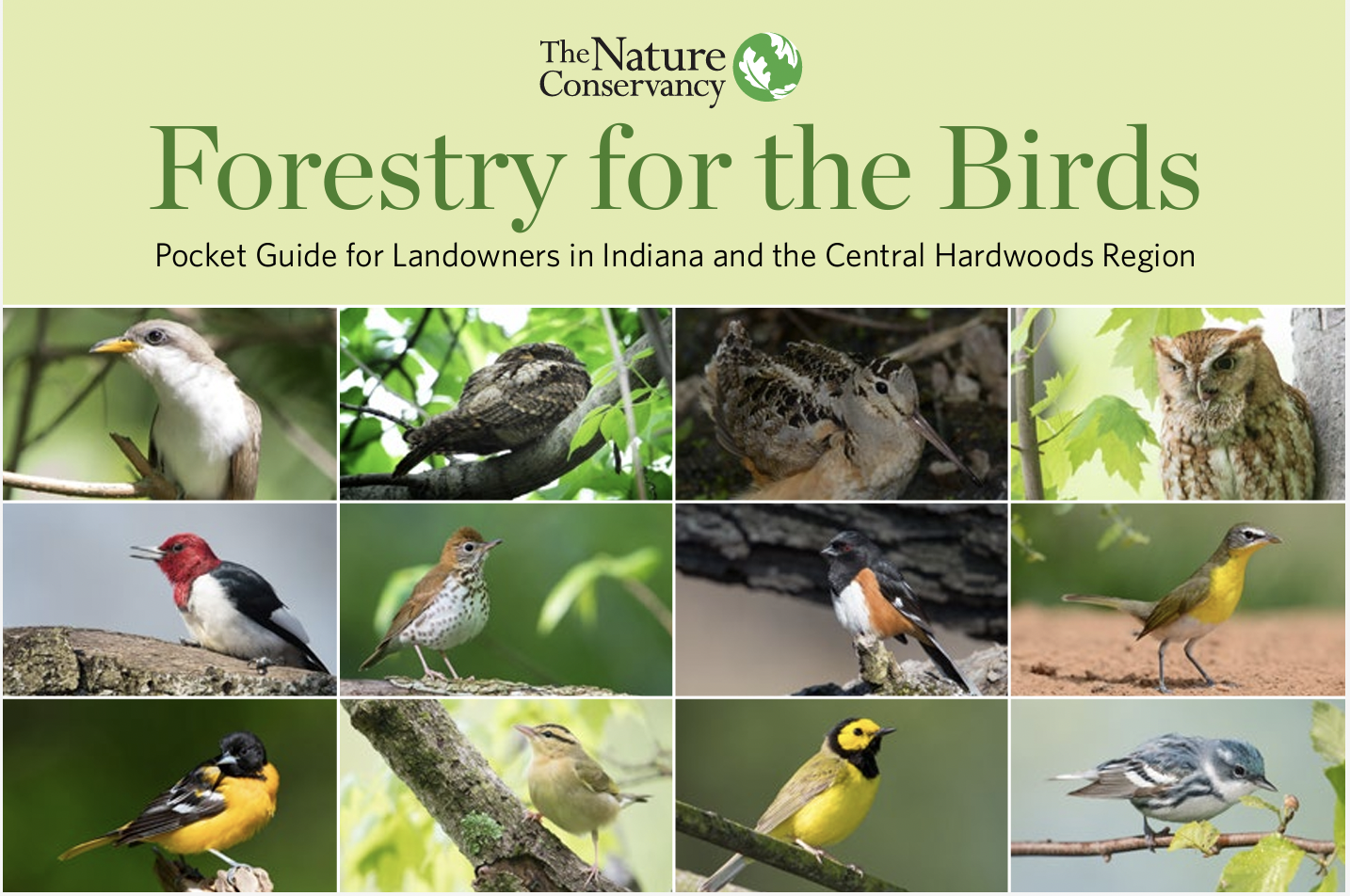
Forestry for the Birds is a project developed by the Indiana Chapter of The Nature Conservancy, which provides foresters and private landowners with the information and tools needed to enhance their forests in a way that fosters thriving bird communities. Many resources, including the Forestry for the Birds pocket guides, focus on the “Birders’ Dozen,” or 12 bird species which nest in the Central Hardwood ecoregion of Indiana that are easy to identify by sight and/or sound, and need conservation action to assist with range-wide or local population declines. The Birders’ Dozen species were selected by The Nature Conservancy and an independent group of birders, ornithologists and conservationists.
The virtual tour focuses on how different forest stewardship practices and forest types can benefit a variety of bird species, including the Birders’ Dozen. In each scene, there are three or more bird species to look for, recorded bird songs which are representative of what you could hear in that scene, interactive icons that link to images and videos and an audio description of the scene.
“I’m excited to see this virtual tour come to fruition – it provides some depth of information to complement the Forestry for the Birds Pocket Guide and Silvicultural Guide,” said Jessica Outcalt, Purdue Extension Educator, who helped develop the Forestry for the Birds materials for TNC. “I especially appreciate the visuals and audio that can’t be communicated via printed materials, and how this tour captures the sense of being in a forest that will make the material accessible to a wider audience.”
The properties shown illustrate a variety of forest stewardship techniques ranging from single tree selection to group tree selection, shelterwood, clearcut, oak woodland restoration and prescribed fire. The tour also highlights both young forests and mature closed-canopy forests.
The Birders’ Dozen includes:
- Yellow-billed and Black-billed Cuckoo
- Eastern Whip-poor-will
- American Woodcock
- Eastern Screech-Owl
- Red-headed Woodpecker
- Wood Thrush
- Eastern Towhee
- Yellow-Breasted Chat
- Baltimore Oriole
- Worm-eating Warbler
- Hooded Warbler
- Cerulean Warbler
*Bird species listed above with links will take you to the Indiana Woodland Steward website as they share highlights with this information in “The Birders’ Dozen Profile” written by Jessica Outcalt.
The American Woodcock, Wood Thrush and Cerulean Warbler are listed on the National Audubon Society watchlist, while the Cerulean warbler is state endangered in Indiana. The Eastern Whip-poor-will, American Woodcock, Worm-eating Warbler and Hooded Warbler have been noted as species of special concern by the Indiana Department of Natural Resources Division of Fish and Wildlife.
To view this article along with other news and stories posted on the Purdue Forestry and Natural Resources website view: Virtual Tour Brings Forest Management for the Birds to Life.
Resources:
Breeding Birds and Forest Management: the Hardwood Ecosystem Experiment and the Central Hardwoods Region, The Education Store, Purdue Extension – Forestry and Natural Resources
Forest Birds, The Education Store
Managing Woodlands for Birds, The Education Store
Managing Woodlands for Birds Video, Purdue Extension-Forestry and Natural Resources (FNR) YouTube Channel
Breeding Birds and Forest Management: the Hardwood Ecosystem Experiment and the Central Hardwoods Region, The Education Store
The Birders’ Dozen, Profile: Baltimore Oriole, Indiana Woodland Steward
Ask An Expert, Playlist, Purdue Extension – FNR YouTube channel
It’s For the Birds, Indiana Yard and Garden-Purdue Consumer Horticulture
Birds and Residential Window Strikes: Tips for Prevention, The Education Store, Purdue Extension resource center
No Room at the Inn: Suburban Backyards and Migratory Birds, Education Store
Putting a Little Wildlife in Your Backyard This Spring, The Education Store
Wendy Mayer, FNR Communications Coordinator
Purdue University Department of Forestry and Natural Resources
Quality of life encompasses individuals’ overall well-being, goals, expectations, standards, and concerns. Various factors shape a person’s perception of quality of life, such as physical and mental health, economic stability, social connections, education, and the environment. Access to healthcare, education, employment opportunities, and recreational facilities significantly influences a person’s ability to meet their needs and achieve their goals (World Health Organization, 2012).

Discover the power of quality of place and placemaking through this new publication by Kara Salazar, who is the Assistant Program Leader for Community Development for Purdue Extension along with being the Sustainable Communities Extension Specialist for Illinois-Indiana Sea Grant. Placemaking is the process of planning, designing, and managing public spaces to enhance quality of life and foster community. Effective placemaking, whether through tactical interventions like pop-up parks or strategic projects that reshape entire neighborhoods, revitalizes communities. By involving residents in the process, we create vibrant spaces that reflect local culture and values. These efforts not only improve quality of life but also attract investment, support local businesses, and promote sustainability.
To receive the free download, visit the Purdue Extension’s resource center: The Education Store – Quality of Place and Community Development.
Resources:
Implementation Examples of Smart Growth Strategies in Indiana, The Education Store, Purdue Extension’s resource center
Community Development, Purdue Extension
Enhancing the Value of Public Spaces Program Video, Purdue Extension
Enhancing the Value of Public Spaces: Creating Healthy Communities, The Education Store – Purdue Extension’s resource center
Enhancing the Value of Public Spaces Curriculum, The Education Store
Sustainable Communities Extension Program Website, Purdue Extension
Conservation Through Community Leadership, The Education Store
One Water Approach to Water Resources Management, The Education Store
Rainscaping Education Program, Purdue Extension
Indiana Creek Watershed Project – Keys to Success, Partnerships and People, Video, Purdue Extension You Tube Channel
Subscribe to Purdue Extension – Forestry and Natural Resources YouTube Channel
Kara Salazar, Sustainable Communities Extension Specialist
Purdue University Department of Forestry and Natural Resources
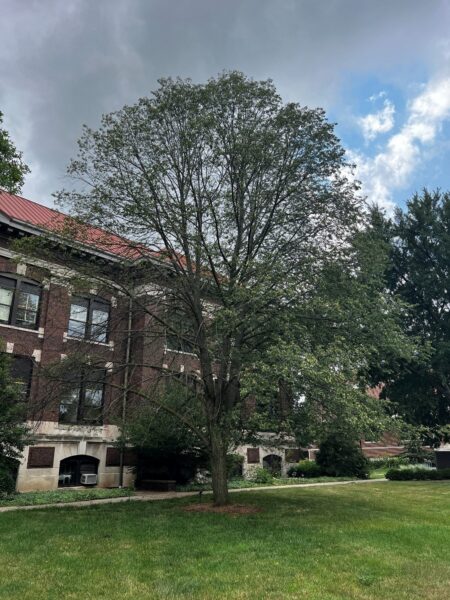
Figure 1: Drought stress can cause decline and, in some cases, death in trees.
Purdue Landscape Report: With recent rain storms across the state, watering may not be at the forefront of everyone’s minds. But as we head deeper into summer it is food to remember most of Indiana is in a state of abnormal dryness to moderate drought, continuing similar conditions from previous years. With that in mind, we should be thinking about the health of our trees (Fig. 1).
Understanding what drought is and its effects on trees can help to bolster care plans. Drought is an extended time with little to no precipitation and can slow growth, reducing photosynthesis, and depleting energy reserves trees need to survive dormancy in winter. Drought conditions can stress trees, making them susceptible to pests and diseases, reducing their ability to produce defensive chemicals, and in severe situations resulting in death (Fig. 2).
One simple task to protect your trees is watering. This is especially important in young and newly transplanted trees. A good industry guideline is the 5-plus-5 rule.
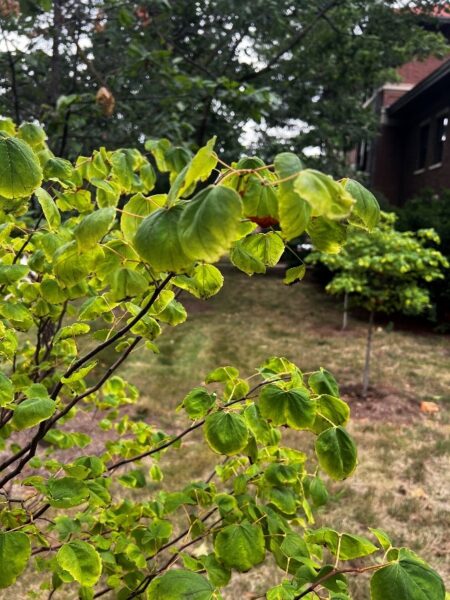
Figure 2a: Wilting in leaves and dieback in parts of the tree can indicate drought stress.
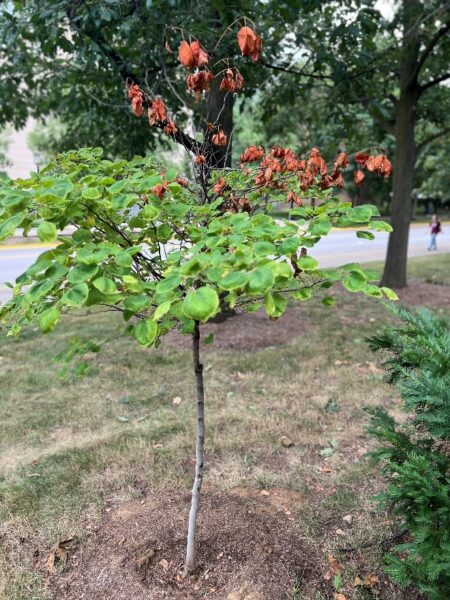
Figure 2b: Wilting in leaves and dieback in parts of the tree can indicate drought stress.
Apply 5 gallons of water plus 5 gallons for every diameter inch of the trunk. For example, a 4-inch tree would require about 25 gallons of water as needed. A good tactic to reduce water runoff from the hose is to take a large bucket and drill enough small holes to create a slow drip watering system. Also check moisture levels in your soil to see if conditions are dry, moist, or saturated.
Another way to maintain soil moisture is to mulch around the tree. Mulch rings should be at least 3 feet in diameter and 2-3 inches deep with a 2–3-inch space between the base of the trunk and the inner mulch ring. Mulching up to the trunk is called volcano mulching and causes issues like stem girdling root production and decay. Mulching reduces evaporation from the soil and helps maintain moderate soil temperatures. It also reduces competition with surrounding lawn and landscaping plants while protecting the trunk from mechanical damage caused by mowing and lawn care practices.
These little steps can go a long way to protect your trees, extending their life spans and your enjoyment with a healthy canopy. For a more detailed look at drought and trees, please have a look at the Purdue extension store here.
Original article posted: Summer Tree Care: Watering Your Trees.
Subscribe and receive the newsletter: Purdue Landscape Report Newsletter.
Resources:
Planting Your Tree Part 1: Choosing Your Tree, Purdue Extension YouTube Channel
Tree Planting Part 2: Planting a Tree, Purdue Extension YouTube Channel
Tree Installation: Process and Practices, The Education Store
Tree Pruning Essentials, The Education Store
Tree Pruning Essentials Video, Purdue Extension YouTube Channel
Drought Information, Indiana Department of Natural Resources
Drought? Don’t forget the trees!, The Education Store
Tree Defect Identification, The Education Store
Tree Wound and Healing, Got Nature? Blog, Purdue Extension – Forestry and Natural Resources
Surface Root Syndrome, The Education Store
Find an Arborist video, Trees are Good-International Society of Arboriculture (ISA)
Trees and Storms: Understanding Damage, Risk and Recovery – Got Nature? Blog, Purdue Extension – FNR
Indiana Invasive Species Council
ID That Tree, Playlist, Purdue Extension – FNR YouTube Channel (Invasive White Mulberry, Siberian Elm, Tree of Heaven)
Fifty Common Trees of Indiana
An Introduction to Trees of Indiana
Native Trees of the Midwest, The Education Store
Subscribe – Purdue Extension-FNR YouTube Channel
Ben McCallister, Urban Forestry Specialist
Purdue Forestry & Natural Resources
In this webinar, hosted by Indiana Forestry & Woodland Owners Association, Joe Caudell, state deer biologist with Indiana DNR Division of Fish and Wildlife, shares recent efforts to better understand Indiana deer populations and how they vary across the landscape. The research from the Integrated Deer Management Project, a multi-year research project with Purdue Forestry and Natural Resources team working closely with the DNR biologists, created research management units (RMUs) so that they could be easily incorporated into deer management practices by the DNR.
Additional resources:
- Indiana Hunt for Hunger Program, Indiana Department of Natural Resources (IN DNR).
- If you’re interested in learning more about Indiana’s white tailed deer hunting and management, see the IN DNR page. There is a section on deer management with deer reports, survey results, and real time harvest data: White-Tailed Deer Hunting.
- Integrated Deer Management Project Website Introduced, Purdue College of Agriculture News.
- DNR Adopts RMU Research Techniques Created by Integrated Deer Management Project, Purdue College of Agriculture News.
- Deer Exclosures, Integrated Deer Management Project, Video, Purdue Extension – Forestry and Natural Resources (FNR) YouTube Channel
Check out the Indiana Forestry & Woodland Association YouTube Channel for videos including: What is IFWOA?; A New Carbon Program for Hardwood Landowners Webinar, Indiana’s Native Orchids, Magnificent Trees of Indiana, Be Tick Aware and much more.
The Indiana Forestry & Woodland Owners Association (IFWOA) was founded in 1977 and is a non-profit organization dedicated to conservation and sustainable management of woodlands in Indiana. IFWOA advocates for scientific best practices for management to achieve objectives of clean water, wildlife habitat, soil protection, native species diversity, timber production, recreation, carbon sequestration and many others.
IFWOA is an affiliate of the National Woodland Owners Association. IFWOA is a partner, collaborator or is represented on leading National and State organizations. These memberships or collaborations are selected to advance Indiana Woodland owner’s interests. IFWOA monitors and influences legislation and economic trends impacting Indiana woodlands and landowners for our members. Membership in IFWOA provides a valuable network linkage to information and resources at the leading edge of science, industry and politics impacting Indiana woodlands.
More Resources:
Ask an Expert, Playlist, Purdue Extension – FNR YouTube Channel
Wildlife Habitat Hint: Trail Camera Tips and Tricks, Video, Purdue Extension – FNR YouTube channel
Wildlife Habitat Hint, Playlist
Trail camera survey for white-tailed deer, Got Nature? Blog
Handling Harvested Game: Episode 1, Field Dressing, Video
Woodland Stewardship for Landowners: Managing Deer Damage to Young Trees, Purdue Extension-FNR YouTube Channel
Managing Your Woods for White-Tailed Deer, The Education Store, Purdue Extension’s resource center
Introduction to White-tailed Deer Impacts on Indiana Woodlands, Got Nature? Blog & The Education Store
Liz Jackson, Engagement Lead
Indiana Forestry & Woodland Association
Illinois-Indiana Sea Grant (IISG) have four buoys now in place on the Great Lakes which inform scientists, weather forecasters, anglers, boaters, paddlers, surfers, swimmers and educational programs about current lake conditions. They collect data on wind speed, surface current, wave height, and water temperatures, providing valuable insights for scientists and the public.
- Michigan City Buoy – This buoy is located three miles offshore of Michigan City, Indiana. Purdue University’s Lyles School of Civil Engineering created the anchor used to keep the buoy in place. They also maintain and help deploy this buoy each year. The Michigan City Port Authority and the Lake Michigan Indiana Department of Natural Resources office played pivotal roles in helping deploy the anchor. The buoy itself was funded through a grant provided by Illinois-Indiana Sea Grant. A grant from the Indiana Department of Natural Resources Coastal Management Program allowed for the addition of the temperature chain.
- Chicago Buoy – This buoy, also called Chuoy, is based in the busy waters off Navy Pier, approximately a mile due east of the pier. This buoy is jointly owned and operated by Illinois-Indiana Sea Grant and the Lyles School of Civil Engineering at Purdue University.
For more information about Chuoy, check out this IISG article: New to Navy Pier waters, Chuoy the Buoy Proved a Valuable Forecasting Tool. - Wilmette Buoy – The Wilmette Buoy is situated approximately four miles off Wilmette, in Lake Michigan. The Sheridan Shore Yacht Club and the Coast Guard in Wilmette help deploy and store this buoy each year. Henry’s Sports and Bait shop in downtown Chicago helped deploy the anchor. The buoy was first deployed through a grant from the Great Lakes Observing System and the NOAA Coastal Storms Program.
- Waukegan Buoy – The Waukegan buoy is situated about a mile offshore from Waukegan Harbor in Lake Michigan. This buoy is owned and operated by the University of Illinois and the Illinois State Geological Survey. LimnoTech, Inc. and Illinois-Indiana Sea Grant play pivotal roles in helping deploy and support the buoy. The buoy was first deployed through a grant from NOAA. Continued funding support comes from the Illinois Department of Natural Resources Coastal Management Program.

For more information and photos view Purdue College of Agriculture News: Gearing Up for a Great Lake Day.
“The buoys act as a service to people who are active in Lake Michigan,” said Tomas Höök, director of Illinois-Indiana Sea Grant and professor of Forestry and Natural Resources at Purdue University. “A line runs from the surface of the buoy to the bottom of the lake, and sensors collect a variety of data. The buoy’s modem then communicates with a cell tower, providing data that anyone can access in real-time.”
“Near-record high water levels a few years ago were causing erosion along the shoreline, and there were even cases farther north in Lake Michigan of houses falling into the lake. But if you look back about 10 years, near-record low levels made the shoreline look like a mud flat,” Höök explained. “It’s important to understand because if infrastructure is built while the water is low, it’s highly likely the water level will rise back up and threaten that infrastructure.”
Subscribe to Illinois-Indiana Sea Grant YouTube Channel and view buoy videos along with fishing, water safety and other educational videos.
Illinois-Indiana Sea Grant is a partnership between NOAA, University of Illinois Extension, and Purdue University Forestry and Natural Resources, bringing science together with communities for solutions that work. Sea Grant is a network of 34 science, education and outreach programs located in every coastal and Great Lakes state, Lake Champlain, Puerto Rico and Guam.
Partners and Other Resources:
Lyles School of Civil Engineering, Purdue University
Henry’s Sports and Bait, Chicago, Illinois
Great Lakes Observing System
National Oceanic and Atmospheric Administration (NOAA) Coastal Storms
Illinois State Geological Survey
University of Illinois
Purdue University
Forestry and Natural Resources, Purdue University
LimnoTech
Illinois Department of Natural Resources Coastal Management Program
Lake Michigan Coastal Program, Indiana Department of Natural Resources
Michigan City Port Authority
Center For Great Lakes Literacy (CGLL)
Eat Midwest Fish, Illinois-Indiana Sea Grant and North Central Regional Aquaculture Center
Informing the Development of the Great Lakes Region Decision Support System, The Education Store, Purdue Extension’s resource center
Fish Cleaning with Purdue Extension County Extension Director, Got Nature? Blog, Purdue Extension – Forestry and Natural Resources
Walleye Farmed Fish Fact Sheet: A Guide for Seafood Consumers, The Education Store
Meet the buoys of summer who help Purdue and Illinois study Lake Michigan: BTN LiveBIG, BTN
National Data Buoy Center (noaa.gov), National Data Buoy Center
Diana Evans, Extension & Web Communications Specialist
Purdue University Department of Forestry and Natural Resources
In this edition of ID That Tree, Purdue Extension forester Lenny Farlee takes us through the different characteristics of coniferous trees found here in Indiana, particularly their foliage and the features that pertain to them. Come along as we look through real examples of shape, scales, leaf and branches of various local trees. The featured species include Eastern red cedarwood, Northern white cedar, and more.
If you have any questions regarding wildlife, trees, forest management, wood products, natural resource planning or other natural resource topics, feel free to contact us by using our Ask an Expert web page.
Resources:
ID That Tree: Firs and Spruces, Video Playlist, Purdue Extension – Forestry and Natural Resources (FNR) YouTube Channel
ID That Tree – Jack Pine, Scotch Pine, Red Pine, Virginia Pine, Eastern White Pine, Video Playlist, Purdue Extension – Forestry and Natural Resources (FNR) YouTube Channel
Beat Back Borers Attacking Pines and Other Cone Bearing Trees, Purdue Landscape Report
Tree Diseases: White Pine Decline in Indiana, The Education Store, Purdue Extension Resource Center
Purdue Arboretum Explorer
Conservation Tree Planting: Steps to Success, Purdue Extension – FNR YouTube Channel
A Woodland Management Moment, Playlist, Purdue Extension – FNR YouTube Channel
Woodland Stewardship for Landowners, Playlist, Purdue Extension – FNR YouTube Channel
Indiana Department of Natural Resources: Invasive Species
Indiana Invasive Species Council
Cooperative Invasive Species Management Area (CISMA)
Report Invasive, Purdue Extension
Episode 11 – Exploring the challenges of Invasive Species, Habitat University-Natural Resource University
Shrubs and Woody Vines of Indiana and the Midwest, The Education Store
Native Trees of the Midwest, The Education Store
Professional Forester, Indiana Forestry Woodland Owners Association
Forest Improvement Handbook, The Education Store
Find an Arborist, International Society of Arboriculture
Lenny Farlee, Extension Forester
Hardwood Tree Improvement and Regeneration Center
Purdue Department of Forestry & Natural Resources
In this edition of ID That Tree, Purdue Extension forester Lenny Farlee goes over leaf characteristics to look for when attempting to identify broadleaved deciduous trees in Indiana. He shares the features of both single and compound leaves while outlining the differences between tree leaves. He takes you through a thorough guide on analyzing the leaflets, leaves, stems and buds, while increasing your knowledge of your surroundings.
If you have any questions regarding wildlife, trees, forest management, wood products, natural resource planning or other natural resource topics, feel free to contact us by using our Ask an Expert web page.
Resources:
ID That Tree – Jack Pine, Scotch Pine, Red Pine, Virginia Pine, Eastern White Pine, Video Playlist, Purdue Extension – Forestry and Natural Resources (FNR) YouTube Channel
Beat Back Borers Attacking Pines and Other Cone Bearing Trees, Purdue Landscape Report
Tree Diseases: White Pine Decline in Indiana, The Education Store, Purdue Extension Resource Center
Purdue Arboretum Explorer
Conservation Tree Planting: Steps to Success, Purdue Extension – FNR YouTube Channel
A Woodland Management Moment, Playlist, Purdue Extension – FNR YouTube Channel
Woodland Stewardship for Landowners, Playlist, Purdue Extension – FNR YouTube Channel
Indiana Department of Natural Resources: Invasive Species
Indiana Invasive Species Council
Cooperative Invasive Species Management Area (CISMA)
Report Invasive, Purdue Extension
Episode 11 – Exploring the challenges of Invasive Species, Habitat University-Natural Resource University
Shrubs and Woody Vines of Indiana and the Midwest, The Education Store
Native Trees of the Midwest, The Education Store
Professional Forester, Indiana Forestry Woodland Owners Association
Forest Improvement Handbook, The Education Store
Lenny Farlee, Extension Forester
Hardwood Tree Improvement and Regeneration Center
Purdue Department of Forestry & Natural Resources
Purdue Landscape Report: Recently a homeowner in Hamilton County posted on the Indiana Native Plant Society Facebook page with concerns about aphids, mites, and apple scab in her maple and oak trees. She asked for a second opinion and treatment options for these pests. I reached out to the homeowner and requested permission to collect samples from the trees. Let’s look at what I found (or didn’t find) and discuss when and if these issues should be treated.
Apple Scab on Maples?
First, we can eliminate the concern about apple scab because maple and oak trees are not hosts for this pathogen. Apple scab is caused by the fungus Venturia inaequalis, and hosts include apples, crabapples, hawthorn, mountain ash, firethorn, and loquat. There are other fungal diseases which cause leaf spotting in maples, such as Anthracnose, tar spot, and Phyllosticta leaf spot. To diagnosis these diseases, homeowners can submit a sample to the Purdue Plant & Pest Diagnostic Lab, or hire a certified arborist to assess the tree. However, all these diseases are primarily aesthetic issues. A healthy tree will not die from these pathogens and does not require treatment. You can find more information about maple diseases in this publication: Diseases in Hardwood Tree Plantings. You can also find a previous article on Tar Spot in Maple in the Purdue Landscape Report (Issue 18-12).

Fig. 1. Severe spider mite damage on maple leaves. (Photo: S. D. Frank, North Carolina State University)
Spider Mites
The next pest concern on these trees is spider mites. Out of the dozens of leaves I collected, I found only two immature mites on a couple of maple leaves I examined. This is a very small mite presence, and it is not recommended to treat for spider mites unless the populations threaten the health or appearance of the tree. Limiting pesticide usage will conserve the natural enemies, which are vital to keeping mite populations in check. In fact, improper pesticide applications can kill these important natural enemies and worsen mite infestations.
When do you know if the mite population is large enough to merit intervention? Check your trees for signs of heavy feeding damage, such as leaf stippling (Fig. 1), or dense webbing on the leaves. Mites can also be monitored by placing a sheet of paper (8.5×11”) beneath a branch and striking the limb. Chemical treatments should be considered when you count ≥24 mites per strike. You can find detailed management recommendations and a full list of pesticide options in this Purdue Extension publication: Spider Mites on Ornamentals.

Fig. 2: Adult painted maple aphids found on maple in Hamilton Co, Indiana. (Photo: Andrew Johnston, Purdue University).
Aphids
The aphids I found on the homeowner’s maple trees are Drepanaphis acerifoliae, or the painted maple aphid (Fig. 2). This species only feeds on maple trees, and is not a threat to the oak tree on this homeowner’s property. Painted maple aphid is a very common aphid in our region. I found only a few aphids on one of the maple trees I sampled, which is not enough to require treatment. In addition, one of the aphids was a “mummy”, or a carcass left behind from a parasitoid wasp. This indicates that natural enemies are already at work managing the aphid population. Aphids may rarely require chemical control if their numbers grow large enough to produce significant amounts of honeydew, which can result in sooty mold outbreaks.
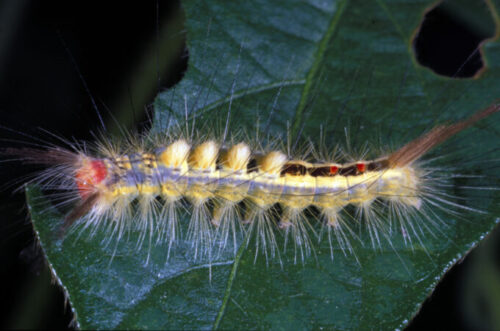
Fig. 3: White-marked tussock moth caterpillar. (Photo: John Obermeyer, Purdue University).
Tussock Moth
The only insect I found on the oak tree was a white-marked tussock moth caterpillar, Orgyia leucostigma (Fig. 3). This is the likely culprit for the minor feeding damage I noticed. These are not significant pests and do not require treatment. Don’t touch them, though! The setae of this caterpillar are irritating and may cause allergic reactions.
Overall, the pests I found were minimal and non-threatening to the trees. It’s normal to find some insect pressure in the landscape. Knowing when and if to treat requires accurate diagnosis and monitoring of pest levels. Check out PurduePlantDoctor.com for an easy-to-use diagnostic aid and treatment recommendations.
Original article posted: Purdue Landscape Report.
Subscribe and receive the newsletter: Purdue Landscape Report Newsletter.
Resources:
Large Spots on Maple Leaves that Look Like Tar, Purdue Extension News
Find an Arborist, International Society of Arboriculture
Diseases in Hardwood Tree Plantings, The Education Store, Purdue Extension’s resource center
Fifty Common Trees of Indiana
An Introduction to Trees of Indiana, The Education Store
Shrubs and Woody Vines of Indiana and the Midwest, The Education Store
Tree Installation: Process and Practices, The Education Store
Forest Improvement Handbook, The Education Store
Invasive Species, Playlist, Purdue Extension – FNR YouTube Channel
Report Invasive Species, Purdue Invasive Species
What are invasive species and why should I care?, Got Nature? Blog, Purdue Extension – Forestry and Natural Resources
Indiana Department of Natural Resources: Invasive Species
Indiana Invasive Species Council
ID That Tree, Purdue Extension-FNR YouTube playlist
Tree Defect Identification, The Education Store
Tree Wound and Healing, Got Nature? Blog, Purdue Extension – Forestry and Natural Resources
Alicia Kelley, Cooperative Agricultural Pest Survey (CAPS) Coordinator
Purdue Extension – Entomology

Recent Posts
- Popular Landscape Shrub is Invasive
Posted: October 15, 2026 in Alert, Forestry, Forests and Street Trees, Invasive Plant Species, Plants, Woodlands - Purdue Extension’s Regional Teams Are Here: Connecting Communities with Expertise and Opportunity
Posted: October 14, 2026 in Community Development, Forestry, Forests and Street Trees, Gardening, How To, Timber Marketing, Urban Forestry, Wildlife, Woodlands - Why Do Our Trees Go From Green Leaves to Different Colors?
Posted: in Forestry, Forests and Street Trees, Urban Forestry, Woodlands - Deer and Turkey Archery Seasons Opening Soon, MyDNR
Posted: October 13, 2026 in Alert, Safety, Wildlife - Distinguishing Dogwoods
Posted: in Forestry, Urban Forestry, Wildlife, Woodlands - It’s Not Too Early To Start Planning For Spring Tree Planting
Posted: in Forestry, How To - Can I Plant Trees in the Fall?
Posted: October 12, 2026 in Forestry, How To, Land Use, Plants, Urban Forestry, Wildlife - Burning for Benefits: Why Fire Belongs in Indiana
Posted: in Forestry, Safety, Woodlands - Publication Helps Midwest Fish Producers “Catch a Following” with Consumers
Posted: in Aquaculture/Fish, Aquatic/Aquaculture Resources, Wildlife - Disease May Cause Wilting and Eventual Death of Certain Trees and Shrubs, Purdue Landscape Report
Posted: October 5, 2026 in Disease, Forestry, Plants
Archives
Categories
- Alert
- Aquaculture/Fish
- Aquatic/Aquaculture Resources
- Ask the Expert
- Christmas Trees
- Community Development
- Disease
- Drought
- Forestry
- Forests and Street Trees
- Gardening
- Got Nature for Kids
- Great Lakes
- How To
- Invasive Animal Species
- Invasive Insects
- Invasive Plant Species
- Land Use
- Natural Resource Planning
- Nature of Teaching
- Plants
- Podcasts
- Ponds
- Publication
- Safety
- Spiders
- Timber Marketing
- Urban Forestry
- Webinar
- Wildlife
- Wood Products/Manufacturing
- Woodland Management Moment
- Woodlands