 Purdue University - Extension - Forestry and Natural Resources
Got Nature? Blog
Indiana joined 22 other states in 2025 when it launched its state-level Certified Prescribed Burn Manager (CPBM) Program. This program resulted from HB-1557, which went into effect on July 1, 2025. For more information about the new prescribed fire law in Indiana and what it means for burners, check out the Indiana Prescribed Burn Law Factsheet.
This article will walk through the steps to complete all stages of the program. The Indiana DNR CPBM Policy can be viewed by visiting the Indiana Prescribed Fire Council website.
The CPBM program consists of three parts:
- Online Training
- In-Person Training
- Prescribed Burn Experience
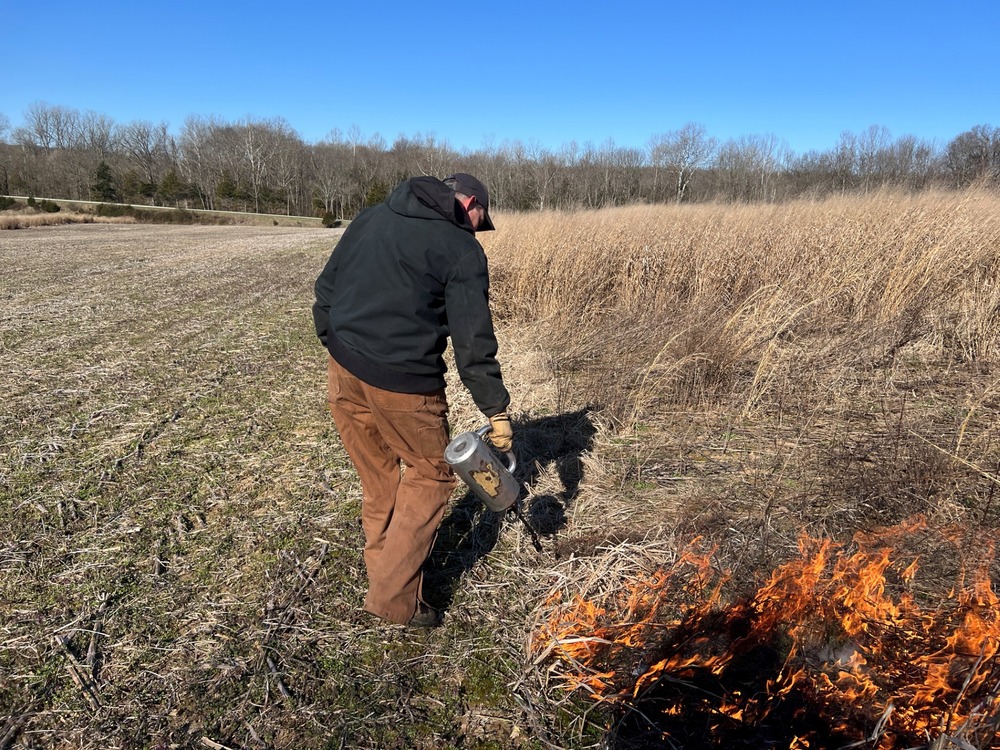 Indiana CPBM Requirements At-a-glance
- Online Training
- S-130
- S-190
- L-180
- IS-100
- In-Person Training
- S-130 Field Day (no pack test requirement)
- Indiana DNR Prescribed Fire for Managers
- Burn Experience (Minimum of 5 total burns for experience)
- Participate in 5 prescribed fires
- At least 3 in woodland at least 1 in grassland
- Ben an Apprentice Burn Manager for 2 burns
- 1 woodland and 1 grassland burn
- Paperwork and Documentation
- IN CPBM Application
- IN CPBM Experience Log
- IN CPBM Task Book
- Burn Plans for Apprentice Burns

Online Training Requirements
The online training required for the CPBM program includes many of the same courses as are necessary for Basic Wildland Firefighting.
- S-130 Firefighter Training
- S-190 Introduction to Wildland Fire Behavior
- L-180 Human Factors on the Fireline I
- S-100 Introduction to the Incident Command System
These are self-paced, free online courses available through FEMA, the National Fire Academy (NFA), and the Wildland Fire Learning Portal.
- FEMA – IS-100
- National Fire Academy Registration Page – S-130, S-190, L-180
- Wildland Fire Learning Portal – S-130, S-190, L-180
*Before taking any courses through FEMA or registering for the NFA, you need to obtain a FEMA SID#. You can do that at FEMA: Student Identification System.

In-Person Training Requirements
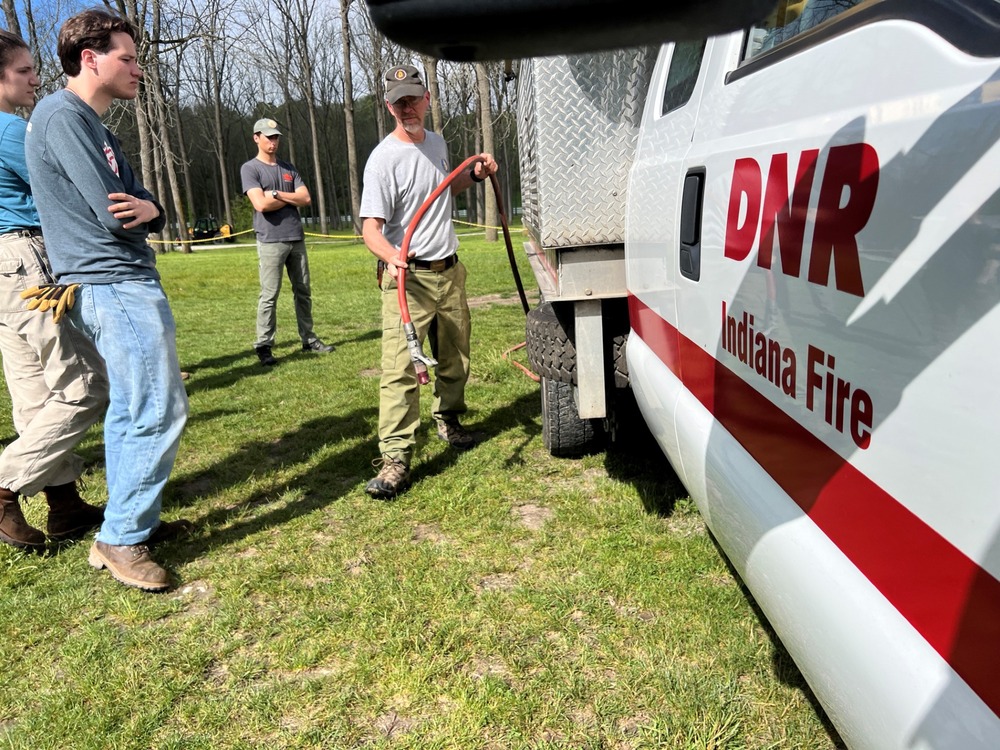 The two requirements for in-person training are:
- S-130 Field Day (1-day; no pack test required)
- Indiana DNR Prescribed Fire for Managers (2-day)
How to complete the in-person training?
In-person S-130 Field Days and Indiana DNR Prescribed Fire for Managers courses are offered 1-2 times per year, often offered in the spring (Feb-Mar) and in December.
*To take the S-130 Field Day, you need to complete the required online training before the field day. To take the Prescribed Fire for Managers Course, you need to take the S-130 Field Day.
You can find information about upcoming trainings by visiting the Indiana Prescribed Fire Council (INPFC) website and the Indiana DNR Fire Headquarters Training Portal.

Prescribed Burn Experience
To be an Indiana CPBM, you need the following prescribed fire experience:
- Participate in 5 prescribed fires across the 2 major fuel model groups in Indiana (grass and hardwood timber litter)
- At least 3 of the burns shall be in the hardwood timber litter fuel model
- Serve as an Apprentice Burn Manager on 2 of the 5 prescribed burns – 1 from each of the two fuel model groups (grass and timber litter)
Serving as an “Apprentice Burn Manager” means you need to lead burns under the guidance of an existing CPBM, RxB1, or RxB2 (RxB1 & RxB2 are Burn Boss qualifications through the National Wildfire Coordinating Group) and complete a Certified Prescribed Burn Manager Task Book related to preparing for and managing a prescribed burn.
How do I receive prescribed fire experience?
To get experience as a crew member on prescribed fires, here are a few steps:
- Meet Common Training Requirements: Many organizations (but not all) require burn crews to have basic wildland fire training courses, many of which are needed for the CPBM program. Having these trainings will open the door for more opportunities.
- Basic Wildland Firefighter (FFT2) Requirements (bolded are required for CPBM)
- S-130 (Online and Field Day)
- S-190
- L-180
- IS-100
- IS-700B
- Arduous Work Capacity Test (Pack Test)
- Basic Wildland Firefighter (FFT2) Requirements (bolded are required for CPBM)
- Attend a Learn-N-Burn: these half- or full-day events can help you get your feet wet with prescribed fire and are offered by groups like the Indiana DNR Division of Fish and Wildlife and Purdue Extension. Generally, prior experience or training is not required for these events.
- Upcoming Learn-N-Burns can be found under Events on the INPFC events website.
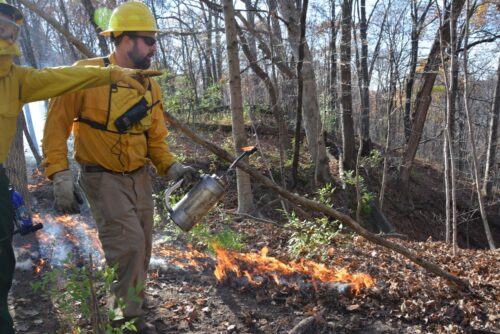 Find Volunteer Opportunities: Many organizations accept volunteers for prescribed fire, but may require Basic Wildland Firefighter Training (see above).
- Volunteer on burns with The Nature Conservancy
- To be a TNC fire volunteer, you need to be a FFT2 or complete the Prescribed Fire Crew Member (RxCM) standard, which is similar to FFT2 standards but does not require IS-700 and requires a moderate pack test. View the TNC Fire Manual for more information.
- To learn more about helping TNC on prescribed burns, contact Stuart Orr, Indiana Fire Program Manager at sorr@tnc.org.
- Volunteer on burns with The Nature Conservancy
- Volunteer with your Local Land Trust
- Indiana is home to over 20 land trusts, many of which utilize prescribed fire.
- Each land trust may have different requirements to volunteer for prescribed fire.
- Visit the Discover Your Land Trust page on the Indiana Land Protection Alliance website to find a land trust in your area.
- Find landowners in your area who are using prescribed fire and volunteer to help
- Several landowners across Indiana use prescribed fire and may be seeking help.
- You may be able to find landowners who burn through existing conservation networks, such as local NGOs (NWTF, NDA, PF, or QF Chapters) or landowner groups such as the Indiana Forest and Woodland Owners Association.
- Join or start a Prescribed Burn Association, which is a collection of landowners who help each other burn by pooling resources, equipment, knowledge, and crew through a “Neighbor Helping Neighbor” model.
- Several landowners across Indiana use prescribed fire and may be seeking help.
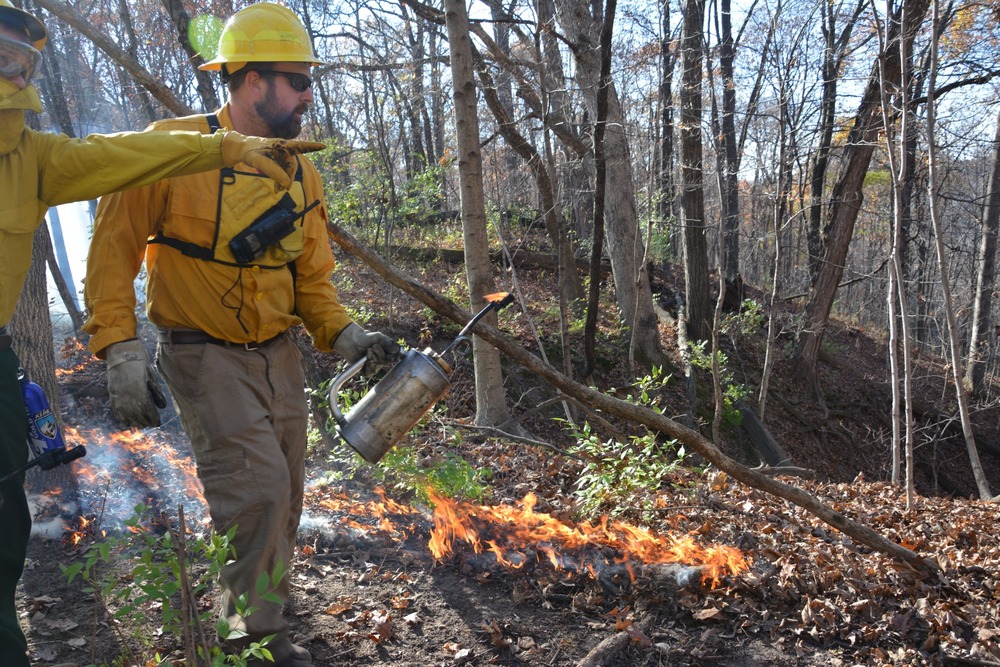
How do I receive apprentice burn manager fire experience?
The first step in finding opportunities is building relationships with current prescribed fire practitioners. By volunteering as a crew member, you start to learn about prescribed fire and build relationships with existing burn managers. This may lead to opportunities to apprentice in the future.
The Indiana Prescribed Fire Council is piloting a Prescribed Fire Opportunity Sharing Network to help connect those seeking burn experience with experienced burners. You can use the links below to sign up for this network as either a Mentor (have experience) or Mentee/Apprentice (need experience). Register on the Mentor sign-up or the Mentee sign-up.
Resources:
FNR Ask The Expert: Prescribed Fire, Purdue Extension Forestry & Natural Resources
100 Year Project Shares New Video, Prescribed Fire, Purdue Extension – FNR Got Nature? Blog
Brooke’s Prescribed Fire Videos Utilized in Global USFS Efforts, Purdue Extension – FNR Got Nature? Blog
Prescribed fire: 6 things to consider before you ignite, Got Nature? Blog, Purdue Extension – 4Forestry and Natural Resources
Wildlife Habitat Hint: Prescribed Fire Techniques – Backing Fire, Video, Purdue Extension – Forestry and Natural Resources YouTube channel
Wildlife Habitat Hint: Prescribed Fire Techniques – Flanking Fire, Purdue Extension – FNR Video
Wildlife Habitat Hint: Prescribed Fire Techniques – Strip Head Fire, Purdue Extension – FNR Video
Wildlife Habitat Hints: Prescribed Fire Techniques – Ring Fire, Purdue Extension – FNR Video
Wildlife Habitat Hints: Prescribed Fire Techniques – Point Source Fire, Purdue Extension – FNR Video
Wildlife Habitat Hint: Late Growing Season Prescribed Fire, Purdue Extension – FNR Video
FNR Ask The Expert: Prescribed Fire with Jarred Brooke and Mike Saunders, Purdue Extension – FNR Video
Indiana Prescribed Fire Council
Renovating Native Warm-Season Grass Stands for Wildlife: A Land Manager’s Guide, The Education Store, Purdue Extension resource center
Jarred Brooke, Wildlife Extension Specialist
Purdue Department of Forestry and Natural Resources

Recent Posts
- Publication – Planting Forest Trees and Shrubs in Indiana
Posted: April 8, 2026 in Forests and Street Trees, Urban Forestry, Wildlife, Woodlands - ID That Tree: Virgin’s Bower Clematis
Posted: April 6, 2026 in Urban Forestry, Wildlife, Woodlands - It’s Timberdoodle Time!
Posted: April 3, 2026 in Got Nature for Kids, How To, Wildlife - Keep An Eye Out for Hammerhead Worms, Purdue Landscape Report
Posted: April 2, 2026 in Invasive Animal Species, Wildlife, Woodlands - When is the Peak Migration For Hummingbirds and How Can You Attract Them?
Posted: in How To, Wildlife - ID That Tree Featured in National Woodland Owners Association Newsletter
Posted: April 1, 2026 in Urban Forestry, Wildlife, Woodlands - New 2026 Indiana Woodland Steward Newsletter
Posted: March 30, 2026 in Urban Forestry, Wildlife, Woodlands - A Woodland Management Moment: Why Aspect Matters
Posted: in Urban Forestry, Woodland Management Moment, Woodlands - 2026 Winter Bat Survey In Progress, MyDNR
Posted: March 27, 2026 in How To, Wildlife - Fast-Growing Trees for the Landscape, Purdue Landscape Report
Posted: March 26, 2026 in Forestry, Urban Forestry, Woodlands
Archives
Categories
- Alert
- Aquaculture/Fish
- Aquatic/Aquaculture Resources
- Ask the Expert
- Christmas Trees
- Community Development
- Disease
- Drought
- Forestry
- Forests and Street Trees
- Gardening
- Got Nature for Kids
- Great Lakes
- How To
- Invasive Animal Species
- Invasive Insects
- Invasive Plant Species
- Land Use
- Natural Resource Planning
- Nature of Teaching
- Plants
- Podcasts
- Ponds
- Publication
- Safety
- Spiders
- Timber Marketing
- Uncategorized
- Urban Forestry
- Webinar
- Wildlife
- Wood Products/Manufacturing
- Woodland Management Moment
- Woodlands