 Purdue University - Extension - Forestry and Natural Resources
Got Nature? Blog
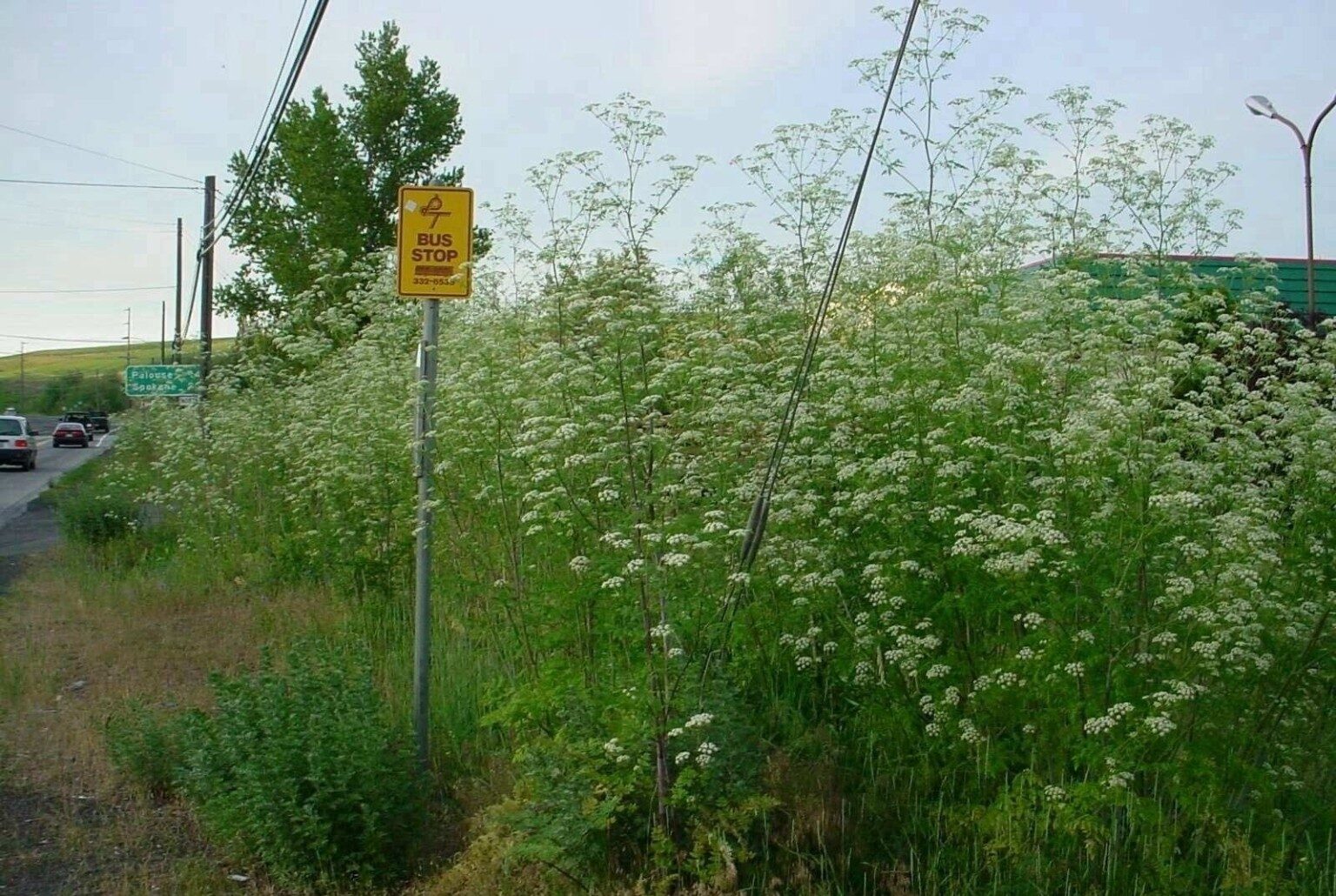
Photo by: Richard Old, XID Services, Inc., Bugwood.org
Made infamous through the trial of Socrates, Shakespeare’s Hamlet and Macbeth, and several other works of classic literature, poison hemlock is an extremely toxic plant that will pose a risk this summer and should be handled with caution.
Poison hemlock is native to Europe. It is a biennial plant, meaning that it has a two-year lifespan. Last summer, it went through vegetative growth and largely stayed out of sight as a basal rosette. This summer, a long stem (up to 3 to 10 feet tall) will bolt and produce small white clusters of flowers. Poison hemlock is a member of the parsley family and can sometimes be confused with wild carrot. However, its distinguishing feature is its hairless hollow stalks with purple blotches.
The biggest risk with poison hemlock is ingestion. Lethal doses are fairly small, so it is important for animal owners or parents of young children to identify it in their area and remove it if possible. The toxins can also be absorbed through the skin and lungs, so be sure to wear gloves and a mask when handling these plants.
Symptoms of hemlock poisoning include dilation of the pupils, weakening or slowing pulse, blue coloration around the mouth and eventually paralysis of the central nervous system and muscles leading to death. Quick treatment can reverse the effects, so act quickly.
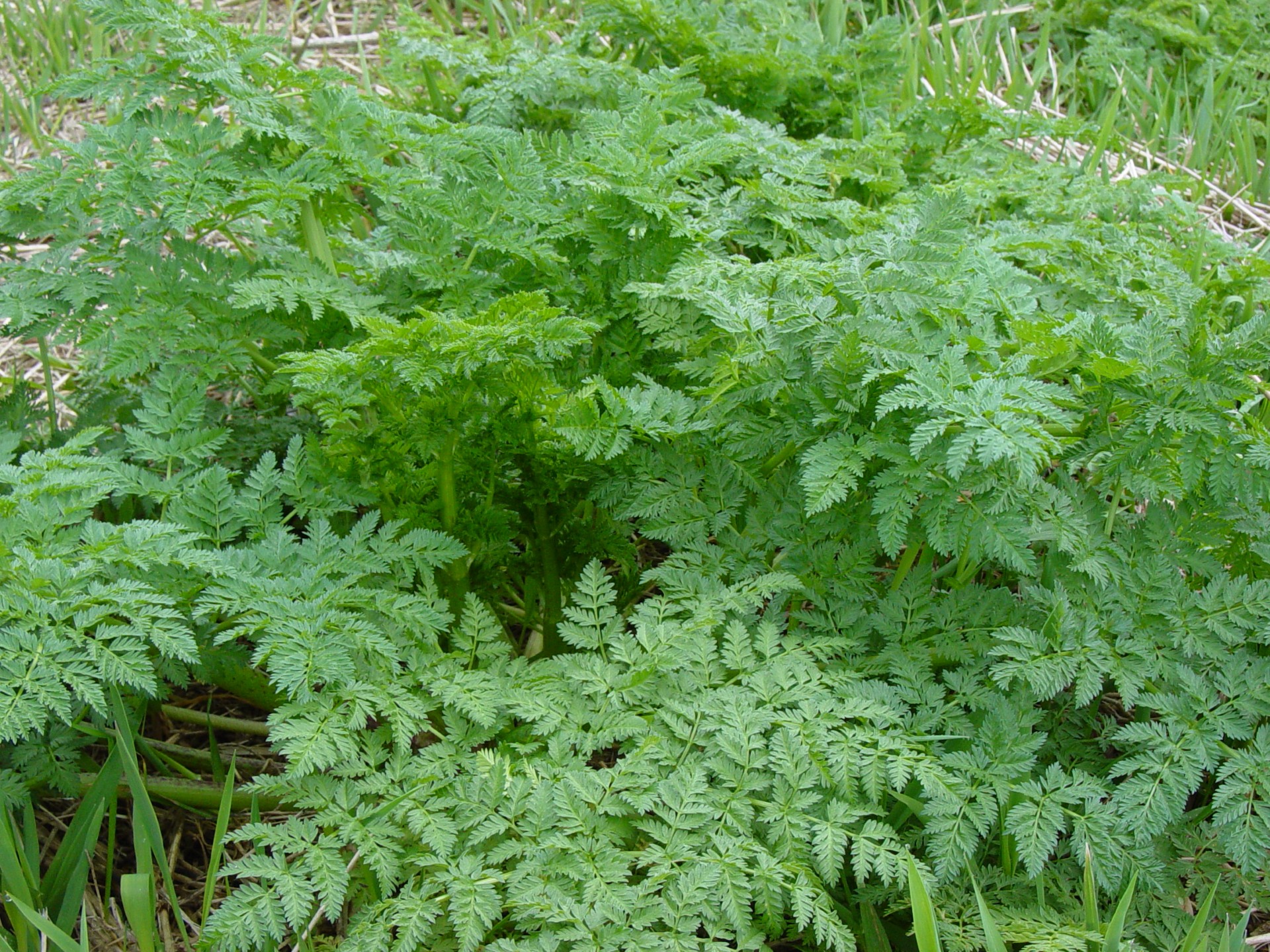
It is considered highly invasive and is listed on both Indiana’s noxious weed list and the terrestrial invasive plant rule list, Indiana General Assembly IC 14-24-12, IC 15-15, IC 15-16-7 to 10, Indiana Department of Natural Resources, Terrestrial Invasive Species – Plants. Thus, its occurrence may have legal implications for landowners. Some Indiana counties aggressively monitor and spray poison hemlock, particularly along county roads. It primarily invades disturbed and early succession sites such as roadsides, stream and ditch banks, vacant lots, and field borders. However, it can spread into pastures, hay fields, and other grassland habitats.
Its sap contains alkaloid toxins which are highly toxic to humans and animals. Although humans would not normally purposely or accidentally ingest poison hemlock (Socrates was a notable exception), care should be taken when mowing or cutting to avoid dermal and respiratory inhalation exposure. Livestock farmers should control poison hemlock in pastures, feed lots and holding pens and ensure it is not baled in hay.
Poison hemlock spreads via seed, so effective management must prevent new seed production, prevent spread of existing seed, and exhaust the existing seed supply in the soil seed bank.
 Poison hemlock seed is often inadvertently spread by mowing, road maintenance or agricultural equipment. Mow infested areas along roadsides, ditch banks and field edges before seed develops. A single mowing may delay but not stop poison hemlock from growing another shoot and ultimately flowering and producing seed. Multiple mowings are likely required to prevent new seed production.
Herbicide control should focus on the first-year basal rosette. Herbicide control can still be achieved in the early stages of flower stem development. However, as the flower stem grows so grows the amount of herbicide required to provide full coverage and thus full control. A 2% solution of glyphosate (41% active ingredient) in water with a non-ionic surfactant will provide good control of poison hemlock basal rosettes. If the poison hemlock is growing among desirable grasses, broadleaf-specific herbicides such as triclopyr and 2,4-D are also very effective on poison hemlock and will not harm the grasses. AS always, read the pesticide label for proper, safe handling and use.
For more information see Purdue Cooperative Extension Invasive Plant Fact Sheet Series FNR-437-W, Poison Hemlock. For further guidance on poison hemlock control, contact your county Purdue Cooperative Extension office.
Resources:
Noxious and Invasive Weeds and the Weed Laws in Indiana, Purdue Extension – Botany & Plant Pathology
Be Careful Around Highly Toxic Poison Hemlock Plant This Summer, Purdue Extension – Forestry and Natural Resources (FNR)
Poison Hemlock, Pest & Crop Newsletter, Purdue Extension – Entomology
Pest & Crop Newsletter, Purdue Extension
Recognizing and Managing Poison Hemlock, Purdue Landscape Report
Hemlock Woolly Adelgid: Distribution Update, Purdue Landscape Report
Poison Hemlock (Conium maculatum), United States Department of Agriculture (USDA)
Invasive plants: impact on environment and people, The Education Store, Purdue Extension’s resource center
Woodland Management Moment: Invasive Species Control Process, Video, Purdue Extension – Forestry and Natural Resources (FNR) YouTube Channel
What are Invasive Species and Why Should I Care?, Purdue Extension – Forestry and Natural Resources (FNR)
Indiana Invasive Species Council
Report INvasive, Purdue Extension & Indiana Invasive Species Council
Purdue Pest and Plant Diagnostic Lab
Ron Rathfon, Regional Extension Forester, Southern Indiana Purdue Agriculture Center (SIPAC)
Purdue Forestry and Natural Resources
Welcome to ID That Tree! In this edition, Purdue Extension Forester Lenny Farlee highlights a native bramble species—black raspberry. A member of the Rubus family, black raspberry is commonly found throughout Indiana, making it useful to recognize its key features. Tune in to learn how to identify this plant by its unique leaf pattern (and how it’s different from autumn olive), understand its role in wildlife habitats and explore its many uses and benefits!
If you have any questions regarding wildlife, trees, forest management, wood products, natural resource planning or other natural resource topics, feel free to contact us by using our Ask an Expert web page.
Resources:
ID That Tree – Video Playlist, Purdue Extension – Forestry and Natural Resources (FNR) YouTube Channel
Purdue Arboretum Explorer
Conservation Tree Planting: Steps to Success, Purdue Extension – FNR YouTube Channel
A Woodland Management Moment, Playlist, Purdue Extension – FNR YouTube Channel
Woodland Stewardship for Landowners, Playlist, Purdue Extension – FNR YouTube Channel
Indiana Department of Natural Resources: Invasive Species
Indiana Invasive Species Council
Cooperative Invasive Species Management Area (CISMA)
Report Invasive, Purdue Extension
Fifty Common Trees of Indiana, Purdue Extension – FNR
Habitat University, Episode 12 – Exploring the challenges of Invasive Species, Habitat University-Natural Resource University
Shrubs and Woody Vines of Indiana and the Midwest, The Education Store
Native Trees of the Midwest, The Education Store
Professional Forester, Indiana Forestry Woodland Owners Association
Forest Improvement Handbook, The Education Store
Find an Arborist, International Society of Arboriculture
Lenny Farlee, Extension Forester
Hardwood Tree Improvement and Regeneration Center
Purdue Department of Forestry & Natural Resources
Hoosier Ag Today: White-tailed deer are very important to Indiana woodlands. But in many areas of the state, deer populations have grown far beyond what the land can support.
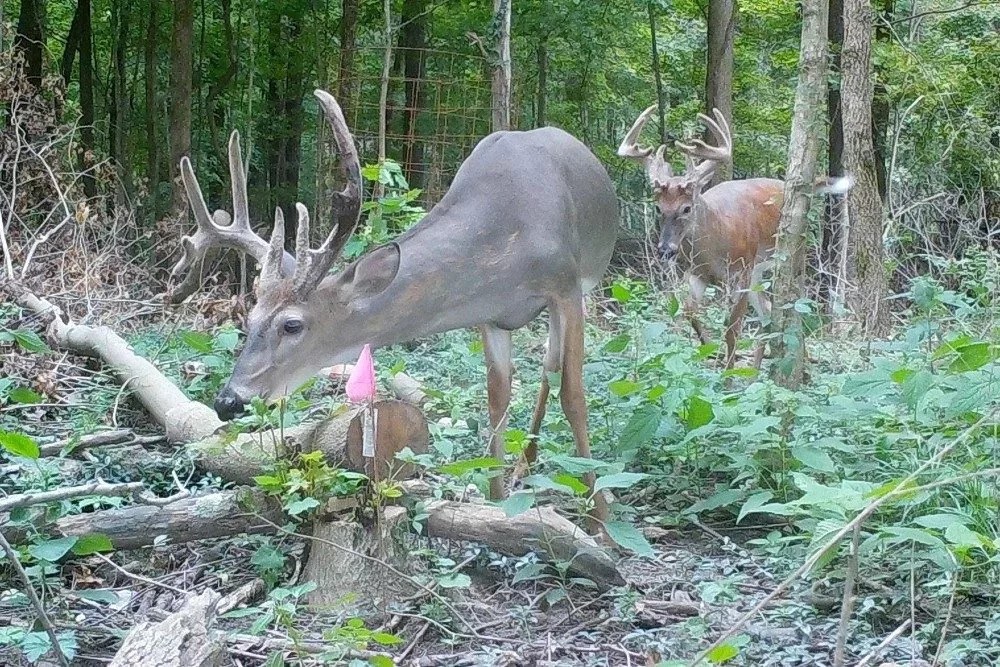
Trail cameras monitor deer impact on woodlands. Integrated Deer Management Project, Purdue University photo.
“Through their browsing and what they eat, they can actually reduce plant diversity and limit the growth of some of our tree seedlings, such as Oak, which are both economically and ecologically important,” says Jarred Brooke, Purdue Extension Wildlife Specialist.
“They can actually cause issues with increases in the invasive species that they don’t eat, like Japanese stilt grass or garlic mustard,” he says.
For woodland owners across Indiana who might not be sure if deer are even a problem on their property, how can they better understand and measure deer impacts?
“I think the first step is being aware and being tuned in to the problems that deer can cause,” he says. “Fortunately, with the help of The Nature Conservancy here in Indiana, we at Purdue Extension created a series of publications and videos called the Deer Impact Toolbox, which are designed to help landowners really understand, monitor, and address the impacts that deer have in their woodlands. These resources are a great starting point for any landowner that is interested in learning more about deer impacts.”
He adds that the best way to manage those impacts from deer are hunting, habitat management, and plant protection.
“Through the reduction of the number of deer by harvesting does on your property, that can be an effective way to reduce their impact,” he says. “Also if you can improve the habitat for deer on your property, either through forest improvement or through a timber harvest, you can actually create more food on the landscape, which reduces overall dear impact.
“The last big way is through protecting the plants that you’re trying to keep deer from browsing. That can be fencing, tree plantations, putting tree tubes or tree shelters on young trees, or fencing sensitive areas from deer browsing,” he says.
Read the Deer Toolbox Publications: Deer Impact Toolbox.
View the original article and listen to the Hoosier Ag Today’s radio News in the Hoosier Ag Today April 2025: Managing the Impact of White-tailed Deer on Indiana Woodlands.
Resources:
Purdue Extension Pond and Wildlife Management
Ask an Expert: Wildlife Food Plots, video, Purdue Extension – FNR YouTube Channel
How to Build a Plastic Mesh Deer Exclusion Fence, The Education Store
A Woodland Management Moment – Deer Fencing, Purdue Extension – FNR YouTube Video
Managing Your Woods for White-Tailed Deer, The Education Store
Bovine Tuberculosis in Wild White-tailed Deer, The Education Store
Handling Harvested Game: Episode 1, Field Dressing, video, Purdue Extension – FNR YouTube Channel
Deer Harvest Data Collection, Got Nature? Blog, Purdue Extension – FNR
How to Score Your White-tailed Deer, video, Purdue Extension
White-Tailed Deer Post Harvest Collection, video, Purdue Forestry and Natural Resources
Age Determination in White-tailed Deer, video, Purdue Extension
Handling Harvested Deer Ask an Expert? video, Purdue Extension – FNR YouTube Channel
Subscribe to Purdue Extension-Forestry & Natural Resources YouTube Channel, Wildlife Playlist
Jarred Brooke, Wildlife Extension Specialist
Purdue Department of Forestry and Natural Resources
The Hardwood Tree Improvement & Regeneration Center (HTIRC) continues to share top forest research as scientists, experts and partners further the mission of tree improvement, management, and protection of hardwood forests. The most recent HTIRC Annual Report is now available and includes research, personnel and outreach news:
- NSF Center for Advanced Forestry System Updates, the only forestry-based National Science Foundation (NSF) Industry/University Cooperative Research Center (I/UCRC)
- Funded Research Grants which includes Backpack System for High Resolution Forest Inventory, Testing Efficacy of Enrichment Plantings for Stand Regeneration in Hardwood Forests, Better Black Walnut by Breeding Without Breeding and much more.
- Creating a Directory, Depository and Database for Historical Genetic and Tree Improvement Trials
- HTIRC Partners with Tree Pro to Distribute Hardwood Seedlings
- Institute of Digital Forestry
- 2024 Tree Improvement Report
If you would like to subscribe and receive the e-newsletter visit HTIRC e-Newsletter.
The mission of the HTIRC is to advance the science and application of tree improvement, management, and protection of hardwood forests, with emphasis in the Central Hardwood Forest Region (CHFR). They seek to develop research and technology-transfer programs that provide knowledge focused on the establishment and maintenance of sustainable, genetically diverse native forests and the development of highly productive woodlands that provide a wide array of products and services.
Other resources:
Forestry & Natural Resources
Tropical HTIRC
An Introduction to Trees of Indiana, The Education Store, Purdue Extension resource center
Native Trees of the Midwest, The Education Store
Shrubs and Woody Vines of Indiana and the Midwest, The Education Store
ID That Tree, Playlist, Subscribe to Purdue Extension – Forestry and Natural Resources YouTube Channel
A Woodland Management Moment, Playlist, Purdue Extension – FNR YouTube Channel
Investing in Indiana Woodlands, The Education Store
Forest Improvement Handbook, The Education Store
Finding help from a professional forester, Indiana Forestry & Woodland Owners Association
District Forester, Indiana DNR Division of Forestry, for over 10 acres of woodlands
Directory of Professional Foresters, Indiana Forestry & Woodland Owners Association (IFWOA)
Matthew Ginzel, Professor and Director of HTIRC
Purdue Entomology
Purdue University Department of Forestry and Natural Resources
Hardwood Tree Improvement and Regeneration Center (HTIRC)
Congratulations to Liz Jackson, FNR Extension Specialist, on receiving the 2025 Indiana Hardwood Lumbermen’s Association (IHLA) President’s Award. This award is given for exceptional contribution to the forest products industry and to members of IHL. We are proud to celebrate her achievements along with seeing her featured in the April 2025 edition of the Agriculture & Natural Resources (ANR) newsletter.

Liz presenting an award plaque at a Walnut Council national conference.
Agricultural & Natural Resources (ANR) Newsletter: Liz has worked as an Extension specialist associated with three forestry organizations since March 2004. Liz obtained her BS in forest products (’82) from Purdue’s Forestry & Natural Resources Department and MS in business management (’84) from Krannert School of Business under a special forestry/business master’s program.
Before coming to Purdue Extension, Liz spent 15 years in wood products manufacturing as a plant manager at Aristokraft cabinets (now MasterBrand) and purchasing and inventory control manager at Lafayette Venetian Blind.
Liz’s Extension role is to provide programs and products on sustainable forest management and forest stewardship to address woodland owners’ concerns and needs. While representing the Department of Forestry and Natural Resources, she works on behalf of three organizations.
The Hardwood Tree Improvement and Regeneration Center (HTIRC) is a research partnership between Purdue FNR and the USDA Forest Service focusing on management, protection and improvement of fine hardwood species. For the HTIRC she coordinates annual meetings, research conferences and educational programs.
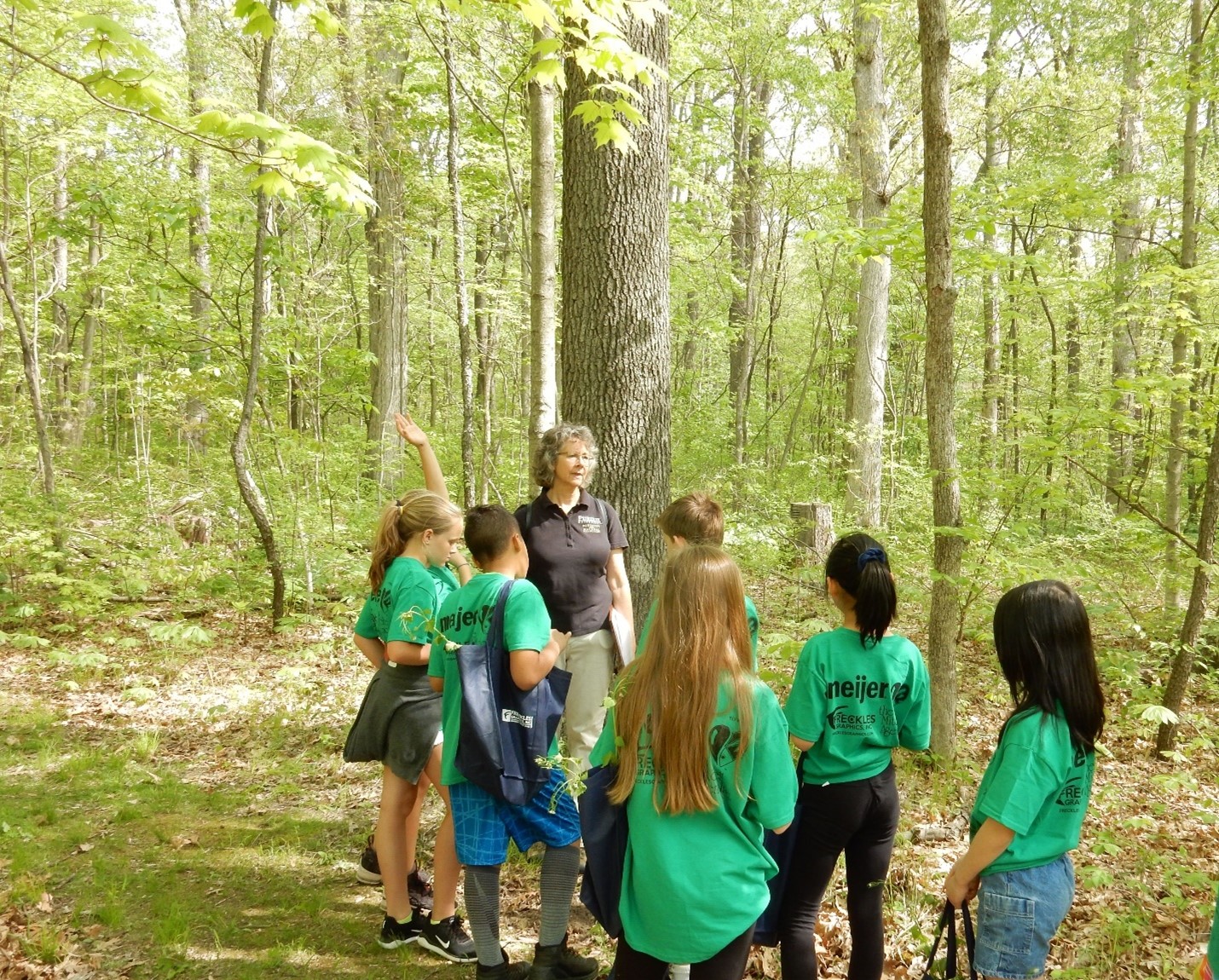
Liz presents on forest management to a group of schoolchildren at Martell Forest.
For the Indiana Forestry & Woodland Owners Association (IFWOA) and National Walnut Council, she represents the interests of the members and manages all business of the associations, including board meetings, annual conferences and education programs, membership and finances, and communications, including newsletters, websites and social media.
Liz is involved in many partnerships around the state, including as a member of the Extension Invasive Species Working Group, on the editorial board for Indiana Woodland Steward newsletter, member of NRCS state technical committee, and advisory partner with Indiana DNR Division of Forestry Forest Stewardship Committee, Sentinel Landscapes, and Let the Sun Shine In Indiana programs.
A highlight of her career was traveling to Washington, D.C., in 2005 to see Sen. Richard Lugar of Indiana and representatives from HTIRC and Indiana forestry plant an Indiana walnut tree on the U.S. Capitol grounds. Ten years later she returned to the site and was thrilled to find the tree and see it was thriving.
Resources:
Indiana Forestry & Woodland Owners Association (IFWOA) YouTube Channel
Observing Seasonal Changes in Nature Webinar with Amanda Wanless, IFWOA YouTube Channel
Magnificent Trees of Indiana Webinar with Author Carroll Ritter, IFWOA YouTube Channel
Ask the FNR Expert: Pests in your Woods, Purdue Extension – Forestry and Natural Resources (FNR) YouTube Channel
Woodland Stewardship for Landowners, Playlist, Purdue Extension – FNR YouTube Channel
Directory of Professional Foresters, Indiana Forestry & Woodland Owners Association (IFWOA)
Indiana Woodland Steward E-newsletters, Eleven Member Organization
Invasive Species, Playlist, Purdue Extension – FNR YouTube Channel
Invasive Plant Species Identification, Video, Purdue Extension – FNR YouTube Channel
Subscribe – Purdue Extension-FNR YouTube Channel
Agricultural & Natural Resources (ANR), Purdue Extension
Join Purdue Extension forester Lenny Farlee in this episode of “A Woodland Management Moment” as he explores the unique ecosystem of bottomlands. These flat, moisture-rich environments are home to a diverse array of species, shrubs, and trees. Watch the video to discover the key features and characteristics of these fascinating sites.
If you have any questions regarding trees, forests, wildlife, wood products, or other natural resource topics, feel free to contact us by using our Ask an Expert web page.
Resources:
A Woodland Management Moment, Playlist, Purdue Extension – Forestry and Natural Resources (FNR) YouTube Channel
The Nature of Oaks Webinar, Purdue Extension-FNR YouTube Channel, Shared from Indiana Forestry & Woodland Owners Association
Conservation Tree Planting: Steps to Success, Purdue Extension – FNR YouTube Channel
Shrubs and Woody Vines of Indiana and the Midwest, Purdue University Press
Native Trees of the Midwest, Purdue University Press
ID That Tree, Playlist, Purdue Extension – FNR YouTube Channel
Investing in Indiana Woodlands, The Education Store
Woodland Stewardship for Landowners Video Series, Playlist, Indiana Department of Natural Resources YouTube Channel
Ask an Expert: Tree Selection and Planting, Purdue Extension – FNR YouTube Channel
Forest Improvement Handbook, The Education Store
Find an Indiana Professional Forester, Indiana Forestry & Woodland Owners Association (IFWOA)
Purdue Arboretum Explorer
Lenny Farlee, Extension Forester
Hardwood Tree Improvement and Regeneration Center
Purdue Department of Forestry & Natural Resources
Purdue Landscape Report: These oak trees are showing the symptoms of smooth patch ( see below Figures 1, 2, 3). This condition is the result of a fungal infection that is restricted to the outer bark, causing it to slough off. The bark layer remaining is smoother and lighter in color than uninfected, normal bark.
Patches can vary from a few inches to a foot or more in diameter and may occur on branches as well as the trunk. Several fungi can cause this condition. A common species, Aleurodiscus oakesii, produces clusters of flat, disc-like spore-bearing structures on the surface of the smooth bark. These structures are gray or beige in color and are usually less than 1⁄2 inch in diameter (Figure 4).
The best time to see this interesting phenomenon in the forest is during wet periods in late winter before new spring growth begins, when the light gray bark stands out in the light penetrating the canopy. The fungal structures shrink when dry so will be more apparent following rainy weather.
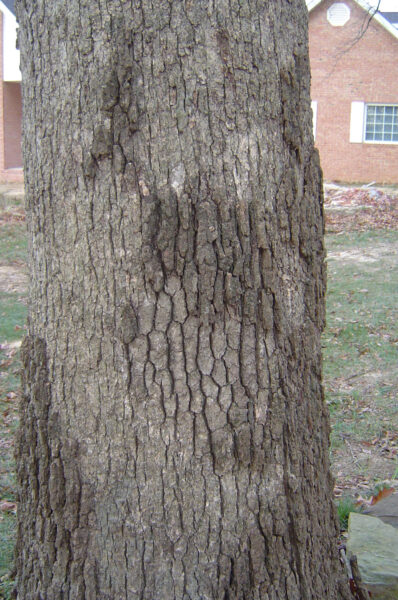

The fungal structures may be mistaken for wood decay fungi, but because smooth patch fungi invade only the nonliving, outer bark tissues, they do not affect the health of the tree. No control measures are needed.
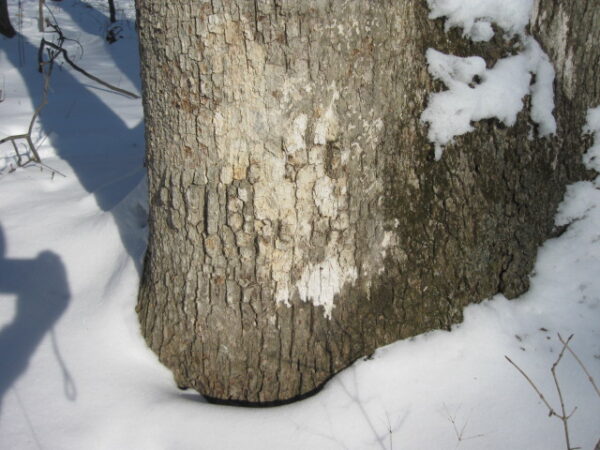
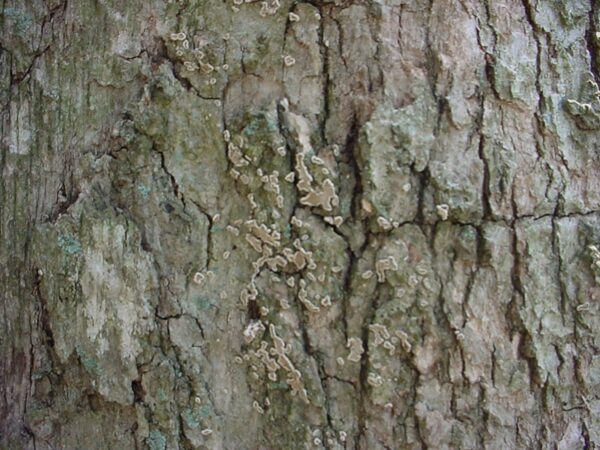
The fungal structures may be mistaken for wood decay fungi, but because smooth patch fungi invade only the nonliving, outer bark tissues, they do not affect the health of the tree. No control measures are needed.
Resources:
Indiana Forestry & Woodland Owners Association (IFWOA) YouTube Channel
District Forester, Indiana DNR Division of Forestry, for over 10 acres of woodlands
Directory of Professional Foresters, Indiana Forestry & Woodland Owners Association (IFWOA)
Indiana Woodland Steward E-newsletters, Eleven Member Organization
The Nature of Oaks Webinar, Purdue Extension-FNR YouTube Channel, Shared from Indiana Forestry & Woodland Owners Association
Purdue Arboretum Explorer
Native Trees of the Midwest, Purdue University Press
A Woodland Management Moment, Playlist, Purdue Extension – Forestry and Natural Resources (FNR) YouTube Channel
Conservation Tree Planting: Steps to Success, Purdue Extension – FNR YouTube Channel
Forest Improvement Handbook, The Education Store
Woodland Stewardship for Landowners, Playlist, Purdue Extension – FNR YouTube Channel
ID That Tree – Video Playlist, Purdue Extension – Forestry and Natural Resources (FNR) YouTube Channel
Invasive Species, Playlist, Purdue Extension – FNR YouTube Channel
Invasive Plant Species Identification, Video, Purdue Extension – FNR YouTube Channel
Report Invasive Species, Purdue Invasive Species
Subscribe – Purdue Extension-FNR YouTube Channel
Tom Creswell, Plant & Pest Diagnostic Laboratory Director
Purdue Botany and Plant Pathology
Welcome to “ID That Tree.” In this edition, Purdue Extension Forester Lenny Farlee introduces us to an autumn olive shrub found across Indiana. This dense shrub requires extensive control and management due to its effects on the habitat. Watch the video to learn about its aggressive growth, wildlife impact, leaf pattern, and other features!
If you have any questions regarding wildlife, trees, forest management, wood products, natural resource planning or other natural resource topics, feel free to contact us by using our Ask an Expert web page.
Resources:
ID That Tree – Video Playlist, Purdue Extension – Forestry and Natural Resources (FNR) YouTube Channel
Purdue Arboretum Explorer
Conservation Tree Planting: Steps to Success, Purdue Extension – FNR YouTube Channel
A Woodland Management Moment, Playlist, Purdue Extension – FNR YouTube Channel
Woodland Stewardship for Landowners, Playlist, Purdue Extension – FNR YouTube Channel
Indiana Department of Natural Resources: Invasive Species
Indiana Invasive Species Council
Cooperative Invasive Species Management Area (CISMA)
Report Invasive, Purdue Extension
Fifty Common Trees of Indiana, Purdue Extension – FNR
Episode 11 – Exploring the challenges of Invasive Species, Habitat University-Natural Resource University
Shrubs and Woody Vines of Indiana and the Midwest, The Education Store
Native Trees of the Midwest, The Education Store
Professional Forester, Indiana Forestry Woodland Owners Association
Forest Improvement Handbook, The Education Store
Find an Arborist, International Society of Arboriculture
Lenny Farlee, Extension Forester
Hardwood Tree Improvement and Regeneration Center
Purdue Department of Forestry & Natural Resources
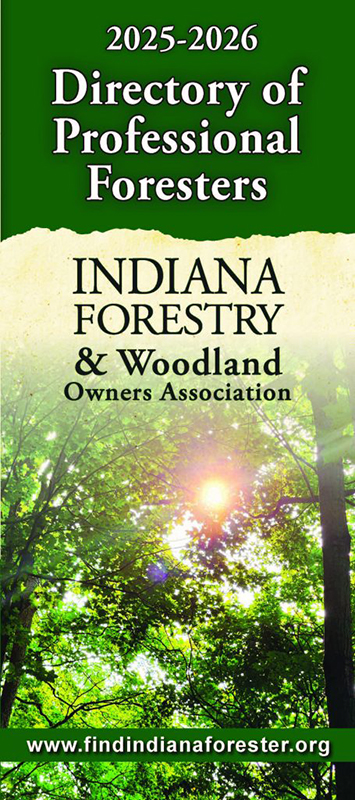 A Directory of Professional Foresters is now available, listing Indiana foresters who provide private woodland services and advice. Foresters are located throughout the state and provide assistance such as management plans, timber sales, tree planting, invasive species control, and many other services.
“Finding the resources to help you meet your woodland management objectives is important to successful stewardship,” says Liz Jackson, Purdue Extension and manager of Indiana Forestry & Woodland Owners Association. “Professional foresters can provide expert assistance to meet your property management goals.”
The Directory is available online via interactive map at www.findindianaforester.org to find foresters by location, or as a downloadable document. Printed copies of the booklet are available at County Extension and Soil & Water Conservation District offices or through a state Division of Forestry district forester.
Indiana Forestry & Woodland Owners Association promotes the wise use of Indiana’s forest resource for today and future generations. Learn more at www.ifwoa.org.
Resources:
Indiana Forestry & Woodland Owners Association (IFWOA) YouTube Channel
Deer Impact Toolbox, Purdue Extension Pond and Wildlife Management
District Forester, Indiana DNR Division of Forestry, for over 10 acres of woodlands
Directory of Professional Foresters, Indiana Forestry & Woodland Owners Association (IFWOA)
Indiana Woodland Steward E-newsletters, Eleven Member Organization
A Woodland Management Moment, Playlist, Purdue Extension – Forestry and Natural Resources (FNR) YouTube Channel
Conservation Tree Planting: Steps to Success, Purdue Extension – FNR YouTube Channel
Forest Improvement Handbook, The Education Store
Invasive Species, Playlist, Purdue Extension – FNR YouTube Channel
Woodland Stewardship for Landowners, Playlist, Purdue Extension – FNR YouTube Channel
Invasive Plant Species Identification, Video, Purdue Extension – FNR YouTube Channel
Report Invasive Species, Purdue Invasive Species
ID That Tree – Video Playlist, Purdue Extension – Forestry and Natural Resources (FNR) YouTube Channel
Subscribe – Purdue Extension-FNR YouTube Channel
Liz Jackson, IFWOA engagement specialist & Walnut Council Manager
Indiana Forestry & Woodlands Owners Association (IFWOA)
IN DNR, Division of Fish & Wildlife: For Indiana Arbor Day, the Indiana DNR tree seedling nurseries provide a tree seedling for each Indiana third grade student whose school and teachers wish to participate in the Arbor Day program.
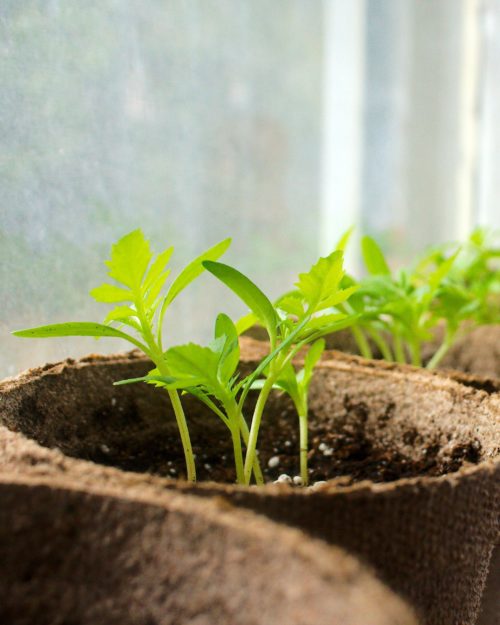
A letter is mailed to every Indiana school in January of each year. To receive a tree seedling for every third grader, the school’s Arbor Day coordinator or principal must return the postcard to Vallonia Nursery by the date indicated in the letter.
Each Indiana school may also receive an Arbor Day seedling to plant on the school grounds. The seedling is ordered at the same time as the third grade seedlings.
To ensure your school receives its third grade trees and school seedling, be sure to return the postcard from the DNR by the date indicated!
To find out more, view the Indiana Department of Natural Resources webpage on Indiana Arbor Day Free seedlings.
Learn more: The Arbor Day Foundation is a diverse community of bold thinkers, supporters, organizers, connectors, and doers.
Arbor Day History: It takes a lot of Yeses to plant 500 million trees. That’s why when you commit to celebrating Arbor Day, you’re doing more than helping put trees in the ground. You’re saying Yes to a healthier world. So grab your gardening gloves and join an event in your area, plant a tree in your yard, or hit the donate button—however you say it, your Yes makes a difference.
Resources:
Find an Arborist video, Trees are Good-International Society of Arboriculture (ISA)
Trees and Storms – The Education Store, Purdue Education’s resource center
Moist soil and rotten roots makes it easy for trees to come crashing down – Fox 59 News
Expert: Some storm damage can be easily prevented – Fox 59
Why Is My Tree Dying? – The Education Store
Tree Risk Management – The Education Store
Mechanical Damage to Trees: Mowing and Maintenance Equipment – The Education Store
Trees and Electric Lines – The Education Store
Tree Defect Identification, The Education Store
Planting Your Tree, video, The Education Store
Tree Installation, The Education Store
Tree Wound and Healing, Got Nature? Blog, Purdue Extension – Forestry and Natural Resources
Subscribe – Purdue Extension-FNR YouTube Channel
Division of Fish and Wildlife, Indiana Department of Natural Resources

Recent Posts
- Keep An Eye Out for Hammerhead Worms, Purdue Landscape Report
Posted: April 2, 2026 in Invasive Animal Species, Wildlife, Woodlands - ID That Tree Featured in National Woodland Owners Association Newsletter
Posted: April 1, 2026 in Urban Forestry, Wildlife, Woodlands - New 2026 Indiana Woodland Steward Newsletter
Posted: March 30, 2026 in Urban Forestry, Wildlife, Woodlands - A Woodland Management Moment: Why Aspect Matters
Posted: in Urban Forestry, Woodland Management Moment, Woodlands - Fast-Growing Trees for the Landscape, Purdue Landscape Report
Posted: March 26, 2026 in Forestry, Urban Forestry, Woodlands - Urban Tree Spotlight: Planting Deciduous Shade Trees, Purdue Landscape Report
Posted: March 25, 2026 in Forests and Street Trees, Urban Forestry, Woodlands - Beetle that attacks Tree-of-Heaven found in Indiana, Purdue Landscape Report
Posted: March 20, 2026 in Invasive Insects, Wildlife, Woodlands - ID That Tree: Dwarf Chinkapin Oak
Posted: in Forestry, Urban Forestry, Wildlife, Woodlands - DNR Hiring for Indiana Conservation Officer Positions, MyDNR
Posted: March 9, 2026 in Urban Forestry, Wildlife, Woodlands - ID That Tree: Shumard Oak
Posted: in Plants, Urban Forestry, Wildlife, Woodlands
Archives
Categories
- Alert
- Aquaculture/Fish
- Aquatic/Aquaculture Resources
- Ask the Expert
- Christmas Trees
- Community Development
- Disease
- Drought
- Forestry
- Forests and Street Trees
- Gardening
- Got Nature for Kids
- Great Lakes
- How To
- Invasive Animal Species
- Invasive Insects
- Invasive Plant Species
- Land Use
- Natural Resource Planning
- Nature of Teaching
- Plants
- Podcasts
- Ponds
- Publication
- Safety
- Spiders
- Timber Marketing
- Uncategorized
- Urban Forestry
- Webinar
- Wildlife
- Wood Products/Manufacturing
- Woodland Management Moment
- Woodlands