 Purdue University - Extension - Forestry and Natural Resources
Got Nature? Blog
The classic and trusted book “Fifty Common Trees of Indiana” by T.E. Shaw was published in 1956 as a user-friendly guide to local species. Nearly 70 years later, the publication has been updated through a joint effort by the Purdue Department of Forestry and Natural Resources, Indiana 4-H, and the Indiana Department of Natural Resources, and reintroduced as “An Introduction to Trees of Indiana.”
The full publication is available for download for $7 in the Purdue Extension Education Store. The field guide helps identify common Indiana woodlot trees.
Each week, the Intro to Trees of Indiana web series will offer a sneak peek at one species from the book, paired with an ID That Tree video from Purdue Extension forester Lenny Farlee to help visualize each species as it stands in the woods. Threats to species health as well as also insight into the wood provided by the species, will be provided through additional resources as well as the Hardwoods of the Central Midwest exhibit of the Purdue Arboretum, if available.
This week, we introduce the flowering dogwood or Cornus florida.
This small native Indiana tree has beautiful white blossoms in the spring, and red to maroon foliage in the fall. It has opposite leaf arrangement with simple leaves featuring a venation pattern that sees the veins angle and sweep along the edges of the leaf and curve to the tip. The bark is a rough alligator hide texture that ranges from light to medium gray.
The showy white flowers, which appear in April or May, are followed by berry-like fruit clusters that are green at first, later turning red.
Flowering dogwood is the largest dogwood in the state of Indiana. It is shade tolerant, but it prefers good soil drainage and protection from the wind.
Flowering dogwood is a great alternative to the invasive callery pear.
According to Morton Arboretum, the flowering dogwood grows to 20 to 40 feet tall.
According to the Wood Database, flowering dogwood is commonly used in golf club heads, textile shuttles, bows for archery, mallets, pulleys and turned objects.
For full article with additional photos view: Intro to Trees of Indiana: Northern catalpa
Resources:
Flowering Dogwood, Native Trees of Indiana River Walk, Purdue Fort Wayne
Fifty Common Trees of Indiana
An Introduction to Trees of Indiana
Native Trees of the Midwest, The Education Store, Purdue Extension’s resource center
Shrubs and Woody Vines of Indiana and the Midwest, The Education Store
Investing in Indiana Woodlands, The Education Store
Forest Improvement Handbook, The Education Store
ID That Tree, Purdue Extension-Forestry and Natural Resources (FNR) YouTube Channel-playlist
Woodland Management Moment, Purdue Extension-FNR YouTube Channel-playlist
Wendy Mayer, FNR Communications Coordinator
Purdue University Department of Forestry and Natural Resources
Lenny Farlee, Sustaining Hardwood Extension Specialist
Purdue University Department of Forestry and Natural Resources
The classic and trusted book “Fifty Common Trees of Indiana” by T.E. Shaw was published in 1956 as a user-friendly guide to local species. Nearly 70 years later, the publication has been updated through a joint effort by the Purdue Department of Forestry and Natural Resources, Indiana 4-H, and the Indiana Department of Natural Resources, and reintroduced as “An Introduction to Trees of Indiana.”
The full publication is available for download for $7 in the Purdue Extension Education Store. The field guide helps identify common Indiana woodlot trees.
Each week, the Intro to Trees of Indiana web series will offer a sneak peek at one species from the book, paired with an ID That Tree video from Purdue Extension forester Lenny Farlee to help visualize each species as it stands in the woods. Threats to species health as well as also insight into the wood provided by the species, will be provided through additional resources as well as the Hardwoods of the Central Midwest exhibit of the Purdue Arboretum, if available.
This week, we introduce the Black cherry or Prunus serotina.
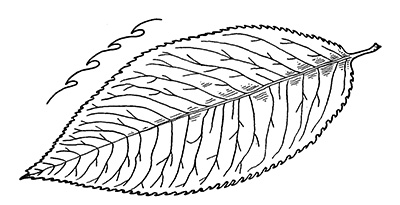 This species, also known as wild black cherry, is characterized by shiny, oblong leaves with finely toothed margins, arranged alternately on slender twigs, as well as very dark, flaky bark. The white flowers, which appear in early summer, develop into clusters of small cherries that ripen from red to black in July and August.
Black cherry, which is shade intolerant, is the only native, tree-sized cherry tree in Indiana. It is one of the quicker growing upland hardwood species in the state, and can grow to 60 to 80 feet tall and two to three feet in diameter.
The species is found from the Great Plains east and from Central Florida to the very southern portion of Ontario to New Brunswick. It also grows from central Arizona south through Mexico. Pennsylvania, parts of West Virginia and New York have developed a reputation for having the best veneer quality and relative gum free cherry.
Black cherry is susceptible to gummosis, or the depositing of resinous gum on the bark of the tree. Unfortunately, widespread gummosis caused by insect damage and other factors keeps many black cherry trees from reaching veneer quality, and reduces their value by as much as 90 percent (Cassens 2004). Black cherry trees are also susceptible to forest tent caterpillars and a variety of other insect attacks.
According to the Hardwoods of the Central Midwest exhibit, black cherry is most commonly used for fine furniture and cabinets. It is also used for high-end face veneer, furniture, molding, architectural millwork, wood paneling and toys. In the past, it was used for printer’s blocks, scientific instrument cases, pattern stock, and blocks for mounting electrotypes.
For full article with additional photos view: Intro to Trees of Indiana: Black Cherry
Resources:
Black Cherry, Hardwoods of the Central Midwest
Black Cherry, Hardwood Lumber and Veneer Series
Black Cherry, Native trees of Indiana River Walk, Purdue Fort Wayne
Case of Gummosis in Black Cherry, The Education Store, Purdue Extension’s resource center
Insects Affecting Hardwood Tree Plantings, The Education Store
Native Trees of the Midwest, The Education Store
Shrubs and Woody Vines of Indiana and the Midwest, The Education Store
Investing in Indiana Woodlands, The Education Store
Forest Improvement Handbook, The Education Store
Fifty Common Trees of Indiana
An Introduction to Trees of Indiana
ID That Tree, Purdue Extension-Forestry and Natural Resources (FNR) YouTube channel-playlist
Woodland Management Moment , Purdue Extension-FNR YouTube playlist
Wendy Mayer, FNR Communications Coordinator
Purdue University Department of Forestry and Natural Resources
Lenny Farlee, Sustaining Hardwood Extension Specialist
Purdue University Department of Forestry and Natural Resources
The classic and trusted book “Fifty Common Trees of Indiana” by T.E. Shaw was published in 1956 as a user-friendly guide to local species. Nearly 70 years later, the publication has been updated through a joint effort by the Purdue Department of Forestry and Natural Resources, Indiana 4-H, and the Indiana Department of Natural Resources, and reintroduced as “An Introduction to Trees of Indiana.”
The full publication is available for download for $7 in the Purdue Extension Education Store. The field guide helps identify common Indiana woodlot trees.
 Each week, the Intro to Trees of Indiana web series will offer a sneak peek at one species from the book, paired with an ID That Tree video from Purdue Extension forester Lenny Farlee to help visualize each species as it stands in the woods. Threats to species health as well as also insight into the wood provided by the species, will be provided through additional resources as well as the Hardwoods of the Central Midwest exhibit of the Purdue Arboretum, if available.
This week, we introduce the Northern catalpa or Catalpa speciose.
This species, which provides rot resistant wood great for outdoor usage such as fence posts, is native to southern Indiana along the Ohio River bottoms. It features huge heart-shaped leaves in whorled formation, long bean-like fruit pods and beautiful, large clusters of white tubular flower clusters in early summer.
The heart-shaped leaves may be held in either opposite or more commonly in whorled arrangement, meaning three leaves originate at the same point on the twig. The bean-like fruit pods, which contain papery winged seeds, can sometimes be more than two feet in length.
For full article with additional photos view: Intro to Trees of Indiana: Northern catalpa
Resources:
Northern Catalpa, Native Trees of Indiana River Walk, Purdue Fort Wayne
Fifty Common Trees of Indiana
An Introduction to Trees of Indiana
Native Trees of the Midwest, The Education Store, Purdue Extension’s resource center
Shrubs and Woody Vines of Indiana and the Midwest, The Education Store
Investing in Indiana Woodlands, The Education Store
Forest Improvement Handbook, The Education Store
ID That Tree, Purdue Extension-Forestry and Natural Resources (FNR) YouTube Channel-playlist
Woodland Management Moment, Purdue Extension-FNR YouTube Channel-playlist
Wendy Mayer, FNR Communications Coordinator
Purdue University Department of Forestry and Natural Resources
Lenny Farlee, Sustaining Hardwood Extension Specialist
Purdue University Department of Forestry and Natural Resources
The classic and trusted book “Fifty Common Trees of Indiana” by T.E. Shaw was published in 1956 as a user-friendly guide to local species. Nearly 70 years later, the publication has been updated through a joint effort by the Purdue Department of Forestry and Natural Resources, Indiana 4-H, and the Indiana Department of Natural Resources, and reintroduced as “An Introduction to Trees of Indiana.”
 The full publication is available for download for $7 in the Purdue Extension Education Store. The field guide helps identify common Indiana woodlot trees.
Each week, the Intro to Trees of Indiana web series will offer a sneak peek at one species from the book, paired with an ID That Tree video from Purdue Extension forester Lenny Farlee to help visualize each species as it stands in the woods. Threats to species health as well as also insight into the wood provided by the species, will be provided through additional resources as well as the Hardwoods of the Central Midwest exhibit of the Purdue Arboretum, if available.
This week, we introduce the Kentucky Coffeetree or Gymnocladus dioicus.
This native species, which is part of the broad legume family, historically provided a substitute for coffee, care of the dark bean like seeds held within its fruit, which is in the form of a wide, thick-shelled pod.
It is easily identifiable by its large seed pods, long doubly-compound leaves and textured, flaking/peeling bark with vertical ridges. Its compound leaves, sometimes two feet or more in length, are arranged alternately on very thick twigs that have a mottled color and a distinct, salmon-colored pith.
This tree is found in many parts of the state, but it is never a common tree and is usually widely scattered. According to the Morton Arboretum, Kentucky coffeetree is tolerant to pollution and a wide range of soils making it a suitable tree for urban environments.
This species can grow to up to 100 feet in height and as large as five and a half feet in diameter at breast height.
For full article with photos view: Intro to Trees of Indiana: Kentucky Coffeetree
Resources:
Kentucky Coffeetree, The Purdue Arboretum Explorer
Kentucky Coffeetree, Purdue Fort Wayne Native Trees of Indiana River Walk
Top 5 List for Tree Selection and Planting, Purdue Extension-Forestry & Natural Resources (FNR) Got Nature? Blog
Fifty Common Trees of Indiana
An Introduction to Trees of Indiana
Native Trees of the Midwest, The Education Store, Purdue Extension’s resource center
Shrubs and Woody Vines of Indiana and the Midwest, The Education Store
ID That Tree, Purdue Extension-FNR’s YouTube playlist
Woodland Management Moment , Purdue Extension-FNR’s YouTube playlist
Investing in Indiana Woodlands, The Education Store
Forest Improvement Handbook, The Education Store
Wendy Mayer, FNR Communications Coordinator
Purdue University Department of Forestry and Natural Resources
Lenny Farlee, Sustaining Hardwood Extension Specialist
Purdue University Department of Forestry and Natural Resources
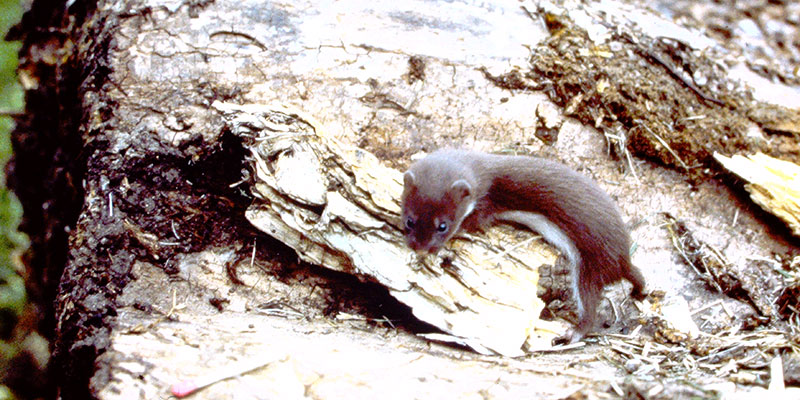
MyDNR, Indiana’s Outdoor Newsletter-Help the DNR by Reporting a Mammal: Did you get something unusual on a trail camera and want to share it to help wildlife in Indiana? DNR has launched a new Report a Mammal page. We are asking for the public’s help to submit sightings to the new online report form. Report a Mammal includes animals like armadillos, badgers, gray foxes, flying squirrels, star-nosed moles, ground squirrels, weasels, and more.
Indiana DNR offers a new, easier way to submit a report for the mammal, no password required. The report form also includes species at risk of declining and Species of Greatest Conservation Need, along with an area to submit a photo or brief video to help document the observation. Media of the animal observed would be most useful, though DNR biologists can examine evidence left by the mammal too (tracks, scat, or other signs). Completion of this form is voluntary. Data submitted may be shared within DNR and partners with the discretion of DNR staff. Personal information will be used to process your observation and may also be used for participation in surveys and other secondary purposes. DNR staff will only respond to reports if more information is needed.
To view what to report and for identification tips see: Full article > > >
Resources:
A Template for Your Wildlife Habitat Management Plan, The Education Store, Purdue Extension resource center
Wildlife Habitat Hint, Purdue Extension – Forestry & Natural Resources (FNR) YouTube Playlist
Orphaned Wildlife, Got Nature? blog
Orphaned & Injured Animals, Indiana Department of Natural Resources (IN DNR)
Purdue Extension – FNR: Ask An Expert, Video, Purdue Extension – FNR YouTube channel
Nature of Teaching, Website
A Woodland Management Moment, Playlist, Purdue Extension – Forestry and Natural Resources YouTube channel
Indiana Department of Natural Resources (IN DNR) – Fish and Wildlife
 The classic and trusted book “Fifty Common Trees of Indiana” by T.E. Shaw was published in 1956 as a user-friendly guide to local species. Nearly 70 years later, the publication has been updated through a joint effort by the Purdue Department of Forestry and Natural Resources, Indiana 4-H, and the Indiana Department of Natural Resources, and reintroduced as “An Introduction to Trees of Indiana.”
The full publication is available for download for $7 in the Purdue Extension Education Store. The field guide helps identify common Indiana woodlot trees.
Each week, the Intro to Trees of Indiana web series will offer a sneak peek at one species from the book, paired with an ID That Tree video from Purdue Extension forester Lenny Farlee to help visualize each species as it stands in the woods. Threats to species health as well as also insight into the wood provided by the species, will be provided through additional resources as well as the Hardwoods of the Central Midwest exhibit of the Purdue Arboretum, if available.
This week, we introduce the Cottonwood or Populus deltoides.
This large bottomland tree’s scientific name deltoides comes from the delta shape of the leaves, which are triangular, often with prominent teeth that resemble saw blades along the edges. This species is also named for its early season fruit, which is a little tuft of white hairs that holds a small seed and is produced in large quantities and often blown far from the parent tree.
Leaves, which are bright green on top and paler below, extend from long flattened leaf stems, which allow the leaves to flutter in the wind. The bark of young cottonwoods is smooth and yellow-green; the old bark is medium gray/brown and rough, with thick, flat ridges that run up and down the trunk.
This tree is found in moist river bottoms and stream bottoms and areas where there is flooding and new soil is created. It shades the streams, holds the soil in place on river bottoms and provides diversity to Indiana forests. Cottonwood is found from Saskatchewan through the Great Plains and east to the Appalachians and the southeast coastal plains.
This species grows rapidly and can be well over 100 feet in height and as large as three or foot feet in diameter.
The wood of eastern cottonwood is very soft, but is strong for its weight. At 12 percent moisture content, it weighs 28 pounds per cubic foot, making it one of the lightest commercially available woods.
For full article with photos view: Intro to Trees of Indiana: Cottonwood
Resources:
Eastern Cottonwood, Tour Hardwoods of the Central Midwest
Eastern Cottonwood – Purdue Arboretum
Fifty Common Trees of Indiana
An Introduction to Trees of Indiana
Native Trees of the Midwest, The Education Store, Purdue Extension’s resource center
Shrubs and Woody Vines of Indiana and the Midwest, The Education Store
ID That Tree, Purdue Extension-FNR’s YouTube playlist
Woodland Management Moment , Purdue Extension-FNR’s YouTube playlist
Investing in Indiana Woodlands, The Education Store
Forest Improvement Handbook, The Education Store
Wendy Mayer, FNR Communications Coordinator
Purdue University Department of Forestry and Natural Resources
Lenny Farlee, Sustaining Hardwood Extension Specialist
Purdue University Department of Forestry and Natural Resources
Starting trees from seed requires knowing the germination requirements for the species you wish to grow. Most native tree seeds require treatments to break seed dormancy before the seed will germinate. These are done naturally by weather cycles, moisture, sunlight and wildlife in the forest environment. When we collect seeds, we will have to simulate these natural events to germinate the seeds successfully.
The Woody Plant Seed Manual, a U.S. Forest Service publication, gives detailed germination and nursery culture instructions by genus and species of trees. With over 450 seeds of woody plants in the United States, this manual continues to be popular both in this country and beyond. Seed data includes approximately 800 species, varieties, and sub-species in 188 genera, considerable more than the 420 species and 140 genera in this edition.
View this general germination guide for some common tree species.
Resources:
Frost Seeding to Establish Wildlife Food Plots & Native Grass and Forb Plantings – YouTube Video
Planting Hardwood Seedlings – The Education Store
Ordering Seedlings from the State Forest Nursery System, Got Nature? – Purdue Extension-FNR
Instructions for Ordering Tree Seedlings – Indiana DNR Division of Forestry
Importance of Hardwood Tree Planting – The Education Store, Purdue Extension Resource Center
Forest Improvement Handbook – The Education Store
Designing Hardwood Tree Plantings for Wildlife – The Education Store
National Nursery and Seed Directory – USDA Forest Service
Web Soil Survey – USDA Natural Resources Conservation Service
ID That Tree – YouTube Playlist
Diana Evans, Extension and Web Communication Specialist
Purdue University Department of Forestry and Natural Resources
Lenny Farlee, Sustaining Hardwood Extension Specialist
Purdue University Department of Forestry and Natural Resources
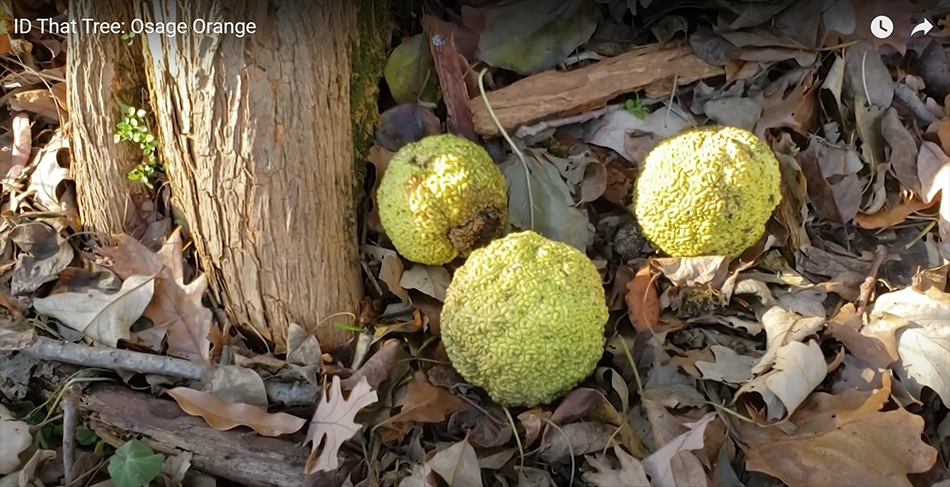 Question: I am building a hedge row and am contemplating working with Osage-orange seedlings and planting them. Is this a good choice?
Answer: Osage-orange, (Maclura pomifera) aka hedge, hedge-apple, bodark, bois d’arc and several other common names, is a tree native to parts of Arkansas, Oklahoma, and Texas, but has been planted in every one of the lower 48 states. The reason for that extensive planting was Osage-orange was promoted as the best tree for “living fences”, which were hedgerows planted to enclose or exclude livestock before the use of barbed wire. Osage-orange was also widely panted as a hedge-row and windbreak by the conservation programs of the FDR administration in the 1930’s. You can still encounter some of those old hedgerows on the landscape. It made a good hedgerow because the stems have stout thorns at the base of the leaves and will produce large and dense sprout colonies when cut back or pruned. It produced a living fence described as “horse-high, bull-strong, and pig-tight”.
The wood of Osage-orange was also used for wagon wheel parts, tool handles and fence posts due to its strength and rot-resistance. I have met a few landowners who showed me Osage gate or fence posts they had helped set as a child that were still in good condition 60 or more years later. It is also an excellent firewood, with one of the highest BTU yields of any native tree. Native peoples used straight-grained Osage-orange wood for outstanding bows, thus the French name bois d’arc and the English derivation bodark. Some crafters still seek Osage wood for making traditional bows or for turnings and other decorative items. The wood becomes so hard and dense with drying that it is recommended in most cases to work it green. The yellow-orange fresh wood color gradually ages to a deep reddish brown.
Osage-orange may have had more favorable treatment as a wood for many uses were it not for the tendency of the tree to fork, bend and twist, making straight, long stems uncommon.
The fruit of Osage-orange is where this and the hedge-apple name comes from. Osage-orange is neither a citrus tree nor an apple, but the large, round, green to yellow fruit suggest each to some extent. The interlacing bumps and crevices and the round shape suggest a brain to many, including myself. The closest relatives of Osage-orange are actually the mulberries. The size of this fruit and the limited number of current animals that will use it have prompted some to suggest it was originally eaten and propagated by large, and now extinct, ice-age animals such as the giant ground sloth, mammoth, and mastodon.
Osage-orange has many interesting and sometimes useful characteristics, but it can also become weedy in some situations. It can spread by seed or sprouts into disturbed areas like abandoned fields, farmlands, or grazed areas and out-compete native vegetation. For these reasons, planting new areas to Osage-orange is usually discouraged.
Resources:
You Say Hedge-Apple, I Say Osage Orange!, Indiana Yard and Garden – Purdue Consumer Horticulture.
Osage Orange, The Wood Database
ID That Tree: Osage-Orange, Purdue Extension-FNR’s YouTube playlist
ID That Tree, Purdue Extension-FNR’s YouTube playlist
Windbreaks – Agroforestry for Any Property, Caring for your Woodland, University of Wisconsin-Madison, Extension
The Woody Plant Seed Manual, U.S. Forest Service
Native Trees of the Midwest, The Education Store, Purdue Extension’s resource center
Shrubs and Woody Vines of Indiana and the Midwest, The Education Store
Woodland Management Moment , Purdue Extension-FNR’s YouTube playlist
Investing in Indiana Woodlands, The Education Store
Forest Improvement Handbook, The Education Store
Lenny Farlee, Sustaining Hardwood Extension Specialist
Purdue University Department of Forestry and Natural Resources
The classic and trusted book “Fifty Common Trees of Indiana” by T.E. Shaw was published in 1956 as a user-friendly guide to local species. Nearly 70 years later, the publication has been updated through a joint effort by the Purdue Department of Forestry and Natural Resources, Indiana 4-H, and the Indiana Department of Natural Resources, and reintroduced as “An Introduction to Trees of Indiana.”
The full publication is available for download for $7 in the Purdue Extension Education Store. The field guide helps identify common Indiana woodlot trees.
book, paired with an ID That Tree video from Purdue Extension forester Lenny Farlee to help visualize each species as it stands in the woods. Threats to species health as well as also insight into the wood provided by the species, will be provided through additional resources as well as the Hardwoods of the Central Midwest exhibit of the Purdue Arboretum, if available.
Each week, the Intro to Trees of Indiana web series will offer a sneak peek at one species from the
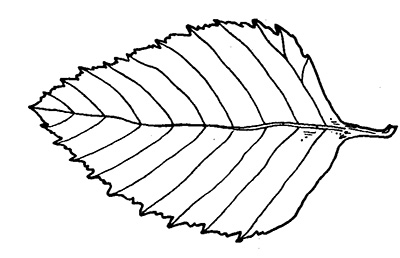
This week, we introduce River Birch or Betula nigra, which is also known as red birch.
As its name implies, it is found frequently in wet situations. It is often found need waterways and in moist soil areas across the state.
Full article also can be viewed with Purdue Forestry and Natural Resources News: Intro to Trees of Indiana: River Birch
Other Resources:
Birch – Hardwood Lumber and Veneer Series
Fifty Common Trees of Indiana
An Introduction to Trees of Indiana
Native Trees of the Midwest-The Education Store, Purdue Extension’s resource center
Shrubs and Woody Vines of Indiana and the Midwest– The Education Store
ID That Tree– YouTube playlist
Woodland Management Moment-YouTube playlist
Investing in Indiana Woodlands– The Education Store
Forest Improvement Handbook– The Education Store
Wendy Mayer, FNR Communications Coordinator
Purdue University Department of Forestry and Natural Resources
Lenny Farlee, Sustaining Hardwood Extension Specialist
Purdue University Department of Forestry and Natural Resources
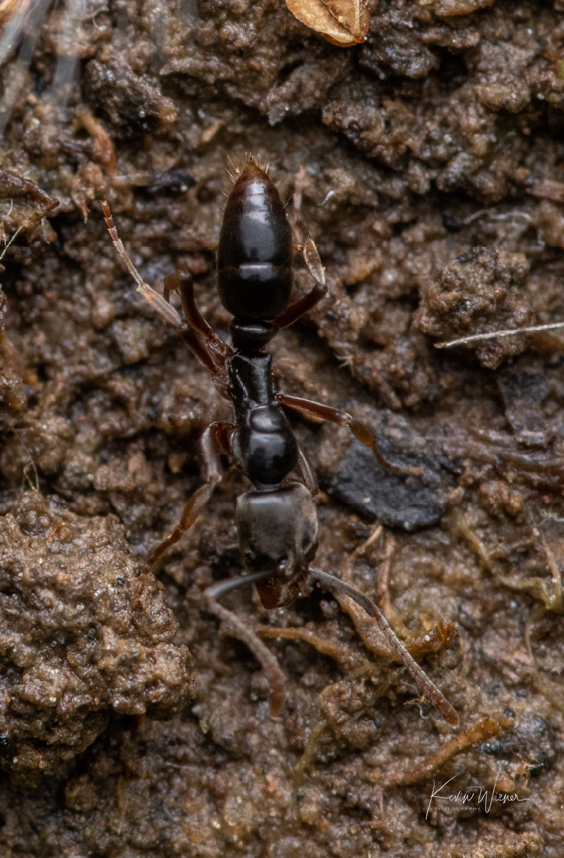
Asian needle ant in
natural setting. Photo by Kevin Weiner, Evansville, IN.
It is official. The Asian needle ant is our newest invasive insect pest and has now become a permanent resident, stinging ant. Two ant specimens taken from a wooded area in southern Indiana by an astute amateur entomologist, who observed their appearance and behavior as ‘out of the ordinary’, was submitted to the Indiana Department of Natural Resources and to the Purdue University Plant and Pest Diagnostic Laboratory for species identification in February, 2022. Both were confirmed to be Formicidae: Brachyponera chinensis, commonly known as the Asian needle ant, not previously recorded from Indiana.
Asian needle ants (ANAs), originally from Eastern Asia (China, Japan, and Korea), were first discovered in the United States in the early 1930s, but only recognized as a pest since 2006. They have been officially established in several states in the U.S. including North Carolina, South Carolina, Alabama and Georgia and, have been anecdotally reported as far north and west as New York, Tennessee and Kentucky.
Note that stings to humans will be moderately painful (potentially causing severe allergic reactions to susceptible individuals) much like fire ant or bee stings, but fortunately because these ants are much less aggressive in protecting their nests, the number of stings per encounter will be less.
The First Report of the Invasive Asian Needle Ant in Indiana pdf provides more details on their identification and biology.
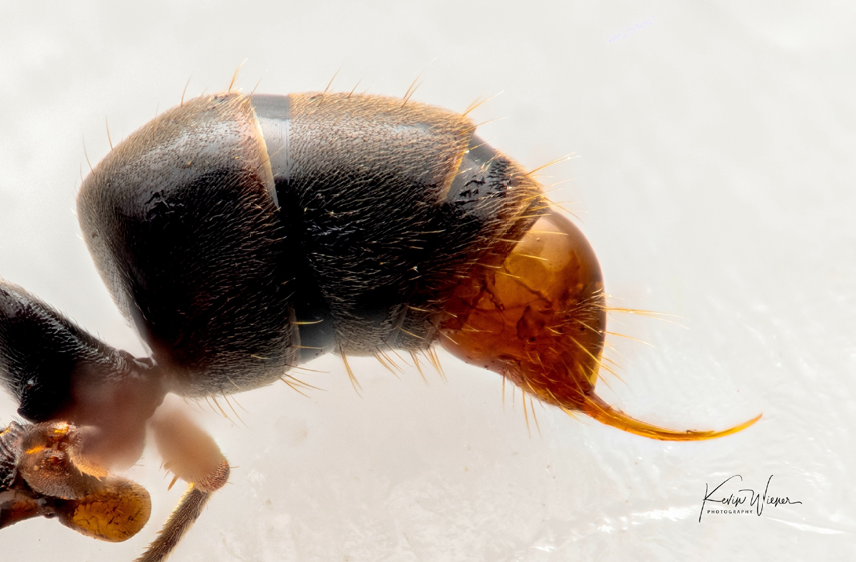
Asian needle ant stinger extended. Photo by Kevin Weiner, Evansville, IN.
If you want to confirm a sighting of the Asian needle ant please contact the Purdue University Plant and Pest Diagnostic Laboratory at this time. More information will be presented as experts monitor the spread.
Resources:
Thousand Cankers Disease, Indiana Department of Natural Resources
Thousand Cankers Disease: Indiana Walnut Trees Threatened, The Education Store, Purdue Extension’s resource center
Indiana Walnut Council
Spotted lanternfly: Everything You Need to Know in 30 Minutes, Video, Emerald Ash Borer University
Emerald Ash Borer, EAB Information Network
Report Invasive Species, Purdue Invasive Species
The GLEDN Phone App – Great Lakes Early Detection Network
EDDMaps – Early Detection and Distribution Mapping System
Indiana Department of Natural Resources: Invasive Species
Indiana Invasive Species Council
Cooperative Invasive Species Management Area (CISMA)
Invasive plants: impact on environment and people, The Education Store
Woodland Management Moment: Invasive Species Control Process, Video, Purdue Extension – Forestry and Natural Resources (FNR) YouTube Channel
Invasive Species, Playlist, Purdue Extension – FNR YouTube Channel
What are invasive species and why should I care?, Got Nature? Blog, Purdue Extension – Forestry and Natural Resources
Report Invasive
Indiana Department of Entomology and Plant Pathology
Tim Gibb, Insect Diagnostician and Extension Specialist
Purdue Department of Entomology

Recent Posts
- New Indiana Woodland Steward Newsletter
Posted: August 12, 2026 in Forestry, Urban Forestry, Wildlife, Woodlands - ID That Tree: Nannyberry Viburnum
Posted: July 22, 2026 in Forestry, Plants, Wildlife, Woodlands - ID That Tree: Eastern Swamp Privet
Posted: in Forestry, Plants, Wildlife, Woodlands - ID That Tree: Carolina Buckthorn
Posted: July 15, 2026 in Forestry, Wildlife, Woodlands - Identifying Evergreens
Posted: June 24, 2026 in Forestry, Wildlife, Woodlands - Pruning Highlight-Pollarding Trees: A Traditional Pruning Practice with Modern Uses
Posted: June 11, 2026 in Forestry, Forests and Street Trees, Urban Forestry, Wildlife, Woodlands - Danielle Howard Hired as FNR Extension Prescribed Fire Specialist
Posted: June 10, 2026 in Forestry, Wildlife, Woodlands - Flat-Faced Longhorn Beetle Found in Hardwood Logs – IDNR Division of Entomology
Posted: June 8, 2026 in Alert, Forestry, Forests and Street Trees, Invasive Insects, Urban Forestry, Wildlife, Woodlands - Connecting Research to Practice: Natural Resources & Land Use Spring Training
Posted: June 5, 2026 in Forestry, Forests and Street Trees, How To, Invasive Animal Species, Invasive Plant Species, Land Use, Natural Resource Planning, Urban Forestry, Wildlife, Woodlands - Spring Storms Are Coming: How to Reduce Tree Damage and Risk
Posted: May 1, 2026 in How To, Urban Forestry, Wildlife, Woodlands
Archives
Categories
- Alert
- Aquaculture/Fish
- Aquatic/Aquaculture Resources
- Ask the Expert
- Christmas Trees
- Community Development
- Disease
- Drought
- Forestry
- Forests and Street Trees
- Gardening
- Got Nature for Kids
- Great Lakes
- How To
- Invasive Animal Species
- Invasive Insects
- Invasive Plant Species
- Land Use
- Natural Resource Planning
- Nature of Teaching
- Plants
- Podcasts
- Ponds
- Publication
- Safety
- Spiders
- Timber Marketing
- Urban Forestry
- Webinar
- Wildlife
- Wood Products/Manufacturing
- Woodland Management Moment
- Woodlands