 Purdue University - Extension - Forestry and Natural Resources
Got Nature? Blog
Explore the dual nature of goldenrods in conservation plantings. While goldenrods like tall and Canada goldenrod benefit pollinators and wildlife, their aggressive growth can outcompete other plants, reducing diversity. This guide offers insights into managing goldenrods to maintain a balanced and thriving ecosystem. It is essential reading for land managers and conservationists committed to maintaining a diverse grassland ecosystem.

Check out the Managing Conservation Plantings series which include details on how to control invasive species and other problematic plants in Conservation Reserve Program (CRP) plantings and native warm-season grass and wildflower conservation plantings.
Plant Facts
- Herbaceous broadleaf, typically 3-5 feet tall (can range from 1 to 7 feet)
- Perennial warm-season forb
- Growing period: April to October
- Flowering: late July through October
- Reproduction: by seed and rhizome
Whether you’re managing a pasture, wildlife area, or prairie restoration, this resource provides science-based strategies to control goldenrod effectively. Learn more about managing goldenrod species in grasslands and wildlife habitats, enhancing your land’s ecological health by reading the full publication: Managing Conservation Plantings: Goldenrod Control, (330kb, pdf).
This publication is part of a seven publication series The Managing Conservation Plantings Series. Publications in this series include:
- Golden Rod Control
- Thinning Native Warm-Season Grasses
- Sericea Lespedeza Control
- Woody Encroachment and Woody Invasives
- Johnson Grass Control
- Reed Canarygrass Control
- Teasel Control (Common and Cut Leaved)
- Controlling Introduced Cool-season Grasses
- Crownvetch, Sweetclover and Birdsfoot Trefoil Control
Resources:
Deer Impact Toolbox & Grassland Management, Purdue Extension Pond and Wildlife Management
Pond and Wildlife Management, Purdue Extension
Forestry for the Birds Virtual Tour and Pocket Guide, Got Nature? Blog, Purdue Extension – FNR
Frost Seeding to Establish Wildlife Food Plots and Native Grass and Forb Plantings – Purdue Extension – FNR YouTube channel
Wildlife Habitat Hint: Tips for Evaluating a First Year Native Grass and Forb Plantings, Purdue Extension – FNR YouTube Channel
Drone Seeding Native Grasses and Forbs: Project Overview & Drone Setup, Purdue Extension – FNR YouTube channel
Ask an Expert: Wildlife Food Plots, video, Purdue Extension – FNR YouTube Channel
Handling Harvested Game: Episode 1, Field Dressing, video, Purdue Extension – FNR YouTube Channel
Managing Your Woods for White-Tailed Deer, The Education Store
Forest Improvement Handbook, The Education Store
Forest Management for Reptiles and Amphibians: A Technical Guide for the Midwest, The Education Store
A Template for Your Wildlife Habitat Management Plan, The Education Store
Woodland Stewardship for Landowners, Playlist, Purdue Extension – FNR YouTube channel
Nature of Teaching Unit 1: Animal Diversity and Tracking, The Education Store
Nature of Teaching, Purdue College of Agriculture
Invasive Species Playlist, Playlist, Purdue Extension – FNR YouTube Channel
Report Invasive, Purdue Extension
Subscribe Purdue Extension – Forestry and Natural Resources YouTube Channel
Jarred Brooke, Wildlife Extension Specialist
Purdue Department of Forestry and Natural Resources
Hoosier Ag Today: White-tailed deer are very important to Indiana woodlands. But in many areas of the state, deer populations have grown far beyond what the land can support.
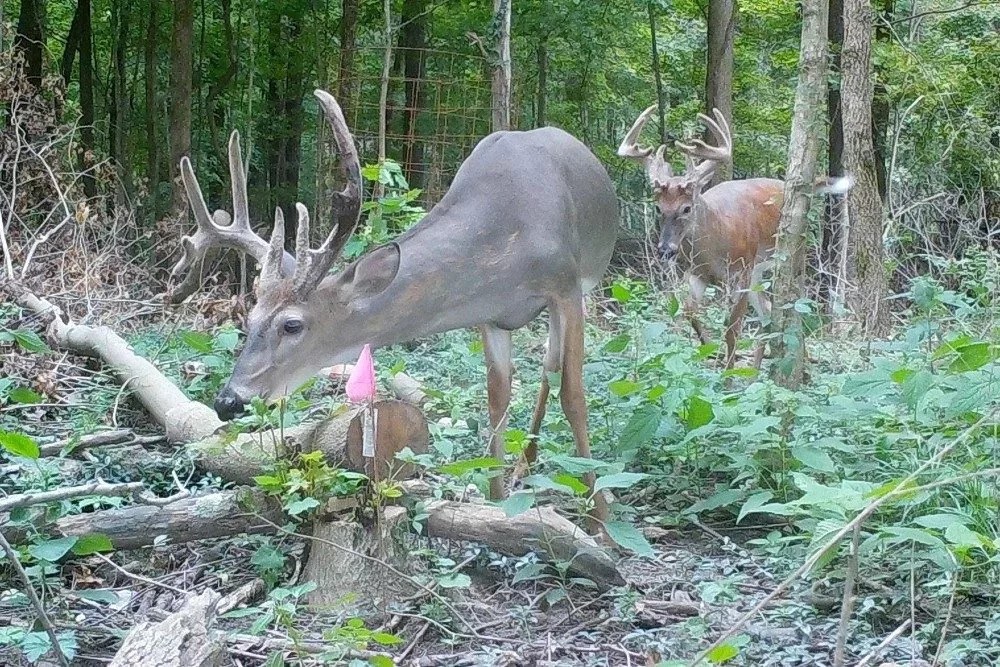
Trail cameras monitor deer impact on woodlands. Integrated Deer Management Project, Purdue University photo.
“Through their browsing and what they eat, they can actually reduce plant diversity and limit the growth of some of our tree seedlings, such as Oak, which are both economically and ecologically important,” says Jarred Brooke, Purdue Extension Wildlife Specialist.
“They can actually cause issues with increases in the invasive species that they don’t eat, like Japanese stilt grass or garlic mustard,” he says.
For woodland owners across Indiana who might not be sure if deer are even a problem on their property, how can they better understand and measure deer impacts?
“I think the first step is being aware and being tuned in to the problems that deer can cause,” he says. “Fortunately, with the help of The Nature Conservancy here in Indiana, we at Purdue Extension created a series of publications and videos called the Deer Impact Toolbox, which are designed to help landowners really understand, monitor, and address the impacts that deer have in their woodlands. These resources are a great starting point for any landowner that is interested in learning more about deer impacts.”
He adds that the best way to manage those impacts from deer are hunting, habitat management, and plant protection.
“Through the reduction of the number of deer by harvesting does on your property, that can be an effective way to reduce their impact,” he says. “Also if you can improve the habitat for deer on your property, either through forest improvement or through a timber harvest, you can actually create more food on the landscape, which reduces overall dear impact.
“The last big way is through protecting the plants that you’re trying to keep deer from browsing. That can be fencing, tree plantations, putting tree tubes or tree shelters on young trees, or fencing sensitive areas from deer browsing,” he says.
Read the Deer Toolbox Publications: Deer Impact Toolbox.
View the original article and listen to the Hoosier Ag Today’s radio News in the Hoosier Ag Today April 2025: Managing the Impact of White-tailed Deer on Indiana Woodlands.
Resources:
Purdue Extension Pond and Wildlife Management
Ask an Expert: Wildlife Food Plots, video, Purdue Extension – FNR YouTube Channel
How to Build a Plastic Mesh Deer Exclusion Fence, The Education Store
A Woodland Management Moment – Deer Fencing, Purdue Extension – FNR YouTube Video
Managing Your Woods for White-Tailed Deer, The Education Store
Bovine Tuberculosis in Wild White-tailed Deer, The Education Store
Handling Harvested Game: Episode 1, Field Dressing, video, Purdue Extension – FNR YouTube Channel
Deer Harvest Data Collection, Got Nature? Blog, Purdue Extension – FNR
How to Score Your White-tailed Deer, video, Purdue Extension
White-Tailed Deer Post Harvest Collection, video, Purdue Forestry and Natural Resources
Age Determination in White-tailed Deer, video, Purdue Extension
Handling Harvested Deer Ask an Expert? video, Purdue Extension – FNR YouTube Channel
Subscribe to Purdue Extension-Forestry & Natural Resources YouTube Channel, Wildlife Playlist
Jarred Brooke, Wildlife Extension Specialist
Purdue Department of Forestry and Natural Resources
Congratulations to Liz Jackson, FNR Extension Specialist, on receiving the 2025 Indiana Hardwood Lumbermen’s Association (IHLA) President’s Award. This award is given for exceptional contribution to the forest products industry and to members of IHL. We are proud to celebrate her achievements along with seeing her featured in the April 2025 edition of the Agriculture & Natural Resources (ANR) newsletter.

Liz presenting an award plaque at a Walnut Council national conference.
Agricultural & Natural Resources (ANR) Newsletter: Liz has worked as an Extension specialist associated with three forestry organizations since March 2004. Liz obtained her BS in forest products (’82) from Purdue’s Forestry & Natural Resources Department and MS in business management (’84) from Krannert School of Business under a special forestry/business master’s program.
Before coming to Purdue Extension, Liz spent 15 years in wood products manufacturing as a plant manager at Aristokraft cabinets (now MasterBrand) and purchasing and inventory control manager at Lafayette Venetian Blind.
Liz’s Extension role is to provide programs and products on sustainable forest management and forest stewardship to address woodland owners’ concerns and needs. While representing the Department of Forestry and Natural Resources, she works on behalf of three organizations.
The Hardwood Tree Improvement and Regeneration Center (HTIRC) is a research partnership between Purdue FNR and the USDA Forest Service focusing on management, protection and improvement of fine hardwood species. For the HTIRC she coordinates annual meetings, research conferences and educational programs.
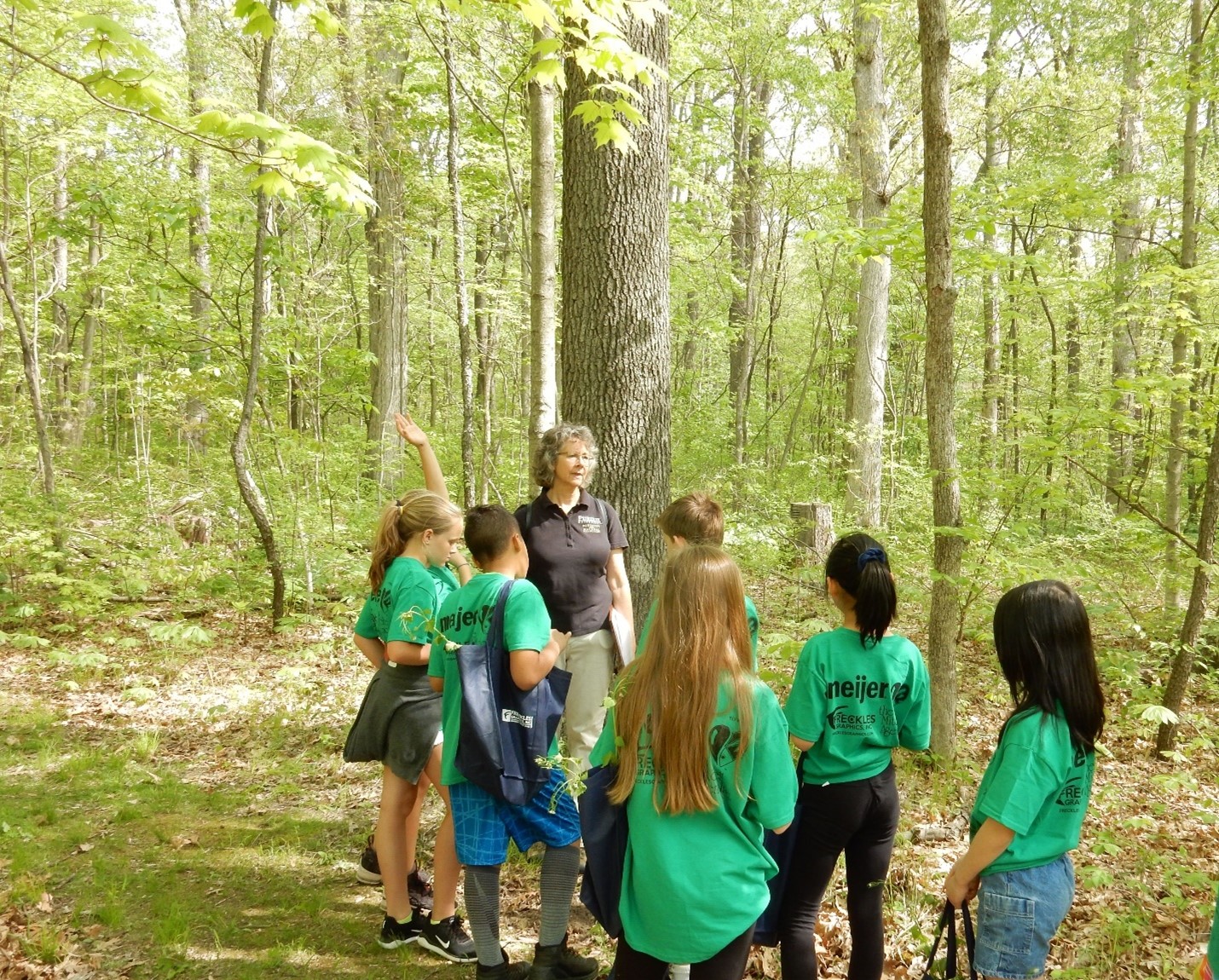
Liz presents on forest management to a group of schoolchildren at Martell Forest.
For the Indiana Forestry & Woodland Owners Association (IFWOA) and National Walnut Council, she represents the interests of the members and manages all business of the associations, including board meetings, annual conferences and education programs, membership and finances, and communications, including newsletters, websites and social media.
Liz is involved in many partnerships around the state, including as a member of the Extension Invasive Species Working Group, on the editorial board for Indiana Woodland Steward newsletter, member of NRCS state technical committee, and advisory partner with Indiana DNR Division of Forestry Forest Stewardship Committee, Sentinel Landscapes, and Let the Sun Shine In Indiana programs.
A highlight of her career was traveling to Washington, D.C., in 2005 to see Sen. Richard Lugar of Indiana and representatives from HTIRC and Indiana forestry plant an Indiana walnut tree on the U.S. Capitol grounds. Ten years later she returned to the site and was thrilled to find the tree and see it was thriving.
Resources:
Indiana Forestry & Woodland Owners Association (IFWOA) YouTube Channel
Observing Seasonal Changes in Nature Webinar with Amanda Wanless, IFWOA YouTube Channel
Magnificent Trees of Indiana Webinar with Author Carroll Ritter, IFWOA YouTube Channel
Ask the FNR Expert: Pests in your Woods, Purdue Extension – Forestry and Natural Resources (FNR) YouTube Channel
Woodland Stewardship for Landowners, Playlist, Purdue Extension – FNR YouTube Channel
Directory of Professional Foresters, Indiana Forestry & Woodland Owners Association (IFWOA)
Indiana Woodland Steward E-newsletters, Eleven Member Organization
Invasive Species, Playlist, Purdue Extension – FNR YouTube Channel
Invasive Plant Species Identification, Video, Purdue Extension – FNR YouTube Channel
Subscribe – Purdue Extension-FNR YouTube Channel
Agricultural & Natural Resources (ANR), Purdue Extension
Join Purdue Extension forester Lenny Farlee in this episode of “A Woodland Management Moment” as he explores the unique ecosystem of bottomlands. These flat, moisture-rich environments are home to a diverse array of species, shrubs, and trees. Watch the video to discover the key features and characteristics of these fascinating sites.
If you have any questions regarding trees, forests, wildlife, wood products, or other natural resource topics, feel free to contact us by using our Ask an Expert web page.
Resources:
A Woodland Management Moment, Playlist, Purdue Extension – Forestry and Natural Resources (FNR) YouTube Channel
The Nature of Oaks Webinar, Purdue Extension-FNR YouTube Channel, Shared from Indiana Forestry & Woodland Owners Association
Conservation Tree Planting: Steps to Success, Purdue Extension – FNR YouTube Channel
Shrubs and Woody Vines of Indiana and the Midwest, Purdue University Press
Native Trees of the Midwest, Purdue University Press
ID That Tree, Playlist, Purdue Extension – FNR YouTube Channel
Investing in Indiana Woodlands, The Education Store
Woodland Stewardship for Landowners Video Series, Playlist, Indiana Department of Natural Resources YouTube Channel
Ask an Expert: Tree Selection and Planting, Purdue Extension – FNR YouTube Channel
Forest Improvement Handbook, The Education Store
Find an Indiana Professional Forester, Indiana Forestry & Woodland Owners Association (IFWOA)
Purdue Arboretum Explorer
Lenny Farlee, Extension Forester
Hardwood Tree Improvement and Regeneration Center
Purdue Department of Forestry & Natural Resources
Hummingbirds are a popular attraction in any backyard and we receive questions on when they will be coming to Indiana and how to attract them to your backyard. Our Purdue professor emeritus of wildlife ecology Barny Dunning in this interview for CBS4 Indianapolis titled “How to attract hummingbirds during peak migration,” shares how planting a variety of plants that bloom will help draw them in along with a simple hummingbird mixture.
The ruby-throated hummingbird is the only species of hummingbird that nests in the Hoosier state. These colorful visitors are migratory and arrive from their wintering grounds around mid-April.
Dr. Brian MacGowan has a publication titled Attracting Hummingbirds to Your Yard that is a great resource to share along with this video showing how to prepare your hummingbird feeders and how to find out when they will be migrating to your area. Hummingbird Central also tracks spring and fall migrations. Anyone can submit sightings on their website and view up-to-date sightings.
Resources:
Attracting Hummingbirds to Your Yard publication, The Education Store-Purdue Extension resource center
Virtual Tour Brings Forest Management for Birds to Life, Got Nature? Blog, Purdue Extension FNR
Birding Through the Seasons, Indiana Forestry & Woodland owners Association (IFWOA)
Behold! The Atlas of Breeding Birds of Indiana, MyDNR, Indiana Department of Natural Resources, Got Nature? Blog, Purdue Extension FNR
Breeding Birds and Forest Management: the Hardwood Ecosystem Experiment and the Central Hardwoods Region, The Education Store, Purdue Extension – Forestry and Natural Resources
Forest Birds, The Education Store
Managing Woodlands for Birds, The Education Store
Managing Woodlands for Birds Video, Purdue Extension-Forestry and Natural Resources (FNR) YouTube Channel
The Birders’ Dozen, Profile: Baltimore Oriole, Indiana Woodland Steward
Birds and Residential Window Strikes: Tips for Prevention, The Education Store, Purdue Extension resource center
No Room at the Inn: Suburban Backyards and Migratory Birds, Education Store
Question: Is there any risk of becoming infected with avian influenza virus by feeding backyard birds?, Got Nature? Blog, Purdue Extension FNR
Preventing Wildlife Damage – Do You Need a Permit?, The Education Store
How to Construct a Scent Station video, The Education Store
Question: How do I properly relocate raccoons from my attic?, Got Nature? Blog, Purdue Extension FNR
Nuisance Wildlife, Indiana Department of Natural Resources
Subscribe – Purdue Extension-FNR YouTube Channel
Brian MacGowan, Wildlife Extension Specialist
Purdue Forestry and Natural Resources
Purdue Landscape Report: These oak trees are showing the symptoms of smooth patch ( see below Figures 1, 2, 3). This condition is the result of a fungal infection that is restricted to the outer bark, causing it to slough off. The bark layer remaining is smoother and lighter in color than uninfected, normal bark.
Patches can vary from a few inches to a foot or more in diameter and may occur on branches as well as the trunk. Several fungi can cause this condition. A common species, Aleurodiscus oakesii, produces clusters of flat, disc-like spore-bearing structures on the surface of the smooth bark. These structures are gray or beige in color and are usually less than 1⁄2 inch in diameter (Figure 4).
The best time to see this interesting phenomenon in the forest is during wet periods in late winter before new spring growth begins, when the light gray bark stands out in the light penetrating the canopy. The fungal structures shrink when dry so will be more apparent following rainy weather.
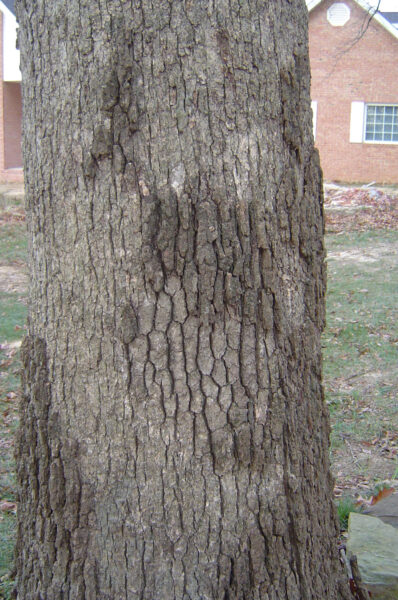

The fungal structures may be mistaken for wood decay fungi, but because smooth patch fungi invade only the nonliving, outer bark tissues, they do not affect the health of the tree. No control measures are needed.
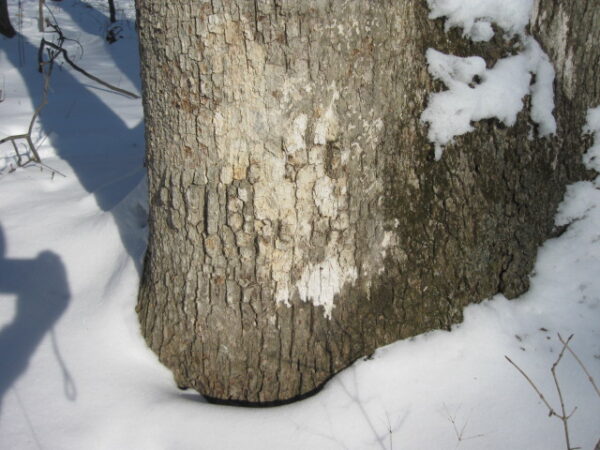
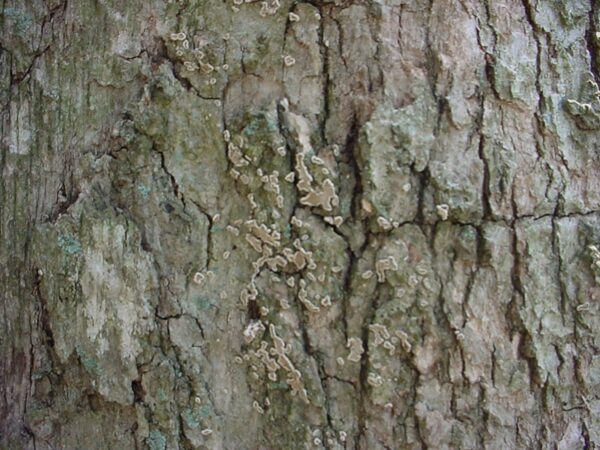
The fungal structures may be mistaken for wood decay fungi, but because smooth patch fungi invade only the nonliving, outer bark tissues, they do not affect the health of the tree. No control measures are needed.
Resources:
Indiana Forestry & Woodland Owners Association (IFWOA) YouTube Channel
District Forester, Indiana DNR Division of Forestry, for over 10 acres of woodlands
Directory of Professional Foresters, Indiana Forestry & Woodland Owners Association (IFWOA)
Indiana Woodland Steward E-newsletters, Eleven Member Organization
The Nature of Oaks Webinar, Purdue Extension-FNR YouTube Channel, Shared from Indiana Forestry & Woodland Owners Association
Purdue Arboretum Explorer
Native Trees of the Midwest, Purdue University Press
A Woodland Management Moment, Playlist, Purdue Extension – Forestry and Natural Resources (FNR) YouTube Channel
Conservation Tree Planting: Steps to Success, Purdue Extension – FNR YouTube Channel
Forest Improvement Handbook, The Education Store
Woodland Stewardship for Landowners, Playlist, Purdue Extension – FNR YouTube Channel
ID That Tree – Video Playlist, Purdue Extension – Forestry and Natural Resources (FNR) YouTube Channel
Invasive Species, Playlist, Purdue Extension – FNR YouTube Channel
Invasive Plant Species Identification, Video, Purdue Extension – FNR YouTube Channel
Report Invasive Species, Purdue Invasive Species
Subscribe – Purdue Extension-FNR YouTube Channel
Tom Creswell, Plant & Pest Diagnostic Laboratory Director
Purdue Botany and Plant Pathology
Purdue Landscape Report: The bitter winter cold has finally passed us (or has it? It’s hard to tell in the Midwest)! The days are getting warmer and longer, and that means the insects are coming out of their overwintering stages. As you prepare for your landscaping and gardening this year, are you implementing preventative measures for pests? Now is the time to think about those strategies to minimize the damage to your plants.
Preventing pest issues is foundational to integrated pest management. The first step is always to start with healthy and clean plants. Don’t be afraid to bring a hand lens to the store and check for those hard-to-see pests! You don’t want to bring a problem home. Next, remember that many pests will thrive due to improper watering, light conditions, or fertilization. Avoid these issues by reviewing the recommendations for your plants and consulting a soil test. (Read more about why soil tests are essential!)
Finally, which pests/diseases do you anticipate? What are the most common pests on the plants in your landscape? Perhaps you have had issues in past years and know what to expect. Review the biology of these pests and consider implementing preventative measures now. Let’s look at a couple of examples of frequent landscape pests and some management options you can add to your list of spring preparations.
Spider Mites
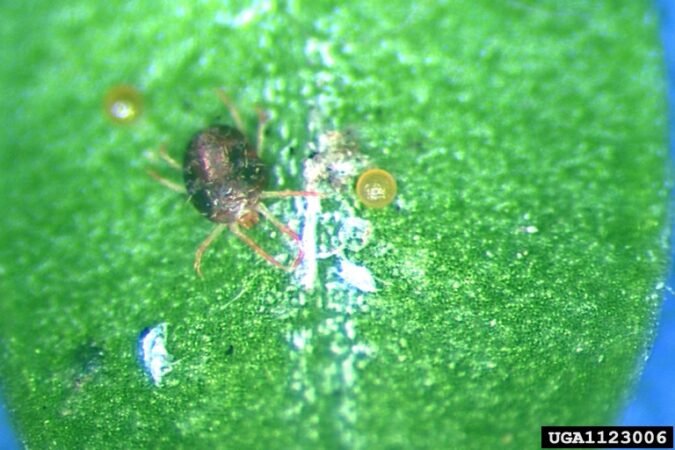
Spider mites overwinter on the host plant or in leaf litter. Around this time of year, cool season mites such as spruce mites and boxwood mites are the dominant issue. Check your plants now for these spider mites, and scout regularly to make sure populations aren’t getting out of control. A rainy spring will help keep the pressure low. If you have to spray, avoid chemicals that will harm natural enemies, which are vital to spider mite management. (Learn more about spider mite management: Spider Mites on Ornamentals; and check out the Purdue Plant Doctor Quick Guide: Managing Spider Mite Mayhem)

Bagworms
Bagworms overwinter as eggs in the bags left on the tree. They’re frequent pests of arborvitae, junipers, and several other trees and shrubs. Take action now to prevent an infestation in the summer that requires costly pesticides. Manually remove the bags from your tree and drown them in soapy water. (Learn more about bagworm management: Bagworms).

Lace Bugs
Lace bugs may overwinter as eggs or adults, depending on the species. They become active again in the spring, so now is a good time to check for these pests. Focus on the undersides of the leaves where the pests are found. Lace bugs prefer hosts planted in sunny areas with a lack of plant diversity, so consider including some flowering plants in your landscape to provide pollen and nectar to beneficials. (Learn more about Lace bug management from the Purdue Plant Doctor Quick Guide: Managing Lace bugs).

What pests do you encounter in the landscape? Take a moment to review their biology and your options for preventative management. Be proactive now and reduce your pest problems for the season ahead. Read the original article, Insects are waking up – are you prepared?
ID That Tree, Playlist, Purdue Extension – FNR YouTube Channel
A Woodland Management Moment, Playlist, Purdue Extension – FNR YouTube Channel
Woodland Stewardship for Landowners, Playlist, Purdue Extension – FNR YouTube Channel
Native Trees of the Midwest, Purdue University Press
Investing in Indiana Woodlands, The Education Store
Indiana Department of Natural Resources: Invasive Species
Indiana Invasive Species Council
Cooperative Invasive Species Management Area (CISMA)
Report Invasive, Purdue Extension
Episode 11 – Exploring the challenges of Invasive Species, Habitat University-Natural Resource University
What are invasive species and why should I care?, Got Nature? Blog, Purdue Extension – FNR
Spotted Lanternfly Found in Indiana, Purdue Landscape Report
Alicia Kelley, Cooperative Agricultural Pest Survey (CAPS) Coordinator
Purdue Extension – Entomology
Welcome to “ID That Tree.” In this edition, Purdue Extension Forester Lenny Farlee introduces us to an autumn olive shrub found across Indiana. This dense shrub requires extensive control and management due to its effects on the habitat. Watch the video to learn about its aggressive growth, wildlife impact, leaf pattern, and other features!
If you have any questions regarding wildlife, trees, forest management, wood products, natural resource planning or other natural resource topics, feel free to contact us by using our Ask an Expert web page.
Resources:
ID That Tree – Video Playlist, Purdue Extension – Forestry and Natural Resources (FNR) YouTube Channel
Purdue Arboretum Explorer
Conservation Tree Planting: Steps to Success, Purdue Extension – FNR YouTube Channel
A Woodland Management Moment, Playlist, Purdue Extension – FNR YouTube Channel
Woodland Stewardship for Landowners, Playlist, Purdue Extension – FNR YouTube Channel
Indiana Department of Natural Resources: Invasive Species
Indiana Invasive Species Council
Cooperative Invasive Species Management Area (CISMA)
Report Invasive, Purdue Extension
Fifty Common Trees of Indiana, Purdue Extension – FNR
Episode 11 – Exploring the challenges of Invasive Species, Habitat University-Natural Resource University
Shrubs and Woody Vines of Indiana and the Midwest, The Education Store
Native Trees of the Midwest, The Education Store
Professional Forester, Indiana Forestry Woodland Owners Association
Forest Improvement Handbook, The Education Store
Find an Arborist, International Society of Arboriculture
Lenny Farlee, Extension Forester
Hardwood Tree Improvement and Regeneration Center
Purdue Department of Forestry & Natural Resources
The Purdue Plant and Pest Diagnostic Laboratory (PPDL) proudly presents its latest Annual Report, offering a comprehensive overview of the year’s most significant insights, diagnostics, and trends. This essential document covers critical topics such as spruce-tordon uptake, hosta virus X, ophiostoma ulmi, diamond back moth, lettuce slime mold, and bentgrass dollar spot. As an indispensable resource for growers, researchers, and the public, PPDL remains at the forefront of providing expert analysis on plant diseases, insect identification, and environmental concerns throughout Indiana and beyond.
Visit the PPDL Annual Reports webpage to find the 2024 report and view past reports.
About PPDL:
The Plant and Pest Diagnostic Laboratory (PPDL) remains dedicated to helping protect Indiana’s agriculture, the green industry, and individual landscapes, by providing rapid and reliable diagnostic services for plant disease and pest problems. PPDL also provides appropriate pest management strategies and diagnostics training. They are a participating member lab in the National Plant Diagnostic Network (NPDN), a consortium of Land Grant University diagnostic laboratories established to help protect our nation’s plant biosecurity infrastructure.
Resources:
Find an Arborist, International Society of Arboriculture
Diseases in Hardwood Tree Plantings, The Education Store, Purdue Extension’s resource center
Fifty Common Trees of Indiana
An Introduction to Trees of Indiana
Shrubs and Woody Vines of Indiana and the Midwest, The Education Store
Tree Installation: Process and Practices, The Education Store
Forest Improvement Handbook, The Education Store
Invasive Species, Playlist, Purdue Extension – FNR YouTube Channel
Report Invasive Species, Purdue Invasive Species
What are invasive species and why should I care?, Got Nature? Blog, Purdue Extension – Forestry and Natural Resources
Indiana Department of Natural Resources: Invasive Species
Indiana Invasive Species Council
ID That Tree, Purdue Extension-FNR YouTube playlist
Tree Defect Identification, The Education Store
Tree Wound and Healing, Got Nature? Blog, Purdue Extension – Forestry and Natural Resources
Purdue Plant & Pest Diagnostic Laboratory (PPDL)
Purdue Botany and Plant Pathology
The Help the Hellbender research program, based in Purdue Forestry and Natural Resources, was honored with the National Association of Conservation Districts (NACD)’s Friends of Conservation Award at the organization’s annual meeting in Salt Lake City on Feb. 11.
“This award means a lot to our program, not just because it’s always nice to be recognized, but because it demonstrates how our program has successfully expanded beyond just conserving wildlife,” Purdue extension wildlife specialist Nick Burgmeier said. “It’s a recognition of our commitment to working with partners and stakeholders to benefit both our wildlife and human communities. When we work together to protect the soil and the land farmers depend on, we are also working together to protect the water and the land wildlife, including Hellbenders, depend on.”

Nick Burgmeier receiving the award
In its award recognition, the NACD noted:
“Led by Dr. Rod Williams and Nick Burgmeier, the Help the Hellbender Project combines research, education, and conservation to enhance the Hellbender’s habitat and promote awareness. Through a captive-rearing program, the project is helping to restore the dwindling population of hellbenders in Indiana’s Sinking Blue River Watershed. The Help the Hellbender Project’s multifaceted approach has benefited both local communities and wildlife now and into the future.”
The NACD award follows a county level Friends of Conservation Award from the Washington County Soil & Water Conservation District in February 2023 and an Indiana state level award in January 2024.
The Help the Hellbender team also received the Outstanding Achievement Award, Academic Sector, from the Indiana Water Resources Association in June 2023.
In March 2023, they received the Budd Denneman Partners in Conservation Excellence award from the Indiana Department of Natural Resources Division of Fish and Wildlife to honor outstanding conservation efforts. The Help the Hellbender partnership is a collaboration between the Indiana DNR and Purdue University with funding support from the U.S. Fish & Wildlife Service and partners in local governments, universities, non-governmental organizations and zoos that are working to recover the state-endangered hellbender. The partnership is the largest and most comprehensive group working to recover an imperiled amphibian in Indiana.
The eastern hellbender (Cryptobranchus alleganiensis alleganiensis) is a large, fully aquatic salamander, nicknamed the snot otter, water dog, devil dog, Allegheny alligator and water eel among other things. Their decline in Indiana started in the early-to-mid 1900s because of habitat loss and poor water quality. Hellbenders play an important role in aquatic ecosystems and are indicators of clean water.
For the last 17 years, the Help the Hellbender team has been researching eastern hellbenders, spearheading regional conservation efforts and advancing hellbender captive propagation, or the rearing of this ancient animal in captivity for their eventual return to the wild.
Each fall, eggs are gathered from rivers and streams in southern Indiana, Kentucky and Ohio and split among the Help the Hellbender lab and zoo partners, to be raised in captivity. At age three or four, the juvenile salamanders are returned to the wild with hopes of increasing the population and encouraging breeding.
Since the project began in 2007, 900 animals have been returned to the Blue River and surrounding areas, accounting for a 670% increase over the original population estimate from 2008-2010. Another 850 hellbenders, not including newly acquired eggs, are currently being raised in captivity.
The Help the Hellbender partnership had a major breakthrough in the summer of 2023 with the documentation of a larval hellbender in the Blue River while conducting routine surveys. This discovery is significant because over the past four decades, only adult hellbenders have been documented in the Blue River. The presence of a larval salamander suggests that conservation efforts and rearing programs are accomplishing their goals for the recovery of this endangered species.
Over the years, the lab has procured nearly $7 million in grants to fund engagement and research. All told, the Help the Hellbender lab has produced 33 research publications, eight extension publications and 12 extension videos to share about the species as well as how other researchers and the general public can aid hellbenders and other species by keeping waterways clear of obstructions and clean.
Given the multifaceted nature of hellbender declines and the broad scope of the problem, diverse stakeholders needed to be engaged to form a collaborative interdisciplinary team of organizations and conservation groups with a common goal. Consequently, a key feature of the program is the partnerships that have been cultivated. Help the Hellbender has assembled a diverse group of 24 partners, including federal, state, and local agencies, non-profits, industry, academic, zoological, and outreach-focused groups, to address the recovery of a threatened aquatic salamander. The HTH team provided the leadership necessary to bring these groups together to forge a successful path to conserve and recover the hellbender in Indiana.
The Help the Hellbender lab, now under the leadership of Dr. Jason Hoverman, is actively collaborating with the Indiana Department of Natural Resources, Indiana Division of Fish and Wildlife, the Nature Conservancy and the Sam Shine Foundation as well as several other partners across 13 states on a number of conservation projects and educational opportunities forteachers, children, farmers and more.
The newest addition to the partnership’s conservation efforts is the Farmers Helping Hellbenders project, which offers funding opportunities to agricultural producers in the Blue River – Sinking Watershed to implement conservation practices on their land to assist with topsoil retention, the improvement of aquatic resources and the recovery of Eastern Hellbenders.
The project, which is made possible by a $2.7 million in funding from the U.S. Department of Agriculture’s Regional Conservation Partnership Program, aims to improve hellbender habitat in a four-county region in south central Indiana, the only remaining habitat for hellbenders in the state, by expanding the use of agricultural conservation practices that lead to decreased sedimentation in local rivers systems. Williams talks more about hellbenders and the Farmers Helping Hellbenders project in this YouTube video.
The program is already producing astounding results. When the first two years of signed contracts (2023 and 2024) are complete, they will result in:
- Reduction of sediment by 2,568,680 pounds per year
- Reduction in nitrogen by 9,040 pounds per year
- Reduction in phosphorus by 2,374 pounds per year
Eligible producers and forest landowners who wish to implement conservation practices on their land should discuss their options with their local district conservationist. For more information or to submit an application, contact your local district conservationist by visiting Farmers.gov/Service-locator.
An in depth look at the hellbender program’s success is available through the story “Rebuilding Indiana’s Hellbender Habitat” from the Natural Resources Conservation Service.
The article was shared from Purdue College of Agriculture News: Help the Hellbender Research Program Honored with Friends of Conservation Award.
Resources:
USDA Awards Farmers Helping Hellbenders Project in Funding, Purdue Extension – Forestry and Natural Resources (FNR) Got Nature? Blog
Improving Water Quality by Protecting Sinkholes on Your Property, Purdue Extension – FNR YouTube Channel
Improving Water Quality Around Your Farm video, Purdue Extension – FNR YouTube Channel
Adaptations for Aquatic Amphibians, The Education Store, Purdue Extension’s resource center
Hellbenders Rock! Nature of Teaching Lesson Plan, The Education Store
Nature of Teaching – Hellbenders Rock Sneak Peek video, Purdue Extension – FNR YouTube Channel
Nature of Teaching – Hellbenders Rock webinar video, Purdue Extension – FNR YouTube Channel
Learn about hellbenders and take a tour of Purdue’s hellbender rearing facility video, Purdue Extension – FNR YouTube Channel
Learn about the hellbender work at Mesker Park Zoo video, Purdue FNR Facebook
Learn about hellbender work at The Wilds video, Purdue FNR Facebook
Dr. Rod Williams’ 2017 TEDx Talk Help the Hellbenders video, Purdue Extension – FNR YouTube Channel
A Moment in the Wild – Hellbender Hides video, Purdue Extension – FNR YouTube Channel
A Moment in the Wild – Hellbender Release video , Purdue Extension – FNR YouTube Channel
Wendy Mayer, FNR Communications Coordinator
Purdue University Department of Forestry and Natural Resources

Recent Posts
- Beetle that attacks Tree-of-Heaven found in Indiana, Purdue Landscape Report
Posted: March 20, 2026 in Invasive Insects, Wildlife, Woodlands - ID That Tree: Dwarf Chinkapin Oak
Posted: in Forestry, Urban Forestry, Wildlife, Woodlands - DNR Hiring for Indiana Conservation Officer Positions, MyDNR
Posted: March 9, 2026 in Urban Forestry, Wildlife, Woodlands - ID That Tree: Shumard Oak
Posted: in Plants, Urban Forestry, Wildlife, Woodlands - Uniting Indiana Residents Against Invasive Species
Posted: February 27, 2026 in Community Development, Invasive Insects, Wildlife - Have You Seen a Soaring Eagle Lately? Morning Ag Clips
Posted: February 25, 2026 in Urban Forestry, Wildlife - Register for Natural Resources Teacher Institute’s Class of 2026
Posted: February 19, 2026 in Forestry, Wildlife, Woodlands - ID That Tree: Fragrant Sumac
Posted: February 4, 2026 in Plants, Urban Forestry, Wildlife - Woodsy Owl Edition for Educational Learning, USDA – U.S. Forest Service
Posted: January 21, 2026 in Forestry, Forests and Street Trees, Got Nature for Kids, Urban Forestry, Wildlife - Opt-in to the Deer Management Survey, MyDNR
Posted: January 12, 2026 in Forestry, Wildlife
Archives
Categories
- Alert
- Aquaculture/Fish
- Aquatic/Aquaculture Resources
- Ask the Expert
- Christmas Trees
- Community Development
- Disease
- Drought
- Forestry
- Forests and Street Trees
- Gardening
- Got Nature for Kids
- Great Lakes
- How To
- Invasive Animal Species
- Invasive Insects
- Invasive Plant Species
- Land Use
- Natural Resource Planning
- Nature of Teaching
- Plants
- Podcasts
- Ponds
- Publication
- Safety
- Spiders
- Timber Marketing
- Uncategorized
- Urban Forestry
- Webinar
- Wildlife
- Wood Products/Manufacturing
- Woodland Management Moment
- Woodlands