 Purdue University - Extension - Forestry and Natural Resources
Got Nature? Blog
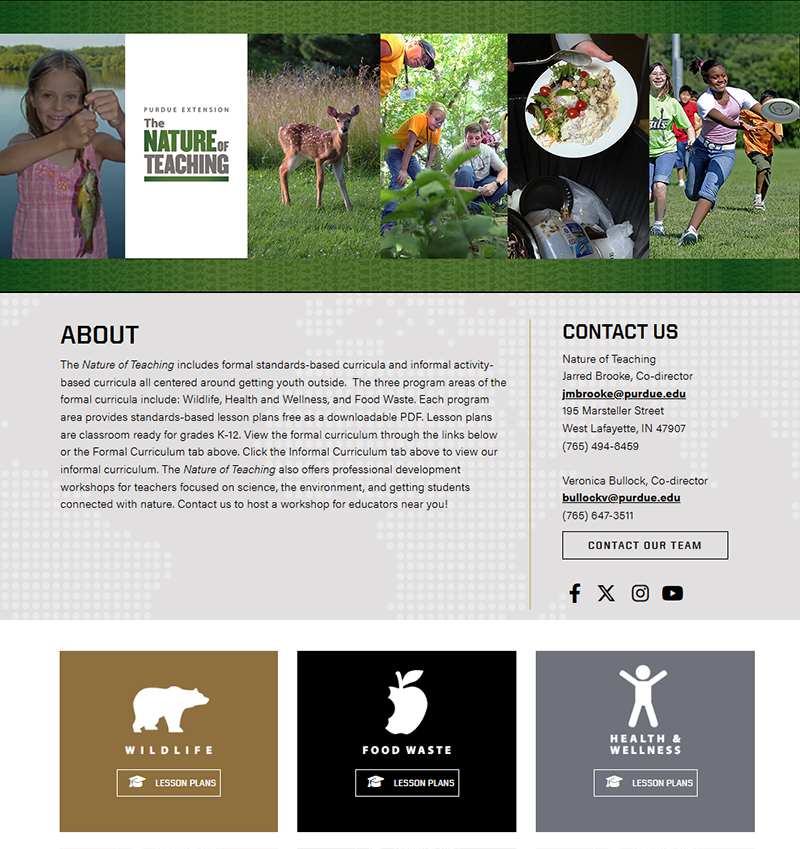 As teachers prepare their lessons for the fall, The Nature of Teaching is a great website to visit for science-based resources. Teachers can find free lesson plans, printable, posters, a photo library, information on upcoming workshops and more. You will find on the website tabs titled “Formal Curriculum” and “Informal Curriculum.” The Nature of Teaching also offers professional development workshops for teachers focused on science, the environment, and getting students connected with nature.
These organized lesson plans meet several K-5 Science and Math Academic Standards along with three 9-12 Natural Resource Management Academic Standards.
Wildlife curriculum include:
- Animal Diversity and Tracking
- Discovering the Watershed: Effects on Water Quality
- Common Indiana Mammals: Natural History and Identification
- Invasive Plants: Impact on Environment and People
- Hellbenders Rock! Natural History and Conservation of the Eastern Hellbender
Food Waste curriculum include:
- Food Waste and Natural Resources
- What a Waste of Food!
- Food Waste and The Environment
- Food Waste Solutions
- Transporting Food Waste
Health & Wellness curriculum include:
- Unit 1 Benefits of Connecting with Nature
- Unit 2 Gardening Station
- Unit 3 Tree Talk Station
Other resources:
- Help the Hellbender, Purdue Extension
- Indiana Department of Natural Resources (INDNR): For Kids
- 4-H, Purdue Extension
- National FFA Organization
- Indiana FFA
- Flying Wild, Association of Fish & Wildlife Agencies
- Project Learning Tree, Indiana Department of Natural Resources
- Project Wet
- Project Wild
- Indiana Wildlife Habitat Evaluation Program (WHEP)
Contact The Nature of Teaching team if you have any questions regarding workshops, certifications and curriculum.
The Nature of Teaching, Purdue Extension
 Several myths have surfaced and resurfaced over many years. Indiana’s state forests have been managed by the Division of Forestry since the first state forest was established in 1903. Questions arise including acreage, management, level of harvest, the forestry profession and a number of other issues. The maintenance of ecosystem processes is inherently more important than a given stage of development that must be preserved.
Check out the Forest Management and Wildlife Habitat Myths and Truths of Indiana State Forests (pdf).
Resources:
Frost Seeding to Establish Wildlife Food Plots and Native Grass and Forb Plantings – Purdue Extension YouTube
Wildlife Habitat Hint: Tips for Evaluating a First Year Native Grass and Forb Plantings, Purdue Extension – FNR YouTube Channel
Drone Seeding Native Grasses and Forbs: Project Overview & Drone Setup, Purdue Extension – FNR YouTube channel
Forest Improvement Handbook, The Education Store
Ordering Seedlings from the State Forest Nursery System, Got Nature? – Purdue Extension-Forestry & Natural Resources (FNR)
Designing Hardwood Tree Plantings for Wildlife – The Education Store
ID That Tree – YouTube Playlist
Forest Management for Reptiles and Amphibians: A Technical Guide for the Midwest, The Education Store
Ask the Expert: Hardwood Ecosystem Experiment – Birds and Salamander Research, Purdue Extension – FNR
A Template for Your Wildlife Habitat Management Plan, The Education Store
Managing Your Woods for White-Tailed Deer, The Education Store
Woodland Stewardship for Landowners, Playlist, Purdue Extension – FNR YouTube channel
Nature of Teaching Unit 1: Animal Diversity and Tracking, The Education Store
Subscribe Purdue Extension – Forestry and Natural Resources YouTube Channel, Playlists include wildlife, Nature of Teaching, Moments in the Wild and much more.
Indiana Department of Natural Resources
Division of Fish and Wildlife
As an Extension Wildlife Specialist, this is one of the most common questions I receive. The answer to this seemingly simple question can actually be quite complicated. It depends in part on what wildlife species you desire and what objectives you have for wildlife and other land uses for your property. There is no one plant that will do it. Food habit studies show that deer, turkey and many other wildlife species can consume hundreds of plant species throughout the year. With that in mind, focusing on one or two “miracle” plants would not yield great results (also remember that the presence of wildlife on your property depends on the surrounding properties).
If you have a particular species of wildlife you are interested in, you can compare their habitat 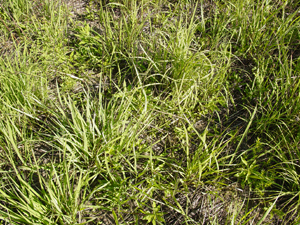 to what you have available to determine what is missing or limiting. You may also use a more general approach, looking at what major plant types are limiting such as hard mast trees, soft mast trees, shrubs, vines, annual forbs and perennial forbs. You will also want to evaluate water, cavities, downed woody debris or snags.
For questions about what to plant, it is easier to answer specific situations. Recently, a blog reader wrote that they just dredged their pond and spread it on a large open pasture about 50 yards from the pond. The reader wanted to know what to plant to attract quail and pheasant while also benefiting deer and turkey populations. Being in Monroe County, quail is more likely, so I will focus on that.
In the fall and winter, quail feed heavily on plant seeds, especially ragweed, pigweed, foxtail and agricultural crop residue. Spring and summer foods include tender green vegetation and soft fruits. Invertebrates are consumed when available and are essential for the development of chicks.
Cover is equally important in deciding what to plant. A mixture of herbaceous (grass, wildflowers) cover with bare ground interspersed with some woody shrubs or open woodland edges will generally benefit quail. With these in mind and using what the “typical” Indiana landscape looks like, the owner may want to consider the following:
Native Warm Season Grass mix – This provides quality brood and nesting cover. Rates are listed in pounds (lbs.) PLS (Pure Live Seed) per acre. A typical mix for quail recommended by the USDA Natural Resources Conservation Service is listed below. The general idea behind this and other mixes for quail is the bunch grass provides overhead cover above and bare ground and space below. This allows free access to seeds on the ground from the wildflowers along with invertebrates on the ground and vegetation. Quail are small and can’t scratch their way to seeds like turkey and other larger birds.
|
Species
|
Rate (PLS)
|
|
Grasses
|
|
|
Big Bluestem
|
0.25 lbs.
|
|
Sideoats grama
|
2.00 lbs.
|
|
Canada Wildrye
|
1.25 lbs.
|
|
Little Bluestem
|
0.50 lbs.
|
|
Wildflowers
|
|
|
Partridge Pea
|
4 oz.
|
|
Illinois Bundleflower
|
1 oz.
|
|
Purple Prairie Clover
|
3 oz.
|
|
Purple Coneflower
|
2 oz.
|
|
Black-eyed Susan
|
1 oz.
|
|
Wild Bergamot
|
1 oz.
|
|
Showy Tick Trefoil
|
1 oz.
|
|
Butterfly Milkweed
|
2 oz.
|
|
Lead Plant
|
2 oz.
|
|
Round-headed Lespedeza
|
2 oz.
|
Plant a mixture of shrubs – Shrubs provide good resting cover and winter cover for quail. Bare root seedlings planted in the spring should be planted 6 ft. x 6 ft. spacing in clumps “about the size of a large pickup truck.” Species that provide good structure for quail include gray or silky dogwood. American plum and serviceberry will also benefit wild turkey and white-tailed deer.
IMPORTANT: Plant species and mixes recommended above may not be suitable for the site moisture or soil conditions. Improper site preparation and methods will lead to planting failures. Contact your county extension office for proper methods and species that are appropriate for your area. It is always best to have a resource professional visit your site to provide you specific advice that considers your current habitat condition and the equipment and resources available to you, along with what you want to accomplish. In addition to your county extension office, you may want to contact your DNR district wildlife biologist. Finally, planting is only a start. Providing habitat for wildlife, and especially for early successional species such as bobwhite quail, requires continually habitat management that may include invasive species control, prescribed burning, disking or more.
Resources:
Natural Resources Conservation Service Indiana
Pheasant Forever
Quail Forever
Pure Live Seed: Calculations and Considerations for Wildlife Food Plots, Purdue Extension – Forestry and Natural Resources (FNR)
Seed Fillers and Carriers for Planting Native Warm-season Grasses and Forbs, Purdue Extension – FNR
Calibrating a No-Till Drill for Conservation Plantings and Wildlife Food Plots, The Education Store, Purdue Extension resource center
Subscribe: Purdue Extension – Forestry and Natural Resources YouTube Channel
Habitat Help LIVE Q&A – Native Grasses and Forbs for Wildlife, Purdue Extension-FNR Got Nature? Blog/Video
Frost Seeding Native Grasses and Forbs with a Drone (UAV): Lessons Learned, Purdue Extension-FNR Got Nature? Blog/Videos
Creating a Wildlife Habitat Management Plan for Landowners, Purdue Extension-FNR Got Nature? Blog
A Template for Your Wildlife Habitat Management Plan, The Education Store, Purdue Extension resource center
Managing Your Woods for White-Tailed Deer, The Education Store
Dr. Brian MacGowan, Wildlife Extension Specialist
Department of Forestry & Natural Resources, Purdue University
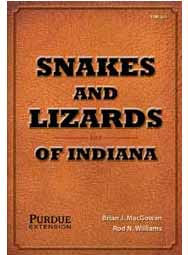 There are 36 species of snakes and lizards in Indiana and about 8,000 species worldwide. Lizards are the most taxonomically diverse and speciose group of reptiles with approximately 5,000 species. Serpentes represents the second most diverse and successful group of reptiles with approximately 3,000 species. Assistant Professor Rod Williams and Extension Wildlife Specialist Brian MacGowan of Purdue Forestry and Natural Resources have authored a book that provides information on the identification, ecology and behavior of snakes and lizards. This colorful resource with maps and photos expands upon their food habits, reproduction and conservation.
For more information about Indiana snakes and lizards, view The Education Store’s Snakes and Lizards of Indiana.
Resources:
Turtles of Indiana, The Education Store
Appreciating Reptiles and Amphibians in Nature, The Education Store
Forestry Management for Reptiles and Amphibians: A Technical Guide for the Midwest, The Education Store
The Nature of Teaching, Unit 3: Reptiles, Amphibians, and the Scientific Method, The Education Store
Snakes of Indiana, The Education Store
IDNR list of Endangered, Threatened & Rare Species
Indiana Herp Atlas
Partners in Amphibian and Reptile Conservation (PARC)
A Moment in the Wild: Black Racer, Video, Purdue Extension – Forestry and Natural Resources YouTube channel
A Moment in the Wild: Eastern Kingsnake, Purdue Extension – FNR Video
A Moment in the Wild: Eastern Hognose, Purdue Extension – FNR Video
Ask An Expert: Turtles and Snakes, Purdue Extension – FNR Video
Ask An Expert, Purdue Extension – FNR Playlist
Brian MacGowan, Wildlife Extension Specialist
Department of Forestry and Natural Resources, Purdue University

Recent Posts
- Beetle that attacks Tree-of-Heaven found in Indiana, Purdue Landscape Report
Posted: March 20, 2026 in Invasive Insects, Wildlife, Woodlands - ID That Tree: Dwarf Chinkapin Oak
Posted: in Forestry, Urban Forestry, Wildlife, Woodlands - DNR Hiring for Indiana Conservation Officer Positions, MyDNR
Posted: March 9, 2026 in Urban Forestry, Wildlife, Woodlands - ID That Tree: Shumard Oak
Posted: in Plants, Urban Forestry, Wildlife, Woodlands - Uniting Indiana Residents Against Invasive Species
Posted: February 27, 2026 in Community Development, Invasive Insects, Wildlife - Have You Seen a Soaring Eagle Lately? Morning Ag Clips
Posted: February 25, 2026 in Urban Forestry, Wildlife - Register for Natural Resources Teacher Institute’s Class of 2026
Posted: February 19, 2026 in Forestry, Wildlife, Woodlands - ID That Tree: Fragrant Sumac
Posted: February 4, 2026 in Plants, Urban Forestry, Wildlife - Woodsy Owl Edition for Educational Learning, USDA – U.S. Forest Service
Posted: January 21, 2026 in Forestry, Forests and Street Trees, Got Nature for Kids, Urban Forestry, Wildlife - Opt-in to the Deer Management Survey, MyDNR
Posted: January 12, 2026 in Forestry, Wildlife
Archives
Categories
- Alert
- Aquaculture/Fish
- Aquatic/Aquaculture Resources
- Ask the Expert
- Christmas Trees
- Community Development
- Disease
- Drought
- Forestry
- Forests and Street Trees
- Gardening
- Got Nature for Kids
- Great Lakes
- How To
- Invasive Animal Species
- Invasive Insects
- Invasive Plant Species
- Land Use
- Natural Resource Planning
- Nature of Teaching
- Plants
- Podcasts
- Ponds
- Publication
- Safety
- Spiders
- Timber Marketing
- Uncategorized
- Urban Forestry
- Webinar
- Wildlife
- Wood Products/Manufacturing
- Woodland Management Moment
- Woodlands