 Purdue University - Extension - Forestry and Natural Resources
Got Nature? Blog
Cerulean Warbler captured in a mist net being processed by researchers.
 Our oak-hickory forests provide us with many environmental, social and economic benefits. Without proper stewardship, these benefits and services can be reduced. Professional foresters have an innovative set of management options for the maintenance of healthy forest ecosystems. But some options raise public objections when applied to public lands (e.g., types of timber harvest, prescribed fire) and the effects of some management options on forests and their native inhabitants are poorly understood. Moreover, forest lands in the Indiana and Midwestern United States primarily are in small privately-owned parcels that change ownership relatively frequently. These lands are often managed for short-term financial gains rather than long-term sustainability.
To address this set of issues, the Hardwood Ecosystem Experiment (HEE), a long-term, large-scale experimental study of forest management and its impacts, was initiated in 2006. Two new videos developed from the HEE provide managers and landowners insights into sustaining our oak forests as well as how some wildlife responses respond to timber harvesting.
Videos:
Hardwood Ecosystem Experiment – Sustaining Our Oak-Hickory Forests, FNR-542-WV, The Education Store
Hardwood Ecosystem Experiment – Wildlife Responses to Timber Harvesting, FNR-543-W,The Education Store
Other resources:
Breeding Birds and Forest Management: the Hardwood Ecosystem Experiment and the Central Hardwoods Region, The Education Store-Purdue Extension
The Hardwood Ecosystem Experiment: Indiana Forestry and Wildlife, The Education Store
Hardwood Ecosystem Experiment
Brian MacGowan, Extension Wildlife Specialist
Department of Forestry & Natural Resources, Purdue University
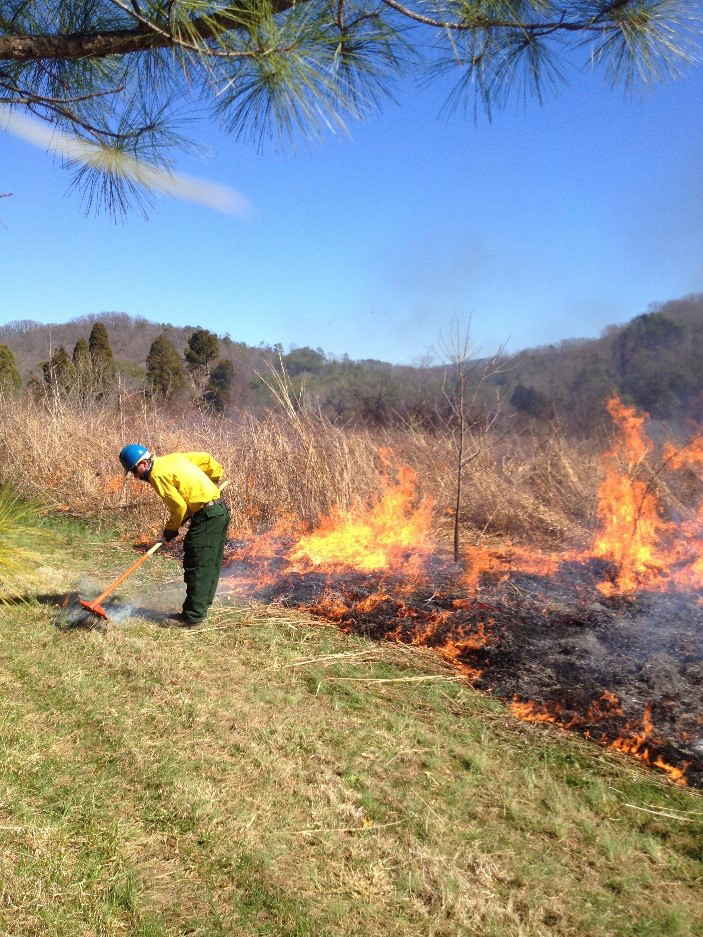
Fire can creep through or spot in cool-season grass firebreaks where thatch has accumulated potentially leading to an escaped fire.
Prescribed fire is an important and effective wildlife habitat management and forestry tool. When used correctly, fire can improve habitat for a variety of wildlife species, forage for cattle, and conditions for oak regeneration among other things. Here are 6 things to consider before you light a prescribed fire in order to ensure it is conducted safely and effectively.
(1) What are your management objectives?
The management objectives you hope to accomplish with prescribed fire need to be outlined in your burn plan. Determining your management objectives will dictate how, when, and how often you burn. For example, you may not burn at the same frequency, in the same season, or with the same firing techniques if you were managing a field of native grasses for grassland songbirds vs. managing your woods for white-tailed deer. For grassland songbirds, you may burn a native-grass field with strip-heading fire during the dormant season every 1-2 years, whereas for white-tailed deer you should burn the woods with a low-intensity backing fire during the dormant or late-growing season every 3-5 years.
(2) Do you have a burn plan?
A well-written burn plan should address all relevant components of the prescribed fire and will answer all the other questions listed below. The plan should include management objectives, the weather prescriptions for the burn, the fuel type(s) (native grass, leaf litter, etc.) being burned, location and make-up of the firebreaks (bare soil, road, creek, etc.), equipment and personnel needed, who to contact before and after the burn, smoke sensitive areas (schools, hospitals, roads), proposed firing techniques, safety considerations, and contingency plan. The burn plan should also include a map of the burn unit and surrounding area. This will help to identify potential hazards or areas where the fire might escape.
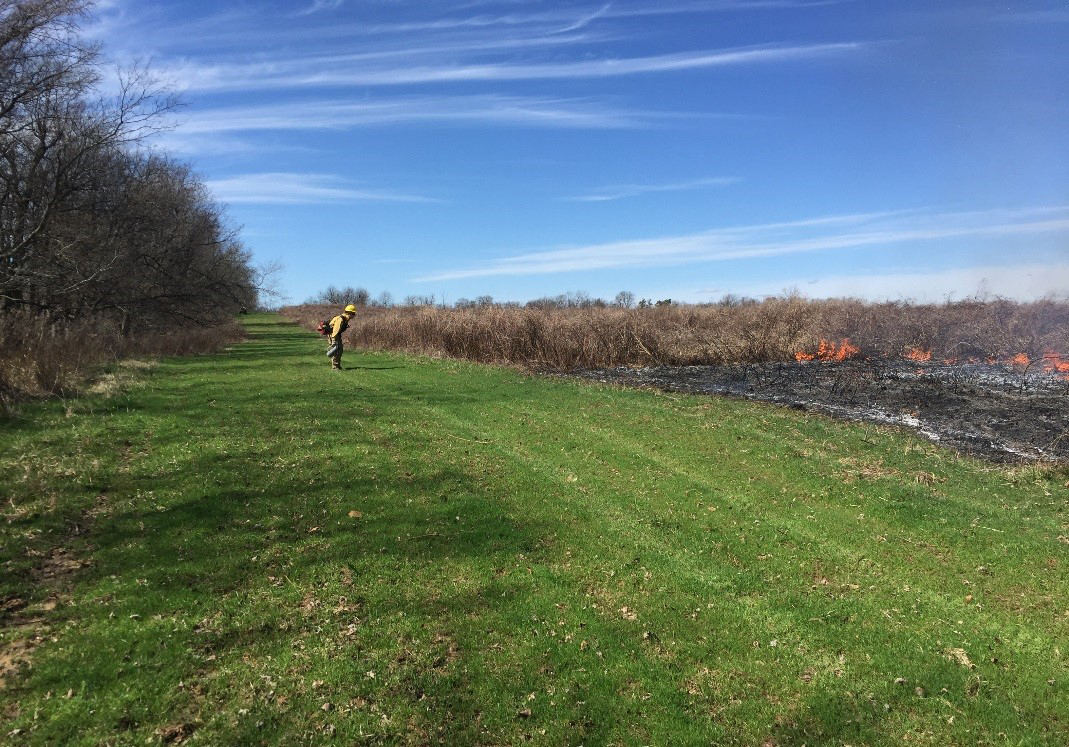
Green growing vegetation with no thatch such as wheat and clover (top picture) and disked or tilled areas (bottom picture) make ideal firebreaks. Wheat or clover firebreaks also double as food plots for various wildlife species and disked firebreaks are attractive to turkeys and bobwhite for brooding areas.
(3) Are your firebreaks in place?
Inadequate firebreaks are a common safety hazard when conducting a prescribed fire and a very likely place for an escape! The firebreak width and composition necessary to conduct your prescribed fire safely should be outlined in your burn plan and firebreaks should be inspected the day of the burn. DO NOT ignite a fire with inadequate firebreaks or if all firebreaks have not been inspected.Mowed cool-season grasses are not ideal firebreaks but they can be used. Dead plant material (thatch) can accumulate in cool-season grass firebreaks following mowing, and this could allow the fire to creep through the firebreak. If you do have mowed cool-season grass firebreaks, make sure thatch has not accumulated and watch them closely during the fire to ensure fire doesn’t creep through the break. You should also consider using water to create a “wet-line” firebreak to contain the fire.Bare soil creates the best man-made firebreak.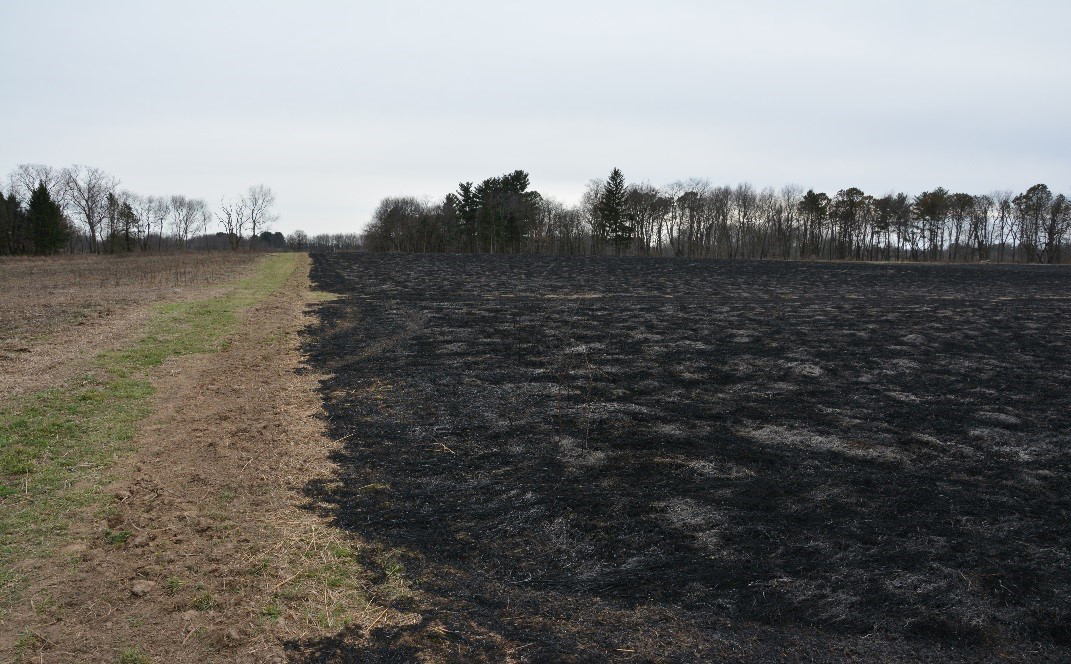 Bare soil firebreaks can be created by disking, tilling, or bulldozing. Empty crop fields, green growing vegetation with no thatch (clover, wheat, alfalfa in the spring), paved, dirt, or gravel roads, and streams, creeks, or rivers also make great firebreaks. In the woods, a leaf blower can be used to remove leaf litter and expose bare mineral soil. Firebreaks should be at least 3 times the width of the adjacent vegetation. In fields of native grasses, firebreaks should be 15-50 feet. By mowing the grasses directly adjacent (10-20 feet) to a firebreak, you can reduce the necessary firebreak width. In the woods, firebreaks only need to be 3-10 feet in width, especially when using only backing fire.
(4) Have you notified the right people about the burn?
Your burn plan should outline who you need to call before and after a prescribed fire. Important people you should call before ignition are the county emergency dispatch (call the non-emergency number), local fire department, and adjacent landowners. You should also call the county dispatch after the fire is complete and extinguished.Calling the county dispatch and local fire department will make them aware of the prescribed fire and sometimes the local fire department might even be willing to lend a hand! Calling dispatch is important because they will likely receive calls from concerned citizens during the fire. Letting them know ahead of time that it is a “prescribed fire” and is being monitored will reduce the number of unnecessary trips by the local fire department.
(5) What are you going to do if the fire escapes?
Escapes do happen and you need to know what to do if your fire escapes. This is called a contingency or escaped fire plan and should be outlined in your burn plan. This plan outlines the roles each person plays if the fire escapes and determines at what point additional resources – fire department or others – should be called to assist in the suppression of the fire.
(6) Have you done your safety briefing?
The last step before ignition of a prescribed fire is the safety briefing. The safety briefing will familiarize personnel with the area, conditions of the firebreaks, weather conditions, radio communication, safety zones and escape routes, contingency plan, and other relevant information. This ensures all the personnel are on the same page when it comes to safely completing the prescribed fire!
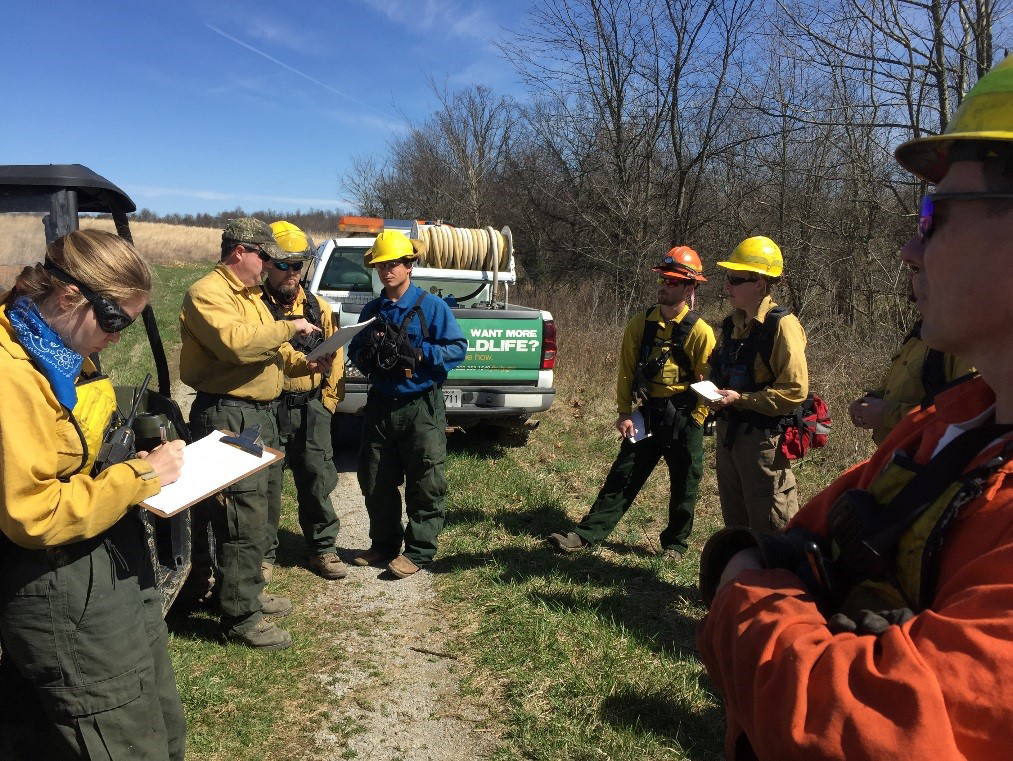
Safety briefings before ignition help familiarize personnel to the area, weather conditions, and potential hazards and help to ensure the fire is conducted safely.
Prescribed fire is an effective management tool, but is only effective if conducted safely! Safety on a prescribed fire is paramount and fires should only be conducted by experienced individuals. If you are interested in learning more about how and why to use prescribed fire on your property, contact your local IN-DNR wildlife biologist.
Additional Resources
Indiana DNR Prescribed Fire Factsheet (pdf), Indiana Department of Natural Resources (IDNR)
Indiana DNR State Parks Prescribed Fire, Indiana Department of Natural Resources (IDNR)
Indiana Woodland Steward Fire and Woodlands, Indiana Woodland Steward
Native Grasses, It’s Time for Management, Got Nature? blog, Purdue Extension-FNR
Jarred Brooke, Extension Wildlife Specialist;
Purdue University Department of Forestry and Natural Resources

Young maple tree leaves.
https://pixabay.com/
Spring is a time of awakening for our forests as the cold temperatures slowly move to another part of the world and the first crop of buds appear on the trees. These delicate buds are the physical representation of energy stored by the tree over the winter for later use in leaf production. This splurging of energy in springtime is an effort by the tree to produce as many leaves as possible to initiate photosynthesis and carbon assimilation for growth. Unfortunately for the trees, these juicy new leaf bundles are an irresistible temptation for the grazing animals in need of nutrients to replenish those stores lost during winter.
How can the trees thwart these hungry ungulates? One would be led to believe that the sedentary nature of trees renders them defenseless. Fortunately, that is not the case. In a research study published earlier this year, scientists at Leipzig University and the German Centre for Integrative Biodiversity Research (iDiv) have found that European beech (Fagus sylvatica L.) and Sycamore maple (Acer pseudoplatanus L.) trees use chemical warfare to fight back against foraging roe deer (Capreolus capreolus).
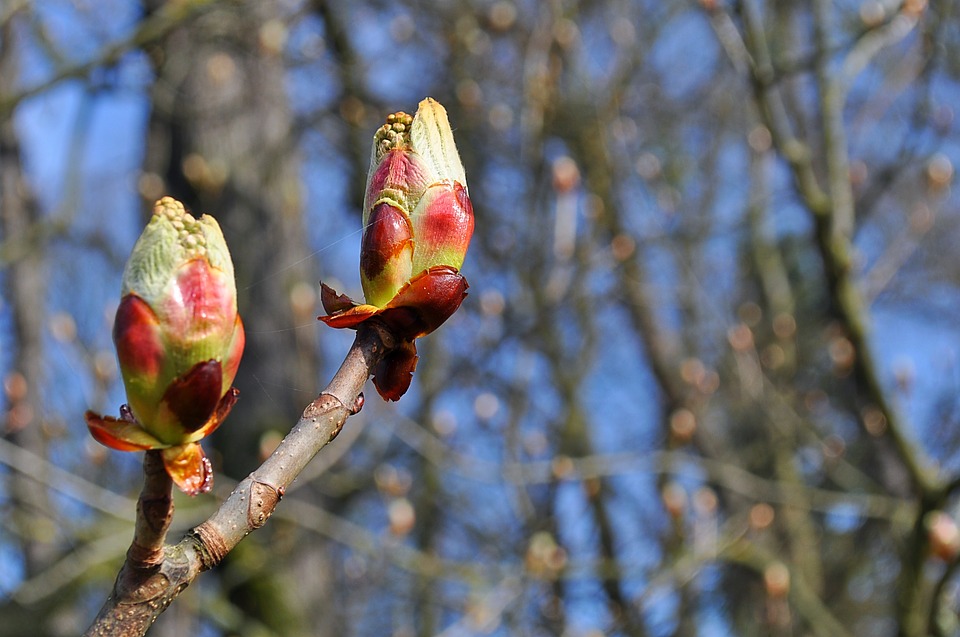
Buds in spring.
https://pixabay.com/
In has been established in other forest species that feeding insects stimulate trees to produce chemicals to deter them from further feeding. This study is the first to present data that indicates that a tree species can identify and selectively defend against browsing deer. Manually clipping buds and leaves to simulate storm or mechanized (chainsaw) damage activated the jasmonic acid wound response pathways in both beech and maple but no defensive responses. However, introduction of deer saliva after clipping the buds and leaves led to increased production of salicylic acid (used in humans as a chemical exfoliant, antiseptic, and acne treatment) and tannins (bitter tasting substance used to cure leather and to make ink) in beech leaves with tannins and flavonol (used as an antioxidant in humans and also functions to block bacterial adhesion) being elevated in maple. These chemicals make the leaves and buds distasteful and difficult to digest.
The results of this study open up entirely new lines of research into tree defense responses. What types of responses do other tree species have? Do they produce stronger chemicals? Is deer browse preference based on the presence or absence of a chemical response? Do they wander from tree to tree to browse to avoid the full onslaught of the chemical response? I am certain that those are stories for another day.
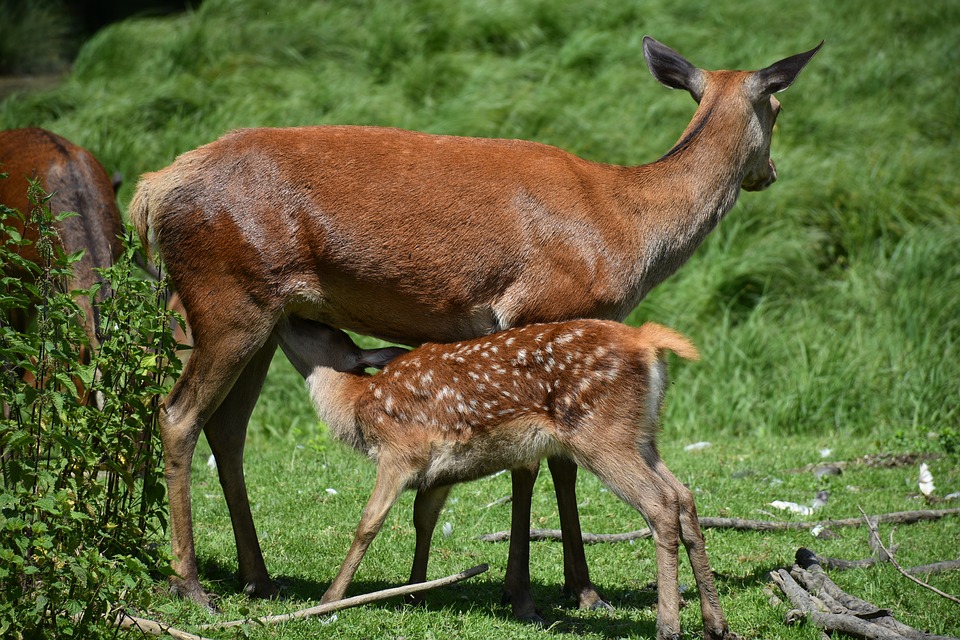
Deer.
https://pixabay.com/.
Reference Materials
Scientific Literature: Ohse, B., Hammerbacher, A., Seele, C., Meldau, S., Reichelt, M., Ortmann, S., and Wirth, C. 2016. Salivary cues: simulated roe deer browsing induces systemic changes in phytohormones and defense chemistry in wild-grown maple and beech saplings. Functional Ecology doi: 10.1111/1365-2435.12717.
Online site: German Centre for Integrative Biodiversity Research (iDiv) Halle-Jena-Leipzig. “Trees recognize roe deer by saliva: Smart defense mechanisms against browsing.” ScienceDaily. ScienceDaily, 12 September 2016. Last Accessed: October 10, 2016.
Resources:
Nuisance Wildlife, Indiana Department of Natural Resources-Fish and Wildlife
Wildlife Damage, Purdue Extension-Department of Forestry and Natural Resources
Preventing Wildlife Damage – Do You Need a Permit?, The Education Store, Purdue Extension
Internet Center for Wildlife Damage Management (ICWDM), University of Wisconsin-Stevens Point
Shaneka Lawson, USDA Forest Service/HTIRC Research Plant Physiologist/Adjunct Assistant Professor
Purdue University Department of Forestry and Natural Resources
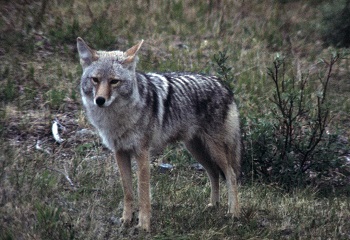
Coyote (Canis latrans) – Photo by Alfred Viola, Northeastern University, Bugwood.org
In acknowledging National Wildlife Week, #nationalwildlifeweek, it seems fitting to place this post regarding several concerned questions that we receive on coyotes. As Spring is just around the corner many urban residents are getting ready for the return of many birds, mammals and amphibians. While folks are quick to recognize the call of spring peepers, or the song of robins, they are surprised to know other types of critters can call their backyard home, or at least visit on occasion. One animal that is getting a lot more attention in recent years is the coyote.
Coyotes are actually native to Indiana, although their historical distribution is much smaller in the state than it is today. Their range expansion is simply the result of their adaptability. Things we have done to the broader landscape combined with less competing animals has opened up new resources to coyotes. You may tend to think that urban landscapes offer little for wildlife species and don’t offer the quality of rural or more “natural” areas. Perhaps surprising to many, urban environments can often support larger densities of wildlife presumably because of increased food resources and lower trapping or hunting pressure. For coyotes, studies have shown that urban coyotes tend to focus activities in natural habitats within the urban landscape. They will still use more well-developed areas and the extent of which varies among animals; however, coyotes will often shift their behavior to avoid human activity.
Coyotes are considered to be a nuisance or even a safety threat by some. They are probably one of the few animals that homeowners want removed simply by seeing them in their yard. However, these fears are rarely justified. Diet studies of urban coyotes indicate they eat primarily rodents and rabbits. Coyote predation may actually help reduce conflicts with other species of wildlife. As a primary predator of Canada goose nests they may limit population growth in urban environments. Similarly, coyotes may do the same for white-tailed deer populations through fawn predation.
Fear of coyotes is derived largely of perceived threats to pets or people. Coyotes have been documented to attack people, but only rarely. Habituation to humans seems to play a role but it is also unclear how other factors contribute to these attacks. For example, the age or social status of the offending coyote and the intentional feeding by humans preceding the attack may play roles. Moreover, not all attacks are the same. Coyotes may attack out of defense, because of disease (e.g., rabies), or other reasons.
The threat to pets, particularly cats or small dogs, is much more real. Coyotes are known predators of cats. In urban areas, predation of cats is slightly higher than in rural areas, although cats still make up only about one percent or less of their diet according to studies. Cat predation may be ecologically beneficial given the impact free ranging cats have on our native wildlife. Attacks on dogs are less common but do occur and are most frequent during the coyote breeding season, December through February. Small dogs are at most risk but larger breeds may be attacked by a pair or family group.
While these facts on coyote behavior may alarm some, the truth is these are all extremely rare cases. Coyotes are around many of us every day and we aren’t even aware of their presence. Coyotes are native to Indiana and can help control populations of other wildlife species that cause more widespread conflicts and property damage. However, there are a few common-sense steps we can do to avoid conflicts with urban coyotes. The most important is to never intentionally feed coyotes or other animals. They don’t need it. Intentional feeding can contribute to coyote’s habitation to people, which is believed to be a contributing factor to attacks. Some also recommend scaring off coyotes you see in the yard by banging pots and pans or similar actions. However, this may cause a defensive response in some animals and it not advisable.
Resources:
Coyotes, IN DNR
Coyotes (PDF), Wildlife Conflicts, Department of Entomology, Purdue University
Should I Be Worried About Coyotes in My Yard?, Purdue Extension – Forestry & Natural Resources (FNR) Got Nature? Blog
Coexisting With Coyotes, Wild Bulletin, Indiana Department of Natural Resources, Division of Fish and Wildlife
Ask the Expert: Coexisting with Coyotes , Purdue Extension – FNR Got Nature? Blog
Urban Coyotes – Should You Be Concerned?, Purdue Extension – FNR Got Nature? Blog
Pets Disappearing? The Cause May Be Coyotes, Purdue Extension – FNR Got Nature? Blog
Question: Which is the correct species of coyotes I have on my land here in Indiana, coyote or coywolf?, Purdue Extension – FNR Got Nature? Blog
Permitted Wildlife Rehabilitators, Indiana Department of Natural Resources
How do you eliminate a nuisance animal on your property?, Indiana Department of Natural Resources (IN DNR)-Fish and Wildlife
Urban Coyote Research Center, Urban Coyote Ecology & Management, Cook County, Illinois
Wildlife Damage, Purdue Extension-Department of Forestry and Natural Resources
Preventing Wildlife Damage – Do You Need a Permit?, The Education Store, Purdue Extension
Internet Center for Wildlife Damage Management (ICWDM), University of Wisconsin
Brian MacGowan, Extension Wildlife Specialist
Department of Forestry & Natural Resources, Purdue University
The Hellbender is a giant, aquatic salamander that has experienced severe population declines throughout its range. It is a sensitive species and there are a number of factors contributing to its declines. To help address the varied threats facing the Hellbender, Help the Hellbender has produced several new products focused on educating both stakeholders and the general public on ways that they can help protect hellbenders.
Help the Hellbender has updated our brochure on hellbender biology and created a series of videos focused and hellbender threats and the relevant stakeholders. The updated brochure expands on the previous edition by including updated information on hellbender biology and the many projects that groups around the country are involved in to help protect hellbenders. Our video series builds off of information in our brochure. The first in this series focuses on the basics of Hellbender population declines. Subsequent videos address practices aimed at improving water quality by implementing conservation practices at farms, livestock operations, and around sinkholes, and also how recreationists can avoid harming Hellbenders.
We have also published two lesson plans targeted at educators of K-5 students. Both lessons contain numerous activities to help keep students engaged while learning about hellbenders and the science of water quality and conservation. Hellbenders Rock! focuses on basic Hellbender biology and the threats that Hellbenders face. Hellbenders Rock! can be combined with the recently published Hellbender Havoc video game to further engage students in learning about hellbender biology and the importance of water quality. Hellbender Havoc is a free app available for download from iTunes and the Google Play Store. The Healthy Water, Happy Home lesson plan focuses on the importance of water quality and how it relates to people and wildlife. Both lesson plans meet Indiana academic standards.
All of our resources are free and can be found at The Education Store, the Purdue Extension resource center. The links are available below. For more information about Eastern Hellbenders and how you can help, please visit helpthehellbender.org.
Resources:
Publications
Healthy Water, Happy Home Lesson Plan – The Education Store, Purdue Extension Resource Center
Hellbenders Rocks! Lesson Plan – The Education Store
Help the Hellbender, North America’s Giant Salamander – The Education Store
Video Games:
Hellbender Havoc – Google Play
Healthy Water, Happy Home Board Game – The Education Store
Videos:
Hellbender Decline – Help the Hellbender, Youtube
How Anglers and Paddlers Can Help the Hellbender – The Education Store
Hellbender ID – YouTube
Improving Water Quality Around Your Farm – The Education Store
Improving Water Quality at Your Livestock Operation – The Education Store
Improving Water Quality by Protecting Sinkholes on Your Property – The Education Store
Nick Burgmeier, Research Biologist & Extension Wildlife Specialist
Purdue Department of Forestry and Natural Resources

Issue:
Woodlands provide a multitude of environmental (e.g., carbon sequestration, enhance water quality, wildlife habitat), economic (e.g., timber, wood products manufacturing, tourism), and social (e.g., recreation, aesthetics) benefits to Indiana residents. The sustainability of these benefits is strongly tied to stability of the resource. In Indiana, 75 percent of the 4.65 million acres of forestland is owned by families. Actions they take on their property can impact the benefits woodlands provide all Indiana residents. However, many do not understand available options or sources of assistance.
What Has Been Done:
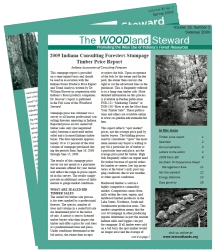 The Department of Forestry and Natural Resources, in partnership with many other organizations, helps produce and mail over 31,000 copies of the Indiana Woodland Steward to woodland owners three times each year. This 16-page, two-color publication includes in-depth articles on forest stewardship and health, invasive species and pests, wildlife habitat management, economics, and more.
Results:
Subscribers owned more woods (71.6 ac) for a longer tenure (33 years) than the average woodland owner in Indiana based on data from the National Woodland Owner Survey. As a group, they were also more active managers based on the proportion enrolled in assistance programs and who had a written stewardship plan. Fifty-four percent regularly utilized information from the Woodland Steward. In addition, 51 percent of respondents have implemented at least one practice they read about from The Woodland Steward, potentially impacting an estimated 1.2 million acres of forestland. His use of print media to communicate with woodland owners could be considered expensive, but clearly a large number of woodland owners regularly read and utilize the information making the average investment per landowner much lower.
When biologists and land managers talk about managing native warm-season grasses (NWSG) they are really talking about managing early-successional plant communities. Early-successional vegetation (i.e., stands of annual or perennial grasses and forbs [broadleaf plants]) provide benefits for a variety of game and non-game wildlife species. Songbirds, northern bobwhite, and ring-necked pheasants use these areas to build nests and raise broods in the summer and for escape and thermal cover in the winter. White-tailed deer also use these areas heavily for bedding, to hide fawns from predators, and the forbs provide deer with excellent nutrition during the summer.
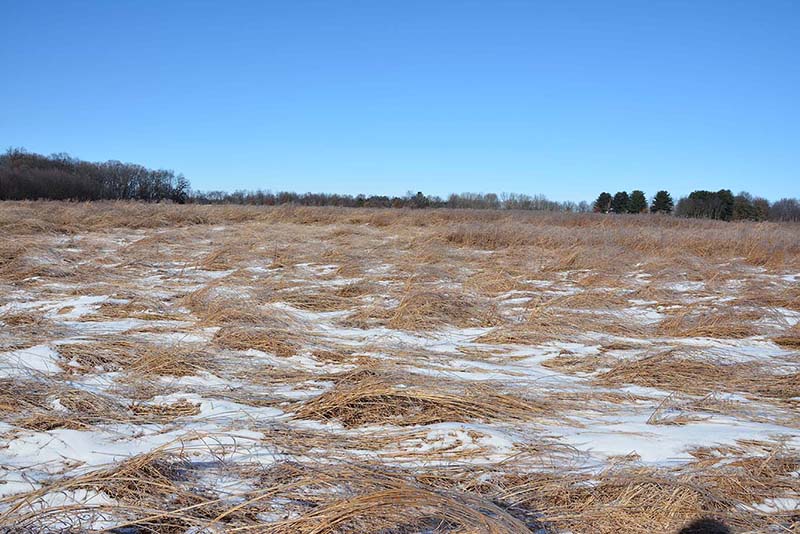
Forbs mixed with grasses help prevent the grasses from falling over and laying flat during the winter.
However, as these stands age their value to most wildlife species decreases drastically! Most stands of planted NWSG have little value, for species such as bobwhite, within 3-5 years of establishment. As the stands age, the tall perennial NWSGs (big bluestem and Indiangrass) become thicker; eventually crowding out all the forbs in the stand and creating a monoculture of grass. In the winter, the grasses fall over or “lodge”, as in the picture, and provide little to no cover.

Forbs mixed with grasses help prevent the grasses from falling over and laying flat during the winter.
This is why programs such as the Conservation Reserve Program require Mid-Contract Management (MCM) during years 4, 5, or 6 of the contract. MCM is aimed at maintaining or enhancing the wildlife value of NWSG stands by thinning the NWSGs providing room for planted and volunteering forbs to grow. These forbs act as supports for the grasses, helping them stand tall all winter, attract pollinators and insects important to foraging songbirds and game birds in the summer, and provide seed throughout the winter. Additionally, thinning the grasses and providing more room for weeds or forbs to grow will make it easier for ground dwelling wildlife to move and forage.
If your stand of NWSGs looks like the picture above, the time to manage them is not now but 2 years ago! However, managing them now can be effective and you have some options!
For most early successional wildlife species, you want the field to be from a 50/50 to 70/30 percent mix of forbs and grasses (favoring forbs). The field should be split into portions and managed on successive years. For larger fields, split the field into 4-5 acres sections. If you have multiple fields on your property you can manage the whole field. The key is to ensure that some cover is left on your farm throughout the winter.
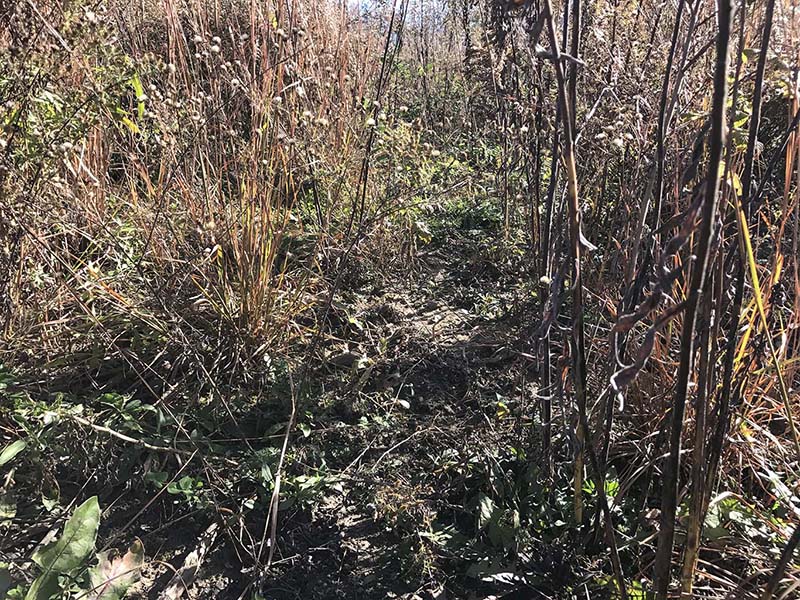
This picture gives you a “quail’s eye view” in a stand of native grasses and forbs with the ideal composition! Notice how the open space between plants and the bare ground would make it easy for a quail to maneuver and feed on insects or seed!
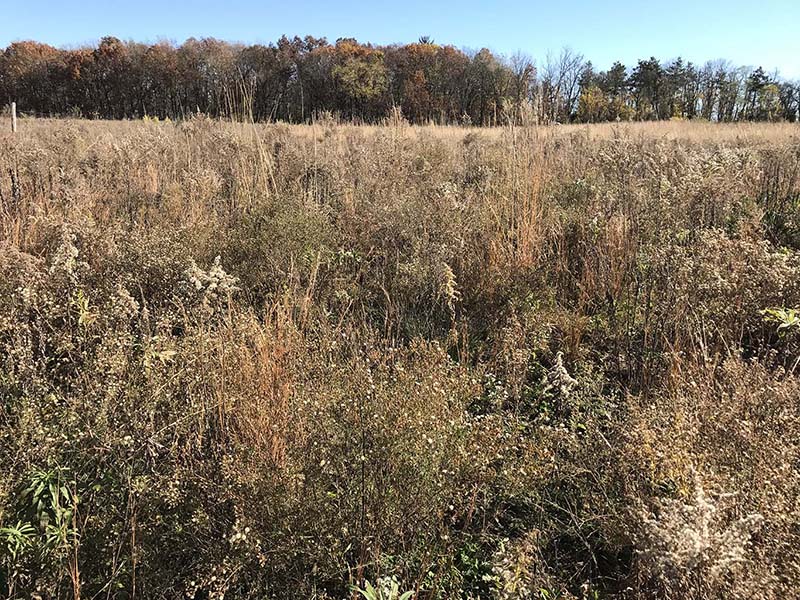
This picture represents the ideal composition of native grass stands; 50% or less of the stand is native grasses and 50% or greater of the stand is comprised of forbs.
September – March
Step 1. Burn or mow a portion of the field.
Step 2. Disk the same portion within a few weeks of burning or mowing the field.
By burning or mowing the field prior to disking, you make it easier for the disk to cut into the soil. The field should be disked so that a majority of the plant debris is worked into the soil and the soil is exposed.
Disking from September through March will result in a more beneficial plant composition than disking in the spring or summer.
May – June or August – September
Step 1. Just after winter and prior to spring green-up (late March or early April) the field should be burned to prepare the field for management. This step is not necessary but can improve the herbicide application. If applying herbicide in Aug-Sep, mowing or burning the field 2-3 weeks prior to application can be beneficial.
Step 2. Apply 2 quarts/acre of glyphosate OR 24 ounces/acre of imazapyr (53% active ingredient) to the field or portions of the field where native grasses are extremely thick.
NOTE: Spot spraying problematic areas are always better than whole field applications, but sometimes whole field applications are warranted.
CAUTION: Imazapyr can harm desirable trees; avoid spraying imazapyr within the drip line of desirable trees.
These management options will reduce or “thin” the native grasses enough to provide forbs from the seed bank with room to grow! The field may look “messy” or “weedy” the first summer or two after application but that’s okay! Actually, it’s what you want! Most of the “weeds” that come from the seed bank provide excellent cover and food for a variety of wildlife species. Just be sure to control undesirable weeds such as Canada thistle, if they appear.
For more information on how to manage NWSG or other early successional vegetation, contact your local IN-DNR wildlife biologist or NRCS office.
Additional Resources:
Herbicides to reduce NWSG density, SEAFWA
Landowner’s guide to NWSG management, TRACE
Quail Habitat – Putting the Numbers in Perspective, The Education Store
Control of Canada Thistle in CRP and Other Noncrop Acreage, The Education Store
Jarred Brooke, Extension Wildlife Specialist;
Purdue University Department of Forestry and Natural Resources

Videos:
Ask an Expert: Anurans (Frogs and Toads)
Ask an Expert: Salamanders
A Moment in the Wild: Wood Frogs
A Moment in the Wild: American Toad
A Moment in the Wild YouTube Playlist-Subscribe
Reptiles, Amphibians & the Scientific Method
Learn All About Hellbenders and Take a Tour

By signing up for the Indiana nongame email list, you’ll get updates on endangered species status, new projects and updates on existing projects including barn owls, bats, turtles, mussels, and countless other species. You can unsubscribe at any time, no risk, just great info right to your mailbox.
Resources:
Nongame & Endangered Wildlife, Indiana Department of Natural Resources (IDNR)
Promote Conservation Through an Effective Campaign, The Education Store
Assessing Your Land’s Potential for Wildlife, The Education Store
A Landowner’s Guide to Sustainable Forestry: Part 4: Conserving Nature, The Education Store
Developing a Wildlife Habitat Management Plan, The Education Store
Indiana Department of Natural Resources (IDNR)
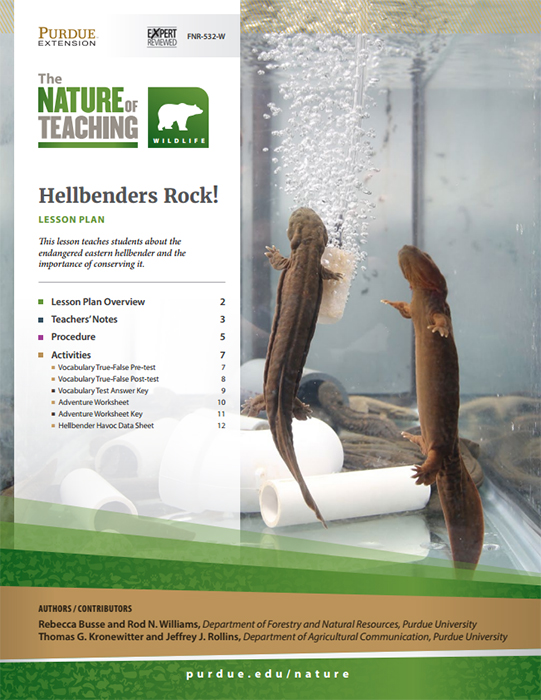 This new lesson plan from The Nature of Teaching titled Hellbenders Rock! is full of engaging activities to teach K-5 students about the endangered eastern hellbender, while meeting Indiana academic standards. Hellbenders Rock is available as a free download in The Education Store, complete with instructional PowerPoint, videos, vocabulary worksheets, along with instructions on how to download the free Hellbender Havoc app.
This lesson is unique in the way that it requires teachers to download the free Hellbender Havoc app from the Google Play Store or Apple App Store to help students apply the educational content learned throughout the lesson. The lesson requires 60 minutes of class time to complete, including time for the students to play the app and complete the worksheets that accompany it. Throughout the lesson, students learn how to identify the eastern hellbender, how to describe the hellbender’s lifecycle, how the hellbender relates to healthy water quality, and how we can help the hellbender.
To find more nature-themed lesson plans that incorporate academic standards and teach material in hands-on and engaging ways, visit The Nature of Teaching website. All lesson plans are free to download. To learn more about the eastern hellbender and how we can help, visit HelpTheHellbender.org.
Resources:
Hellbenders Rock! Lesson Plan, The Education Store, Purdue Extension Resource Center
The Nature of Teaching, Purdue Extension
Help the Hellbender, Purdue Extension
Hellbender Havoc App-Purdue Envision PC or Hellbender Havoc-Apple App Store
Rebecca Busse, Graduate Student
Purdue Department of Forestry and Natural Resources
Rod Williams, Associate Professor of Wildlife Science
Purdue Department of Forestry and Natural Resources

Recent Posts
- Beetle that attacks Tree-of-Heaven found in Indiana, Purdue Landscape Report
Posted: March 20, 2026 in Invasive Insects, Wildlife, Woodlands - ID That Tree: Dwarf Chinkapin Oak
Posted: in Forestry, Urban Forestry, Wildlife, Woodlands - DNR Hiring for Indiana Conservation Officer Positions, MyDNR
Posted: March 9, 2026 in Urban Forestry, Wildlife, Woodlands - ID That Tree: Shumard Oak
Posted: in Plants, Urban Forestry, Wildlife, Woodlands - Uniting Indiana Residents Against Invasive Species
Posted: February 27, 2026 in Community Development, Invasive Insects, Wildlife - Have You Seen a Soaring Eagle Lately? Morning Ag Clips
Posted: February 25, 2026 in Urban Forestry, Wildlife - Register for Natural Resources Teacher Institute’s Class of 2026
Posted: February 19, 2026 in Forestry, Wildlife, Woodlands - ID That Tree: Fragrant Sumac
Posted: February 4, 2026 in Plants, Urban Forestry, Wildlife - Woodsy Owl Edition for Educational Learning, USDA – U.S. Forest Service
Posted: January 21, 2026 in Forestry, Forests and Street Trees, Got Nature for Kids, Urban Forestry, Wildlife - Opt-in to the Deer Management Survey, MyDNR
Posted: January 12, 2026 in Forestry, Wildlife
Archives
Categories
- Alert
- Aquaculture/Fish
- Aquatic/Aquaculture Resources
- Ask the Expert
- Christmas Trees
- Community Development
- Disease
- Drought
- Forestry
- Forests and Street Trees
- Gardening
- Got Nature for Kids
- Great Lakes
- How To
- Invasive Animal Species
- Invasive Insects
- Invasive Plant Species
- Land Use
- Natural Resource Planning
- Nature of Teaching
- Plants
- Podcasts
- Ponds
- Publication
- Safety
- Spiders
- Timber Marketing
- Uncategorized
- Urban Forestry
- Webinar
- Wildlife
- Wood Products/Manufacturing
- Woodland Management Moment
- Woodlands