 Purdue University - Extension - Forestry and Natural Resources
Got Nature? Blog
On this edition of ID That Tree, meet umbrella magnolia, a small tree easily identified by the clusters of long simple leaves at the end of the twigs, which form an umbrella shape, and by its beautiful white blossoms in the spring.
If you have any questions regarding wildlife, trees, forest management, wood products, natural resource planning or other natural resource topics, feel free to contact us by using our Ask an Expert web page.
Resources:
ID That Tree, Playlist, Purdue Extension – Forestry and Natural Resources YouTube Channel
A Woodland Management Moment, Playlist, Purdue Extension – FNR YouTube Channel
Shrubs and Woody Vines of Indiana and the Midwest, The Education Store, Purdue Extension Resource Center
Native Trees of the Midwest, The Education Store
Investing in Indiana Woodlands, The Education Store
Forest Improvement Handbook, The Education Store
Pin Oak, Native Trees of Indiana River Walk, Purdue Fort Wayne
Lenny Farlee, Sustaining Hardwood Extension Specialist
Purdue University Department of Forestry and Natural Resources
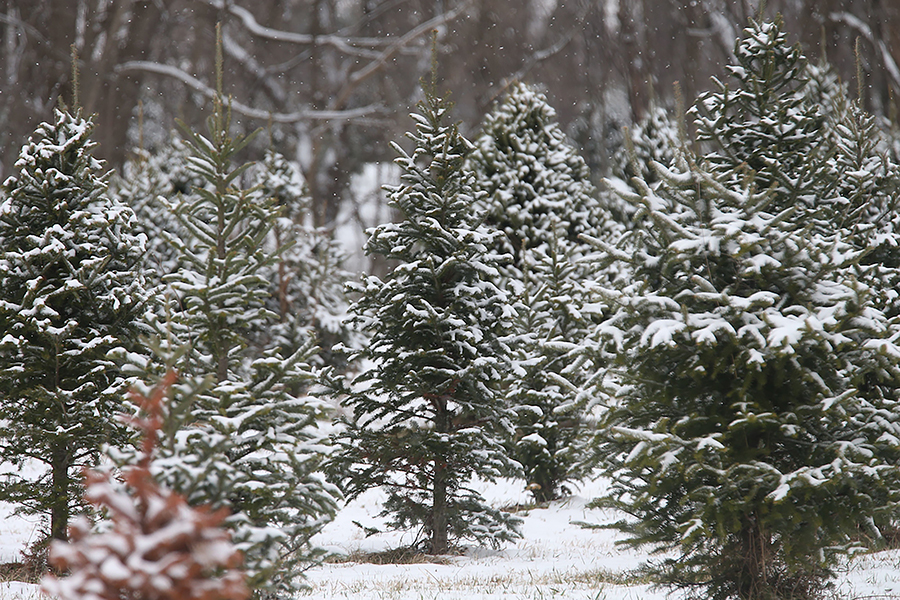 With the holidays over the needles are beginning to fall from your natural Christmas tree, continue to spread holiday cheer by returning your tree to nature.
Jarred Brooke, Extension wildlife specialist, shares a few creative ways you can repurpose and recycle your tree this year.
“Before you throw your used natural Christmas tree in the trash, think about recycling it on your property. Instead of taking up space in the landfill, your tree could decompose naturally while providing cover and food for fish, wildlife or insects,” said Brooke.
No matter how you choose to repurpose your tree, make sure it is free from ornaments and decorations. Do not recycle trees that have been sprayed with “fake” snow or treated with chemicals.
Create a habitat for fish
Throwing used Christmas trees in ponds is a great way to recycle the tree and provide a fish habitat to your pond. The small branches provide hiding spots for small fish to escape from larger predators.
If the pond is frozen with more than four inches of ice, you can drag your tree onto the ice. The tree will fall into place once the ice melts.
You should only add Christmas trees to your ponds or other private ponds with the permission of the pond owner. While they do provide great habitats for fish, they can be a nuisance for fishing as hooks and lines may get caught on branches. It is recommended that you keep trees away from popular fishing areas like docks.
Resources:
Selecting a Real Christmas Tree, Got Nature? Blog, Purdue Extension-Forestry and Natural Resources
A Choose-and-Cut Pine and Fir Christmas Tree Case Study, The Education Store, Purdue Extension’s resource center
Living Christmas Trees For The Holidays and Beyond, The Education Store
Growing Christmas Trees, The Education Store
Selecting an Indiana-Grown Christmas Tree, The Education Store
Forest/Timber Playlist, subscribe to Purdue Extension – Forestry and Natural Resources YouTube Channel
Aquatics & Fisheries, Playlist, Purdue Extension – Forestry and Natural Resources YouTube Channel
Ask an Expert: Pond Wildlife Management, Video, Purdue Extension – FNR YouTube Channel
Ask an Expert: Pond Management: What to Do in Winter, How to Plan for Spring, Video, Purdue Extension – FNR YouTube Channel
Aquatic Plant Management: Identifying and Managing Aquatic Vegetation, The Education Store
Pond and Wildlife Management, Purdue Extension-Forestry and Natural Resources
Jarred Brooke, Wildlife Extension Specialist
Purdue Forestry and Natural Resources
On this edition of ID That Tree, meet a species of native Indiana oak from the broad red/black oak family, which is found in bottomlands and areas with imperfectly drained soil, the Pin Oak. This species is recognizable by round acorns with flat scales, bristle-tipped leaves with deep 90-degree angled lobes, and lower branches that angle downward.
If you have any questions regarding wildlife, trees, forest management, wood products, natural resource planning or other natural resource topics, feel free to contact us by using our Ask an Expert web page.
Resources:
ID That Tree, Playlist, Purdue Extension – Forestry and Natural Resources YouTube Channel
A Woodland Management Moment, Playlist, Purdue Extension – FNR YouTube Channel
Shrubs and Woody Vines of Indiana and the Midwest, The Education Store, Purdue Extension Resource Center
Native Trees of the Midwest, The Education Store
Investing in Indiana Woodlands, The Education Store
Forest Improvement Handbook, The Education Store
Pin Oak, Native Trees of Indiana River Walk, Purdue Fort Wayne
Lenny Farlee, Sustaining Hardwood Extension Specialist
Purdue University Department of Forestry and Natural Resources
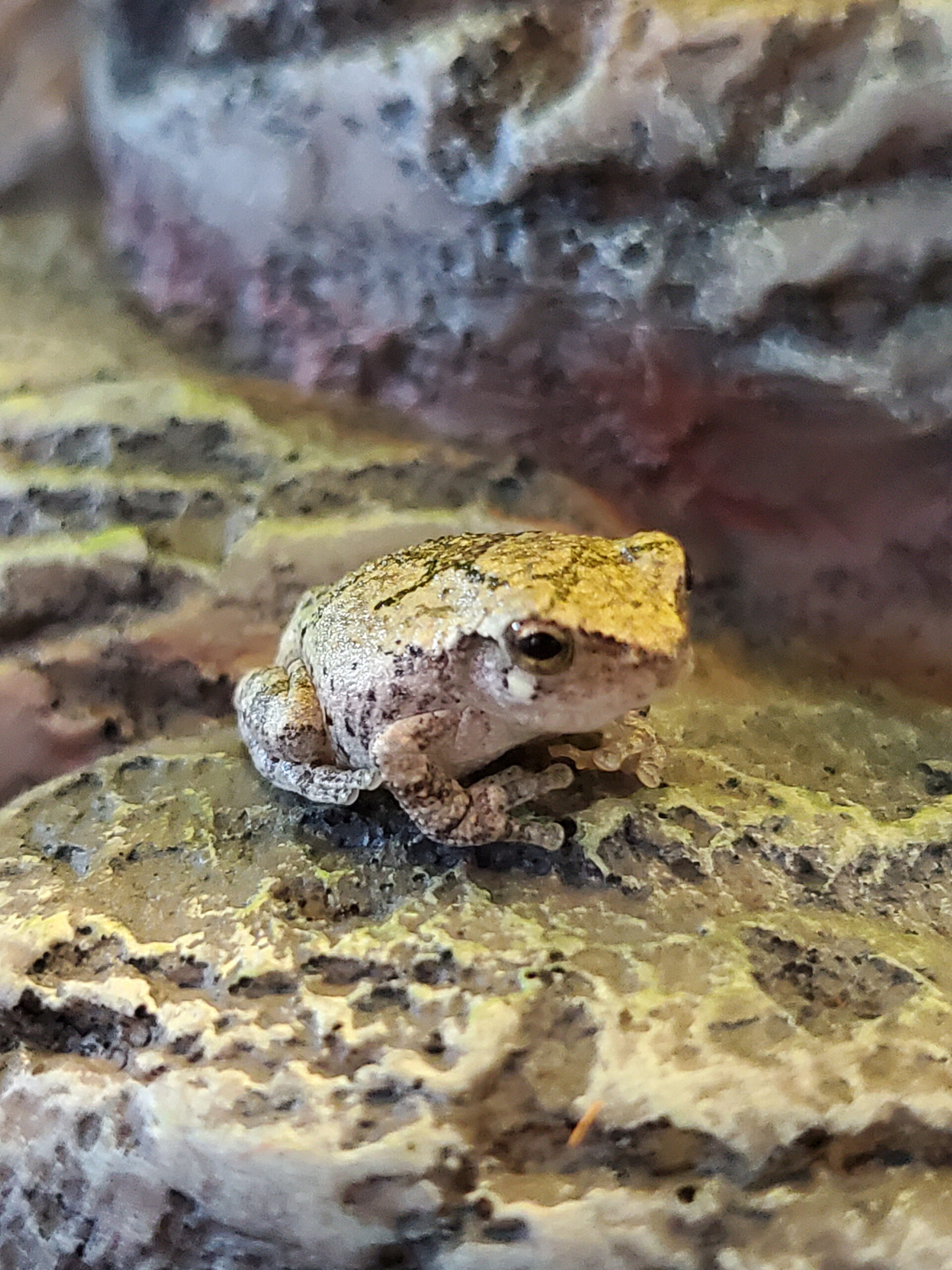
Juvenile gray tree frog on rock. Photo by Harve Crabtree.
Question: About two months ago I found a tree frog in my parents backyard and was curious about the species of the frog. From what I can tell it appears to be a Gray Tree Frog however it is quite small. I’m not sure if it just happens to be a juvenile frog or if it is by chance a different species that I am mislabeling. Can you help with the identification of this small frog? It is about 3/4 in in length roughly the size of a dime. Coloration of the frog is Green/Gray depending on lighting and seemingly what the frog happens to be sitting on.
Answer: It is a juvenile Gray Treefrog. They can be as small as a fingernail or so.
Indiana is home to two species of Gray Treefrog–Cope’s Gray Treefrog (Hyla chrysoscelis) and Gray Treefrog, also referred to as Eastern Gray Treefrog in some references (Hyla versicolor). They are morphologically indistinguishable. The advertisement call of these Treefrogs is the only reliable characteristic for distinguishing the two species in the field. Both species have short, flute-like trills. The Cope’s Gray Treefrog’s call is louder, shriller, and faster and lasts approximately 2–3 seconds. The Gray Treefrog has a slower, more melodious trill lasting up to 4 seconds.
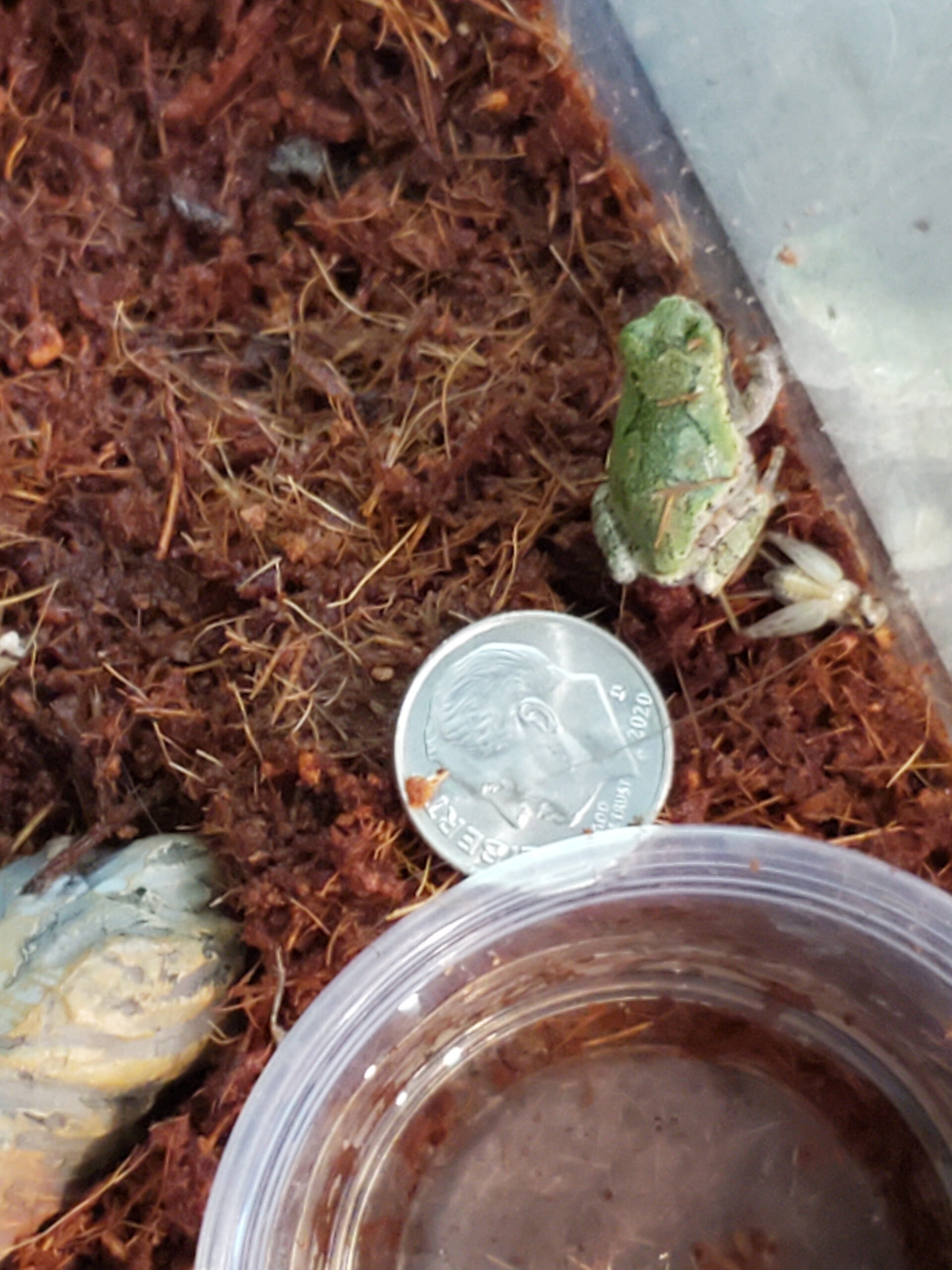
Juvenile gray tree frog by dime showing its size. Photo by: Harve Crabtree.
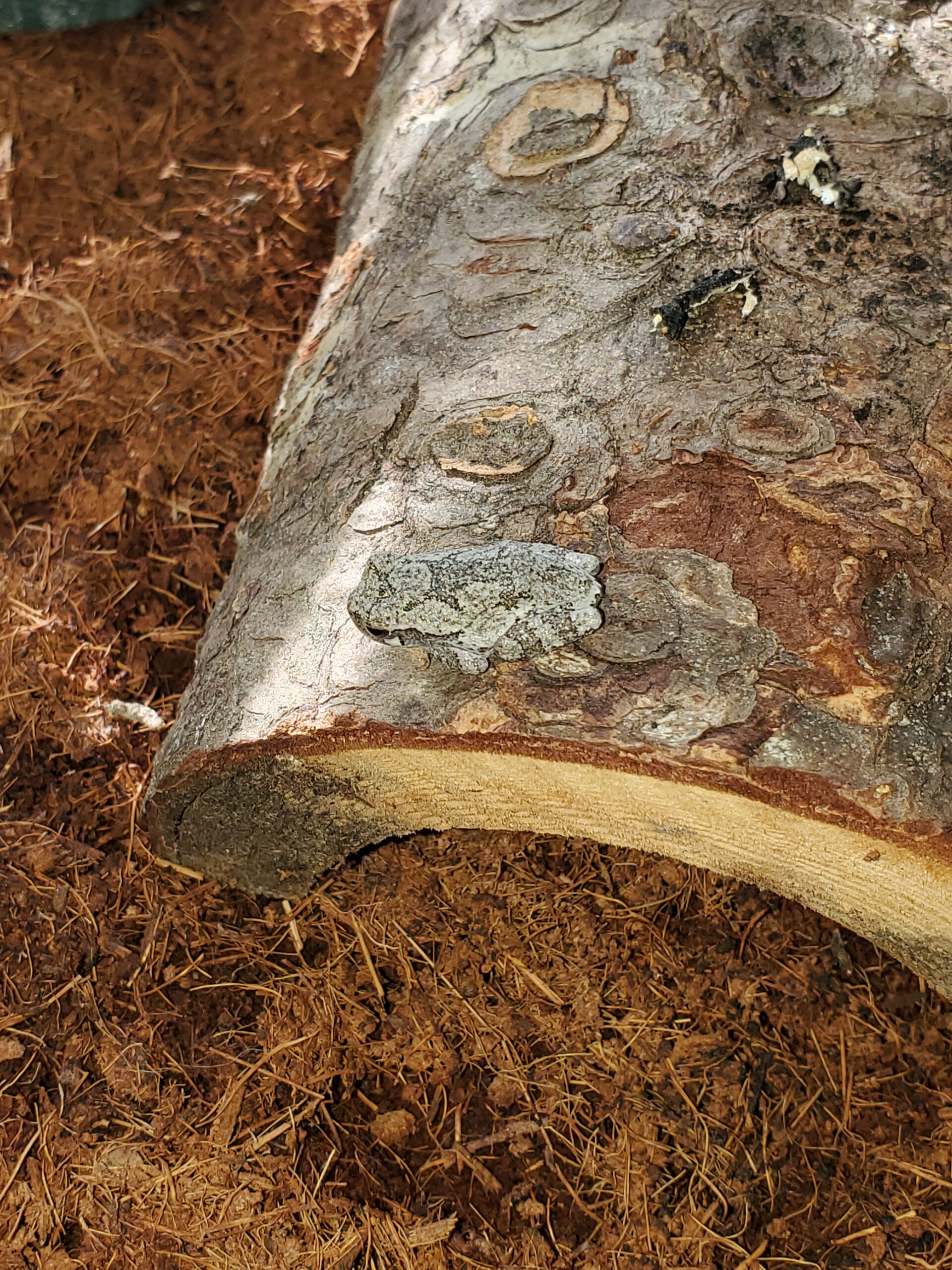
Juvenile gray tree frog on log. Photo by Harve Crabtree.
Gray treefrogs can change their color in response to temperature or to blend into their surroundings. Gray Treefrogs are common inhabitants of both upland and lowland deciduous hardwood forests as well as more developed areas. Gray Treefrogs are closely bound to their breeding ponds and do not typically travel far. They hibernate in or under logs, leaf litter, tree cavities, and rotting stumps.
Resources:
Sounds & Photos of Frogs and Toads in Indiana (shows Eastern Gray frog and Cope’s Gray frog), Purdue Extension-Forestry and Natural Resources web page
Frogs and Toads of Indiana, Purdue Extension-Forestry and Natural Resources publication
Orphaned & Injured Animals – Indiana Department of Natural Resources
Creating a Wildlife Habitat management Plan for Landowners, The Education Store, Purdue Extension resource center
Mythbusters, Got Nature? Blog, Purdue Extension – Forestry and Natural Resources
Appreciating Reptiles and Amphibians in Nature, The Education Store
Forestry Management for Reptiles and Amphibians: A Technical Guide for the Midwest, The Education Store
The Nature of Teaching, Unit 3: Reptiles, Amphibians, and the Scientific Method, The Education Store
Frogs and Toads of Indiana, The Education Store
Snakes and Lizards of Indiana, The Education Store
Ask the Expert: Turtles and Snakes video, Got Nature? post
Subscribe: Purdue Extension – Forestry and Natural Resources YouTube Channel, with over 195 videos regarding wildlife, forestry and natural resources
Brian MacGowan, Wildlife Extension Specialist
Purdue University, Department of Forestry and Natural Resources
In this episode of ID That Tree, Purdue Extension forester Lenny Farlee introduces a native Indiana species found in dry sites in Northern and Southern Indiana, the scarlet oak. Identify this member of the red oak family by its terminal buds with hairs and a red coloration, leaves with deep C-shaped sinuses, dark smooth bark and acorns with caps that cover half the acorn.
If you have any questions regarding wildlife, trees, forest management, wood products, natural resource planning or other natural resource topics, feel free to contact us by using our Ask an Expert web page.
Resources:
ID That Tree, Playlist, Purdue Extension – Forestry and Natural Resources YouTube Channel
A Woodland Management Moment, Playlist, Purdue Extension – FNR YouTube Channel
Shrubs and Woody Vines of Indiana and the Midwest, The Education Store, Purdue Extension Resource Center
Native Trees of the Midwest, The Education Store
Scarlet Oak, Native Trees of Indiana Riverwalk Purdue Fort Wayne
Investing in Indiana Woodlands, The Education Store
Forest Improvement Handbook, The Education Store
Lenny Farlee, Sustaining Hardwood Extension Specialist
Purdue University Department of Forestry and Natural Resources
Question: Often ginkgo trees will drop all of their leaves on a single day after a cold night. I thought that was going to be Monday at Purdue (left: leaves falling). But no, we’re at Wednesday now (right) and this one changed its mind. Anyone know how common that is?
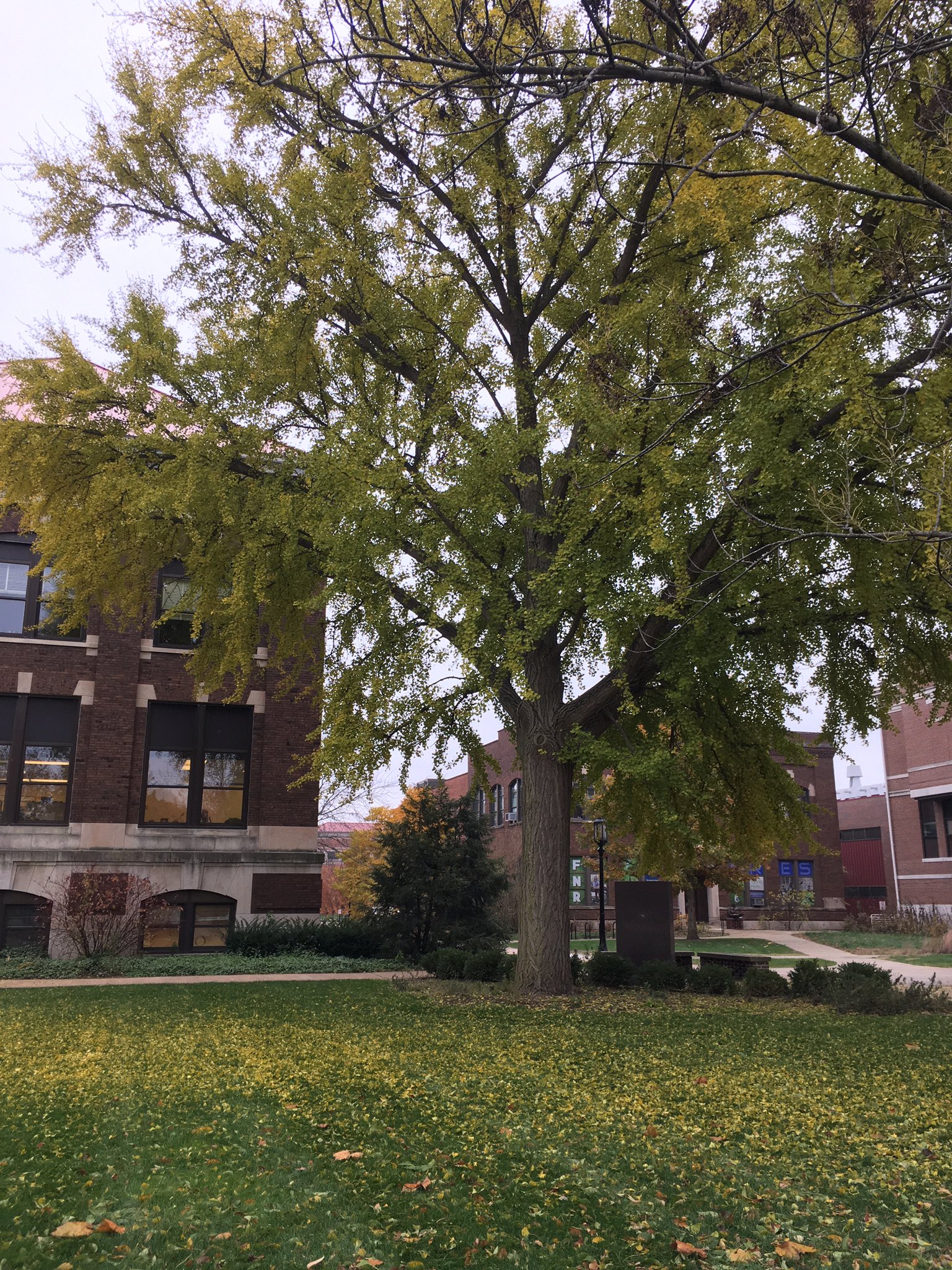
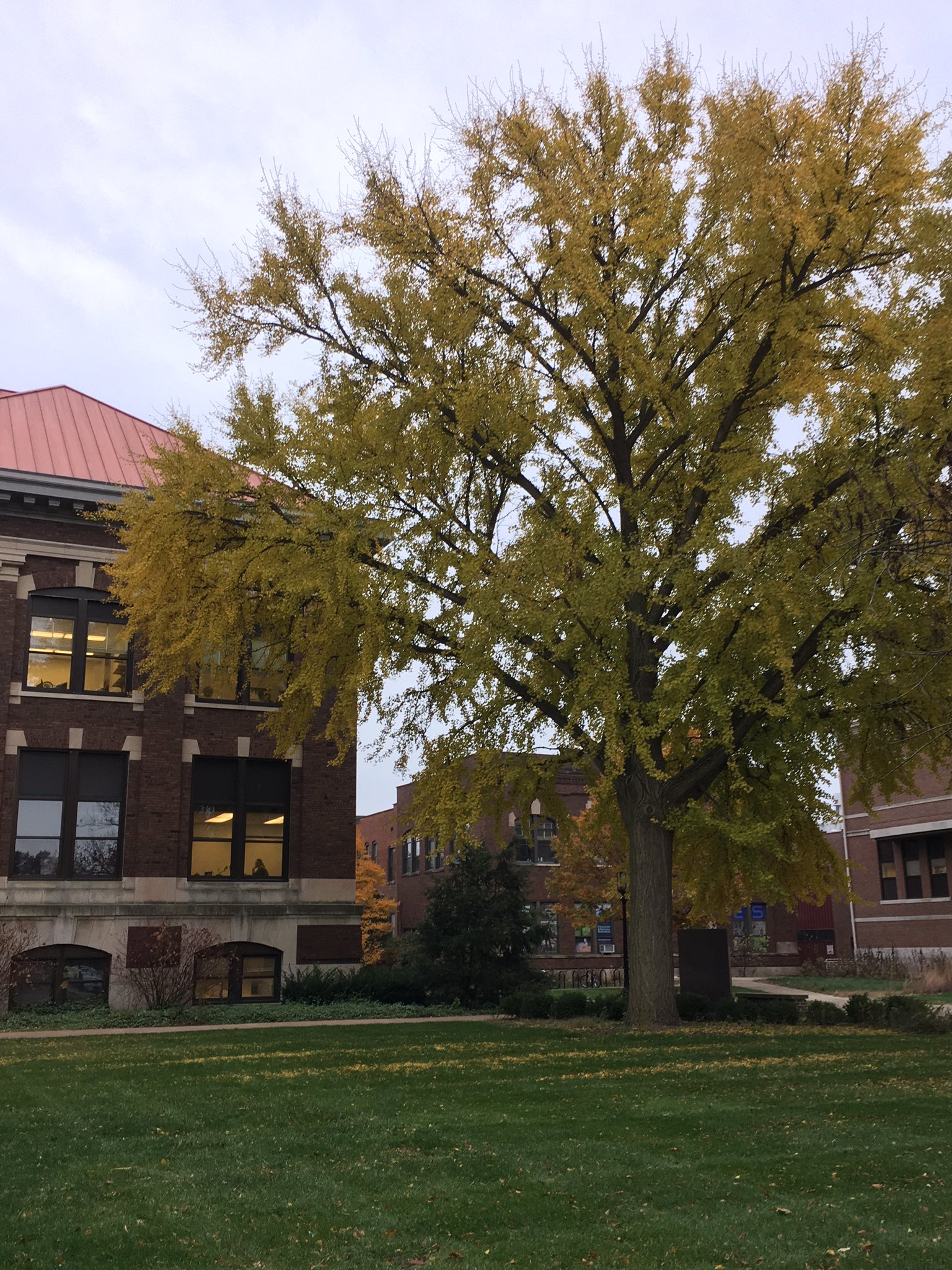
Answer: It was a very peculiar fall. The overall leaf drop was one to two weeks later than normal at least. An October with weather more like September has likely had some impact on this. Individual trees will vary some on their leaf drop timing, probably due to their geographic origin (for planted trees) and individual genetic variation. The severity and timing of frost/freeze also influences strongly. As you can see, lots of variables!
Leaf drop is not solely dependent on temperatures. There is a process of dormancy the tree follows to properly acclimate in preparation for winter. One of these is leaf drop, but it must go through the process of developing an abscission layer between the petiole base and branch. Most likely, the tree didn’t drop leaves yet because this separation layer of chemicals hasn’t fully responded yet. We often see frozen leaves on a tree and later they fall, but this is the result of sudden extreme cold ahead of proper dormancy routines.
Resources:
Fall Color Pigments, Purdue Extension YouTube Channel
Why Leaves Change Color – The Physiological Basis,
Oak Wilt in Indiana, Purdue Landscape Report
Dog Days of Summer Barking Early This Year, Purdue Landscape Report
Tulip Poplar Summer Leaf Drop, Purdue Landscape Report
Be on the Lookout for Defoliated Viburnums and Viburnum Leaf Beetle, Purdue Landscape Report
Will my Trees Recover After Losing Their Leaves?, Purdue Landscape Report
What Do Trees Do in the Winter?, Purdue Landscape Report
Why Fall Color is Sometimes a Dud, Purdue Landscape Report
Alternatives to Burning Bush For Fall Color, Purdue Landscape Report
Start Preparing Trees for Winter and Next Year, Purdue Landscape Report
ID That Tree Winter Edition: Opposite Leaf Arrangement – Ohio buckeye, Red Maple, Purdue Extension YouTube Channel
ID That Tree Winter Edition: Alternate Leaf Arrangement – Black Walnut, Eastern Cottonwood, Purdue Extension YouTube Channel
ID That Tree Winter Edition: Alternate Leaf Arrangement – Honey Locust, Burr Oak, Purdue Extension YouTube Channel
Lenny Farlee, Sustaining Hardwood Extension Specialist
Purdue University Department of Forestry and Natural Resources
Lindsey Purcell, Urban Forestry Specialist
Purdue University Department of Forestry and Natural Resources
Meet overcup oak, a species found on swampy ground and soils in southwestern Indiana. It is identifiable by its deeply sinused alternately arranged leaves as well as its acorns, which have a cap which encases nearly the entire acorn and typically don’t let go easily.
If you have any questions regarding wildlife, trees, forest management, wood products, natural resource planning or other natural resource topics, feel free to contact us by using our Ask an Expert web page.
Resources:
ID That Tree, Playlist, Purdue Extension – Forestry and Natural Resources YouTube Channel
A Woodland Management Moment, Playlist, Purdue Extension – FNR YouTube Channel
Shrubs and Woody Vines of Indiana and the Midwest, The Education Store, Purdue Extension Resource Center
Native Trees of the Midwest, The Education Store
Overcup Oak, Native Trees of Indiana Riverwalk Purdue Fort Wayne
Investing in Indiana Woodlands, The Education Store
Forest Improvement Handbook, The Education Store
Lenny Farlee, Sustaining Hardwood Extension Specialist
Purdue University Department of Forestry and Natural Resources
In this edition of ID That Tree, Purdue Extension forester Lenny Farlee introduces you to a native Indiana tree that provided a substitute for coffee in its past. Meet the Kentucky coffee tree, which is known by its large pods, doubly-compound leaves and beautifully textured bark. Learn more inside.
If you have any questions regarding wildlife, trees, forest management, wood products, natural resource planning or other natural resource topics, feel free to contact us by using our Ask an Expert web page.
Resources:
ID That Tree, Playlist, Purdue Extension – Forestry and Natural Resources YouTube Channel
A Woodland Management Moment, Playlist, Purdue Extension – FNR YouTube Channel
Shrubs and Woody Vines of Indiana and the Midwest, The Education Store, Purdue Extension Resource Center
Native Trees of the Midwest, The Education Store
Investing in Indiana Woodlands, The Education Store
Forest Improvement Handbook, The Education Store
River Birch-Native Trees of Indiana River Walk, Purdue University Fort Wayne
Lenny Farlee, Sustaining Hardwood Extension Specialist
Purdue University Department of Forestry and Natural Resources
In this edition of ID That Tree, meet River Birch. As its name implies, it is often found near waterways and in moist soil areas across the state of Indiana. It can be multi-stemmed, often in landscaping, or single stemmed, often in woodlands and bottomlands. Simple triangular-shaped leaves with doubly-serrated margins and flaking/peeling bark are key identifiers. In younger trees, the bark peels more and can range from chalky white to reddish brown. Bark on older trees is darker gray/brown and peeling is less prominent.
If you have any questions regarding wildlife, trees, forest management, wood products, natural resource planning or other natural resource topics, feel free to contact us by using our Ask an Expert web page.
Resources:
ID That Tree, Playlist, Purdue Extension – Forestry and Natural Resources YouTube Channel
A Woodland Management Moment, Playlist, Purdue Extension – FNR YouTube Channel
Shrubs and Woody Vines of Indiana and the Midwest, The Education Store, Purdue Extension Resource Center
Native Trees of the Midwest, The Education Store
Investing in Indiana Woodlands, The Education Store
Forest Improvement Handbook, The Education Store
River Birch-Native Trees of Indiana River Walk, Purdue University Fort Wayne
Lenny Farlee, Sustaining Hardwood Extension Specialist
Purdue University Department of Forestry and Natural Resources
In this edition of ID That Tree, learn how to tell Red Hickory apart from its cousins shellbark, shagbark and pignut hickory. Located typically in upland dry sites, red hickory stands out with compound leaves with seven leaflets, long running interlacing gray bark, buds and twigs free of hairs, and lastly nuts with a husk that separates all the way down the sides of the nut.
If you have any questions regarding wildlife, trees, forest management, wood products, natural resource planning or other natural resource topics, feel free to contact us by using our Ask an Expert web page.
Resources:
ID That Tree, Playlist, Purdue Extension – Forestry and Natural Resources Youtube Channel
A Woodland Management Moment, Playlist, Purdue Extension – FNR Youtube Channel
Shrubs and Woody Vines of Indiana and the Midwest, The Education Store, Purdue Extension Resource Center
Native Trees of the Midwest, The Education Store
Investing in Indiana Woodlands, The Education Store
Forest Improvement Handbook, The Education Store
Lenny Farlee, Sustaining Hardwood Extension Specialist
Purdue University Department of Forestry and Natural Resources

Recent Posts
- Beetle that attacks Tree-of-Heaven found in Indiana, Purdue Landscape Report
Posted: March 20, 2026 in Invasive Insects, Wildlife, Woodlands - ID That Tree: Dwarf Chinkapin Oak
Posted: in Forestry, Urban Forestry, Wildlife, Woodlands - DNR Hiring for Indiana Conservation Officer Positions, MyDNR
Posted: March 9, 2026 in Urban Forestry, Wildlife, Woodlands - ID That Tree: Shumard Oak
Posted: in Plants, Urban Forestry, Wildlife, Woodlands - Uniting Indiana Residents Against Invasive Species
Posted: February 27, 2026 in Community Development, Invasive Insects, Wildlife - Have You Seen a Soaring Eagle Lately? Morning Ag Clips
Posted: February 25, 2026 in Urban Forestry, Wildlife - Register for Natural Resources Teacher Institute’s Class of 2026
Posted: February 19, 2026 in Forestry, Wildlife, Woodlands - ID That Tree: Fragrant Sumac
Posted: February 4, 2026 in Plants, Urban Forestry, Wildlife - Woodsy Owl Edition for Educational Learning, USDA – U.S. Forest Service
Posted: January 21, 2026 in Forestry, Forests and Street Trees, Got Nature for Kids, Urban Forestry, Wildlife - Opt-in to the Deer Management Survey, MyDNR
Posted: January 12, 2026 in Forestry, Wildlife
Archives
Categories
- Alert
- Aquaculture/Fish
- Aquatic/Aquaculture Resources
- Ask the Expert
- Christmas Trees
- Community Development
- Disease
- Drought
- Forestry
- Forests and Street Trees
- Gardening
- Got Nature for Kids
- Great Lakes
- How To
- Invasive Animal Species
- Invasive Insects
- Invasive Plant Species
- Land Use
- Natural Resource Planning
- Nature of Teaching
- Plants
- Podcasts
- Ponds
- Publication
- Safety
- Spiders
- Timber Marketing
- Uncategorized
- Urban Forestry
- Webinar
- Wildlife
- Wood Products/Manufacturing
- Woodland Management Moment
- Woodlands