 Purdue University - Extension - Forestry and Natural Resources
Got Nature? Blog
In this edition of ID That Tree, Purdue Extension forester Lenny Farlee introduces you to a native Indiana tree that provided a substitute for coffee in its past. Meet the Kentucky coffee tree, which is known by its large pods, doubly-compound leaves and beautifully textured bark. Learn more inside.
If you have any questions regarding wildlife, trees, forest management, wood products, natural resource planning or other natural resource topics, feel free to contact us by using our Ask an Expert web page.
Resources:
ID That Tree, Playlist, Purdue Extension – Forestry and Natural Resources YouTube Channel
A Woodland Management Moment, Playlist, Purdue Extension – FNR YouTube Channel
Shrubs and Woody Vines of Indiana and the Midwest, The Education Store, Purdue Extension Resource Center
Native Trees of the Midwest, The Education Store
Investing in Indiana Woodlands, The Education Store
Forest Improvement Handbook, The Education Store
River Birch-Native Trees of Indiana River Walk, Purdue University Fort Wayne
Lenny Farlee, Sustaining Hardwood Extension Specialist
Purdue University Department of Forestry and Natural Resources
In this edition of ID That Tree, meet River Birch. As its name implies, it is often found near waterways and in moist soil areas across the state of Indiana. It can be multi-stemmed, often in landscaping, or single stemmed, often in woodlands and bottomlands. Simple triangular-shaped leaves with doubly-serrated margins and flaking/peeling bark are key identifiers. In younger trees, the bark peels more and can range from chalky white to reddish brown. Bark on older trees is darker gray/brown and peeling is less prominent.
If you have any questions regarding wildlife, trees, forest management, wood products, natural resource planning or other natural resource topics, feel free to contact us by using our Ask an Expert web page.
Resources:
ID That Tree, Playlist, Purdue Extension – Forestry and Natural Resources YouTube Channel
A Woodland Management Moment, Playlist, Purdue Extension – FNR YouTube Channel
Shrubs and Woody Vines of Indiana and the Midwest, The Education Store, Purdue Extension Resource Center
Native Trees of the Midwest, The Education Store
Investing in Indiana Woodlands, The Education Store
Forest Improvement Handbook, The Education Store
River Birch-Native Trees of Indiana River Walk, Purdue University Fort Wayne
Lenny Farlee, Sustaining Hardwood Extension Specialist
Purdue University Department of Forestry and Natural Resources
In this edition of ID That Tree, learn how to tell Red Hickory apart from its cousins shellbark, shagbark and pignut hickory. Located typically in upland dry sites, red hickory stands out with compound leaves with seven leaflets, long running interlacing gray bark, buds and twigs free of hairs, and lastly nuts with a husk that separates all the way down the sides of the nut.
If you have any questions regarding wildlife, trees, forest management, wood products, natural resource planning or other natural resource topics, feel free to contact us by using our Ask an Expert web page.
Resources:
ID That Tree, Playlist, Purdue Extension – Forestry and Natural Resources Youtube Channel
A Woodland Management Moment, Playlist, Purdue Extension – FNR Youtube Channel
Shrubs and Woody Vines of Indiana and the Midwest, The Education Store, Purdue Extension Resource Center
Native Trees of the Midwest, The Education Store
Investing in Indiana Woodlands, The Education Store
Forest Improvement Handbook, The Education Store
Lenny Farlee, Sustaining Hardwood Extension Specialist
Purdue University Department of Forestry and Natural Resources
 Question: My husband and I love to build wildlife habitat areas and have built a large pond with a strategic filtering system in the pond. We had to place a net five to six feet up to keep leaves and acorns out of the filtering system and now the frogs are jumping on the net. One specialist said they are trying to get to the woods to hibernate for winter and one shared that they can stay in the pond as long as it doesn’t freeze. Which answer is correct?
Answer: Both of your answers could be correct. The following is from Michael Lannoo (2005) Amphibian Declines: The Conservation Status of United States Species. In summary, adults will hibernate in both water and on land, although underwater seems to be the most common site. The key is having available oxygen. However, hibernating amphibians when hibernating have extremely low oxygen requirements. So much so that most species get enough O2 from absorption through specialized patches of skin.
- Seasonal Migrations. Green frogs probably do not migrate en masse to breeding sites. Lamoureux and Madison (1999) tracked 23 green frogs and found that they made extensive movements in late fall away from summer breeding ponds to areas of flowing water in streams and seeps. They suggested that flowing water is used because it remains unfrozen and provides adequate oxygen.
- J. Torpor (Hibernation). Green frog tadpoles will typically, but not always, overwinter for 1 yr prior to metamorphosing the following spring (Martof, 1952; Richmond, 1964; Vogt, 1981). While overwintering, and despite cold temperatures, tadpoles remain active and likely feed (Getz, 1958). Tadpoles probably remain active and grow during the winter in Louisiana but do not transform until warm weather (Dundee and Rossman, 1989). In Maine, they remain under silt and dead vegetation during the winter (Hunter et al., 1999). Both tadpoles and adults require aquatic sites that do not completely freeze and that also maintain enough oxygen during the winter (Oldfield and Moriarty, 1994).
Green frog adults typically overwinter in water (Dickerson, 1906; Walker, 1946; Pope, 1947; Wright and Wright, 1949; Harding and Holman, 1999) but will occasionally overwinter on land (Bohnsack, 1951). The frog followed by Bohnsack (1951) was found beneath 5 cm (2 in) of compact leaf litter in an oak-hickory forest near Pickney, Michigan. Lannoo et al. (1998) cites an instance where a large number (25, including 4 gravid females) of green frogs were caught on land near a wetland during a cold snap in northern Wisconsin. Minton (1972) notes that adults near Indianapolis, Indiana, seek cover from early December to early March and that juveniles emerge earlier in the season than do adults. In Maine, green frogs hibernate either underwater or underground from October–March (Hunter et al., 1999). In Ohio, several hibernating individuals have been found in springs and in masses of leaves and aquatic vegetation on the bottom of small ponds (Walker, 1946).
Resources:
Mythbusters, Got Nature? Blog, Purdue Extension – Forestry and Natural Resources
Frogs and Toads of Indiana, The Education Store, Purdue Extension resource center
Appreciating Reptiles and Amphibians in Nature, The Education Store
Forestry Management for Reptiles and Amphibians: A Technical Guide for the Midwest, The Education Store
The Nature of Teaching, Unit 3: Reptiles, Amphibians, and the Scientific Method, The Education Store
Frogs and Toads of Indiana, The Education Store
Snakes and Lizards of Indiana, The Education Store
Ask the Expert: Turtles and Snakes video, Got Nature? post
Brian MacGowan, Wildlife Extension Specialist
Purdue University, Department of Forestry and Natural Resources
In this episode of ID That Tree, Purdue Extension forester Lenny Farlee introduces the blue ash. This native Indiana ash species can be differentiated from other members of the ash family by corky edges on the twig, more branches lower on the stem and a platy, ashy gray bark.
If you have any questions regarding wildlife, trees, forest management, wood products, natural resource planning or other natural resource topics, feel free to contact us by using our Ask an Expert web page.
Resources:
ID That Tree, Playlist, Purdue Extension – Forestry and Natural Resources Youtube Channel
A Woodland Management Moment, Playlist, Purdue Extension – FNR Youtube Channel
Shrubs and Woody Vines of Indiana and the Midwest, The Education Store, Purdue Extension Resource Center
Native Trees of the Midwest, The Education Store
Investing in Indiana Woodlands, The Education Store
Forest Improvement Handbook, The Education Store
Lenny Farlee, Sustaining Hardwood Extension Specialist
Purdue University Department of Forestry and Natural Resources
 MyDNR: Annually, more than 14,000 deer-vehicle collisions are reported in Indiana. If you live where deer are found, especially in suburban areas or where field and forest meet, it is important to know ways to reduce the likelihood of a collision and what to do if you are involved in one. While you can’t eliminate the possibility of running into a deer on the road, you can minimize the risk of severe damage to you or your vehicle.
Deer movements are not random, and the likelihood of seeing deer near roads varies by time of day and month. Deer are most active when many people are commuting to and from work, resulting in increased collisions. While your chance of hitting a deer varies, in general, deer-vehicle collisions are most likely to occur during these conditions:
- At dawn and dusk when deer are most active.
- From September through December, particularly October and November during deer mating season as bucks cross roads more frequently and are less cautious when crossing.
For more information view the Indiana DNR printable PDF (.144mb) Deer-Vehicle Collisions and You.
Resources:
Watch out for deer on the roads, Got Nature? Post, Purdue Extension – Forestry and Natural Resources (FNR)
A Woodland Management Moment – Deer Fencing, Purdue Extension – FNR YouTube Video
Woodland Stewardship for Landowners: Managing Deer Damage to Young Trees, Purdue Extension – FNR YouTube Video
Ask an Expert: Wildlife Food Plots, Purdue Extension – FNR YouTube Video
How to Build a Plastic Mesh Deer Exclusion Fence, The Education Store, Purdue Extension resource center
Deer Harvest Data Collection, Got Nature? Blog, Purdue Extension – FNR
Handling Harvested Game: Episode 4, Cutting, Grinding & Packaging, Purdue Extension – FNR YouTube Video
Indiana Department of Natural Resources
In this edition of ID That Tree, meet the Eastern Hop Hornbeam, so named because of its fruit which resembles hops. This small, native, shade tolerant tree also is identifiable by its simply finely toothed leaves on thin twigs as well as its brown flaky bark. Learn how to separate it from its cousin American Hornbeam inside.
If you have any questions regarding wildlife, trees, forest management, wood products, natural resource planning or other natural resource topics, feel free to contact us by using our Ask an Expert web page.
Resources:
ID That Tree, Playlist, Purdue Extension – Forestry and Natural Resources Youtube Channel
A Woodland Management Moment, Playlist, Purdue Extension – FNR Youtube Channel
Shrubs and Woody Vines of Indiana and the Midwest, The Education Store, Purdue Extension Resource Center
Native Trees of the Midwest, The Education Store
Investing in Indiana Woodlands, The Education Store
Forest Improvement Handbook, The Education Store
Lenny Farlee, Sustaining Hardwood Extension Specialist
Purdue University Department of Forestry and Natural Resources
This native tree comes with its own defense system in very large thorns on the stems and trunk. Meet the honey locust. Purdue Extension forester Lenny Farlee explains that large, long yellow seed pods that resemble bean pods, the option of single or doubly compound leaves on the same tree and smooth gray bark also help identify this species.
If you have any questions regarding wildlife, trees, forest management, wood products, natural resource planning or other natural resource topics, feel free to contact us by using our Ask an Expert web page.
Resources:
ID That Tree, Playlist, Purdue Extension – Forestry and Natural Resources Youtube Channel
A Woodland Management Moment, Playlist, Purdue Extension – FNR Youtube Channel
Shrubs and Woody Vines of Indiana and the Midwest, The Education Store, Purdue Extension Resource Center
Native Trees of the Midwest, The Education Store
Investing in Indiana Woodlands, The Education Store
Forest Improvement Handbook, The Education Store
Lenny Farlee, Sustaining Hardwood Extension Specialist
Purdue University Department of Forestry and Natural Resources
This native Indiana tree species is found in three southwestern counties near the lower Wabash River. It is often found in wet or ponded locations where there is standing water or high water tables. Meet water locust. It has large multi-pronged thorns and compound leaves like its cousin the honey locust, but can be differentiated by its location, its much smaller seed pods and its flattened thorns along the branches.
If you have any questions regarding wildlife, trees, forest management, wood products, natural resource planning or other natural resource topics, feel free to contact us by using our Ask an Expert web page.
Resources:
ID That Tree, Playlist, Purdue Extension – Forestry and Natural Resources Youtube Channel
A Woodland Management Moment, Playlist, Purdue Extension – FNR Youtube Channel
Shrubs and Woody Vines of Indiana and the Midwest, The Education Store, Purdue Extension Resource Center
Native Trees of the Midwest, The Education Store
Investing in Indiana Woodlands, The Education Store
Forest Improvement Handbook, The Education Store
Lenny Farlee, Sustaining Hardwood Extension Specialist
Purdue University Department of Forestry and Natural Resources
If you have ever noticed acorns so numerous that you could not take a step without crushing several, you may be asking the question, “why are there so many acorns?” Some answers to this question can be found in the physiology and ecology of trees and their relationship to wildlife. Oaks and several other tree species occasionally produce enormous crops of seed. This is called “masting” or “mast events”. These events are periodic. In the case of many oak species, a large mast event may happen every two to five years, depending on the species of oak and several other factors. Masting events may be preceded and followed by small or moderate acorn crops, or complete crop failures in some cases. Why does this irregular seed production happen? These events may be tied to several aspects of the life of oaks.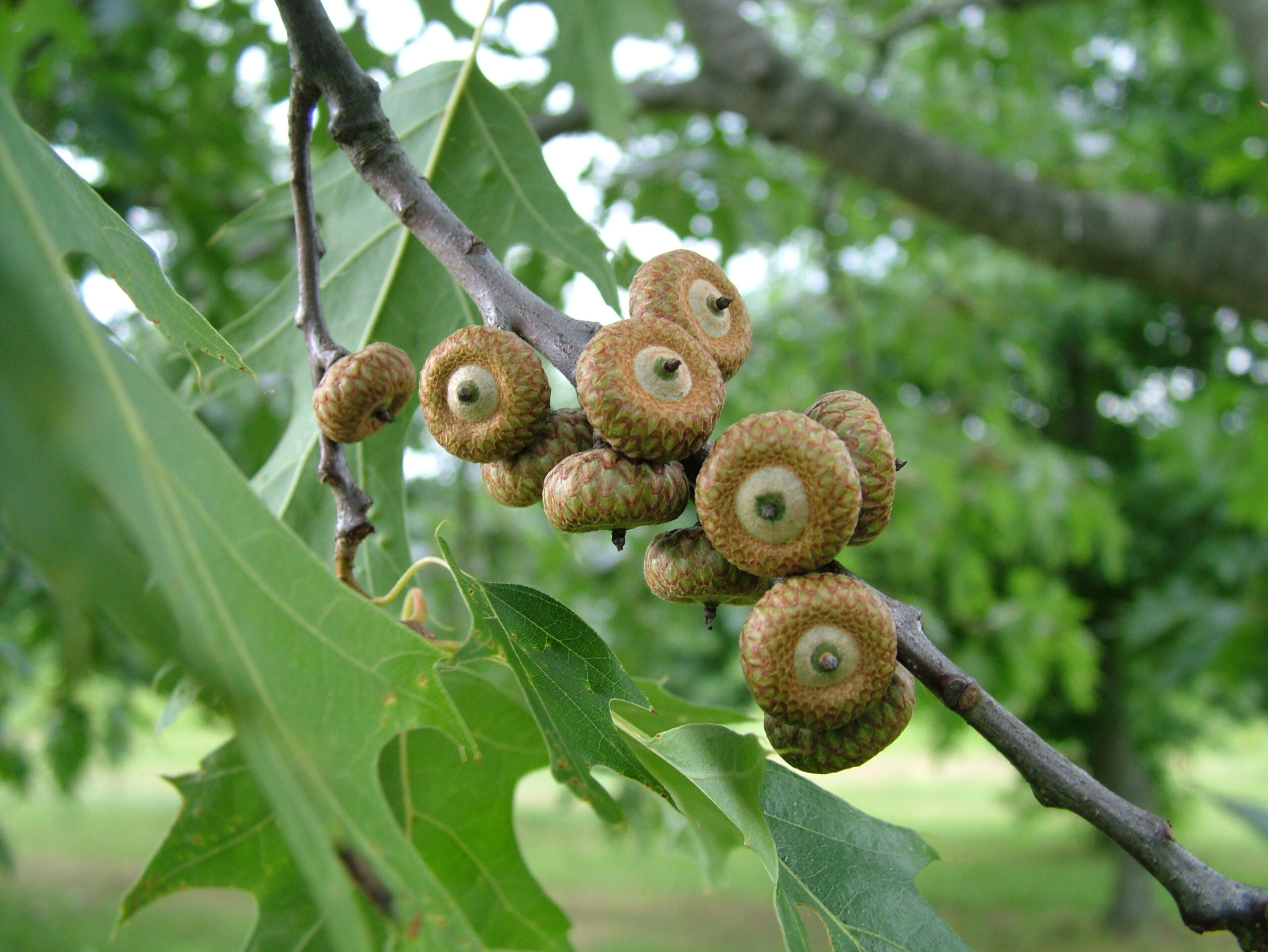
First, the production of a huge volume of a large seed like an acorn requires a lot of resources from the tree. This level of production may not be possible for the tree every year. Trees allocate energy to several different functions, so committing large amounts of energy to one area could mean deficits in others. This may mean there are advantages for the tree to produce occasional, rather than annual, mastings.
Second, weather does not always cooperate to provide the conditions for a bumper acorn crop. Unfavorable weather during pollination and seed development periods can result in reduced production of acorns. Late spring freezes, extremely high temperatures, summer droughts and other weather stresses can reduce acorn pollination and production.
Third, predation by seed-eaters like squirrels, deer, turkey and even weevil larvae can greatly reduce the number of viable acorns. It may take a very large acorn crop to have many acorns escape from the numerous species that depend on acorns for food.
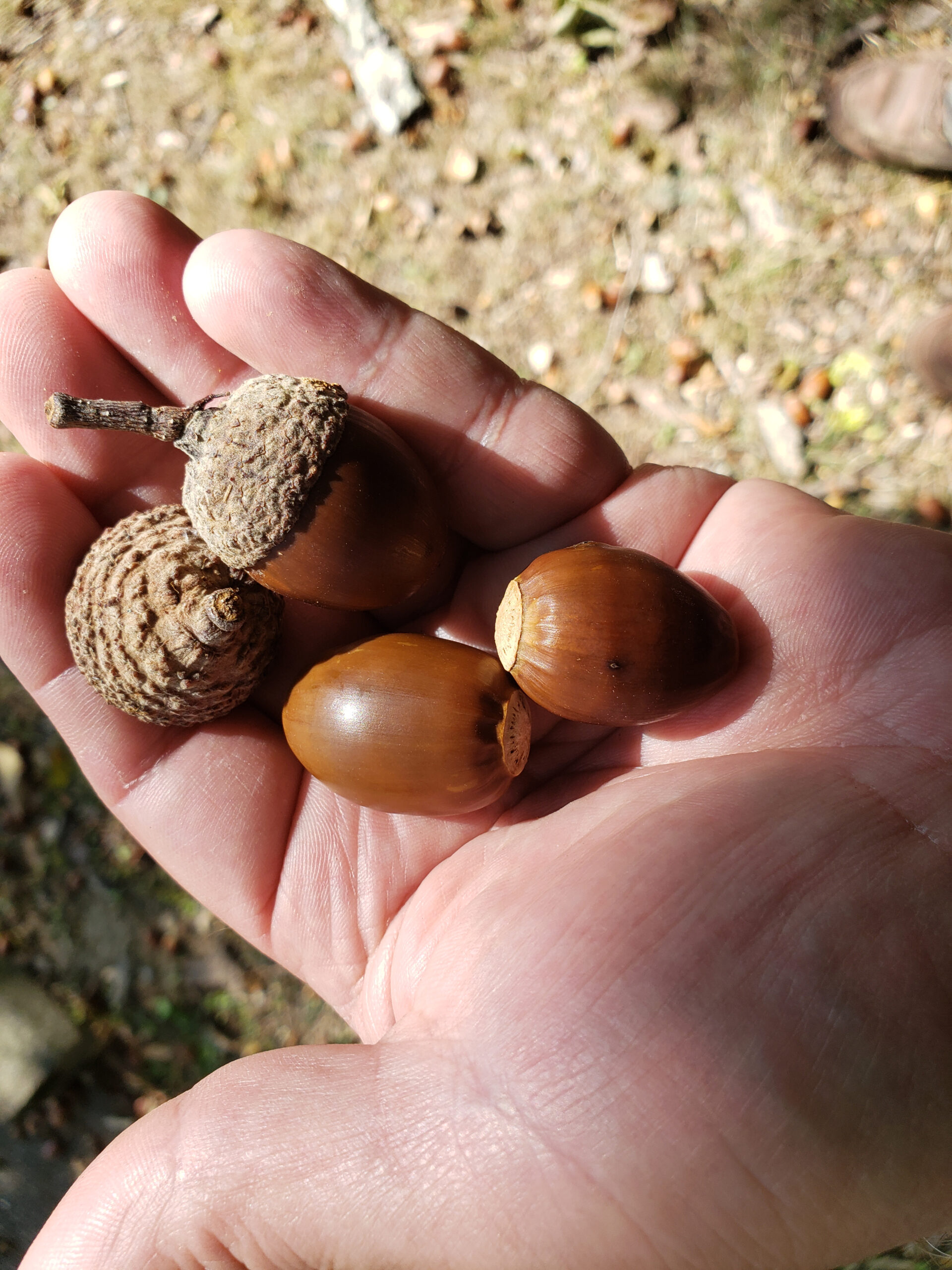
This irregular cycle of large crops can be beneficial for the oaks by overwhelming the seed eaters. Populations of wildlife that depend on acorns may eat most of the seed during normal seed crops, but may not be able to utilize all the seed produced during a masting. This surplus seed is available produce the next generation of oak seedlings.
However, some species will produce copious amounts of the mast if the developmental age of the tree is favorable, regardless of conditions.
Acorn production can vary by species and individual trees across the oak family, but masting is a way this important group of trees can continue to be a part or our Midwestern landscape.
Resources:
Woodland Management Moment: Direct Seeding, Purdue Extension – Forestry and Natural Resources (FNR) YouTube Channel
Ask an Expert: Tree Selection and Planting, Purdue Extension – Forestry and Natural Resources (FNR) YouTube Channel
Forest Improvement Handbook, The Education Store, Purdue Extension resource center
Native Trees of the Midwest, The Education Store
Investing in Indiana Woodlands, The Education Store
Tree Pruning Essentials, The Education Store
Lenny Farlee, Sustaining Hardwood Extension Specialist
Purdue University Department of Forestry and Natural Resources
Lindsey Purcell, Chapter Executive Director and Certificate Liaison
Indiana Arborist Association

Recent Posts
- Purdue Extension’s Regional Teams Are Here: Connecting Communities with Expertise and Opportunity
Posted: October 14, 2026 in Community Development, Forestry, Forests and Street Trees, Gardening, How To, Timber Marketing, Urban Forestry, Wildlife, Woodlands - Deer and Turkey Archery Seasons Opening Soon, MyDNR
Posted: October 13, 2026 in Alert, Safety, Wildlife - Distinguishing Dogwoods
Posted: in Forestry, Urban Forestry, Wildlife, Woodlands - Can I Plant Trees in the Fall?
Posted: October 12, 2026 in Forestry, How To, Land Use, Plants, Urban Forestry, Wildlife - Publication Helps Midwest Fish Producers “Catch a Following” with Consumers
Posted: in Aquaculture/Fish, Aquatic/Aquaculture Resources, Wildlife - Minecraft Meets the Hellbender
Posted: September 22, 2026 in Aquaculture/Fish, Aquatic/Aquaculture Resources, Wildlife - What You Plant Matters to Wildlife
Posted: September 16, 2026 in Plants, Urban Forestry, Wildlife - Woodland Flowers of Late Summer
Posted: September 14, 2026 in Forestry, Gardening, Wildlife, Woodlands - Heavy August Rains Bring More Mosquitoes to Indiana
Posted: September 9, 2026 in How To, Invasive Insects, Safety, Wildlife - New Indiana Woodland Steward Newsletter
Posted: August 12, 2026 in Forestry, Urban Forestry, Wildlife, Woodlands
Archives
Categories
- Alert
- Aquaculture/Fish
- Aquatic/Aquaculture Resources
- Ask the Expert
- Christmas Trees
- Community Development
- Disease
- Drought
- Forestry
- Forests and Street Trees
- Gardening
- Got Nature for Kids
- Great Lakes
- How To
- Invasive Animal Species
- Invasive Insects
- Invasive Plant Species
- Land Use
- Natural Resource Planning
- Nature of Teaching
- Plants
- Podcasts
- Ponds
- Publication
- Safety
- Spiders
- Timber Marketing
- Urban Forestry
- Webinar
- Wildlife
- Wood Products/Manufacturing
- Woodland Management Moment
- Woodlands