 Purdue University - Extension - Forestry and Natural Resources
Got Nature? Blog
MyDNR, Indiana’s Outdoor Newsletter: Blotchy bass syndrome (BBS) is the occurrence of black ink-like spots (hyperpigmentation) on the skin, fins, and/or mouths of freshwater bass species.
Researchers once thought that melanosis was caused by sun exposure or stress related to fishing, temperature, or pollution; however, researchers recently discovered that a family of viruses was associated with the black spots in fish that were in poor body condition.
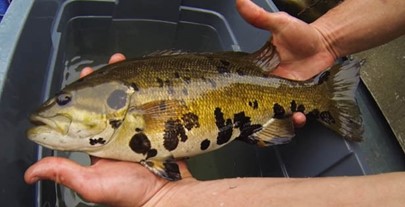
Photo courtesy of USGS
The Division of Fish & Wildlife is partnering with the United States Geological Survey (USGS) to collect samples from black bass species to test for BBS and needs your help. DNR encourages anglers to report observations of affected bass when you are fishing, so they and USGS can learn more about the effect of this family of viruses.
How to participate:
- Download the MyCatch app from Angler’s Atlas.
- Register for the “Blotchy Bass Bonanza.”
- Take photos of all the bass you’ve caught (preferably on a measuring board) while fishing and upload them to the MyCatch app.
The Blotchy Bass Bonanza runs from March 1, 2023 —Feb. 29, 2024. The Indiana DNR is not associated with the MyCatch app or the Blotchy Bass Bonanza.
Newsletter can be found online: MyDNR Email Newsletter
For more information please visit Investigating blotch bass syndrome in black basses.
Resources:
FNR Extension Aquaculture and Aquatic Resources
FNR Extension Publications
Indiana Pond Fish, Species Identification Card Set, Purdue Extension – Forestry and Natural Resources (FNR)
Walleye Farmed Fish Fact Sheet, The Education Store, Purdue Extension’s resource center
Pacific White Shrimp Farmed Fact Sheet, The Education Store
Yellow Perch Farmed Fish Fact Sheet, The Education Store
Tilapia Farmed Fish Fact Sheet, The Education Store
Rainbow Trout Farmed Fish Fact Sheet, The Education Store
American Paddlefish, The Education Store
A Guide to Small-Scale Fish Processing Using Local Kitchen Facilities, The Education Store
Aquaculture Family Coloring Book Development, The Education Store
Eat Midwest Fish, Illinois-Indiana Sea Grant online resource hub
Aquatics & Fisheries Videos, Purdue Extension-Forestry and Natural Resources YouTube Channel Playlist
Indiana Department of Natural Resources, Department of Fish & Wildlife
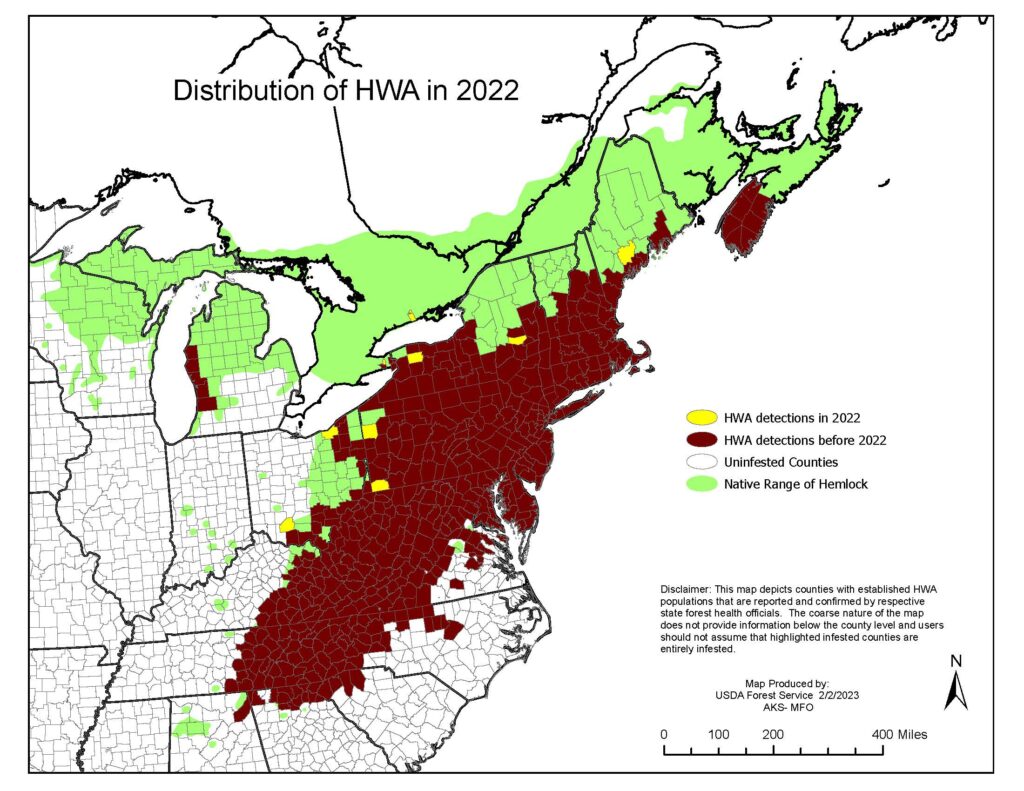
Photo of the distribution of hemlock woolly adelgid in 2022.
Purdue Landscape Report: The hemlock woolly adelgid (Adelges tsugae) continues its eastward spread across the US. In 2022, seven new counties were added to the distribution map of this invasive insect. While it is not present in Indiana yet, it is confirmed throughout the eastern USA from northern Georgia to Maine, extending west into Michigan, Ohio, and Kentucky.
Since its introduction in the 1950s, hemlock woolly adelgid has caused severe mortality of eastern hemlock in the United States. Not only is this a significant impact on our native tree diversity, hemlock losses are linked to a decline in several native bird species in the New England and mid-Atlantic forests (Ellison et al. 2018). In Indiana, eastern hemlock has a scattered native range in isolated locations of the west-central and southern regions of the state. It typically grows on steep slopes, canyons, and ravines. Hemlock woolly adelgid is also a threat to ornamental hemlocks, which are frequently used in landscaping.
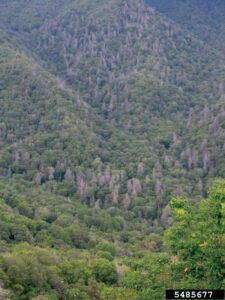
Photo of forest in hills, forest mortality, hemlock woolly adelgid.
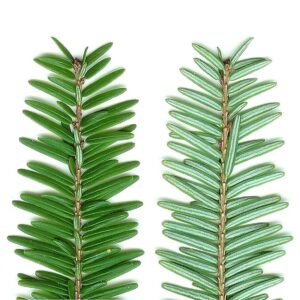
Photo of needles from eastern hemlock.
Identifying Eastern Hemlock
Hemlock woolly adelgid will only feed on hemlocks, so proper tree identification is crucial. If you’re not sure whether your conifer is hemlock, check the color, shape, and arrangement of the needles. The needles of eastern hemlock grow singly (not in clusters) in alternate or opposite positions. The needles are flattened, and have two white stripes on the underside. The cones are small (1-2 cm), and when dry, they can resemble a rosette.
Monitoring for Hemlock Woolly Adelgid
The white “wool” balls are the most tell-tale sign of this pest. Check the undersides of the branches at the base of the needles, and look for small, round, white cottony masses that cover the twig. These are actually the egg sacs of the hemlock woolly adelgid. You may also notice the “crawlers”, or the mobile nymphs, which are tiny, oval-shaped, reddish-brown insects.
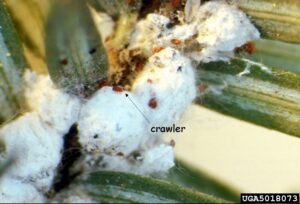
Photo of egg sacs of the hemlock woolly adelgid. These white “wool” balls are the most tell-tale sign of this pest.
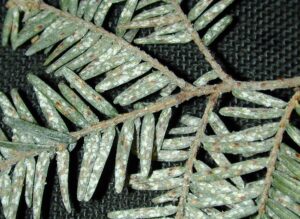
Photo of elongate hemlock scale with flattened white spots.
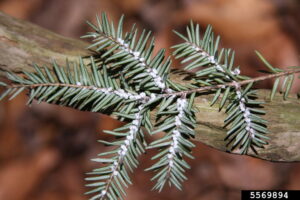
Photo of hemlock wooly adelgids with egg sacks along the twig.
If you frequently check hemlock trees, you may see other white spots that resemble the woolly adelgid. The cocoons of elongate hemlock scale are often confused with hemlock woolly adelgid. However, note how the white “spots” from the scale infestation are flattened and cover the needles. Hemlock wooly adelgids congregate at the base of the needles along the twig, not on the needles themselves, and the egg sacs are round in shape. Single, large egg sacs found throughout the branch are often spider egg sacs or oak skeletonizer cocoons.
Report any suspected findings of hemlock woolly adelgid at the Early Detection Distribution Map System (EDDMapS) website.
To view this original article and other Purdue Landscape Report articles, please visit Purdue Landscape Report.
Resources:
ID That Tree: Eastern Hemlock, video, Purdue Extension – Forestry and Natural Resources (FNR) YouTube Channel
Distinguishing Hemlock From Yew, The Purdue Landscape Report
Normal Needle Drop: Even Healthy Evergreens are not Evergreen, Purdue Plant & Pest Diagnostic Lab (PPDL)
Recognizing and Managing Poison Hemlock, Purdue Landscape Report
Be Careful Around Highly Toxic Poison Hemlock Plant This Summer, Purdue Extension – FNR
Phomopsis Dieback of Spruce, The Education Store, Purdue Extension resource center
Chlorosis of Pine Trees, The Purdue Landscape Report
Borers of Pines and Other Needle Bearing Evergreens in Landscapes, The Education Store
Stress-related Conifer Dieback, The Education Store
Certified Soil Testing Laboratories, Purdue Extension-Master Gardener Program
Tree Installation: Process and Practices, The Education Store
Planting Your Tree Part 1: Choosing Your Tree, video, Purdue Extension – FNR YouTube Channel
Tree Defect Identification, The Education Store
Shrubs and Woody Vines of Indiana and the Midwest, The Education Store
Tree Risk Management, The Education Store
Consumer Horticulture: Collecting Soil Samples for Testing, The Education Store
Find an Arborist website, Trees are Good, International Society of Arboriculture (ISA)
Purdue Pest and Plant Diagnostic Lab, send in photo or samples
Alicia Kelley, Cooperative Agricultural Pest Survey (CAPS) Coordinator
Purdue Extension – Entomology
Everyone experiences phenology. What is phenology and how can observing plant and animal life cycle stages help us understand changes in climate, water, light and other abiotic factors? In this webinar hosted by Indiana Forestry & Woodland Owners Association (IFWOA), presenter Amanda Wanless of Indiana Phenology explains what phenology is and how each season is unique. Phenology includes the leafing and flowering, the ripening of crops in the fields, the emergence of insects, the migration of birds and much more. Amanda discusses how you can observe seasonal change on the landscape, and ways to monitor on your own or join a citizens science network collecting long term data.
Check out the Indiana Forestry & Woodland Association YouTube Channel for videos including: What is IFWOA?; A New Carbon Program for Hardwood Landowners Webinar, Indiana’s Native Orchids, Magnificent Trees of Indiana, Be Tick Aware and much more.
The Indiana Forestry & Woodland Owners Association (IFWOA) was founded in 1977 and is a non-profit organization dedicated to conservation and sustainable management of woodlands in Indiana. IFWOA advocates for scientific best practices for management to achieve objectives of clean water, wildlife habitat, soil protection, native species diversity, timber production, recreation, carbon sequestration and many others.
IFWOA is an affiliate of the National Woodland Owners Association. IFWOA is a partner, collaborator or is represented on leading National and State organizations. These memberships or collaborations are selected to advance Indiana Woodland owner’s interests. IFWOA monitors and influences legislation and economic trends impacting Indiana woodlands and landowners for our members. Membership in IFWOA provides a valuable network linkage to information and resources at the leading edge of science, industry and politics impacting Indiana woodlands.
Resources:
Magnificent Trees of Indiana, Purdue University Press
Forest Improvement Handbook, The Education Store, Purdue Extension’s resource center
Planting Hardwood Seedlings – The Education Store
Ordering Seedlings from the State Forest Nursery System, Got Nature? – Purdue Extension-FNR
Importance of Hardwood Tree Planting – The Education Store, Purdue Extension Resource Center
Forest Improvement Handbook – The Education Store
Designing Hardwood Tree Plantings for Wildlife – The Education Store
ID That Tree – YouTube Playlist
Forest Management for Reptiles and Amphibians: A Technical Guide for the Midwest, The Education Store
Hardwood Ecosystem Experiment – Forest Birds , Purdue Extension – FNR YouTube Channel
Managing Woodlands for Birds , Purdue Extension – FNR YouTube Channel
Sustaining Our Oak-Hickory Forests , Purdue Extension – FNR YouTube Channel
Ask the Expert: Hardwood Ecosystem Experiment – Birds and Salamander Research, Purdue Extension – FNR
Subscribe to Purdue Extension-FNR YouTube Channel
Liz Jackson, Engagement Lead
Indiana Forestry & Woodland Association
Purdue Landscape Report: Each spring the PPDL receives several samples of oak trees showing curled, twisted, stunted and/or generally ratty looking leaves. When there are holes in the leaves or leaf edges are missing tissue, we add another symptom name to the mix: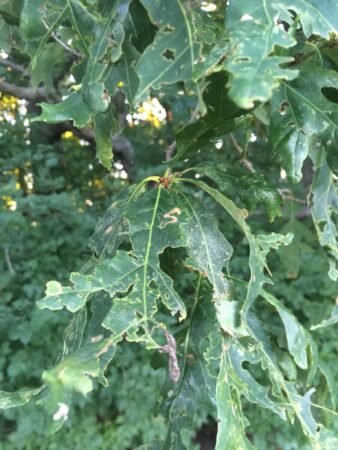 tatters.
Distorted new growth and tatters are most common on white oaks and may occasionally show up on red oak, hackberry and other trees. Upon initial inspection the leaves look as if they have been shredded or severely fed upon by insects. However, a closer observation of the leaves will reveal that the leaf tissue has not been removed, but rather, it never developed normally. We have seen this problem on white oaks for many years in Indiana and it has been reported in other states throughout the Midwest.
Several possible causes for this symptom have been proposed, including poor growing conditions, insect injury, leaf diseases, late spring frost damage and herbicide drift; however, no single factor serves to explain all the cases. In 2020 we saw a distinct link between tattered oak leaves and a late spring frost that year but the connection is not always so clear cut. See PLR article: Oaks Will Persist After Ugly Summer Start.
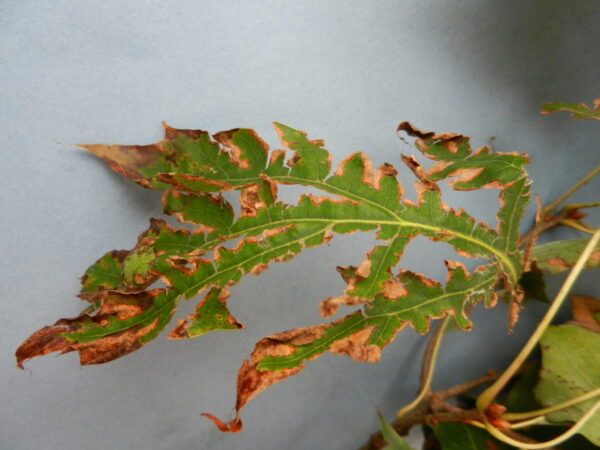
Researchers have shown that acetochlor and s-metolachlor drift can cause tatters-like symptoms but results were variable, and in some treatments red oaks were more affected than white oaks, contrary to the expected results. In many instances there is no direct link to herbicide drift. We once had samples from a white oak tree that showed symptoms of tatters and leaf curl every year, yet was located in the middle of a heavily forested area miles away from any agricultural fields that might have been a source of herbicide drift. While the exact cause may not be clear, it does appear that conditions that lead to tatters occur while the leaves are still developing.
To view this full article and other Purdue Landscape Report articles, please visit Purdue Landscape Report.
Subscribe and receive the newsletter: Purdue Landscape Report Newsletter.
Resources:
The Purdue Landscape Report
Certified Soil Testing Laboratories, Purdue Extension-Master Gardener Program
Consumer Horticulture: Collecting Soil Samples for Testing, The Education Store
Purdue Landscape Report Facebook Page
Find an Arborist website, Trees are Good, International Society of Arboriculture (ISA)
Tree Installation: Process and Practices, The Education Store
Planting Forest Trees and Shrubs in Indiana, The Education Store
Planting Your Tree Part 1: Choosing Your Tree, Video, Purdue Extension – Forestry and Natural Resources YouTube Channel
Tree Defect Identification, The Education Store, Purdue Extension resource center
Tree wounds and healing, Got Nature? Blog
Tree Pruning Essentials, Publication & Video, The Education Store
Shrubs and Woody Vines of Indiana and the Midwest, The Education Store
Tree Risk Management, The Education Store
Why Is My Tree Dying?, The Education Store
Tom Creswell, Plant & Pest Diagnostic Laboratory Director
Purdue Botany and Plant Pathology

Brian MacGowan, Wildlife Extension Specialist and Extension Coordinator.
Agriculture Natural Resources (ANR) Newsletter: Dr. Brian MacGowan is an Extension wildlife specialist and Extension coordinator in the Department of Forestry and Natural Resources (FNR). Brian grew up in rural St. Joseph County and began his career in Extension in 1999.
Part of Brian’s Extension program focuses on professional development in cooperation with many agencies and organizations including the Indiana Chapter of the Wildlife Society, Natural Resources Conservation Service, Indiana Department of Natural Resources, and Fur Takers of America. For example, Brian works with the FTA and DNR to conduct the Professional Trappers College Furbearer Management Short Course held annually since 1980. Nuisance wildlife control operators, conservation officers, wildlife biologists, and trappers attend a week-long workshop. Almost all participants report improved trapping skills (98%) and that the knowledge gained will help them in their professional career (87%).
Much of his Extension and research has focused on management on public and private woodlands. He served as a co-PI on the Hardwood Ecosystem Experiment (www.heeforeststudy.org) where he studied the effects of timber harvesting on movement and survival of timber rattlesnakes and box turtles. More recently, Brian worked with Dr. Linda Prokopy to evaluate the impact of the Forest Management for the Private Woodland Owner Course and its role in the landowner decision-making process.
Brian also co-instructs (with Dr. Rod Williams) FNR506 Theory and Application of Natural Resources Extension Programming. Since 2012, graduate students per department policy develop a logic model, an Extension plan and an Extension deliverable. In FNR506, students increase their familiarity with natural resource Extension programs, create a logic model based on their own research and Extension interests, develop a plan that outlines extension goals, and increase skills for communicating with non-scientific audiences. To date 270 students have completed the course and produced more than 400 Extension deliverables. A recent academic review showed that “integration of Extension training and activity into the graduate program has been a great success, helping students better understand the role of Extension and outreach into the land grant mission.” Based on data from course evaluations, student interest in Extension has increased 66 percent as a result of the class and 42 percent of students said they would consider a career in Extension.
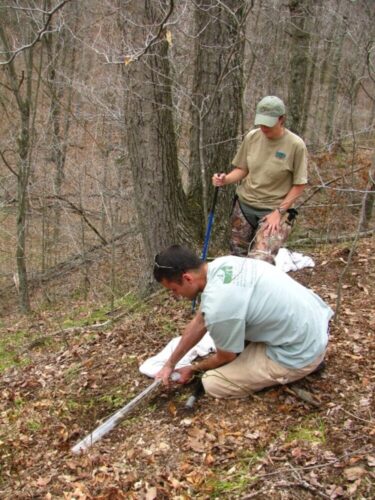
Brian conducting field work in the woods.
MacGowan launched the Natural Resources Extension internship program in 2015. This program, which is funded through the Renewable Resources Extension Act (RREA), helps students develop leadership and decision-making skills, increase communication skills, build professional references, and clarify career goals while also enhancing the scope and capacity of the FNR Extension program. Proposals are submitted to a departmental committee, which selects up to three paid internships to be awarded each funding cycle. Eric Norland, the RREA National Program leader, described the internship program as “unique and innovative” and noted “how forward-looking and beneficial (this program is) to both the program and the intern.” Thus far, 21 students have participated in internships, producing 30 videos and 16 publications, helping organize 22 workshops, making 19 presentations, hosting booths at 12 events, and contributing to 15 demonstration areas. A survey following the internships showed a 64 percent increase in a student considering a career in Extension and a 52 percent improvement in ability to speak with non-scientific audiences.
According to Brian, he received some valuable advice early in his career. “One of the best things about working in Extension is you are only limited by time and your imagination. If you have an idea that is good enough, someone will work with you to see it through.”
Agriculture & Natural Resource (ANR) is comprised of many specialists from Purdue Extension and from departments at Purdue. The Purdue Extension Educators serve as research based, unbiased information source for county and state constituents on a variety of topics including: crops, ag business, livestock, natural resource, horticulture, small farms, urban ag, pesticide use, and land conservation. In partnership with Purdue University subject matter experts, ANR Extension Educators can provide relevant and proven best management practices to address many client’s situational needs.
Resources:
Wildlife, Playlist, Purdue Extension – Forestry and Natural Resources (FNR) YouTube Channel
Ask the Expert: Birdwatching, Purdue Extension – FNR YouTube Channel
How to Stop Woodland Animals from Digging in Your Flower Pots, Got Nature? Blog with video, Purdue Extension FNR
Considerations for Trapping Nuisance Wildlife with Box Traps, The Education Store
Hardwood Ecosystem Experiment (HEE) – Wildlife Responses to Timber Harvesting, The Education Store
Snakes and Lizards of Indiana, The Education Store
Turtles of Indiana, The Education Store
Attracting Hummingbirds to Your Yard, The Education Store
Agriculture Natural Resources (ANR)
Wild Bulletin, Indiana Department of Natural Resources (DNR) Fish and Wildlife: The Eastern box turtle (Terrapene carolina) is a species of hinge-shelled turtle that lives on forested land in Indiana. Box turtles are long-lived, slow to mature and have few offspring per year. This, coupled with the high mortality rate of box turtles being hit on roads, has resulted in Eastern box turtles being a species of special concern in Indiana.
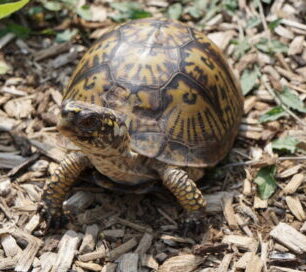
Eastern box turtles are listed as a species of special concern in Indiana due to population declines involving habitat loss, road mortality, and collection for pets. If you see one this summer, be sure to keep these guidelines in mind:
- Eastern box turtles may not be collected from the wild; however, if you accidentally catch an Eastern box turtle from Indiana from the wild, please contact the Division of Fish & Wildlife at DFW@dnr.IN.gov; do not release it into the wild. Its chances of survival are low, and it could transmit diseases to other wild Eastern box turtles.
- Sick or injured Eastern box turtles should be left in the wild. Don’t fret—box turtles are surprisingly resilient to damage and disease. If left alone, they will likely heal on their own. If a box turtle appears severely injured, it can be given to a licensed rehabilitator or licensed veterinarian.
If you see a wild Eastern box turtle crossing a busy road, you can pick it up and move it to the other side of the road in the direction it was facing. DNR appreciates your efforts to conserve wildlife.
To identify and learn more about the Eastern box turtle, please visit the DNR: Fish and Wildlife: Eastern Box Turtle website
Resources
Turtles of Indiana, The Education Store
Appreciating Reptiles and Amphibians in Nature, The Education Store
Forestry Management for Reptiles and Amphibians: A Technical Guide for the Midwest, The Education Store
The Nature of Teaching, Unit 3: Reptiles, Amphibians, and the Scientific Method, The Education Store
Partners in Amphibian and Reptile Conservation (PARC)
Ask An Expert, Purdue Extension – FNR Playlist
Indiana Department of Natural Resources
What is phenology and how do we observe seasonal changes in nature? In this webinar hosted by Indiana Forestry & Woodland Owners Association (IFWOA), presenter Amanda Wanless of Indiana Phenology discusses how you can observe seasonal change on your landscape and ways to monitor the changes. Find out how to join a citizens science network collecting long term data.
Check out the Indiana Forestry & Woodland Association YouTube Channel for videos including: What is IFWOA?; A New Carbon Program for Hardwood Landowners Webinar, Indiana’s Native Orchids, Magnificent Trees of Indiana, Be Tick Aware and much more.
The Indiana Forestry & Woodland Owners Association (IFWOA) was founded in 1977 and is a non-profit organization dedicated to conservation and sustainable management of woodlands in Indiana. IFWOA advocates for scientific best practices for management to achieve objectives of clean water, wildlife habitat, soil protection, native species diversity, timber production, recreation, carbon sequestration and many others.
IFWOA is an affiliate of the National Woodland Owners Association. IFWOA is a partner, collaborator or is represented on leading National and State organizations. These memberships or collaborations are selected to advance Indiana Woodland owner’s interests. IFWOA monitors and influences legislation and economic trends impacting Indiana woodlands and landowners for our members. Membership in IFWOA provides a valuable network linkage to information and resources at the leading edge of science, industry and politics impacting Indiana woodlands.
Resources:
Nature’s Notebook, USA National Phenology Network
Forest Improvement Handbook, The Education Store, Purdue Extension’s resource center
Harvesting our forests, the wildlife debate, Purdue Extension – Forestry and Natural Resources (FNR) Got Nature? Blog
Wildlife Responses to Timber Harvesting, The Education Store
Breeding Birds and Forest Management: the Hardwood Ecosystem Experiment and the Central Hardwoods Region, The Education Store
Forest Management for Reptiles and Amphibians: A Technical Guide for the Midwest, The Education Store
Hardwood Ecosystem Experiment – Forest Birds , Purdue Extension – FNR YouTube Channel
Managing Woodlands for Birds , Purdue Extension – FNR YouTube Channel
Sustaining Our Oak-Hickory Forests , Purdue Extension – FNR YouTube Channel
Ask the Expert: Hardwood Ecosystem Experiment – Birds and Salamander Research, Purdue Extension – FNR
Subscribe to Purdue Extension-FNR YouTube Channel
Liz Jackson, Engagement Lead
Indiana Forestry & Woodland Association
In this webinar, hosted by Indiana Forestry & Woodland Owners Association (IFWOA), presenter LeAnne Barta of Indiana Lyme Connect shares strategies for preventing tick bites and discuss the ticks found in Indiana, their life stages, and symptoms of tick-borne illnesses like Lyme disease.
Check out the Indiana Forestry & Woodland Association YouTube Channel for videos including: What is IFWOA?; A New Carbon Program for Hardwood Landowners Webinar, Indiana’s Native Orchids, Magnificent Trees of Indiana, Observing Seasonal Changes in Nature and much more.
The Indiana Forestry & Woodland Owners Association (IFWOA) was founded in 1977 and is a non-profit organization dedicated to conservation and sustainable management of woodlands in Indiana. IFWOA advocates for scientific best practices for management to achieve objectives of clean water, wildlife habitat, soil protection, native species diversity, timber production, recreation, carbon sequestration and many others.
IFWOA is an affiliate of the National Woodland Owners Association. IFWOA is a partner, collaborator or is represented on leading National and State organizations. These memberships or collaborations are selected to advance Indiana Woodland owner’s interests. IFWOA monitors and influences legislation and economic trends impacting Indiana woodlands and landowners for our members. Membership in IFWOA provides a valuable network linkage to information and resources at the leading edge of science, industry and politics impacting Indiana woodlands.
Resources:
Find an Indiana Professional Forester, Indiana Forestry & Woodland Owners Association (IFWOA)
Purdue Arboretum Explorer
Native Trees of the Midwest, Purdue University Press
Shrubs and Woody Vines of Indiana and the Midwest, Purdue University Press
Investing in Indiana Woodlands, The Education Store
Forest Improvement Handbook, The Education Store
ID That Tree, Purdue Extension-Forestry & Natural Resources (FNR) YouTube playlist
Woodland Management Moment , Purdue Extension-FNR YouTube playlist
Liz Jackson, Engagement Lead
Indiana Forestry & Woodland Association
Illinois-Indiana Sea Grant Newsroom: During large rainstorms, many Illinois residents brace themselves for flooding in their basements, streets and neighborhoods. A new online tool, Illinois Groundwork, provides communities and stormwater professionals with resources on green stormwater infrastructure, which provides a way for rain to be absorbed into soil where it lands.
Green stormwater infrastructure offers a way to enhance traditional or “grey” infrastructure using a rain garden or permeable pavement but this approach doesn’t always work as well as it might. Improving access to, and use of, data, research and other resources can help increase the effectiveness of green infrastructure in addressing stormwater management challenges.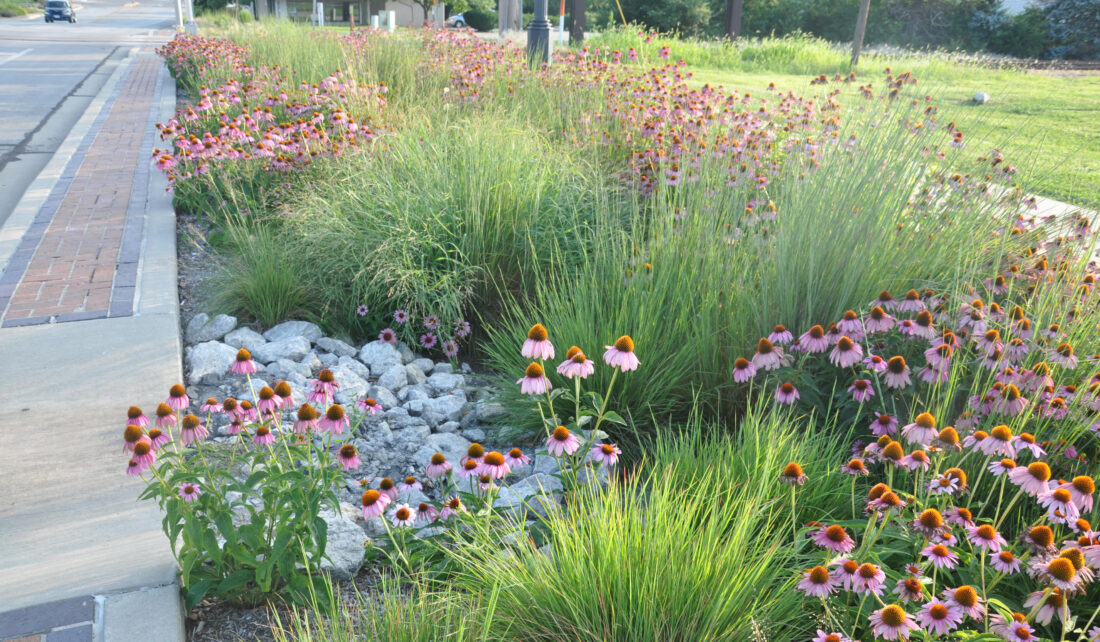
“The University of Illinois not only has relevant research and data across many departments, but also real-world examples of successful green infrastructure, along with other extension and education tools, such as the Red Oak Rain Garden,” said C. Eliana Brown, University of Illinois Extension stormwater specialist. “This new tool brings these resources together, providing a robust platform to access green infrastructure knowledge.”
For full article and videos please visit Illinois Groundwork provides a rich supply of green infrastructure resources – IISG
About IISG: These are trying times for the environment. Climate change and other concerns such as population growth, aquatic invasive species, contaminated waters, and loss of natural habitat, the southern Lake Michigan region faces many challenges. Illinois-Indiana Sea Grant (IISG), with its unique mandate to bring the latest science to those who can best use the information, serves a critical role in empowering people to solve problems in sustainable ways. The program is funded through National Oceanic and Atmospheric Administration (NOAA), the University of Illinois and Purdue University, but IISG also works in partnerships with key organizations, institutions, and agencies in the region to reach more audiences and multiply opportunities for success. IISG brings together scientists, educators, policy makers, community decision makers, outreach specialists, business leaders, and the general public to work towards a healthy environment and economy.
Resources
Center For Great Lakes Literacy (CGLL), Website
Ask An Expert: Hot and Cold, Video, Purdue Extension – Forestry and Natural Resources YouTube channel
Informing the Development of the Great Lakes Region Decision Support System, The Education Store, Purdue Extension’s resource center
Urban Best Management & Low Impact Development Practices, The Education Store
Improving Water Quality Around Your Farm, The Education Store
New website: Eat Midwest Fish, Got Nature? Blog, Purdue Extension – Forestry and Natural Resources (FNR)
Scientists bring the Great Lakes to students learning from home, Got Nature? Blog
Adaptations for Aquatic Amphibians Activity 2: Water Quality Sneak Peak, Purdue Nature of Teaching
Illinois-Indiana Sea Grant (IISG)
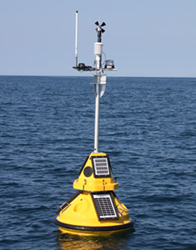
Illinois-Indiana Sea Grant Newsroom: May 2022, Illinois-Indiana Sea Grant (IISG) launched its third buoy in southern Lake Michigan—this one based in the busy waters off Navy Pier. This new buoy with its flow of in-the-moment data is helping the National Weather Service (NWS) Chicago develop more accurate forecasts and warnings, especially related to nearshore wave heights and wind speeds.
This third buoy, known affectionately as Chuoy, joins IISG buoys in the nearshore waters of Michigan City, Indiana and Wilmette, Illinois. Together, these three, along with two University of Illinois buoys closer to the Wisconsin border, paint a comprehensive picture of coastal lake conditions in the two states. In addition to meteorologists, the data is used by scientists, boaters, anglers and beach goers.
“Information from these buoys allows recreational water users to make better informed decisions when it comes to safety,” said Ben Szczygiel, IISG buoy specialist. “The data allows people to plan for current conditions and avoid the water when there are increased safety concerns.”
For full article and videos please visit New to Navy Pier waters, Chuoy the Buoy proved a valuable forecasting tool-IISG
About IISG: These are trying times for the environment. Climate change and other concerns such as population growth, aquatic invasive species, contaminated waters, and loss of natural habitat, the southern Lake Michigan region faces many challenges. Illinois-Indiana Sea Grant (IISG), with its unique mandate to bring the latest science to those who can best use the information, serves a critical role in empowering people to solve problems in sustainable ways. The program is funded through National Oceanic and Atmospheric Administration (NOAA), the University of Illinois and Purdue University, but IISG also works in partnerships with key organizations, institutions, and agencies in the region to reach more audiences and multiply opportunities for success. IISG brings together scientists, educators, policy makers, community decision makers, outreach specialists, business leaders, and the general public to work towards a healthy environment and economy.
Resources
Center For Great Lakes Literacy (CGLL), Website
Ask An Expert: Hot and Cold, Video, Purdue Extension – Forestry and Natural Resources YouTube channel
Informing the Development of the Great Lakes Region Decision Support System, The Education Store, Purdue Extension’s resource center
Urban Best Management & Low Impact Development Practices, The Education Store
Improving Water Quality Around Your Farm, The Education Store
New website: Eat Midwest Fish, Got Nature? Blog, Purdue Extension – Forestry and Natural Resources (FNR)
Scientists bring the Great Lakes to students learning from home, Got Nature? Blog
Adaptations for Aquatic Amphibians Activity 2: Water Quality Sneak Peak, Purdue Nature of Teaching
Illinois-Indiana Sea Grant (IISG)

Recent Posts
- Beetle that attacks Tree-of-Heaven found in Indiana, Purdue Landscape Report
Posted: March 20, 2026 in Invasive Insects, Wildlife, Woodlands - ID That Tree: Dwarf Chinkapin Oak
Posted: in Forestry, Urban Forestry, Wildlife, Woodlands - DNR Hiring for Indiana Conservation Officer Positions, MyDNR
Posted: March 9, 2026 in Urban Forestry, Wildlife, Woodlands - ID That Tree: Shumard Oak
Posted: in Plants, Urban Forestry, Wildlife, Woodlands - Uniting Indiana Residents Against Invasive Species
Posted: February 27, 2026 in Community Development, Invasive Insects, Wildlife - Have You Seen a Soaring Eagle Lately? Morning Ag Clips
Posted: February 25, 2026 in Urban Forestry, Wildlife - Register for Natural Resources Teacher Institute’s Class of 2026
Posted: February 19, 2026 in Forestry, Wildlife, Woodlands - ID That Tree: Fragrant Sumac
Posted: February 4, 2026 in Plants, Urban Forestry, Wildlife - Woodsy Owl Edition for Educational Learning, USDA – U.S. Forest Service
Posted: January 21, 2026 in Forestry, Forests and Street Trees, Got Nature for Kids, Urban Forestry, Wildlife - Opt-in to the Deer Management Survey, MyDNR
Posted: January 12, 2026 in Forestry, Wildlife
Archives
Categories
- Alert
- Aquaculture/Fish
- Aquatic/Aquaculture Resources
- Ask the Expert
- Christmas Trees
- Community Development
- Disease
- Drought
- Forestry
- Forests and Street Trees
- Gardening
- Got Nature for Kids
- Great Lakes
- How To
- Invasive Animal Species
- Invasive Insects
- Invasive Plant Species
- Land Use
- Natural Resource Planning
- Nature of Teaching
- Plants
- Podcasts
- Ponds
- Publication
- Safety
- Spiders
- Timber Marketing
- Uncategorized
- Urban Forestry
- Webinar
- Wildlife
- Wood Products/Manufacturing
- Woodland Management Moment
- Woodlands