 Purdue University - Extension - Forestry and Natural Resources
Got Nature? Blog
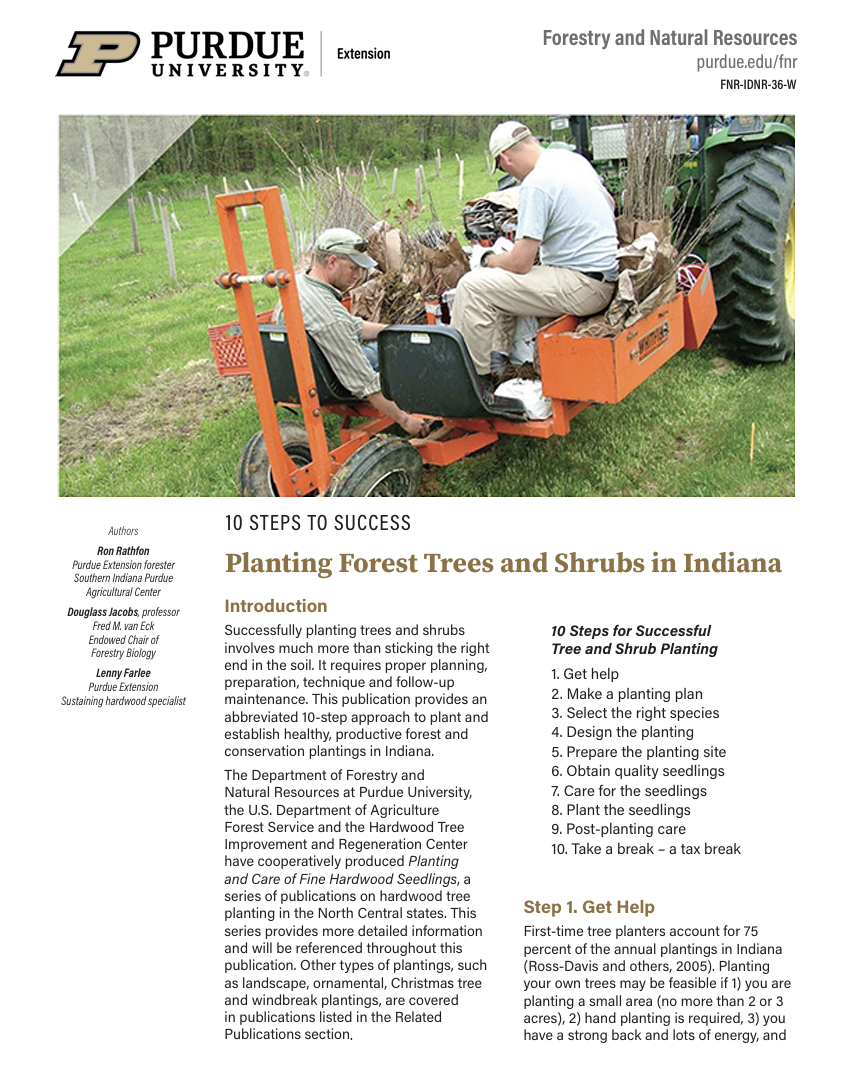 Discover the essential guide for anyone looking to plant forest trees or shrubs in Indiana. Whether you’re a first‑time landowner or an experienced conservationist, Planting Forest Trees and Shrubs in Indiana walks you through the 10 proven steps for establishing healthy, resilient plantings that thrive for generations. From choosing the right species to preparing your site, planting with confidence and ensuring long‑term success, this publication distills expert forestry knowledge into clear, practical advice. Ready to transform your landscape and leave a lasting legacy?
This publication provides an abbreviated 10-step approach to plant and establish healthy, productive forest and conservation plantings in Indiana. Successfully planting trees and shrubs involves much more than sticking the right end in the soil.
To receive the free download, visit the Purdue Extension’s resource center: The Education Store – Planting Forest Trees and Shrubs in Indiana.
Resources:
Control Management of Poison Hemlock, Got Nature? Blog, Purdue Extension – Forestry & Natural Resources (FNR)
Publication: Invasive Plant Series-Tree of Heaven, Got Nature? Blog, Purdue Extension – FNR
Publication – Invasive Plant Series: Swallow-worts, Got Nature? Blog, Purdue Extension – FNR
Question: What is the best management process with cut invasive brush tops?, Got Nature? Blog, Purdue Extension – FNR
Planting Your Tree Part 1: Choosing Your Tree, Purdue Extension YouTube Channel
Tree Pruning Essentials, The Education Store
Tree Pruning Essentials Video, Purdue Extension YouTube Channel
Surface Root Syndrome, The Education Store
District Forester, Indiana Department of Natural Resources, 10+ acres
Directory of Professional Foresters, Indiana Forestry & Woodland Owners Association (IFWOA)
Find an Arborist video, Trees are Good-International Society of Arboriculture (ISA)
Indiana Invasive Species Council
ID That Tree, Playlist, Purdue Extension – FNR YouTube Channel (Invasive White Mulberry, Siberian Elm, Tree of Heaven)
Fifty Common Trees of Indiana
An Introduction to Trees of Indiana
Native Trees of the Midwest, The Education Store
Subscribe – Purdue Extension-FNR YouTube Channel
Ron Rathfon, Regional Extension Forester, Southern Indiana Purdue Agriculture Center (SIPAC)
Purdue Forestry and Natural Resources
In this edition of ID That Tree, Purdue Extension Forester Lenny Farlee introduces us to Virgin’s Bower clematis, a native vining plant found in Indiana that’s especially noticeable when it blooms later in the growing season. Often seen climbing over nearby vegetation or spreading across open spaces, this species adds both beauty and ecological value to the landscape. Learn where Virgin’s Bower is typically found, how to recognize it and how it compares to a similar invasive look-alike. Whether you’re a student, landowner or simply curious about native vines, this video offers a quick introduction to this attractive and useful Indiana species.
If you have any questions regarding wildlife, trees, forest management, wood products, natural resource planning or other natural resource topics, feel free to contact us by using our Ask an Expert web page.
Resources:
ID That Tree – Video Playlist, Purdue Extension – Forestry and Natural Resources (FNR) YouTube Channel
Purdue Arboretum Explorer
Conservation Tree Planting: Steps to Success, Purdue Extension – FNR YouTube Channel
A Woodland Management Moment, Playlist, Purdue Extension – FNR YouTube Channel
Woodland Stewardship for Landowners, Playlist, Purdue Extension – FNR YouTube Channel
Fifty Common Trees of Indiana, Purdue Extension – FNR
Indiana Invasive Species Council
Cooperative Invasive Species Management Area (CISMA)
Report Invasive, Purdue Extension
Habitat University, Episode 12 – Exploring the challenges of Invasive Species, Habitat University-Natural Resource University
Shrubs and Woody Vines of Indiana and the Midwest, Purdue University Press
Native Trees of the Midwest, Purdue University Press
Professional Forester, Indiana Forestry Woodland Owners Association
District Forester, Indiana Department of Natural Resources, 10+ acres
Find an Arborist, International Society of Arboriculture
Forest Improvement Handbook, The Education Store
Lenny Farlee, Extension Forester
Hardwood Tree Improvement and Regeneration Center
Purdue Department of Forestry & Natural Resources
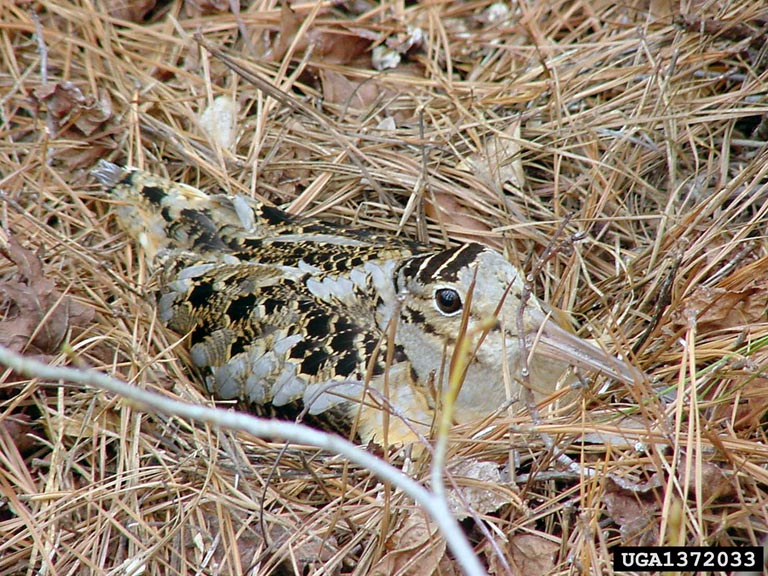
American Woodcock. Photo credit: Ricky Layson Photography, Bugwood.org.
You know Spring is around the corner when the days get longer and the temperatures rise. While the weather has pleasantly been warm this year so far, perhaps my favorite harbinger of Spring is the annual arrival of the American Woodcock, also known as the Timberdoodle. Their unique “peents” and the spectacular aerial flights of males looking to attract mates can be very entertaining.
Woodcock are migratory and spend their winters in the southern U.S. They arrive in Indiana in the early spring. Male woodcock typically set up their singing grounds in open fields and forest openings and recently logged areas. However, they can often be seen in urban areas including parks and even residential communities. The best time to observe them is at dusk. Woodcock will spend time on the ground “peenting” for a while, then fly high into the air to perform their “dance” only to return to the ground where they will repeat the process. This will go on until it gets dark. You can sometimes hear them peent in the morning before sunrise.
If you’re outside around dusk in early spring, keep an ear out — you just might hear the peent of a timberdoodle nearby.
Resources:
American Woodcock, Indiana Department of Natural Resources, Department of Fish & Wildlife
Americna Woodock – Listen to Woodcock call, Purdue Ross Biological Reserve
The Birders’ Dozen Profile 2: American Woodcock, Indiana Woodland Steward
Learn how forests are used by birds new videos, Got Nature? Blog
Managing Woodlands for Birds, The Education Store-Purdue Extension resource center
Managing Woodlands for Birds Video, Purdue Extension-Forestry and Natural Resources (FNR) YouTube Channel
Birds and Residential Window Strikes: Tips for Prevention, The Education Store, Purdue Extension resource center
Breeding Birds and Forest Management: The Hardwood Ecosystem Experiment and the Central Hardwoods Region, The Education Store
No Room at the Inn: Suburban Backyards and Migratory Birds, The Education Store
The Birders’ Dozen, Profile: Baltimore Oriole, Indiana Woodland Steward
Ask An Expert, Playlist, Purdue Extension – FNR YouTube Channel
It’s For the Birds, Indiana Yard and Garden-Purdue Consumer Horticulture
National Audubon Society
The Cornell Lab of Ornithology
Subscribe, Purdue Extension – FNR YouTube Channel
Brian MacGowan, Extension Wildlife Specialist
Purdue University, Department of Forestry and Natural Resources
Purdue Landscape Report: When talking about invasive species, specialists are most commonly talking about some kind of plant or insect that is making an impact on landscape plants, soil, or hardwood. Most of these species are relatively easy to understand, with a biology that typically resembles that of a native counterpart. Wood-boring insects, vining plants, and fast-growing shrubs all have similar native species that landowners deal with on a regular basis. And then, some invasive species are just plain weird, like the invasive hammerhead worm!
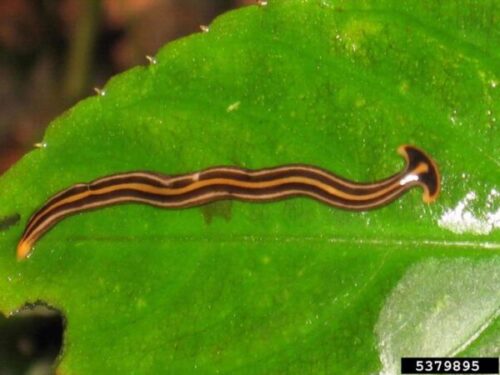
Hammerhead worm (photo from Arun T P, Bugwood.org)
Hammerhead worms, sometimes called shovel-headed garden worms, are a type of land planarian, or flatworm. Flatworms are worm-like organisms that lack the segmentation of earthworms and have the ability to regenerate from parts and pieces. Hammerhead worms belong to a subset of planarians, the genus Bipalium; while there are a few native species of Bipalium, most are from tropical regions. It is believed that hammerhead worms have been present in North America for long time, preferring environments that stay warm and moist through most of the year. Hammerhead worms are named for their spade-shaped head and typically have bright colors with dark lines running the length of their bodies. They are often found in indoor spaces and greenhouses that are temperature controlled and maintain humid conditions. Hammerhead worms can also be found living under rocks, fallen trees, or anywhere that can maintain a high enough relative humidity. While some flatworms are able to live in drier conditions, Bipalium need moisture in order to survive.
Members of Bipalium are predatory, consuming invertebrates like earthworms, snails, slugs, and some soft-bodied insects. Once they capture a prey item, they envelop it in a mouth-like organ located on the underside of their bodies. The primary issue with hammerhead worms is the potential damage they can do by preying on beneficial organisms that maintain soil and plant health. Hammerhead worms, and all other planarians, lack a closed body plan that uses a one-way digest system. Once they eat something, it is digested and waste is excreted through that same mouth-like opening. Some members of Bipalium can also use a toxin called tetrodotoxin to subdue their prey; however, they only produce a small amount and lack a way to use it on a larger organism. While they are often confused for more dangerous species, the Bipalium in North America do not represent a human health concern. Just keep any pets or children away from them, and if found, and use gloves if you’re forced to handle them.
As mentioned above, one of the more unique traits of Bipalium, and planarians in general, is their capacity to regenerate new individuals from parts and pieces. A piece as small as 1/279th of the whole can regenerate into a new individual. Do not attempt to chop up or crush hammerhead worms, or you may be dealing with several dozen when new worms develop in two weeks. However, even though it seems like hammerhead worms could reproduce very quickly, it’s still fairly uncommon to see one. If found, place it in a bag or bucket with either salt, alcohol, or vinegar until the worm is dead. As long as you do not cut or chop up the worms, it is very unlikely you’ll have to deal with more than one at any given time. Just keep your eyes open and remember to report any sightings to 1-866-NOEXOTICS!
View the original article on the Purdue Landscape Report website: Keep an eye out for hammerhead worms!.
Subscribe and receive the newsletter: Purdue Landscape Report Newsletter.
Resources:
Gardeners Asked to be Vigilant This Spring for Invasive Jumping Worm, Purdue Extension – FNR Got Nature? Blog
Fall webworms: Should you manage them?, Purdue Landscape Report
Mimosa Webworm, The Education Store, Purdue Extension resource center
Sod Webworms, Turf Science at Purdue University
Bagworm caterpillars are out feeding, be ready to spray your trees, Purdue Extension Forestry & Natural Resources (FNR) Got Nature? Blog
Landscape & Ornamentals: Bagworms, The Education Store
Purdue Plant Doctor, Purdue Extension-Entomology
Find an Arborist website, Trees are Good, International Society of Arboriculture (ISA)
ID That Tree – Video Playlist, Purdue Extension – Forestry and Natural Resources (FNR) YouTube Channel
Fifty Common Trees of Indiana, Purdue FNR web page list
Indiana Department of Natural Resources: Invasive Species
Indiana Invasive Species Council
Cooperative Invasive Species Management Area (CISMA)
Report Invasive, Purdue Extension
Native Trees of the Midwest, Purdue University Press
Report INvasive Facebook
Subscribe – Purdue Extension – FNR YouTube Channel
Bob Bruner, Exotic Forest Pest Educator
Purdue Entomology
Hummingbirds are a popular attraction in any backyard and we receive questions on when they will be coming to Indiana and how to attract them to your backyard. Our Purdue professor emeritus of wildlife ecology Barny Dunning in this interview for CBS4 Indianapolis titled “How to attract hummingbirds during peak migration,” shares how planting a variety of plants that bloom will help draw them in along with a simple hummingbird mixture.
The ruby-throated hummingbird is the only species of hummingbird that nests in the Hoosier state. These colorful visitors are migratory and arrive from their wintering grounds around mid-April.
Dr. Brian MacGowan has a publication titled Attracting Hummingbirds to Your Yard that is a great resource to share along with this video showing how to prepare your hummingbird feeders and how to find out when they will be migrating to your area. Hummingbird Central also tracks spring and fall migrations. Anyone can submit sightings on their website and view up-to-date sightings.
Resources:
Attracting Hummingbirds to Your Yard publication, The Education Store-Purdue Extension resource center
Virtual Tour Brings Forest Management for Birds to Life, Got Nature? Blog, Purdue Extension FNR
Birding Through the Seasons, Indiana Forestry & Woodland owners Association (IFWOA)
Behold! The Atlas of Breeding Birds of Indiana, MyDNR, Indiana Department of Natural Resources, Got Nature? Blog, Purdue Extension FNR
Breeding Birds and Forest Management: the Hardwood Ecosystem Experiment and the Central Hardwoods Region, The Education Store, Purdue Extension – Forestry and Natural Resources
Forest Birds, The Education Store
Managing Woodlands for Birds, The Education Store
Managing Woodlands for Birds Video, Purdue Extension-Forestry and Natural Resources (FNR) YouTube Channel
The Birders’ Dozen, Profile: Baltimore Oriole, Indiana Woodland Steward
Birds and Residential Window Strikes: Tips for Prevention, The Education Store, Purdue Extension resource center
No Room at the Inn: Suburban Backyards and Migratory Birds, Education Store
Question: Is there any risk of becoming infected with avian influenza virus by feeding backyard birds?, Got Nature? Blog, Purdue Extension FNR
Preventing Wildlife Damage – Do You Need a Permit?, The Education Store
How to Construct a Scent Station video, The Education Store
Subscribe – Purdue Extension-FNR YouTube Channel
Brian MacGowan, Wildlife Extension Specialist
Purdue Forestry and Natural Resources
Purdue Extension – Forestry and Natural Resources’ ID That Tree video series was recently highlighted in the National Woodland Owners Association’s (NWOA) Woodland Word Newsletter, recognizing the value of this Purdue FNR extension resource for woodland owners nationwide.

Hosted by Purdue Extension – Forestry and Natural Resources Forester Lenny Farlee, ID That Tree is a video series created to help viewers identify forest trees, shrubs and invasive plants through short, easy-to-follow lessons. With more than 150 videos in the playlist, the series offers a practical resource for woodland owners, land managers, outdoor enthusiasts and natural resource professionals interested in learning more about the plants and trees in their woodlands and surrounding landscapes. The ID That Tree playlist can be viewed on the Purdue Extension Forestry and Natural Resources YouTube channel.
In the March 25, 2026 issue of Woodland Word, NWOA featured the playlist in its “Knowledge, Inspiration, and Humor” section, describing it as a helpful tool for woodland owners seeking tree identification assistance.
Connecting National Resources to Indiana Woodland Owners
The National Woodland Owners Association (NWOA) is a nonprofit organization supporting woodland owners through education, advocacy, and stewardship resources across the U.S. To learn more about the opportunities and resources available view Join NWOA.
Here in Indiana, that national mission is carried forward locally through the Indiana Forestry & Woodland Owners Association (IFWOA), an official affiliate of NWOA.
IFWOA provides Indiana woodland owners with:
- Local networking and peer learning
- Educational programs and field tours
- Connections to Purdue Extension resources
- A voice for woodland owners at the state level
Resources:
Purdue Arboretum Explorer
Conservation Tree Planting: Steps to Success, Purdue Extension – FNR YouTube Channel
A Woodland Management Moment, Playlist, Purdue Extension – FNR YouTube Channel
Woodland Stewardship for Landowners, Playlist, Purdue Extension – FNR YouTube Channel
Fifty Common Trees of Indiana, Purdue Extension – FNR
Episode 11 – Exploring the challenges of Invasive Species, Habitat University-Natural Resource University
Shrubs and Woody Vines of Indiana and the Midwest, The Education Store
Native Trees of the Midwest, The Education Store
Professional Forester, Indiana Forestry Woodland Owners Association
Forest Improvement Handbook, The Education Store
Professional Forester, Indiana Forestry Woodland Owners Association (IFWOA)
District Forester, Indiana Department of Natural Resources, 10+ acres
Find an Arborist, International Society of Arboriculture
Indiana Invasive Species Council
Cooperative Invasive Species Management Area (CISMA)
Indiana Department of Natural Resources: Invasive Species
Report Invasive, Purdue Extension
Diana Evans, Extension & Web Communications Specialist
Purdue University Department of Forestry and Natural Resources
Explore the latest newsletter updates on the Indiana Woodland Steward website. Stay up-to-date with forestry news and receive their free e-newsletter by subscribing at IWS Subscribe.
Highlights from the new Newsletter include:
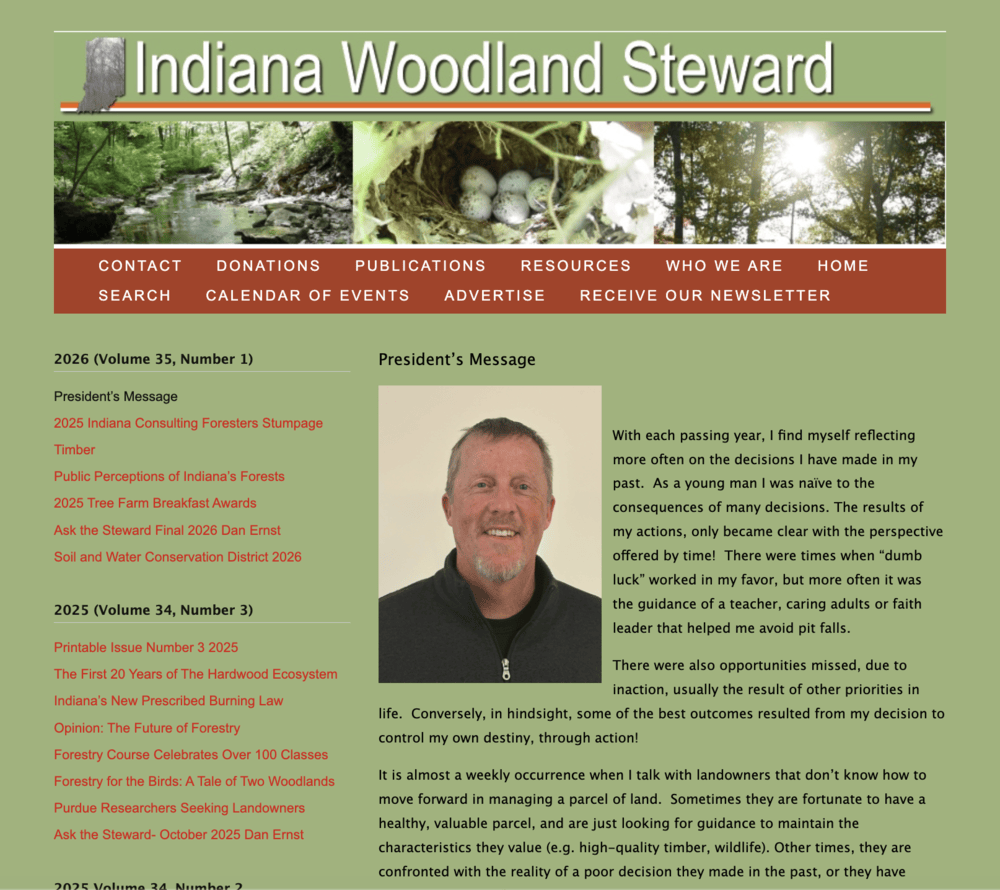
- President’s Message
By Dan McGuckin
“With each passing year, I find myself reflecting more often on the decisions I have made in my past…” - 2025 Indiana Consulting Foresters Stumpage Timber Price Report
“This report is provided annually and is intended to be used as a general indicator of timber stumpage prices and activity in Indiana…” - Public Perceptions of Indiana’s Forests and Woodlands: Insights from a Statewide Survey
By Erica Kronenberger, Zhao Ma, and Cynthia Longmire
“Public opinion plays a critical role in natural resource management. Natural resource agencies and organizations increasingly recognize that achieving and maintaining public approval…” - 2025 Tree Farm Breakfast Awards
By Ken Day
“Kline Contracting is the 2025 Indiana Logger of the Year. Mike Kline is third generation, and Miles Kline is a fourth generation Kline to operate the logging business…” - Ask the Steward – Final Column
by Dan Ernst
“‘Ask the Steward’ began as a Q&A column in the very first issue of Woodland Steward in 1992, with goals of being both informative and entertaining…“ - Soil and Water Conservation District 2026
“Thank you to all the supporting SWCD’s. Supporting the Woodland Steward Newsletter puts timely, relevant and science-based information…”
The Indiana Woodland Steward Newsletter is a resource offering a wealth of valuable information for foresters, woodland owners, timber marketing specialists, woodland and wildlife enthusiasts. The Indiana Woodland Steward Institute (IWS) is an entity made from 11 organizations within the state including Purdue University, Indiana Department of Natural Resources (DNR), and Indiana Hardwood Lumbermen’s Association (IHLA), that works to promote best usage practices of Indiana’s woodland resources through their Woodland Steward publication.
Resources
Hardwood Ecosystem Experiment (HEE) website
Hardwood Ecosystem Experiment – Wildlife Responses to Timber Harvesting, Purdue Extension
Forest Improvement Handbook, The Education Store
Invasive plants: impact on environment and people, The Education Store
Managing Your Woods for White-Tailed Deer, The Education Store
Shrubs and Woody Vines of Indiana and the Midwest, Purdue University Press
Virtual Tour Brings Forest Management for Birds to Life, Got Nature? Blog Post, Purdue Extension – Forestry and Natural Resources (FNR)
Breeding Birds and Forest Management: the Hardwood Ecosystem Experiment and the Central Hardwoods Region, The Education Store
Deer Impact Toolbox, Purdue Extension
Grassland Management Series, Purdue Extension Pond and Wildlife Management
Birdfeeder tips, The National Audubon Society
Explore the Rich World of Oaks with Purdue FNR Extension & Partners, Purdue Extension – FNR
Managing Woodlands for Birds Video, Purdue Extension-Forestry and Natural Resources YouTube Channel
Subscribe: Deer, Forest Management, ID That Tree, Woodland Management Moment, Invasive Species and many other topic video playlists Purdue Extension-Forestry and Natural Resources YouTube Channel
Dan McGuckin, President
Indiana Woodland Steward
Dr. Brian MacGowan, Extension Wildlife Specialist
Department of Forestry & Natural Resources, Purdue University
MyDNR, Indiana’s Outdoor Newsletter: While temperatures were frigid, conditions were perfect for DNR mammalogists to conduct surveys for rare and endangered bats. About half of the bat species found in Indiana avoid the cold by seeking out climate-controlled caves where they can hibernate.

Image credit: Indiana Department of Natural Resources
During this time, biologists count bats to get a snapshot of roughly how many of each species are present. Conducting surveys regularly provides a better understanding of population trends over time and conducting them at the same time every other year helps to minimize disturbance. The surveys primarily target the Indiana bat, but also include counts for the gray bat, little brown bat, tricolored bat and big brown bat.
Donations to the Indiana Nongame Wildlife Fund help the DNR purchase equipment needed for surveys. One critical tool is digital cameras which enable biologists to spend less time in caves disturbing the bats and more time in the office viewing photos to obtain a more accurate count.
While the data is still being tallied for the 2026 winter bat count, the impression DNR mammalogists have from this winter’s surveys is that multiple bat species continue to show signs of population growth.
Want to help bats? You can give them the best chance to thrive by growing native plants, installing bat houses, protecting forested habitat and minimize disturbance to bats.
To subscribe to the newsletter, visit MyDNR Email Newsletter.
Resources:
Hardwood Ecosystem Experiment (HEE) Highlights: Bats, Video, Purdue Extension – Forestry and Natural Resources (FNR) YouTube Channel
Bats in the Belfry, Purdue Extension – FNR Got Nature? Blog
Ask An Expert: Bats on the Hardwood Ecosystem Experiment (HEE), Video, Purdue Extension – FNR Facebook
Bats in Indiana, Indiana Department of Natural Resources (IN DNR)
Bat Houses, Bat Conservation International
Creating a Wildlife Habitat Management Plan for Landowners, The Education Store, Purdue Extension’s resource center
The Hardwood Ecosystem Experiment (HEE): Indiana Forestry and Wildlife, The Education Store
Subscribe to Purdue Extension-FNR YouTube Channel
Unexpected Plants and Animals of Indiana: Indiana Bats, Purdue College of Agriculture News
Selecting a Nuisance Wildlife Control Professional, The Education Store, Purdue Extension’s resource center
FAQs – How can I get rid of nuisance wildlife (bats, deer, racoons, etc.)?
Division of Fish and Wildlife
Indiana Department of Natural Resources (IN DNR)
Purdue Landscape Report: We are often the bearers of bad news when a new exotic insect species is discovered in Indiana. This time, however, we have some good news to share. Agrilus smaragdifrons, a beetle that feeds exclusively on Tree-of-Heaven (Ailanthus altissima), was detected in Indiana last year in Allen County.
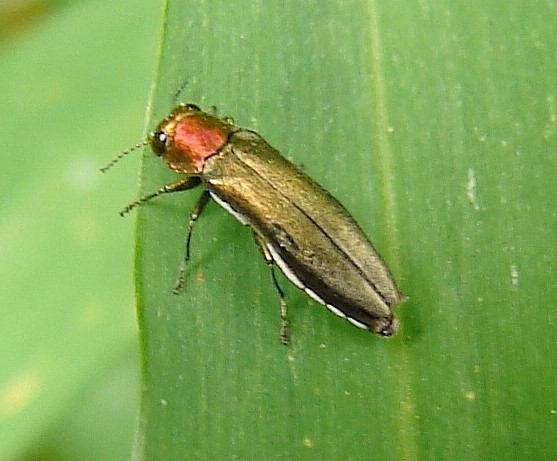
Figure 1. Agrilus smaragdifrons adult (Photograph by Dave Eib, iNaturalist)
You might notice that this beetle belongs to the same genus as the infamous Emerald Ash Borer (Agrilus planipennis) (EAB). Indeed, the two species look quite similar, although there are subtle differences in their striking metallic coloration. While Emerald Ash Borer is a vibrant green from head to wing, A. smaragdifrons has a golden-red head and thorax with green to black-green wings (Fig. 1).
This beetle has been present in the United States for several years, with the earliest record dating back to 2011 from a photograph taken in New Jersey that was uploaded to BugGuide.net. Subsequent detections occurred in several neighboring eastern states, often as bycatch during Emerald Ash Borer surveys (Hoebeke et al. 2017).
The life cycle of A. smaragdifrons also shares many similarities with Emerald Ash Borer. Although its life cycle under North American conditions has not yet been formally described, Hoebeke et al. (2017) summarize the beetle’s biology in its native Asian range based on Chinese literature (Xu and Yang 2007).
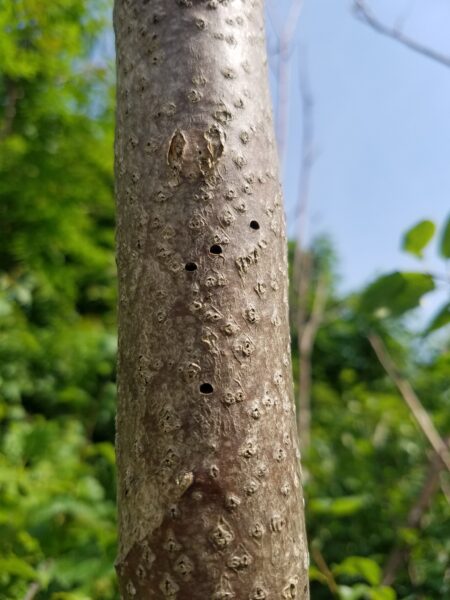
Figure 2. Agrilus smaragdifrons exit holes in Ailanthus altissima (Photograph by Patrick Perish, iNaturalist)
Females lay eggs in bark crevices during mid- to late summer, and newly hatched larvae burrow into the tree. The larvae overwinter within galleries beneath the bark and resume feeding the following spring. Pupation occurs in early summer, around June, and adult mating flights take place from June through July. When adults emerge, they leave characteristic “D”-shaped exit holes in the bark (Fig. 2; Photograph by Patrick Perish, iNaturalist).
It is not yet known whether A. smaragdifrons will function as a biological control agent for Tree-of-Heaven. Additional research and field observations are needed to determine its impact on its host. However, reports from Beijing Forestry University indicate that attacks by A. smaragdifrons can lead to decline and eventual death of Tree-of-Heaven (Hoebeke et al. 2017).
Scientists with the Indiana Department of Natural Resources and Purdue University are interested in tracking the distribution of A. smaragdifrons across the state. The next time you encounter a Tree-of-Heaven, keep an eye out for the distinctive D-shaped exit holes. In late summer, you may also observe adults feeding on the leaves.
See something? Report it Identifying and Reporting Pests at just as you would any other invasive species!
Original article posted: Beetle that attacks Tree-of-Heaven found in Indiana.
Subscribe and receive the newsletter: Purdue Landscape Report Newsletter.
Resources:
Ask the Expert: Pests in Your Woods, Purdue Extension – Forestry & Natural Resources (FNR) YouTube Channel
Report Spotted Lanternfly, Purdue Landscape Report
Invasive Species Playlist, Purdue Extension – FNR YouTube Channel
Indiana Department of Natural Resources: Invasive Species
Indiana Invasive Species Council
Cooperative Invasive Species Management Area (CISMA)
Report Invasive, Purdue Extension
What are invasive species and why should I care?, Got Nature? Blog, Purdue Extension – FNR
Purdue Plant Doctor, Purdue Extension
An Introduction to Trees of Indiana, The Education Store, Purdue Extension’s resource center
Fifty Common Trees of Indiana, Forestry & Natural Resources
ID That Tree, Playlist, Purdue Extension – FNR YouTube Channel
A Woodland Management Moment, Playlist, Purdue Extension – FNR YouTube Channel
Woodland Stewardship for Landowners, Playlist, Purdue Extension – FNR YouTube Channel
Native Trees of the Midwest, Purdue University Press
Forest Improvement Handbook, The Education Store
Alicia Kelley, Cooperative Agricultural Pest Survey (CAPS) Coordinator
Purdue Extension – Entomology
In this edition of ID That Tree, Purdue Extension Forester Lenny Farlee introduces us to dwarf chinkapin oak, an uncommon oak species found in far northern Indiana. Unlike many oaks that grow into large forest trees, this species often takes on a different form. Learn about the types of sites where dwarf chinkapin oak is typically found, how it compares to its relative the chinkapin oak and why it plays an important role in supporting wildlife. Whether you’re a student, landowner or simply curious about Indiana’s native trees and shrubs, this video offers a quick introduction to this unique and lesser-known oak species.
If you have any questions regarding wildlife, trees, forest management, wood products, natural resource planning or other natural resource topics, feel free to contact us by using our Ask an Expert web page.
Resources:
ID That Tree – Video Playlist, Purdue Extension – Forestry and Natural Resources (FNR) YouTube Channel
Purdue Arboretum Explorer
Conservation Tree Planting: Steps to Success, Purdue Extension – FNR YouTube Channel
A Woodland Management Moment, Playlist, Purdue Extension – FNR YouTube Channel
Woodland Stewardship for Landowners, Playlist, Purdue Extension – FNR YouTube Channel
Fifty Common Trees of Indiana, Purdue Extension – FNR
Indiana Invasive Species Council
Cooperative Invasive Species Management Area (CISMA)
Report Invasive, Purdue Extension
Habitat University, Episode 12 – Exploring the challenges of Invasive Species, Habitat University-Natural Resource University
Shrubs and Woody Vines of Indiana and the Midwest, Purdue University Press
Native Trees of the Midwest, Purdue University Press
Professional Forester, Indiana Forestry Woodland Owners Association
District Forester, Indiana Department of Natural Resources, 10+ acres
Find an Arborist, International Society of Arboriculture
Forest Improvement Handbook, The Education Store
Lenny Farlee, Extension Forester
Hardwood Tree Improvement and Regeneration Center
Purdue Department of Forestry & Natural Resources

Recent Posts
- Publication – Planting Forest Trees and Shrubs in Indiana
Posted: April 8, 2026 in Forests and Street Trees, Urban Forestry, Wildlife, Woodlands - ID That Tree: Virgin’s Bower Clematis
Posted: April 6, 2026 in Urban Forestry, Wildlife, Woodlands - It’s Timberdoodle Time!
Posted: April 3, 2026 in Got Nature for Kids, How To, Wildlife - Keep An Eye Out for Hammerhead Worms, Purdue Landscape Report
Posted: April 2, 2026 in Invasive Animal Species, Wildlife, Woodlands - When is the Peak Migration For Hummingbirds and How Can You Attract Them?
Posted: in How To, Wildlife - ID That Tree Featured in National Woodland Owners Association Newsletter
Posted: April 1, 2026 in Urban Forestry, Wildlife, Woodlands - New 2026 Indiana Woodland Steward Newsletter
Posted: March 30, 2026 in Urban Forestry, Wildlife, Woodlands - 2026 Winter Bat Survey In Progress, MyDNR
Posted: March 27, 2026 in How To, Wildlife - Beetle that attacks Tree-of-Heaven found in Indiana, Purdue Landscape Report
Posted: March 20, 2026 in Invasive Insects, Wildlife, Woodlands - ID That Tree: Dwarf Chinkapin Oak
Posted: in Forestry, Urban Forestry, Wildlife, Woodlands
Archives
Categories
- Alert
- Aquaculture/Fish
- Aquatic/Aquaculture Resources
- Ask the Expert
- Christmas Trees
- Community Development
- Disease
- Drought
- Forestry
- Forests and Street Trees
- Gardening
- Got Nature for Kids
- Great Lakes
- How To
- Invasive Animal Species
- Invasive Insects
- Invasive Plant Species
- Land Use
- Natural Resource Planning
- Nature of Teaching
- Plants
- Podcasts
- Ponds
- Publication
- Safety
- Spiders
- Timber Marketing
- Uncategorized
- Urban Forestry
- Webinar
- Wildlife
- Wood Products/Manufacturing
- Woodland Management Moment
- Woodlands