 Purdue University - Extension - Forestry and Natural Resources
Got Nature? Blog
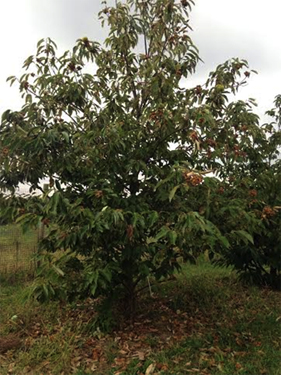
10 year old American chestnut tree. Photo: Jim McKenna
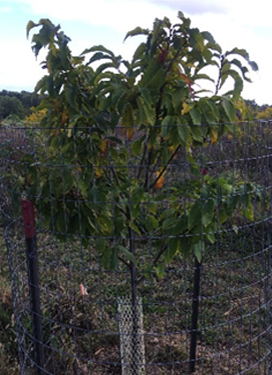
Juvenile American chestnut (Castanea dentata) tree. Photo: Dr. Shaneka Lawson, USDA Forest Service, Purdue FNR
When you hear about endangered species, most of us think about the plights of our furry or feathered friends. This article describes the plight of some of the less cuddly members of the endangered species list. Indiana is home to a number of endangered and threatened tree species. In this multi-part series, we will identify some of the tree species and describe some of their unique characteristics.
Our first species is the American chestnut (Castanea dentata) sometimes called the “Sequoia of the East”. This species was once found thriving throughout eastern forests from central Maine west to southeastern Michigan, and south to northern Mississippi, Alabama, and Georgia.

American chestnut fruit (nuts) inside an opened bur. Photo: Jim McKenna
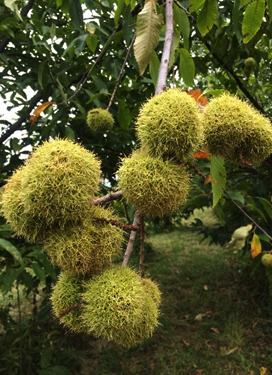
American chestnut fruit protected by a spiny bur. Photo: Dr. Shaneka Lawson, USDA Forest Service, Purdue HTIRC
Early 20th century estimates indicated that these trees numbered closed to 4 billion with the finest, most productive stands found in the Appalachian Mountains and southern New England. American chestnut is a fast growing species that can reach a pinnacle of 120 feet high and 10 feet or more in diameter. The majority of the mature trees were between 3 and 5 feet in diameter and 60 to 90 feet high. The fruit from this tree has been a valued food source for humans, wildlife, and livestock alike. Timber from this former giant is naturally rot-resistant and nearly as durable as oak yet lighter.
American chestnut populations went into decline after the introduction of chestnut blight.
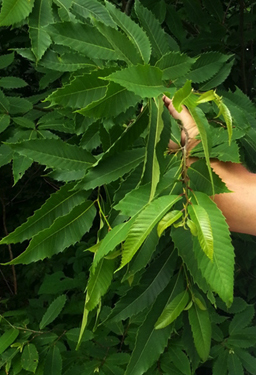
Mature American chestnut leaves. Photo: Dr. Shaneka Lawson, USDA Forest Service, Purdue FNR
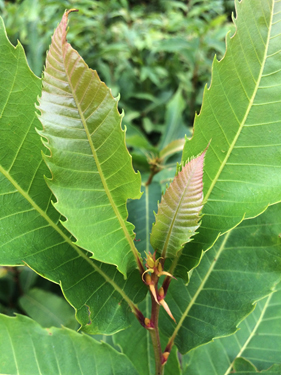
Immature American chestnut leaves. Photo: Dr. Shaneka Lawson, USDA Forest Service, Purdue FNR
Chestnut blight is caused by the fungal pathogen (Cryphonectria parasitica), and was accidentally introduced into the American population by imported Asian chestnut trees a century ago. American chestnut is highly susceptible to the fungus which enters the tree through any small wound or crack in the bark. The fungus replicates beneath the bark and produces toxins which lead to plant cell death. The fungus continues to grow until it has circumnavigated the tree and effectively stopped the flow of nutrients. Everything above the girdled circle of fungus will die. The primary symptoms of chestnut blight disease are a sunken canker and orange spores covering the bark.
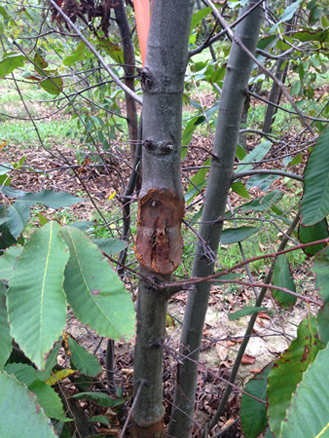
Chestnut blight canker four months after inoculating a susceptible chestnut tree. Photo: Jim McKenna
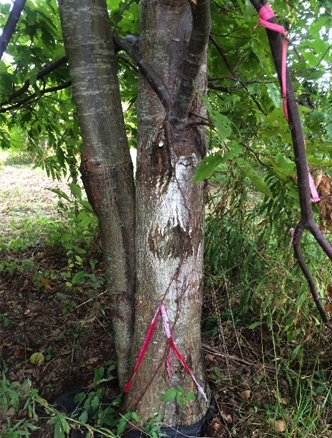
12 year old resistant 15/16 American chestnut after direct challenge with (Cryphonectria parasitica) fungus. Photo: Dr. Shaneka Lawson, USDA Forest Service, Purdue FNR
Loss of American chestnut on the landscape has resulted in reduced species diversity and severely reduced fall mast for woodland animal species. In addition, leaves of American chestnut contain greater nutrient concentrations (nitrogen [N], phosphorus [P], potassium [K]) than most other co-occurring trees therefore its loss affects soil nutrient cycling.
American chestnut has survived thus far because it has the ability to sprout from roots and stumps of diseased trees. However, these trees rarely live to maturity thus are often unable to flower and bear fruit. Numerous efforts to restore the tree to its former glory have been and are currently being attempted. Thus far, two of the most effective methods of breeding for resistance are hybridizing with resistant Asian parents and attempting to intercross surviving pure American chestnuts. The HTIRC within the Forestry and Natural Resources Department at Purdue University is working on hybridization of American chestnuts with Asian chestnuts for future restoration of resistant American-like chestnuts for Indiana.
Resources:
The American Chestnut Foundation
A New Generation of American chestnut Trees May Redefine America’s Forests – Scientific American
Consequences of Shifts in Abundance and Distribution of American Chestnut for Restoration of a Foundation Forest Tree – Forests Open Access Forestry Journal
Transgenic American chestnuts show enhanced blight resistance and transmit the trait to T1 progeny – Science Direct (Plant Science)
Scientists Work to Create a Blight-Resistant Chestnut with Hopes of Restoring Tree to America, Forest Service, U.S. Department of Agriculture
FNR Hardwood – American Chestnut, Purdue Arboretum Explorer
Hardwood Tree Improvement Regeneration Center (HTIRC) Research Publications
American Chestnut Trees return to the Hoosier National Forest, Indiana Woodland Steward
Forest Regeneration and Restoration Laboratory, Purdue Forestry and Natural Resources, Dr. Doug Jacobs
Shaneka Lawson, USDA Forest Service and HTIRC Research Plant Physiologist & Adjunct Assistant Professor
Purdue University Department of Forestry and Natural Resources
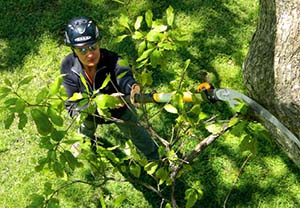 Urban Forestry Specialist Lindsey Purcell‘s helpful publication “Tree Pruning Essentials” is now available in a Spanish-language version, “Lo Esencial Para la Poda de Árboles.” This publication explores the techniques behind good pruning, from the planning process before planting to monitoring the tree’s response after the pruning cuts.
Trees continue to survive in spite of the many challenges they face in the urban environment. However, to grow from seedling to a mature tree in the urban forest, they need our help. They are the largest, oldest living organisms on the planet and can live long, healthy lives with some assistance. We often place trees in less-than-favorable growing locations that don’t allow natural development and maturity and often require pruning to develop a durable structure, improve clearance and maintain aesthetics.
Pruning has been called “one of the best, worst maintenance practices” performed on trees. The process creates wounds, which have a major impact on plant processes. Improper cutting on a tree causes severe damage or even death. To prune properly, it is important to understand both the proper techniques and how the tree responds to pruning.
Check out “Lo Esencial Para la Poda de Árboles” or “Tree Pruning Essentials” and make sure you are pruning your trees to maximize safety, aesthetics, and tree health!
Resources:
Lo Esencial Para la Poda de Árboles (Tree Pruning Essentials)– The Education Store, Purdue Extension Resource Center
Instalación de Árboles: Proceso y practicas (Tree Installation) – The Education Store, Purdue Extension Resource Center
Tree Pruning Essentials – The Education Store
Trees and Storms – The Education Store
Tree Risk Management – The Education Store
Prune Your Trees – Indiana Department of Natural Resources
Lindsey Purcell, Urban Forestry Specialist
Purdue University Department of Forestry and Natural Resources
Forests and woodlots are constantly changing. To get the most out of your property to meet your wildlife, recreational, aesthetic or economic goals, some type of regular management will be necessary. Getting the most out of your woods can be a challenge on your own. Fortunately, there are many resources available to help you.
A professional can help plot the best course of action for meeting your ownership objectives while keeping your woods healthy. Your selection of a professional depends on what services you need and the size of your property. Ten (10) acres is a threshold for where you go in Indiana.
More than 10 acres
- The Directory of Professional Foresters is a service provided by the Indiana Forestry & Woodland Owners Association. For this directory, the term “professional forester” means a person who has successfully completed a four year college level curriculum accredited by the Society of American Foresters and has received a Bachelor’s Degree in Forestry from that accredited institution.
- The Indiana DNR Division of Forestry provides private forestland management assistance through District Foresters who are professionally trained to manage forestland for the many resources it can provide. District foresters administer both state and federal programs that provide technical assistance, property tax incentives, and cost-sharing incentives for applying practices that accomplish sustainable management.
- Foresters can help answer some of your tax questions. The National Timber Tax Website is another good resource. The National Timber Tax Website was developed to be used by timberland owners, as well as a reference for accountants, attorneys, consulting foresters and other professionals who work with timberland owners regarding the tax treatment of timber related activities.
Less than 10 acres and Backyards
- The Indiana Division of Forestry has a woodlot owner series that provides basic information for anyone who owns a small woodlot or backyard woods.
- Because of the scale of operation, it can be difficult to get professional services from a forester for small woodlots. In most cases, tree harvests and other improvement cuts are set up directly with loggers. The Indiana Hardwood Lumberman’s Association has a Find a Logger database online.
Selling Timber
Selling timber from yards or small tracts of woodland present some challenges.
- Three Purdue publications provide suggestions on steps to take when selling timber:
Marketing Timber, The Education Store, Purdue Extension Resource Center.
Tips on How to Get the Most from Your Timber Harvest, The Education Store. - Some consulting and industrial foresters may be willing to assist you on small properties. Find foresters in your area at: www.findindianaforester.org.
- In some cases, tree harvests are conducted directly with loggers. The Indiana Hardwood Lumberman’s Association has a Find a Logger database online.
Forest Management for the Private Woodland Owner Course
The Forest Management for the Private Woodland Owner course provides forest landowners eight learning sessions designed to introduce them to the biology and management of forests, and the resources and professional assistance they can access to help them form their property management goals and pursue their objectives. Field experiences are integrated into the course to provide in-person, hands-on connections with the biology and management of Indiana forests. Connections made during the course and field tours introduce landowners to the foresters and other natural resource professionals who can help them with the management of their forestland. This course is offered in-person at varying locations around the state and also as an online version with live question-and-answer sessions. Courses normally run between January and April, so check the Purdue Extension – FNR Got Nature Blog and Upcoming Events sites for dates and registration information.
Explore the Rich World of Oaks with Purdue FNR Extension & Partners
Discover a comprehensive suite of oak-focused resources curated by Purdue Forestry and Natural Resources Extension to support landowners, educators and natural resource professionals. From expert-reviewed publications and engaging videos to insightful webinars and podcasts, our oak resources cover everything from species identification and forest stewardship to wildlife habitat management and oak regeneration techniques, Explore the Rich World of Oaks.
Get connected with other Indiana landowners!
Woodland owners often learn the most from people who are in their situation – fellow woodland owners. Several groups provide different ways to connect and have different resources. Explore the following to find out which group(s) fits your needs.
- Indiana Chapter, American Chestnut Foundation
- Indiana Forestry & Woodland Owners Association
- Indiana Tree Farm Program
- Indiana Woodland Steward Institute, Inc.
- Walnut Council
Invasive Species
Invasive species present a serious threat to the health and productivity of trees and forests. You can learn about recognition, reporting, and management of the invasive species found in forests at these sites:
- Purdue University Report Invasives
- Purdue FNR Got Nature Blog post, What Are Invasive Species and Why Should I Care?
- Indiana Invasive Species Council
Forestry Videos on Purdue Extension – FNR YouTube Channel
- Forests and Timber Playlist
- Invasive Species Playlist
- ID That Tree Playlist
- Subscribe to Purdue Extension – Forestry & Natural Resources (FNR) YouTube Channel and receive notice of when a new video is posted.
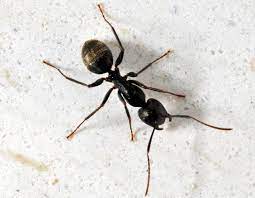 Carpenter ants are very common inside trees, especially on larger, mature trees that are hollow with cavities. They nest in rotted, decayed wood, although some nests may extend into sound heartwood in the center of the tree. Carpenter ant presence is an indication of rotting wood, and infested trees should be checked to determine whether the rot has weakened the tree enough that it has become a risk of failure.
Carpenter ants in trees are not directly harmful to the tree. Control is not necessary for the tree’s health; their presence indicates decay in the tree, and they only feed on dead wood fiber. Wood decay can set in if moisture is present; it is the wood decay that gives the carpenter ants the opportunity to colonize the tree. Carpenter ants use knots, cracks, holes and old insect tunnels to gain access to these areas.
Control of carpenter ants inside trees is difficult but can be done as a way to reduce invasion of the ants into adjacent structures and places where they are unwelcome. It is also possible for ant colonies located inside trees to form satellite colonies inside a nearby home wall. Available controls are not likely to permanently rid a tree of carpenter ants, so retreatment every year or so may be necessary. Dust insecticides (such as Sevin or Abamectin) labeled for use on trees in the landscape are suggested for control. Apply the dust directly into the nest cavity.
Sealing tree cavities or treating tree wounds with wound dressings is not advised. Such treatments are unnecessary and will not eliminate nor prevent decay or carpenter ant activity. Also cutting down otherwise viable trees that happen to be infested with carpenter ants is generally not necessary unless the tree poses a risk.
Resources:
Household & Structural, Department of Entomology, Purdue University
Who Let the Bugs Out?, 4-H Purdue Extension – Entomology
The Space Invaders of Summer, Purdue Agriculture News
Report Invasive Species, Purdue Invasive Species
The GLEDN Phone App – Great Lakes Early Detection Network
EDDMaps – Early Detection and Distribution Mapping System (Report Invasives)
Subscribe – Purdue Extension-FNR YouTube Channel, find videos for wildlife, forestry, urban forestry, community development and more.
Lindsey Purcell, Chapter Administrator & Master Arborist
Indiana Arborist Association

Recent Posts
- Urban Tree Spotlight: Planting Deciduous Shade Trees, Purdue Landscape Report
Posted: March 25, 2026 in Forests and Street Trees, Urban Forestry, Woodlands - Tree Silvics and Succession Webinar: A Biological Basis for Management
Posted: January 30, 2026 in Forests and Street Trees, Urban Forestry, Woodlands - Woodsy Owl Edition for Educational Learning, USDA – U.S. Forest Service
Posted: January 21, 2026 in Forestry, Forests and Street Trees, Got Nature for Kids, Urban Forestry, Wildlife - ID That Tree: Trumpet Creeper
Posted: January 20, 2026 in Forests and Street Trees, Urban Forestry, Woodlands - A Woodland Management Moment: Black Walnut in Pine Plantation
Posted: December 19, 2025 in Forestry, Forests and Street Trees, Urban Forestry, Woodlands - A Woodland Management Moment: Butternut Disease and Breeding
Posted: December 1, 2025 in Forestry, Forests and Street Trees, Woodland Management Moment, Woodlands - Why Do Our Trees Go From Green Leaves to Different Colors?
Posted: November 4, 2025 in Forestry, Forests and Street Trees, Urban Forestry, Woodlands - October Is Firewood Month: Protect Indiana’s Forests by Making Smart Choices
Posted: October 13, 2025 in Forestry, Forests and Street Trees, How To, Invasive Insects, Urban Forestry - Help Your Trees Transition Into Autumn, Purdue Landscape Report
Posted: October 7, 2025 in Forests and Street Trees, Urban Forestry, Woodlands - Marssonina Leaf Spot and Blotch of Poplar, Purdue Landscape Report
Posted: October 1, 2025 in Disease, Forests and Street Trees, Urban Forestry, Woodlands
Archives
Categories
- Alert
- Aquaculture/Fish
- Aquatic/Aquaculture Resources
- Ask the Expert
- Christmas Trees
- Community Development
- Disease
- Drought
- Forestry
- Forests and Street Trees
- Gardening
- Got Nature for Kids
- Great Lakes
- How To
- Invasive Animal Species
- Invasive Insects
- Invasive Plant Species
- Land Use
- Natural Resource Planning
- Nature of Teaching
- Plants
- Podcasts
- Ponds
- Publication
- Safety
- Spiders
- Timber Marketing
- Uncategorized
- Urban Forestry
- Webinar
- Wildlife
- Wood Products/Manufacturing
- Woodland Management Moment
- Woodlands