 Purdue University - Extension - Forestry and Natural Resources
Got Nature? Blog
Welcome to this edition of “ID That Tree”. In this video Purdue Extension forester Lenny Farlee will introduce you to leatherwood, a charming Indiana shrub. Typically found in the understory of forest areas, this compact shrub is easy to identify by its oblong leaves with smooth margins and alternate leaf arrangement. Join us to learn more about leatherwood and its unique characteristics!
If you have any questions regarding wildlife, trees, forest management, wood products, natural resource planning or other natural resource topics, feel free to contact us by using our Ask an Expert web page.
Resources:
ID That Tree – Video Playlist, Purdue Extension – Forestry and Natural Resources (FNR) YouTube Channel
Purdue Arboretum Explorer
Conservation Tree Planting: Steps to Success, Purdue Extension – FNR YouTube Channel
A Woodland Management Moment, Playlist, Purdue Extension – FNR YouTube Channel
Woodland Stewardship for Landowners, Playlist, Purdue Extension – FNR YouTube Channel
Indiana Department of Natural Resources: Invasive Species
Indiana Invasive Species Council
Cooperative Invasive Species Management Area (CISMA)
Report Invasive, Purdue Extension
Fifty Common Trees of Indiana, Purdue Extension – FNR
Episode 11 – Exploring the challenges of Invasive Species, Habitat University-Natural Resource University
Shrubs and Woody Vines of Indiana and the Midwest, The Education Store
Native Trees of the Midwest, The Education Store
Professional Forester, Indiana Forestry Woodland Owners Association
Forest Improvement Handbook, The Education Store
Find an Arborist, International Society of Arboriculture
Lenny Farlee, Extension Forester
Hardwood Tree Improvement and Regeneration Center
Purdue Department of Forestry & Natural Resources
In this episode of A Woodland Management Moment, Purdue Extension forester Lenny Farlee discusses the regeneration of small forest openings. Even forested areas of an acre or less can offer excellent opportunities for growth. Light-loving species thrive in the center, while more shade-tolerant plants flourish at the edges. This practice enhances the diversity of your woodlands. Adequate sunlight is crucial for creating a well-structured opening. By regenerating light-loving species, you can also add valuable wildlife habitat diversity to your property.
If you have any questions regarding trees, forests, wildlife, wood products or other natural resource topics, feel free to contact us by using our Ask an Expert web page.
Resources:
A Woodland Management Moment, Playlist, Purdue Extension – Forestry and Natural Resources (FNR) YouTube Channel
The Nature of Oaks Webinar, Purdue Extension-FNR YouTube Channel, Shared from Indiana Forestry & Woodland Owners Association
Conservation Tree Planting: Steps to Success, Purdue Extension – FNR YouTube Channel
Shrubs and Woody Vines of Indiana and the Midwest, The Education Store, Purdue Extension Resource Center
Native Trees of the Midwest, The Education Store
ID That Tree, Playlist, Purdue Extension – FNR YouTube Channel
Investing in Indiana Woodlands, The Education Store
Woodland Stewardship for Landowners Video Series, Playlist, Indiana Department of Natural Resources YouTube Channel
Ask an Expert: Tree Selection and Planting, Purdue Extension – FNR YouTube Channel
Forest Improvement Handbook, The Education Store
Find an Indiana Professional Forester, Indiana Forestry & Woodland Owners Association (IFWOA)
Purdue Arboretum Explorer
Lenny Farlee, Extension Forester
Hardwood Tree Improvement and Regeneration Center
Purdue Department of Forestry & Natural Resources
In this edition of ID That Tree, Purdue Extension Forester Lenny Farlee showcases the unique features of prickly ash. The northeast member of the Citrus family (not the Ash family!) is a shrub with stout, paired thorns, reddish-brown buds and also has other traits shared in the video that makes it easy to spot out in the wild. This video contains nice close-up shots so you can identify this plant, which is native to Indiana and an important part of the habitat.
If you have any questions regarding wildlife, trees, forest management, wood products, natural resource planning or other natural resource topics, feel free to contact us by using our Ask an Expert web page.
Resources:
ID That Tree: Firs and Spruces, Video Playlist, Purdue Extension – Forestry and Natural Resources (FNR) YouTube Channel
ID That Tree – Jack Pine, Scotch Pine, Red Pine, Virginia Pine, Eastern White Pine, Video Playlist, Purdue Extension – Forestry and Natural Resources (FNR) YouTube Channel
Beat Back Borers Attacking Pines and Other Cone Bearing Trees, Purdue Landscape Report
Tree Diseases: White Pine Decline in Indiana, The Education Store, Purdue Extension Resource Center
Purdue Arboretum Explorer
Conservation Tree Planting: Steps to Success, Purdue Extension – FNR YouTube Channel
A Woodland Management Moment, Playlist, Purdue Extension – FNR YouTube Channel
Woodland Stewardship for Landowners, Playlist, Purdue Extension – FNR YouTube Channel
Indiana Department of Natural Resources: Invasive Species
Indiana Invasive Species Council
Cooperative Invasive Species Management Area (CISMA)
Report Invasive, Purdue Extension
Episode 11 – Exploring the challenges of Invasive Species, Habitat University-Natural Resource University
Shrubs and Woody Vines of Indiana and the Midwest, The Education Store
Native Trees of the Midwest, The Education Store
Professional Forester, Indiana Forestry Woodland Owners Association
Forest Improvement Handbook, The Education Store
Find an Arborist, International Society of Arboriculture
Lenny Farlee, Extension Forester
Hardwood Tree Improvement and Regeneration Center
Purdue Department of Forestry & Natural Resources

Photo by Larry Caplan.
When do you need to discard your real Christmas tree? What options are there in disposing the tree?
Check out these tips from our Purdue experts:
Lenny Farlee, Purdue Extension Forester with Forestry and Natural Resources, in interview with the WLFI news team shares the first steps is to remove all decorations. “Several municipalities here in the area will either take the trees for mulching or composting. So if you don’t want to fool with the tree anymore, that’s a great option. You can just take it to the curb, or certain locations, and they’ll take care of it for you and it gets reused or recycled into usable material,” explains Farlee. Choosing to keep the tree in your backyard is a great wildlife friendly option. Lenny shares how important it is to remove your tree in a timely manner to avoid any fire hazards in your house. The video explains on how you can test your tree to see if it should be discarded. See video and full article for more options: Options for Getting Rid of Real Christmas Tree, wlfi.com.
John Woodmansee, Purdue Extension Educator-Agriculture Natural Resources (ANR), also shares tips in the Purdue Extension article Recycle Your Christmas Tree. If you have permission and/or have access to a private pond you can discard your tree in the pond to improve fish habitat.
Resources:
A Choose-and-Cut Pine and Fir Christmas Tree Case Study, The Education Store, Purdue Extension’s resource center
Living Christmas Trees For The Holidays and Beyond, The Education Store
Tips for First-Time Buyers of Real Christmas Trees, The Education Store
Growing Christmas Trees, The Education Store
Selecting an Indiana-Grown Christmas Tree, The Education Store
Repurposing Your Real Christmas Tree, Purdue Extension News
An Introduction to Trees of Indiana, The Education Store
Native Trees of the Midwest, The Education Store
Shrubs and Woody Vines of Indiana and the Midwest, The Education Store
ID That Tree, Playlist, Subscribe to Purdue Extension – Forestry and Natural Resources YouTube Channel
A Woodland Management Moment, Playlist, Purdue Extension – FNR YouTube Channel
Investing in Indiana Woodlands, The Education Store
Forest Improvement Handbook, The Education Store
Finding help from a professional forester, Indiana Forestry & Woodland Owners Association
District Foresters for 10 plus acres, Indiana Department of Natural Resources
Sustainable Biomaterials, FNR Concentration
Diana Evans, Extension & Web Communications Specialist
Purdue University Department of Forestry and Natural Resources
Lenny Farlee, Extension Forester
Hardwood Tree Improvement and Regeneration Center
Purdue Department of Forestry & Natural Resources
Join Purdue Extension forester Lenny Farlee and wildlife specialist Brian MacGowan as they help you prepare for the holidays while keeping your family and local wildlife safe. This video discusses everything from how to choose and care for a real Christmas tree as well as what to do with it after the season and also how to make wildlife/nature-friendly decorations.
Topics Include:
– What can I do with my tree after Christmas that would benefit wildlife?
– Are artificial structures legal in Indiana lakes?
– What types of items can I collect from the wild for holiday decorations?
– How do I do it in an environmentally responsible way?
– Are there some things I shouldn’t or can’t collect?
– What outdoor holiday decorations can benefit wildlife?
– How do I make it last longer?
– Can I avoid problems with non-target wildlife?
If you have any questions regarding trees, forest management, wildlife, wood products or other natural resource topics, feel free to contact us by using our Ask an Expert web page.
Resources
Selecting an Indiana-Grown Christmas Tree, The Education Store, Purdue Extension resource center
Tips for First-Time Buyers of Real Christmas Trees, The Education Store
Indiana Christmas Tree Growers Association
Purdue University Invasive Species resources
Indiana DNR Division of Fish and Wildlife for wildlife possession rules
Feed the birds with a DIY wreath, Audubon
Dan Cassens: Tips for First-Time Christmas Tree Buyers, Video, Purdue Agriculture
Dan Cassens: Starting Your Own Christmas Tree Farm, Video
Lenny Farlee, Sustaining Hardwood Extension Specialist
Purdue University Department of Forestry and Natural Resource
Brian MacGowan, Extension Wildlife Specialist
Department of Forestry & Natural Resources, Purdue University
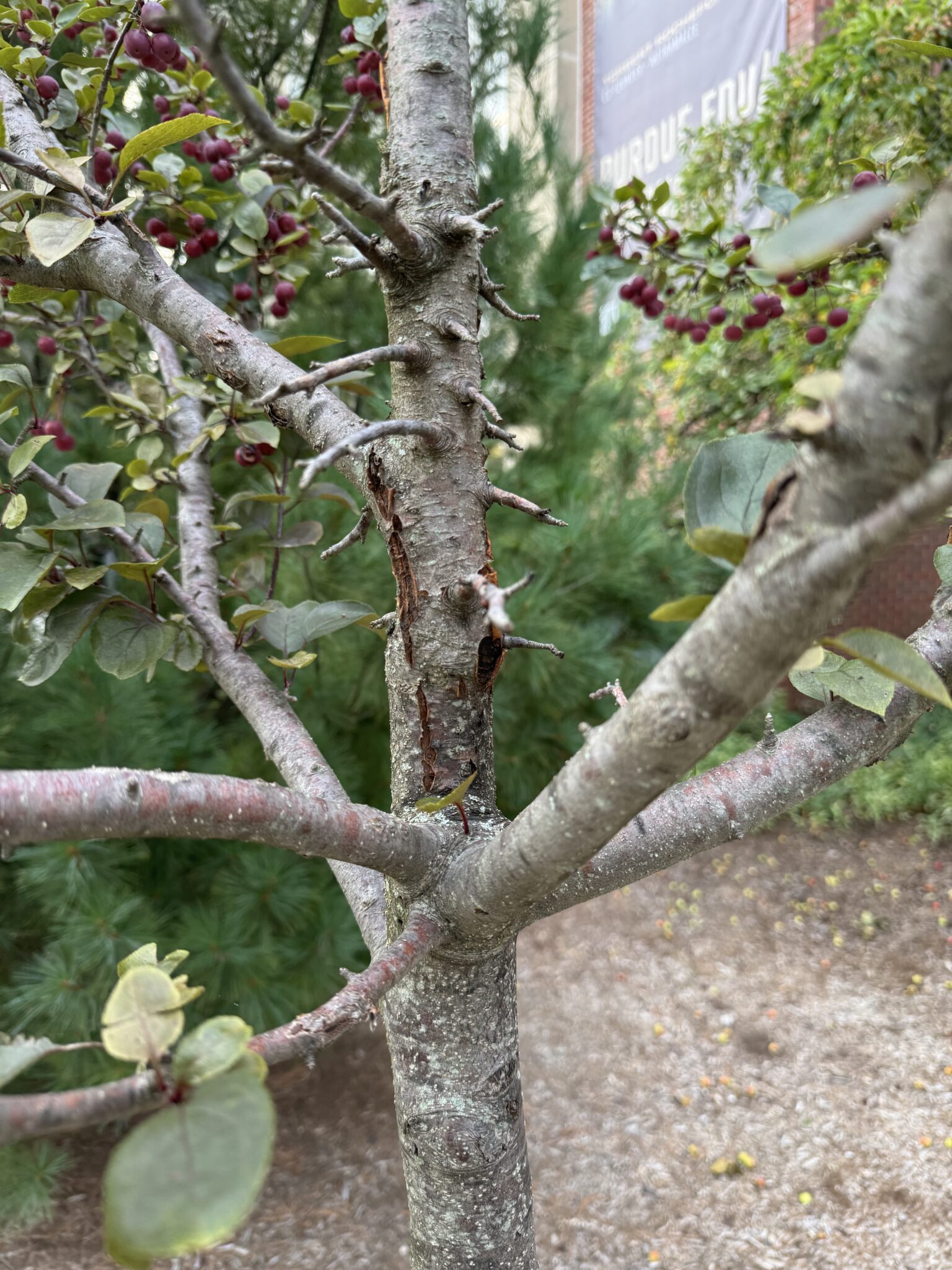
Figure 1: This crabapple tree was attacked first by fire blight and later by Botryosphaeria canker, killing the main trunk.
Purdue Landscape Report: Dieback and canker diseases caused by Botryosphaeria, Sphaeropsis, Diplodia and other closely related fungal pathogens are exceptionally common on woody landscape plants. This group of diseases are often referred to collectively as Botryosphaeria diseases and this article will follow that convention to discuss them as a group. Examine any mature oak tree long enough and you’re likely to find at least some stems dying due to Botryosphaeria. Check the base of dying stems of cranberry bush viburnum and you’re likely to find a Botryosphaeria canker. Look closely at sunken cracked stems and dieback on redbud and, you guessed it, more Botryosphaeria.
Botryosphaeria is opportunistic and is often seen killing individual branches that have been wounded or attacked by other diseases, providing an entry point for the fungus. (Fig 1) Stress factors like drought, freezing or defoliation due to disease or insect attack increases susceptibility to infection, and reduces plant defenses so that existing infections often move faster down the stem. However, wounds are not required for infection. In susceptible trees and shrubs, the fungus may attack the smallest twigs and later spread to larger branches where they cause cankers.
Symptoms:
Discoloration and death of leaves on individual stems may point to Botryosphaeria canker at the base of the dying stem (Fig 2). As the canker girdles a stem, the portion of the stem above the canker gradually dies. Smaller twigs with immature bark may become discolored as the pathogen spreads. Symptoms may vary depending on the plant species infected. In many cases the infection fails to completely encircle the stem, resulting in stems with half necrotic and half living stem tissue (Fig 3).
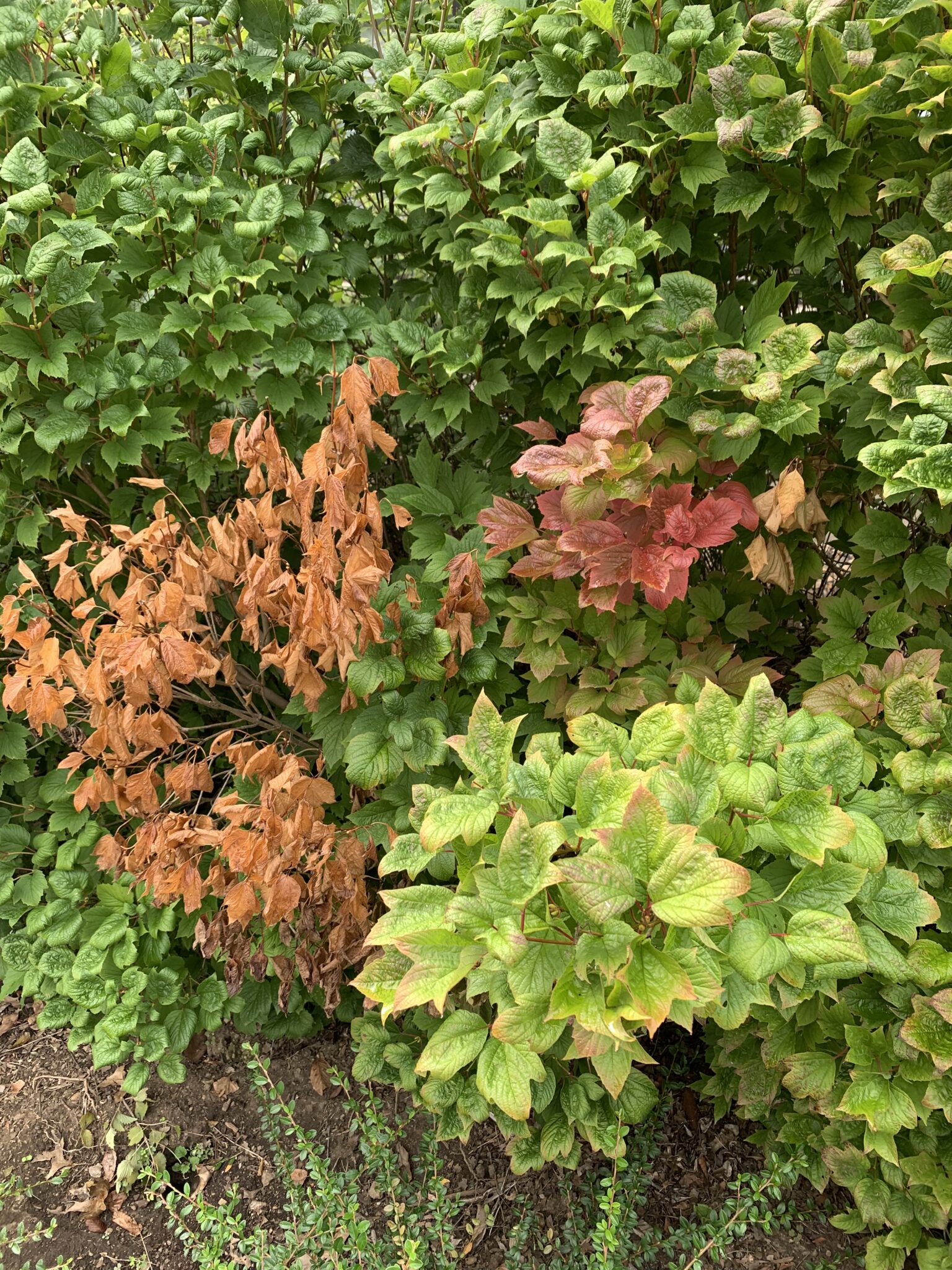
Figure 2: A viburnum hedge with dieback caused by Botryosphaeria. Leaf color may progress from yellow to red to brown as branches die.
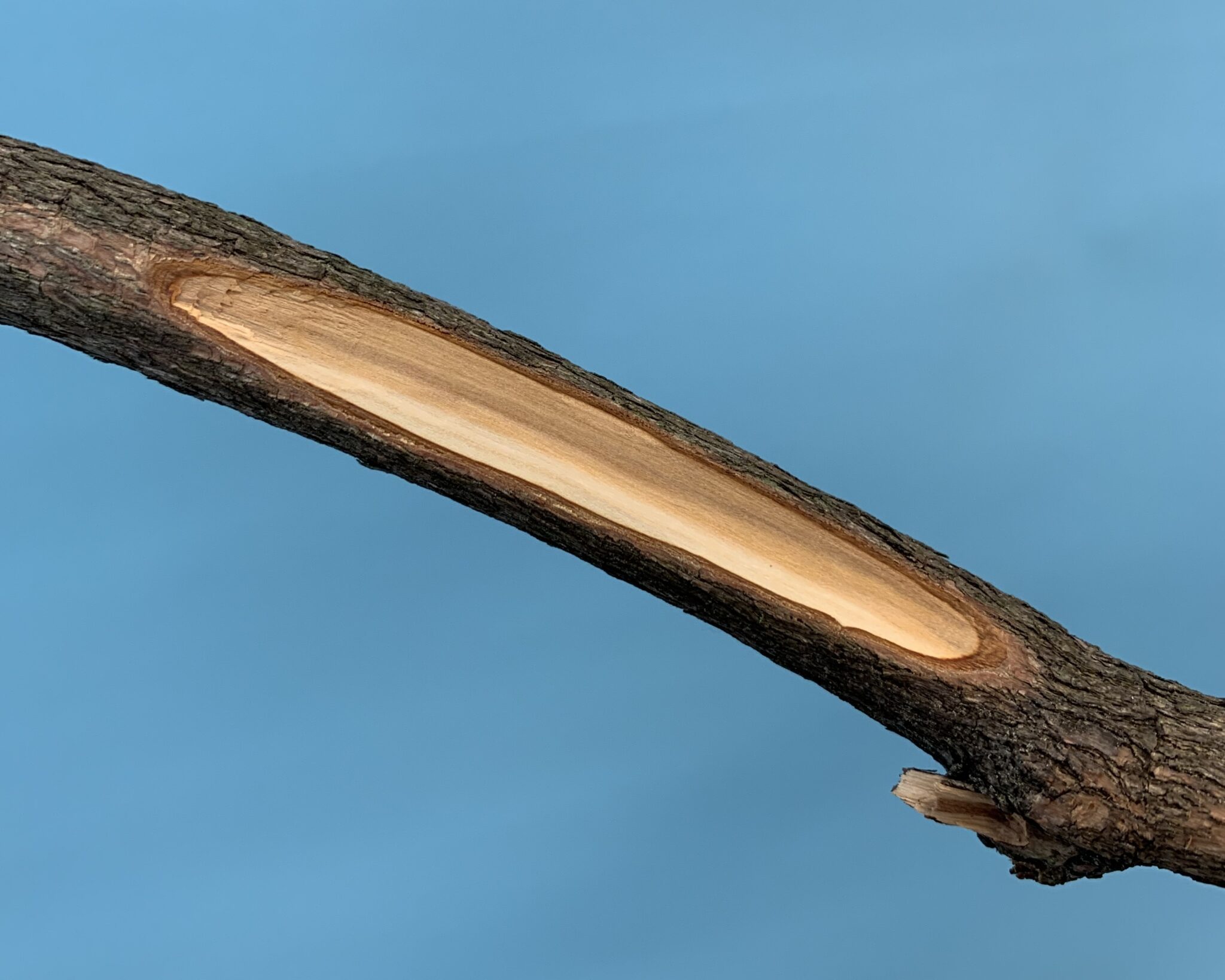
Figure 3: A rhododendron stem showing one-sided necrosis caused by Botryosphaeria infection. The tan to brown discoloration in the wood is typical of Botryosphaeria on many deciduous trees and shrubs.
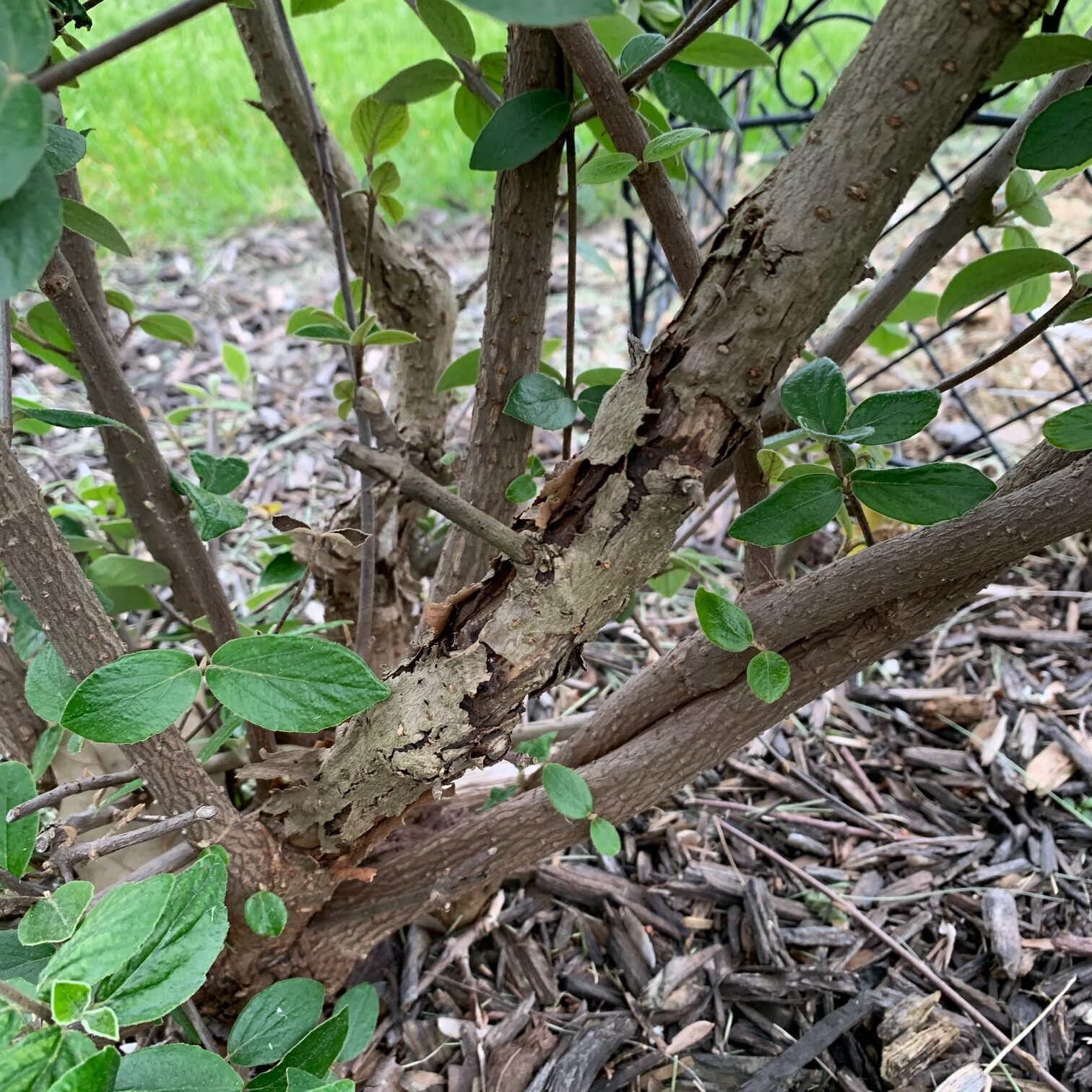
Figure 4: This Viburnum x burkwoodii stem has a large Botryosphaeria canker at the base, killing the branch above that point. After the branch was pruned out the remainder of the shrub survived.
Botryosphaeria cankers usually cause bark to be cracked, sunken and discolored (Fig 4). Fruiting bodies of the fungus appear as pinhead-sized black specks embedded in the bark, which may be raised in small bumps covering the cankers.
Management:
Prevention of infection depends mainly upon avoiding unnecessary wounding and minimizing environmental stresses that induce susceptibility. Avoid allowing trees and shrubs, especially those recently transplanted, to become drought stressed. Keep plants in good condition and in moderate growth. Avoid high fertilizer rates that induce rapid, succulent growth that may be more susceptible to infection.
Prune out and destroy any dead branches at least six inches below discoloration in the bark or sapwood. Be sure to clean pruning tools with a disinfectant after working on infected plants.
Fungicides have not been effective at preventing infections, and once the fungus is inside the wood fungicides can’t touch it, so they are generally not recommended in the landscape.
Avoid using highly susceptible plants, such as Viburnum trilobum or Salix spp., in drought prone sites.
Resources:
Botryosphaeria Canker, Purdue Plant Doctor
Beat Back Borers Attacking Pines, Purdue Landscape Report
Black Spot of Elm, Purdue Landscape Report
Inonotus Dryadeus – Butt and Root Rot of Oaks, Purdue Landscape Report
Stories in the Bark – Patterns and Growth, Purdue Extension – Forestry & Natural Resources Got Nature? Blog
Root Rot in Landscape Plants, The Education Store, Purdue Extension resource center
Dead Man’s Fingers, Purdue Landscape Report
ID That Tree Fall Color: Sugar Maple, Purdue Extension – Forestry and Natural Resources (FNR) YouTube Channel
ID That Tree Fall Color Edition: Black Gum, Purdue Extension – FNR YouTube Channel
An Introduction to Trees of Indiana, The Education Store
Tree Defect Identification, The Education Store
Tree Wound and Healing, Got Nature? Blog, Purdue Extension – FNR
Shrubs and Woody Vines of Indiana and the Midwest, The Education Store
Ask an Expert: Tree Selection and Planting, Purdue Extension – FNR YouTube playlist
ID That Tree, Purdue Extension – FNR YouTube playlist
Invasive Species, Playlist, Purdue Extension – FNR YouTube Channel
Report Invasive Species, Purdue Invasive Species
Find an Arborist, International Society of Arboriculture
Subscribe, Purdue Extension – FNR YouTube Channel
Tom Creswell, Plant & Pest Diagnostic Laboratory Director
Purdue Botany and Plant Pathology
 Wild Bulletin, Indiana Department of Natural Resources (DNR) Fish and Wildlife: Instead of raking and bagging leaves this fall, consider allowing them to stay and naturally decay. Fallen leaves, plant stems, flower heads, twigs, and logs provide crucial winter habitat for Indiana’s wildlife.
The warmth and cover of leaves provide shelter for Eastern box turtles, salamanders and frogs, as well as insulation for butterflies and moths. Leaf piles can even benefit landscaping, as they can suppress weeds, retain moisture, and add nutrients to the soil as they decay. Leaves don’t have to be left exactly where they fall—you can rake them into flower beds and around tree bases.
For more information about creating habitat for wildlife in your backyard, visit the DNR website and the Wildlife Habitat Fact Sheet.
Resources:
Frost Seeding to Establish Wildlife Food Plots and Native Grass and Forb Plantings – The Education Store, Purdue Extension’s resource center
Wildlife Habitat Hint: Tips for Evaluating a First Year Native Grass and Forb Plantings, Purdue Extension – FNR YouTube Channel
Drone Seeding Native Grasses and Forbs: Project Overview & Drone Setup, Purdue Extension – FNR YouTube channel
Forest Improvement Handbook, The Education Store
Ordering Seedlings from the State Forest Nursery System, Got Nature? – Purdue Extension-Forestry & Natural Resources (FNR)
Designing Hardwood Tree Plantings for Wildlife – The Education Store
ID That Tree – YouTube Playlist
Forest Management for Reptiles and Amphibians: A Technical Guide for the Midwest, The Education Store
Ask the Expert: Hardwood Ecosystem Experiment – Birds and Salamander Research, Purdue Extension – FNR
A Template for Your Wildlife Habitat Management Plan, The Education Store
Managing Your Woods for White-Tailed Deer, The Education Store
Woodland Stewardship for Landowners, Playlist, Purdue Extension – FNR YouTube channel
Nature of Teaching Unit 1: Animal Diversity and Tracking, The Education Store
Subscribe Purdue Extension – Forestry and Natural Resources YouTube Channel, Playlists include wildlife, Nature of Teaching, Moments in the Wild and much more.
Indiana Department of Natural Resources – Division of Fish & Wildlife
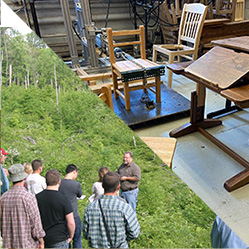 Purdue Extension’s annual report showcases the accomplishments, outcomes and activities that highlight the impact of Purdue Extension across Indiana. Extension specialists and educators provide educational programs and research-based knowledge to help families, individuals, and communities prosper and thrive.
The Purdue Extension – Forestry and Natural Resources specialists featured:
Private Woodland Owners Make Decisions and Take Actions to Improve Acreage Value – project specialist include Lenny Farlee, Ron Rathfon, Don Carlson, and Jarred Brooke, along with county extension educators Dave Osborne, and Phil Woolery. Indiana has 20% forest lands, most privately owned. Forests are important habitats for wildlife and provide environmental and social benefits. Purdue Extension offers Forest Management for the Private Woodland Owner, in-person and virtually. The in-person program has eight 2.75-hour evening sessions and two Saturday three-hour field day tours. Purdue Extension and local forestry and natural resource professionals provide presentations and direct activities. Participants receive a tree measuring stick and a flash drive containing more than 100 publications and resources.
Participant forest management knowledge improved after the program. More than 90% found it useful for making decisions, and 80% plan to take actions in the next year. A participant said, “This course provided exactly the information I needed to understand the DNR forester’s report on my classified forest and to act on it. It will also help form a land management plan of my own (beyond what the forester provided), find programs to help manage and expand the forest, and earn a little money from the property in future years.”
Furniture Production Addresses Workforce Development and Rebuilds Lives in Indiana – project specialist include Dr. Eva Haviarova and Dr. Henry Quesada. Most U.S. school furniture is made overseas and from nonrenewable materials (steel, plastic, and composite). Increasingly, the product sustainability, the circular economy, and the benefits of natural materials are being shown to be important in learning environments.
To create a new market for low-value hardwoods, urban woods, and plantation resources by designing and producing innovative products, including wooden school furniture, Purdue’s Wood Research Lab has tested all strength and environmental attributes. At the same time, Purdue Extension is focusing on workforce development for Indiana’s wood products industry. An approach is to provide potential employment and entrepreneurial opportunities to residents with troubled pasts, underprivileged workers, and those needing a second chance in life by partnering with Purposeful Design, the Forest Service, Indiana Hardwood Lumbermen’s Association, Urban Forest Products and other industry players to train workers in furniture production and qualify for future work.
To view full report visit: Purdue Extension Showcase.
To learn more about Purdue Extension visit: About Us.
For all Purdue Extension – Forestry and Natural Resources publications, videos, webinars and initiatives view: Purdue Extension – Forestry and Natural Resources.
Resources:
A Woodland Management Moment, Playlist, Purdue Extension – Forestry and Natural Resources Youtube Channel
Invasive Species, Playlist
Woodland Stewardship for Landowners, Playlist
Invasive Plant Species Identification, Video
Invasive plants: impact on environment and people, The Education Store, Purdue Extension resource center
Investing in Indiana Woodlands, The Education Store
Woodland Invaders, Got Nature? Blog
District Forester, Indiana DNR Division of Forestry, for over 10 acres of woodlands
Directory of Professional Foresters, Indiana Forestry & Woodland Owners Association (IFWOA)
Indiana Woodland Steward E-newsletters, Eleven Member Organization
Conservation Tree Planting: Steps to Success, Purdue Extension – FNR Youtube Channel
Forest Improvement Handbook, The Education Store
Joint Design Manual for Furniture Frames Constructed of Plywood and Oriented Strand Board, The Education Store
The Shrinking and Swelling of Wood and Its Effect on Furniture, The Education Store
Performance Test Method for Intensive Use Chairs – FNEW 83-269: A Description of the Test Method with Drawings, The Education Store
How Baby Bear’s Chair Was Made, The Education Store
Diana Evans, Extension & Web Communications Specialist
Purdue University Department of Forestry and Natural Resources
In this edition of ID That Tree, Purdue Extension forester Lenny Farlee takes us through the different characteristics of Hoptree, a relatively common shrub here in Indiana. This is a unique native plant with three-part leaves and hop-like seed pods. Also called Wafer Ash due to its distinctive wafer-shaped seeds, this shrub can often be confused with Poison Ivy or Bladdernut, so be sure to pay attention to key differences in the video. Features include trifoliate leaves and the temperate areas in which it grows.
If you have any questions regarding wildlife, trees, forest management, wood products, natural resource planning or other natural resource topics, feel free to contact us by using our Ask an Expert web page.
Resources:
ID That Tree: Firs and Spruces, Video Playlist, Purdue Extension – Forestry and Natural Resources (FNR) YouTube Channel
ID That Tree – Jack Pine, Scotch Pine, Red Pine, Virginia Pine, Eastern White Pine, Video Playlist, Purdue Extension – Forestry and Natural Resources (FNR) YouTube Channel
Beat Back Borers Attacking Pines and Other Cone Bearing Trees, Purdue Landscape Report
Tree Diseases: White Pine Decline in Indiana, The Education Store, Purdue Extension Resource Center
Purdue Arboretum Explorer
Conservation Tree Planting: Steps to Success, Purdue Extension – FNR YouTube Channel
A Woodland Management Moment, Playlist, Purdue Extension – FNR YouTube Channel
Woodland Stewardship for Landowners, Playlist, Purdue Extension – FNR YouTube Channel
Indiana Department of Natural Resources: Invasive Species
Indiana Invasive Species Council
Cooperative Invasive Species Management Area (CISMA)
Report Invasive, Purdue Extension
Episode 11 – Exploring the challenges of Invasive Species, Habitat University-Natural Resource University
Shrubs and Woody Vines of Indiana and the Midwest, The Education Store
Native Trees of the Midwest, The Education Store
Professional Forester, Indiana Forestry Woodland Owners Association
Forest Improvement Handbook, The Education Store
Find an Arborist, International Society of Arboriculture
Lenny Farlee, Extension Forester
Hardwood Tree Improvement and Regeneration Center
Purdue Department of Forestry & Natural Resources
Purdue Agriculture News: As autumn settles in, we eagerly await the transformation of leaves into vibrant hues of red, orange and yellow. However, this year might tell a different story due to prolonged periods of hot weather. Ben McCallister, urban forestry specialist in Purdue University’s Department of Forestry and Natural Resources, sheds light on what to expect this fall.
The Impact of Weather on Fall Foliage Timing
“Right now, we’re seeing a mix of fall coming in and shifting temperatures, which is causing trees to respond. This back-and-forth hot weather is creating some color changes related to drought and stress. This can be expressed as brown color where leaves are starting to wilt and look a little crunchy from exposure to heat and drought stress,” McCallister explains.
While the typical color change occurs from mid-September to early November, it’s not unusual for leaves to remain green at this point in the season. McCallister suggests that while the hot weather “most likely won’t affect anything visually, it could influence fall foliage over time as climate change progresses.”
He anticipates a more pronounced display of fall colors extending through October, with some species showing their colors into November. Ultimately, the vibrancy and timing of these changes will depend on daily temperature fluctuations and the amount of sunlight trees receive.
The environment also plays a significant role in how trees respond. For instance, urban areas with more concrete and buildings create a “urban heat island” effect, which can delay color changes compared to more rural settings.
The science of fall foliage is both fascinating and complex. McCallister explains that different tree species respond to autumn at varying times, with chlorophyll being a key player in this process.
“Changes in chlorophyll production leads to the color changes in leaves. Chlorophyll allows leaves to take up sunlight and convert it into energy, creating carbohydrates in the form of sugars – really anything that gives energy to the tree to help it grow, sustain itself and compartmentalize,” McCallister notes.
As temperatures cool and the sunlight diminishes, chlorophyll production declines, allowing the green hues of leaves to fade. This decline reveals carotenoids and anthocyanins – two chemicals essential to fall foliage. Carotenoids contribute to the yellow and orange shades, while anthocyanins produce reds and purples. As chlorophyll wanes, these vibrant colors emerge.
“It’s a very cool process,” McCallister adds. “Each color absorbs different spectrums of light, altering energy uptake and preparing trees for leaf drop and dormancy. As leaves in deciduous trees transition, trees store energy in their roots and wood so they can brave the winter.”
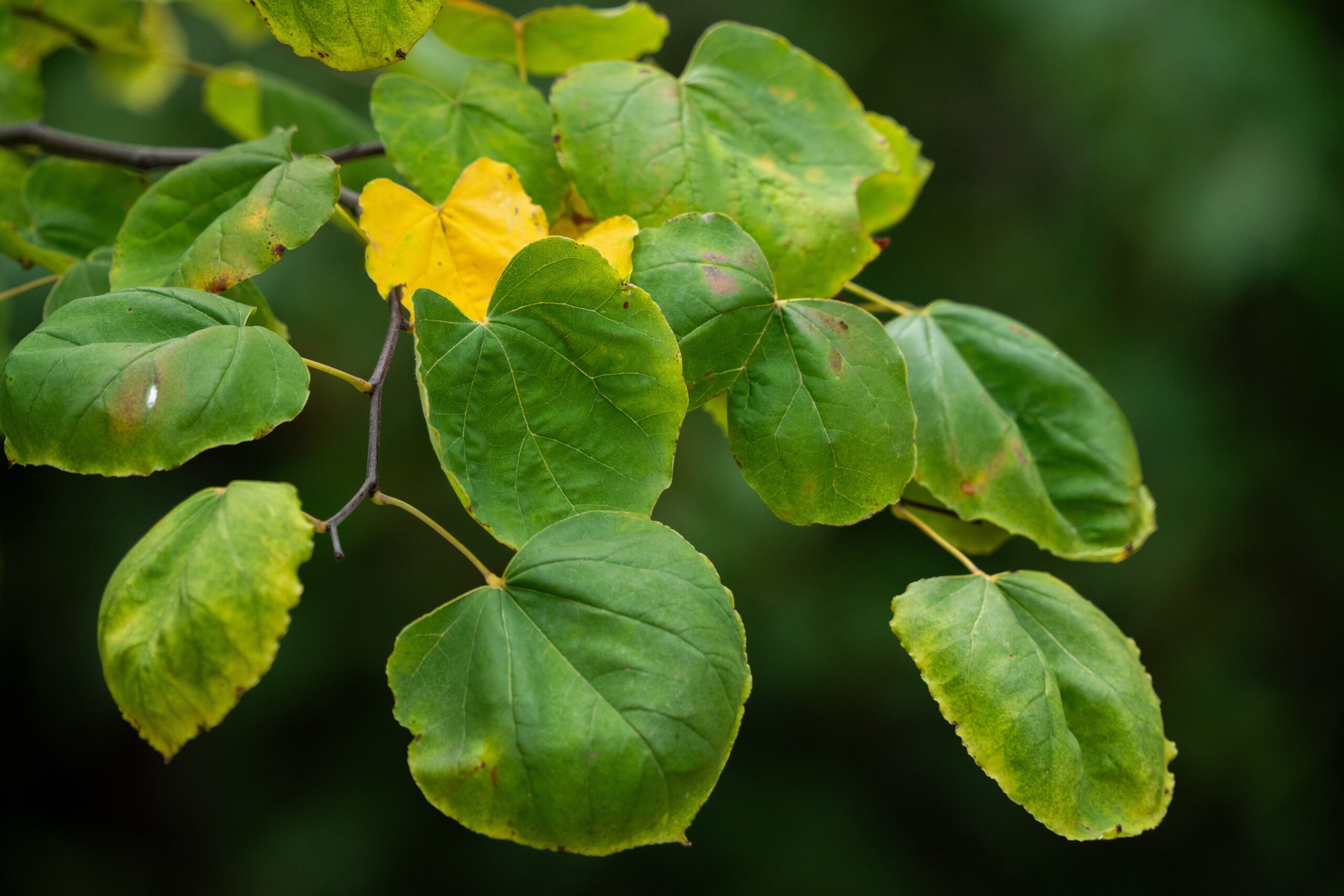
When it comes to enjoying fall foliage, McCallister emphasizes that Indiana offers many great viewing locations not far from Purdue’s campus.
Locally, Martell Forest, which is open to the public, is a great spot to check out the fall foliage and immerse yourself in the woods,” says McCallister.
Leaf drop is likely to occur anytime from mid-October into December, although this process may take longer than usual due to the milder winters we’ve been experiencing. Similar to color changing, the timing of leaf drop varies by tree species and their growth patterns, as well as the overall weather conditions.
“For instance, ginkgo trees turn this brilliant yellow and have a cool reaction to leaf drop. Typically, all their leaves fall within a day or so, creating a carpet of yellow. In contrast, trees like maples and oaks, which have a mix of yellow, orange and red leaves, tend to hold onto their foliage a bit longer,” McCallister recalls.
It’s also important to note that while coniferous trees, like pines, spruces and furs, retain their needles year-round, some conifers like bald-cypress trees drop theirs. This sometimes causes confusion for homeowners who mistake these deciduous conifers for dying trees.
To provide the best care for your trees during these changing weather patterns, McCallister advises familiarizing yourself with different tree species. Resources like Google and dichotomous keys in forestry books can help with species identification and lead to tips for care. Regularly checking your trees’ health is essential year-round. Specialists in your local county Extension offices and ISA Certified Arborists can be valuable resources for proper tree management.
To view the original article along with other news and stories posted on the Purdue Agriculture website see: Is fall foliage a sign of seasonal change or response to heat waves?
Resources:
Find an Arborist video, Trees are Good-International Society of Arboriculture (ISA)
ID That Tree, Playlist, Purdue Extension – FNR YouTube Channel
Invasive Species Playlist, Playlist, Purdue Extension – FNR YouTube Channel
A Woodland Management Moment, Playlist, Purdue Extension – FNR YouTube Channel (Against Invasives, Garlic Mustard, Autumn Olive)
Report Invasive Species, Purdue Invasive Species
Invasive Plants of the Eastern U.S.: An Introduction to the Problematic Non-Native Species, The Education Store, Purdue Extension’s resource center
Why Fall Color is Sometimes a Dud, Purdue Landscape Report
\U.S. Forest Service Fall Colors, Forest Service, U.S. Department of Agriculture
ID That Tree Fall Color: Sugar Maple, Purdue Extension – Forestry and Natural Resources YouTube Channel, ID That Tree Playlist
What Are Invasive Species and Why Should I Care?, Purdue Extension-FNR Got Nature? Blog
Emerald Ash Borer Information Network, Purdue University and Partners
Invasive plants: impact on environment and people, The Education Store, Purdue Extension’s resource center
Subscribe Purdue Extension-Forestry and Natural Resources YouTube Channel
Devyn Raver, Media Relations and Content Development Specialist
Purdue Forestry & Natural Resources
Ben McCallister, Urban Forestry Specialist
Purdue Forestry & Natural Resources

Recent Posts
- Tree Silvics and Succession Webinar: A Biological Basis for Management
Posted: January 30, 2026 in Forests and Street Trees, Urban Forestry, Woodlands - Woodsy Owl Edition for Educational Learning, USDA – U.S. Forest Service
Posted: January 21, 2026 in Forestry, Forests and Street Trees, Got Nature for Kids, Urban Forestry, Wildlife - ID That Tree: Trumpet Creeper
Posted: January 20, 2026 in Forests and Street Trees, Urban Forestry, Woodlands - A Woodland Management Moment: Black Walnut in Pine Plantation
Posted: December 19, 2025 in Forestry, Forests and Street Trees, Urban Forestry, Woodlands - A Woodland Management Moment: Butternut Disease and Breeding
Posted: December 1, 2025 in Forestry, Forests and Street Trees, Woodland Management Moment, Woodlands - Why Do Our Trees Go From Green Leaves to Different Colors?
Posted: November 4, 2025 in Forestry, Forests and Street Trees, Urban Forestry, Woodlands - October Is Firewood Month: Protect Indiana’s Forests by Making Smart Choices
Posted: October 13, 2025 in Forestry, Forests and Street Trees, How To, Invasive Insects, Urban Forestry - Help Your Trees Transition Into Autumn, Purdue Landscape Report
Posted: October 7, 2025 in Forests and Street Trees, Urban Forestry, Woodlands - Marssonina Leaf Spot and Blotch of Poplar, Purdue Landscape Report
Posted: October 1, 2025 in Disease, Forests and Street Trees, Urban Forestry, Woodlands - Discover the Rich World of Oaks with Purdue Extension – FNR
Posted: September 26, 2025 in Ask the Expert, Forests and Street Trees, Wildlife, Woodlands
Archives
Categories
- Alert
- Aquaculture/Fish
- Aquatic/Aquaculture Resources
- Ask the Expert
- Christmas Trees
- Community Development
- Disease
- Drought
- Forestry
- Forests and Street Trees
- Gardening
- Got Nature for Kids
- Great Lakes
- How To
- Invasive Animal Species
- Invasive Insects
- Invasive Plant Species
- Land Use
- Natural Resource Planning
- Nature of Teaching
- Plants
- Podcasts
- Ponds
- Publication
- Safety
- Spiders
- Timber Marketing
- Uncategorized
- Urban Forestry
- Webinar
- Wildlife
- Wood Products/Manufacturing
- Woodland Management Moment
- Woodlands