 Purdue University - Extension - Forestry and Natural Resources
Got Nature? Blog
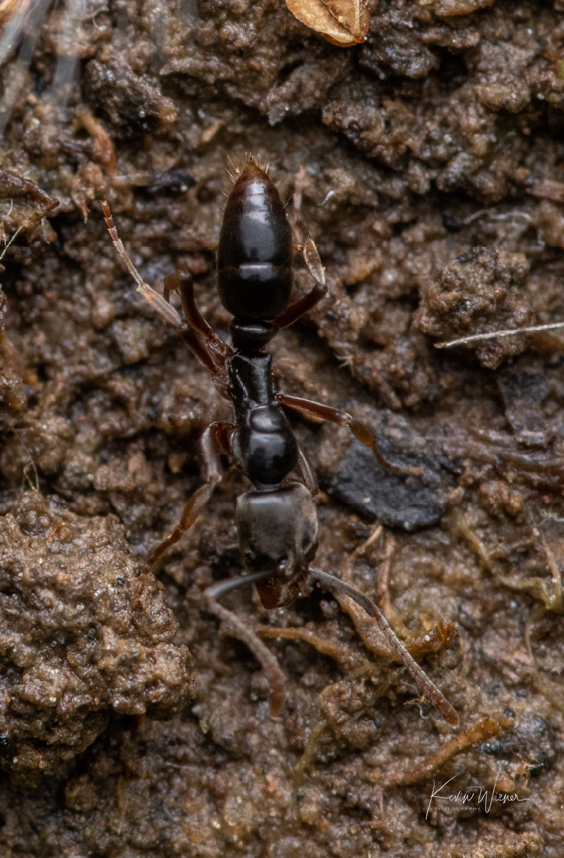
Asian needle ant in
natural setting. Photo by Kevin Weiner, Evansville, IN.
It is official. The Asian needle ant is our newest invasive insect pest and has now become a permanent resident, stinging ant. Two ant specimens taken from a wooded area in southern Indiana by an astute amateur entomologist, who observed their appearance and behavior as ‘out of the ordinary’, was submitted to the Indiana Department of Natural Resources and to the Purdue University Plant and Pest Diagnostic Laboratory for species identification in February, 2022. Both were confirmed to be Formicidae: Brachyponera chinensis, commonly known as the Asian needle ant, not previously recorded from Indiana.
Asian needle ants (ANAs), originally from Eastern Asia (China, Japan, and Korea), were first discovered in the United States in the early 1930s, but only recognized as a pest since 2006. They have been officially established in several states in the U.S. including North Carolina, South Carolina, Alabama and Georgia and, have been anecdotally reported as far north and west as New York, Tennessee and Kentucky.
Note that stings to humans will be moderately painful (potentially causing severe allergic reactions to susceptible individuals) much like fire ant or bee stings, but fortunately because these ants are much less aggressive in protecting their nests, the number of stings per encounter will be less.
The First Report of the Invasive Asian Needle Ant in Indiana pdf provides more details on their identification and biology.
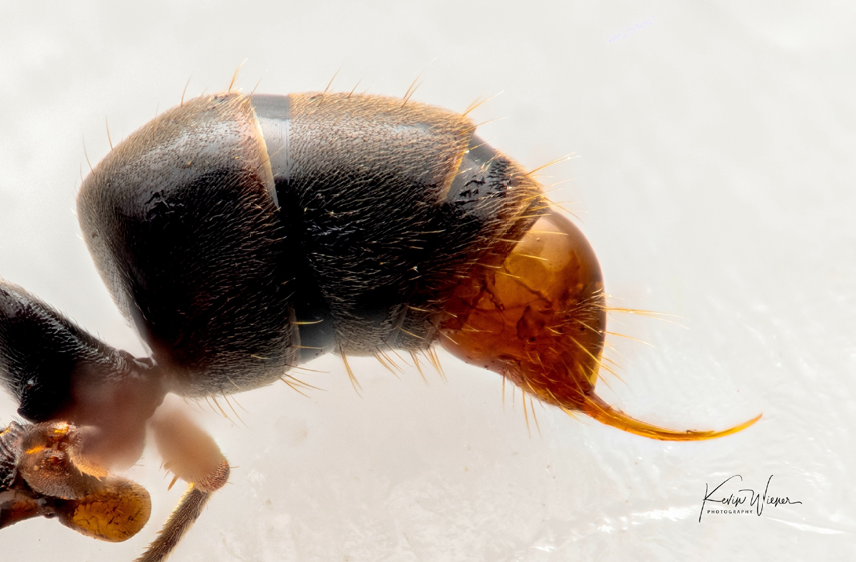
Asian needle ant stinger extended. Photo by Kevin Weiner, Evansville, IN.
If you want to confirm a sighting of the Asian needle ant please contact the Purdue University Plant and Pest Diagnostic Laboratory at this time. More information will be presented as experts monitor the spread.
Resources:
Thousand Cankers Disease, Indiana Department of Natural Resources
Thousand Cankers Disease: Indiana Walnut Trees Threatened, The Education Store, Purdue Extension’s resource center
Indiana Walnut Council
Spotted lanternfly: Everything You Need to Know in 30 Minutes, Video, Emerald Ash Borer University
Emerald Ash Borer, EAB Information Network
Report Invasive Species, Purdue Invasive Species
The GLEDN Phone App – Great Lakes Early Detection Network
EDDMaps – Early Detection and Distribution Mapping System
Indiana Department of Natural Resources: Invasive Species
Indiana Invasive Species Council
Cooperative Invasive Species Management Area (CISMA)
Invasive plants: impact on environment and people, The Education Store
Woodland Management Moment: Invasive Species Control Process, Video, Purdue Extension – Forestry and Natural Resources (FNR) YouTube Channel
Invasive Species, Playlist, Purdue Extension – FNR YouTube Channel
What are invasive species and why should I care?, Got Nature? Blog, Purdue Extension – Forestry and Natural Resources
Report Invasive
Indiana Department of Entomology and Plant Pathology
Tim Gibb, Insect Diagnostician and Extension Specialist
Purdue Department of Entomology
The classic and trusted book “Fifty Common Trees of Indiana” by T.E. Shaw was published in 1956 as a user-friendly guide to local species. Nearly 70 years later, the publication has been updated through a joint effort by the Purdue Department of Forestry and Natural Resources, Indiana 4-H, and the Indiana Department of Natural Resources, and reintroduced as “An Introduction to Trees of Indiana.”
 The full publication is available for download for $7 in the Purdue Extension Education Store. The field guide helps identify common Indiana woodlot trees.
Each week, the Intro to Trees of Indiana web series will offer a sneak peek at one species from the book, paired with an ID That Tree video from Purdue Extension forester Lenny Farlee to help visualize each species as it stands in the woods. Threats to species health as well as also insight into the wood provided by the species, will be provided through additional resources as well as the Hardwoods of the Central Midwest exhibit of the Purdue Arboretum, if available.
This week, we introduce the Blue Beech or Carpinus caroliniana.
The blue beech, also known as the American hornbeam, musclewood or the water beech, is an understory tree that stands out due to its gray bark and striations that resemble muscles and sinews as well as its doubly toothed leaves.
The small tree, which typically grows to a height of 20 to 35 feet, has oblong leaves with doubly toothed leaf margins, arranged alternately on very fine twigs. Lower leaf veins are seldom forked. The fruit is in clusters, consisting of small, seed-like nuts on small, three-lobed leaves. It’s bark and fruit help differentiate blue beech from its close relative, the ironwood.
Blue beech’s natural range is the majority of the midwestern and eastern United States, reaching as far south as Texas.
For full article and photos view Purdue Forestry and Natural Resources News: Trees of Indiana: Blue Beech.
Other Resources:
Beech – Hardwood Lumber and Veneer Series
Fifty Common Trees of Indiana
An Introduction to Trees of Indiana
Native Trees of the Midwest, The Education Store, Purdue Extension’s resource center
Shrubs and Woody Vines of Indiana and the Midwest
ID That Tree YouTube playlist
Woodland Management Moment YouTube playlist
Investing in Indiana Woodlands, The Education Store
Forest Improvement Handbook The Education Store
Wendy Mayer, FNR Communications Coordinator
Purdue University Department of Forestry and Natural Resources
Lenny Farlee, Sustaining Hardwood Extension Specialist
Purdue University Department of Forestry and Natural Resources

Photo credit: Adobe Stock
Lawn to Lake Midwest is a great resource as the experts share each month care tips on how to have a healthy lawn all year long while using natural lawn care practices. For the month of May check out the things to watch out for and why testing your soil is important.
You will also find resources for more options for a sustainable lawn:
- Take the Natural Lawn Care Quiz and see where you are at with your lawn care practices.
- Take a look at some simply ways to incorporate more natural lawn care practices.
- If you’re ready, jump into the weeds to explore even more sustainable lawn management practices.
- Find answers to commonly asked lawn care questions.
Resources:
Forest Improvement Handbook, The Education Store
Turfgrass Science, Department of Horticulture & Landscape Architecture
Turfgrass Insect Management, The Education Store
Tree Planting Part 1: Choosing a Tree, Video, The Education Store
Purdue Turf Doctor app for Apple iOS, Apple App Store
Illinois-Indiana Sea Grant (IISG)
The classic and trusted book “Fifty Common Trees of Indiana” by T.E. Shaw was published in 1956 as a user-friendly guide to local species. Nearly 70 years later, the publication has been updated through a joint effort by the Purdue Department of Forestry and Natural Resources, Indiana 4-H, and the Indiana Department of Natural Resources, and reintroduced as “An Introduction to Trees of Indiana.”
The full publication is available for download for $7 in the Purdue Extension Education Store. The field guide helps identify common Indiana woodlot trees.
Each week, the Intro to Trees of Indiana web series will offer a sneak peek at one species from the book, paired with an ID That Tree video from Purdue Extension forester Lenny Farlee to help visualize each species as it stands in the woods. Threats to species health as well as also insight into the wood provided by the species, will be provided through additional resources as well as the Hardwoods of the Central Midwest exhibit of the Purdue Arboretum, if available. 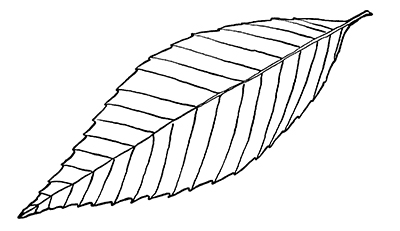
This week, we introduce the beech, or Fagus grandifolia.
The Beech is easily identified by its smooth gray bark and its simple leaves, which feature straight-line veins from the midrib to the small teeth on the margin. Beeches produce a 3/4-inch long fruit covered in spines, which typically holds two triangular-shaped nuts.
American beech is a shade tolerant species found in the understory often on moist but well-drained soils, that also reaches up into the forest canopy at around 70 to 80 feet tall. Beech is found throughout the Great Lakes region as well as the central and southeastern United States.
Beech is used to make items varying from wooden clothes pins to brush banks, handles and woodenware. Due to its strength and ease of turning, it is also used for chair production. Flooring, railroad ties, pallets and container veneer are other uses for this species.
For full article and photos view Purdue Forestry and Natural Resources: Trees of Indiana: Beech.
 View the Purdue Online Tour: Hardwoods of the Central Midwest and find out beech species workability, strength, if it can be steam bent, drying details and much more.
Resources:
Beech – Hardwood Lumber and Veneer Series
Fifty Common Trees of Indiana
An Introduction to Trees of Indiana
Native Trees of the Midwest, The Education Store, Purdue Extension’s resource center
Shrubs and Woody Vines of Indiana and the Midwest, The Education Store, Purdue Extension’s resource center
ID That Tree, YouTube playlist
Woodland Management Moment, YouTube playlist
Investing in Indiana Woodlands, The Education Store, Purdue Extension’s resource center
Forest Improvement Handbook, The Education Store, Purdue Extension’s resource center
Wendy Mayer, FNR Communications Coordinator
Purdue University Department of Forestry and Natural Resources
Lenny Farlee, Sustaining Hardwood Extension Specialist
Purdue University Department of Forestry and Natural Resources
 The classic and trusted book “Fifty Common Trees of Indiana” by T.E. Shaw was published in 1956 as a user-friendly guide to local species. Nearly 70 years later, the publication has been updated through a joint effort by the Purdue Department of Forestry and Natural Resources, Indiana 4-H, and the Indiana Department of Natural Resources, and reintroduced as “An Introduction to Trees of Indiana.”
The full publication is available for download for $7 in the Purdue Extension Education Store. The field guide helps identify common Indiana woodlot trees.
Each week, the Intro to Trees of Indiana web series will offer a sneak peek at one species from the book, paired with an ID That Tree video from Purdue Extension forester Lenny Farlee to help visualize each species as it stands in the woods. Threats to species health as well as also insight into the wood provided by the species, will be provided through additional resources as well as the Hardwoods of the Central Midwest exhibit of the Purdue Arboretum, if available.
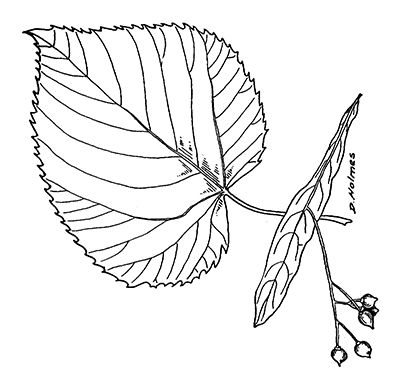
This week, we introduce the basswood or Tilia Americana.
The American basswood, which is also called linden, is commonly identified by its simple heart-shaped leaves with finely toothed margins, flat bark with long running lines up and down the trees, and possibly a ring of sprouts originating from the base of the tree. The clusters of small, nutlike seeds (⅓-inch in diameter)
are attached by a stem to a leaflike wing. 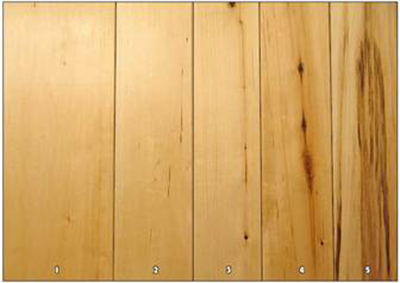
This species is often found on moist sites, deep, loamy soils, with its range stretching from the Great Plains east and from southern Canada through northern Arkansas, Kentucky and the mountains of North Carolina and Tennessee.
With heights reaching 70 to 80 feet tall, basswood can offer good shade. It also offers good flowering for bees. This species has a light colored, fine-grained wood varying from a white color to a very light brown or flesh color.
Due to its weight and stability, basswood has historically been used to make Venetian blinds and key stock in pianos. It also is a preferred species for carving, including items like hunting decoys, etc.
Full article also can be viewed with Purdue Forestry and Natural Resources News: Trees of Indiana: American Basswood.
Other Resources
Basswood – Hardwood Lumber and Veneer Series
Hardwoods of Central Indiana: American Basswood
Fifty Common Trees of Indiana
An Introduction to Trees of Indiana
Native Trees of the Midwest
Shrubs and Woody Vines of Indiana and the Midwest
ID That Tree YouTube playlist
Woodland Management Moment YouTube playlist
Investing in Indiana Woodlands
Forest Improvement Handbook
Wendy Mayer, FNR Communications Coordinator
Purdue University Department of Forestry and Natural Resources
Lenny Farlee, Sustaining Hardwood Extension Specialist
Purdue University Department of Forestry and Natural Resources
Spring is in full bloom and trees are beginning to look green again. Learning how to identify trees in yards, neighborhoods and local parks provides insight into the diversity and relationships found in nature. Lenny Farlee, Purdue Extension Forester, shares how to identify trees native to Indiana.
Leaf Arrangement
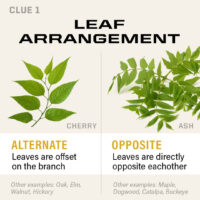 Leaf arrangement is one of the first characteristics to check for on deciduous (trees that lose their leaves annually) broadleaved trees that make up the majority of our native species. The two arrangements we commonly find are alternate and opposite.
Opposite arrangement means the leaves are held on the twig directly opposite of one another. Alternate leaf arrangement means the leaves are arranged on the twig in an offset manner. We have one leaf, then another in a zig-zag or spiral fashion.
There are only a few native tree families with opposite leaf arrangements: Maple, Ash, Dogwood, Catalpa, Buckeye. You can remember these from the anacronym MAD Cat Buck – Maple, Ash, Dogwood, Catalpa, Buckeye. Almost all other native trees have alternate leaf arrangements.
Leaf Types
The next characteristic to check is if the tree has simple or compound leaves. To do this, we need to understand the difference between a leaf and a leaflet. A leaf has a bud at the base of the stem. The entire structure after the bud is the leaf.
A simple leaf is singular and never divided into smaller leaflets. A compound leaf consists of several or many leaflets joined to a single stem after the bud.
Resources:
ID That Tree, Playlist, Purdue Extension – Forestry and Natural Resources YouTube Channel
A Woodland Management Moment, Playlist, Purdue Extension – FNR YouTube Channel
Purdue Extension, website
Shrubs and Woody Vines of Indiana and the Midwest, The Education Store, Purdue Extension Resource Center
Native Trees of the Midwest, The Education Store
Investing in Indiana Woodlands, The Education Store
Forest Improvement Handbook, The Education Store
Purdue College of Agriculture News
Lenny Farlee, Sustaining Hardwood Extension Specialist
Purdue University Department of Forestry and Natural Resources
The classic and trusted book “Fifty Common Trees of Indiana” by T.E. Shaw was published in 1956 as a user-friendly guide to local species. Nearly 70 years later, the publication has been updated through a joint effort by the Purdue Department of Forestry and Natural Resources, Indiana 4-H, and the Indiana Department of Natural Resources, and reintroduced as “An Introduction to Trees of Indiana.”
The full publication is available for download for $7 in the Purdue Extension Education Store. The field guide helps identify common Indiana woodlot trees.
 Each week, the Intro to Trees of Indiana web series will offer a sneak peek at one species from the book, paired with an ID That Tree video from Purdue Extension forester Lenny Farlee to help visualize each species as it stands in the woods. Threats to species health as well as also insight into the wood provided by the species, will be provided through additional resources as well as the Hardwoods of the Central Midwest exhibit of the Purdue Arboretum, if available.
This week, we introduce the quaking aspen or populus tremuloides.
The quaking aspen, also known as the trembling aspen, is adaptable to a variety of soils, ranging from moist loamy sands and clay, but it is shade intolerant. It is often found on the edge of woodlands or where the site has been disturbed, giving it access to full sunlight.
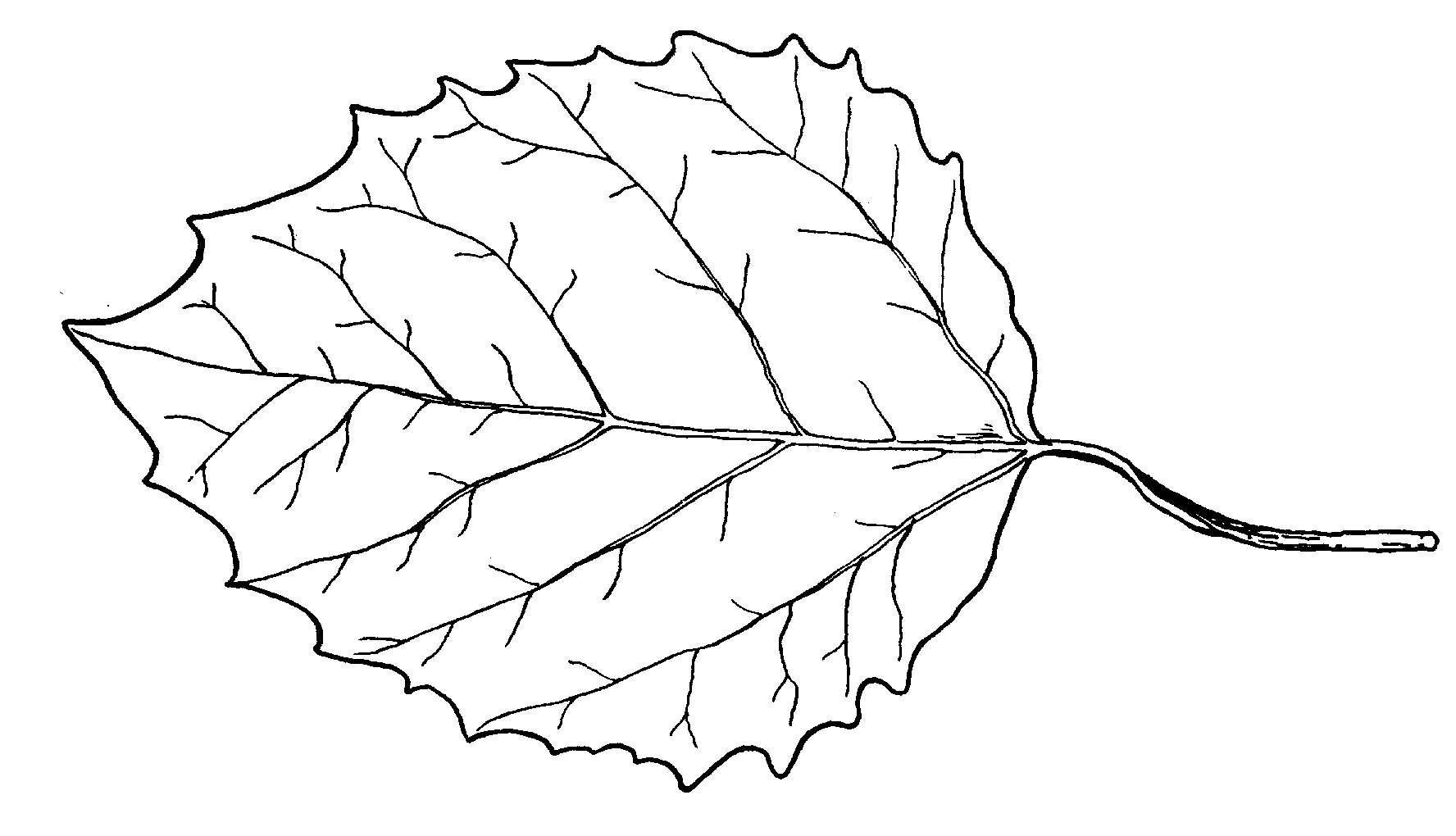
This species is identifiable by its whitish to grayish bark with dark spots where the branches come out of the trunk. It has small rounded leaves with very small teeth along the margin. Like most aspens, it has long flat leaf steams that are known to flutter in the wind.
Quaking aspen is found int he northern part of the state of Indiana. This species is found from Nefoundland through Alaska in the West, and as far south as Arizona. In the Midwest, it ranges south to northeastern Iowa, northern Illinois and Pennsylvania. It is also found in some scattered areas in the Appalachian Mountains. It is the most widely distributed tree in the United States.
According to the Hardwood Lumber and Veneer Series, aspen is one of our lightest woods with a 12 percent moisture content and a weight of 26 to 27 pounds per cubic foot. It was at one time relegated to the pulp and paper industry as a weed tree, however it is now a favored species for the manufacturer of panel boards.
Full article also can be viewed with Purdue Forestry and Natural Resources News: Trees of Indiana: Quaking Aspen.
Other Resources
Aspen – Hardwood Lumber and Veneer Series
Why Fall Color Is Sometimes a Dud – Purdue Landscape Report
Fifty Common Trees of Indiana
An Introduction to Trees of Indiana
Native Trees of the Midwest, The Education Store, Purdue Extension’s resource center
Shrubs and Woody Vines of Indiana and the Midwest, The Education Store
ID That Tree YouTube playlist
Woodland Management Moment YouTube playlist
Investing in Indiana Woodlands, The Education Store
Forest Improvement Handbook , The Education Store
Wendy Mayer, FNR Communications Coordinator
Purdue University Department of Forestry and Natural Resources
Lenny Farlee, Sustaining Hardwood Extension Specialist
Purdue University Department of Forestry and Natural Resources
In this edition of ID That Tree, meet another member of the hickory family that can found in upland areas, the pignut hickory. This species is identifiable by its five-leaflet compound leaves, its smooth round nut and partially open husk.
If you have any questions regarding wildlife, trees, forest management, wood products, natural resource planning or other natural resource topics, feel free to contact us by using our Ask an Expert web page.
Resources:
ID That Tree, Playlist, Purdue Extension – Forestry and Natural Resources YouTube Channel
A Woodland Management Moment, Playlist, Purdue Extension – FNR YouTube Channel
Shrubs and Woody Vines of Indiana and the Midwest, The Education Store, Purdue Extension Resource Center
Native Trees of the Midwest, The Education Store
Investing in Indiana Woodlands, The Education Store
Forest Improvement Handbook, The Education Store
Pignut Hickory, Native Trees of Indiana River Walk, Purdue Fort Wayne
Lenny Farlee, Sustaining Hardwood Extension Specialist
Purdue University Department of Forestry and Natural Resources
In this episode of ID That Tree, meet the ash family, with specific focus on the white ash, which is typically found on higher and drier sites than its cohorts. This species, which is in trouble due to the emerald ash borer, an invasive beetle, features opposite leaf arrangement, compound leaves with seven to nine leaflets, and squatty terminal buds as well as a bud that dips down into the leaf scar, resembling a smiley face. The bark is gray and featured an interlacing network of ridges forming a diamond shape.
If you have any questions regarding wildlife, trees, forest management, wood products, natural resource planning or other natural resource topics, feel free to contact us by using our Ask an Expert web page.
Resources:
ID That Tree, Playlist, Purdue Extension – Forestry and Natural Resources YouTube Channel
Emerald Ash Borer (EAB), Purdue Extension-Entomology
A Woodland Management Moment, Playlist, Purdue Extension – FNR YouTube Channel
Shrubs and Woody Vines of Indiana and the Midwest, The Education Store, Purdue Extension Resource Center
Native Trees of the Midwest, The Education Store
Investing in Indiana Woodlands, The Education Store
Forest Improvement Handbook, The Education Store
White Ash, Native Trees of Indiana River Walk, Purdue Fort Wayne
Lenny Farlee, Sustaining Hardwood Extension Specialist
Purdue University Department of Forestry and Natural Resources
The classic and trusted book “Fifty Common Trees of Indiana” by T.E. Shaw was published in 1956 as a user-friendly guide to local species. Nearly 70 years later, the publication has been updated through a joint effort by the Purdue Department of Forestry and Natural Resources, Indiana 4-H, and the Indiana Department of Natural Resources, and reintroduced as “An Introduction to Trees of Indiana.”
The full publication is available for download for $7 in the Purdue Extension Education Store. The field guide helps identify common Indiana woodlot trees.
Each week, the Intro to Trees of Indiana web series will offer a sneak peek at one species from the book, paired with an ID That Tree video from Purdue Extension forester Lenny Farlee to help visualize each species as it stands in the woods. Threats to species health as well as also insight into the wood provided by the species, will be provided through additional resources as well as the Hardwoods of the Central Midwest exhibit of the Purdue Arboretum, if available.
This week, we introduce the large tooth aspen or populus grandidentata.
The large tooth aspen, also known as the big tooth aspen, needs full sunlight and thrives in areas where the soil has been disturbed and provides a good seed bed for its wind-blown seeds.
This species is identifiable by its triangular to round simple leaves with prominent, coarse, hooked teeth on the leaf margins. The long, flat leaf stems which flutter in the wind also are a good characteristic for identification along with its smooth olive green bark.
Large tooth aspen is found throughout the state of Indiana, while its close relative, the quaking aspen is found mostly in the northern portions of the state. This species is found from Nova Scotia west through southern Canada reaching to northeastern North Dakota. Its range also reaches southeast to the Ohio River and along the mountains to Tennessee and then to coastal New Jersey.
According to the Hardwood Lumber and Veneer Series, aspen is one of our lightest woods with a 12 percent moisture content and a weight of 26 to 27 pounds per cubic foot. It was at one time relegated to the pulp and paper industry as a weed tree, however it is now a favored species for the manufacturer of panel boards.
Find this and other Forestry and Natural Resources (FNR) news articles: Purdue FNR News & Stories.
Other Resources:
Aspen – Hardwood Lumber and Veneer Series, The Education Store, Purdue Extension’s resource center
Why Fall Color Is Sometimes a Dud, Purdue Landscape Report
Fifty Common Trees of Indiana
An Introduction to Trees of Indiana
Native Trees of the Midwest, The Education Store
Shrubs and Woody Vines of Indiana and the Midwest
ID That Tree, Purdue Extension-Forestry and Natural Resources (FNR) YouTube playlist
Woodland Management Moment , Purdue Extension-FNR YouTube playlist
Investing in Indiana Woodlands, The Education Store
Forest Improvement Handbook, The Education Store
Wendy Mayer, FNR Communications Coordinator
Purdue University Department of Forestry and Natural Resources
Lenny Farlee, Sustaining Hardwood Extension Specialist
Purdue University Department of Forestry and Natural Resources

Recent Posts
- Tree Silvics and Succession Webinar: A Biological Basis for Management
Posted: January 30, 2026 in Forests and Street Trees, Urban Forestry, Woodlands - Woodsy Owl Edition for Educational Learning, USDA – U.S. Forest Service
Posted: January 21, 2026 in Forestry, Forests and Street Trees, Got Nature for Kids, Urban Forestry, Wildlife - ID That Tree: Trumpet Creeper
Posted: January 20, 2026 in Forests and Street Trees, Urban Forestry, Woodlands - A Woodland Management Moment: Black Walnut in Pine Plantation
Posted: December 19, 2025 in Forestry, Forests and Street Trees, Urban Forestry, Woodlands - A Woodland Management Moment: Butternut Disease and Breeding
Posted: December 1, 2025 in Forestry, Forests and Street Trees, Woodland Management Moment, Woodlands - Why Do Our Trees Go From Green Leaves to Different Colors?
Posted: November 4, 2025 in Forestry, Forests and Street Trees, Urban Forestry, Woodlands - October Is Firewood Month: Protect Indiana’s Forests by Making Smart Choices
Posted: October 13, 2025 in Forestry, Forests and Street Trees, How To, Invasive Insects, Urban Forestry - Help Your Trees Transition Into Autumn, Purdue Landscape Report
Posted: October 7, 2025 in Forests and Street Trees, Urban Forestry, Woodlands - Marssonina Leaf Spot and Blotch of Poplar, Purdue Landscape Report
Posted: October 1, 2025 in Disease, Forests and Street Trees, Urban Forestry, Woodlands - Discover the Rich World of Oaks with Purdue Extension – FNR
Posted: September 26, 2025 in Ask the Expert, Forests and Street Trees, Wildlife, Woodlands
Archives
Categories
- Alert
- Aquaculture/Fish
- Aquatic/Aquaculture Resources
- Ask the Expert
- Christmas Trees
- Community Development
- Disease
- Drought
- Forestry
- Forests and Street Trees
- Gardening
- Got Nature for Kids
- Great Lakes
- How To
- Invasive Animal Species
- Invasive Insects
- Invasive Plant Species
- Land Use
- Natural Resource Planning
- Nature of Teaching
- Plants
- Podcasts
- Ponds
- Publication
- Safety
- Spiders
- Timber Marketing
- Uncategorized
- Urban Forestry
- Webinar
- Wildlife
- Wood Products/Manufacturing
- Woodland Management Moment
- Woodlands