 Purdue University - Extension - Forestry and Natural Resources
Got Nature? Blog
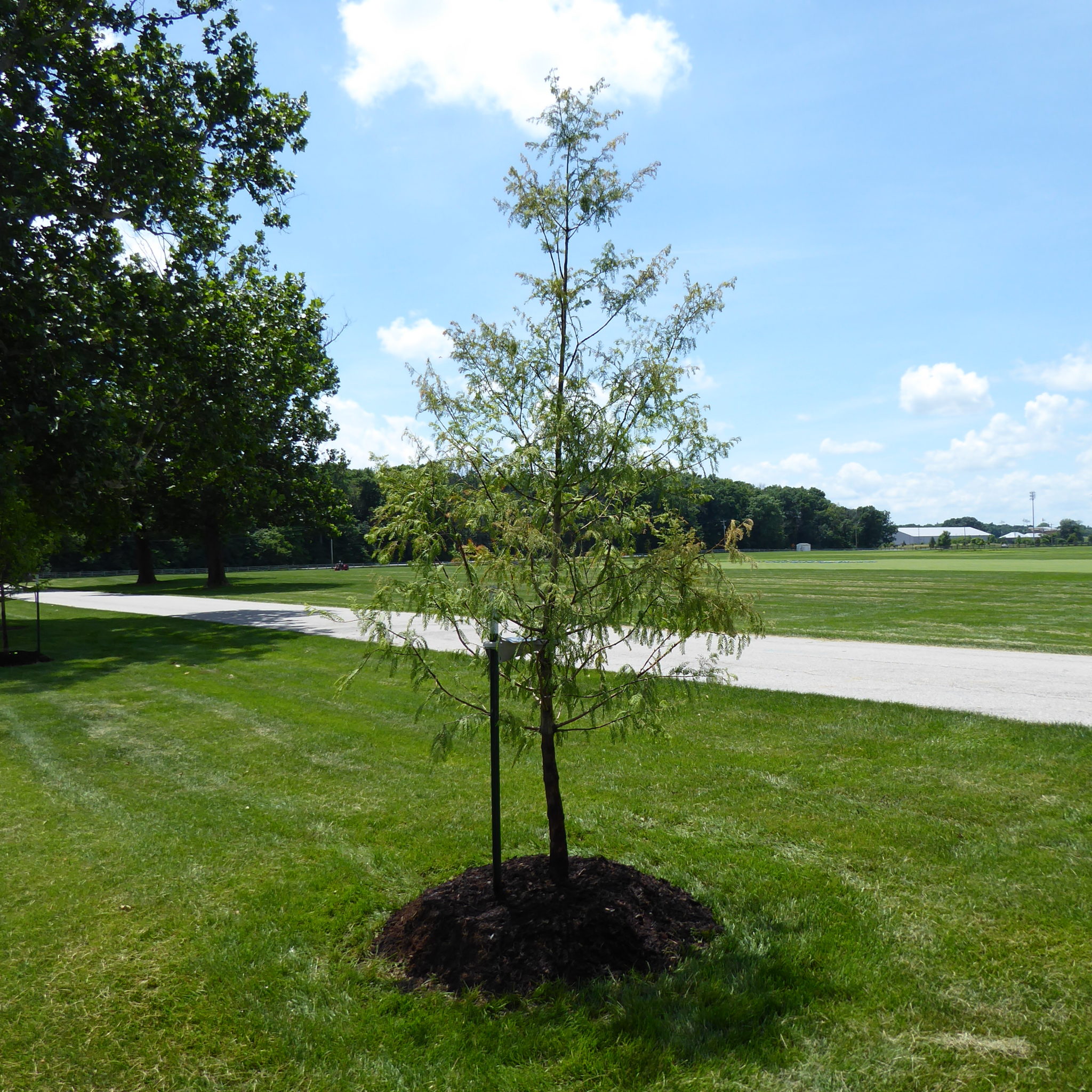
Figure 1. Properly staked tree adds support.
Stake or not to stake, that is the question!?
“No,” is the likely answer to these common questions about post-planting tree care. Trees establish themselves quite well in normal situations. Support systems such as staking and guying are, in most cases, unnecessary and can even be detrimental. Movement caused by the wind is crucial to help saplings develop into strong, structurally balanced trees.
However, in unusual conditions, staking, guying, or a similar system may be needed to hold tress upright until adequate root growth anchors them firmly in the soil. When necessary, the support system must be installed properly and removed at the appropriate time to prevent damage.
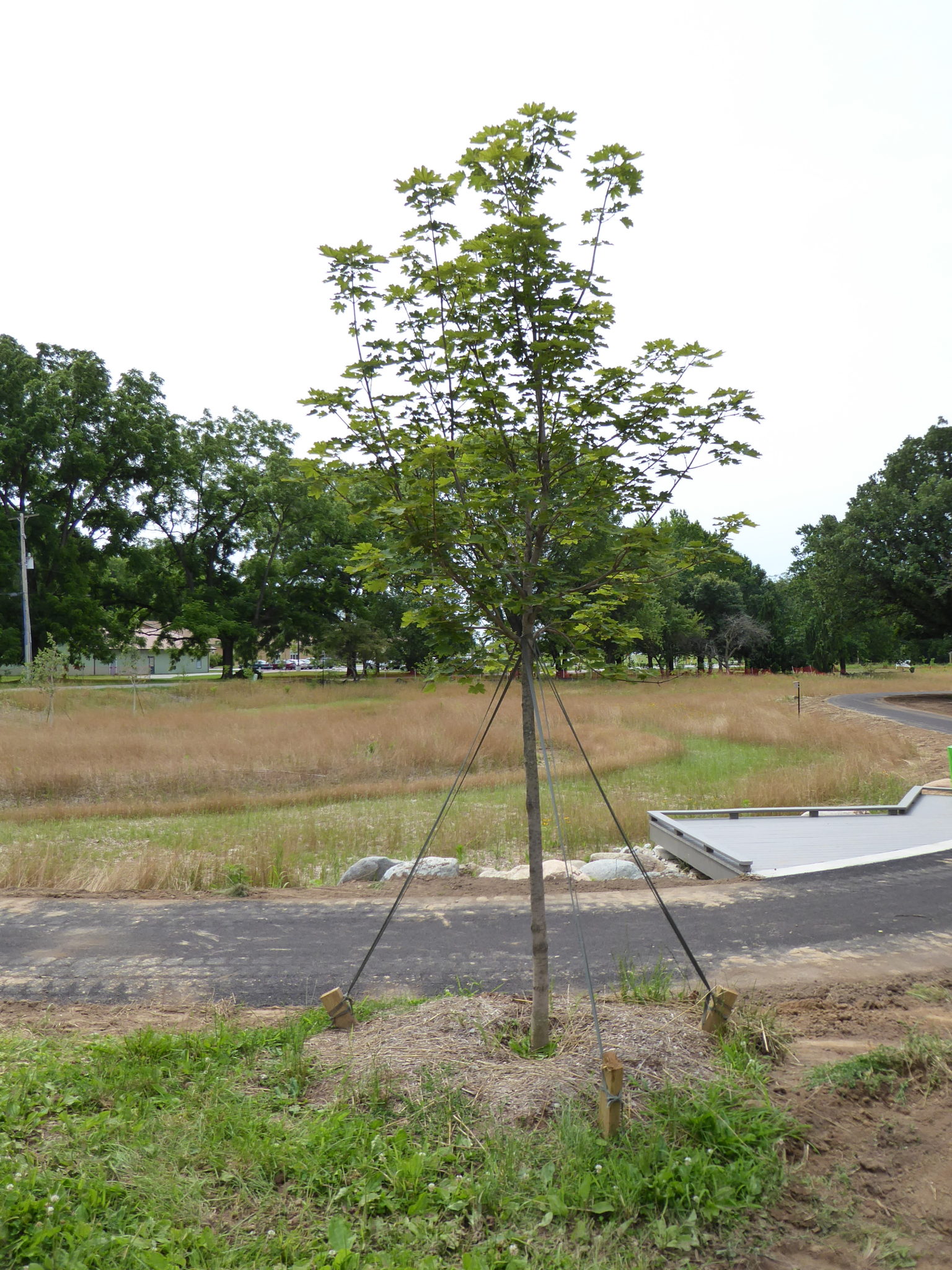
Figure 2. Guy wires can provide stability in harsh, windy conditions.
When to Stake Trees
When stakes are needed, timing depends on the environment and the type of tree.
- Bare-root trees and container-grown trees
- Large evergreen trees with high wind exposure
- Open sites exposed to strong winds
- Taller trees with undersized root balls
- Trees in areas with high rates of vandalism
- Threat of mechanical damage
Improperly staked trees suffer from poor development such as decreased truck diameters and smaller root systems – and may be unable to stay upright after you take the supports away. Often trunk tissue suffers from rubbing and may even be girdled by support materials. Also, due to poor development and taper, previously supported trunks are more likely to break off in high winds or blow over after stakes are removed.

Figure 3. Support materials left too long can damage trees.
Proper Methods and Materials of Guying and Staking
Staking and guying a tree trunk to keep it upright can be a necessary, temporary support system, but does not compensate for poor root development and establishment long-term.
- Guying is temporary and typically used on larger trees that are transplanted balled-and-burlapped. Three points of attachment provide the best support for these large-trees.
- Staking connects the trunk to a nearby steel or wooden post. This is a common approach on smaller trees or containerized tree stock.
- Underground stabilizing systems are also effective and economical for stabilizing the root balls on larger balled-and-burlapped trees. There are several commercial anchor systems available.
The cardinal sins of support include: staking trees too high, too tightly, and for too long which all cause tree damage. Improper staking can cause stem abrasions and trunk girdling. Review the anchor, attachment point, and tension on a regular basis, adjusting as needed to make certain the supports are effective and not damaging the tree. If a tree is supported, the ties and guys should be removed as soon as feasible, usually no later than after one growing season or one year. For more information see Purdue extension publication, Tree Support Systems.
Related Sources:
Stake or not to stake, that is the question?!, The Landscape Report
Tree Support Systems, The Education Store
Latest Issue of the Purdue Landscape Report, Got Nature Post
Plant for the Sun!, Got Nature Post
Lindsey Purcell, Urban Forestry Specialist
Purdue Forestry and Natural Resources
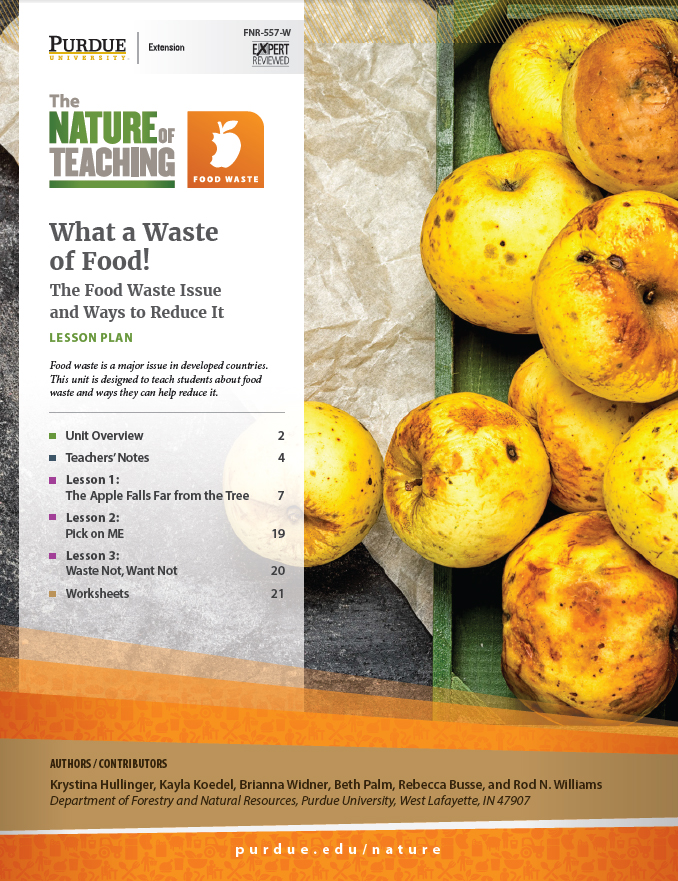 Food waste is a major issue in developed countries. This unit is designed to teach students about food waste and ways they can help reduce it. This section contains one unit with three lesson plans that will teach students how to reduce food waste by learning more about proper food storage, best-by dates, and ugly foods. It also contains a stand-alone lesson on food packaging and composting.
To view this free complete unit see: What a Waste of Food! Lesson Plans and PowerPoint, The Education Store, Purdue Extension.
Resources:
Food Preservation Methods, Purdue Extension
Washing Fresh Vegetables to Enhance Food Safety, Purdue Extension
Food Waste Lesson Plans, Nature of Teaching
Rebecca L Busse, Graduate Research Assistant
Purdue University Department of Forestry and Natural Resources
Rod N Williams, Engagement Faculty Fellow & Associate Professor of Wildlife Science
Purdue University Department of Forestry and Natural Resources
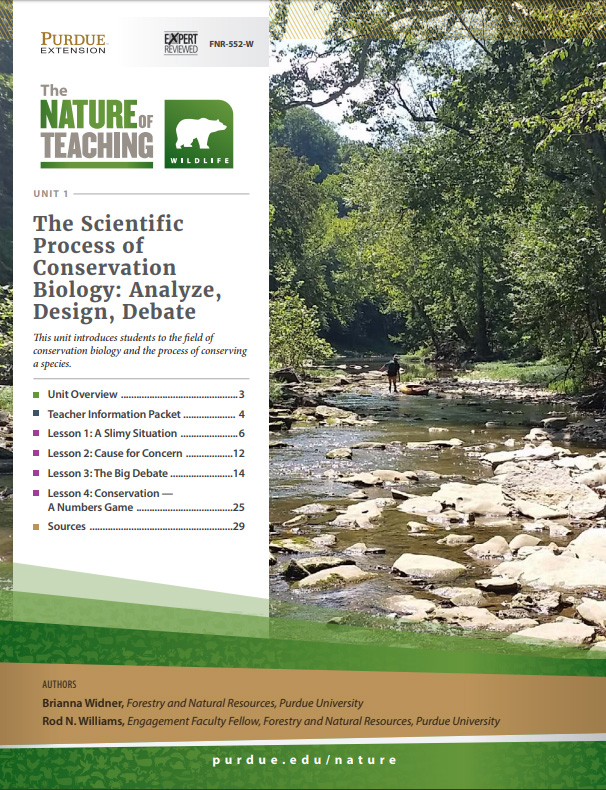 Conservation biology is considered by some to be a “crisis discipline.” Decisions within the field must often be made quickly, sometimes without enough time to gather all of the data one would ideally have, and they can decide the fate of a species. This Nature of Teaching unit titled “the Scientific Process of Conservation Biology: Analyze, Design, Debate,” introduces students to the field of conservation biology and the process of conserving a species. It includes 4 lessons and 4 case studies as well as a teacher information section and list of sources. Students will learn how to: analyze literature, graphs, and figures to discern factors threatening a species; identify different careers involved in conservation biology; learn how to edit, revise an original management plan to better comprehend the iterative process of science; and much more.
To view this free complete unit see: The Scientific Process of Conservation Biology: Analyze, Design, Debate, The Education Store, Purdue Extension.
Resources:
Health & Wellness Lesson Plans, Nature of Teaching
Wildlife Lesson Plans, Nature of Teaching
Food Waste Lesson Plans, Nature of Teaching
Briana Widner, student
Purdue University Department of Forestry and Natural Resources
Rod N Williams, Engagement Faculty Fellow & Associate Professor of Wildlife Science
Purdue University Department of Forestry and Natural Resources

Recent Posts
- Publication – Direct Marketing Guidebook for Small/Medium-Scale Aquaculture Businesses
Posted: March 7, 2025 in Aquaculture/Fish, Aquatic/Aquaculture Resources, Publication - Publication – Handbook on Processing Fish for Small-Scale Fish Farmers
Posted: October 17, 2024 in Aquaculture/Fish, Aquatic/Aquaculture Resources, How To, Publication, Wildlife - Virtual Tour Brings Forest Management for Birds to Life
Posted: July 19, 2024 in Forestry, How To, Publication, Wildlife - Publication – Quality of Place and Community Development
Posted: July 18, 2024 in Community Development, Land Use, Publication, Urban Forestry - Publication – Introduction to White-tailed Deer Impacts on Indiana Woodlands
Posted: April 28, 2024 in Forestry, Land Use, Plants, Publication, Wildlife, Woodlands - Publication – Understanding White-tailed Deer and Their Impact on Indiana Woodlands
Posted: in Forestry, Land Use, Plants, Publication, Wildlife, Woodlands - Publication – Monitoring White-tailed Deer and Their Impact on Indiana Woodlands
Posted: in Forestry, Land Use, Plants, Publication, Wildlife, Woodlands - Publication – Managing White-tailed Deer Impacts on Indiana Woodlands
Posted: in Forestry, Land Use, Plants, Publication, Wildlife, Woodlands - New Deer Impact Toolbox
Posted: April 7, 2024 in Forestry, Land Use, Plants, Publication, Safety, Wildlife, Woodlands - Publication- Bluegill Farmed Fish Fact Sheet
Posted: December 15, 2023 in Aquaculture/Fish, Aquatic/Aquaculture Resources, Publication, Wildlife
Archives
Categories
- Alert
- Aquaculture/Fish
- Aquatic/Aquaculture Resources
- Ask the Expert
- Christmas Trees
- Community Development
- Disease
- Drought
- Forestry
- Forests and Street Trees
- Gardening
- Got Nature for Kids
- Great Lakes
- How To
- Invasive Animal Species
- Invasive Insects
- Invasive Plant Species
- Land Use
- Natural Resource Planning
- Nature of Teaching
- Plants
- Podcasts
- Ponds
- Publication
- Safety
- Spiders
- Timber Marketing
- Uncategorized
- Urban Forestry
- Webinar
- Wildlife
- Wood Products/Manufacturing
- Woodland Management Moment
- Woodlands