 Purdue University - Extension - Forestry and Natural Resources
Got Nature? Blog
Purdue Landscape Report: As summer comes to a close, plants are rapidly releasing seeds and the most noticeable are the flying fluffy type. Thistles, asters and milkweed are just a few of the summer-flowering plants that depend on the wind to disperse their seeds, sometimes carrying them miles away to potentially suitable locations, though seeds typically land within a few meters of the mother plant. This may not be a concern if it’s a desirable plant, but can become extremely problematic when that seed comes from Canada Thistle (Cirsium arvense) (Fig. 1).
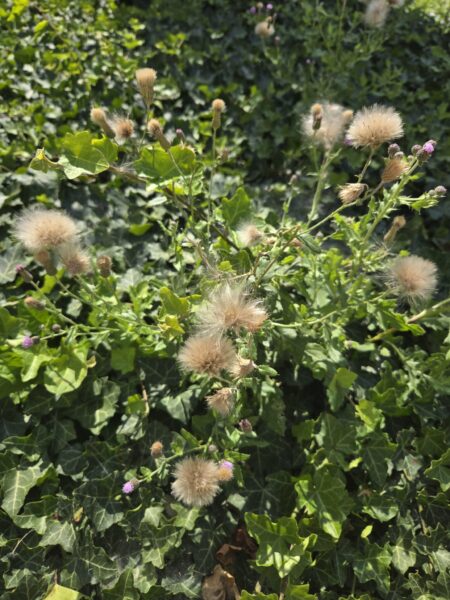
Figure 1. Canada thistle (Cirsium arvense), growing amongst common ivy (Hedera helix), produces a fluffy seed that is dispersed by wind.
Canada thistle is found on the list of Indiana Noxious Weeds (IC 15-16-7-2), which mandates that landowners take necessary steps to control and contain the spread of this highly invasive species. Formal enforcement of this Indiana Code falls to Township Trustees, though weed control is a responsibility that is often overlooked. Landowners and homeowners shouldn’t wait for a notice, or knock at the door, from a Township Trustee to begin controlling Canada thistle. It’s listed as a noxious weed for good reason.
Canada thistle is a perennial plant that can reproduce from seed or rhizomes making it difficult to control and contain. Each plant can produce thousands of wind-blown seeds that may remain viable for up to 20 years in the soil. Rhizomes are horizontal underground stems that can grow several feet and put out new shoots (Fig. 2). To add insult to injury, if a rhizome is cut or tilled, a separate plant may grow from each piece of rhizome.
Mechanical and cultural control options for Canada thistle are limited and may reduce plant density, but are not effective at eradicating large, established populations in a landscape. A new population, without an established root system, may be controlled with frequent mowing to deplete food reserves and prevent seed production.Small, isolated populations may be controlled with hand-pulling, but this will need to be repeated every few weeks.

Figure 2. Canada thistle (Cirsium arvense) reproduces by growing horizontal underground stems called rhizomes. Rhizomes can send up new shoots several feet from the mother plant.
Chemical control options include pre- and post-emergent herbicides and, in many cases, applications of both types are needed for complete eradication. A pre-emergent herbicide, with an active ingredient of dichlobenil, is effective at preventing seed from germinating, but will not control established plants. A post-emergent herbicide with the active ingredient of clopyralid is the most effective option for home gardeners. Clopyralid is a selective herbicide for broadleaf weeds, but most vegetable and ornamental plants are susceptible. Precautions should be taken to avoid off-target damage. Read and understand the herbicide label before use. The label is the law.
Regardless of the method used, complete control of an established Canada thistle population will take persistence over multiple seasons. If the fluffy seed is beginning to fly from your thistle patch, it will likely take many more seasons to rid the garden of this pest, but it is possible. To win the battle against Canada thistle, it takes serious grit and an effective herbicide, or a good realtor.
View the original article here: What the Fluff?!
Subscribe and receive the newsletter: Purdue Landscape Report Newsletter.
Resources:
ID That Tree, Playlist, Purdue Extension – FNR YouTube Channel
Find an Arborist video, Trees are Good-International Society of Arboriculture (ISA)
A Woodland Management Moment, Playlist, Purdue Extension – FNR YouTube Channel (Against Invasives, Garlic Mustard, Autumn Olive)
Woodland Stewardship for Landowners, Playlist, Purdue Extension – FNR YouTube Channel (Common Buckthorn, Japanese Barberry)
Planting Your Tree, Video, The Education Store
Tree Installation, The Education Store
Indiana Invasive Species Council
Indiana Department of Natural Resources: Invasive Species
Purdue Extension Pond and Wildlife Management Website
Control of Canada Thistle in CRP and Other Noncrop Acreage, The Ed Store
Invasive Thistles
Report Invasive Species, Purdue Invasive Species
Understanding and Controlling Thistle in the Nursery and Landscape, Purdue Landscape Report
Subscribe – Purdue Extension-FNR YouTube Channel
Karen Mitchell, Consumer Horticulture Extension Specialist
Purdue Horticulture & Landscape Architecture
Purdue Landscape Report: There have been a significant number of questions and problems regarding triclopyr that have come up this growing season.
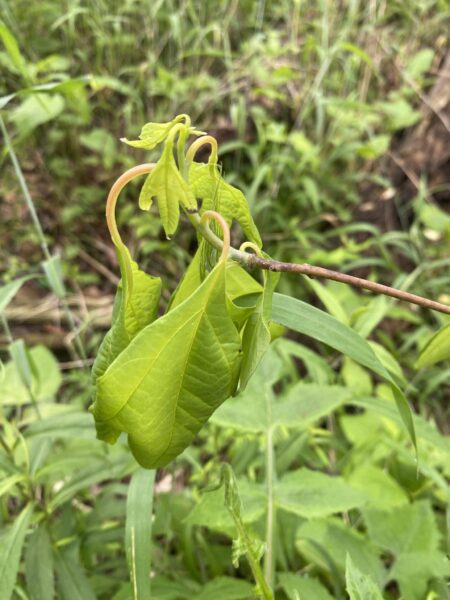
Figure 1. Confirmed damage from triclopyr on sassafras shows the growth regulator-type injury on leaves. Photo courtesy of the Office of the Indiana State Chemist.
Several of these problems have come through the Purdue Plant and Pest Diagnostic Laboratory from landscapers, nurseries, and property managers.
General Information about Triclopyr
Triclopyr is a selective systemic herbicide belonging to the pyridine class. It is primarily used to manage woody plants, vines, and some broadleaf weeds. Unlike glyphosate, a broad-spectrum herbicide, triclopyr specifically targets the growth hormones in dicotyledonous plants, making it effective in controlling species that are difficult to manage with other herbicides. It works by mimicking plant hormones, disrupting normal growth processes, and leading to the death of the treated plant (Fig. 1).
What Triclopyr Controls
Triclopyr is utilized in various settings to control unwanted vegetation. It is effective against species such as:
- Woody Plants: Includes trees like tree of heaven and callery pear and shrubs like autumn olive and honeysuckle (Fig. 2).
- Vines: Particularly those that can outcompete native flora, such as kudzu or English ivy (Fig. 3).
- Broadleaf Weeds: Some herbaceous plants that pose ecological or agricultural problems.

Figure 2. Invasive plants, such as, Pyrus calleryana (callery pear) can be controlled by triclopyr.

Figure 3. Invasive vines, such as Hedera helix (English ivy) can be controlled via multiple applications of triclopyr.
Where and When Triclopyr is Used
Triclopyr is applied in a range of environments, including:
- Forestry: To clear invasive species and manage forest regeneration.
- Agriculture: To control weeds and shrubs that interfere with crop production.
- Aquatic Areas: Formulations that are safe for aquatic environments help manage invasive species near water bodies.
- Rights-of-Way: To maintain clear paths and prevent the spread of invasive plants.
Timing of application is crucial. Triclopyr is most effective when applied during the growing season when plants are actively taking up nutrients and can transport the herbicide throughout their system.

Figure 4. Hack and squirt treatments with triclopyr is a common method to control invasive trees. Photo by Lenny Farlee.
Movement in the Plant
Triclopyr is absorbed through foliage and roots and is translocated systematically within the plant. Once inside, it moves upward through the xylem and downward through the phloem (ambimobile). This systemic movement allows triclopyr to affect not just the treated areas but also parts of the plant that are not directly sprayed. This attribute makes it effective for managing large, established plants, specifically through hack and squirt treatments (Fig. 4).
For the full article and conclusion sharing how Triclopyr is a valuable tool for managing invasive and woody plants view: The Summer of Triclopyr: Mounting evidence for off-target damage.
Subscribe and receive the newsletter: Purdue Landscape Report Newsletter.
Resources:
Find an Arborist video, Trees are Good-International Society of Arboriculture (ISA)
ID That Tree, Playlist, Purdue Extension – FNR YouTube Channel
Invasive Species Playlist, Playlist, Purdue Extension – FNR YouTube Channel
A Woodland Management Moment, Playlist, Purdue Extension – FNR YouTube Channel (Against Invasives, Garlic Mustard, Autumn Olive)
Woodland Stewardship for Landowners, Playlist, Purdue Extension – FNR YouTube Channel (Common Buckthorn, Japanese Barberry)
Report Invasive Species, Purdue Invasive Species
The GLEDN Phone App – Great Lakes Early Detection Network
Invasive Plants of the Eastern U.S.: An Introduction to the Problematic Non-Native Species, The Education Store, Purdue Extension’s resource center
EDDMaps – Early Detection and Distribution Mapping System
Episode 11 – Exploring the challenges of Invasive Species, Habitat University-Natural Resource University
What Are Invasive Species and Why Should I Care?, Purdue Extension-FNR Got Nature? Blog
Emerald Ash Borer Information Network, Purdue University and Partners
Aquatic Invasive Species, Illinois-Indiana Sea Grant (IISG)
Invasive plants: impact on environment and people, The Education Store, Purdue Extension’s resource center
Subscribe Purdue Extension-Forestry and Natural Resources YouTube Channel
Kyle Daniel, Commercial Landscape and Nursery Crops Extension Specialist
Purdue Horticulture & Landscape Architecture
 Purdue Landscape Report: Most people these days have, at the very least, heard of Callery and Bradford pear trees and know something about the invasiveness of this ornamental street tree. But I still get questions about what it is and why it’s so bad. So, I’d like to offer a little history of this infamous tree. Where did it come from, why is it so popular, why is it such an awful tree to plant, and some suggestions for better species to plant in its place.
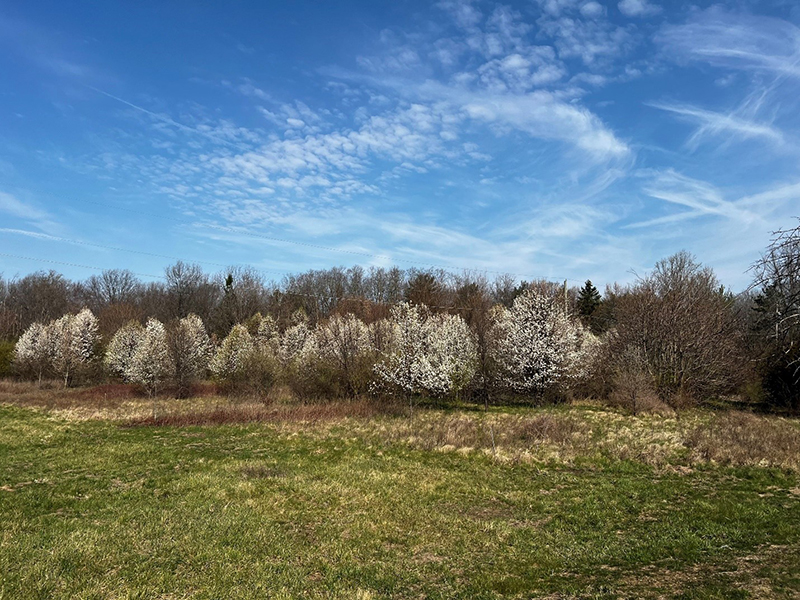
Pyrus calleryana, the Callery pear (Fig. 1), was originally introduced from Asia to the United States in 1908. This was done in an attempt to breed pear trees that were resistant to fire blight, a bacterial disease that can spread rapidly causing leaves and branches to blacken as if burnt by fire, eventually resulting in death. Along with its resistance, the Callery pear was tested as a rootstock for the edible European pear (Pyrus communis) and its vigor in growth.
Callery Pear grows to a height of 30 to 50 feet with a spread up to 30 feet wide. Thick leaves grow alternately, are dark green, grow with sharp spurs along branches, and turn reddish-purple in the fall. They are one of the first trees to bloom and begin to grow in the spring and one of the last to drop their leaves in the fall. They produce a beautiful show of white flowers in the spring that have an unfortunate odor and an abundance of small fruits in the fall that are spread by birds and other wildlife. In fact, invasive European Starlings are one of the primary species that feed on and spread the fruits and seeds. Stems are smooth with light-colored lenticels while more mature stems are light to medium grey with fissures along the bark. Branching is usually upright in structure leading to poor branch unions that are weak and prone to failure. They grow quickly and tolerate a wide variety of planting locations and conditions, which led to the widespread use as both street and ornamental trees in urban plantings.
The Bradford pear tree is a variety of Callery pear cultivated in the early 1950s as a sterile tree without sharp spurs. Unfortunately, it cross-pollinated with other varieties leading to the rapid spread and out-competing of native species that we see in fields, along roadsides, and in forests today (Figs. 2 & 3). As awareness of the environmental issues of Callery pear spreads, local and state governments are working on removing them from the landscape. It is often joked that pruning these trees is extremely simple, involving a single cut at the base of the tree.
Due to the extensive use of these trees over the past 7 decades though, removals can lead to a large loss of existing canopy, especially with mature trees. This loss is worth negating the ecological damage they cause and with patience can be replaced with more appropriate species. Suggestions include serviceberry (Amelanchier laevis), flowering dogwood (Cornus florida), redbud (Cercis canadensis), and crabapple (Malus sylvestris).
For more information on invasive pear trees or on how to remove them see the links below.
To view this full article and other Purdue Landscape Report articles, please visit: Invasive Bradford/Callery Pear: Why it is so detrimental and what to plant instead.
Subscribe and receive the newsletter: Purdue Landscape Report.
Resources:
ID That Tree: Invasive Callery Pear, Purdue Extension – Forestry and Natural Resources (FNR) YouTube Channel
The Rise and Fall of the Ornamental Callery Pear Tree, Arboretum of Harvard University
Find an Arborist video, Trees are Good-International Society of Arboriculture (ISA)
ID That Tree, Playlist, Purdue Extension – FNR YouTube Channel (Invasive White Mulberry, Siberian Elm, Tree of Heaven)
Invasive Species Playlist, Playlist, Purdue Extension – FNR YouTube Channel (Asian Bush Honeysuckle, Burning Bush, Callery Pear, Multiflora rose)
A Woodland Management Moment, Playlist, Purdue Extension – FNR YouTube Channel (Against Invasives, Garlic Mustard, Autumn Olive)
Woodland Stewardship for Landowners, Playlist, Purdue Extension – FNR YouTube Channel (Common Buckthorn, Japanese Barberry)
Report Invasive Species, Purdue Invasive Species
The GLEDN Phone App – Great Lakes Early Detection Network
EDDMaps – Early Detection and Distribution Mapping System (Report Invasives)
How long do seeds of the invasive tree, Ailanthus altissima remain viable? (Invasive Tree of Heaven), USDA Forest Service
Indiana Department of Natural Resources: Invasive Species
Indiana Invasive Species Council
Cooperative Invasive Species Management Area (CISMA)
Aquatic Invasive Species, Illinois-Indiana Sea Grant (IISG)
Episode 11 – Exploring the challenges of Invasive Species, Habitat University-Natural Resource University
What are invasive species and why should I care?, Got Nature? Blog, Purdue Extension – FNR
Trees and Storms – The Education Store, Purdue Education’s resource center
Planting Your Tree, video, The Education Store
Tree Installation, The Education Store
Subscribe – Purdue Extension-FNR YouTube Channel
Ben McCallister, Urban Forestry Specialist
Purdue Forestry & Natural Resources
 Governor Eric Holcomb has proclaimed February 25th to March 2nd as 2024 Invasive Species Awareness Week in Indiana.
This serves as an important reminder for Hoosiers to be aware and report potentially devastating invasives.
This proclamation states “invasive aquatic, riparian and terrestrial species influence the productivity, value and management of land and water resources in Indiana and the cost to prevent, monitor and control invasive species costs Indiana millions annually and after habitat destruction, invasive species are a great threat to biodiversity and threaten the survival of native plants and animals and interfere with ecosystem functions by changing processes like fire, nutrient flow and flooding”.
It continues with “invasive species impede industry, threaten agriculture, endanger human health and are becoming increasingly harder to control as a result of rapid global commercialization and human travel; and invasive species are as significant threat to almost half of the native species currently listed as federally endangered.”
As Invasive Species Awareness Week starts Sunday, February 25th, the Indiana Department of Natural Resources (IN DNR), Purdue Extension-Forestry and Natural Resources and the Indiana Invasive Species Council will answer any questions you may have.
For Questions:
Ask an Expert, Purdue Extension-Forestry and Natural Resources
Invasive Species – Indiana Department of Natural Resources (IDNR)
Indiana Invasive Species Council – Includes: IDNR, Purdue Department of Entomology and Professional Partners
Cooperative Invasive Species Management Area (CISMA)
Report and Learn More About Invasive Species –
Great Lakes Early Detection Network App (GLEDN) – The Center for Invasive Species & Ecosystem Health
EDDMaps – Early Detection and Distribution Mapping System
Purdue University Report Invasive Species, College of Agriculture
Check Out Our Invasive Species Videos –
Subscribe: Purdue Extension-Forestry and Natural Resources (FNR) YouTube Channel
Invasive Species YouTube Video Playlist includes:
- Asian Bush Honeysuckle
- Burning Bush
- Callery Pear
- Multiflora Rose
- Invasive Plants Threaten Our Forests Part 1: Invasive Plant Species Identification
- Invasive Plants Threaten Our Forests Part 2: Control and Management
More Purdue Extension-FNR YouTube Video Series –
Woodland Management Moment:
Woodland Stewardship for Landowners:
ID That Tree:
More Resources –
FNR Extension Publications, The Education Store:
- Invasive Plant Species: Tree of Heaven
- Invasive Plant Species: Oriental Bittersweet
- Invasive Plant Species: Wintercreeper
- Japanese Chaff Flower
- Kudzu in Indiana
- Mile-a-minute Vine
Purdue Landscape Report:
FNR Extension Got Nature? Blog:
Don’t Miss These Resources:
Episode 11 – Exploring the challenges of Invasive Species, Habitat University-Natural Resource University
What Are Invasive Species and Why Should I Care?, Purdue Extension-FNR Got Nature? Blog
Emerald Ash Borer Information Network, Purdue University and Partners
Aquatic Invasive Species, Illinois-Indiana Sea Grant (IISG)
Invasive plants: impact on environment and people, The Education Store, Purdue Extension’s resource center
Purdue Extension-Forestry and Natural Resources
In this edition of ID That Tree, we’re going to introduce you to two species found in Indiana. One of them is a native called blackhaw, and the other an invasive called burning bush. Blackhaw has opposite simple leaves, very finely toothed margins, and elongated buds that have a grey haze to them. It also has a striking fall color. Burning bush on the other hand is an invasive spread by seeding itself through birds and other wildlife. It also has opposite leaf arrangement but much smaller leaves that are a bit more elongated.
If you have any questions regarding wildlife, trees, forest management, wood products, natural resource planning or other natural resource topics, feel free to contact us by using our Ask an Expert web page.
Resources:
ID That Tree, Playlist, Purdue Extension – Forestry and Natural Resources (FNR) YouTube Channel (Invasive White Mulberry, Siberian Elm, Tree of Heaven)
Invasive Species Playlist, Playlist, Purdue Extension – FNR YouTube Channel (Asian Bush Honeysuckle, Burning Bush, Callery Pear, Multiflora rose)
A Woodland Management Moment, Playlist, Purdue Extension – FNR YouTube Channel (Against Invasives, Garlic Mustard, Autumn Olive)
Woodland Stewardship for Landowners, Playlist, Purdue Extension – FNR YouTube Channel (Common Buckthorn, Japanese Barberry)
Invasive Plant Series: Winged Burning Bush, Got Nature? Blog, Purdue Extension – FNR
Invasive Plant Series: Winged Burning Bush, The Education Store
How long do seeds of the invasive tree, Ailanthus altissima remain viable? (Invasive Tree of Heaven), USDA Forest Service
Indiana Department of Natural Resources: Invasive Species
Indiana Invasive Species Council
Cooperative Invasive Species Management Area (CISMA)
Report Invasive, Purdue Extension
Aquatic Invasive Species, Illinois-Indiana Sea Grant (IISG)
Episode 11 – Exploring the challenges of Invasive Species, Habitat University-Natural Resource University
What are invasive species and why should I care?, Got Nature? Blog, Purdue Extension – FNR
Shrubs and Woody Vines of Indiana and the Midwest, The Education Store, Purdue Extension Resource Center
Native Trees of the Midwest, The Education Store
Investing in Indiana Woodlands, The Education Store
Professional Forester, Indiana Forestry Woodland Owners Association
District Forester 10+acres of woodlands, Indiana Department of Natural Resources
Forest Improvement Handbook, The Education Store
Lenny Farlee, Extension Forester
Hardwood Tree Improvement and Regeneration Center
Purdue Department of Forestry & Natural Resources
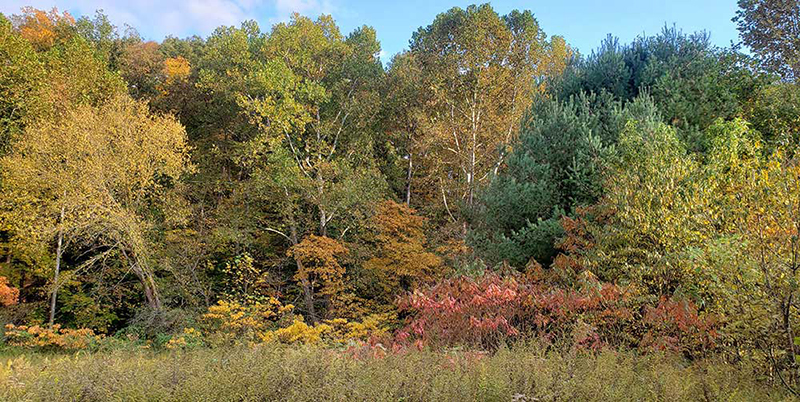 The Indiana Natural Resources Conservation Service (NRCS) is offering an opportunity for landowners to apply for cost assistance with conservation practices like tree planting, forest stand improvement, invasive species control, wildlife habitat improvement and many others.
U.S. Department of Agriculture, Natural Resources Conservation Service News Release, Indianapolis, IN, October 11, 2023 – Farm Bill program application dates have been set for Indiana’s agricultural producers who want to improve natural resources and address concerns on their land. Curtis Knueven, USDA-Natural Resources Conservation Service (NRCS) Acting State Conservationist, announced that December 8 will be the application deadline for the Environmental Quality Incentives Program (EQIP) and Conservation Stewardship Program (CSP) in Indiana. This year’s funding levels are a historic high for Indiana NRCS, bringing $42 million in EQIP and $22 million in CSP for Indiana landowners.
EQIP is a voluntary conservation program available for agricultural producers. Through EQIP, NRCS provides financial and technical assistance to install conservation practices that reduce soil erosion and sedimentation, improve soil health, improve water and air quality and create wildlife habitat. Also included in this sign up are several state and national initiatives. A full list of initiatives can be found by visiting www.nrcs.usda.gov/programs-initiatives/eqip-environmental-quality-incentives/indiana/environmental-quality-incentives.
“EQIP helps agricultural producers in a manner that promotes agricultural production and environmental quality as compatible goals,” said Knueven. “Farmers can receive assistance to implement structural and management conservation practices that optimize environmental benefits on their working agricultural land while helping to increase their yields.”
CSP is an important Farm Bill conservation program that helps producers who are already practicing good stewardship to take their natural resource management to the next level. The program helps to improve both their agricultural production and provide valuable conservation benefits such as cleaner and more abundant water, as well as healthier soils and better wildlife habitat.
“Whether you are looking to improve grazing conditions, increase crop resiliency, or develop wildlife habitat, we can custom design a CSP plan to help you meet those goals,” Knueven said. “We can help you identify natural resource problems in your operation and provide technical and financial assistance to solve those problems or attain higher stewardship levels in an environmentally beneficial and cost-effective manner.”
While applications are accepted year-round, interested producers should work with their local NRCS staff and apply by December 8 to be considered for the current funding period. Applications received after December 8 will automatically be considered during the next funding cycle.
For more information about Farm Bill programs and other technical and financial assistance available through Indiana NRCS conservation programs, visit www.nrcs.usda.gov/indiana or contact your district conservationist www.farmers.gov/working-with-us/service-center-locator.
Resources:
Woodland Stewardship for Landowners: EQUP, video, Purdue Extension-Forestry and Natural Resources (FNR) YouTube Channel
Woodland Stewardship for Landowners: Single Tree and Patch-Cut Harvesting, Purdue Extension – FNR Video
Woodland Stewardship for Landowners YouTube Playlist, Purdue Extension – FNR
Woodland Management Moment: Invasive Species Control Process, Purdue Extension – FNR Video
Woodland Management Moment YouTube Playlist, Purdue Extension – FNR
Invasive Species YouTube Playlist, Purdue Extension – FNR
What are invasive species and why should I care?, Got Nature? Blog, Purdue Extension – Forestry and Natural Resources
Report Invasive Species, Purdue Invasive Species
The GLEDN Phone App – Great Lakes Early Detection Network
EDDMaps – Early Detection and Distribution Mapping System
Hardwood Ecosystem Experiment: Uneven-aged Management, Purdue Extension – FNR Video
Hardwood Ecosystem Experiment: Even-aged Management, Purdue Extension – FNR Video
Finding help from a professional forester, Indiana Forestry & Woodland Owners Association
Forest Improvement Handbook, The Education Store, Purdue Extension resource center
Natural Resources Conservation Service
U.S. Department of Agriculture
Lenny Farlee, Extension Forester
Hardwood Tree Improvement & Regeneration Center (HTIRC)
Purdue University Department of Forestry and Natural Resources
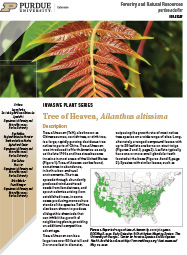 Tree-of-heaven (ToH), also known as Chinese sumac, varnish tree, or stink tree, is a large, rapidly growing deciduous tree native to parts of China. Tree-of-heaven was introduced to North America as early as the late 1700s and has since become invasive in most areas of the United States. Tree-of-heaven can be found, sometimes in abundance, in both urban and rural environments. The tree spreads through abundantly produced wind-scattered seeds from female trees, and sprout colonies arising from established trees, in some cases producing monoculture stands of the species. ToH has also been shown to produce allelopathic chemicals that can inhibit the growth of neighboring plants, providing an additional competitive advantage.
Tree-of-heaven is a serious threat as an invasive species in many habitats or untended areas. It can reach 80 feet or more, its growth rate outpaces most native tree species, and wind scatters seeds that female trees produce in abundance. Controlling ToH is a challenge. In this publication, Purdue University extension specialists and property managers explain herbicide options, application techniques and strategies to control and manage ToH.
To receive the free download visit the Purdue Extension’s resource center: The Education Store – Invasive Plant Series – Tree of Heaven, Ailanthus altissima.
View Forestry and Natural Resources (FNR) YouTube Video: ID That Tree: Invasive Tree of Heaven.
Resources:
Invasive Species, Playlist, Purdue Extension – FNR YouTube Channel
Report Invasive Species, Purdue Invasive Species
What are invasive species and why should I care?, Got Nature? Blog, Purdue Extension – Forestry and Natural Resources
Invasive plants: Impact on Environment and People, The Education Store, Purdue Extension’s resource center
A Woodland Management Moment, Playlist, Purdue Extension – Forestry and Natural Resources (FNR) Youtube Channel
Conservation Tree Planting: Steps to Success, Purdue Extension – FNR Youtube Channel
Forest Improvement Handbook, The Education Store
Tree Risk Management – The Education Store, Purdue Extension’s resource center
Investing in Indiana Woodlands, The Education Store
Woodland Invaders, Got Nature? Blog, Purdue Extension – FNR
Indiana Department of Natural Resources: Invasive Species
Invasive Plant Species Identification, Video, Purdue Extension – FNR Youtube Channel
Mile-a-minute Vine, The Education Store
Lenny Farlee, Extension Forester
Hardwood Tree Improvement & Regeneration Center (HTIRC) & Purdue University Department of Forestry and Natural Resources
Ron Rathfon, Regional Extension Forester, Southern Indiana Purdue Agriculture Center (SIPAC)
Purdue Forestry and Natural Resources
Purdue Landscape Report: Despite the sublime name, tree-of-heaven, Ailanthus altissima, is a particularly bad actor when it comes to trees encountered in the Midwest. This native of Asia was introduced to North America more than 150 years ago and has since become a widespread invasive pest. Rapid growth, extremely high seed production (hundreds of thousands from a mature female tree), and root sprouting that can turn one tree into dozens makes this a formidable competitor with our native plants. Tree-of-Heaven can sprout and grow almost anywhere, including cracks in streets and sidewalks or building foundations, resulting in infrastructure damage and increased costs of maintenance. It is also the preferred host for a new and destructive invasive insect pest, the spotted lantern fly.
Reducing tree-of-heaven numbers on the landscape is a worthy goal, but can be a difficult task. Seed is windblown and can disperse for hundreds of yards or further, producing new populations. Tree-of-heaven will produce dozens of root sprouts if the stem is cut or girdled, even when herbicides are applied to the cuts. Both seedlings and root sprouts can grow rapidly, outpacing the native trees. However, there are effective control methods and even a potential biological control agent, a native wilt fungus, on the horizon. If you have tree-of-heaven or know of those who do, here are some methods to control this invasive tree.
Young seedlings and sprouts may be controlled with foliar applications of herbicides containing glyphosate during the summer growing season. Apply the herbicide and water mixture according to label directions, covering the entire leaf area. Pulling seedlings is an option, but any root fragments left in the soil may produce new sprouts.
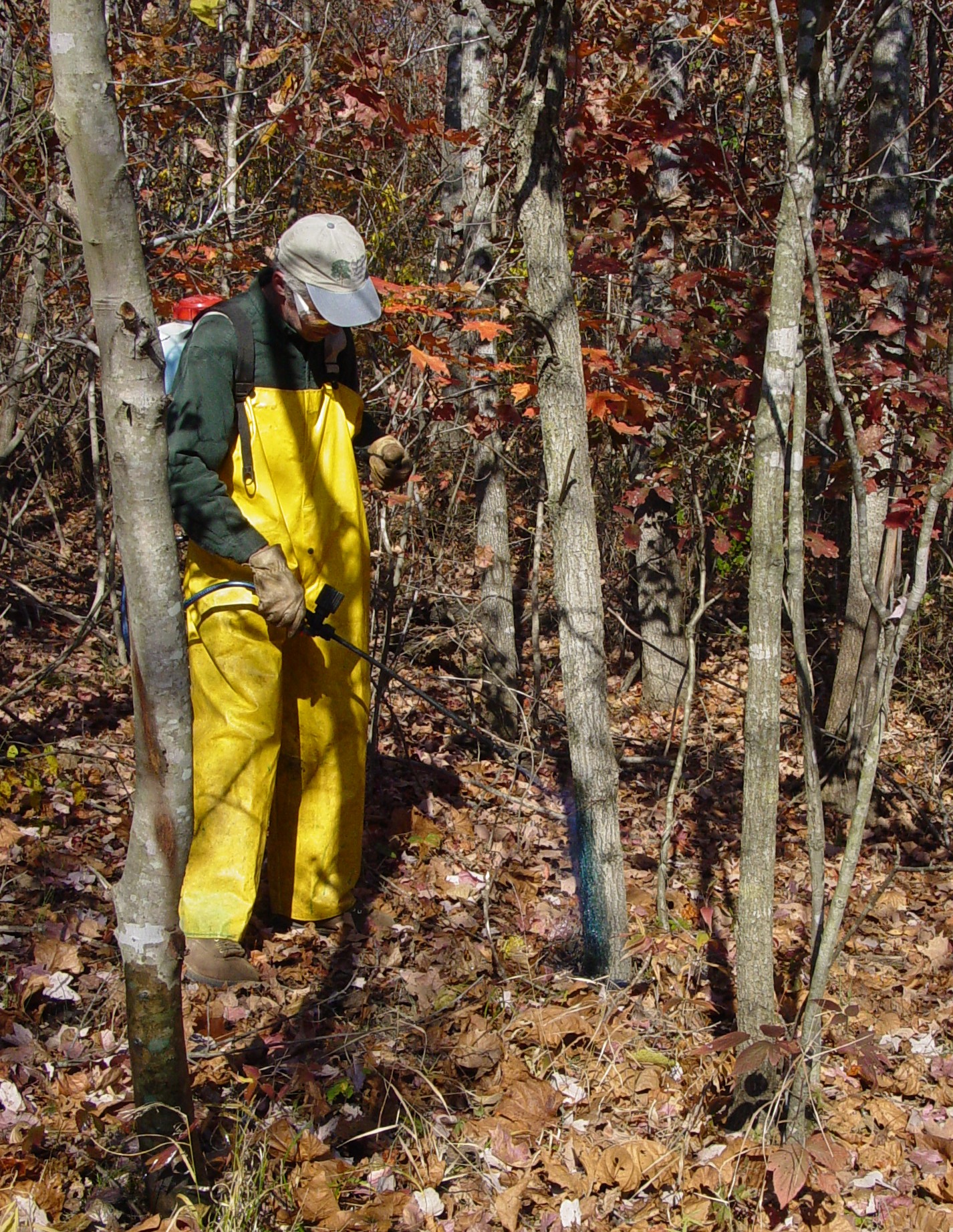
Larger tree-of-heaven too tall for foliar spray may be controlled with a couple of other techniques. The basal bark technique applies an herbicide and oil mixture to the lower 15-18 inches of the stem of the tree. The oil carries the herbicide into the tree stem and kills the tree while also limiting the amount of root sprouting. This method is recommended for stems up to 6 inches in diameter, but larger stems have been controlled effectively with this approach. The best seasons for application are summer to winter, but avoid days where temperature is over 85 degrees F as the herbicide and oil mix can volatilize and damage non-target plants. Also discontinue applications if stems are wet or when snow cover is present. Recommended herbicides are the triclopyr ester herbicides and a commercially available basal oil mixed in a ratio of 20% herbicide and 80% oil.
Trees three or more inches in diameter may also be controlled using the “hack and squirt” method, also referred to as the injection method in some cases. A narrow cutting tool like a shingle hatchet is used to make 45 degree angled cuts through the bark of the tree around the circumference, with equal-sized uncut spaces between the cuts. Herbicides like glyphosate or triclopyr amine formulations are applied as directed on the label into the pockets created by the cuts. This treatment results in very few root sprouts as compared to cutting down or girdling the tree. The number of cuts should approximately equal the diameter of the tree in inches, and be sure to leave the uncut spaces between the cuts.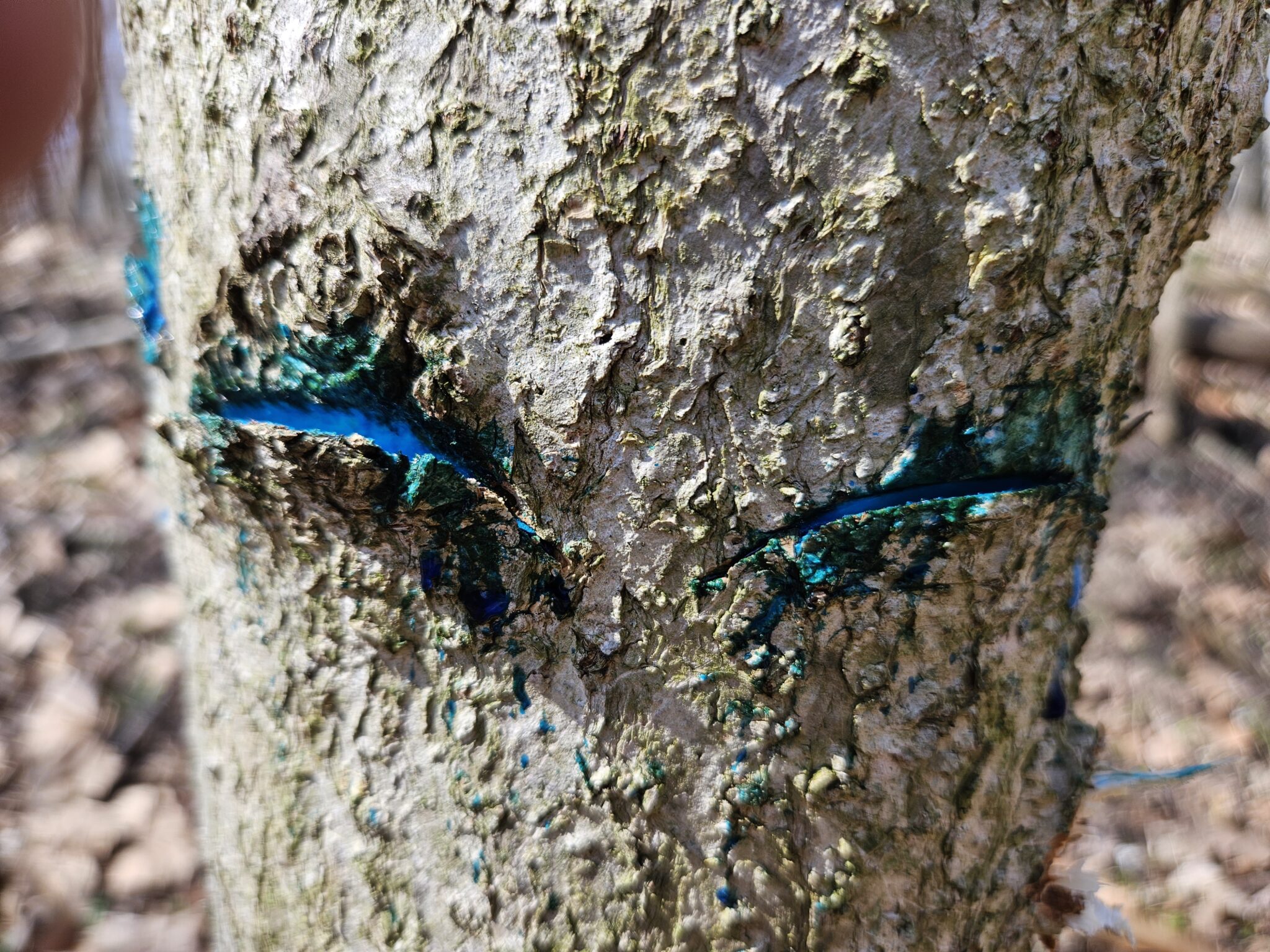
If the tree stems need to come down for safety or other reasons, apply the basal bark or hack and squirt treatments and wait approximately 30 days before cutting down the stem. This should allow time for the herbicide to impact the root system and limit the amount of root sprouting.
Work safely for yourself and the environment by reading and following the herbicide label, wearing the required personal protective gear, and working carefully with cutting tools.
To view this full article and other Purdue Landscape Report articles, please visit Purdue Landscape Report.
Subscribe and receive the newsletter: Purdue Landscape Report Newsletter.
Resources:
ID That Tree: Invasive Tree of Heaven, Purdue Extension – Forestry and Natural Resource (FNR) YouTube Channel
Control & Management — State of Indiana Cooperative Invasives Management (sicim.info)
Invasive Plant Control Database (wisc.edu)
Invasive Species, Playlist, Purdue Extension – FNR YouTube Channel
Report Invasive Species, Purdue Invasive Species
A Woodland Management Moment, Playlist, Purdue Extension – FNR Youtube Channel
Conservation Tree Planting: Steps to Success, Purdue Extension – FNR Youtube Channel
Forest Improvement Handbook, The Education Store
Tree Risk Management – The Education Store, Purdue Extension’s resource center
Investing in Indiana Woodlands, The Education Store
Woodland Invaders, Got Nature? Blog, Purdue Extension – FNR
Indiana Department of Natural Resources: Invasive Species
Invasive Plant Species Identification, Video, Purdue Extension – FNR Youtube Channel
Lenny Farlee, Sustaining Hardwood Extension Specialist
Purdue University Department of Forestry and Natural Resources
Question: I have 2,700 young white oak and hickory trees that were planted in 2017 that now have black locust creeping in. Should I try to remove them by cutting them down and treating the stumps? What is the best treatment to control the brush?
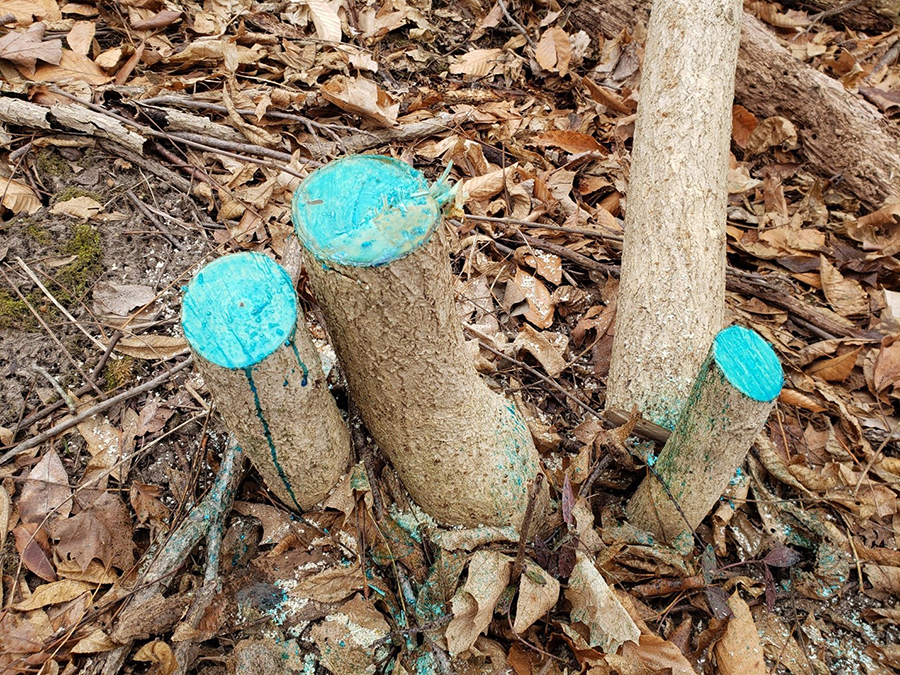
Cut stumps treated with herbicide including a dye to show application. Photo by Lenny Farlee.
Answer: Whether eliminating black locust competing with oaks in a tree planting, or controlling invasive woody shrubs like autumn-olive or Asian bush honeysuckles, cutting the stems near ground-line and treating the stumps with an appropriate herbicide provides a one-two punch to the target plant. Severing the stems from the roots cuts off the flow of photosynthesis-produced food to the roots, and may prevent production and ripening of seed, if done early enough in the growing season. The stump left behind provides a small target area for herbicide application, limiting the damage to nearby native plants that can result from foliar herbicide overspray and drift. The herbicide application should kill the roots and limit re-sprouting. While it requires two sequential operations, cutting and spraying, it may be one of the most efficient methods to control many smaller-diameter woody plants due to the high rate of control achieved when done correctly and limited damage to surrounding desirable vegetation.
So how do you do the “cut-stump” treatment correctly? Several factors need to be considered, but some common elements to effective and efficient treatments include a cutting tool you can operate safely, effective herbicide type and application, and correct timing for the site and situation. Tools can be powered by fuel or electric motors or by your muscles. Be sure you know how to operate them safely and wear appropriate safety gear. I prefer brush saws for near-ground cutting as it limits bending over and is safer to operate than a chainsaw, but they will struggle with some larger diameter or denser stems a chainsaw could cut easily. Handsaws, loppers, pruners, or blade-tools like machetes and brush-hooks are hand-tool options, but larger stems will require more time and effort to cut or will be too large for some hand-tools to handle. Herbicides should be applied immediately after you have cut off the stems. A good choice for many applications is herbicide containing the active ingredient Glyphosate. Glyphosate concentrate herbicides containing 42% or more active ingredient are widely available at many garden and farm stores. Read the label before using the herbicide to confirm the active ingredients, concentration, and requirements for safe and effective applications, including the appropriate safety gear during dispensing and application. Apply the concentrate straight or mixed with up to 50% water to the cut surface immediately after the cut is made. For stems over 3 to 4 inches in diameter, you can apply a band of spray around the perimeter of the stump so the bark, cambium and some sapwood is treated. If you wait to apply the spray to cut surfaces a dozen minutes to hours after the cut is made, two things will happen that can impact the effectiveness of the spray. The surface of the stump will seal as it dries, preventing the entry of the water/herbicide mixture into the plant. You may also have difficulty tracking down the cut stumps if the area is weedy and brushy.
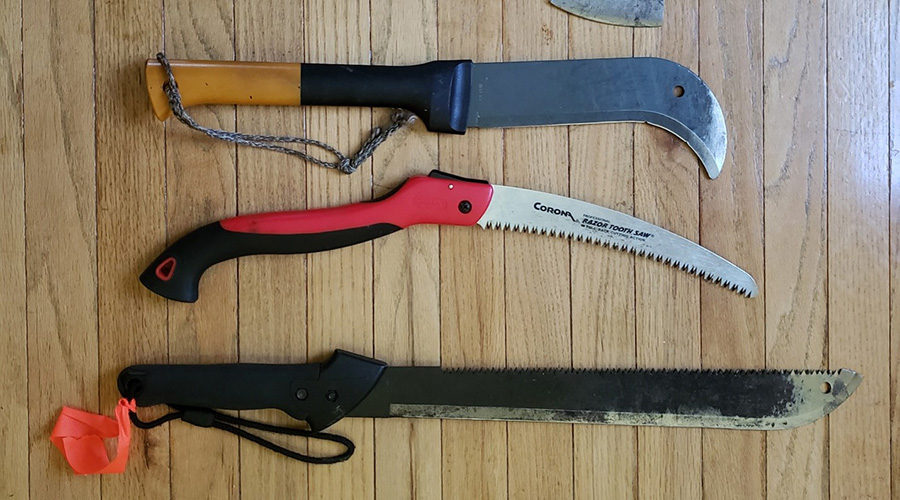
Hand-cutting tools suited for small diameter woody plants. Photo by Lenny Farlee.
Some cautions about timing and locations of this application method. Many plants are pumping lots of sap up from the roots in spring. That sap can flush herbicides out of the application area and result in herbicide failure and re-sprouting from the root system. If the stem is frozen, usually 25 degrees F or colder, herbicide may also not penetrate and evaporate off the frozen stump. Also avoid applications when rain could wash off the herbicide within two or three hours of application.
Several other herbicides are available for this treatment including Triclopyr and 2-4-D/Picloram herbicides. Be sure to read the labels and understand the safety requirements and application instructions before using.
For additional information see the Purdue Extension-FNR webinar Invasive Plants Threaten our Forests Part 2: Control and Management.
More resources:
District Forester, Indiana DNR Division of Forestry, for over 10 acres of woodlands
Directory of Professional Foresters, Indiana Forestry & Woodland Owners Association (IFWOA)
Indiana Woodland Steward E-newsletters, Eleven Member Organization
A Woodland Management Moment, Playlist, Purdue Extension – Forestry and Natural Resources (FNR) Youtube Channel
Conservation Tree Planting: Steps to Success, Purdue Extension – FNR Youtube Channel
Forest Improvement Handbook, The Education Store
Invasive Species, Playlist, Purdue Extension – FNR Youtube Channel
Woodland Stewardship for Landowners, Playlist, Purdue Extension – FNR Youtube Channel
Invasive Plant Species Identification, Video, Purdue Extension – FNR Youtube Channel
Report Invasive Species, Purdue Invasive Species
The GLEDN Phone App – Great Lakes Early Detection Network
EDDMaps – Early Detection and Distribution Mapping System
Indiana Department of Natural Resources: Invasive Species
Indiana Invasive Species Council
Cooperative Invasive Species Management Area (CISMA)
Invasive plants: impact on environment and people, The Education Store, Purdue Extension’s resource center
A Landowner’s Guide to Sustainable Forestry: Part 7: Managing for a Diversity of Value-Added Forest Products, The Education Store
Investing in Indiana Woodlands, The Education Store
Woodland Invaders, Got Nature? Blog, Purdue Extension – FNR
The Education Store, Purdue Extension’s resource center (place keywords in search bar, for ex: invasive, forest, timber)
Lenny Farlee, Extension Forester
Purdue University Department of Forestry and Natural Resources
Question: Once I’ve pulled or cut, and have treated the bush honeysuckle stumps, can it be left to decay, particularly if not piled directly on the ground in a woodland?
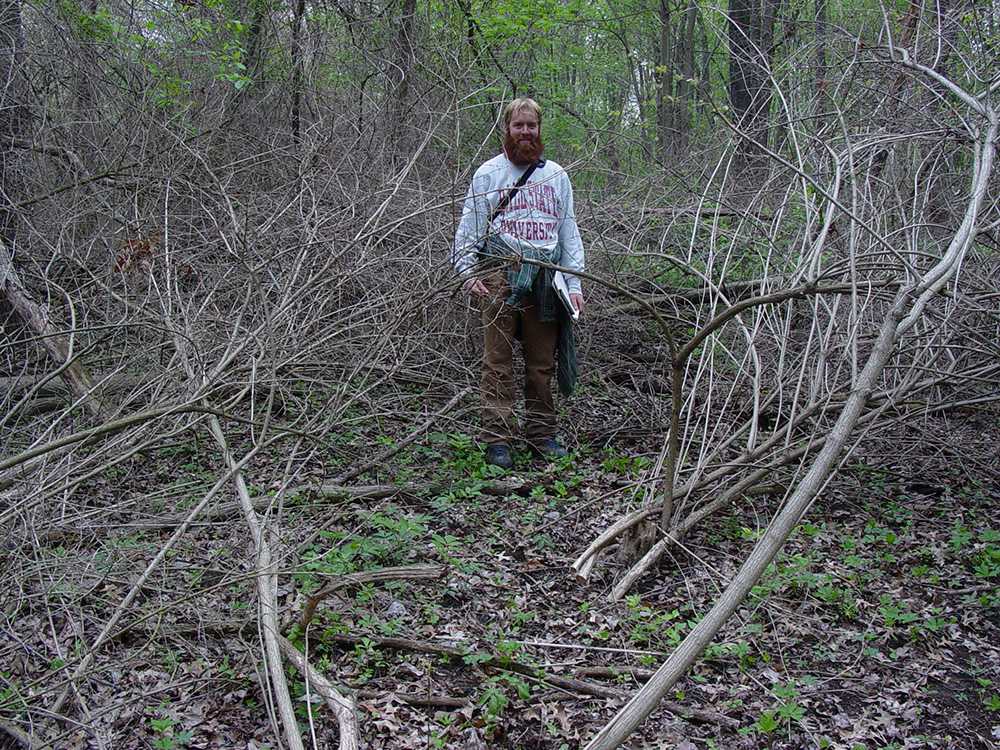
Figure 1. Invasive brush cut and left in place to decay. (click to enlarge)
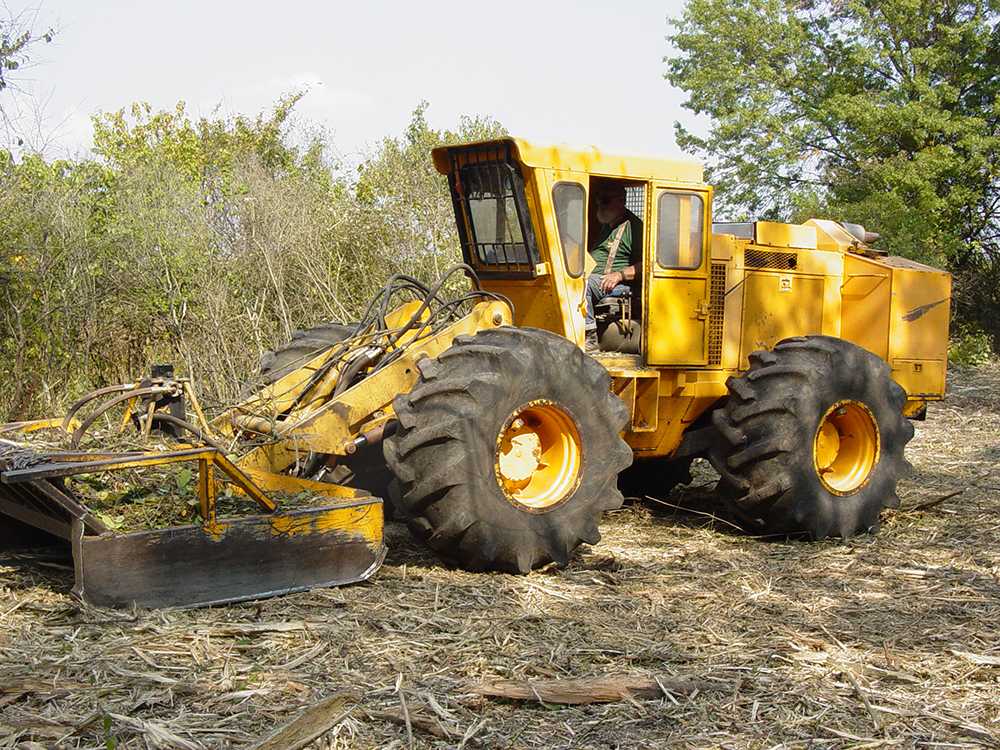
Figure 2. Kershaw Hydroax brush cutter. (click to enlarge)
When deciding what methods to use to control invasive brush on your property, one of the questions often asked is “what should I do with the cut tops?” (Fig. 1) A similar question we often get from landowners planning to have timber harvested from their woods is “what should I or the loggers do with the tree tops that are left?” The simple answer is just leave them where they are and they will decay over time and gradually disappear. If you have many acres to treat for invasive brush infestation, then this is good news. But there may be other factors to consider. In this blog post I will try to unpack those other considerations to help you decide what to do.To start let’s do a quick review of the more common methods of controlling invasive brush and the resulting ground conditions left in their aftermath. By invasive brush, I am primarily talking about non-native brush species that have invaded our native habitats, including the woods, and that are wreaking ecological havoc and degrading the productive potential of those lands for wildlife, timber, and recreation. The more common species include Asian bush honeysuckle, autumn olive, multiflora rose and callery pear (aka Bradford, Cleveland, ornamental pear).There are a variety of methods, tools, equipment, and chemicals used for invasive brush control. Other blog posts cover many of these methods, so I will not describe their use except to show what a site looks like in their wake. Large equipment like skid steer mounted mulchers or brush cutters or the industrial size Hydroax (Fig. 2) thoroughly chop up or mulch all that brush material and leave a fairly clean site (Fig. 3). In this case, there are no brush tops to dispose of. If you are wanting a very “clean” site, then hiring a dozer may be what you’re after. All those tops can then be piled and burned. The bare soil can then be planted in desired vegetation.Most forest landowners are going to use smaller scale methods and equipment, especially in the woods. Spraying herbicide on the foliage (Fig. 4) or applying it as a basal bark application to the lower stems leaves dead standing shrubs. Using brushsaws and chainsaws to cut the shrubs close to the ground and then applying a concentrated herbicide to the stump (commonly called cut-stump treatment, Fig. 5) leaves severed brush tops lying about. Even the less conventional prescribed fire will almost always leave standing dead shrub tops.
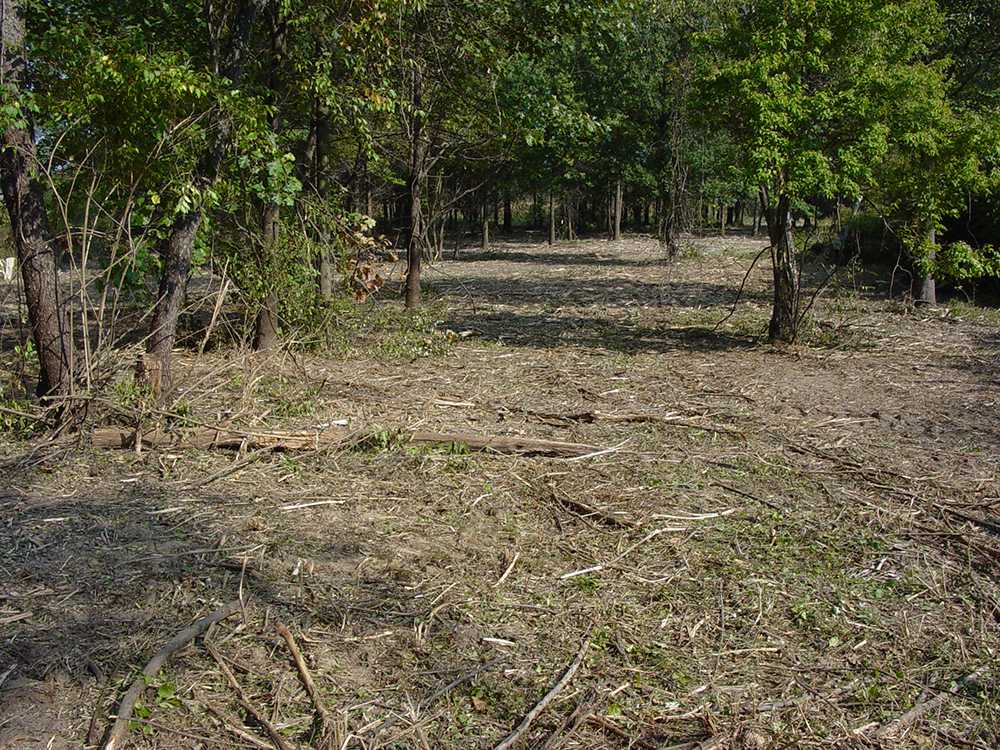
Figure 3. Once dominated by large non-native bush honeysuckle shrubs, this site was recently cleared by large brush cutting equipment. (click to enlarge)
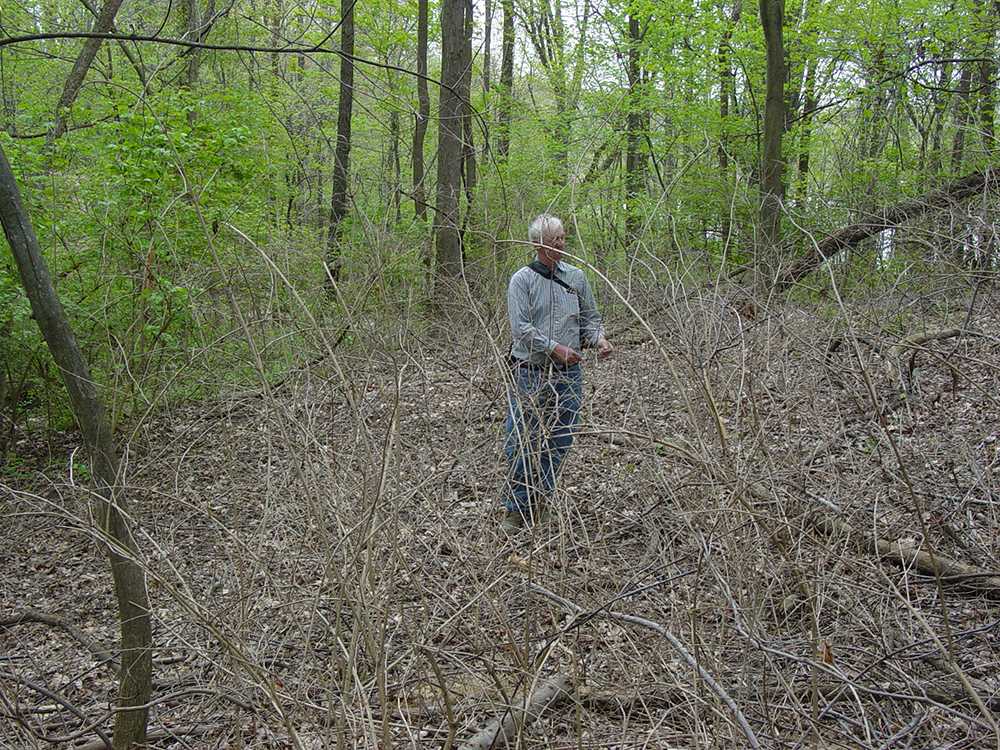
Figure 4. Dead non-native bush honeysuckle recently sprayed with herbicide. (click to enlarge)
For many people, the problem with all these dead shrubs lying about is aesthetic – it makes the property look cluttered, at best, if not downright unsightly. If aesthetics were the only concern, we might be able to talk ourselves into putting up with it for several years until the dead shrub tops begin to decay and break down and new vegetation grows up to mask them.
But are there other concerns that would justify expending time and money to dispose of the dead tops?
Access may be another consideration, especially in high use areas such as those used frequently for recreation like hunting or hiking. Depending on habitat restoration plans, you may want access to those areas to seed or plant native trees, shrubs, forbs or grasses. Especially if you are using specialized planting or seed drill equipment, the site may need to be relatively clear of obstructions and debris.
How does leaving dead invasive shrub tops impact this restoration process?
The removal of invasive species should not be the end goal in managing habitat, but only an important step in restoring a healthy native plant community. How does leaving dead invasive shrub tops impact this restoration process? Researchers in Ohio found in the short term that cutting and applying herbicide to the stumps of Amur honeysuckle (Asian bush honeysuckle) and leaving the tops in place allowed more sunlight to reach the forest floor than the basal bark treatment which left dead tops standing in place (Cipollini et al. 2009). This resulted in greater height growth for native herbaceous plant growth. However, in the presence of deer browse, the native plants suffered less deer damage in the basal bark treatment area, due to the greater protection afforded by the standing dead tops, compared to the areas where tops were cut. One might surmise that even leaving cut tops in place may provide some protection from deer browse compared to complete removal of the tops. Joshua Shields and fellow researchers at Purdue University (2014) studied the impact of clearing bush honeysuckle in a forest environment on white footed mice populations. They found that where bush honeysuckle was cut and the tops removed from the site that white footed mice numbers increased, compared with mice numbers in nearby standing live bush honeysuckle. They did not, however, test how leaving cut honeysuckle tops on site would affect mice populations.
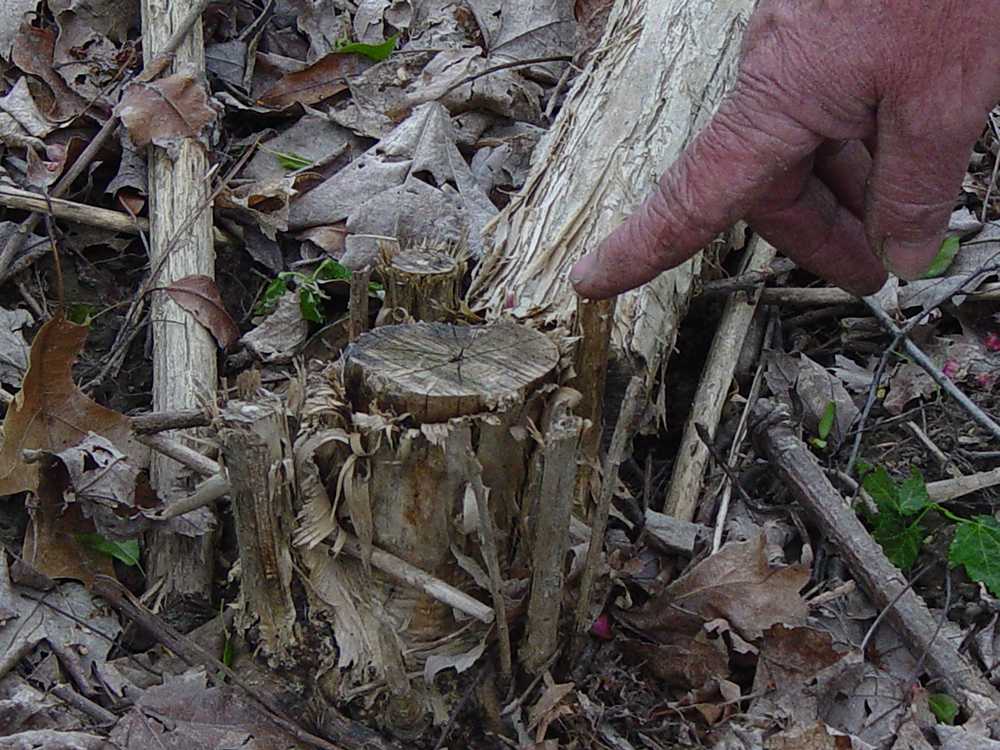
Figure 5. Cut stump of bush honeysuckle. (click to enlarge)
Many people may cringe at the thought of increasing numbers of mice, but mice in their natural environment are an important source of food for many predators, including hawks, owls, fox, mink, weasels, and bobcats. In a study comparing the cut stump method (cutting the stems and treating the stump with herbicide) and the use of a mulching head attachment on a skid steer for controlling bush honeysuckle, Purdue researchers found no difference in the growth and recovery of the native plants (Graham et al. 2018). However, the mulching head treatment resulted in a greater abundance of garlic mustard, a non-native invasive biennial herb. Invasive brush control treatments resulting in greater soil disturbance often lead to a second wave of invasive plants that need follow-up treatment.
So what can we conclude from all this?
There are benefits and drawbacks to removing invasive brush tops when managing invasive species on your property. It really depends on your management objectives. It can even vary depending on the specific location on your property. In some select areas it may be very beneficial to remove the tops while in most other areas you can just let them rot in place. The important thing is that you have a well thought out plan for managing the invasive species on your property and that you are working your plan. As you work your plan you will begin seeing the positive results as native plant communities begin to make a comeback.
Resources:
A Woodland Management Moment, Playlist, Purdue Extension – Forestry and Natural Resources (FNR) Youtube Channel
Conservation Tree Planting: Steps to Success, Purdue Extension – FNR Youtube Channel
Invasive Species, Playlist, Purdue Extension – FNR Youtube Channel
Woodland Stewardship for Landowners, Playlist, Purdue Extension – FNR Youtube Channel
Invasive Plant Species Identification, Video, Purdue Extension – FNR Youtube Channel
Report Invasive Species, Purdue Invasive Species
The GLEDN Phone App – Great Lakes Early Detection Network
EDDMaps – Early Detection and Distribution Mapping System
Indiana Department of Natural Resources: Invasive Species
Indiana Invasive Species Council
Cooperative Invasive Species Management Area (CISMA)
Invasive plants: impact on environment and people, The Education Store, Purdue Extension’s resource center
A Landowner’s Guide to Sustainable Forestry: Part 7: Managing for a Diversity of Value-Added Forest Products, The Education Store
Investing in Indiana Woodlands, The Education Store
Woodland Invaders, Got Nature? Blog, Purdue Extension – FNR
Ron Rathfon, Regional Extension Forester, Southern Indiana Purdue Agriculture Center (SIPAC)
Purdue Forestry and Natural Resources

Recent Posts
- Purdue Extension: Empowering Indiana Through Innovation, Education and Community Impact
Posted: January 28, 2026 in Community Development, How To, Invasive Insects, Invasive Plant Species, Natural Resource Planning, Woodlands - Learn How to Control Reed Canarygrass
Posted: December 8, 2025 in Forestry, Invasive Plant Species, Wildlife - Controlling Introduced Cool-Season Grasses
Posted: December 1, 2025 in Forestry, Invasive Plant Species, Wildlife - Managing Common and Cut Leaved Teasel
Posted: November 24, 2025 in Forestry, Invasive Plant Species, Wildlife - Crownvetch, Sweetclover and Birdsfoot Trefoil Control
Posted: November 17, 2025 in Forestry, Invasive Plant Species, Wildlife - Now Is The Time To Control Non-Native Bush Honeysuckle
Posted: October 30, 2025 in Forestry, How To, Invasive Plant Species, Woodlands - ID That Tree: Invasive Multiflora Rose
Posted: October 9, 2025 in Forestry, Invasive Plant Species, Urban Forestry, Wildlife - Untangling and Identifying Vines, Purdue Landscape Report
Posted: September 29, 2025 in Invasive Plant Species, Plants, Wildlife - Discover Effective Strategies for Controlling Johnsongrass
Posted: September 3, 2025 in Forestry, Invasive Plant Species, Wildlife - Publication – Woody Encroachment and Woody Invasives
Posted: August 29, 2025 in Forestry, Invasive Plant Species, Wildlife
Archives
Categories
- Alert
- Aquaculture/Fish
- Aquatic/Aquaculture Resources
- Ask the Expert
- Christmas Trees
- Community Development
- Disease
- Drought
- Forestry
- Forests and Street Trees
- Gardening
- Got Nature for Kids
- Great Lakes
- How To
- Invasive Animal Species
- Invasive Insects
- Invasive Plant Species
- Land Use
- Natural Resource Planning
- Nature of Teaching
- Plants
- Podcasts
- Ponds
- Publication
- Safety
- Spiders
- Timber Marketing
- Uncategorized
- Urban Forestry
- Webinar
- Wildlife
- Wood Products/Manufacturing
- Woodland Management Moment
- Woodlands