 Purdue University - Extension - Forestry and Natural Resources
Got Nature? Blog
 This appears to be Northern Tooth Fungus, but I would need to look at it more closely for certain identification. This fungus causes a heart rot on maples and other trees. In most cases, the tree has to be tested for the extent of the decay. Presence alone of the fruiting bodies is usually not reason for removal; however, it should be reviewed by a certified arborist for risk assessment.
Resources
Northern Tooth Fungus-Climacodon septentrionale, Department of Biology, University of Wisconsin
Indiana Certified Arborists, International Society of Arboriculture
Lindsey Purcell, Urban Forestry Specialist
Department of Forestry and Natural Resources, Purdue University
A girdling root is one that circles the base of a tree at or just below the surface. Girdling roots can also girdle other roots but without harm. The most commonly affected species are maples, lindens and ashes.
The threat of a girdling root depends on two major factors, the size of the root and the amount of circumference affected on the tree. The expansion of the root and the stem squeezes them against each other, interfering with the transport of water, nutrients, sugars and other necessary compounds. Eventually, there may be damage which reduces vigor and often leads eventually to whole stem failure.
The only sure sign is to see a root circling the main stem at or crossing other roots at or just below the soil surface. Typically, roots should grow laterally, away from the trunk. Poor root systems grow horizontally, across each other and the main stem at the root flare. Look for a crossing network of roots near the trunk or larger woody roots growing horizontally. It may be helpful to gently displace the soil at the tree base to see if a circling root lies just under the soil surface.
Common symptoms include one side of the trunk flattened, marginal and/or tip scorching on the leaves, crown discoloration or dieback. However, many of these symptoms can be caused by other factors such as root damage, flooding or wilt diseases.
Treatment should be conducted by a qualified, International Society of Arboriculture Certified Arborist who understands the proper protocol for root surgery. This is done by the use of a saw or chisel to sever the girdling root. Arborists who remove stem girdling roots as part of their regular tree care program report that roots can be removed until their total cross sectional area is 25 percent of the trunk cross sectional area at 4.5 feet from the ground. Root severance is very serious work that requires knowledge and experience but can be done successfully in the right situations and especially prior to worsening conditions.
Resources
The Education Store (Search keywords to find the resources you need)
When Tree Roots Surface, Purdue Yard & Garden News
Lindsey Purcell, Urban Forestry Specialist
Department of Forestry and Natural Resources, Purdue University
 Woodland owners seem to have a lot to worry about these days. Threats to the health of their woodlands are announced regularly as new insects or diseases are detected, drought rages or invasive plant species compete with native vegetation. Some threats, like the emerald ash borer or a large tornado, can result in nearly unstoppable destruction. However, there are some actions that woodland owners can take to make their woodlands more resistant to other damaging agents or events. One of the best preventative measures is to use forest management practices to make the trees in your woodland as healthy and vigorous as possible. Competition between trees is a natural part of forest growth and development, but excessive competition as trees become more crowded and fight for growing space can make trees more susceptible to attack by insects and diseases and damage by weather extremes like droughts. Thinning around desirable trees provides additional growing space and reduces stress on these trees. Thinning can be done by harvesting trees for firewood or other personal use products, selling trees in a timber sale, or felling or girdling trees to be left for wildlife habitat. Gradual thinning in your woodland helps maintain the vigor of the remaining trees much like thinning carrots in a garden result in larger, faster growing carrots.
Vines and invasive plants can also create problems for tree health. Some vines, like wild grape, kudzu and Asian bittersweet, can climb over the crown of the tree, covering the leaves and reducing growth and vigor, and in some cases, killing the tree. Trees with large vines in their crowns may also be more susceptible to damage during wind, snow or ice storms, due to the extra weight of the vines. Cutting vines that climb into desirable trees is a good way to protect their health. Invasive plants like Asian bush honeysuckles and tree-of-heaven can become serious competitors with native forest trees and shrubs for space, water and nutrients required for tree growth and regeneration. Heavy infestations of invasive plant species can even change the soil environment, making it more difficult for trees to regenerate. Controlling invasive plants in your woodland is an important step in encouraging long-term woodland health.
Professional foresters and arborists can help you manage the health of your woodland. You can find professional foresters through the website findindianaforester.org or from the Indiana Division of Forestry.
The Education Store, available through Purdue Extension, has many resources available to help you manage your woodlands. Just place the keyword “woodland” in the search field box.
Forest Improvement Handbook.
Resources:
Resources and Assistance Available for Planting Hardwood Seedlings, The Education Store, Purdue Extension’s resource center
Creating a Wildlife Habitat Management Plan for Landowners, The Education Store
How to Build a Plastic Mesh Deer Exclusion Fence, The Education Store
Planting Forest Trees and Shrubs in Indiana, The Education Store
Shrubs and Woody Vines of Indiana and the Midwest, The Education Store
Investing in Indiana Woodlands, The Education Store
Woodland Stewardship for Landowners Purdue Extension – Forestry & Natural Resources (FNR) Extension YouTube Playlist
ID That Tree, Purdue Extension-FNR YouTube playlist
Woodland Management Moment , Purdue Extension-FNR YouTube playlist
Lenny Farlee, Extension Forester
Hardwood Tree Improvement and Regeneration Center (HTIRC)
Forestry and Natural Resources, Purdue University
Logs need to be at least 8 inch diameter inside bark small end, at least 8 feet long and straight and sound. Good grade logs do not develop until you get into at least the 14 inch diameter range and up. To be commercial, you will need at least a semi load. The issue here is hauling as well as the need to have a loader to load the semi.
If the above is not an option, you might go to the Wood-Mizer website and search for a sawyer. You will likely find one that would saw the logs for you and maybe one that would be interested in smaller quantities of logs.
You might also check with any local sawmill operation or district forester.
Resources
Wood-Mizer (Find a local portable sawmill service)
Indiana District Foresters
Forestry and Natural Resources Extension Workshops (Hardwood Lumber workshop)
The Education Store (Search the keyword “lumber” to find a large list of resources)
Dan Cassens, professor of wood products
Department of Forestry and Natural Resources
Purdue University
Indiana Department of Natural Resources (INDNR) recently received inquiries asking what to do with an abandoned animal. The INDNR web resource titled Orphaned and Injured Animals has steps to follow as you decide if the animal is truly abandoned.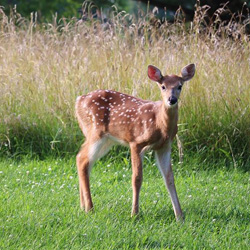
Resources
Got Nature? Orphaned Animals, author Brian MacGowan, extension wildlife specialist, Purdue University:
In most cases, the young animal is simply “spreading its wings” and exploring, or mom simply left it to get something to eat. Fawn deer are programmed to hide and remain motionless while mom is away. The fact is wildlife rarely abandons their young. They may leave briefly only to return.
Remember that you should never handle wild animals unless absolutely necessary. Any animal can bite you, and many harbor diseases and pests that can be transmitted to people.
In Indiana, wildlife rehabilitators have necessary state and federal permits to house and care for sick or injured wild animals. If you think you have found a sick or injured animal, you can find a list of licensed Wild Animal Rehabilitators in your area on the DNR Division of Fish and Wildlife’s website.
Mammals of Indiana, J.O. Whitker and R.E. Mumford
Common Indiana Mammals, R.N. Chapman and R.N. Williams, publication number FNR-413-W
Orphaned and Injured Animals, Indiana DNR
The Education Store (Search keywords to find the resources you need)
 Woodlots are dynamic, vital ecosystems in the urban and suburban landscapes of the Midwest. People own these small wooded lots in urbanized areas for a variety of reasons: timber production, firewood production, recreation, wildlife habitat, aesthetics and alternative forest products. Many owners who keep and nurture these natural areas are motivated by powerful, non-economic motives based primarily on aesthetics and environmental protection.
This new Purdue Extension publication titled Indiana’s Urban Woodlots is a great way to aid you in a management plan and build your knowledge of what trees can do for you and the environment. This 24-page booklet covers benefits of trees, laws and zoning, stewardship planning, management, planting and renewal, and more.
View The Education Store for this and other Purdue Extension publications. Just type keywords in the search field to find the resources you need.
Lindsey Purcell, Urban Forestry Specialist
Department of Forestry and Natural Resources, Purdue University
Lenny Farlee, Sustaining Hardwood Extension Specialist
Hardwood Tree Improvement and Regeneration Center (HTIRC)
Department of Forestry and Natural Resources, Purdue University
An unsatisfactory approach to tree maintenance or pruning is “topping” it. Topping is the indiscriminant removal of branches of a tree above an arbitrary height, leaving unnatural, grotesque stubs and misshapen tree forms. In addition, increased risk tree conditions are introduced with development of decay, weak branch attachments and poor health.
Large evergreen trees do not respond well to topping. The removal of the upper main stem through topping opens the tree to internal decay, disease or damaging insects; it also removes the most productive portion of the tree. The practice of topping to control tree size or growth is not justified. If the tree is too large to fit the space, it should be removed and replaced with a smaller, more suitable species for its growing space.
Be aware that unprofessional tree service crews use this approach because it takes little skill and is easiest for them to perform. Do not let yourself be persuaded that topping serves your best interest; both you and your tree will suffer from such mistreatment.
The topmost part of an evergreen whose shape is pyramidal, such as a spruce tree, has a growing point known as the apical meristem. In evergreen trees, the apical meristem contains a hormone that suppresses lateral growth, helping it to keep its excurrent or pyramidal form. The further away from the tip (apical meristem), the less affect this hormone has on the lateral growth of the tree’s branches. This is why spruce trees have that pyramidal shape and are not more rounded or decurrent. By topping evergreen trees, it will destroy the apical dominance of the plant and result in growing more round than tall with a misshaped top. It will try to re-establish apical dominance as it matures, but it will most likely look very unusual and not like these species should appear with multiple competing growing tips. Remember, this is a natural form for many evergreens to help shed the heavy loads from snowfall. Remove the apical meristem (tip), and you reduce the suppression of lateral growth. This affects the shape of the spruce tree and exposes it to potentially splitting the tree down the trunk as well as exposure to the problems associated with topping.
Resources
Trees are Good
What’s Wrong with Topping Trees?
Lindsey Purcell, Urban Forestry Specialist
Department of Forestry and Natural Resources, Purdue University
Spring brings an opportunity to spend more time outdoors but also increases our exposure to tick bites and infection from some of the diseases that ticks carry. Taking some precautions to reduce risks of exposure and infection from ticks can make your outdoor activities more safe and enjoyable. Ticks can be found in almost any location that has animals and vegetation, so completely avoiding ticks is very difficult. But there are some practices that will help you prevent ticks from biting and passing disease organisms to you.
Here are several suggestions:
- Wear light-colored clothing that makes it easier to see ticks and remove them before they get to bare skin.
- Tuck in shirt-tails, tuck pants into boots or socks or use “tick gators” that are essentially a legging that covers where your pants and socks or boots meet.
- Wearing a hat is another good precautionary measure.
- Treat bare skin with repellants containing 20 to 30% DEET. Always read and follow label directions!
- Treat clothing (not skin!) with repellants containing permethrin prior to entering areas with ticks. Once dried on the clothing, permethrin can still be effective after several washes. Follow label directions.
- Upon your return, inspect clothing for any ticks. Tumbling clothes in a hot dryer for an hour will kill ticks. Shorter times may be effective if the clothes are not wet.
- Wash up after visiting tick-infested areas and do a body check for any ticks.
If you find a tick attached, remove it by using tweezers or a tick removal tool to grasp it as near to the skin as possible and pulling straight out. DO NOT use hot match heads or needles, nail polish, gasoline or similar techniques. Ticks that are removed shortly after they attach may not have the opportunity to pass disease organisms to you, so quick detection and removal are good prevention methods.
If you experience a rash, fever, chills, aching or other unusual symptoms after a tick bite or exposure to tick-infested areas, see your physician immediately. Most tick-borne diseases can be effectively treated with early detection.
Enjoy the outdoors by taking precautions to reduce your risks.
Purdue has an informational webpage on ticks at Purdue Medical Entomology.
The Center for Disease Control and Prevention has an information site on ticks and tick diseases.
Lenny Farlee, Sustaining Hardwood Extension Specialist
Hardwood Tree Improvement and Regeneration Center (HTIRC)
Forestry and Natural Resources, Purdue University
I seem to be finding Kirtland’s snakes as I am cleaning my gardens. There seems to be an increase of grubs, beetles and worms, but I have not seen the small lizards yet. We have an abundance of chipmunks. Is there something I can do to discourage the snakes from taking up residency in my yard?
Many people have questions about snakes, and this post addresses the two most common – what is it and what can I do? The answer to the latter is, in part, related to the first, so I’ll address that one first. Indiana is home to a diversity of snake species. Identifying snakes to species can be tricky. First, geographic location often can easily differentiate among similar species or subspecies. Check the distribution map of the species in question and that of similar species. This may not resolve all issues since the distribution of similar species often overlap, distribution maps are not 100 percent accurate (i.e., they are a “best guess”) and some species and subspecies share similar characteristics where their ranges overlap. Second, scale configuration and appearance differs among some groups of species. For snakes, the texture of the body scales (keeled or smooth) or the presence/absence of a divided anal plate (the large scale that covers the cloacal opening) are key. Finally, physical characteristics including size, color and pattern can be used. For some species, conclusive identification is easier with the specimen in hand, although handling venomous species (which are rare in Indiana) is not recommended. With practice, one can become quite adept at identifying all of them.
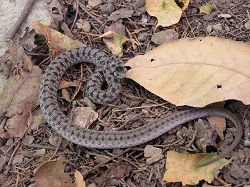
DeKay’s Brownsnake – This species is a small chestnut to dark brown snake averaging 25-30 centimeters in length. The belly is cream to pink. It has two rows of dark spots along the back that fade toward the tail. Dark bars may connect the dorsal spots, giving the impression of a ladder-like pattern. The area within this pattern is usually lighter in color than the sides, often giving the impression of a central stripe.
Kirtland’s snakes referenced in the homeowner’s question are endangered in Indiana. They are generally found near or along the margins of water bodies, but they can also be found in some urban areas on occasion. Due to these facts and since Kirtland’s snakes are generally quite secretive in behavior, this homeowner’s garden visitors are likely another species. Common garden visitors in Indiana include DeKay’s Brown snake (pictured above) or Eastern Gartersnake. Red-bellied Snakes (pictured below) have a pinkish-red belly similar to Kirtland’s snake. They are more of a woodland species, but it could be a possibility. All of these snakes can eat slugs and other garden pests.
Is there something homeowners can do to discourage snakes from taking up residency in their yards and around their homes? There really is no foolproof method to discourage snakes from utilizing a property. Reducing mulch layer thickness; removing brush piles, rock piles or other refuse; and keeping vegetation low are all steps that may help. Keep in mind that this may also reduce use of your property by wildlife you desire. There have been some repellents developed for snakes, but research results on their effectiveness have been mixed at best. In general, you should be wary of repellents that promise to keep animals out of an area. Lastly, there is plastic mesh fencing that you can purchase. Fencing can be used to exclude animals from small areas – it is generally cost-prohibitive for larger areas, and I am not aware of studies that test the effectiveness of fencing for snakes. Snake fencing is generally designed to exclude larger venomous snakes as opposed to the typical garden species that can be quite small. Snakes can also get stuck and die in mesh fences when their head fits through but the body gets stuck. The scales “catch” the mesh when the snake attempts to back out. Mesh fencing is also susceptible to damage from trimmers and falling limbs, and rabbits and rodents can chew holes in it. Thus, regular inspection and maintenance is required to maintain its function.
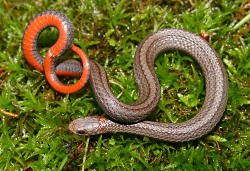
The Red-bellied Snake (18-25 cm) has both a brown and gray color phase. The two black lines along the length of its back may appear similar to the dark spots along the back of the DeKay’s Brownsnake (Storeria dekayi), but lack the crossbars. The belly has a distinctive bright pink or red coloration for which the species was named. Three light blotches may be visible behind the head on the neck.
Remember, while many folks are afraid of snakes or don’t want them around, the vast majority of species are harmless and can actually help homeowners by preying upon animals that actually are a nuisance and cause damage. Before taking any action, consider their benefits to you and how your actions affect other wildlife that call your yard home.
Resources
Snakes and Lizards of Indiana, The Education Store, Purdue Extension’s resource center
Snakes of the Central and Northeastern United States, The Education Store
Snakes of Indiana, The Education Store
Indiana Amphibian and Reptile ID Package (4 softcover books), The Education Store
Reptiles: Turtles, Snakes, and Lizards, Purdue Nature of Teaching Website
Ask An Expert, Playlist, Purdue Extension – Forestry and Natural Resources YouTube channel
A Moment in the Wild: Eastern Hognose, Purdue Extension – FNR Video
A Moment in the Wild: Eastern Kingsnake, Purdue Extension – FNR Video
A Moment in the Wild: Racer, Purdue Extension – FNR Video
Brian MacGowan, Extension Wildlife Specialist
Department of Forestry and Natural Resources, Purdue University
While the weather may tell you otherwise, spring is upon us. With the changing weather comes greening grass, breaking buds and sprouting plants. This plethora of fresh growth can help cure the winter blues, but it also provides wildlife with a desirable food source. Recently you may have noticed deer and other wildlife’s increased utilization of winter wheat fields and other green areas like lawns – early spring is the time you see deer in Indiana feed extensively on grass.
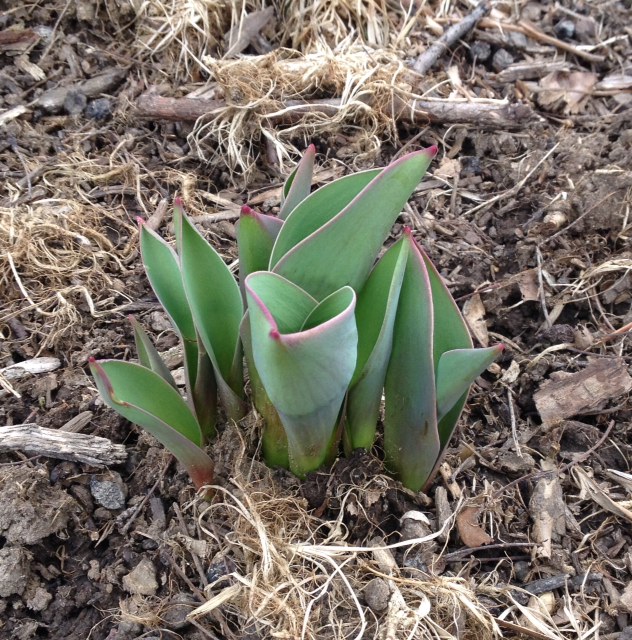 For homeowners, this is the time you need to scout around your home for emerging plants in your landscaping beds. Plants that are frequently browsed by deer such as tulips or hostas need special attention, but the limited amount of green plant material can leave any plant as a potential target. Most homeowners choose a type of taste repellent to protect plants. There are several tips on how to increase the efficacy of this approach.
- Timing: It helps to have some foresight into when damage is likely to occur and/or the plant developmental stage(s). Unfortunately, this is usually based on past experience. Ideally, you want to time applications during these periods. With tulips, for example, applying repellents early during sprouting, later during sprouting and during flower bud development will prevent damage during most years.
- Type of repellent: There are many types of taste repellents labeled for deer and other wildlife species. Most have a combination of capsaicin, putrefied egg solids and/or fatty acids of ammonium soaps. There are, of course, others with different ingredients. So which do you choose? There have been many studies that have investigated the efficacy of repellents. The bottom line – they work, but control is not 100%.
- Label: Failures can often result when not following the directions on the label. The label also provides safety information and what you can/can’t spray. Read and follow the label – it’s the law.
- Expectations: You aren’t going to solve all of your wildlife problems by spraying a few plants or even everything. If you use repellents, reapply according to label directions (every three to four weeks is usually a good rule of thumb). To increase success, you may use them as part of an integrated approach that includes exclusion, cultural practices and other approaches.
Resources
Diagnosing and Controlling Wildlife Damage
Preventing Wildlife Damage – Do You Need a Permit?
Corn and Soybean Crop Depredation by Wildlife
Wildlife Conflicts
Brian MacGowan, Extension Wildlife Specialist
Department of Forestry and Natural Resources

Recent Posts
- Purdue Extension: Empowering Indiana Through Innovation, Education and Community Impact
Posted: January 28, 2026 in Community Development, How To, Invasive Insects, Invasive Plant Species, Natural Resource Planning, Woodlands - Forest Landowners: Share Your Experience with Regeneration and Restoration
Posted: January 27, 2026 in Forestry, How To, Timber Marketing, Woodlands - It’s Not Too Late to Order Trees for Spring Planting
Posted: January 13, 2026 in Forestry, How To, Plants - Now Is The Time To Control Non-Native Bush Honeysuckle
Posted: October 30, 2025 in Forestry, How To, Invasive Plant Species, Woodlands - October Is Firewood Month: Protect Indiana’s Forests by Making Smart Choices
Posted: October 13, 2025 in Forestry, Forests and Street Trees, How To, Invasive Insects, Urban Forestry - ID That Tree: Smooth Sumac
Posted: October 2, 2025 in Forestry, How To, Wildlife - ID That Tree: Wild Grape Vine
Posted: August 12, 2025 in Forestry, How To, Urban Forestry, Wildlife - Publication – Sericea Lespedeza Control
Posted: July 7, 2025 in Forestry, How To, Invasive Plant Species, Wildlife - How to ID Asian Jumping Worms, Purdue Landscape Report
Posted: July 2, 2025 in How To, Invasive Insects, Wildlife - Alert – Water Your Trees, Watch Video
Posted: June 20, 2025 in Alert, Drought, Forests and Street Trees, How To, Urban Forestry, Wildlife, Woodlands
Archives
Categories
- Alert
- Aquaculture/Fish
- Aquatic/Aquaculture Resources
- Ask the Expert
- Christmas Trees
- Community Development
- Disease
- Drought
- Forestry
- Forests and Street Trees
- Gardening
- Got Nature for Kids
- Great Lakes
- How To
- Invasive Animal Species
- Invasive Insects
- Invasive Plant Species
- Land Use
- Natural Resource Planning
- Nature of Teaching
- Plants
- Podcasts
- Ponds
- Publication
- Safety
- Spiders
- Timber Marketing
- Uncategorized
- Urban Forestry
- Webinar
- Wildlife
- Wood Products/Manufacturing
- Woodland Management Moment
- Woodlands