 Purdue University - Extension - Forestry and Natural Resources
Got Nature? Blog
 The Wildlife Habitat Education Program (WHEP) helps students understand wildlife ecology and management practices. In addition, students gain skills in teamwork, oral and written communication, decision-making and leadership. The WHEP career development event includes three activities: Wildlife Challenge, Wildlife Management Practices and Wildlife Management Plan. Each activity has an important role in teaching about the management of wildlife populations. The instructions in this publication can help leaders teach students to evaluate habitat for Wildlife Management Practices (WMPs).
Wildlife Habitat Education Program – Teaching and Learning Wildlife Management Practices is available at The Education Store today.
Resources
Wildlife Habitat Education Program (WHEP)
A Template for Your Wildlife Habitat Management Plan, The Education Store
Managing Forest and Wildlife Resources: An Integrated Approach, The Education Store
Teaching and Learning Wildlife Management Practices, The Education Store
Indiana’s State Wildlife Action Plan, Indiana DNR
Brian MacGowan, Extension Wildlife Specialist
Department of Forestry and Natural Resources
 In the aftermath of a natural disaster such as a hurricane or earthquake, victims could get more than temporary help if the structures erected to provide immediate relief could be easily converted into permanent structures. These converted repurposed buildings could become long-term housing, schools and clinics—or farm and light-industrial buildings. This six-page publication describes two different approaches to building canvas-covered, skeletal, light-timber frames to meet this need.
Light-Timber Frames for Transitional Disaster-Relief Housing is available as a free download at The Education Store.
Resources
First Steps to Flood Recovery, The Education Store
Disaster Recovery, IN.gov
Eva Haviarova, Associate Professor of Wood Products
Department of Forestry and Natural Resources
The Guardian has published an article in regards to the large loss of wildlife in the past 40 years. Due to humans’ rapid consumption practices and our ecological footprint, the Earth cannot replenish what we use fast enough. The WWF analyzed 10,000 different populations consisting of animals, fish and birds in the study to create a representative “Living Planet Index” (LPI). The study showed that freshwater ecosystems had the fastest declining population. While the biggest decline in animal numbers are in low income, developing nations, rich nations are “outsourcing” wildlife decline in developing countries by importing food and other goods produced through habitat destruction. What can you do to make a difference to help keep the Earth clean?
View the full article, Earth Has Lost Half of its Wildlife in the Past 40 Years, says WWF, at theguardian.com.
Resources
Living Planet Report 2014, WWF.panda.org
Land and Water Conservation Fund, Indiana DNR
Saving Energy in Your Home series, The Education Store
 Trees are cultivated in public and private landscapes in and around cities and towns. They are grown for the tremendous contributions they make both to the environment and the quality of people’s lives. In this urban forest, trees must be removed when they die or for reasons of health, safety or necessary changes in the landscape. The wood from these felled landscape trees could potentially be salvaged and used to manufacture wood products but not in the same way as forest-grown trees. This publication describes some key differences between wood products from traditional forests and those available from urban forests.
Urban Wood and Traditional Wood: A Comparison of Properties and Uses is available at The Education Store as a free download.
Resources
Lumber from Hardwood Trees, The Education Store
Winterize Your Trees, The Education Store
Lumber from Urban and Construction-Site Trees, The Education Store
Indiana’s Urban Woodlots, The Education Store
Dan Cassens, Professor of Wood Products and Extension Specialist
Department of Forestry and Natural Resources
Edith Makra, Chairman
Illinois Emerald Ash Borer Wood Utilization Team
 One of the most dangerous pests of trees is humans, especially humans with equipment. Lawn mowers and weed trimmers can cause injuries that can create a hazard when an injury leads to tree disease or death. This publication explains why the damage is so dangerous and suggests ways to protect your trees.
View Lindsey Purcell’s new publication, Mechanical Damage to Trees: Mowing and Maintenance Equipment, today at The Education Store.
Resources
Indiana’s Urban Woodlots, The Education Store
Tree Installation: Process and Practices, The Education Store
Lindsey Purcell, Urban Forestry Specialist
Department of Forestry and Natural Resources
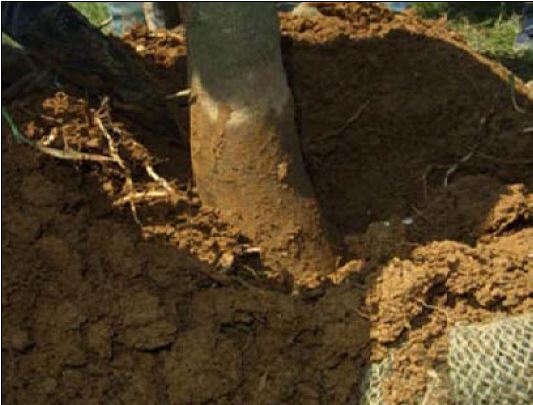 Full Question: I have removed six Silver Maple trees (12″ – 16″ diameter) from my yard because of root intrusion and roots surfacing. Can I treat the stumps by drilling and applying copper sulfate and not be concerned with the existing roots “leaching” to newly planted trees? If there is leaching from the existing roots, how long a period must I wait before replanting a better species of tree(s)? My plans are to replant from approx. 5-6′ from the stump location of the trees that were removed.
Answer: The best treatment for stump and roots left behind from removals is grinding and time. Treating with chemicals is typically not a good solution, nor does it really speed up the process. In fact, copper sulfate is a very caustic chemical. It can cause illness and injury if inhaled or if it comes in contact with your skin. Also do not use copper sulfate if your tree stump is near a water source or if you have children or domestic animals that may accidentally come into contact with the treated area. The copper sulfate that comes into contact with the surrounding landscape can also kill grass, plants and other trees. So caution should be used if you feel the need to use it. However, grinding the stumps and planting into good soil outside the area of the woody debris from the stump is the best course of action. The roots should not cause any issues except depressions in the lawn as they decompose.
Resources:
Tree Installation: Process and Practices, The Education Store, Purdue Extension’s resource center
Tree Pruning Essentials, The Education Store
Tree Appraisal, The Education Store
Tree Installation: Process and Practices, The Education Store
Debrushing, Indiana Department of Natural Resources
Find an Arborist, Trees are Good
Tree wounds and healing, Got Nature? Blog
Ask an Expert: Tree Selection and Planting, Purdue Extension – Forestry and Natural Resources (FNR) YouTube Channel
Planting Your Tree Part 1: Choosing Your Tree, Purdue Extension-FNR YouTube Channel
Subscribe to Purdue Extension-FNR YouTube Channel
Lindsey Purcell, Chapter Executive Director
Indiana Arborist Association

Lenny Farlee pointing out invasive Jet Bead at a Purdue Extension invasive plant training program.
If you have ever taken a walk through a forest, a woodland or a park, then you have likely encountered exotics plants. What may be difficult to distinguish, however, is whether or not those exotic plants are invasive. Unfortunately, most of us think that if it’s green, it’s good, but being green could be misleading. Invasive exotic plants are consuming growing space at an alarming rate and replacing our native species. These changes in plant species can have dramatic impacts, both economically and ecologically, to landowners and the ecosystem. Invasive species are such a problem that we are devoting an entire Podcast series to this topic.
In Part I of the Got Nature? Podcast mini-series on Invasive species, our host, Rod Williams, will be interviewing Lenny Farlee, an extension forester with the Hardwood Tree Improvement and Regeneration Center at Purdue University. Lenny will be the first expert in a series of podcasts devoted to the topic of invasive species, both terrestrial and aquatic. Lenny will be introducing our listeners to the topic of invasive species, identifying which species pose the greatest threats to the woodlands within Indiana and discussing the ecological and economic impacts that invasive plants pose to landowners. This podcast will also highlight methods that can be used to manage woodlands infested with invasive plants.
Resources
Midwest Invasive Plant Network
Indiana “Most Unwanted” Invasive Plant Pests
Purdue Extension Agriculture & Natural Resources
iTunes-Got Nature?
Got Nature? Podcasts
Lenny Farlee, Sustaining Hardwood Extension Specialist
Department of Forestry and Natural Resources, Purdue University
Rod Williams, Associate Professor of Wildlife Science
Department of Forestry and Natural Resources, Purdue University

Although fresh chips from tree pruning and removals look great for mulch and compost, there are some hidden issues. First, fresh wood chips can be very acidic (sometimes down around a pH of 4) which can be detrimental to plant growth. Also fresh chips have a high C:N (carbon to nitrogen ratio), and it must borrow nitrogen from the soil to help the decomposing process. So mixing the chips with the soil can actually reduce fertility for a while. Both of those can be problems for plants trying to grow in a bed mulched or mixed with fresh chips. Ideally, the newly ground chips should compost properly for a full year. If nitrogen fertilizer is added to the soil/mulch mix, it can speed up the process.
The effects of wood chips as mulch involve mainly the surface of the soil, which means it’s mainly shallow-rooted plants like perennial and annual flowers that would run into fresh wood chip trouble. This includes serious chlorosis and other health issues involving establishment and development. Deeper-rooted trees and shrubs are less likely to be affected as much; however, they are subject to the effects of the poor C:N ratio. I would suggest removing as much of the chips as possible, piling them for composting and replacing with proper soil for perennial growth unless you can wait for a full year to allow the decomposition cycle to be completed. This may help eliminate issues with new plants going into that location.
Resources
Mulching Conserves Soil Moisture, Department of Horticulture and Landscape Architecture
Growing Perennial Flowers, The Education Store (Search keywords to find the resources you need)
Collecting Soil Samples for Testing, The Education Store
Soil and Water Conservation Districts, Indiana State Department of Agriculture
Certified Soil Testing Laboratories, Purdue Department of Agronomy/Extension
Lindsey Purcell, Urban Forestry Specialist
Department of Forestry and Natural Resources
Many trees and plants in Indiana suffer from iron deficiency, chlorsis, induced by high (alkaline) soil pH. A symptom from the iron deficiency is the leaf yellowing. Plants suffering from iron chlorosis will often exhibit dieback and poor growth. Chlorosis is especially a problem with trees planted along streets and around homes where the original topsoil was removed or mixed with subsoil. The lime content of many of these subsoils is high. Most likely, the best course of action would be to conduct a soil test for mineral deficiencies and perhaps tissue analysis.
Resources
Iron Chlorosis of Trees and Shrubs, The Education Store
Collecting Soil Samples for Testing, The Education Store
Soil and Water Conservation Districts, Indiana State Department of Agriculture
Certified Soil Testing Laboratories, Purdue Department of Agronomy/Extension
Certified Arborists, International Society of Arboriculture (ISA)
Lindsey Purcell, Urban Forestry Specialist
Department of Forestry and Natural Resources, Purdue University
Planting food plots is a popular activity for landowners interested in attracting wildlife for viewing or hunting. The following are answers to questions we commonly receive regarding food plots, providing basic information to consider when planning for food plots as part of a comprehensive wildlife management plan for your property.
What is a food plot, and how important are food plots for wildlife in general?
A food plot is simply an agricultural crop or forage planted to attract wildlife for observation or hunting. While food plots are readily used by wildlife, they are not necessarily needed by wildlife. When we manage wildlife habitat, we break the habitat down into four basic components. Those components are food, water, cover and space. When we assess a habitat for the needs of a particular wildlife species, we want to determine which of those basic habitat components are most limiting or in need of the most work. Food is rarely the most limiting factor for wildlife. The most limiting factors are usually cover and space. Therefore, food is usually not the first habitat component needing to be addressed on the landscape. The primary purpose of planting food plots is to meet human desires to attract wildlife, rather than a necessity for wildlife. That said, food plots can still be incorporated and managed as part of a comprehensive management plan for any property in which wildlife viewing or hunting is an objective.
What are the different types of food plots?
What plants you provide in a food plot is largely determined by what species of wildlife you are interested in attracting. If you are interested in attracting white-tailed deer, which is quite often the wildlife species for which most food plots are planted, plants that provide green browse throughout most of the year would be recommended. The most popular green browse plants are typically forage plants and include clovers and wheat. Other green browse options might include soybeans, alfalfa, brassicas, turnips, kale, rye, oats and triticale, among others.
Wild turkeys will also use green browse plots, especially during the spring. Due to the short growth stature of green browse plots in the spring, male turkeys will often use these areas for strutting. Hen turkeys will bring broods to food plots of clover or other legumes for “bugging.” These areas are often high in insect biomass, providing an abundant and easily accessible food source for growing turkey chicks.
Agricultural grains are often planted for small game wildlife, including northern bobwhites, ring-necked pheasant and eastern cottontails. Grains like milo (or sorghum), sunflowers and corn are popular for small game food plots. Eastern cottontails will also readily use green browse plots if there is dense shrubby cover close by to escape predation. Sunflowers are usually planted specifically for hunting mourning doves. Grain food plots will also attract many nongame wildlife, especially songbirds. A mature sunflower field will often be full of American goldfinches, indigo buntings, chipping sparrows and song sparrows.
When should food plots be planted?
When food plots should be planted depends on what plants you will be planting. Most of the agricultural grains should be planted in the spring. Typically April and May are best for spring planted grains. Exact timing for spring planting is not as critical for food plots as it is for agricultural production. For example, soybeans can be planted in late June or even early July as a food plot. Soybeans planted for food plots are usually to provide green browse through the summer rather than bean production for harvest. Although late planted soybeans may not grow as optimal as earlier planted beans, they can still enhance the nutritional quality of summer forage for deer. Green browse plots for winter forage, including wheat and clovers, are usually planted in late summer through early fall. Clovers can also be planted in late winter or early spring.
Are food plots expensive?
Food plots vary in their expense to establish. Much of the expense depends on what you plant, equipment costs, herbicides and soil amendments. The expense really boils down to how much effort you want to put in the food plot and how successful you want it to be.
Seed costs vary considerably. Some conservation organizations, like Quail Forever and Pheasants Forever, offer free seed for its members to plant grain food plots. You might check with a local agricultural seed dealer or Ag co-op for availability of old seed. Older seed is not usually sold for agricultural production, and seed dealers may be willing to make a deal to get it out of their storage facilities. Some seed suppliers can provide additional services such as mixing your seed order for a small fee to save you time in the field. Of course, there are also the name brand seed varieties available through many sporting goods stores; however, they are usually much more expensive.
Equipment can be a considerable expense for planting food plots. Small tractors and utility vehicles can be quite expensive alone. Then you will need the implements to do the job, such as discs, planters, sprayers and possibly tillers or cultivators. If you lease part of your land for farming, you might be able to negotiate food plot work as part of the contract. Some Soil and Water Conservation Districts have implements, especially grain drills, available for loan at a small fee or deposit. Some equipment can be rented from rental supply companies. There are also individuals who specialize in food plot establishment and other habitat management projects available for hire.
Expenses associated with food plot preparation should be considered during the planning process. You will likely need to control undesirable vegetation with herbicides. Fertilizer may be necessary, and fertilizer costs fluctuate yearly. You may even have to consider exclusion of wildlife during the establishment phase, especially where deer are extremely abundant. Fencing for exclusion can be a considerable cost.
What are the basic steps in establishing a food plot?
The first step in food plot planning is to consider your objectives for having a food plot. Are you a hunter wanting to attract game to increase your hunting success? Are you interested in bringing wildlife closer to you and your family for viewing and enjoying?
Once you have determined your objectives, you need to determine the location(s). If you are planting for viewing only, where do you intend to view from? A back deck or perhaps from your living room or kitchen with large windows? You will need to consider the movement patterns of wildlife through the landscape, especially if hunting is your objective. Wildlife are more likely to utilize food plots when they are planted in areas through which they are already moving. It can be difficult to attract wildlife to an area they do not otherwise occupy unless you intend to address other habitat needs, especially cover requirements. If you are hunting, you will also want to consider wind patterns that will impact your movement into and out of the food plot during hunting. Providing multiple food plots increases hunting opportunities.
Site preparation is determined by several factors, including the amount of undesirable vegetation you will have to treat with herbicides, soil tests and planting method. If the site you have selected contains a large amount of herbaceous vegetation, you will want to consider using herbicide to kill as much of the competing vegetation as possible. Which herbicide needed depends on the nature of the plants you will control. A general herbicide most people use is glyphosate. If you have mostly grass to control, then a grass-specific herbicide can be used. If you need to control mostly broad-leaved plants, then a broad-leaf specific herbicide can be used. It is critical that before you use any herbicide, you read and follow all label directions.
A soil fertility test should be conducted for each food plot in order to determine if any of the essential soil elements are lacking and in need of amendment. The basic test will provide information on soil pH, plus the amounts of nitrogen, phosphorus, potassium and lime (calcium) that should be added. The folks at your county Extension or Soil and Water Conservation offices will provide you with the information you need for soil sampling and submission for testing. After you receive the test results, it is up to you on whether you want to amend the soil as per the test recommendations. Factors to consider are cost of the amendments and the desired vigor of the crop you plant. The more vigorous the crop, the more nutritional value it will have.
The planting method you choose will dictate how much soil work will be necessary. If you will be using a no-till drill, then you will be able to drill your seed directly into the soil through vegetation without disking it first. If you are using a conventional drill or broadcasting the seed, you will need to disk the soil prior to planting. If broadcasting, you will want to make another pass over the field with a cultipacker, harrow or other drag to lightly cover the broadcasted seed.
Annual plants, such as agricultural grains, will need to be planted every year. You could lightly disk a field of annual grains following seed set and perhaps get a second growing season from the seed production, assuming all the seeds have not been consumed. You could also leave the field fallow the next year, which means do nothing with it and let it go without disking or spraying. Either way will result in some germination of the previous year’s seed production along with annual weeds. The annual weeds are likely to be of good value for wildlife. Invasive weeds, such as Canada thistle, should be controlled with herbicide. Keep in mind that ragweeds and foxtail, while agricultural weeds, are highly valued by wildlife who consume seeds.
Other food plot plants, such as many clovers, are short-lived perennial plants and do not usually need to be planted every year. Once established, many clovers can be mowed periodically to maintain a vigorous growth. It would be beneficial to allow the perennials to produce seed to help maintain the field. Reseeding perennial plants may be necessary where browse pressure by deer is excessive.
Are there negatives associated with food plots?
There are not many negative impacts of food plots on wildlife. Two that could potentially impact wildlife are disease and predation. Any time you concentrate animals, you increase the risk of communicable disease transmission and predation. These negatives can be reduced through vigilant observation of your plots and habitat management. If you do notice a disease problem, then you may want to take the plot out of production for a year or two to reduce the concentration of animals. Disease transmission associated with food plots is rare.
Anytime you concentrate a food resource, you attract animals that eat that food, and this logic follows on up the food chain. If you plant milo, you will attract northern bobwhites and other birds. This, in turn, will attract predators of those birds. You can reduce predation by providing adequate escape cover in close proximity to the food plot.
What resources are available to help with food plots?
One of the best resources available for wildlife habitat management, including food plots, is your local District Wildlife Biologist from the Indiana Department of Natural Resources. The District Wildlife Biologist will be able to assist you in meeting your land management objective, especially as it relates to wildlife habitat. They will also be able to determine if your wildlife management objectives qualify for any cost share opportunities. If you are not in Indiana, your state’s natural resource management agency will also have a team of wildlife biologists dedicated to assisting landowners.
Another source of information is the Cooperative Extension Service. All states have Extension Wildlife Specialists housed within a Land Grant university that can provide you with information on managing wildlife habitat. Your county Extension Educator/Agent will also be able to provide you with information. The University of Tennessee Extension Service has several food plot resources available that are applicable throughout the eastern United States, including the book, A Guide to Successful Wildlife Food Plots: Blending Science with Common Sense (8MB pdf). For more resources, view Food Plots from The University of Tennessee Extension.
There are many books about food plots available from online bookstores. You can also get information about food plots from non-profit conservation organizations such as Whitetail’s Unlimited, Quality Deer Management Association, Pheasants Forever, Quail Forever, Duck’s Unlimited, etc. If you use the Internet for information, look for information from organizations previously listed, from government natural resource agencies and the Cooperative Extension Service.
Don’t forget to ask neighbors, friends, hunters and others with similar interests from your area. They may be experienced with planting food plots and, from my experience, enjoy talking about their experiences. They can be a wealth of knowledge, especially in regard to what will grow and what will not in your area. They may also be willing to help you with the planting of your plots!
If you have any questions, please feel free to contact Jarred Brooke, extension wildlife specialist, at jmbrooke@purdue.edu.
Resources
Food Plots, The University of Tennessee Extension
A Guide to Successful Wildlife Food Plots: Blending Science with Common Sense, The University of Tennessee Extension
Indiana’s District Wildlife Biologist, Indiana Department of Natural Resources
Food Plots for White-Tailed Deer, The Education Store
The Basics of Managing Wildlife on Agricultural Lands, The Education Store
How to Score Your White-tailed Deer, video, The Education Store, Purdue Extension Resource Center
White-Tailed Deer Post Harvest Collection, video, The Education Store
Jarred Brooke, Wildlife Specialist
Department of Forestry and Natural Resources, Purdue University

Recent Posts
- Purdue Extension: Empowering Indiana Through Innovation, Education and Community Impact
Posted: January 28, 2026 in Community Development, How To, Invasive Insects, Invasive Plant Species, Natural Resource Planning, Woodlands - Forest Landowners: Share Your Experience with Regeneration and Restoration
Posted: January 27, 2026 in Forestry, How To, Timber Marketing, Woodlands - It’s Not Too Late to Order Trees for Spring Planting
Posted: January 13, 2026 in Forestry, How To, Plants - Now Is The Time To Control Non-Native Bush Honeysuckle
Posted: October 30, 2025 in Forestry, How To, Invasive Plant Species, Woodlands - October Is Firewood Month: Protect Indiana’s Forests by Making Smart Choices
Posted: October 13, 2025 in Forestry, Forests and Street Trees, How To, Invasive Insects, Urban Forestry - ID That Tree: Smooth Sumac
Posted: October 2, 2025 in Forestry, How To, Wildlife - ID That Tree: Wild Grape Vine
Posted: August 12, 2025 in Forestry, How To, Urban Forestry, Wildlife - Publication – Sericea Lespedeza Control
Posted: July 7, 2025 in Forestry, How To, Invasive Plant Species, Wildlife - How to ID Asian Jumping Worms, Purdue Landscape Report
Posted: July 2, 2025 in How To, Invasive Insects, Wildlife - Alert – Water Your Trees, Watch Video
Posted: June 20, 2025 in Alert, Drought, Forests and Street Trees, How To, Urban Forestry, Wildlife, Woodlands
Archives
Categories
- Alert
- Aquaculture/Fish
- Aquatic/Aquaculture Resources
- Ask the Expert
- Christmas Trees
- Community Development
- Disease
- Drought
- Forestry
- Forests and Street Trees
- Gardening
- Got Nature for Kids
- Great Lakes
- How To
- Invasive Animal Species
- Invasive Insects
- Invasive Plant Species
- Land Use
- Natural Resource Planning
- Nature of Teaching
- Plants
- Podcasts
- Ponds
- Publication
- Safety
- Spiders
- Timber Marketing
- Uncategorized
- Urban Forestry
- Webinar
- Wildlife
- Wood Products/Manufacturing
- Woodland Management Moment
- Woodlands