Join Purdue Extension wildlife specialists Brian MacGowan and Rod Williams as they clear up what is fact and fiction when it comes to wildlife. They burst the bubble on some commonly heard “facts” about snapping turtles, hellbenders, coyotes, snakes and more.
 Purdue University - Extension - Forestry and Natural Resources
Got Nature? Blog
In this “A Moment in the Wild” episode, Rod Williams, Purdue professor of wildlife science, talks about the conservation efforts to save the North America’s giant salamander, the hellbender. Walk with Rod through Purdue Forestry and Natural Resources’ facilities and see how they are raised and released in the few clean rivers and streams that they can still be found.
If you have any questions regarding wildlife, or other natural resource topics, feel free to contact us by using our Ask an Expert web page.
Resources
A Moment in the Wild, Playlist, Purdue Extension – Forestry and Natural Resources
Help the Hellbender, Playlist & Website
The Nature of Teaching: Adaptations for Aquatic Amphibians, The Education Store, Purdue Extension resource center
How Our Zoos Help Hellbenders, The Education Store
Hellbenders Rock!, The Education Store
Rod Williams, Professor of Wildlife Science
Purdue University Department of Forestry and Natural Resources
In this “A Moment in the Wild” episode, Rod Williams, Purdue professor of wildlife science, talks about where hellbenders hide and how sedimentation adds more difficulty for these endangered giant salamanders living on the bottom of our rivers and streams. How can we help?
If you have any questions regarding wildlife, or other natural resource topics, feel free to contact us by using our Ask an Expert web page.
Resources
A Moment in the Wild, Playlist, Purdue Extension – Forestry and Natural Resources
Help the Hellbender, Playlist & Website
The Nature of Teaching: Adaptations for Aquatic Amphibians, The Education Store, Purdue Extension resource center
How Our Zoos Help Hellbenders, The Education Store
Hellbenders Rock!, The Education Store
Rod Williams, Professor of Wildlife Science
Purdue University Department of Forestry and Natural Resources
Posted on July 30th, 2020 in How To, Land Use, Natural Resource Planning, Publication | No Comments »
 This Community Soundscape Planning Guide is to be used by communities in the United States and other places, to focus land use planning within the context of the sonic spaces of built and natural areas locally.
This guide focuses on:
– Learning the Basics: helping planners understand what a soundscape is and what is noise
– Impacts of Noise on People and Wildlife: summarizes what is known about how sound affects people and wildlife
– Soundscape Workbook: allowing individual planners or community groups to work through major issues related to natural and cultural soundscapes and the occurrence of noise in their community
– Planning Tools and Resources: which describes tools already in existence and new tools such as an app and online mapping system developed at Purdue University.
This planning guide is also associated with several Purdue Extension projects that are underway and which can be offered to communities.
Resources
Center for Global Soundscapes, Purdue University
Record the Earth, APP
Your Ecosystem Listening Labs (YELLS): The Science of Soundscape Ecology Instructor’s Guide, Grades 5-8, The Education Store, Purdue Extension resource center
Bryan Pijanowski, Professor of Landscape and Soundscape Ecology
Purdue University Department of Forestry and Natural Resources
Kara Salazar, Assistant Program Leader and Extension Specialist for Sustainable Communities
Purdue University Department of Forestry and Natural Resources
Dan Walker, Community Planning Extension Specialist
Purdue University Department of Forestry and Natural Resources
If you have any questions regarding wildlife, or other natural resource topics, feel free to contact us by using our Ask an Expert web page.
Ask an Expert, Playlist, Purdue Extension – Forestry and Natural Resources Youtube Channel
Wildlife, Playlist
Wildlife, Playlist
Reptiles: Turtles, Snakes, and Lizards, Purdue Nature of Teaching
Coyotes are on the Move, Got Nature? Blog, Purdue FNR Extension
Help the Hellbender, Website
Indiana Amphibian and Reptile ID Package (4 softcover books), The Education Store, Purdue Extension resource center
Coyotes are on the Move, Got Nature? Blog, Purdue FNR Extension
Help the Hellbender, Website
Indiana Amphibian and Reptile ID Package (4 softcover books), The Education Store, Purdue Extension resource center
Brian MacGowan, Wildlife Extension Specialist
Purdue Forestry and Natural Resources
Purdue Forestry and Natural Resources
Rod Williams, Professor of Wildlife Science
Purdue Forestry and Natural Resources
Purdue Forestry and Natural Resources
Posted on July 23rd, 2020 in Forestry, How To, Plants, Timber Marketing, Webinar, Woodlands | No Comments »
Join Purdue Extension forestry specialist Lenny Farlee and John Woodmansee, extension educator, as they share:
– Why should I sell timber?
– Getting help from a professional forester
– Common concerns when selling timber
– Best management practices loggers use
– Types of tree sales, pros and cons of each
– Tax considerations
– Potential cost sharing opportunities through USDA
– Where to get additional information
Several resources are listed at the end of the webinar for those who may be considering timber sales or for those who may be thinking of purchasing land in the future, or may inherit land with woodlands. These resources will guide you as you meet your goals.
Resources
Woodland Stewardship for Landowners: Sealed Bid (FNR 592 WV), Video, Purdue Extension – Forestry and Natural Resources Youtube channel
Woodland Stewardship for Landowners: EQIP (FNR 587 WV), Video, Purdue Extension – Forestry and Natural Resources Youtube channel
Forest/Timber, Playlist, Purdue Extension – Forestry and Natural Resources Youtube channel
A Woodland Management Moment, Playlist, Purdue Extension – Forestry and Natural Resources Youtube channel
Find an Indiana Forester
Marketing Timber, The Education Store, Purdue Extension resource center
Determining Tax Basis of Timber, The Education Store, Purdue Extension resource center
Lenny Farlee, Sustaining Hardwood Extension Specialist
Purdue University Department of Forestry and Natural Resources
John Woodmansee, Extension Educator, Whitely County
Purdue Extension
Purdue extension forester Lenny Farlee explains how to tell identify black maple and how to tell it apart from its cousin, sugar maple.
If you have any questions regarding trees, forests, wildlife, wood products or other natural resource topics, feel free to contact us by using our Ask an Expert web page.
Resources
ID That Tree, Playlist, Purdue Extension – Forestry and Natural Resources Youtube Channel
A Woodland Management Moment, Playlist, Purdue Extension – Forestry and Natural Resources Youtube Channel
Investing in Indiana Woodlands, The Education Store
Tree Appraisal and the Value of Trees, The Education Store
Forest Improvement Handbook, The Education Store
Lenny Farlee, Sustaining Hardwood Extension Specialist
Purdue University Department of Forestry and Natural Resources
In this tree identification episode, Purdue Extension forester Lenny Farlee will talk about how American elm leaves have jagged edges with a large tooth and then smaller teeth like edges on top of it. Find out why these trees are not as easy to find as they used to be.
If you have any questions regarding trees, forests, wildlife, wood products or other natural resource topics, feel free to contact us by using our Ask an Expert web page.
Resources
Elm, The Education Store, Purdue Extension resource center
American Elm, The Purdue Arboretum Explorer
ID That Tree, Playlist, Purdue Extension – Forestry and Natural Resources Youtube Channel
A Woodland Management Moment, Playlist, Purdue Extension – Forestry and Natural Resources Youtube Channel
Investing in Indiana Woodlands, The Education Store
Tree Appraisal and the Value of Trees, The Education Store
Forest Improvement Handbook, The Education Store
Lenny Farlee, Sustaining Hardwood Extension Specialist
Purdue University Department of Forestry and Natural Resources
Posted on July 13th, 2020 in Forestry, Forests and Street Trees, How To, Land Use, Plants | No Comments »
Purdue Extension forester Lenny Farlee tells you a little about how to identify Silver Maple trees and differentiate them from other species of maple.
If you have any questions regarding trees, forests, wildlife, wood products or other natural resource topics, feel free to contact us by using our Ask an Expert web page.
Resources
ID That Tree, Playlist, Purdue Extension – Forestry and Natural Resources Youtube Channel
A Woodland Management Moment, Playlist, Purdue Extension – Forestry and Natural Resources Youtube Channel
Investing in Indiana Woodlands, The Education Store
Tree Appraisal and the Value of Trees, The Education Store
Forest Improvement Handbook, The Education Store
Lenny Farlee, Sustaining Hardwood Extension Specialist
Purdue University Department of Forestry and Natural Resources
Posted on July 13th, 2020 in Aquaculture/Fish, Aquatic/Aquaculture Resources, How To, Ponds | No Comments »
FNR Extension Wildlife Specialist Jarred Brooke and Dr. Mitch Zischke teach you how to better manage your land and ponds for fish and wildlife. They provide tips and also answer all of your land management and pond management questions in the video below.
Resources
Pond and Wildlife Management
Need help with pond or wildlife management? Looking for a professional to contact for help?, Got Nature? Blog, Purdue FNR extension
Salmon and Trout of the Great Lakes: A Visual Identification Guide, The Education Store, Purdue Extension resource center
Pond Management: Stocking Fish in Indiana Ponds, The Education Store
Pond Management: Managing Fish Populations, The Education Store
A Pond Management Plan Template, The Education Store
Jarred Brooke, Extension Wildlife Specialist
Purdue Department of Forestry and Natural Resources
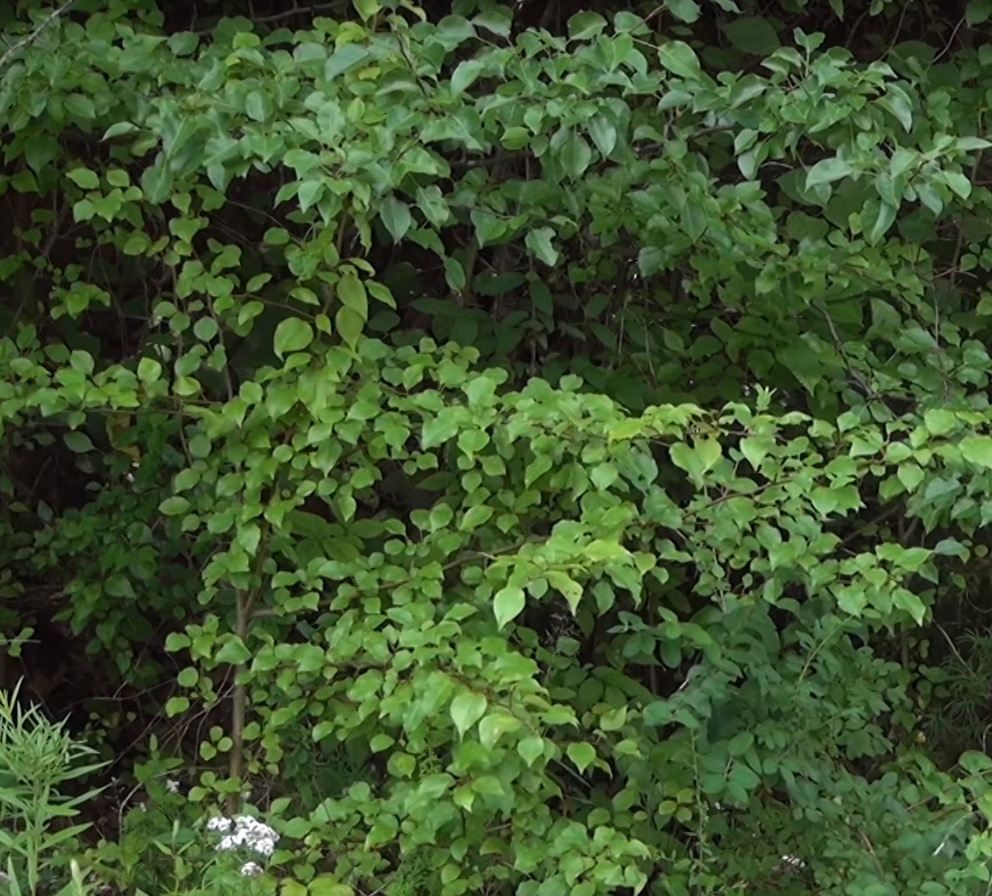
Callery Pear
Question: We have a customer with an ornamental pear tree that is sprouting shoots throughout their entire front lawn. Do you have any recommendations regarding control, other than removing the tree?
Answer: Hello, and thanks for reaching out with your tree questions. It sounds like the seedlings from ornamental callery pear. For many years, the cultivar Bradford dominated the landscape and was not self-fruiting. But as newer, improved cultivars were introduced to landscapes, they were cross-fruitful with Bradford pears.
So now “volunteer” callery pear trees are seeding themselves in alarming numbers and from their roots as suckers even where they were not planted, helped along by birds. These seedling pears are extremely vigorous and quite precocious, coming into bloom and fruit at a very young age. The Indiana Invasive Species Council has listed this species as highly invasive in Indiana.
Remove seedling trees immediately or keep them mowed very low to prevent flowering and fruiting. Usually, the ordinary broadleaf weed sprays for turf will keep them down. If you have ornamental pear trees in your landscape, keep a close watch for fruit set. If your existing landscape specimens bore fruit this year, you can spray next spring with fruit inhibitor hormone (e.g., ethephon, Florel® fruit inhibitor) to reduce fruit set. Note that timing and thorough coverage is critical. The spray must be applied when plants are in the early stage of full bloom, before fruit sets. Typically, ornamental pear is in bloom for 10 to 14 days. It will be difficult to provide thorough coverage on larger specimens. Be sure to read and follow all label directions.
Below we have several resources that also expands upon the Callery Pear trees.
Resources
Invasive Plant Species: Callery Pear, Video, Purdue Extension
Now is the Time to Identify Callery Pear, Purdue Landscape Report
A “Perfect” Nightmare, Purdue Extension’s Indiana Yard and Garden
What are invasive species and why should I care?, Got Nature? Blog, Purdue FNR Extension
Invasive Species, Playlist, Purdue Extension – Forestry and Natural Resources Youtube Channel
Lindsey Purcell, Chapter Administrator & Master Arborist
Indiana Arborist Association

Recent Posts
- Purdue Extension: Empowering Indiana Through Innovation, Education and Community Impact
Posted: January 28, 2026 in Community Development, How To, Invasive Insects, Invasive Plant Species, Natural Resource Planning, Woodlands - Forest Landowners: Share Your Experience with Regeneration and Restoration
Posted: January 27, 2026 in Forestry, How To, Timber Marketing, Woodlands - It’s Not Too Late to Order Trees for Spring Planting
Posted: January 13, 2026 in Forestry, How To, Plants - Now Is The Time To Control Non-Native Bush Honeysuckle
Posted: October 30, 2025 in Forestry, How To, Invasive Plant Species, Woodlands - October Is Firewood Month: Protect Indiana’s Forests by Making Smart Choices
Posted: October 13, 2025 in Forestry, Forests and Street Trees, How To, Invasive Insects, Urban Forestry - ID That Tree: Smooth Sumac
Posted: October 2, 2025 in Forestry, How To, Wildlife - ID That Tree: Wild Grape Vine
Posted: August 12, 2025 in Forestry, How To, Urban Forestry, Wildlife - Publication – Sericea Lespedeza Control
Posted: July 7, 2025 in Forestry, How To, Invasive Plant Species, Wildlife - How to ID Asian Jumping Worms, Purdue Landscape Report
Posted: July 2, 2025 in How To, Invasive Insects, Wildlife - Alert – Water Your Trees, Watch Video
Posted: June 20, 2025 in Alert, Drought, Forests and Street Trees, How To, Urban Forestry, Wildlife, Woodlands
Archives
Categories
- Alert
- Aquaculture/Fish
- Aquatic/Aquaculture Resources
- Ask the Expert
- Christmas Trees
- Community Development
- Disease
- Drought
- Forestry
- Forests and Street Trees
- Gardening
- Got Nature for Kids
- Great Lakes
- How To
- Invasive Animal Species
- Invasive Insects
- Invasive Plant Species
- Land Use
- Natural Resource Planning
- Nature of Teaching
- Plants
- Podcasts
- Ponds
- Publication
- Safety
- Spiders
- Timber Marketing
- Uncategorized
- Urban Forestry
- Webinar
- Wildlife
- Wood Products/Manufacturing
- Woodland Management Moment
- Woodlands