 Purdue University - Extension - Forestry and Natural Resources
Got Nature? Blog
Purdue Extension forester Lenny Farlee introduces you to the quaking or trembling aspen. This tree is found in northern Indiana and typically identifiable by whitish to grayish bark with dark spots where the branches come out.
If you have any questions regarding trees, forests, wildlife, wood products or other natural resource topics, feel free to contact us by using our Ask an Expert web page.
Resources
Aspen, The Education Store, Purdue Extension resource center
Quaking Aspen, Purdue Fort Wayne
Investing in Indiana Woodlands, The Education Store
Investing in Indiana Woodlands, The Education Store
Tree Appraisal and the Value of Trees, The Education Store
Forest Improvement Handbook, The Education Store
ID That Tree, Playlist, Purdue Extension – Forestry and Natural Resources Youtube Channel
A Woodland Management Moment, Playlist, Purdue Extension – Forestry and Natural Resources Youtube Channel
Lenny Farlee, Sustaining Hardwood Extension Specialist
Purdue University Department of Forestry and Natural Resources
On this edition of ID That Tree, Purdue Extension forester Lenny Farlee introduces you to the northern white cedar, a native conifer that is used for ornamental, windbreak and reforestation purposes. This evergreen has distinct scale like foliage which is soft to the touch. He shares how to distinguish it from the eastern red cedar.
If you have any questions regarding trees, forests, wildlife, wood products or other natural resource topics, feel free to contact us by using our Ask an Expert web page.
Resources
ID That Tree, Playlist, Purdue Extension – Forestry and Natural Resources Youtube Channel
ID That Tree: Eastern Red Cedar, Video
Thuja occidentalis, The Purdue Arboretum Explorer
Investing in Indiana Woodlands, The Education Store
Tree Appraisal and the Value of Trees, The Education Store
Forest Improvement Handbook, The Education Store
Lenny Farlee, Sustaining Hardwood Extension Specialist
Purdue University Department of Forestry and Natural Resources
In this video, Purdue wildlife extension specialist Jarred Brooke shares tips and tricks for setting up a trail camera for monitoring your property for wildlife and preparing for hunting season.
If you have any questions regarding wildlife, trees, forest management, wood products, natural resource planning or other natural resource topics, feel free to contact us by using our Ask an Expert web page.
Resources
Wildlife Habitat Hint, Playlist, Purdue Extension – Forestry and Natural Resouces
Habitat Help LIVE Q&A – Native Grasses and Forbs for Wildlife, Video, Purdue Extension – Forestry and Natural Resources Youtube channel
Renovating Native Warm-Season Grass Stands for Wildlife: A Land Manager’s Guide, The Education Store, Purdue Extension resource center
Considerations for Trapping Nuisance Wildlife with Box Traps, The Education Store
New Indiana Hunting & Trapping Guide, Got Nature? Blog
Jarred Brooke, Wildlife Extension Specialist
Purdue Department of Forestry and Natural Resources
In this “A Moment in the Wild” episode, Nick Burgmeier, Purdue Extension wildlife specialist, talks about the black racer, one of three large black snakes found in Indiana, including the myth that this species chases people who encounter it.
If you have any questions regarding wildlife, trees and forest management, wood products, or other natural resource topics, feel free to contact us by using our Ask an Expert web page.
Resources
A Moment in the Wild, Playlist, Purdue Extension – Forestry and Natural Resources
Snakes of Indiana, The Education Store, Purdue Extension resource center
Indiana Amphibian and Reptile ID Package (4 softcover books), The Education Store
When Juvenile Snakes Come Calling, Purdue Extension
Nick Burgmeier, Research Biologist and Wildlife Extension Specialist
Purdue Department of Forestry and Natural Resources
Purdue Landscape Report: Have you noticed large, messy webs on trees? You may have seen a colony of fall webworms. These caterpillars hatch in mid-July but tend to become more noticeable as the summer progresses. They often eat branches bare of leaves but are they a threat to tree health?
What do they look like?
Fall webworms are small, fuzzy pale-yellow caterpillars (figure 1) that build large, conspicuous white webs in trees in the late summer (figure 2). Their webs stretch over tree branches and grow over the course of the summer. When disturbed, the caterpillars will violently thrash back and forth in a bid to ward off predators.
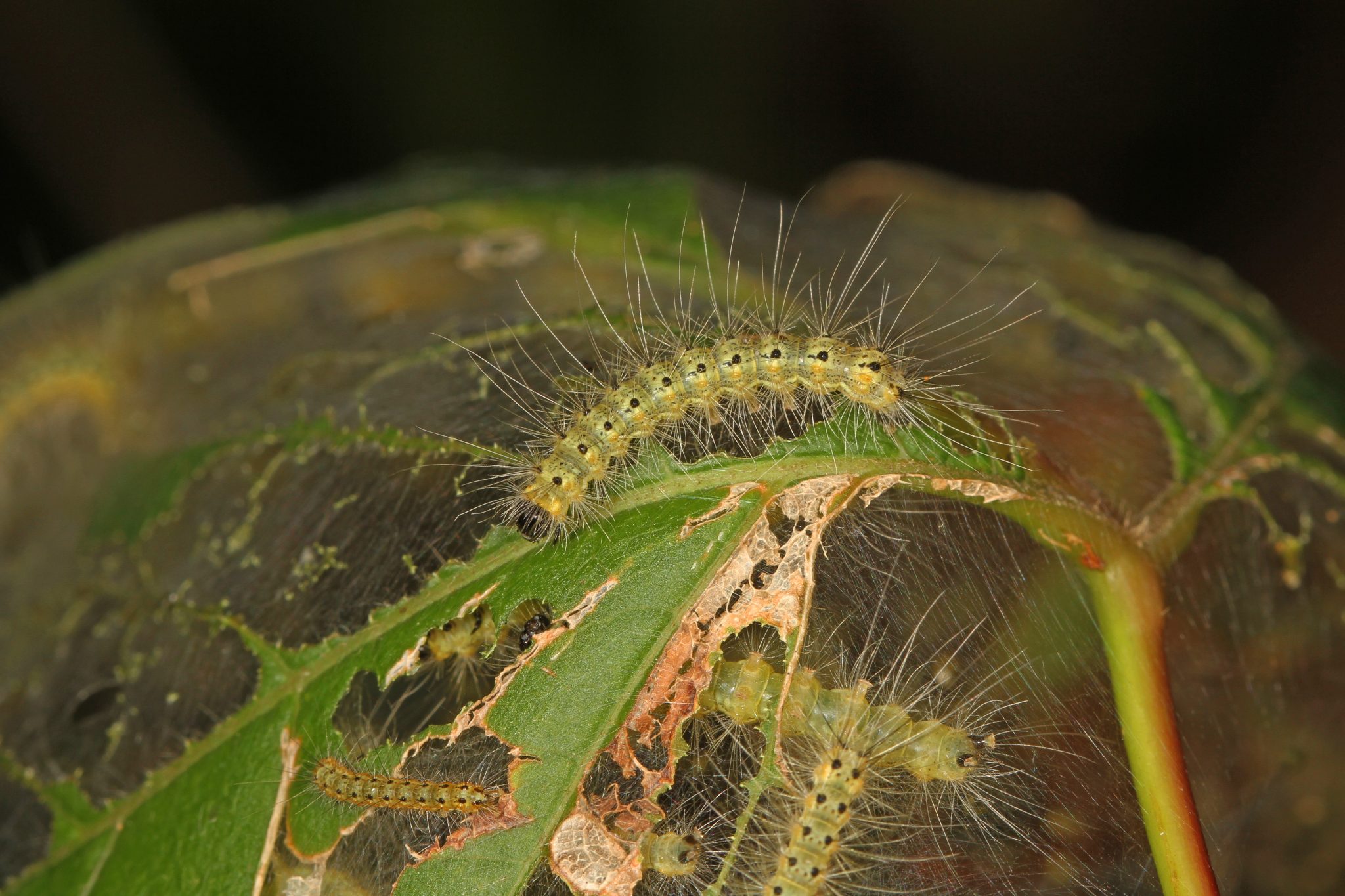
Fig1. A colony of fall webworm caterpillars feeding on a leaf. Note that the web covers the leaves they are currently eating. Photo by Judy Gallagher.
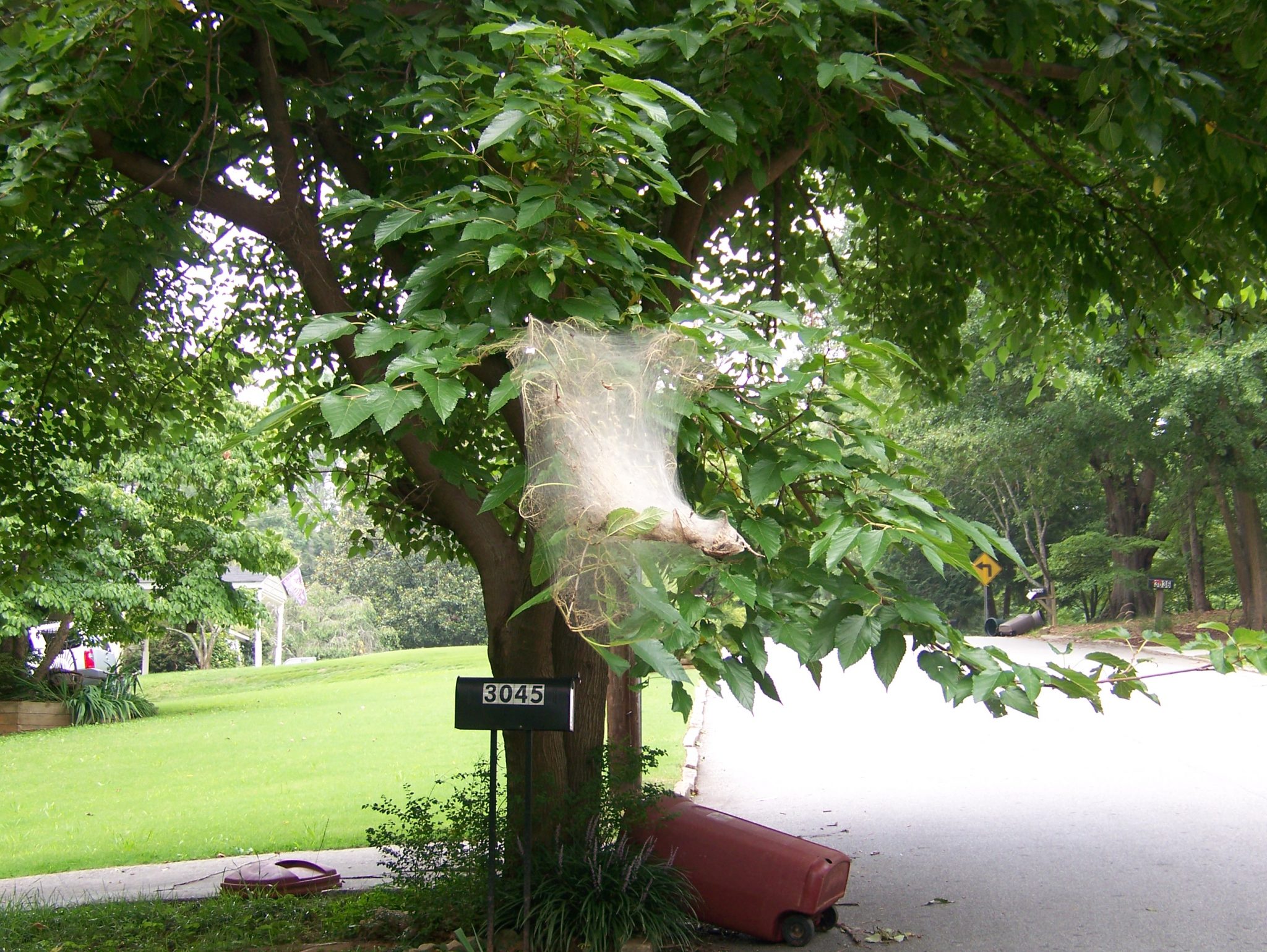
Fig2. Trees will often have multiple fall webworm webs on them. This photo shows a typical number of webs for a large tree. Notice that the webs tend to be on the ends of branches and that the leaf damage is concentrated close to each web. Photo by Ken Gibson.
What kind of damage do they cause?
Fall webworms eat the leaves of many species of deciduous trees and bushes. This damage occurs late in the summer shortly before the trees normally drop their leaves for fall. Therefore, fall webworms very rarely do serious damage to trees. In most cases the trees will grow their leaves back the following spring. On rare occasions, a tree that is already highly stressed may be further weakened by fall webworm damage. However, most trees, even heavily infested trees, are minimally affected and show no signs of damage the following spring.
Do they need to be managed?
Fall webworm damage generally looks much worse than it is. In general, trees only need to be managed for fall webworm if the owner is concerned about aesthetics. In that case, the easiest means of management is pulling the web off the tree by hand and putting it in a bucket of soapy water or freezing it. Some people may be sensitive to the caterpillars’ hairs so gloves should be worn to prevent contact.
In cases where the webs are too high up to be reached, they can be managed through insecticides. Further instructions can be found here.
Cover image by Photo by msumuh on Flickr.
Resources
Fall Webworm Bulletin, Purdue Extension -Entomology
Which Web is Which, Purdue Landscape Report
Will My Trees Recover After Losing Their Leaves?, Purdue Landscape Report
Safe Caterpillar Control, Purdue Landscape Report
Mimosa Webworm, The Education Store, Purdue Extension resource center
Sod Webworms, Turf Science at Purdue University
Bagworm caterpillars are out feeding, be ready to spray your trees, Purdue Extension – Forestry and Natural Resources
Elizabeth Barnes, Exotic Forest Pest Educator
Purdue University Department of Entomology
Join Kara Salazar, Assistant Program Leader and Extension Specialist for Sustainable Communities, and Sarah Hanson, Ag & Natural Resources Educator for Purdue Extension in Johnson County, as they introduce you to the world of rainscaping and rain gardens.
If you have any questions regarding wildlife, trees, forest management, wood products, natural resource planning or other natural resource topics, feel free to contact us by using our Ask an Expert web page.
Resources
Rainscaping Education Program, Purdue University
Master Gardeners Program
Ask An Expert, Playlist, Purdue Extension – Forestry and Natural Resources Youtube channel
Rainscaping, Playlist
Rain Gardens Go with the Flow, Indiana Yard and Garden, Purdue Horticulture
Rainscaping Education Program Highlighted in NOAA Annual Report, Got Nature? Post, Purdue Extension
What is Rainscaping? Purdue Rainscaping Education Program Video, Purdue Extension
Q&A About Drainage Water Recycling for the Midwest, The Education Store, Purdue Extension resource center
Become a Purdue Master Gardener, The Education Store
Kara Salazar, Assistant Program Leader and Extension Specialist for Sustainable Communities
Department of Forestry and Natural Resources
Sarah Hanson, Ag & Natural Resources Educator
Purdue Extension for Johnson County
Join Purdue Extension wildlife specialist Jarred Brooke as he talks about all things regarding planting wildlife food plots. This includes a step by step guide from planning to planting, explanation of types of food plots, types of seed, seed mixes and more.
If you have any questions regarding wildlife, trees, forest management, wood products, natural resource planning or other natural resource topics, feel free to contact us by using our Ask an Expert web page.
Resources
Calibrating a No-Till Drill for Conservation Plantings and Wildlife Food Plots, video, Purdue Extension
Frost Seeding to Establish Wildlife Food Plots and Native Grass and Forb Plantings, video, Purdue Extension
Now is the time to sow native grass and forbs seeds. Here’s why. Got Nature? Blog, Purdue Extension – Forestry and Natural Resources
Habitat Help LIVE Q&A – Native Grasses and Forbs for Wildlife, Video, Purdue Extension – Forestry and Natural Resources Youtube channel
Jarred Brooke, Wildlife Extension Specialist
Purdue Department of Forestry and Natural Resources
In this edition of ID That Tree, Purdue Extension forester Lenny Farlee introduces you to the large tooth or big tooth aspen. This tree needs full sunlight and often thrives in areas where the soil has been disturbed. The leaf stems are long and flat which allow them to flutter in the wind.
If you have any questions regarding trees, forests, wildlife, wood products or other natural resource topics, feel free to contact us by using our Ask an Expert web page.
Resources
ID That Tree, Playlist, Purdue Extension – Forestry and Natural Resources Youtube Channel
A Woodland Management Moment, Playlist, Purdue Extension – Forestry and Natural Resources Youtube Channel
Aspen, The Education Store, Purdue Extension resource center
Investing in Indiana Woodlands, The Education Store
Tree Appraisal and the Value of Trees, The Education Store
Forest Improvement Handbook, The Education Store
Lenny Farlee, Sustaining Hardwood Extension Specialist
Purdue University Department of Forestry and Natural Resources
Meet the Hackberry. Purdue Extension forester Lenny Farlee introduces you to this native tree with single toothed leaves, an uphill/downhill shaped base of the leaves and a gray, ashy bark with warty/bumpy areas with smooth spots in between.
If you have any questions regarding trees, forests, wildlife, wood products or other natural resource topics, feel free to contact us by using our Ask an Expert web page.
Resources
ID That Tree, Playlist, Purdue Extension – Forestry and Natural Resources Youtube Channel
A Woodland Management Moment, Playlist, Purdue Extension – Forestry and Natural Resources Youtube Channel
Hackberry/Sugarberry, The Education Store, Purdue Extension resource center
Investing in Indiana Woodlands, The Education Store
Tree Appraisal and the Value of Trees, The Education Store
Forest Improvement Handbook, The Education Store
Lenny Farlee, Sustaining Hardwood Extension Specialist
Purdue University Department of Forestry and Natural Resources

May IDNR Wildlife Bulletin Newsletter: Do you know what to do if you find an injured wild animal? The first step is determining if it is actually injured. Clear signs of distress include:
- Bleeding or clear signs of injuries such as bruises, cuts, punctures or broken bones
- Looks thin, weak, cold or soaking wet
- Signs of diarrhea
- Flies, fly eggs, maggots, ticks, lice or fleas have infested the animal
If a wild animal shows any of these signs and is unable to move or run away effectively, it may be time to call a licensed wildlife rehabilitator for help. You can find a list of wildlife rehabilitators on IDNR Orphaned & Injured Animals website.
Please note that the Indiana DNR does not provide services for injured or orphaned wildlife. We rely on licensed wildlife rehabilitators to assist with these situations.
Resources
Orphaned & Injured Animals, Indiana Department of Natural Resources (IN DNR)
Resourceful Animal Relationships, The Education Store, Purdue Extension resource center
Wildlife, Playlist, Purdue Extension – Forestry and Natural Resources (FNR) YouTube channel
How to Stop Woodland Animals from Digging in Your Flower Pots, Got Nature? Blog with video, Purdue Extension FNR
Considerations for Trapping Nuisance Wildlife with Box Traps, The Education Store
Indiana Department of Natural Resources (IN DNR)

Recent Posts
- Purdue Extension: Empowering Indiana Through Innovation, Education and Community Impact
Posted: January 28, 2026 in Community Development, How To, Invasive Insects, Invasive Plant Species, Natural Resource Planning, Woodlands - Forest Landowners: Share Your Experience with Regeneration and Restoration
Posted: January 27, 2026 in Forestry, How To, Timber Marketing, Woodlands - It’s Not Too Late to Order Trees for Spring Planting
Posted: January 13, 2026 in Forestry, How To, Plants - Now Is The Time To Control Non-Native Bush Honeysuckle
Posted: October 30, 2025 in Forestry, How To, Invasive Plant Species, Woodlands - October Is Firewood Month: Protect Indiana’s Forests by Making Smart Choices
Posted: October 13, 2025 in Forestry, Forests and Street Trees, How To, Invasive Insects, Urban Forestry - ID That Tree: Smooth Sumac
Posted: October 2, 2025 in Forestry, How To, Wildlife - ID That Tree: Wild Grape Vine
Posted: August 12, 2025 in Forestry, How To, Urban Forestry, Wildlife - Publication – Sericea Lespedeza Control
Posted: July 7, 2025 in Forestry, How To, Invasive Plant Species, Wildlife - How to ID Asian Jumping Worms, Purdue Landscape Report
Posted: July 2, 2025 in How To, Invasive Insects, Wildlife - Alert – Water Your Trees, Watch Video
Posted: June 20, 2025 in Alert, Drought, Forests and Street Trees, How To, Urban Forestry, Wildlife, Woodlands
Archives
Categories
- Alert
- Aquaculture/Fish
- Aquatic/Aquaculture Resources
- Ask the Expert
- Christmas Trees
- Community Development
- Disease
- Drought
- Forestry
- Forests and Street Trees
- Gardening
- Got Nature for Kids
- Great Lakes
- How To
- Invasive Animal Species
- Invasive Insects
- Invasive Plant Species
- Land Use
- Natural Resource Planning
- Nature of Teaching
- Plants
- Podcasts
- Ponds
- Publication
- Safety
- Spiders
- Timber Marketing
- Uncategorized
- Urban Forestry
- Webinar
- Wildlife
- Wood Products/Manufacturing
- Woodland Management Moment
- Woodlands