 Purdue University - Extension - Forestry and Natural Resources
Got Nature? Blog
The classic and trusted book “Fifty Common Trees of Indiana” by T.E. Shaw was published in 1956 as a user-friendly guide to local species. Nearly 70 years later, the publication has been updated through a joint effort by the Purdue Department of Forestry and Natural Resources, Indiana 4-H, and the Indiana Department of Natural Resources, and reintroduced as “An Introduction to Trees of Indiana.”
 The full publication is available for download for $7 in the Purdue Extension Education Store. The field guide helps identify common Indiana woodlot trees.
Each week, the Intro to Trees of Indiana web series will offer a sneak peek at one species from the book, paired with an ID That Tree video from Purdue Extension forester Lenny Farlee to help visualize each species as it stands in the woods. Threats to species health as well as also insight into the wood provided by the species, will be provided through additional resources as well as the Hardwoods of the Central Midwest exhibit of the Purdue Arboretum, if available.
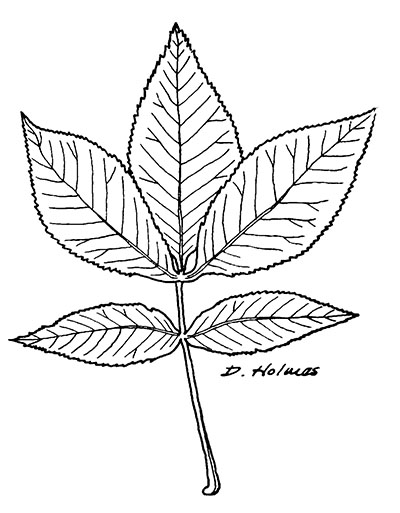
This week, we introduce the Shagbark hickory or Carya ovata.
This species is easily identifiable by its rough, shaggy bark, which is often peeling off from the trunk in thin strips. Its unique leaves feature five leaflets, two held opposite one another toward the base of the stem and three held at the end of the leaf. The fruit is a large, four-ribbed nut with a husk that will split all the way open. In the fall, shagbark hickory can provide fall color in the form of its stunning golden or yellow leaves.
Shagbark hickory has several close relatives. Shagbark can be differentiated from its cousin shellbark hickory, which features large stout twigs, seven to nine leaflets and typically has substantially larger nuts.
Shagbark hickories grow to a mature height of 60 to 80 feet tall. They grow mostly in moist, well-drained soil and are often found in upland woodlands and savannas, ranging across the Eastern United States, except in the gulf and Atlantic coastal plains, as well as in portions of Canada along Lake Erie and Ontario and the St. Lawrence River.
Shagbark hickory has a unique application in the furniture industry known as “Old Hickory Furniture,” which originated around 1900 in Indiana. This rustic furniture is made from hickory rounds or sapling with the bark left on, and was used in parks and other natural areas during his prime production.
For full article with additional photos view: Intro to Trees of Indiana: Shagbark Hickory
Other Resources:
Shagbark Hickory in Hardwoods of the Midwest, Purdue Arboretum Explorer
Hickory and Pecan Species in the Hardwood Lumber and Veneer Series, The Education Store, Purdue Extension’s resource center
Sustaining Our Oak-Hickory Forests – Hardwood Ecosystem Experiment, The Education Store
The Hardwood Ecosystem Experiment: 2006-2016, The Education Store
Indiana Forestry and Wildlife: The Hardwood Ecosystem Experiment, The Education Store
Fifty Common Trees of Indiana
An Introduction to Trees of Indiana
Native Trees of the Midwest, The Education Store
Shrubs and Woody Vines of Indiana and the Midwest, The Education Store
Investing in Indiana Woodlands, The Education Store
Forest Improvement Handbook, The Education Store
ID That Tree, Purdue Extension-Forestry & Natural Resources (FNR) YouTube playlist
Woodland Management Moment , Purdue Extension-FNR YouTube playlist
Wendy Mayer, FNR Communications Coordinator
Purdue University Department of Forestry and Natural Resources
Lenny Farlee, Sustaining Hardwood Extension Specialist
Purdue University Department of Forestry and Natural Resources
The precipitous decline in songbird numbers over the past few decades has made national news and generated calls for action to address the issues contributing to this decline. One of the contributing factors to the decline of several North American bird species is the diminishing area of suitable habitat.
 The initial assumption that many people have is this loss of habitat is forests or grasslands being converted into cropland or developments. While this does happen and is a concern in some areas, Indiana has actually been increasing our area of forest over the last several decades. An increasingly common habitat threat to several bird species is changing grassland or forest structure that occur through time in the absence of historic disturbances like fires or land management activities like thinning and harvesting.
The invasion of forests, wetlands, and grasslands by invasive plant species can also degrade or destroy habitat values for birds and other wildlife. Managing areas to reduce invasive species and introducing disturbances like prescribed fires, critical area plantings, thinning, and regeneration activities can improve habitat quality for a variety of declining birds.
The The Nature Conservancy in Indiana, partnering with birders, ornithologists, foresters, and wildlife biologists, has developed the Forestry for the Birds program, modeled from a similar program in Vermont. The goal is to provide strategies that can benefit both forest management and bird communities, facilitating and simplifying the management of bird-friendly forests. “The Birders Dozen” were selected among declining birds that Indiana residents could identify by sight or song and need conservation action through habitat management.
Learn more about Forestry for the Birds, the Birders Dozen, and what you can do to help declining birds and other wildlife in Indiana. Find the Forestry for the Birds Pocket Guide which is a free download.
Resources:
Managing Woodlands for Birds Video, Purdue Extension-Forestry and Natural Resources (FNR) YouTube Channel
Breeding Birds and Forest Management: the Hardwood Ecosystem Experiment and the Central Hardwoods Region, The Education Store
The Birders’ Dozen, Profile: Baltimore Oriole, Indiana Woodland Steward
Ask An Expert, Playlist, Purdue Extension – FNR YouTube channel
It’s For the Birds, Indiana Yard and Garden-Purdue Consumer Horticulture
Birds and Residential Window Strikes: Tips for Prevention, The Education Store, Purdue Extension resource center
No Room at the Inn: Suburban Backyards and Migratory Birds, Education Store, Purdue Extension resource center
Hardwood Ecosystem Experiment – Wildlife Responses to Timber Harvesting, The Education Store
Subscribe, Purdue Extension – FNR YouTube Channel
Lenny Farlee, Sustaining Hardwood Extension Specialist
Purdue University Department of Forestry and Natural Resources
Jessica Outcalt, Agricultural & Natural Resources Educator
Purdue University Department of Forestry and Natural Resources
The Nature Conservancy – Indiana
 The classic and trusted book “Fifty Common Trees of Indiana” by T.E. Shaw was published in 1956 as a user-friendly guide to local species. Nearly 70 years later, the publication has been updated through a joint effort by the Purdue Department of Forestry and Natural Resources, Indiana 4-H, and the Indiana Department of Natural Resources, and reintroduced as “An Introduction to Trees of Indiana.”
The full publication is available for download for $7 in the Purdue Extension Education Store. The field guide helps identify common Indiana woodlot trees.
Each week, the Intro to Trees of Indiana web series will offer a sneak peek at one species from the book, paired with an ID That Tree video from Purdue Extension forester Lenny Farlee to help visualize each species as it stands in the woods. Threats to species health as well as also insight into the wood provided by the species, will be provided through additional resources as well as the Hardwoods of the Central Midwest exhibit of the Purdue Arboretum, if available.
This week, we introduce the bitternut hickory or Carya cordiformis.
This cousin of the pecan, has anywhere from five to 11 leaflets, commonly seven to nine, on each alternately held compound leaf. Leaflets are much longer than they are wide and are often curved backwards.
A sulphur-colored, elongated bud is a standout identifying characteristic. Bitternut hickory has tight light to silvery gray bark with interlacing ridges throughout the life of the tree.
The fruit is a light colored, small, round nut, with a thick hull and a slight wing where the sutures meet. It is quite bitter and not preferred by animals or humans.
The bitternut hickory is one of the fastest growing hickory species in the state behind the pecan, and produces some fall beauty with yellow and gold foliage. Bitternut hickory, one of the most abundant and wide spread hickory species, can be found on dry gravelly uplands as well as rich moist bottomland from the Atlantic coast to the Great Plains, north through Minnesota and the St. Lawrence River valley, except the gulf coastal plains and the lower Mississippi flood plain regions.
For full article with additional photos view: Intro to Trees of Indiana: Bitternut Hickory.
Other Resources:
Hackberry in Hardwoods of the Midwest, Purdue Arboretum Explorer
Hickory and Pecan Species in the Hardwood Lumber and Veneer Series, The Education Store, Purdue Extension’s resource center
Sustaining Our Oak-Hickory Forests – Hardwood Ecosystem Experiment, The Education Store
The Hardwood Ecosystem Experiment: 2006-2016, The Education Store
Indiana Forestry and Wildlife: The Hardwood Ecosystem Experiment, The Education Store
Fifty Common Trees of Indiana
An Introduction to Trees of Indiana
Native Trees of the Midwest, The Education Store
Shrubs and Woody Vines of Indiana and the Midwest, The Education Store
Investing in Indiana Woodlands, The Education Store
Forest Improvement Handbook, The Education Store
ID That Tree, Purdue Extension-Forestry & Natural Resources (FNR) YouTube playlist
Woodland Management Moment , Purdue Extension-FNR YouTube playlist
Wendy Mayer, FNR Communications Coordinator
Purdue University Department of Forestry and Natural Resources
Lenny Farlee, Sustaining Hardwood Extension Specialist
Purdue University Department of Forestry and Natural Resources
 The classic and trusted book “Fifty Common Trees of Indiana” by T.E. Shaw was published in 1956 as a user-friendly guide to local species. Nearly 70 years later, the publication has been updated through a joint effort by the Purdue Department of Forestry and Natural Resources, Indiana 4-H, and the Indiana Department of Natural Resources, and reintroduced as “An Introduction to Trees of Indiana.”
The full publication is available for download for $7 in the Purdue Extension Education Store. The field guide helps identify common Indiana woodlot trees.
Each week, the Intro to Trees of Indiana web series will offer a sneak peek at one species from the book, paired with an ID That Tree video from Purdue Extension forester Lenny Farlee to help visualize each species as it stands in the woods. Threats to species health as well as also insight into the wood provided by the species, will be provided through additional resources as well as the Hardwoods of the Central Midwest exhibit of the Purdue Arboretum, if available.
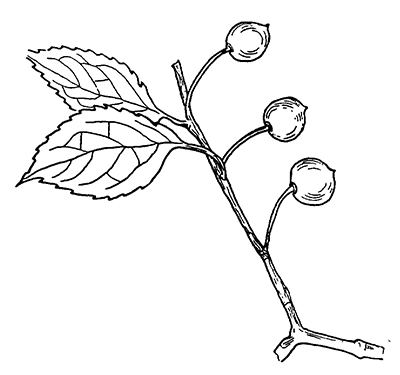
This week, we introduce the hackberry or Celtis occidentalis.
This species is easily identified by its single-tooth margined leaves, which are lopsided with one side slightly higher than the other at the base of the twig. The gray, ashy bark is often warty/bumpy with smooth spots in between, although it may be fairly smooth like beech with warts and ridges spaced throughout. Many hackberries have clumps of distorted twigs in their tops call witch’s brooms. The fruit of the hackberry are small hard black berries, which are favored by birds.
The leaves of hackberry may be confused with elm at first glance, due to their sandpapery texture, but elms have doubly toothed margins with smaller teeth on top of the large teeth, unlike the single tooth appearance of hackberry. The leaves are often deteriorating late in the growing season after being attacked by a variety of insects.
Hackberry is often found along fence rows and field edges, but also may be found in the interior woodlands. This species prefers moist, well-drained soils, but will row on limestone outcrops and other droughty areas. It is native to the Midwest and upper eastern United States, ranging from the Great Plains to the east coast and from the Great Lakes states to central Tennessee and Arkansas.
For full article with additional photos view: Intro to Trees of Indiana: Hackberry
Other Resources:
Hackberry in Hardwoods of the Midwest
Hackberry in the Hardwood Lumber and Veneer Series
Why is my hackberry tree losing leaves?
Fifty Common Trees of Indiana
An Introduction to Trees of Indiana
Native Trees of the Midwest
Shrubs and Woody Vines of Indiana and the Midwest
ID That Tree YouTube playlist
Woodland Management Moment YouTube playlist
Investing in Indiana Woodlands
Forest Improvement Handbook
Wendy Mayer, FNR Communications Coordinator
Purdue University Department of Forestry and Natural Resources
Lenny Farlee, Sustaining Hardwood Extension Specialist
Purdue University Department of Forestry and Natural Resources
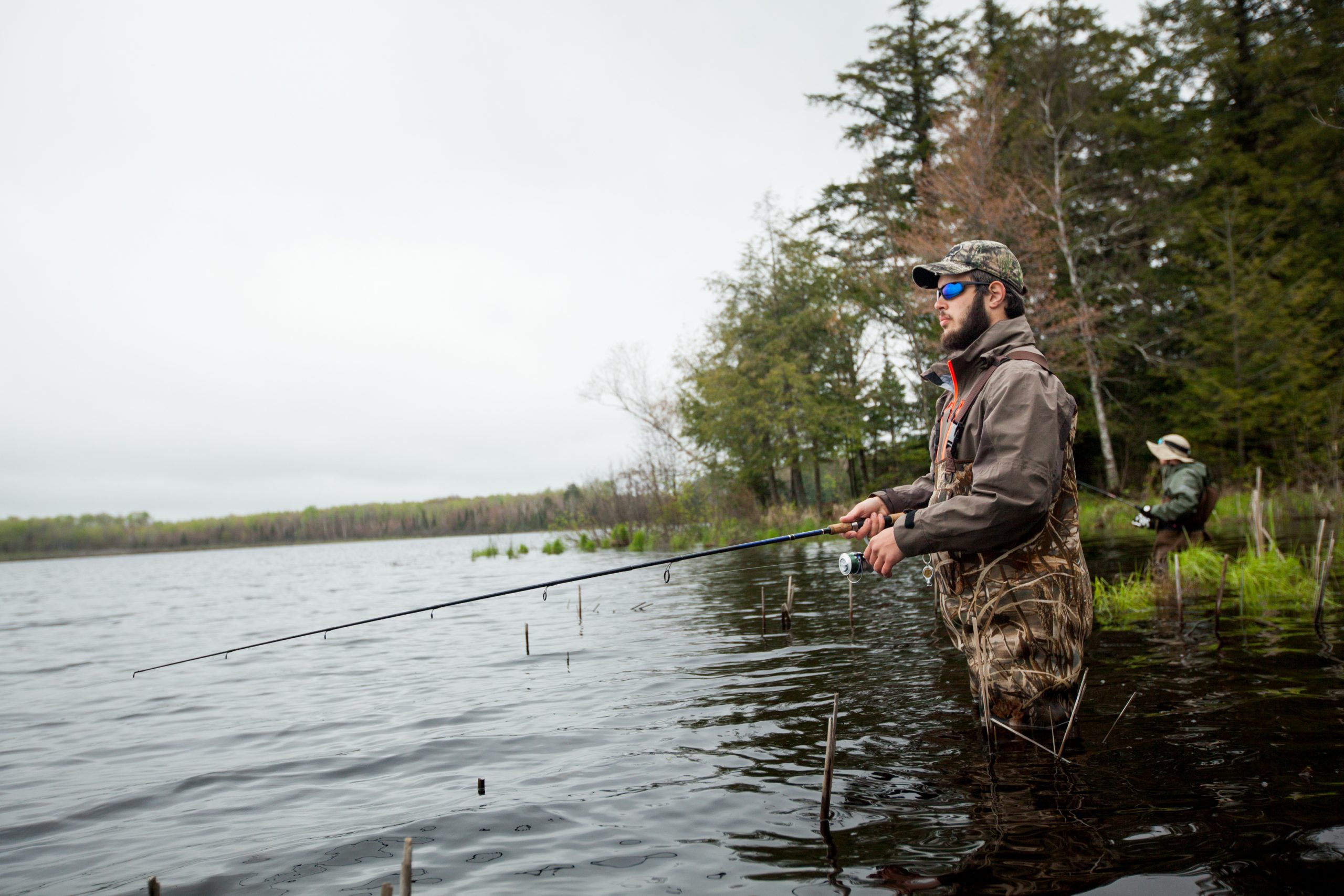 Wild Bulletin, Indiana Department of Natural Resources Fish & Wildlife email newsletter, Fishing Tips, and Videos: Fishing can be hard for someone just starting—the choice in rods, reels, bait, lures, and lines can be mind-boggling. So, when first learning how to fish, keep it simple, light, and close to home.
A light fishing line with small bobbers, weights, hooks, and bait can help you get some excitement on the end of the line fast. Beginner anglers (kids or adults) may tire quickly and often give up while waiting for a giant bass to bite. Most beginners would rather pull in 25 minnow-sized bluegills than wait for one trophy catch.
If you are looking for additional information on how to get get started, you can learn more fishing tips about:
For more fishing tips. Check out these advanced fishing tips.
To subscribe visit: Wildlife Bulletin Newsletter, Indiana DNR-Department of Fisheries and Wildlife.
Resources:
Lampreys, Indiana Division of Fish and Wildlife’s Animal Informational Series
Protect Your Waters, U.S. Fish, and Wildlife Service & U.S. Coast Guard
Nongame and Endangered Wildlife, Indiana Department of Natural Resources
Fishing Guide and Regulations, Indiana Department of Natural Resources
List of Indiana Fishes, Indiana Department of Natural Resources
Pond Management: Stocking Fish in Indiana Ponds, The Education Store
Indiana Department of Natural Resources
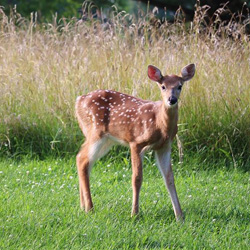
MyDNR, Indiana’s Outdoor Newsletter: It’s not too early to think about deer season. You can find season dates and answers to deer hunting FAQs at White-tailed Deer Hunting, and you can purchase deer licenses at an authorized retailer or online.
 Remember, you must have an Access Indiana account before purchasing your license online. We recommend setting up or reviewing your account information ahead of time to avoid any delay. Some waterfowl, deer, game bird, and pheasant applications open on Aug. 22. See the full list on Reserved Hunt Information. You can submit only one application per hunt, and no changes can be made once an application is submitted.
The 2022-2023 deer hunting seasons are as follows:
- Reduction Zone: Sept. 15, 2022 – Jan. 31, 2023 (where open)
- Youth Season: Sept. 24-25, 2022
- Archery: Oct. 1, 2022 – Jan. 1, 2023
- Firearm: Nov. 12-27, 2022
- Muzzleloader: Dec. 3-18, 2022
- Special Antlerless: Dec. 26, 2022 – Jan. 1, 2023
A resident youth hunt/trap, or comprehensive lifetime hunting license is required to hunt for deer unless you meet one of the license exemptions. All deer harvested in Indiana must be reported within 48 hours of the time of harvest at an on-site check station. It is only available online, through your Indiana Fish & Wildlife Account, or by phone at 1-800-419-1326. There is a $3 charge for the phone service, payable only by Visa or Mastercard.
Want to apply for a reserved hunt? Applicants must possess a valid hunting license for the hunt for which they are applying. To find out more about reserved hunt applications that are open or open soon, please visit the full article > > >
Resources:
How to Score Your White-tailed Deer, video, The Education Store, Purdue Extension Resource Center
White-Tailed Deer Post Harvest Collection, video, The Education Store
Age Determination in White-tailed Deer, video, The Education Store
How to Build a Plastic Mesh Deer Exclusion Fence, The Education Store
Managing Your Woods for White-Tailed Deer, The Education Store
Bovine Tuberculosis in Wild White-tailed Deer, The Education Store
Subscribe to Purdue Extension-Forestry & Natural Resources YouTube Channel, Wildlife Playlist
Subscribe to MyDNR, Wild Bulletin and State Park Inns News, Indiana Department of Natural Resources (IN DNR)
Indiana Deer Hunting, Biology and Management, Safe Food Handling and Preparation IN DNR
Indiana Department of Natural Resources, Department of Fish & Wildlife
The classic and trusted book “Fifty Common Trees of Indiana” by T.E. Shaw was published in 1956 as a user-friendly guide to local species. Nearly 70 years later, the publication has been updated through a joint effort by the Purdue Department of Forestry and Natural Resources, Indiana 4-H, and the Indiana Department of Natural Resources, and reintroduced as “An Introduction to Trees of Indiana.”
 The full publication is available for download for $7 in the Purdue Extension Education Store. The field guide helps identify common Indiana woodlot trees.
Each week, the Intro to Trees of Indiana web series will offer a sneak peek at one species from the book, paired with an ID That Tree video from Purdue Extension forester Lenny Farlee to help visualize each species as it stands in the woods. Threats to species health as well as also insight into the wood provided by the species will be provided through additional resources as well as the Hardwoods of the Central Midwest exhibit of the Purdue Arboretum, if available.
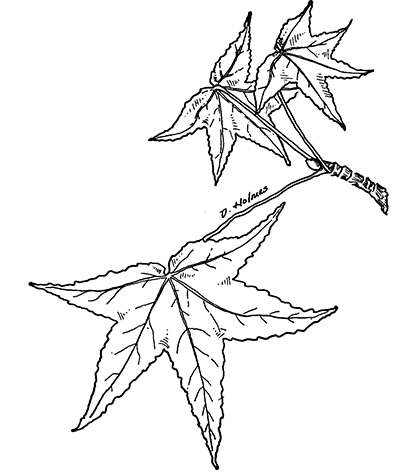
This week, we introduce the sweetgum or Liquidambar styraciflua.
This species is easily identified by its leaves, which are shaped like a five-pointed star and held alternately near the end of the twigs on long leaf stems. The leaves change from bright green in the summer to fall colors ranging from yellow to orange, red, and purple. The twigs of sweetgum may be smooth or feature corky winged projections. The fruit of the sweetgum are spiny spherical balls that hold tiny winged seeds inside, which are released in the fall.
Sweetgum is found natively in the low, wet bottomland woods of southern Indiana, but is planted ornamentally through the state. This species grows as far north as coastal New York, as far south as central Florida, as far west as eastern Texas as well as throughout the Midwest with the exception of the Appalachian Mountains.
For full article with additional photos view: Intro to Trees of Indiana: Sweet Gum
Other Resources:
Sweetgum in Hardwoods of the Midwest
Sweetgum in the Hardwood Lumber and Veneer Series
Fifty Common Trees of Indiana
An Introduction to Trees of Indiana
Native Trees of the Midwest
Shrubs and Woody Vines of Indiana and the Midwest
ID That Tree YouTube playlist
Woodland Management Moment YouTube playlist
Investing in Indiana Woodlands
Forest Improvement Handbook
Wendy Mayer, FNR Communications Coordinator
Purdue University Department of Forestry and Natural Resources
Lenny Farlee, Sustaining Hardwood Extension Specialist
Purdue University Department of Forestry and Natural Resources
 The classic and trusted book “Fifty Common Trees of Indiana” by T.E. Shaw was published in 1956 as a user-friendly guide to local species. Nearly 70 years later, the publication has been updated through a joint effort by the Purdue Department of Forestry and Natural Resources, Indiana 4-H, and the Indiana Department of Natural Resources, and reintroduced as “An Introduction to Trees of Indiana.”
The full publication is available for download for $7 in the Purdue Extension Education Store. The field guide helps identify common Indiana woodlot trees.
Each week, the Intro to Trees of Indiana web series will offer a sneak peek at one species from the book, paired with an ID That Tree video from Purdue Extension forester Lenny Farlee to help visualize each species as it stands in the woods. Threats to species health as well as also insight into the wood provided by the species, will be provided through additional resources as well as the Hardwoods of the Central Midwest exhibit of the Purdue Arboretum, if available.
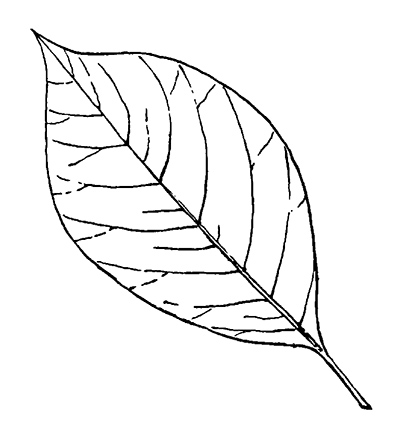
This week, we introduce the black gum or Nyssa sylvatica.
The black gum, also known as bee gum, sour gum, black tupelo or pepperidge, has glossy, green oblong leaves broader at the tip that at the base. The alternately held leaves are often found in clusters at the tips of the branches, which grow out of the trunk at nearly 90-degree angles. The bark, which can range from light gray to a dark grayish brown, resembles alligator hide or in some case features long running ridges.
Black gum produces a small dark-blue berry-like fruit which ripen in late September and are favored by birds. In the fall, this species also puts on quite a show with its striking red/maroon leaves, which begin to change in mid-September.
Black gum is a medium-sized tree that is found on moist, well-drained soils, but also grows on dry upland sites. This species can be found from southern Maine to nearly the tip of Florida. It also ranges from east Texas north across Missouri, southern Illinois, nearly all of Indiana and to central Michigan and back east, except in the lower Mississippi River bottom.
For full article with additional photos view: Intro to Trees of Indiana: Black Gum
Other Resources:
Black Gum in the Hardwood Lumber and Veneer Series
Black Gum/Tupelo, Native Trees of Indiana River Walk, Purdue Fort Wayne
Black Gum & Tupelo, Purdue Arboretum Explorer
Fifty Common Trees of Indiana
An Introduction to Trees of Indiana
Native Trees of the Midwest
Shrubs and Woody Vines of Indiana and the Midwest
ID That Tree YouTube playlist
Woodland Management Moment YouTube playlist
Investing in Indiana Woodlands
Forest Improvement Handbook
Wendy Mayer, FNR Communications Coordinator
Purdue University Department of Forestry and Natural Resources
Lenny Farlee, Sustaining Hardwood Extension Specialist
Purdue University Department of Forestry and Natural Resources
In this episode of A Moment in the Wild, Purdue extension wildlife technician Zach Truelock introduces you to the northern map turtle. This species is named for the fact that its shell resembles a topographic map. Learn more inside.
If you have any questions regarding wildlife, trees, forest management, wood products, natural resource planning, or other natural resource topics, feel free to contact us by using our Ask an Expert web page.
Resources:
Turtles of Indiana, The Education Store
Forestry Management for Reptiles and Amphibians: A Technical Guide for the Midwest, The Education Store
Appreciating Reptiles and Amphibians in Nature, The Education Store
Indiana Amphibian and Reptile ID Package (4 softcover books), The Education Store
When Juvenile Snakes Come Calling, FNR Got Nature? blog
A Moment in the Wild, Playlist, Purdue Extension – Forestry and Natural Resources
A Moment in the Wild: Black Racer, Video, Purdue Extension – Forestry and Natural Resources YouTube channel
A Moment in the Wild: Eastern Kingsnake, Purdue Extension – FNR Video
A Moment in the Wild: Eastern Hognose, Purdue Extension – FNR Video
Ask An Expert, Purdue Extension – FNR Playlist
Zach Truelock, Hellbender Technician
Purdue Forestry and Natural Resources
Rod Williams, Assistant Provost for Engagement/Professor of Wildlife Science
Purdue University Department of Forestry and Natural Resources
 The classic and trusted book “Fifty Common Trees of Indiana” by T.E. Shaw was published in 1956 as a user-friendly guide to local species. Nearly 70 years later, the publication has been updated through a joint effort by the Purdue Department of Forestry and Natural Resources, Indiana 4-H, and the Indiana Department of Natural Resources, and reintroduced as “An Introduction to Trees of Indiana.”
The full publication is available for download for $7 in the Purdue Extension Education Store. The field guide helps identify common Indiana woodlot trees.
Each week, the Intro to Trees of Indiana web series will offer a sneak peek at one species from the book, paired with an ID That Tree video from Purdue Extension forester Lenny Farlee to help visualize each species as it stands in the woods. Threats to species health as well as also insight into the wood provided by the species, will be provided through additional resources as well as the Hardwoods of the Central Midwest exhibit of the Purdue Arboretum, if available.
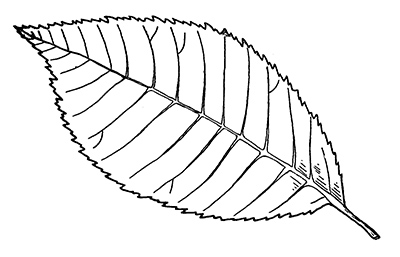
This week, we introduce the American elm or Ulmus americana.
The American elm, also called white elm, is easily identified by its simple doubly-serrated oval leaves, which feature a large tooth with small teeth like edges on top that. The leaves are held on fine twigs, which turn a medium brown over the summer. The bark of the American elm is spongy, with strong crisscrossing ridges. When sliced open, these ridges show distinct reddish brown and light tan/white colored layers inside the bark. This is different from the dark brown and reddish-brown layers found in the bark of red elm or slippery elm.
The American elm features an open, spreading crown and drooping limbs that form a vase shape.
American elm is a common tree in many riparian forest areas or moist soil forest areas. The species used to be a common street tree in Indiana, but that number has dwindled due to Dutch elm disease, a fungal diseased which ravaged the species in the second half of the 20th century.
American elm can be found throughout the northeastern United States south to central Florida and west to central Texas and north to southeastern Saskatchewan.
For full article with additional photos view: Intro to Trees of Indiana: American Elm
Resources:
Elm, The Education Store, Purdue Extension resource center
Slippery Elm, Native Trees of Indiana River Walk, Purdue – Fort Wayne
Top 5 List for Tree Selection and Planting, Purdue Extension-Forestry & Natural Resources (FNR) Got Nature? Blog
Fifty Common Trees of Indiana
An Introduction to Trees of Indiana
Native Trees of the Midwest, The Education Store, Purdue Extension’s resource center
Shrubs and Woody Vines of Indiana and the Midwest, The Education Store
ID That Tree, Purdue Extension-FNR’s YouTube playlist
Woodland Management Moment , Purdue Extension-FNR’s YouTube playlist
Investing in Indiana Woodlands, The Education Store
Forest Improvement Handbook, The Education Store
Wendy Mayer, FNR Communications Coordinator
Purdue University Department of Forestry and Natural Resources
Lenny Farlee, Sustaining Hardwood Extension Specialist
Purdue University Department of Forestry and Natural Resources

Recent Posts
- Purdue Extension: Empowering Indiana Through Innovation, Education and Community Impact
Posted: January 28, 2026 in Community Development, How To, Invasive Insects, Invasive Plant Species, Natural Resource Planning, Woodlands - Forest Landowners: Share Your Experience with Regeneration and Restoration
Posted: January 27, 2026 in Forestry, How To, Timber Marketing, Woodlands - It’s Not Too Late to Order Trees for Spring Planting
Posted: January 13, 2026 in Forestry, How To, Plants - Now Is The Time To Control Non-Native Bush Honeysuckle
Posted: October 30, 2025 in Forestry, How To, Invasive Plant Species, Woodlands - October Is Firewood Month: Protect Indiana’s Forests by Making Smart Choices
Posted: October 13, 2025 in Forestry, Forests and Street Trees, How To, Invasive Insects, Urban Forestry - ID That Tree: Smooth Sumac
Posted: October 2, 2025 in Forestry, How To, Wildlife - ID That Tree: Wild Grape Vine
Posted: August 12, 2025 in Forestry, How To, Urban Forestry, Wildlife - Publication – Sericea Lespedeza Control
Posted: July 7, 2025 in Forestry, How To, Invasive Plant Species, Wildlife - How to ID Asian Jumping Worms, Purdue Landscape Report
Posted: July 2, 2025 in How To, Invasive Insects, Wildlife - Alert – Water Your Trees, Watch Video
Posted: June 20, 2025 in Alert, Drought, Forests and Street Trees, How To, Urban Forestry, Wildlife, Woodlands
Archives
Categories
- Alert
- Aquaculture/Fish
- Aquatic/Aquaculture Resources
- Ask the Expert
- Christmas Trees
- Community Development
- Disease
- Drought
- Forestry
- Forests and Street Trees
- Gardening
- Got Nature for Kids
- Great Lakes
- How To
- Invasive Animal Species
- Invasive Insects
- Invasive Plant Species
- Land Use
- Natural Resource Planning
- Nature of Teaching
- Plants
- Podcasts
- Ponds
- Publication
- Safety
- Spiders
- Timber Marketing
- Uncategorized
- Urban Forestry
- Webinar
- Wildlife
- Wood Products/Manufacturing
- Woodland Management Moment
- Woodlands