 Purdue University - Extension - Forestry and Natural Resources
Got Nature? Blog
In this episode of ID That Tree, Purdue Extension forester Lenny Farlee introduces the White Spruce. This species is found in the North Woods of Northern Wisconsin and the Upper Peninsula of Michigan. This species has single needles attached to the twig that tend to be relatively angular and stout. The bark tends to be flaky and dark. The cones are two to three inches in length, have thin scales, and are cylindrical in shape.
If you have any questions regarding wildlife, trees, forest management, wood products, natural resource planning or other natural resource topics, feel free to contact us by using our Ask an Expert web page.
Resources:
ID That Tree, Playlist, Purdue Extension – Forestry and Natural Resources YouTube Channel (Invasive White Mulberry, Siberian Elm, Tree of Heaven)
Invasive Species Playlist, Playlist, Purdue Extension – FNR YouTube Channel (Asian Bush Honeysuckle, Burning Bush, Callery Pear, Multiflora rose)
A Woodland Management Moment, Playlist, Purdue Extension – FNR YouTube Channel (Against Invasives, Garlic Mustard, Autumn Olive)
Woodland Stewardship for Landowners, Playlist, Purdue Extension – FNR YouTube Channel (Common Buckthorn, Japanese Barberry)
Report Invasive Species, Purdue Invasive Species
The GLEDN Phone App – Great Lakes Early Detection Network
EDDMaps – Early Detection and Distribution Mapping System
How long do seeds of the invasive tree, Ailanthus altissima remain viable? (Invasive Tree of Heaven), USDA Forest Service
Indiana Department of Natural Resources: Invasive Species
Indiana Invasive Species Council
Cooperative Invasive Species Management Area (CISMA)
Aquatic Invasive Species, Illinois-Indiana Sea Grant (IISG)
Episode 11 – Exploring the challenges of Invasive Species, Habitat University-Natural Resource University
What are invasive species and why should I care?, Got Nature? Blog, Purdue Extension – FNR
Shrubs and Woody Vines of Indiana and the Midwest, The Education Store, Purdue Extension Resource Center
Native Trees of the Midwest, The Education Store
Investing in Indiana Woodlands, The Education Store
Forest Improvement Handbook, The Education Store
Lenny Farlee, Extension Forester
Hardwood Tree Improvement and Regeneration Center
Purdue Department of Forestry & Natural Resources
Purdue Landscape Report: I have lost count of the number of times I’ve witnessed people working with chainsaws in shorts, a tank top, and flip flops with maybe a pair of earbuds, and it makes me cringe every time. According to the CDC, over 36,000 chainsaw-related injuries a year are reported with annual medical costs of more than $350 million (Johnson, 2023). Wearing the proper personal protective equipment (PPE) can help prevent accidents and injuries (Fig. 1). PPE is there to protect you from head to toe and if you are investing in a chainsaw, it doesn’t take much more to invest in the proper PPE. Including a work shirt and pants, if you’re using a chainsaw you should wear protection for your head, eyes and ears, hands, legs, and feet, most of which can be found at your local hardware store or home center.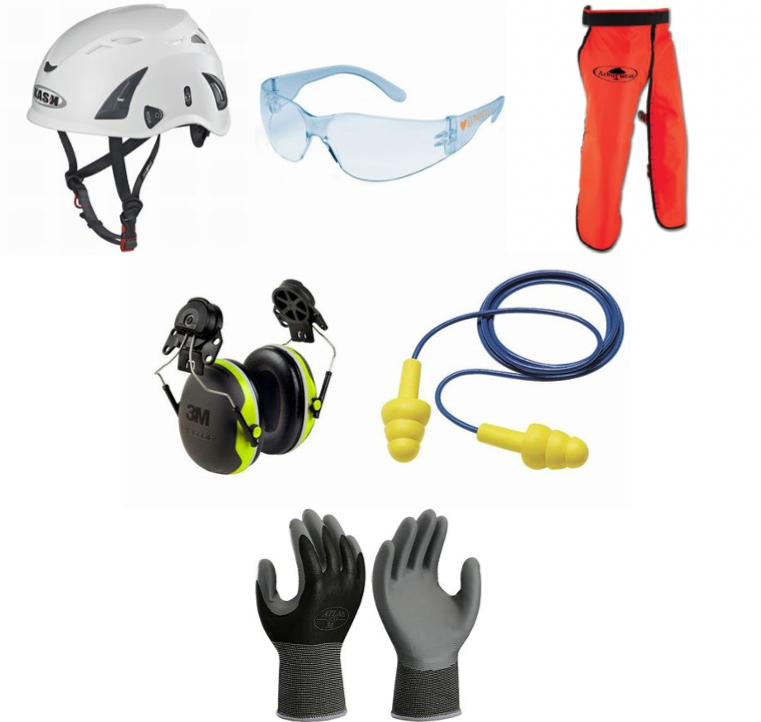
Protecting your head means using a helmet, not a baseball cap or bandanna. Depending on the type of work you’re doing there is a risk of being struck by wood or branches or if kickback occurs, sending the chainsaw back towards your head. Safety glasses will help keep sawdust and other debris out of your eyes and should be stamped with Z87.1, showing they conform to ANSI safety regulations. Normal glasses and sunglasses are not rated for being struck and can shatter, sending broken lenses into your eyes. Ear protection can be in the form of plugs or muffs and should be rated to reduce noise to appropriate levels when worn properly.
Most modern chainsaws have built-in anti vibration technology to reduce fatigue, but having a nice pair of work gloves will still help to protect your hands and grip. Gloves will help protect against debris and are also good to wear for chainsaw maintenance. Although not about PPE, another note on protecting your hands when operating a chainsaw includes the proper use of the chain brake. Injuries can occur on the right hand because operators will remove it from the back handle to activate the chain brake with the palm of their hand and miss it, putting their hand on the still moving chain. Injuries on either hand can happen when one handing a saw while using your other hand to brace or manage what you are cutting and losing control. The chain brake is designed to be engaged by popping your left wrist forward while maintaining a grip with both hands on the handles.
To protect your legs some form of chaps or chap pants are needed. Prices can range from around $40 for a pair of wrap-chaps that can be worn over your work pants up to around $400 for a high-end pair of chap pants that are a stand-alone work pant replacement. Whichever you choose to wear, the protection should be from the top of your thigh to the top of your foot and wrap around your calf. Care should be taken to keep them clean from gas and oil and if they are ever damaged by a chainsaw, chaps should be discarded and replaced. Once the protective material has been damaged the safety has been compromised. Chainsaw boots are also available to protect your lower legs and feet but are expensive and can be heavy. A sturdy work boot should be worn at the very least while staying alert to how close the chainsaw is coming to you. And please, no open-toed shoes.
Whatever the task, if you are going to do your own chainsaw work, then I implore you to wear your PPE from head to toe. I know it’s hot and can get uncomfortable, but all it takes is one mistake to send you to the ER. If you feel the job is beyond your capabilities you can always contact an ISA certified arborist at Find an Arborist through the treesaregood.org website.
To view this full article and other Purdue Landscape Report articles, please visit Purdue Landscape Report.
Subscribe and receive the newsletter: Purdue Landscape Report Newsletter.
Resources:
The Purdue Landscape Report
A Woodland Management Moment, Playlist, Purdue Extension – Forestry and Natural Resources (FNR) Youtube Channel
Conservation Tree Planting: Steps to Success, Purdue Extension – FNR Youtube Channel
Forest Improvement Handbook, The Education Store
Find an Arborist website, Trees are Good, International Society of Arboriculture (ISA)
Caring for storm-damaged trees/How to Acidify Soil in the Yard – In the Grow, Purdue Extension
Moist soil and rotten roots makes it easy for trees to come crashing down – Fox 59 News
Tree Risk Management – The Education Store, Purdue Extension’s resource center
Mechanical Damage to Trees: Mowing and Maintenance Equipment – The Education Store
Trees and Electric Lines – The Education Store
Tree Support Systems, The Education Store
Corrective Pruning for Deciduous Trees, The Education Store
Tree Installation: Process and Practices, The Education Store
Ben McCallister, Urban Forestry Specialist
Purdue Forestry & Natural Resources
In this webinar hosted by Indiana Forestry & Woodland Owners Association, ecologist Michael Homoya discusses the many naturally occurring species of orchids in Indiana and their range, habitats and blooming seasons. This presentation will look at a selection of them and discuss their floral characteristics as well as range, habitat, and blooming seasons. Michael Homoya served as Botanist/Plant Ecologist for the Indiana Department of Natural Resources, Division of Nature Preserves for 37 years before retiring in 2019. He has written over 75 scientific papers, popular articles, and books about Indiana’s natural features, including Orchids of Indiana, Wildflowers and Ferns of Indiana Forests: A Field Guide, Wake Up, Woods, and Wildflowers of the Midwest.
Check out the Indiana Forestry & Woodland Association YouTube Channel for videos including: What is IFWOA?; A New Carbon Program for Hardwood Landowners Webinar, Indiana’s Native Orchids, Magnificent Trees of Indiana, Be Tick Aware and much more.
The Indiana Forestry & Woodland Owners Association (IFWOA) was founded in 1977 and is a non-profit organization dedicated to conservation and sustainable management of woodlands in Indiana. IFWOA advocates for scientific best practices for management to achieve objectives of clean water, wildlife habitat, soil protection, native species diversity, timber production, recreation, carbon sequestration and many others.
IFWOA is an affiliate of the National Woodland Owners Association. IFWOA is a partner, collaborator or is represented on leading National and State organizations. These memberships or collaborations are selected to advance Indiana Woodland owner’s interests. IFWOA monitors and influences legislation and economic trends impacting Indiana woodlands and landowners for our members. Membership in IFWOA provides a valuable network linkage to information and resources at the leading edge of science, industry and politics impacting Indiana woodlands.
Resources:
Orchids of Indiana, Google Books
Wildflowers and Ferns of Indiana Forests: A Field Guide, Google Books
Wildflowers of the Midwest, Google Books
Magnificent Trees of Indiana, Purdue University Press
Forest Improvement Handbook, The Education Store, Purdue Extension’s resource center
Planting Hardwood Seedlings – The Education Store
Ordering Seedlings from the State Forest Nursery System, Got Nature? – Purdue Extension-FNR
Importance of Hardwood Tree Planting – The Education Store, Purdue Extension Resource Center
Forest Improvement Handbook – The Education Store
Designing Hardwood Tree Plantings for Wildlife – The Education Store
ID That Tree – YouTube Playlist
Forest Management for Reptiles and Amphibians: A Technical Guide for the Midwest, The Education Store
Hardwood Ecosystem Experiment – Forest Birds , Purdue Extension – FNR YouTube Channel
Managing Woodlands for Birds , Purdue Extension – FNR YouTube Channel
Sustaining Our Oak-Hickory Forests , Purdue Extension – FNR YouTube Channel
Ask the Expert: Hardwood Ecosystem Experiment – Birds and Salamander Research, Purdue Extension – FNR
Subscribe to Purdue Extension-FNR YouTube Channel
Liz Jackson, Engagement Lead
Indiana Forestry & Woodland Association
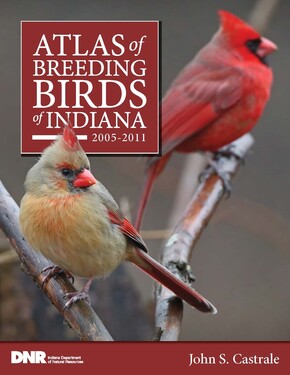 MyDNR, Indiana’s Outdoor Newsletter: The latest Breeding Bird Atlas is available. The Division of Fish & Wildlife thanks all atlas participants for their hard work and patience as we worked together to complete this multi-year feat.
The 2005-2011 Atlas of Breeding Birds of Indiana is essential to conservation efforts, as it provides information on breeding occurrences and habitats of rare birds. Not only does it identify new habitat locations for our state’s birds, but it also provides baseline data that can be used for studies on future populations.
Add some color to your day by browsing through the atlas and its beautiful photos of the native birds of Indiana.
Newsletter can be found online: MyDNR Email Newsletter
For more information please visit DNR: Fish & Wildlife: Breeding Bird Atlas.
Resources:
Breeding Birds and Forest Management: the Hardwood Ecosystem Experiment and the Central Hardwoods Region, The Education Store, Purdue Extension – Forestry and Natural Resources
Forest Birds, The Education Store
Managing Woodlands for Birds, The Education Store
Managing Woodlands for Birds Video, Purdue Extension-Forestry and Natural Resources (FNR) YouTube Channel
Breeding Birds and Forest Management: the Hardwood Ecosystem Experiment and the Central Hardwoods Region, The Education Store
The Birders’ Dozen, Profile: Baltimore Oriole, Indiana Woodland Steward
Ask An Expert, Playlist, Purdue Extension – FNR YouTube channel
It’s For the Birds, Indiana Yard and Garden-Purdue Consumer Horticulture
Birds and Residential Window Strikes: Tips for Prevention, The Education Store, Purdue Extension resource center
No Room at the Inn: Suburban Backyards and Migratory Birds, Education Store, Purdue Extension resource center
Indiana Department of Natural Resources, Department of Fish & Wildlife
In this episode of ID That Tree, Purdue Extension forester Lenny Farlee introduces the Balsam Poplar. This species is found in the North Woods of Northern Wisconsin and the Upper Peninsula of Michigan. This species can be quite tall and has gray bark with relatively prominent diamond shapes along it. These trees have a very vertical form and their leaves are elongated, sharply pointed, and have a shiny finish. Balsam Poplar also have very resinous sticky bud scales located below the leaves along the stem.
If you have any questions regarding wildlife, trees, forest management, wood products, natural resource planning or other natural resource topics, feel free to contact us by using our Ask an Expert web page.
Resources:
ID That Tree, Playlist, Purdue Extension – Forestry and Natural Resources YouTube Channel (Invasive White Mulberry, Siberian Elm, Tree of Heaven)
Invasive Species Playlist, Playlist, Purdue Extension – FNR YouTube Channel (Asian Bush Honeysuckle, Burning Bush, Callery Pear, Multiflora rose)
A Woodland Management Moment, Playlist, Purdue Extension – FNR YouTube Channel (Against Invasives, Garlic Mustard, Autumn Olive)
Woodland Stewardship for Landowners, Playlist, Purdue Extension – FNR YouTube Channel (Common Buckthorn, Japanese Barberry)
Report Invasive Species, Purdue Invasive Species
The GLEDN Phone App – Great Lakes Early Detection Network
EDDMaps – Early Detection and Distribution Mapping System
How long do seeds of the invasive tree, Ailanthus altissima remain viable? (Invasive Tree of Heaven), USDA Forest Service
Indiana Department of Natural Resources: Invasive Species
Indiana Invasive Species Council
Cooperative Invasive Species Management Area (CISMA)
Aquatic Invasive Species, Illinois-Indiana Sea Grant (IISG)
Episode 11 – Exploring the challenges of Invasive Species, Habitat University-Natural Resource University
What are invasive species and why should I care?, Got Nature? Blog, Purdue Extension – FNR
Shrubs and Woody Vines of Indiana and the Midwest, The Education Store, Purdue Extension Resource Center
Native Trees of the Midwest, The Education Store
Investing in Indiana Woodlands, The Education Store
Forest Improvement Handbook, The Education Store
Lenny Farlee, Extension Forester
Hardwood Tree Improvement and Regeneration Center
Purdue Department of Forestry & Natural Resources
In this episode of ID That Tree, Purdue Extension forester Lenny Farlee introduces the Pin or Fire Cherry. This species is found in the North Woods of Northern Wisconsin and the Upper Peninsula of Michigan, and highly associated with disturbances such as fire. This species has a smooth bark with a reddish bronze color. It also has a very shiny surface with horizontal lenticels. The leaves are alternately arranged and are elongated. There are also clusters of white flowers that grow from one point on the stem.
If you have any questions regarding wildlife, trees, forest management, wood products, natural resource planning or other natural resource topics, feel free to contact us by using our Ask an Expert web page.
Resources:
ID That Tree, Playlist, Purdue Extension – Forestry and Natural Resources YouTube Channel (Invasive White Mulberry, Siberian Elm, Tree of Heaven)
Invasive Species Playlist, Playlist, Purdue Extension – FNR YouTube Channel (Asian Bush Honeysuckle, Burning Bush, Callery Pear, Multiflora rose)
A Woodland Management Moment, Playlist, Purdue Extension – FNR YouTube Channel (Against Invasives, Garlic Mustard, Autumn Olive)
Woodland Stewardship for Landowners, Playlist, Purdue Extension – FNR YouTube Channel (Common Buckthorn, Japanese Barberry)
Report Invasive Species, Purdue Invasive Species
The GLEDN Phone App – Great Lakes Early Detection Network
EDDMaps – Early Detection and Distribution Mapping System
How long do seeds of the invasive tree, Ailanthus altissima remain viable? (Invasive Tree of Heaven), USDA Forest Service
Indiana Department of Natural Resources: Invasive Species
Indiana Invasive Species Council
Cooperative Invasive Species Management Area (CISMA)
Aquatic Invasive Species, Illinois-Indiana Sea Grant (IISG)
Episode 11 – Exploring the challenges of Invasive Species, Habitat University-Natural Resource University
What are invasive species and why should I care?, Got Nature? Blog, Purdue Extension – FNR
Shrubs and Woody Vines of Indiana and the Midwest, The Education Store, Purdue Extension Resource Center
Native Trees of the Midwest, The Education Store
Investing in Indiana Woodlands, The Education Store
Forest Improvement Handbook, The Education Store
Lenny Farlee, Extension Forester
Hardwood Tree Improvement and Regeneration Center
Purdue Department of Forestry & Natural Resources
 MyDNR, Indiana’s Outdoor Newsletter: Did you know that Indiana’s waterways can be altered by the presence of aquatic invasive species? Non-native plants, animals, and organisms can disrupt bodies of water and ecosystems, threatening sport fisheries and other commercial resources.
If you’re wondering what you can do to help prevent the spread of aquatic invasive species, there are many easy steps that Hoosiers and out-of-state visitors can take to stop aquatic hitchhikers:
- Clean off any animals, plants, and mud from any angling or boating gear.
- Drain the water from watercrafts, bladder tanks, bilges, motors, livewells, and portable bait containers before leaving the water access area.
- Make sure everything air-dries for five days or longer or is dried with a towel.
- Dispose of any unwanted or unused bait, fish parts, and packing materials in the trash, rather than on the ground or in water. Remember, littering harms the environment.
DNR is counting on you to help protect Indiana’s waterways and species.
Newsletter can be found online: MyDNR Email Newsletter
For more information please visit DNR: Fish & Wildlife: Aquatic Invasive Species (AIS).
Resources:
Invasive Mussels, IN DNR Fish and Wildlife
Aquatic Invasive Species in the Great Lakes: The Quagga Mussel, Purdue Extension – Forestry & Natural Resources (FNR) Got Nature? Blog
Aquatic Invaders in the Marketplace, Illinois-Indiana Sea Grant (IISG)
Invasive Species, Playlist, Purdue Extension – FNR YouTube Channel
What are invasive species and why should I care?, Got Nature? Blog, Purdue Extension – Forestry and Natural Resources
Report Invasive Species, Purdue Invasive Species
The GLEDN Phone App – Great Lakes Early Detection Network
EDDMaps – Early Detection and Distribution Mapping System
Indiana Department of Natural Resources: Invasive Species
Indiana Invasive Species Council
Cooperative Invasive Species Management Area (CISMA)
Great Lakes Sea Grant Network (GLERL), NOAA – Great Lakes Environmental Research Laboratory
A Field Guide to Fish Invaders of the Great Lake Regions, Illinois-Indiana Sea Grant (IISG)
Purdue Researchers Get to the Bottom of Another Quagga Mussel Impact, Illinois-Indiana Sea Grant (IISG)
Invasive plants: Impact on Environment and People, The Education Store, Purdue Extension’s resource center
Protect Your Waters, U.S. Fish and Wildlife Service & U.S. Coast Guard
Nongame and Endangered Wildlife, Indiana Department of Natural Resources
Indiana Department of Natural Resources, Department of Fish & Wildlife
 MyDNR, Indiana’s Outdoor Newsletter: As we head into month 07, remember that all fall hunting license types are available for purchase. If you’re looking for a deer or turkey license, now is a handy time to buy it. With plenty of license options available for residents and nonresidents, we’ve got the perfect outdoor adventure for you.
Spend some time this fall bonding with your friends and family and helping DNR’s efforts to conserve Indiana’s natural resources.
Newsletter can be found online: MyDNR Email Newsletter
For more information please visit Fish & Wildlife: Licenses & Permits.
Resources:
How to Score Your White-tailed Deer, video, The Education Store, Purdue Extension Resource Center
White-Tailed Deer Post Harvest Collection, video, The Education Store
Age Determination in White-tailed Deer, video, The Education Store
How to Build a Plastic Mesh Deer Exclusion Fence, The Education Store
Managing Your Woods for White-Tailed Deer, The Education Store
Bovine Tuberculosis in Wild White-tailed Deer, The Education Store
Help With Wild Turkey Populations, Video, Purdue Extension – Forestry and Natural Resources YouTube Channel
Turkey Brood Reporting, Indiana Department of Natural Resources (IDNR)
Wild Turkey, Indiana Department of Natural Resources (IDNR)
Wild Turkey Hunting Biology and Management, Indian Department of Natural Resources (IDNR)
Subscribe to Purdue Extension-Forestry & Natural Resources YouTube Channel, Wildlife Playlist
Indiana Department of Natural Resources, Department of Fish & Wildlife
 MyDNR, Indiana’s Outdoor Newsletter: Out with the old, in with the new! Our upgraded, free DNR smartphone app is now available to guide you to the best places for outdoor exploration in Indiana. View the nearest State Parks, Fish & Wildlife areas, State Forests, Archery & Shooting Ranges, Nature Preserves, and more.
With a fresh interface, better maps, and more content, you’ll be the most prepared explorer in the wild. DNR app-reciates you!
Whether you are just visiting, hunting, fishing or staying at a campground or state park inn, we hope you will find this portable guide to DNR properties and services useful. Please send questions or suggestions to dnrwebmaster@dnr.IN.gov. Don’t forget to leave a review on the app stores.
Newsletter can be found online: MyDNR Email Newsletter
For more information please visit Communications: Indiana DNR Smartphone Apps
Resources:
Wildfire Prevention, National Association of State Foresters
Ask the Expert: Learn All About Hellbenders and Take a Tour, Subscribe Purdue Extension – Forestry & Natural Resources (FNR) YouTube Channel
Managing Woodlands for Birds Video, Purdue Extension-Forestry and Natural Resources (FNR) YouTube Channel
Ask the Expert: What’s Buzzing or Not Buzzin About Pollinators, Purdue Extension – FNR YouTube Channel.
Observing Seasonal Changes in Nature-IFWOA Webinar | Purdue Extension Forestry & Natural Resources , Purdue Extension – FNR Got Nature? Blog
Report if You See a Spotted Lanternfly – MyDNR , Purdue Extension – FNR Got Nature? Blog
What are invasive species and why should I care?, Got Nature? Blog, Purdue Extension – FNR
Report Invasive, Purdue College of Agriculture – Entomology
Indiana Department of Natural Resources, Department of Fish & Wildlife
In this episode of ID That Tree, Purdue Extension forester Lenny Farlee introduces the Paper Birch. This species is found in the North Woods of Northern Wisconsin and the Upper Peninsula of Michigan. This species has white chalky bark that peels and flakes off the sides of the tree. Under the bark, the tree tends to be a light tan to bronze color. They have alternate leaf arrangement, are catkins as part of their flowering structure, and have simple leaves.
If you have any questions regarding wildlife, trees, forest management, wood products, natural resource planning or other natural resource topics, feel free to contact us by using our Ask an Expert web page.
Resources:
ID That Tree, Playlist, Purdue Extension – Forestry and Natural Resources YouTube Channel (Invasive White Mulberry, Siberian Elm, Tree of Heaven)
Invasive Species Playlist, Playlist, Purdue Extension – FNR YouTube Channel (Asian Bush Honeysuckle, Burning Bush, Callery Pear, Multiflora rose)
A Woodland Management Moment, Playlist, Purdue Extension – FNR YouTube Channel (Against Invasives, Garlic Mustard, Autumn Olive)
Woodland Stewardship for Landowners, Playlist, Purdue Extension – FNR YouTube Channel (Common Buckthorn, Japanese Barberry)
Report Invasive Species, Purdue Invasive Species
The GLEDN Phone App – Great Lakes Early Detection Network
EDDMaps – Early Detection and Distribution Mapping System
How long do seeds of the invasive tree, Ailanthus altissima remain viable? (Invasive Tree of Heaven), USDA Forest Service
Indiana Department of Natural Resources: Invasive Species
Indiana Invasive Species Council
Cooperative Invasive Species Management Area (CISMA)
Aquatic Invasive Species, Illinois-Indiana Sea Grant (IISG)
Episode 11 – Exploring the challenges of Invasive Species, Habitat University-Natural Resource University
What are invasive species and why should I care?, Got Nature? Blog, Purdue Extension – FNR
Shrubs and Woody Vines of Indiana and the Midwest, The Education Store, Purdue Extension Resource Center
Native Trees of the Midwest, The Education Store
Investing in Indiana Woodlands, The Education Store
Forest Improvement Handbook, The Education Store
Lenny Farlee, Extension Forester
Hardwood Tree Improvement and Regeneration Center
Purdue Department of Forestry & Natural Resources

Recent Posts
- Purdue Extension: Empowering Indiana Through Innovation, Education and Community Impact
Posted: January 28, 2026 in Community Development, How To, Invasive Insects, Invasive Plant Species, Natural Resource Planning, Woodlands - Forest Landowners: Share Your Experience with Regeneration and Restoration
Posted: January 27, 2026 in Forestry, How To, Timber Marketing, Woodlands - It’s Not Too Late to Order Trees for Spring Planting
Posted: January 13, 2026 in Forestry, How To, Plants - Now Is The Time To Control Non-Native Bush Honeysuckle
Posted: October 30, 2025 in Forestry, How To, Invasive Plant Species, Woodlands - October Is Firewood Month: Protect Indiana’s Forests by Making Smart Choices
Posted: October 13, 2025 in Forestry, Forests and Street Trees, How To, Invasive Insects, Urban Forestry - ID That Tree: Smooth Sumac
Posted: October 2, 2025 in Forestry, How To, Wildlife - ID That Tree: Wild Grape Vine
Posted: August 12, 2025 in Forestry, How To, Urban Forestry, Wildlife - Publication – Sericea Lespedeza Control
Posted: July 7, 2025 in Forestry, How To, Invasive Plant Species, Wildlife - How to ID Asian Jumping Worms, Purdue Landscape Report
Posted: July 2, 2025 in How To, Invasive Insects, Wildlife - Alert – Water Your Trees, Watch Video
Posted: June 20, 2025 in Alert, Drought, Forests and Street Trees, How To, Urban Forestry, Wildlife, Woodlands
Archives
Categories
- Alert
- Aquaculture/Fish
- Aquatic/Aquaculture Resources
- Ask the Expert
- Christmas Trees
- Community Development
- Disease
- Drought
- Forestry
- Forests and Street Trees
- Gardening
- Got Nature for Kids
- Great Lakes
- How To
- Invasive Animal Species
- Invasive Insects
- Invasive Plant Species
- Land Use
- Natural Resource Planning
- Nature of Teaching
- Plants
- Podcasts
- Ponds
- Publication
- Safety
- Spiders
- Timber Marketing
- Uncategorized
- Urban Forestry
- Webinar
- Wildlife
- Wood Products/Manufacturing
- Woodland Management Moment
- Woodlands