 Purdue University - Extension - Forestry and Natural Resources
Got Nature? Blog
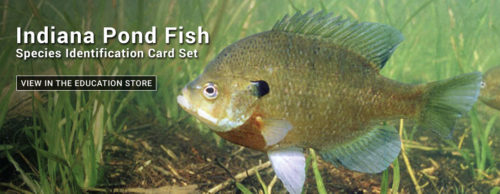 This guide called Indiana Pond Fish, Species Identification Card Set identifies commonly stocked fish and problem fish that may be encountered in Indiana ponds. It includes full-color pictures and information about sunfishes, other panfish, sport fish, catfishes and bullheads, carp, suckers and buffalo, minnows, shiners and much more.
These colorful cards are a great resource for teachers, 4-H leaders, natural resource educators, anglers and fishing enthusiast. Enjoy this free download or place an order through The Education Store to receive the printed colorful cards.
Resources
Aquaculture & Aquatics, Purdue Extension-Forestry & Natural Resources
Salmon and Trout of the Great Lakes: A Visual Identification Guide, The Education Store, Purdue Extension Resource Center
Pond Management: Stocking Fish in Indiana Ponds, The Education Store
The Nature of Teaching: Adaptations for Aquatic Amphibians, The Education Store
Illinois & Indiana Sea Grant, using research, outreach, and education to bring the latest science to communities and their residents.
Mitch Zischke, Clinical Assistant Professor
Purdue University, Department of Forestry and Natural Resources
With all of the recent rain we have had throughout the state,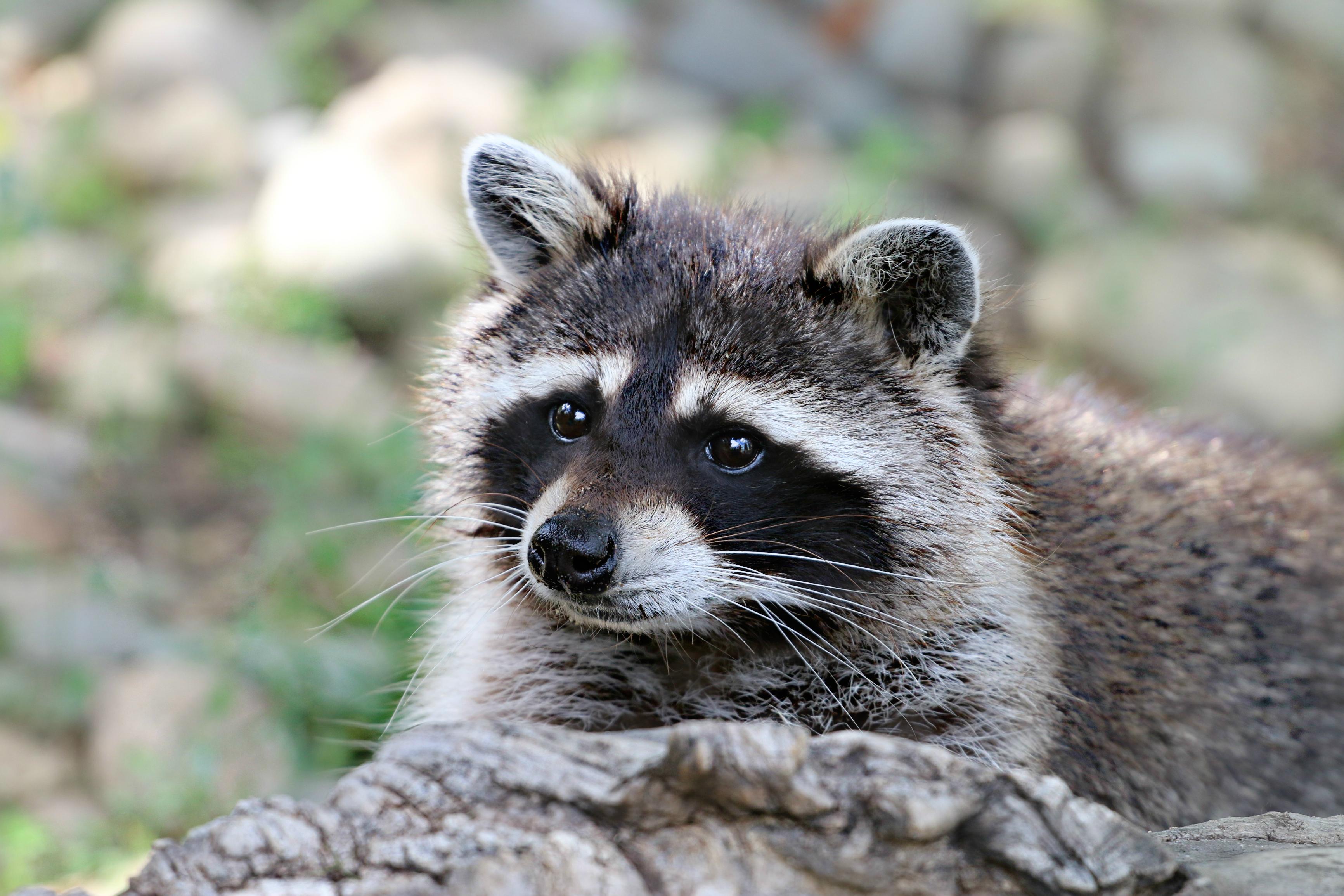 I have received several inquiries about effects on wildlife and what we can expect. While some flooding is natural in low areas and wildlife are adapted to respond, extreme flooding can impact wildlife. Flood waters can wash away nests or drown developing or very young animals for those living in low-lying areas. For example, heavy spring rains can reduce nest success of wild turkeys.
In many cases, wildlife will adapt by simply moving to higher ground. I tend to get an increase in inquiries about snakes after flooding. They begin showing up in neighborhood homes when they have never been observed in years past. Certainly our environment changes over time and wildlife can and do respond to these changes. However, sudden changes are likely due to a response of snakes moving to drier ground. The good news is this and other similar displacement of wildlife is usually temporary.
What can we do? I’m afraid not much for our currently flooded friends. However, in the long-term, times like this reinforce the need to create and enhance quality wildlife habitat. Providing wildlife with quality habitat that contains the necessary food, cover and water resources gives them a fighting chance to deal with issues that inevitably arise. In addition, wetlands that landowners build and restore on their properties not only enhance wildlife habitat, but also help retain moderate flood waters and recharge groundwater supplies.
If some unwanted wildlife has overstayed their welcome in and around your home, check out the Purdue Education Store publication, Considerations for Trapping Nuisance Wildlife with Box Traps. If you think you have found a sick or injured animal, you can find a list of licensed Wild Animal Rehabilitators in your area on the DNR Division of Fish and Wildlife’s Orphaned and Injured webpage. In Indiana, wildlife rehabilitators have necessary state and federal permits to house and care for sick or injured wild animals.
Additional Resources
Preventing Wildlife Damage – Do You Need a Permit? The Education Store, Purdue Extension
The Basics of Managing Wildlife on Agricultural Lands, The Education Store, Purdue Extension
Brian J. MacGowan, Extension Wildlife Specialist
Department of Forestry and Natural Resources, Purdue University
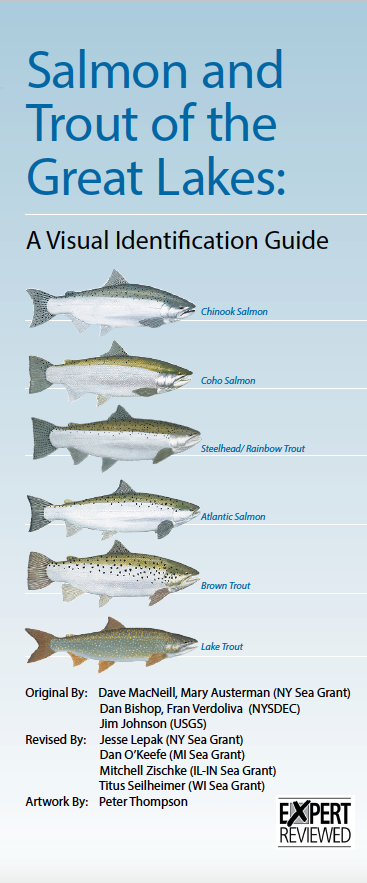 The Illinois-Indiana Sea Grant and Purdue Forestry and Natural Resources Extension have recently released a new publication through The Education Store. This collaborative publication is a visual identification guide on salmon and trout of the Great Lakes.
The Great Lakes are home to eight species of salmon and trout. These species can be difficult to distinguish from each other as they overlap in their distributions and change appearance depending on their habitat and the time of year. This illustrated, peer-reviewed, two-page guide, courtesy of the Great Lakes Sea Grant Network, shows important body features and helpful tips to identify and distinguish between salmon and trout species in the Great Lakes.
View the Salmon and Trout of the Great Lakes: A Visual Identification Guide on The Education Store-Purdue Extension. See below for other related publications and websites.
Resources
A Fish Farmer’s Guide to Understanding Water Quality, National Oceanic and Atmospheric Administration
Pond Management: Stocking Fish in Indiana Ponds, The Education Store
The Nature of Teaching: Adaptations for Aquatic Amphibians, The Education Store
DNR Fish Identification Form, Indiana Department of Natural Resources
Illinois-Indiana Sea Grant, IISG Homepage
Mitchell Zischke, Clinical Assistant Professor
Purdue University Department of Forestry and Natural Resources
 Fish stocking in a pond is like a retirement plan—you need to have a vision of your ultimate goal. You want to start off in the right direction or your long-term investment may not pay the dividends you had hoped for. Pond Management: Stocking Fish in Indiana Ponds is an 8-page publication written by our experts partnering together from Purdue’s Pesticide Programs, Forestry and Natural Resources and Purdue Weed Science. They share recommendations regarding fish types, numbers, and predator/prey relationships for new and renovated ponds.
Main topics include:
- Stocking new or renovated ponds with no fish present
- Assessment of ponds with existing fish populations
- Northern strain largemouth bass
- Stocking fathead minnows
- Stocking fish to control vegetation
- Dissolved oxygen – fish need it to live
- Fish health
Properly stocking your pond with the correct number of the recommended species at the right size are all important steps in creating a healthy and well-balanced pond that will provide good fishing into the future. For more information on pond management go to extension.purdue.edu/pondwildlife or contact Jarred Brooke at jmbrooke@purdue.edu.
Other resources:
Indiana Pond Fish, Species Identification Card Set, The Education Store, Purdue Extension Resource Center
Forestry and Water Quality: Pollution Control Practices, The Education Store
Marine Shrimp Biofloc Systems: Management Practices, The Education Store
The Nature of Teaching: Healthy Water, Happy Home – Lesson Plan, The Education Store
Aquaculture & Aquatics, Purdue Extension-Forestry & Natural Resources
Jarred Brooke, Wildlife Extension Specialist
Purdue University, Department of Forestry and Natural Resources
Proper disposal of medicine and personal care products is important not only 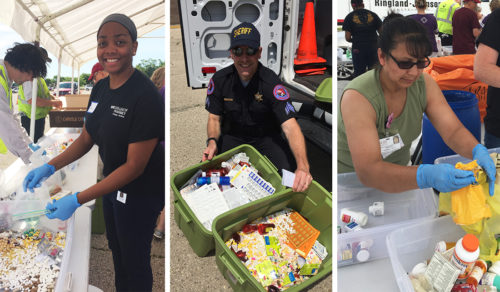 for you and your loved ones, but for the safety of the community around you. This article will walk you through methods of proper disposal for your area.
“Illinois-Indiana Sea Grant’s (IISG) Pollution Prevention Team is continually working with individuals, communities, and local governments to make the disposal of your unused, expired, or unwanted medicines convenient and safe. Since 2007, IISG has helped set up more than 70 new take-back programs, including more than 40 permanent take-back sites, collecting over 55 tons of unwanted medicines at collection events/locations in Illinois, Indiana, Michigan, and Wisconsin.” Read more and find out “Where to Dispose”. . .
Unwanted Medicine, Indiana Department of Environmental Management
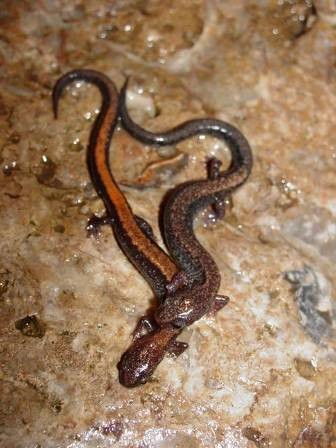 The Purdue Extension-Nature of Teaching has recently released a new publication through The Education Store. The Nature of Teaching provides free Indiana Academic Standard-based lesson plans for students in grades second through sixth to guide them on how to help maintain a healthy environment.
Understanding adaptations for aquatic amphibians can help humans learn more about healthy ecosystems. Through this educational unit, students will be able to explain how amphibian adaptations benefit survival, describe the importance of Eastern Hellbender adaptations, and identify impacts that humans have on aquatic amphibians.
These packed lesson plans are great resources for school teachers, parents, 4-H leaders and other natural resource educators. View the Adaptations for Aquatic Amphibians for the latest installment in the Nature of Teaching resources. See below for other related publications, lesson plans and games.
Resources
Frogs and Toads of Indiana, The Education Store, Purdue Extension
Salamanders of Indiana, The Education Store
Snakes and Lizards of Indiana, The Education Store
Turtles of Indiana, The Education Store
Help the Hellbender, Purdue Extension
Hellbender Decline, Purdue Extension-FNR Youtube
The Nature of Teaching, Lesson Plans K-12, Purdue Extension
Nick Burgmeier, Extension Wildlife Specialist & Research Biologist
Purdue University Department of Forestry and Natural Resources
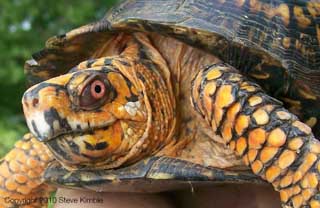
People have been catching wild turtles and selling them as pets, leading to many species becoming endangered. This is very dangerous for the health and survival of the turtle as well as being highly illegal in Indiana. We highly discourage you from taking turtles from their natural habitat and turning them into pets (or any animal for that matter). Here’s a list of reasons why it is not good to make a pet out of a wild turtle and what you can do if you see any turtle miss handling and turtle wrong doing.
Turtles DO NOT make good pets!
Reasons why turtles aren’t good pets:
- Turtles require time and money for proper care, and some species can live up to 50 years.
- Pet turtles do not like to be held and are loners; therefore, they can become boring pets for children.
- Turtles are cold-blooded and need a source of heat. They also require an ultraviolet light for proper growth and health.
- Without this special light, many health issues arise such as metabolic bone disease.
- It is very important to know what kind of species you want and the care it needs before you acquire a pet turtle. Many need special food and tanks.
- Each species has different feeding requirements, with some being strictly carnivores or herbivores. Map turtles, for example, have restricted diets that must include snails, aquatic insects and crayfish. Some species of aquatic turtles, such as the red-eared slider, map turtle and soft-shell, grow up to 12 inches long, requiring a large tank for swimming and basking.
- Land turtles need a large pen, with sufficient substrate, properly sized water bowl, a hide area, as well as heat. Some require more humidity than others.
- If you no longer want your pet turtle, you cannot release into the wild because it is not likely to survive.
- It will have to find its own food, deal with the elements and deal with predators.
- These once-captive turtles are also likely to transmit diseases to wild turtle populations.
- Turtles can carry salmonella bacteria.
- The Centers for Disease Control and Prevention recommend that children, pregnant women, and persons with compromised immune systems avoid contact with reptiles to avoid getting Salmonella.
- The DNR does not encourage the keeping of turtles as pets, but does allow it if the turtle species is obtained legally with a hunting or fishing license.
It is illegal to sell wild turtles
Many native, wild-caught turtles are still sold as pets, even though this practice is illegal in Indiana. The collection of wild turtles has caused many species to become endangered, especially when combined with habitat loss, water pollution and predators. Predators such as raccoons eat a large number of turtle eggs each year, and some species do not even breed until they are several years old, meaning that it can take many years for a population to become established. You can help protect Indiana’s turtles by helping to preserve turtle habitat, especially wetlands, through local conservation organizations or the Indiana Nongame and Endangered Wildlife Program.
Help our endangered turtle species and report any wrong handling, contact DNR Customer Service Center.
For the full article, see Turtles As Pets, Indiana Department of Natural Resources.
Resources:
Turtles of Indiana, The Education Store, Purdue Extension’s resource center
Reptile and Amphibian Regulations, Indiana Department of Natural Resources
Eastern Box Turtle Information, Indiana Department of Natural Resources
Indiana Department of Natural Resources (IDNR)
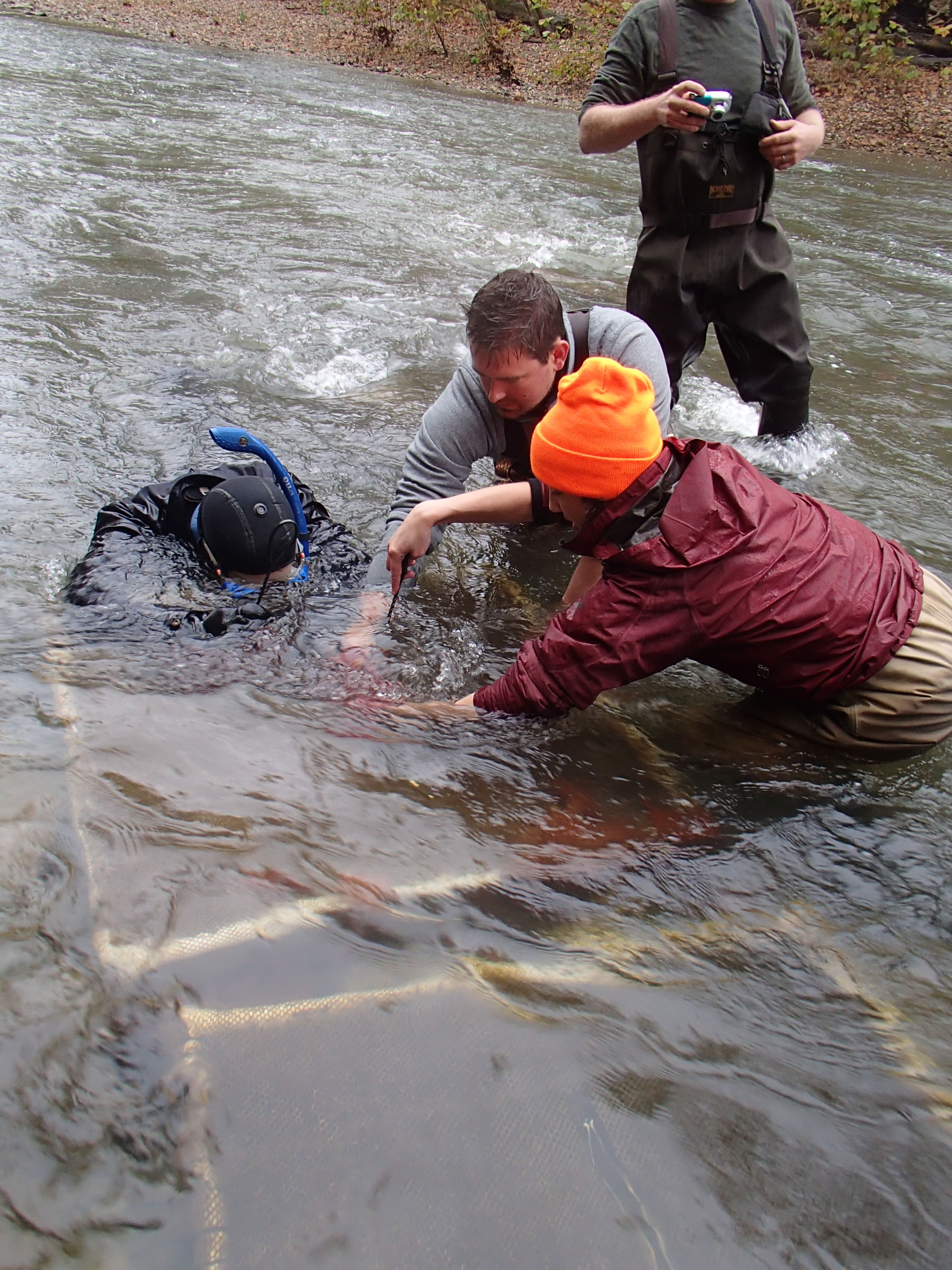
Hellbender release – Purdue biologists help a release attendee place a Hellbender in its temporary holding pen. Photo credit: Marci Skelton.
 The Hellbender salamander is North America’s largest salamander. It is fully aquatic, living its entire life in rivers and streams throughout the midwest and southeast. Hellbenders require cool, clean rivers and streams with rocky substrates to thrive and reproduce. Unfortunately, over the past several decades the species has declined or disappeared from many of these areas. In Indiana, the species can only be found in the Blue River in south-central Indiana where there remains only a very small, geriatric population incapable of sustaining itself. In order to save the species in the state, Purdue University and its many partners have joined together to reverse the decline.
On November 1st and 2nd of this year, Purdue FNR’s Williams lab released 80, 4-year old Hellbenders into a site chosen as the best Hellbender habitat in the Blue River. Members from Purdue University, Mesker Park Zoo and Botanic Garden, Columbian Park Zoo, Fort Wayne Children’s Zoo, Indianapolis Zoo, the Indiana Department of Natural Resources, the Indiana Department of Environmental Management, Duke Energy, and more all helped in the task of releasing the individuals into their new homes.
The chosen Hellbenders had been raised in captivity at Purdue University. Unfortunately, captive-raised animals are often times not equipped with the necessary set of skills to survive life outside of an aquarium. However, these were not all aquarium-raised individuals more akin to pets than wild animals. Forty of the individuals were raised in specially designed tanks called raceways that incorporated water flow to mimic that found in a natural river setting. The remaining forty individuals were raised in standard, low-flow conditions. The idea behind raising the animals in these differing conditions is to compare whether or not the individuals raised in conditions that are more natural (i.e., higher flow rates) will be better able to survive the varying water levels they will encounter in the wild than those that are raised without flow.
In order to document success, all 80 Hellbenders were implanted with radio-transmitters. These transmitters emit a signal that allows biologists to detect them with antennae and locate the exact location an individual is hiding. For the next six to ten months, through rain, snow, and shine, Purdue biologists will follow these animals to document their behavior, habitat preferences, and whether or not they survive life in the wild.
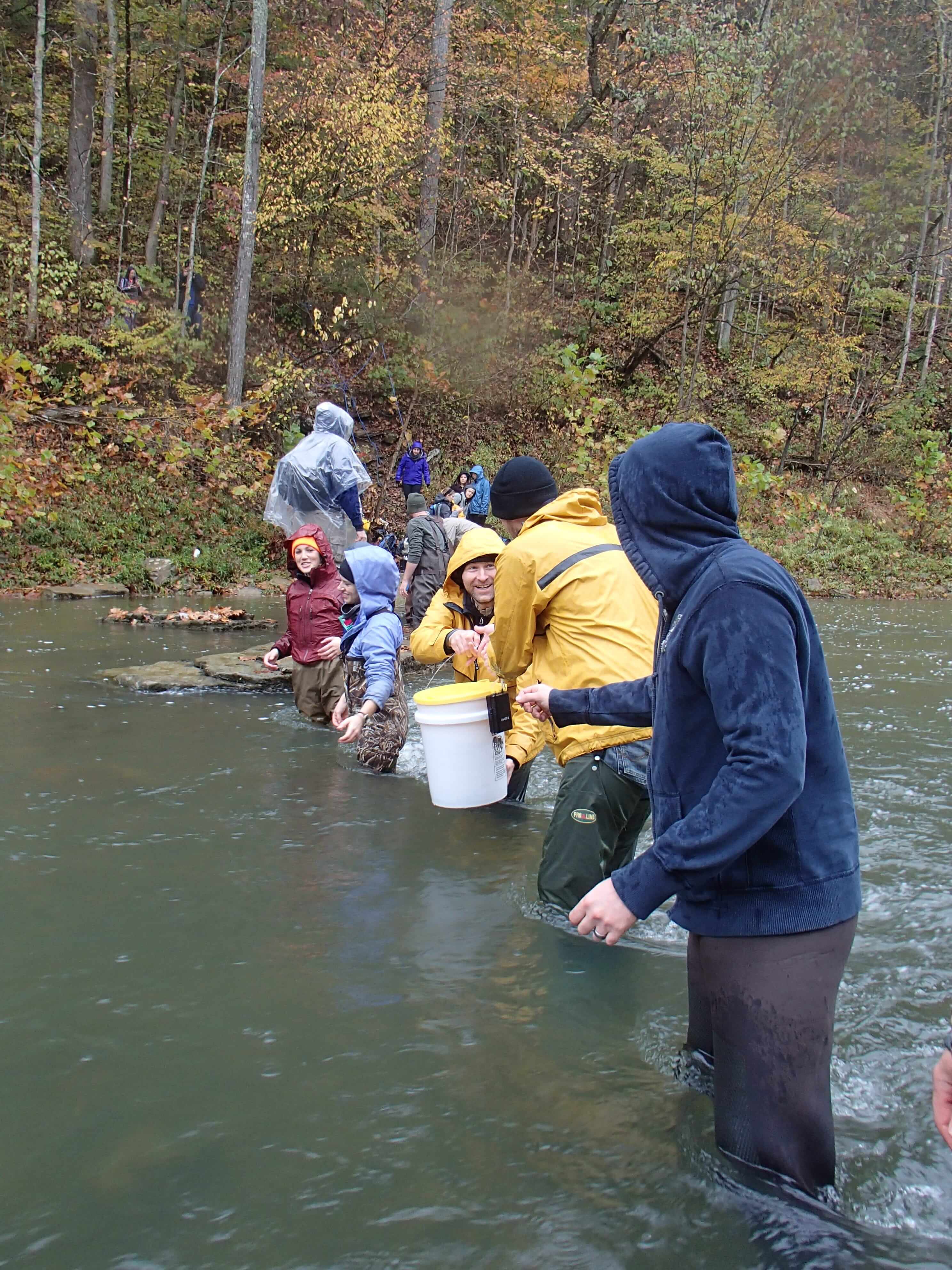
Transporting Hellbenders – Release attendees work together to transport Hellbenders across the river to be processed before release. Photo credit: Marci Skelton.
The outcomes of this study could help solve two major problems facing Hellbender conservation. The first is that the addition of Hellbenders into the system could help spur natural reproduction and help to start stabilizing the system. This small step is important towards our eventual goal of repopulating the Blue River and other former Hellbender streams. The second problem this study will hopefully address is the issue of poor survival of captive-reared animals when released into the wild. If we find that raising animals in more natural conditions improves survival over those raised in the more common no-flow conditions, this technique could be easily adopted at captive-rearing facilities throughout the nation and help increase the overall success of Hellbender conservation in the United States.
For more information, please visit HelptheHellbender.org.
Resources:
Hellbender ID, The Education Store
HelptheHellbender.org, Purdue Extension
Help the Hellbender: North America’s Giant Salamander, The Education Store
How Our Zoos Help Hellbenders, The Education Store
Nick Burgmeier, Research Biologist and Extension Wildlife Specialist
Purdue University Department of Forestry and Natural Resources
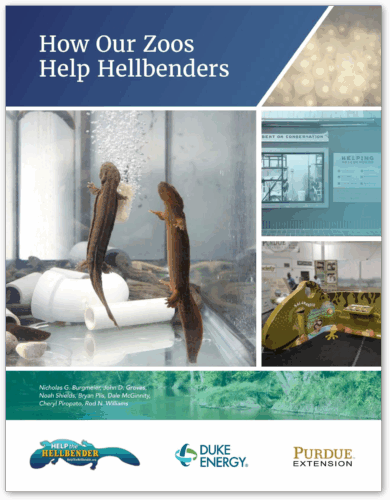 Purdue University has teamed up with four zoos to protect hellbenders. This effort is a worldwide collaboration as zoos, government agencies, and other conservation groups, implement much-needed conservation initiatives. This recently published publication titled How Our Zoos Help Hellbenders shares the current zoos in Indiana that are collaborating with Purdue in this conservation effort. Zoos are conservation and research organizations that play critical roles both in protecting wildlife and their habitats and in educating the public. Thus, with hellbenders experiencing declines over the past several decades, teaming up with zoos in order to preserve and protect the hellbender species is ideal. The zoos that are currently partners with Purdue University in this effort are: Mesker Park Zoo in Evansville, Indiana; Columbian Park Zoo in Lafayette, Indiana; Fort Wayne Children’s Zoo in Fort Wayne, Indiana; and Nashville Zoo in Nashville, Tennessee.
Three videos have been released showing how the zoos are working with Purdue University to help protect hellbenders. You can check them out below!
Resources:
Conservation Efforts, Mesker Park Zoo
Hellbender Research Participation Spotlight, Columbian Park Zoo
Conservation, Fort Wayne Children’s Zoo
Hellbender Conservation, Nashville Zoo
Purdue Partners with Indiana Zoos for Hellbender Conservation – Purdue Newsroom
Help the Hellbender, Purdue Extension-FNR
Nature of Teaching, Purdue Extension-FNR
I found this in my barn. Is it a Hellbender? – Purdue FNR Extension, Got Nature
Purdue University Department of Forestry and Natural Resources
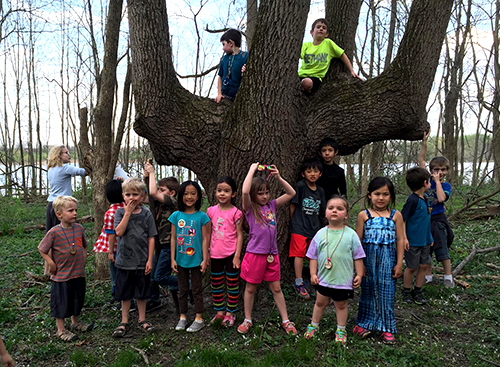
Students in Forestry and Natural Resources (FNR) continue to volunteer for Hands of the Future, Inc., a non-profit program whose mission is to help educate children about the outdoors and natural resources. As this program continues to grow, one of their dreams has been to find woods to create a children’s forest. To have a natural site that has been embellished upon with children’s needs in mind and to encourage outdoor play and adventures.
The students plan on transforming 18.8 acres of idle woods into Zonda’s Children’s Forest. The children’s forest will be composed of six main areas:
- A children’s garden, equipped with a greenhouse and kitchen, that’ll allow children to learn how to properly grow and cook food.
- An enclosed area dedicated to allowing children having fun and safe adventures.
- A viewing area for butterflies, birds and other organisms of the wild, allowing children to easily enjoy the life of the forest.
- A maze designed by sunflowers, where children can have fun and do problem-solving, while close to nature.
- A walk dedicated to viewing the owls and other organisms composing the forest.
- Another enclosed area of the woods for adventures; However, it’ll also contain tree houses, bridges and other fun additions for the children.
Donations:
Donations to help make Zonda’s Children’s Forest a reality can be made here. They have six months to raise $235,000 in order to purchase the woods.
Volunteers & Interns:
Older students and adults can apply to be a volunteer. Volunteers are always appreciated, no past experience necessary. If you love nature and kids you will enjoy this program. Internships are available for college students, contact Zonda Bryant.
Resources:
Family Nature Clubs in Indiana – Indiana Children and Nature Network
Zonda Bryant, Director
765.366.9126
director@hands-future.org

Recent Posts
- Discover the Great Lakes, The 2025 Helm Magazine is Available
Posted: November 17, 2025 in Aquaculture/Fish, Aquatic/Aquaculture Resources, Wildlife - Illinois-Indiana Sea Grant Newsletter Shares New Resources
Posted: November 13, 2025 in Aquaculture/Fish, Aquatic/Aquaculture Resources, Wildlife - Publication – Fish Muscle Hydrolysate
Posted: September 15, 2025 in Aquaculture/Fish, Aquatic/Aquaculture Resources - Publication – Direct Marketing Guidebook for Small/Medium-Scale Aquaculture Businesses
Posted: March 7, 2025 in Aquaculture/Fish, Aquatic/Aquaculture Resources, Publication - Conservationists Unite for Snuffbox Mussels – Wild Bulletin
Posted: February 20, 2025 in Aquaculture/Fish, Aquatic/Aquaculture Resources, Wildlife - Publication – Handbook on Processing Fish for Small-Scale Fish Farmers
Posted: October 17, 2024 in Aquaculture/Fish, Aquatic/Aquaculture Resources, How To, Publication, Wildlife - IISG Adds New Water Safety Videos
Posted: May 8, 2024 in Aquaculture/Fish, Aquatic/Aquaculture Resources, Community Development, Great Lakes, Wildlife - Farmers Helping Hellbenders RCPP Program Accepting Applications
Posted: May 1, 2024 in Aquaculture/Fish, Forestry, How To, Wildlife, Woodlands - 2024-25 Fishing Guide now available – Wild Bulletin
Posted: April 4, 2024 in Alert, Aquaculture/Fish, Aquatic/Aquaculture Resources, How To, Ponds, Wildlife - Look Out for Invasive Carp in Your Bait Bucket – Wild Bulletin
Posted: March 31, 2024 in Alert, Aquaculture/Fish, Aquatic/Aquaculture Resources, Invasive Animal Species, Wildlife
Archives
Categories
- Alert
- Aquaculture/Fish
- Aquatic/Aquaculture Resources
- Ask the Expert
- Christmas Trees
- Community Development
- Disease
- Drought
- Forestry
- Forests and Street Trees
- Gardening
- Got Nature for Kids
- Great Lakes
- How To
- Invasive Animal Species
- Invasive Insects
- Invasive Plant Species
- Land Use
- Natural Resource Planning
- Nature of Teaching
- Plants
- Podcasts
- Ponds
- Publication
- Safety
- Spiders
- Timber Marketing
- Uncategorized
- Urban Forestry
- Webinar
- Wildlife
- Wood Products/Manufacturing
- Woodland Management Moment
- Woodlands