 Purdue University - Extension - Forestry and Natural Resources
Got Nature? Blog
From Lake Michigan to the Ohio River, fire once influenced large portions of Indiana. But when we get into the details, we find that certain ecosystems are much more reliant on fire than others. In this article, we’ll move north to south through some of Indiana’s fire-adapted ecosystems, highlighting properties where the effects of fire can be seen today.
Dunes
Hugging the shores of Lake Michigan, the Indiana Dunes are among the most distinctive and fascinating natural features in Indiana. On these sandy hilltops, jack pines and prickly pear cactus grow side by side, along with many of Indiana’s rarest plant species. The Dunes area is home to swales, prairies, and savannas that have burned regularly for millennia.
Although fire is used for many ecological reasons in the region, one noteworthy goal of burning in the Indiana Dunes National Park and Indiana Dunes State Park is to create habitat for the federally endangered Karner Blue Butterfly. This butterfly’s caterpillars feed exclusively on sundial lupine, which thrives in openings on sandy soil. Fire is an important tool for keeping the habitat open enough for lupine and therefore suitable for this imperiled butterfly. By managing for this species, many other fire-adapted plants also benefit.
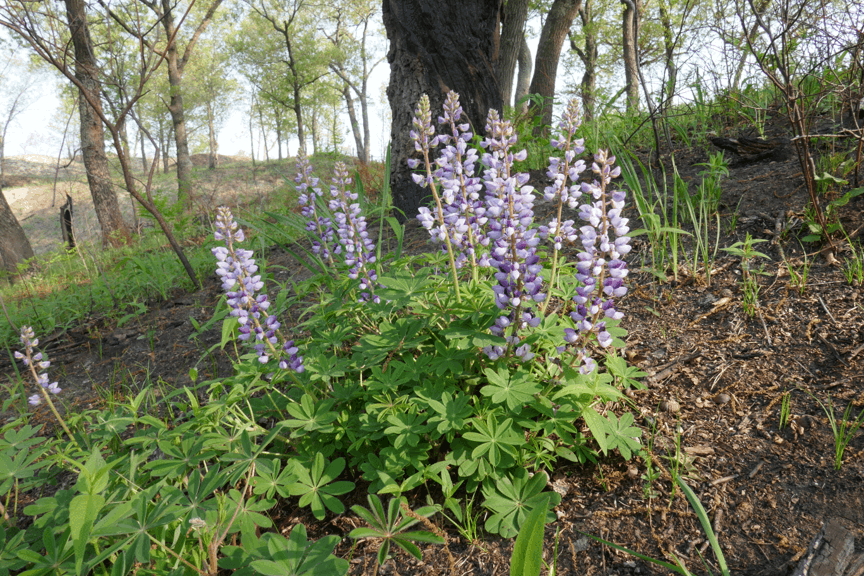
Sundial lupine blooms after a prescribed fire at Indiana Dunes State Park (photo by Derek Nimetz).
Prairies
Prior to European settlement, prairie covered around 15% of Indiana, mostly across northern Indiana in a region called the “Prairie Peninsula”. This sizable land area, covered in tall grass and wildflowers, was largely maintained by fires set by Native Americans, along with bison grazing. Fire knocks back woody plants that threaten to shade out the herbaceous plants and create a fertile seedbed for new growth. Prairie grasses and wildflowers are well-adapted to fire, with deep roots the fire can’t touch.
In Indiana, prairie is closely intertwined with wetlands and savannas, and even small changes in elevation and soil type can influence the plant community. One example is fens like the one in Prophetstown State Park, which are groundwater-fed wetlands that often share many species with prairies. In dry years, fens and other wetlands likely burned as well.
While most of Indiana’s prairies were plowed for farmland, some survived, including a complex of remnant and restored prairie and wetlands at The Nature Conservancy’s Kankakee Sands Nature Preserve. Fire is regularly used on the property to restore and maintain these habitats. The best part? In addition to observing the effects of fire on the landscape, visitors can see a herd of bison like those that once roamed Indiana. This property offers a glimpse of what northwest Indiana looked like centuries ago.
Savannas
On sandy rises among the prairies and wetlands, savannas dominate. These ecosystems are home to sprawling, widely spaced oaks among lush understories of grasses and wildflowers. They are the transition between prairie and woodland, with characteristics of both. And they only continue to exist because of fire. Fire maintains their open structure, allowing enough light to the understory for the herbaceous layer to grow. Without fire, shrubs and young trees would take over, and the savanna would become a shady forest.
Willow Slough Fish and Wildlife Area features many oak savannas. These have been regularly burned for decades and are home to a wide variety of rare plants. They are also beautiful – in fact, humans tend to prefer savannas to other habitat types.
Oak Woodlands
In the rolling hills of southern Indiana, oak woodlands were once the dominant ecosystem. An oak woodland is similar to a forest, with a few key differences. The main one is that there are generally fewer trees per acre, giving a woodland a spread-out structure with more light than a forest. This encourages a thick, diverse understory. Oak woodlands are also, as the name suggests, dominated by oaks rather than shade-loving trees like beeches and maples. Finally, they are typically dry, while beech-maple forests are wetter and contain lots of small depressions and seasonal ponds.
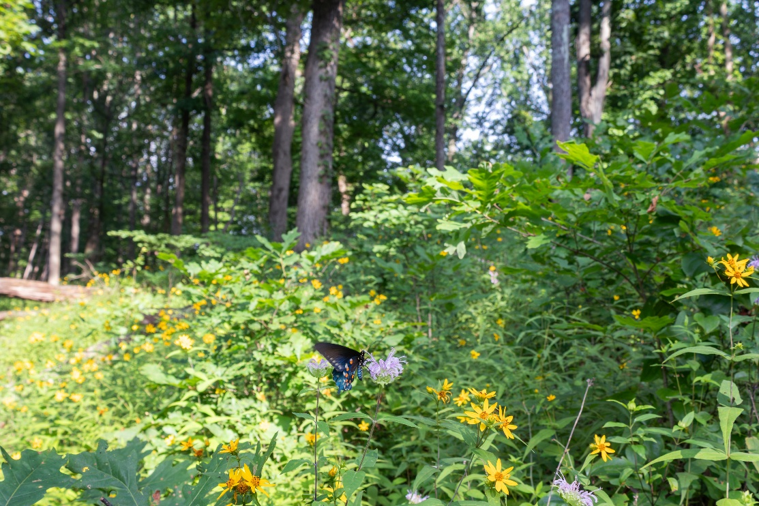
An oak woodland in Brown County State Park.
In Indiana, many of our oak woodlands have closed in due to lack of fire, losing this structure and therefore much of their plant diversity. This reduces habitat for the plants and animals that inhabit oak woodlands.
In some places, though, prescribed fire has re-established this oak woodland structure. One example is 10 O’ Clock Line Nature Preserve in Brown County State Park. This nature preserve – the largest in the state – has been restored using multiple large-scale prescribed fires. In contrast to other parts of the park, the resulting structure is open, with plants like little bluestem, beebalm, and woodland sunflower popping up from the seedbed. This immediate herbaceous response tells managers that this area was once more open, and the plants had just been waiting for the light to return to bloom once more. Given the chance, nearby tracts of state and national forest would likely respond in a similar fashion.
Glades and Barrens
Now we go all the way south to the glades and barrens of southern Indiana. Glades and barrens, though subtly different in certain ways, are both natural openings in woodlands. They are home to many “prairie” species like prairie dock, pale purple coneflower, and obedient plant. Glades and barrens occur where the soil is too poor to support large trees, often because the bedrock is very near or at the surface of the soil. These pockets of grasses and wildflowers provide many resources for wildlife, especially pollinators that feed on the broad assortment of flowers.
One of the main threats to these rare ecosystems is encroachment by eastern redcedar and other trees that can tolerate the poor soil. Without regular fire, these species crowd out the grasses and wildflowers. Luckily for managers of properties like the Nature Conservancy’s Harrison County Glades, these trees are not very fire-resistant, so prescribed burns can be used to restore and maintain these special places.
Appreciating the Smoke
That concludes our fiery tour of Indiana. Next time you’re near one of these properties and see smoke, take a moment to appreciate fire in its natural places, keeping Indiana’s ecosystems healthy for future generations to enjoy.
Want to learn more about prescribed fire?
This article is part of our Burning for Benefits series exploring how fire shapes Indiana’s landscapes, supports wildlife and helps maintain healthy ecosystems. Read Burning for Benefits: Why Fire Belongs in Indiana to discover why prescribed fire is an important tool for conservation and land management.
Resources:
Indiana Prescribed Fire Council (INPFC)
Prescribed Burn Association
Lighting a Spark: Prescribed Burn Associations, Got Nature? Blog, Purdue Extension – Forestry and Natural Resources (FNR)
Effective Firebreaks for Safe Use of Prescribed Fire, Got Nature? Blog, Purdue Extension – FNR
Prescribed fire: 6 things to consider before you ignite, Got Nature? Blog, Purdue Extension – FNR
Getting Certified as an Indiana Certified Prescribed Burn Manager, Got Nature? Blog, Purdue Extension – FNR
FNR Ask The Expert: Prescribed Fire, Purdue Extension – FNR YouTube Channel
Hardwood Ecosystem Experiment: Prescribed Fire, Purdue Extension – FNR YouTube Channel
Wild Habitat Hint: Late Growing Season Prescribed Fire, Purdue Extension – FNR YouTube Channel
Wild Habitat Hint: Prescribed Fire Techniques – Backing Fire, Purdue Extension – FNR YouTube Channel
Wild Habitat Hint: Prescribed Fire Techniques – Flanking Fire, Purdue Extension – FNR YouTube Channel
Wild Habitat Hint: Prescribed Fire Techniques – Strip Head Fire, Purdue Extension – FNR YouTube Channel
Wild Habitat Hint: Prescribed Fire Techniques – Point Source Fire, Purdue Extension – FNR YouTube Channel
Wild Habitat Hint: Prescribed Fire Techniques – Ring Fire, Purdue Extension – FNR YouTube Channel
Explore the Rich World of Oaks, Purdue Extension – FNR
Subscribe – Purdue Extension – FNR YouTube Channel
Danielle Howard, Extension Prescribed Fire Specialist
Department of Forestry and Natural Resources

Recent Posts
- Opportunities for Prescribed and Wildland Fire Training
Posted: November 4, 2026 in Forestry, How To, Wildlife, Woodlands - Wildlife Issues and Solutions: A New Online Series
Posted: in Forestry, How To, Wildlife, Woodlands - Burning for Benefits: Where Fire Belongs in Indiana
Posted: in Forestry, Safety, Wildlife, Woodlands - Residents, Alumni Invited to Share Indiana Natural Resource, Spaces, Species Memories
Posted: in Forestry, Forests and Street Trees, Gardening, Urban Forestry, Wildlife - Now Is The Time To Control Non-Native Bush Honeysuckle
Posted: October 30, 2026 in Forestry, How To, Invasive Plant Species, Woodlands - Help Strengthen the Future of Indiana Maple Syrup
Posted: October 29, 2026 in Forestry, How To, Woodlands - Popular Landscape Shrub is Invasive
Posted: October 15, 2026 in Alert, Forestry, Forests and Street Trees, Invasive Plant Species, Plants, Woodlands - Purdue Extension’s Regional Teams Are Here: Connecting Communities with Expertise and Opportunity
Posted: October 14, 2026 in Community Development, Forestry, Forests and Street Trees, Gardening, How To, Timber Marketing, Urban Forestry, Wildlife, Woodlands - Why Do Our Trees Go From Green Leaves to Different Colors?
Posted: in Forestry, Forests and Street Trees, Urban Forestry, Woodlands - Deer and Turkey Archery Seasons Opening Soon, MyDNR
Posted: October 13, 2026 in Alert, Safety, Wildlife
Archives
Categories
- Alert
- Aquaculture/Fish
- Aquatic/Aquaculture Resources
- Ask the Expert
- Christmas Trees
- Community Development
- Disease
- Drought
- Forestry
- Forests and Street Trees
- Gardening
- Got Nature for Kids
- Great Lakes
- How To
- Invasive Animal Species
- Invasive Insects
- Invasive Plant Species
- Land Use
- Natural Resource Planning
- Nature of Teaching
- Plants
- Podcasts
- Ponds
- Publication
- Safety
- Spiders
- Timber Marketing
- Urban Forestry
- Webinar
- Wildlife
- Wood Products/Manufacturing
- Woodland Management Moment
- Woodlands