 Purdue University - Extension - Forestry and Natural Resources
Got Nature? Blog
Purdue Landscape Report: It’s that time again! With the arrival of warm temperatures and increased rainfall, many of us are getting to work on our lawns, gardens, and landscaping. Unfortunately, this often comes with discovering what new (or old) invasive species are here to haunt us. So far this year, the invasive I’ve gotten the most questions on is the Asian jumping worm. This earthworm’s life cycle tends to experience ‘boom & bust’ years due to their feeding habits, and, anecdotally speaking, we appear to be experiencing an increase in their populations throughout the state this season. Now is a great time to brush up on our understanding of this organism, and the revisit how it impacts our environment.
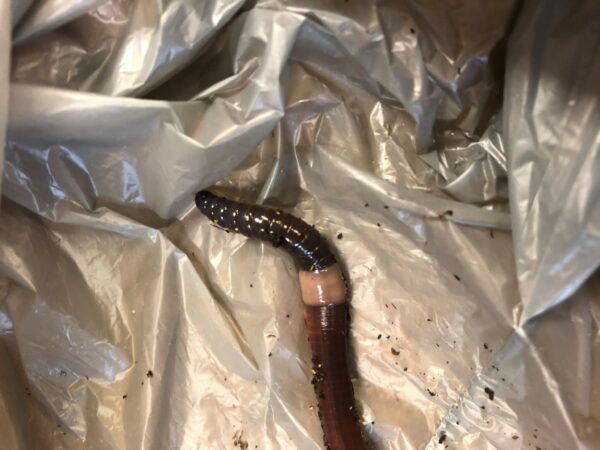
Figure 1. The clitellum, the set of pale, milky colored segments, is the reproductive organ of earthworms.
Identification
While Asian jumping worms share a lot of traits with other, less harmful earthworm species, they do have some features we can use to differentiate them from the rest. Jumping worms tend to be darker in color, since they live either on top of the soil or just under the first layer of plant detritus and get more exposure to sunlight. Asian jumping worms also have a significantly higher number of bristles, or setae, that they can use to move around. They can have as many as forty bristles per segment, in contrast to the eight found on other species, giving them the traction they need to wriggle and squirm as violently as they do. Perhaps the easiest feature we can use to identify them is the clitellum, the organ that contains they reproductive organs. On Asian jumping worms, the clitellum just looks like a very pale set of segments close to the anterior end of the worm, whereas on most other worms, it’s about midway down the body and saddle-shaped. Finally, we can detect their presence by changes in our soil. Asian jumping will not improve soil quality for growing like other earthworms can, but rather change the soil consistency into something like coffee grounds, rendering it unsuitable for growing most crops and ornamentals.
Environmental Impact
As I alluded to above, Asian jumping worms do significant damage to soil quality when left unmanaged. These earthworms, unlike their beneficial cousins, do not provide ecosystems services like soil aeration or castings that help add nutrients to the soil. Since they live at the surface, they do not burrow, and their castings lock in nutrients and often get swept away by hydrological events. Asian jumping worms also tend to gather in large groups whenever they infest an area, resulting in most of the decaying plant material and other organic material being stripped out of the soil. Often, the only plants capable of developing in those conditions are invasive themselves!
Reporting
We are still learning about the Asian jumping worms spread in Indiana, so we are asking everyone to please report sightings. You can report them either online by going to the EDDMapS website or you can call 1-866-NOEXOTIC. We ask that you take a picture and tell us where you were when you saw the worms. You can also check the Report Invasive webpage for up-to-date information on all kinds of invasive species, or reach out to Bob Bruner, Purdue University Exotic Forest Pest Educator, by emailing rfbruner@purdue.edu. With your help, we can map out this worm and create effective plans to limit its presence in our state.
View the original article on the Purdue Landscape Report website: Asian Jumping Worms: How to ID this soil pest.
Subscribe and receive the newsletter: Purdue Landscape Report Newsletter.
Resources:
Gardeners Asked to be Vigilant This Spring for Invasive Jumping Worm, Purdue Extension – FNR Got Nature? Blog
Fall webworms: Should you manage them?, Purdue Landscape Report
Mimosa Webworm, The Education Store, Purdue Extension resource center
Sod Webworms, Turf Science at Purdue University
Bagworm caterpillars are out feeding, be ready to spray your trees, Purdue Extension Forestry & Natural Resources (FNR) Got Nature? Blog
Landscape & Ornamentals: Bagworms, The Education Store
Purdue Plant Doctor App Suite, Purdue Extension-Entomology
Find an Arborist website, Trees are Good, International Society of Arboriculture (ISA)
ID That Tree – Video Playlist, Purdue Extension – Forestry and Natural Resources (FNR) YouTube Channel
Fifty Common Trees of Indiana, Purdue FNR web page list
Indiana Department of Natural Resources: Invasive Species
Indiana Invasive Species Council
Cooperative Invasive Species Management Area (CISMA)
Report Invasive, Purdue Extension
Native Trees of the Midwest, Purdue University Press
Bob Bruner, Exotic Forest Pest Educator
Purdue Entomology

Recent Posts
- Disease May Cause Wilting and Eventual Death of Certain Trees and Shrubs, Purdue Landscape Report
Posted: October 5, 2026 in Disease, Forestry, Plants - October Is Firewood Month: Protect Indiana’s Forests by Making Smart Choices
Posted: October 1, 2026 in Forestry, Forests and Street Trees, How To, Invasive Insects, Urban Forestry - Minecraft Meets the Hellbender
Posted: September 22, 2026 in Aquaculture/Fish, Aquatic/Aquaculture Resources, Wildlife - Is It Too Early to Think About Christmas Tree Pests?
Posted: in Christmas Trees, Invasive Insects, Safety - What You Plant Matters to Wildlife
Posted: September 16, 2026 in Plants, Urban Forestry, Wildlife - Woodland Flowers of Late Summer
Posted: September 14, 2026 in Forestry, Gardening, Wildlife, Woodlands - Heavy August Rains Bring More Mosquitoes to Indiana
Posted: September 9, 2026 in How To, Invasive Insects, Safety, Wildlife - Question: Why Did the Shagbark Hickories Survive the Tornado?
Posted: August 27, 2026 in Forests and Street Trees, How To, Urban Forestry - New Indiana Woodland Steward Newsletter
Posted: August 12, 2026 in Forestry, Urban Forestry, Wildlife, Woodlands - Indiana Fall Hunting Licenses on Sale and New Mobile App Available
Posted: in Forestry, How To, Wildlife
Archives
Categories
- Alert
- Aquaculture/Fish
- Aquatic/Aquaculture Resources
- Ask the Expert
- Christmas Trees
- Community Development
- Disease
- Drought
- Forestry
- Forests and Street Trees
- Gardening
- Got Nature for Kids
- Great Lakes
- How To
- Invasive Animal Species
- Invasive Insects
- Invasive Plant Species
- Land Use
- Natural Resource Planning
- Nature of Teaching
- Plants
- Podcasts
- Ponds
- Publication
- Safety
- Spiders
- Timber Marketing
- Urban Forestry
- Webinar
- Wildlife
- Wood Products/Manufacturing
- Woodland Management Moment
- Woodlands