 Purdue University - Extension - Forestry and Natural Resources
Got Nature? Blog
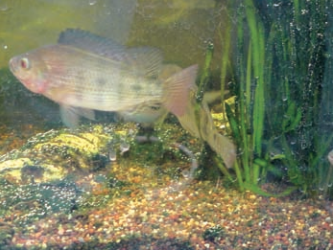 Information from Grist.org:
If you’re like many other Americans, at some point this week unless you are a vegetarian, you will probably be eating some sort of red meat like beef or pork. In fact, you might be having it for dinner later this evening. However, a significantly smaller amount of the people reading this might have recently had a meal of seafood. As of 2012, the average American consumed 71.2 pounds of red meat a year, compared to only 14.4 pounds of fish and shellfish, according to the annual report Fisheries of the United States 2012.
This might not seem like a huge deal today, but something to consider is our planet’s growing population. Over the next 40 years, we will have 2.3 billion extra people, 2.3 billion extra mouths to feed and not a whole lot of extra space for producing food. Looking to the future, it is crucial that we think about efficiency and sustainability to maximize the amount of food we can produce with the resources we have. And we have to start thinking about the idea that the amount of red meat currently being produced might not be the most effective way to do that.
To feed a cow, it needs to be supplied with grass to graze on. A lot of grass, actually. A cow needs calories not only to grow but to produce heat and stay upright. Pound for pound, a cow needs 8.7 pounds of feed for every pound of meat it provides. Pigs, while a little more efficient, still need 5.9 pounds of feed per pound of pork. A large percentage of our crops grown go straight into feed for animals that provide much less than they take. This sounds pretty inefficient compared to just eating the plants and vegetables ourselves and skipping the energy-burning middle man. However, this is not to say that livestock is a bad thing – they provide many benefits to agriculture like consuming resources not edible to humans and providing natural fertilizer in the form of manure. Non-edible parts of the animals are used in many things from food glue to train brakes. Eliminating livestock is not the answer, but perhaps switching our focus to farmed fish is.
Farmed fish is not to be confused with fisheries. Both are highly inspected and provide us with food with great health benefits as discussed in our blog post “The Benefits of Seafood Consumption.” However, there is a distinct difference between the two. Farmed fish are grown in cages or monitored areas and fed regularly, similar to livestock on land. Fisheries catch fish in the wild and use a little more energy in the process. There are likely very few new areas for fishing left to be discovered, and already there is a limit to how many fish we can catch so that the fish population can keep up. So while fisheries are also important, a focus on fish farming, where we can still grow, is important.
Unlike a cow or any other warm-blooded livestock, a fish does not need to spend energy to keep warm and stay upright. In fact, a farmed fish can provide a 1 to 1 ratio of feed to weight. This feed comes from other low-value fish, and research is being conducted for even cheaper alternatives such as insects or flax. Shellfish actually don’t require feeding at all, taking their nutrients through filtering and cleaning the water. Some people have a negative view on farmed fish after some pretty unregulated and chemical-infused fish farms of the 1980s showed the practice in an unflattering light. However, practices have changed dramatically since then, and as the industry evolves, newer and cleaner methods are being developed every day. Salmon, once the face of “bad fish farming,” are now being certified sustainable for the first time.
Using fish for a larger amount of our protein is key to sustaining our food supply to meet a growing need. Farmed fish provide a very efficient source of protein that could lessen the demand for much less-efficient red meats, freeing up more resources and allowing us to feed more people. It might take a conscious effort at first; a salmon might not be a desirable replacement for a steak dinner for some, especially in our country. We’re already making progress; as of 2012, more farmed fish was produced than beef. With enough people on board, we can begin making the change today and help to feed the people of the future.
Resources
Aquaculture and Aquatic Resources Purdue Forestry and Natural Resources Extension
The Benefits of Seafood Consumption The Education Store, Purdue Extension Resource Center
A Fish Farmer’s Guide to Understanding Water Quality, Koi Organization International
Everything You Always Wanted to Know About Fish Farming But Were Afraid to Ask, Grist.org
Aquaculture, National Oceanic and Atmospheric Administration Fisheries
Aaron Doenges, Assistant Web Designer/Videographer
Purdue FNR Extension
Indiana has experienced extreme weather over the last couple of years. Extreme heat, draught, cold, winds, you name it, we’ve dealt with it. Most recently, through June and July, Indiana has experienced record-breaking rainfall and flooding. These weather conditions can make it difficult for our surroundings, but it can also cause a lot of stress on our trees.
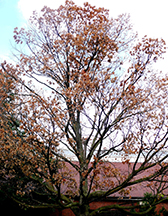
Photo credit: Keith Robinson
Urban trees are more susceptible to weather-related injury because of their oftentimes compromised root systems. In forested areas, trees spread their roots out two to three times the length of the tree. This is important because roots are the tree’s way to receive oxygen from the soil. This provides for a healthy defense system, giving the tree advantages like the ability to draw in moisture during dry spells and secrete fungi- and insect-repelling chemicals. In urban areas, roads and construction oftentimes sever roots or restrict where they can go, leaving the trees in a vulnerable state.
Our vulnerable urban trees are especially likely to be harmed by weather-induced stress. Symptoms like browning of leaves, dying branches and early coloration in the fall are all signs that a tree’s health is declining.
Keep an eye on your trees, and if you are concerned, use the Purdue Tree Doctor app or submit a sample to the Purdue Plant and Pest Diagnostic Lab as you seek best practices to care and protect your trees.
Resources
Purdue Experts: Tree Deaths Across Indiana May be Related to Weather Stress, Purdue Agriculture News
Drought? Don’t forget the trees! The Education Store, Purdue Resource Center
Plan Today For Tomorrow’s Flood, The Education Store
Community & Urban Forestry, Indiana Department of Natural Resources
The Root of the Problem, Northern Woodlands
Purdue University Agriculture News
Lindsey Purcell, Urban Forestry Specialist
Department of Natural Resources, Purdue University
B. Rosie Lerner, Extension Consumer Horticulture Architecture
Department of Horticulture and Landscape Architecture, Purdue University
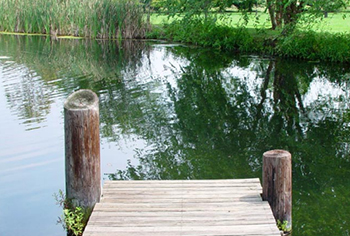
Photo credit: Dan Annarino
Hopefully no one is reading this after a catastrophic loss of their pond. This very wet summer has tested some ponds’ ability to hold and safely release excess water. I would like to quickly review the overflow structures ponds should have and also some management necessary to ensure the safety of ponds levees/dams.
For recreational ponds, there should be one or perhaps two means of releasing water from the pond. Most of these ponds are built on sloping land in order to capture rainwater to fill the pond. In this case, it is necessary to have an emergency spillway that will divert excess water once the pond is full away from the dam to prevent erosion and save the integrity of the structure. Usually they is just an earthen channel that runs around the end of the dam with an initial elevation 1-2 feet below the top of the dam. Water only runs through the spillway when the pond is full. An emergency spillway should have vegetation to prevent erosion but not to the extent that water is blocked from passing through efficiently.
A distinct advantage can be gained by having a drain structure installed through the dam when ponds are initially constructed. Drains such as this typically have a valve or swivel pipe which can regulate water level to whatever height the owner would like. With a wet summer such as we have had, the pond water level could be proactively lowered to save massive amounts of water passing through the spillway.
Additionally you can remove stagnant low oxygen water from the bottom of the pond. If a drain structure is releasing water from the bottom of the pond, it is a good idea to flush this valve two to three times per year to remove debris from around the structure which may plug it up if used infrequently. With these structures, it is a good idea to use the 6/12 rule. Water levels are kept six inches below maximum in order to catch any rain water event without overflowing. Evaporation and seepage will reduce the level back down over time. The 12 refers to the level the inches below maximum where you would add well water if you have the capacity. Generally this is only used with aquaculture ponds.
Control structures to maintain water levels will ensure the integrity of your ponds dams and levees. By controlling the amount of water flushing through a pond, the owner can also manage the productivity of the pond ecosystem by releasing/maintaining nutrients in the pond.
Resources
Commercial Greenhouse and Nursery Production: Controlling Algae in Irrigation Ponds, The Education Store, Purdue Extension Resource Center
Indiana Ponds, The Education Store
Indiana Ponds Q&A, The Education Store
Management of Ponds, Wetlands, and Other Water Reservoirs to Minimize Mosquitoes, The Education Store
Indiana Pond Management, Indiana Department of Natural Resources (IDNR), Fish & Pond Management
Ponds – Planning, Design, Construction, USDA Natural Resources Conservation Service (NRCS)
Bob Rode, Extension Aquaculture Specialist
Department of Forestry and Natural Resources, Purdue University
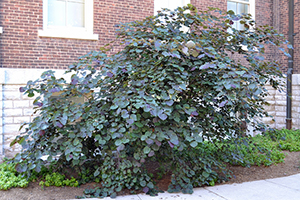
Photo credit: Purdue Arboretum
In July’s column of Purdue Yard & Garden News, Purdue Extension Consumer Horticulturist B. Rosie Lerner discusses several types of purple plants that could spice up your landscape, from small shrubs like Weigela and Ninebark to larger trees like Purple-leaf European Beech and Redbud Forest Pansy.
Resources
The Purple Landscape, Purdue Yard & Garden News
News Archive, Purdue Yard & Garden News
Purdue Master Gardener Program, Purdue Horticulture
B. Rosie Lerner
Extension Consumer Horticulturist, Purdue Extension
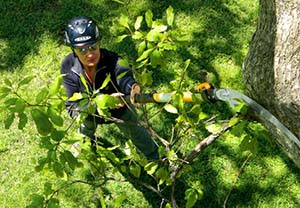 Trees continue to survive in spite of the many challenges they face in the urban environment. However, to grow from seedling to a mature tree in the urban forest, they need our help. They are the largest, oldest living organisms on the planet and can live long, healthy lives with some assistance. We often place trees in less-than-favorable growing locations that don’t allow natural development and maturity and often require pruning to develop a durable structure, improve clearance and maintain aesthetics.
Pruning has been called “one of the best, worst maintenance practices” performed on trees. The process creates wounds, which have a major impact on plant processes. Improper cutting on a tree causes severe damage or even death. To prune properly, it is important to understand both the proper techniques and how the tree responds to pruning.
In this publication, Urban Forestry Specialist Lindsey Purcell explores the techniques behind good pruning, from the planning process before planting to monitoring the tree’s response after the pruning cuts. Check out Tree Pruning Essentials and make sure you are pruning your trees to maximize safety, aesthetics and tree health!
Resources
Tree Pruning Essentials, Purdue Extension
Tree Pruning Essentials Video, Purdue Extension
Trees and Storms, Got Nature?
Tree Risk Management, The Education Store, Purdue Extension Resource Center
Pruning, Indiana Department of Natural Resources
Prune Your Trees, Indiana Department of Natural Resources
Lindsey Purcell, Urban Forestry Specialist
Department of Natural Resources, Purdue University
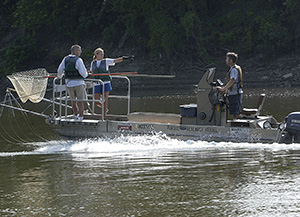
Photo credit: Tom Campbell
As boats enter and exit public bodies of water, they risk transferring aquatic plants, mussels or invertebrates that attach themselves to the bottom of the boat. While this might seem pretty harmless at first, this spreading of aquatic species runs the risk of introducing invasive species into new environments.
Invasive species cause harm to local ecosystems by reproducing exponentially when they are outside of their usual habitat and the organisms that keep their populations in check. They can then cause great damage by feeding on local species and the food they depend on. Once an invasive species is detected, it is oftentimes very expensive and difficult to control. For example, around 1991, the U.S. and Canada spent an estimated $20 million per year to control invasive sea lampreys and restore the trout populations that were damaged by them. In Indiana alone, we spend around $800,000 a year to attempt to control the growth of Eurasian watermilfoil, another nuisance invasive species.
In an attempt to avoid more cases like this in the future, the Indiana Department of Natural Resources (INDNR) is looking for help. Volunteers can sign up to record information about boats and their potential aquatic hitchhikers entering and leaving lakes during times of heavy use. The DNR Division of Fish and Wildlife can take this data and use it for public outreach and planning species management.
Those interested are highly encouraged to sign up on INDNR’s Volunteer Program page.
Resources
Aquatic Invasive Species (AIS), Indiana Department of Natural Resources
DNR Seeks Help Gathering Info on Spread of Aquatic Species, WFYI
Indiana Invasive Species Council, Purdue Entomology Extension
Invasive Plants, Purdue Agriculture Weed Science
The Education Store, Purdue Extension Resource Center (search “invasive”)
Indiana Department of Natural Resources

Recent Posts
- ID That Tree: Sugarberry
Posted: December 12, 2025 in Forestry, Wildlife, Woodlands - Powering Rural Futures: Purdue’s Agrivoltaics Initiative for Sustainable Growth
Posted: December 9, 2025 in Community Development, Wildlife - Learn How to Control Reed Canarygrass
Posted: December 8, 2025 in Forestry, Invasive Plant Species, Wildlife - Benefits of a Real Christmas Tree, Hoosier Ag Today Podcast
Posted: December 5, 2025 in Christmas Trees, Forestry, Woodlands - Succession Planning Resource: Secure your Future
Posted: December 2, 2025 in Community Development, Land Use, Woodlands - A Woodland Management Moment: Butternut Disease and Breeding
Posted: December 1, 2025 in Forestry, Forests and Street Trees, Woodland Management Moment, Woodlands - Controlling Introduced Cool-Season Grasses
Posted: in Forestry, Invasive Plant Species, Wildlife - Red in Winter – What Are Those Red Fruits I See?
Posted: in Forestry, Plants, Urban Forestry, Wildlife, Woodlands - Managing Common and Cut Leaved Teasel
Posted: November 24, 2025 in Forestry, Invasive Plant Species, Wildlife - Extension Team Wins Family Forests Comprehensive Education Award
Posted: November 21, 2025 in Forestry, Urban Forestry, Wildlife, Woodlands
Archives
Categories
- Alert
- Aquaculture/Fish
- Aquatic/Aquaculture Resources
- Ask the Expert
- Christmas Trees
- Community Development
- Disease
- Drought
- Forestry
- Forests and Street Trees
- Gardening
- Got Nature for Kids
- Great Lakes
- How To
- Invasive Animal Species
- Invasive Insects
- Invasive Plant Species
- Land Use
- Natural Resource Planning
- Nature of Teaching
- Plants
- Podcasts
- Ponds
- Publication
- Safety
- Spiders
- Timber Marketing
- Uncategorized
- Urban Forestry
- Webinar
- Wildlife
- Wood Products/Manufacturing
- Woodland Management Moment
- Woodlands