 Purdue University - Extension - Forestry and Natural Resources
Got Nature? Blog
Six pieces of data to collect from deer you harvest this year
Deer season is upon us in Indiana! If you are a serious hunter and deer manager, here are some things you should consider collecting from deer you harvest. This data provides valuable insights to the deer herd condition, and when combined with hunter observation data and habitat data, like browse transects, you can get a clear picture of the deer herd and habitat quality on your property. However, one year of harvest data is unlikely to be much of value, but collecting data over multiple years can help you track trends in the herd and habitat quality.
What to collect
When you harvest a deer on your property you should consider collecting the following pieces of biological information:
- Sex
- Age
- Weight
- Lactation status
- Antler measurements
- Rumen contents
*Each deer you harvest should be assigned a unique ID number to be sure all the following data is assigned to the right deer.
Sex and Age
Collecting deer sex and age (based on tooth replacement and wear) can help you divide the rest of the data you collect into sex and age classes. Find out how to determine age by viewing Age Determination in White-Tailed Deer video. You do not 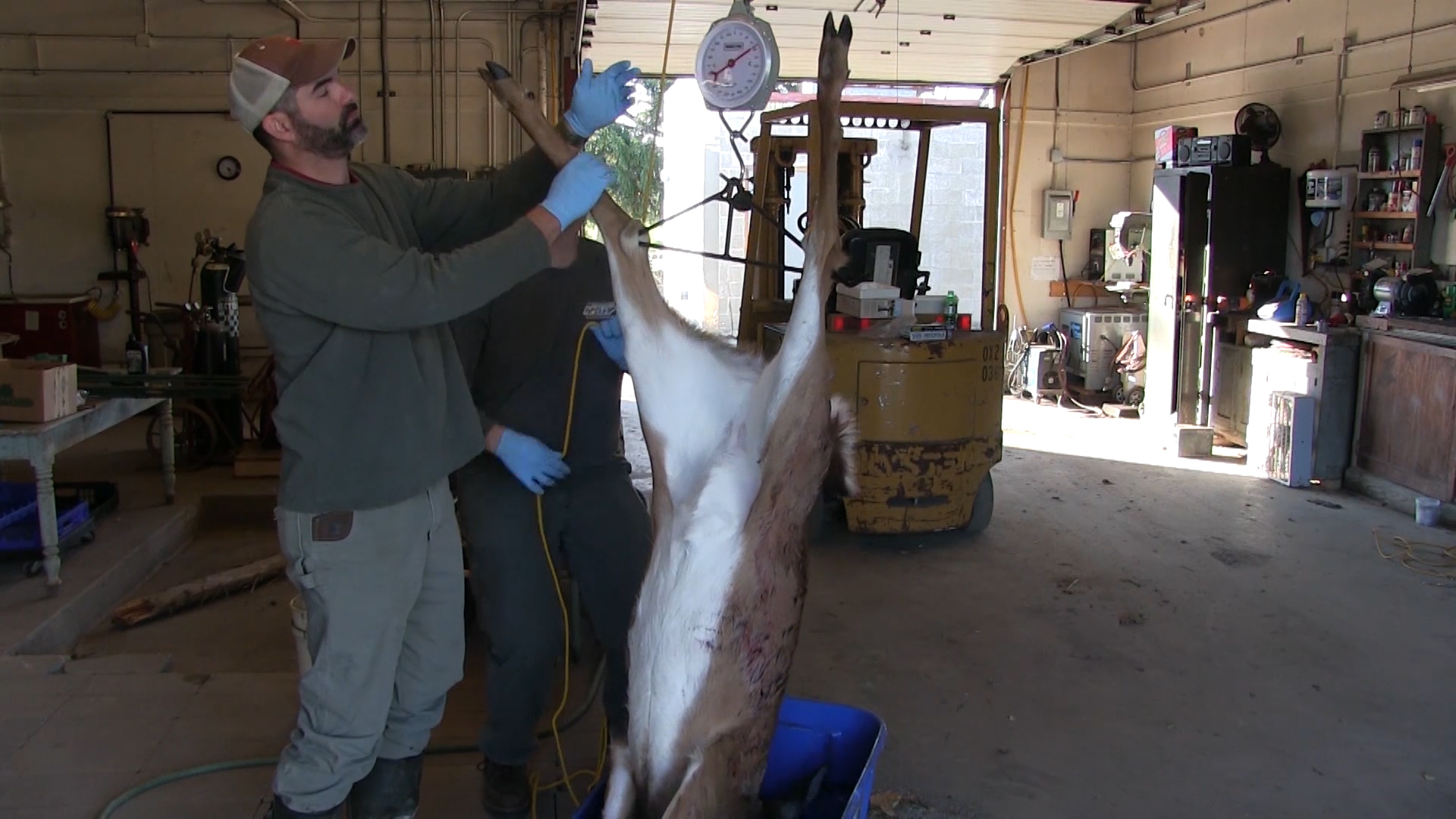 necessarily have to age a deer to the exact year, but you should separate ages into at least 3 age classes; fawns, yearlings, and >= 2.5 years old. This can be important for tracking changes to the average weight per age class or average antler measurements per age class over time.
Weight
You can collect either live weights or dressed weights, but you should pick one or the other and collect all weights consistently. Be sure to test your scales for accuracy before weighing deer. Tracking changes to the average weight per age class can provide 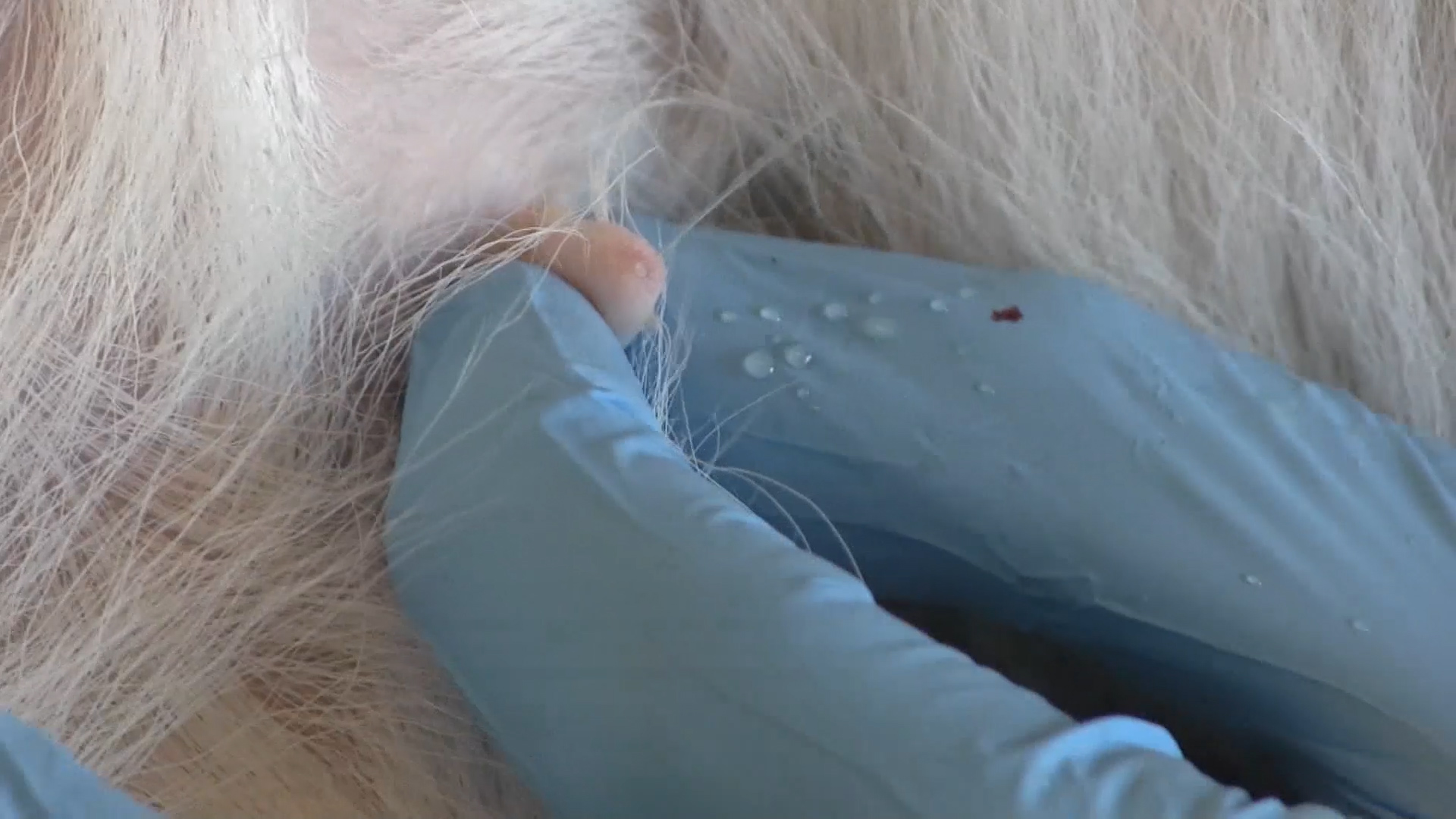 information about the nutritional status of the herd.
Lactation Status
Lactation status of does is often used as an index of fawn recruitment and can help determine if a doe had a fawn the summer preceding the hunting season. Lactation status for does harvested early in the season can be checked by squeezing the teats to produce milk you may need to cut into the mammary gland on does harvested later in the season to check lactation status.
Antler measurements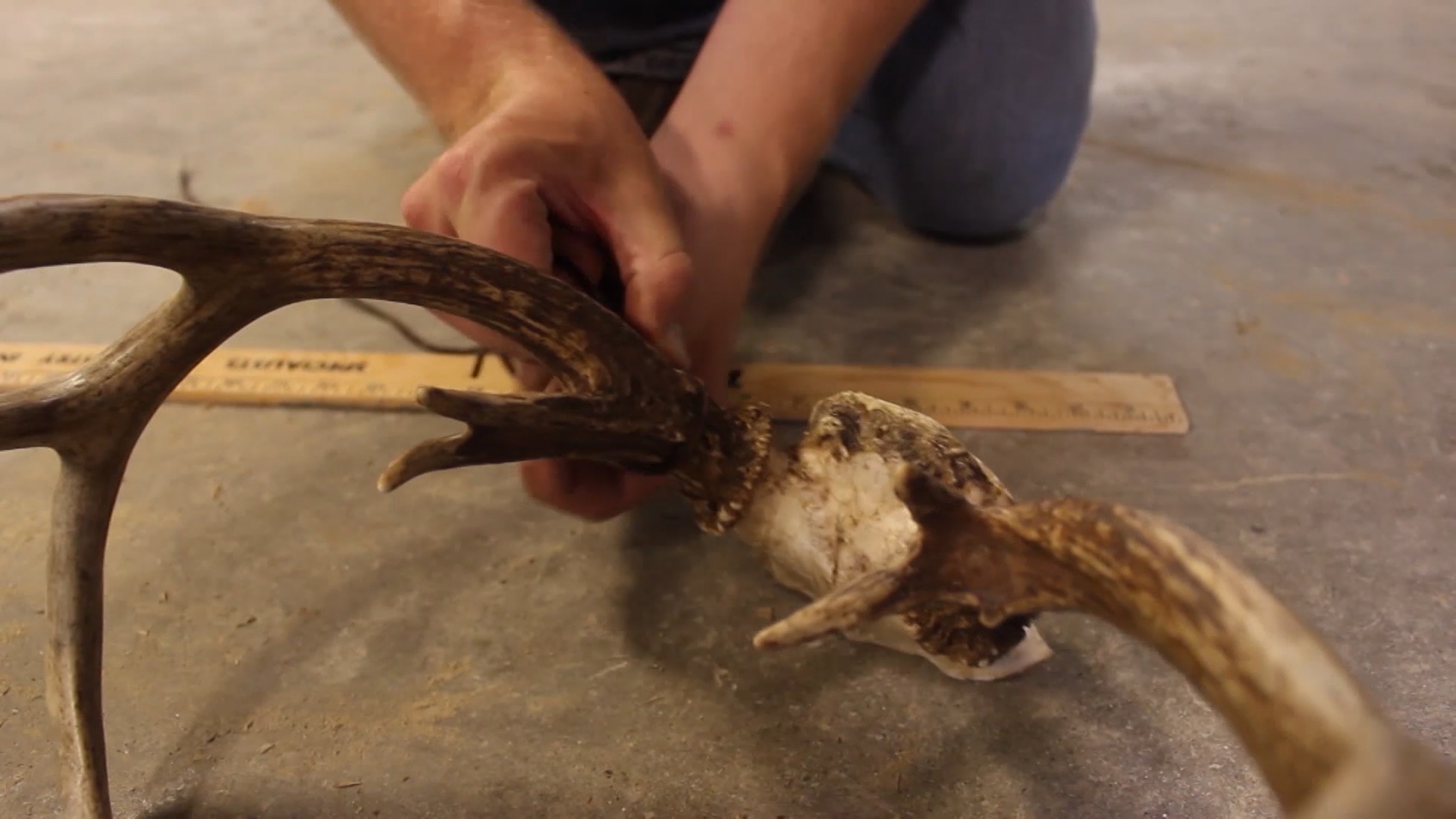
Antler measurements should be collected from bucks harvested on your property, including yearlings. Find out how to measure the antlers by viewing How to Score Your White-Tailed Deer video. At a minimum, you should collect the number of points on each antler and the basal circumference of the main beams. You may also consider collecting the inside spread of the antlers and the main beam lengths. Additionally, you can collect the gross Boone & Crockett Score.
Rumen contents
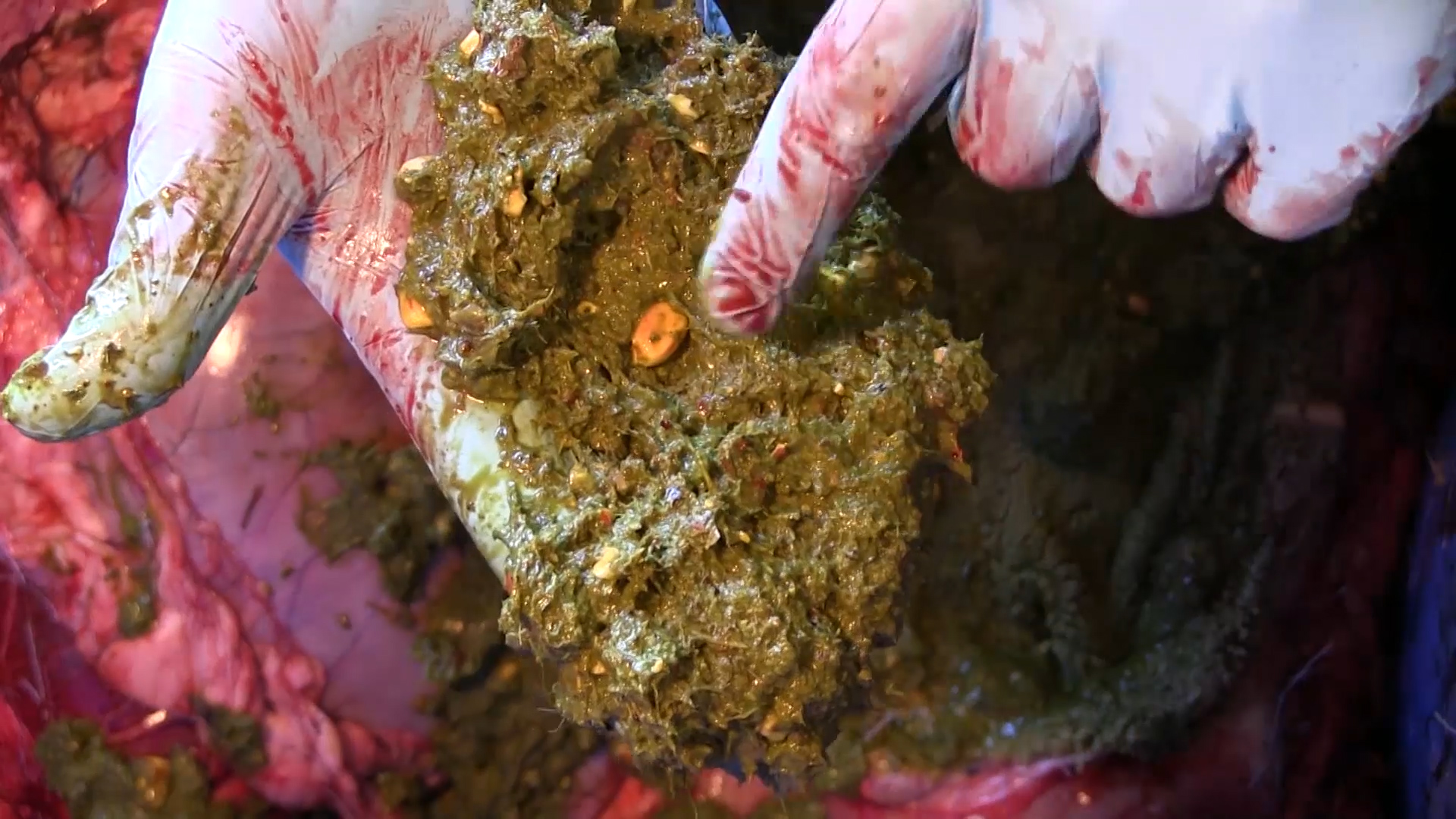 This piece of data can be helpful from a scouting and hunting aspect. Looking into the rumen of a deer can help you determine what deer may be eating during the portion of the year the deer was harvested. You may find green material (which can be hard to identify), corn, acorns, or whatever else deer may be consuming.
Things you need to collect harvest data
Here is a list of items you might need to collect data from harvested deer.
- Jawbone extractor
- Knife
- Loppers
- Scale
- Jawbone tag or permanent marker
- Flexible measuring tape
- Datasheet (click here for a white-tailed deer harvest datasheet)
Putting all of this data together can give you a picture into the condition of the deer herd on your property. Collecting this data only takes a small amount of time and effort and the information you gather is well worth it! For more information of how to collect biological data from harvested deer, check out this video from Purdue Extension.
Help the Indiana Department of Natural Resources (IDNR) collect biological data from harvested deer
Most of the data we discussed in this blog post and that is covered in the White-Tailed Deer Post Harvest Collection video, are data the Indiana DNR is collecting through an online post-harvest survey. This is a great opportunity for hunters to help the DNR collect data that will be used to manage the deer herd throughout the state. More information about the after the hunt survey can be found by visiting the Indiana DNR Deer After Hunt Survey page. If you are successful in harvesting a deer in Indiana this year, be sure to check your email for a link to the survey.
Additional Resources:
Age Determination in White-Tailed Deer video, Purdue Extension – FNR YouTube Playlist
How to Score Your White-Tailed Deer video, Purdue Extension – FNR YouTube Playlist
White-Tailed Deer Post Harvest Collection video, Purdue Extension – FNR YouTube Playlist
White-Tailed Deer Harvest Log (pdf), Purdue Extension-FNR
Indiana Deer Hunting, Biology and Management, Indiana Department of Natural Resources (IDNR)
Indiana Hunting and Trapping Guide, Indiana Department of Natural Resources (IDNR)
Managing White-Tailed Deer: Collecting Data from Harvested Deer, Alabama Cooperative Extension System
Jarred Brooke, Wildlife Extension Specialist
Department of Forestry & Natural Resource, Purdue University
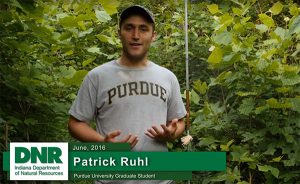 The Indiana Department of Natural Resources (IDNR) has released its latest video – Indiana’s Working Forests.
This video explores the origins of Indiana’s state forest system that developed after pioneer settlers cleared the original forests and left behind a nearly barren landscape.
State forests were established to demonstrate how to use science to grow and sustain healthy forest systems. Beginning with just 2,000 acres at Clark State Forest in 1903, the DNR Division of Forestry has expanded to cover more than 156,000 acres at 15 sites.
In the video, IDNR Forestry professionals discuss how management practices contribute to forest health by mimicking natural disturbances. Those practices promote regeneration of oaks and hickories that are valuable food sources for many forest wildlife species. They explain that although timber harvests have increased in recent years, the selective approach they use removes less than 1 percent of the available trees in any given year.
FNR graduate wildlife student Patrick Ruhl, Purdue adviser Dr. J. Barny Dunning, Jr., shares how the Hardwood Ecosystem Experiment provides him the opportunity to study the effects of forest management and the changes that are taking place among migratory songbirds. This project is a collaborative effort with the following sponsors: Indiana Department of Natural Resources, Division of Forestry; Indiana Department of Natural Resources, Division of Fish and Wildlife, Wildlife Diversity Section; Purdue University; Indiana Chapter of the Ruffed Grouse Society; National Geographic Society; and The Wildlife Management Institute. To view more partners view the Hardwood Ecosystem Experiment website: heeforestudy.org.
Resources:
A Landowner’s Guide to Sustainable Forestry: Part 1: Sustainable Forestry – What does it mean for Indiana?, The Education Store
Indiana Forest Issues and Recommendations, The Education Store
The Hardwood Ecosystem Experiment: Indiana Forestry and Wildlife, The Education Store
Forest Ecosystem Management in Indiana, The Education Store
Forest Ecosystem Management in the Central Hardwood Region, The Education Store
Phil Bloom, Director
Indiana Department of Natural Resources
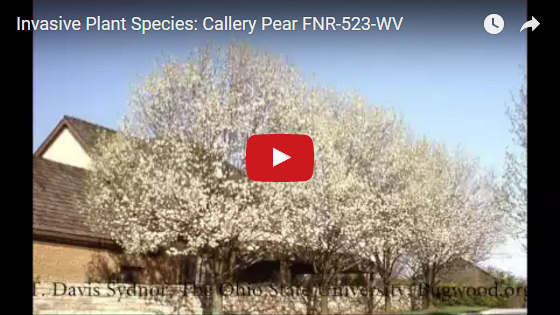 Purdue Extension-FNR now has another expert-reviewed video to help spread awareness of invasive plant species in Indiana. This video discusses the callery pear, an exotic tree from East Asia that is moving from ornamental plantings to fields and woodlands.
Check out Invasive Plant Species: Callery Pear to learn how to identify the callery pear and how you can join the fight to stop it from spreading further. To learn more about invasive plant species, check out the videos covering oriental bittersweet and wintercreeper, or visit the Invasive Species section of the Purdue Extension website.
Resources:
Invasive Plant Species: Callery Pear – The Education Store, Purdue Extension Resource Center
Invasive Plant Species: Oriental Bittersweet – The Education Store
Invasive Plant Species: Wintercreeper – The Education Store
Invasive Species – Purdue Extension
Indiana’s “Most Unwanted” Invasive Plant Pest List – Indiana Cooperative Agricultural Pest Survey (CAPS) Program
Danny Thomas, Purdue Extension-FNR intern
Purdue University Department of Forestry and Natural Resources
Lenny Farlee, Sustaining Hardwood Extension Specialist
Purdue University Department of Forestry and Natural Resources
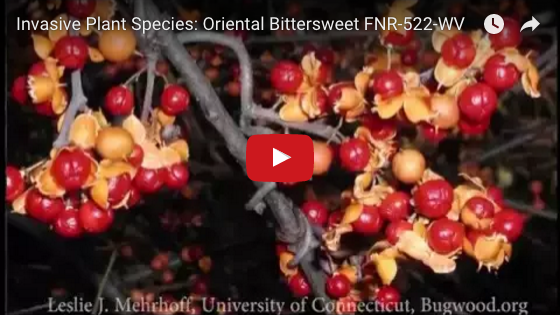 Purdue Extension-FNR now has two new expert-reviewed videos to help spread awareness of two significant invasive plant species in Indiana: the oriental bittersweet and wintercreeper. These videos share plant characteristics, their effect on forests, and alternative native species that can be utilized.
Oriental bittersweet is a vine that was brought over from Asia in the 1960’s. It is a pleasant looking plant that is popular in landscaping and home decor items. However, they can be harmful to trees as they wrap around them and cut off their access to light and are also problematic on the forest floor.
Wintercreeper was brought over as an ornamental ground cover in 1907 and is still planted for landscaping today. As birds eat its seeds, wintercreeper spreads from urban areas into the forests where it grows earlier in the spring than native plants and prevents new growth from emerging.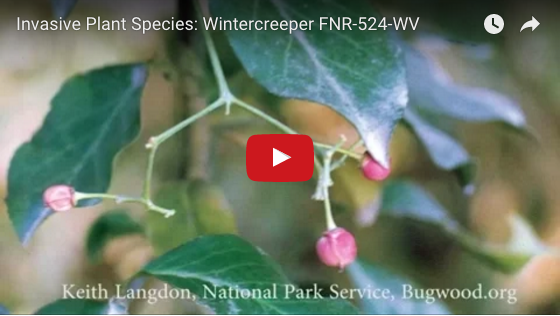
Check out the oriental bittersweet and wintercreeper videos to learn more about these invasive species and to how to join the fight to stop them from spreading further.
Resources:
Invasive Plants of the Eastern U.S.: An Introduction to the Problematic Non-Native Species – The Education Store
Invasive Plants – Purdue University, Department of Botany and Plant Pathology
Invasive Plants – Indiana Invasive Species Council
Purdue Extension-FNR Internship Program – Purdue University, Department of Forestry and Natural Resources
Danny Thomas, Purdue Extension-FNR intern
Purdue University Department of Forestry and Natural Resources
Lenny Farlee, Sustaining Hardwood Extension Specialist
Purdue University Department of Forestry and Natural Resources

Recent Posts
- It’s Timberdoodle Time!
Posted: April 3, 2026 in Got Nature for Kids, How To, Wildlife - Keep An Eye Out for Hammerhead Worms, Purdue Landscape Report
Posted: April 2, 2026 in Invasive Animal Species, Wildlife, Woodlands - When is the Peak Migration For Hummingbirds and How Can You Attract Them?
Posted: in How To, Wildlife - ID That Tree Featured in National Woodland Owners Association Newsletter
Posted: April 1, 2026 in Urban Forestry, Wildlife, Woodlands - New 2026 Indiana Woodland Steward Newsletter
Posted: March 30, 2026 in Urban Forestry, Wildlife, Woodlands - A Woodland Management Moment: Why Aspect Matters
Posted: in Urban Forestry, Woodland Management Moment, Woodlands - 2026 Winter Bat Survey In Progress, MyDNR
Posted: March 27, 2026 in How To, Wildlife - Fast-Growing Trees for the Landscape, Purdue Landscape Report
Posted: March 26, 2026 in Forestry, Urban Forestry, Woodlands - Urban Tree Spotlight: Planting Deciduous Shade Trees, Purdue Landscape Report
Posted: March 25, 2026 in Forests and Street Trees, Urban Forestry, Woodlands - Beetle that attacks Tree-of-Heaven found in Indiana, Purdue Landscape Report
Posted: March 20, 2026 in Invasive Insects, Wildlife, Woodlands
Archives
Categories
- Alert
- Aquaculture/Fish
- Aquatic/Aquaculture Resources
- Ask the Expert
- Christmas Trees
- Community Development
- Disease
- Drought
- Forestry
- Forests and Street Trees
- Gardening
- Got Nature for Kids
- Great Lakes
- How To
- Invasive Animal Species
- Invasive Insects
- Invasive Plant Species
- Land Use
- Natural Resource Planning
- Nature of Teaching
- Plants
- Podcasts
- Ponds
- Publication
- Safety
- Spiders
- Timber Marketing
- Uncategorized
- Urban Forestry
- Webinar
- Wildlife
- Wood Products/Manufacturing
- Woodland Management Moment
- Woodlands