 Purdue University - Extension - Forestry and Natural Resources
Got Nature? Blog
Question: We have a large 60+ foot mulberry tree in our backyard that is located by our pond. This is the first year I have seen these dark streaks on the bark of the tree. Should I have concerns?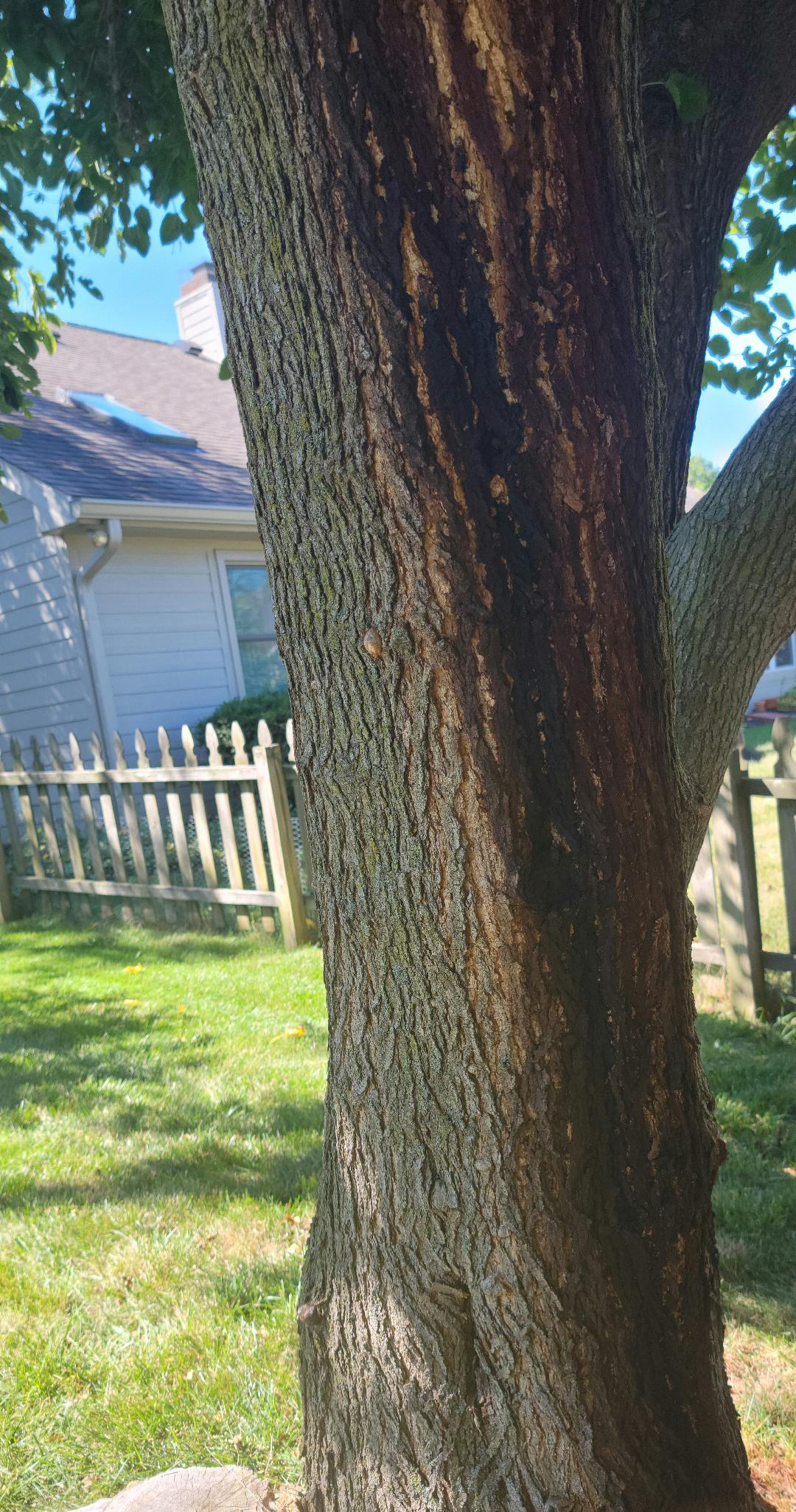
Answer: From the photos, it looks like wet wood/slime flux is affecting your tree. It is a bacterial infection on trees and in most cases is not a serious issue, but unfortunately, there is nothing to be done about it. Many years ago they used to drill holes to try and allow gases and liquids drain from an area with the slime flux but through research and experience this practice is not recommended.
The Purdue Landscape Report titled Slime Flux of Trees shares more about this disease:
Slime flux (also known as wet wood) is a dark, foul-smelling and unsightly seepage of sap from tree trunks. The disease is not usually a serious problem but the appearance can be alarming. Slime flux is caused by common surface-inhabiting bacteria or yeast fungi that enter the trunk through wounds associated with improper pruning, stem breakage, injections, cracks from freeze injury or weak limb crotches. The bacteria and yeast may live on sap nutrients within injured trees for many years without any outward evidence.
Symptoms
The main symptom is the appearance of the dark sap oozing on the trunk exterior which happens when gasses produced by growth of the bacteria and yeast cause the internal pressure of the sap to become high enough to force the sap out through cracks in the bark. The dark streaks usually turn light gray or white upon drying. Oozing sap may be frothy and white at the point of exit. Airborne bacteria, yeasts, and fungi often colonize the wet oozing material, which ferments and releases a foul odor. Slime flux may delay wound healing (callus formation).
For prevention and other resources view: Slime Flux of Trees.
Resources
Purdue Landscape Report
Find an Arborist video, Trees are Good-International Society of Arboriculture (ISA)
Tree Pruning Essentials, Publication & Video, The Education Store, Purdue Extension resource center
Tree Pruning: What Do Trees Think?, The Education Store
Tree Installation Process and Practices, The Education Store
Tree Pruning for the Landscape, Webinar, Purdue Extension – Forestry and Natural Resources YouTube channel
Tree Wounds and Healing
Why Is My Tree Dying?, The Education Store
Tree Risk Management, The Education Store
What Are Invasive Species and Why Should I Care?, Got Nature? Blog Post, Purdue Extension – FNR
Purdue Plant & Pest Diagnostic Lab (PPDL)
Subscribe – Purdue Extension-FNR YouTube Channel
Ben McCallister, Urban Forestry Specialist
Purdue Forestry & Natural Resources
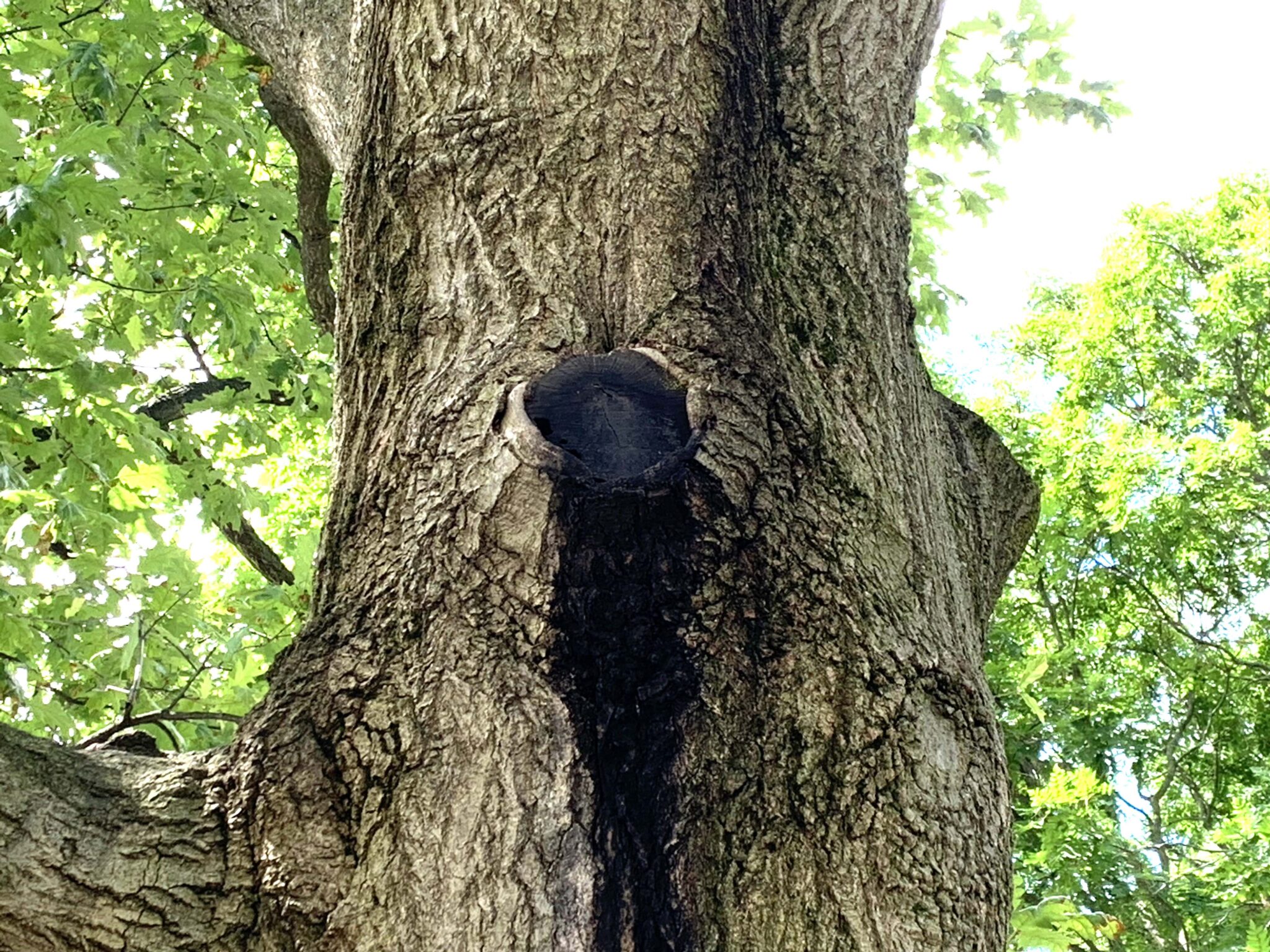
Figure 1. White oak slime flux
Purdue Landscape Report: Slime flux (also known as wet wood) is a dark, foul-smelling and unsightly seepage of sap from tree trunks (fig. 1). The disease is not usually a serious problem but the appearance can be alarming. Slime flux is caused by common surface-inhabiting bacteria or yeast fungi that enter the trunk through wounds associated with improper pruning, stem breakage, injections, cracks from freeze injury or weak limb crotches. The bacteria and yeast may live on sap nutrients within injured trees for many years without any outward evidence.
Symptoms
The main symptom is the appearance of the dark sap oozing on the trunk exterior which happens when gasses produced by growth of the bacteria and yeast cause the internal pressure of the sap to become high enough to force the sap out through cracks in the bark. The dark streaks usually turn light gray or white upon drying. Oozing sap may be frothy and white at the point of exit. Airborne bacteria, yeasts, and fungi often colonize the wet oozing material, which ferments and releases a foul odor. Slime flux may delay wound healing (callus formation).
Slime flux is extremely common on mature elms (fig 2), oak (fig 3) and mulberry; and is seen less frequently on maples (fig 4), paper birch, sycamore, and walnut.
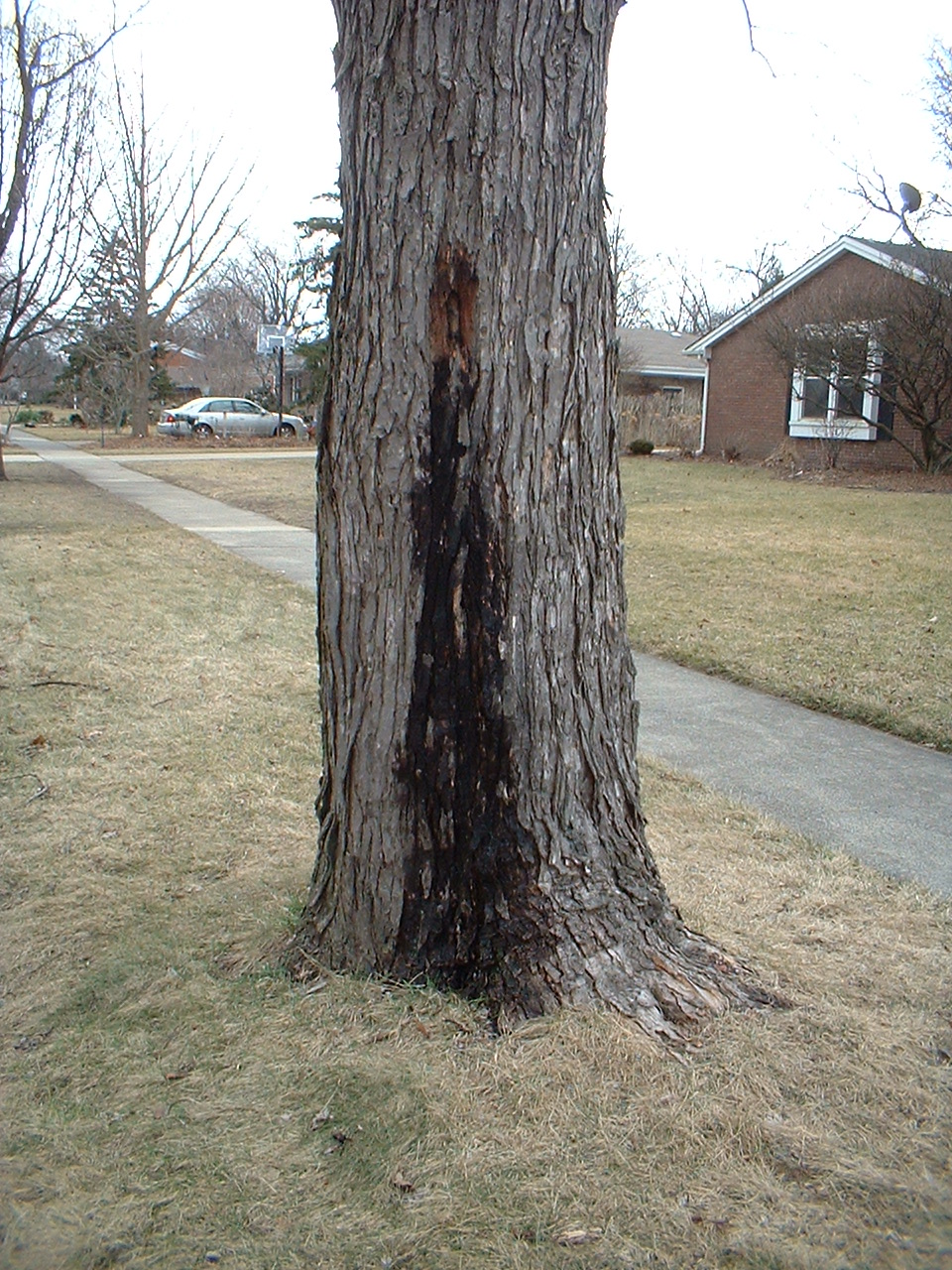
Figure 4. Silver Maple
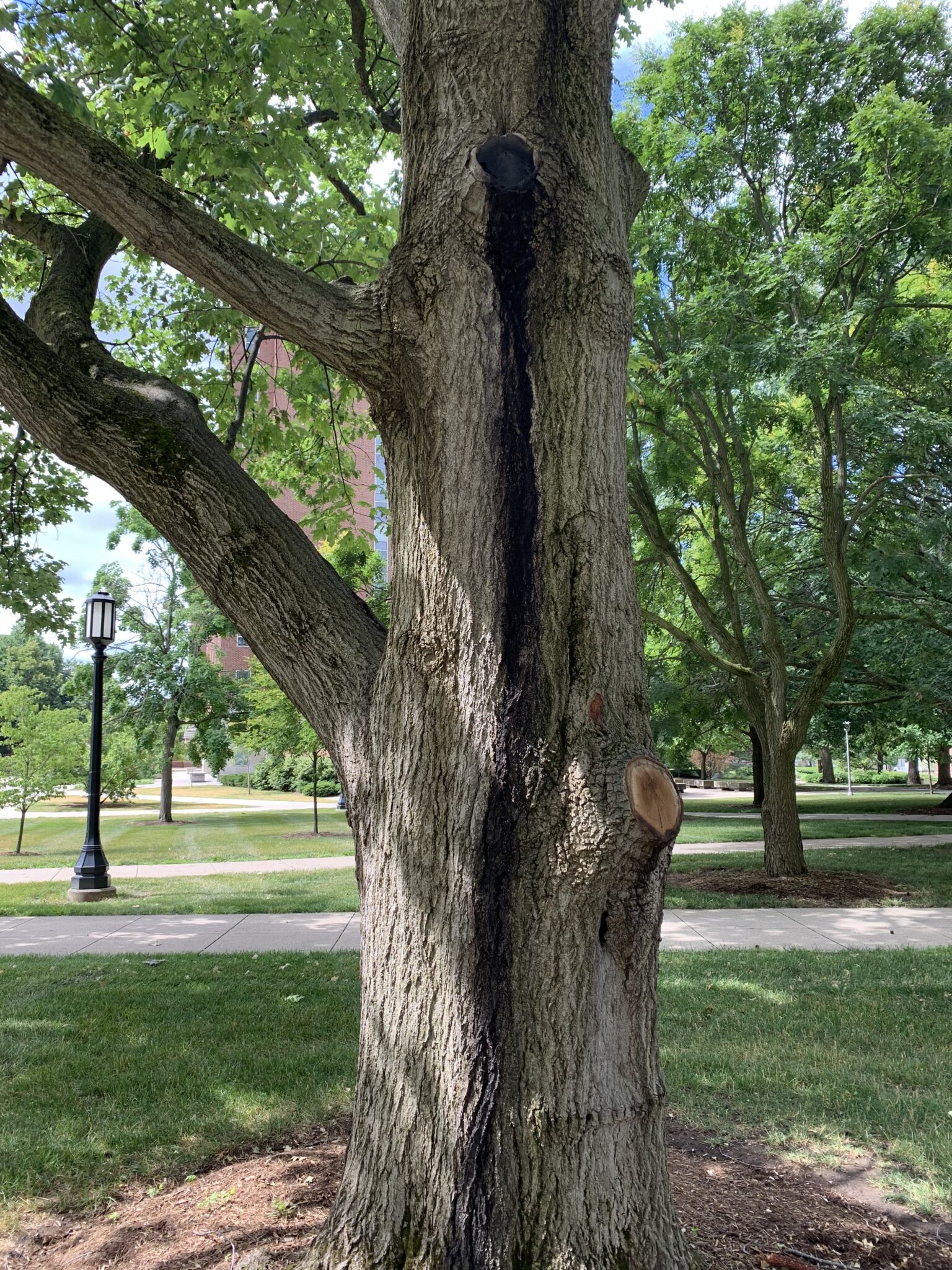
Figure 3. White Oak
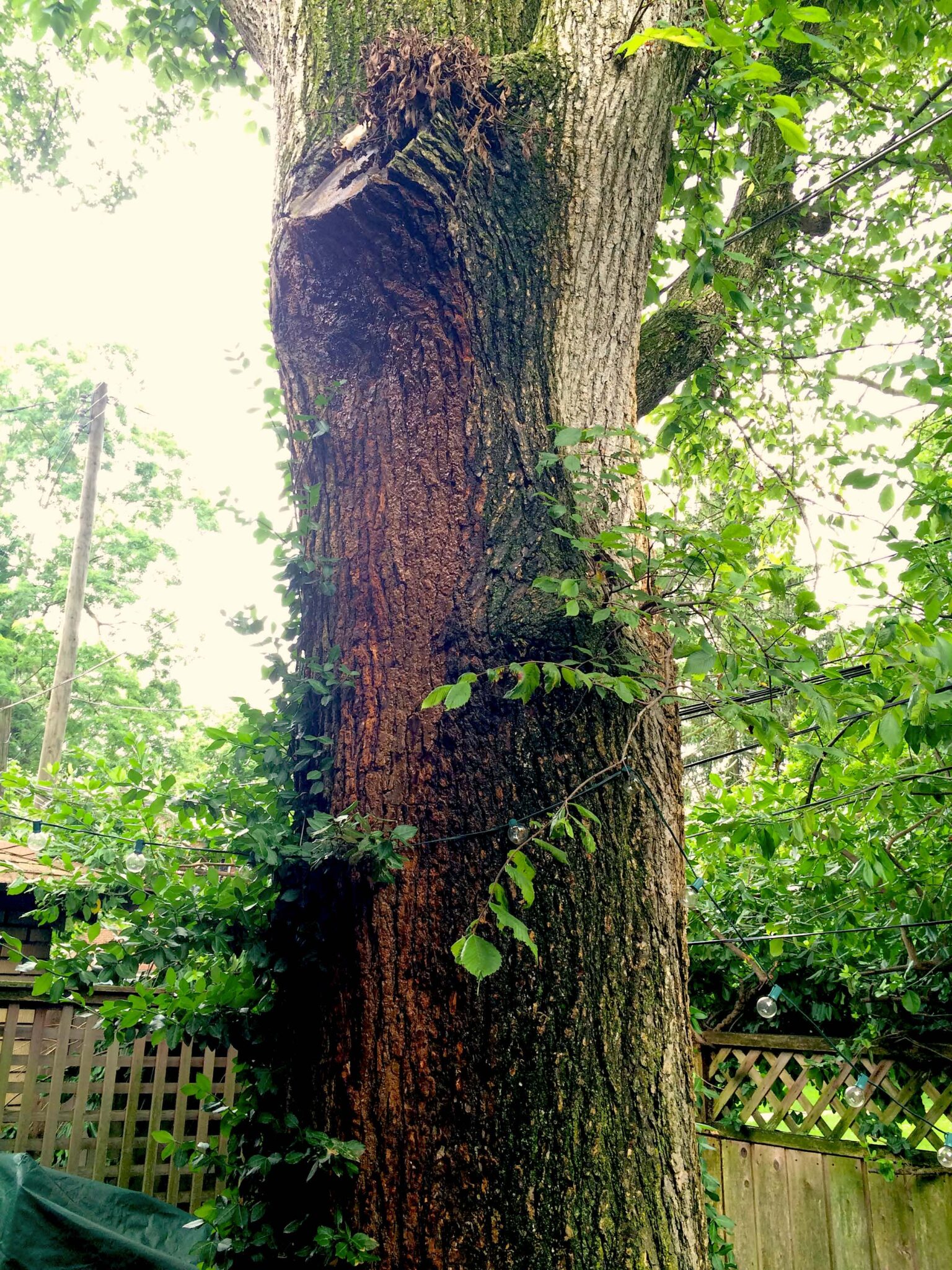
Figure 2. American Elm
Prevention
There is no control or treatment for slime flux. Inserting a drain tube into the tree to relieve pressure and drain infected sap was once an accepted treatment, but is no longer recommended and may do more harm than good. Boring holes in affected trees causes internal spread of the bacteria within the tree and may allow entry of wood decay fungi.
To reduce the chances of susceptible trees developing wet wood avoid unnecessary wounding of the trunk and branches. Proper pruning techniques, HO-4-W, will allow branches to heal more rapidly. Make sure susceptible trees receive good general care; including irrigation when needed and mulch to conserve moisture and keep mowers away from the trunk. Avoid excess traffic in tree root zone to prevent soil compaction and root injury.
The first and most important step for managing a tree disease is to accurately diagnose the problem. The best approach to diagnosis of tree problems is to start by submitting photos of the tree via the digital upload tool on the Purdue Pest & Diagnostic Lab (PPDL) website. In the case of slime flux it is impractical to collect the type of physical sample needed for confirmation so photos are the best alternative.
References
Sinclair, W. A. and H. H. Lyon. 2005. Diseases of trees and shrubs. Cornell University Press, Ithaca, NY. 660 pp.
Stipes, R. J. and Campana, R. J. (eds.) 1981. Compendium of Elm Diseases. APS Press, St. Paul, MN.
Resources
Diseases in Hardwood Tree Plantings , The Education Store, Purdue Extension’s resource center
Iron Chlorosis of Trees and Shrubs, The Education Store
Surface Root Syndrome, The Education Store
Tom C Creswell, Clinical Engagement Professor – Plant & Pest Diagnostic Laboratory
Purdue University Department of Botany and Plant Pathology
Lindsey Purcell, Chapter Executive Director
Indiana Arborist Association

Recent Posts
- It’s Timberdoodle Time!
Posted: April 3, 2026 in Got Nature for Kids, How To, Wildlife - Keep An Eye Out for Hammerhead Worms, Purdue Landscape Report
Posted: April 2, 2026 in Invasive Animal Species, Wildlife, Woodlands - When is the Peak Migration For Hummingbirds and How Can You Attract Them?
Posted: in How To, Wildlife - ID That Tree Featured in National Woodland Owners Association Newsletter
Posted: April 1, 2026 in Urban Forestry, Wildlife, Woodlands - New 2026 Indiana Woodland Steward Newsletter
Posted: March 30, 2026 in Urban Forestry, Wildlife, Woodlands - A Woodland Management Moment: Why Aspect Matters
Posted: in Urban Forestry, Woodland Management Moment, Woodlands - 2026 Winter Bat Survey In Progress, MyDNR
Posted: March 27, 2026 in How To, Wildlife - Fast-Growing Trees for the Landscape, Purdue Landscape Report
Posted: March 26, 2026 in Forestry, Urban Forestry, Woodlands - Urban Tree Spotlight: Planting Deciduous Shade Trees, Purdue Landscape Report
Posted: March 25, 2026 in Forests and Street Trees, Urban Forestry, Woodlands - Beetle that attacks Tree-of-Heaven found in Indiana, Purdue Landscape Report
Posted: March 20, 2026 in Invasive Insects, Wildlife, Woodlands
Archives
Categories
- Alert
- Aquaculture/Fish
- Aquatic/Aquaculture Resources
- Ask the Expert
- Christmas Trees
- Community Development
- Disease
- Drought
- Forestry
- Forests and Street Trees
- Gardening
- Got Nature for Kids
- Great Lakes
- How To
- Invasive Animal Species
- Invasive Insects
- Invasive Plant Species
- Land Use
- Natural Resource Planning
- Nature of Teaching
- Plants
- Podcasts
- Ponds
- Publication
- Safety
- Spiders
- Timber Marketing
- Uncategorized
- Urban Forestry
- Webinar
- Wildlife
- Wood Products/Manufacturing
- Woodland Management Moment
- Woodlands