 Purdue University - Extension - Forestry and Natural Resources
Got Nature? Blog
Hummingbirds are a popular attraction in any backyard and we receive questions on when they will be coming to Indiana and how to attract them to your backyard. Our Purdue professor emeritus of wildlife ecology Barny Dunning in this interview for CBS4 Indianapolis titled “How to attract hummingbirds during peak migration,” shares how planting a variety of plants that bloom will help draw them in along with a simple hummingbird mixture.
The ruby-throated hummingbird is the only species of hummingbird that nests in the Hoosier state. These colorful visitors are migratory and arrive from their wintering grounds around mid-April.
Dr. Brian MacGowan has a publication titled Attracting Hummingbirds to Your Yard that is a great resource to share along with this video showing how to prepare your hummingbird feeders and how to find out when they will be migrating to your area. Hummingbird Central also tracks spring and fall migrations. Anyone can submit sightings on their website and view up-to-date sightings.
Resources:
Attracting Hummingbirds to Your Yard publication, The Education Store-Purdue Extension resource center
Virtual Tour Brings Forest Management for Birds to Life, Got Nature? Blog, Purdue Extension FNR
Birding Through the Seasons, Indiana Forestry & Woodland owners Association (IFWOA)
Behold! The Atlas of Breeding Birds of Indiana, MyDNR, Indiana Department of Natural Resources, Got Nature? Blog, Purdue Extension FNR
Breeding Birds and Forest Management: the Hardwood Ecosystem Experiment and the Central Hardwoods Region, The Education Store, Purdue Extension – Forestry and Natural Resources
Forest Birds, The Education Store
Managing Woodlands for Birds, The Education Store
Managing Woodlands for Birds Video, Purdue Extension-Forestry and Natural Resources (FNR) YouTube Channel
The Birders’ Dozen, Profile: Baltimore Oriole, Indiana Woodland Steward
Birds and Residential Window Strikes: Tips for Prevention, The Education Store, Purdue Extension resource center
No Room at the Inn: Suburban Backyards and Migratory Birds, Education Store
Question: Is there any risk of becoming infected with avian influenza virus by feeding backyard birds?, Got Nature? Blog, Purdue Extension FNR
Preventing Wildlife Damage – Do You Need a Permit?, The Education Store
How to Construct a Scent Station video, The Education Store
Subscribe – Purdue Extension-FNR YouTube Channel
Brian MacGowan, Wildlife Extension Specialist
Purdue Forestry and Natural Resources
Most of us have probably heard or seen a lot about pollinators in the media recently. The reason why is that pollinators are really, really important. We simply can’t live without them. Researchers estimate that one out of every three bites of food we eat is made possible by pollinators. More than 100 food crops in the U.S. depend on pollinators, including almost all fruit and grain crops.
There are many different types of pollinators including native bees, butterflies and moths, beetles, flies, wasps, and of course hummingbirds. But perhaps one of the more interesting pollinators is the Monarch. Millions of Monarchs congregate in a relative small area in Mexico each winter. In March they start their journey north which has occurred over several generations. Unfortunately, the number of Monarchs counted in overwintering colonies has declined over the past 25 years.
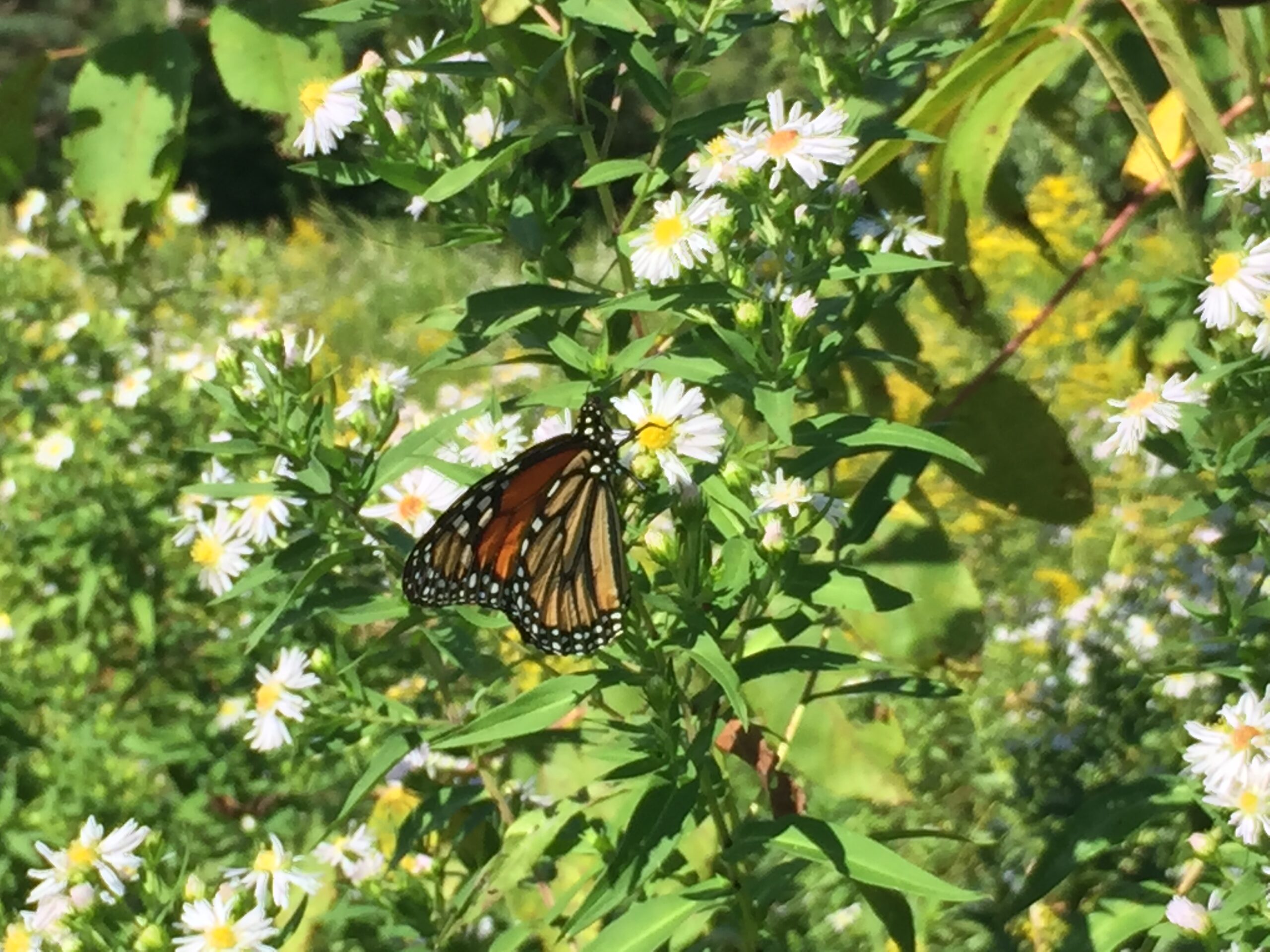
In response, many states including Indiana have developed a state Monarch Conservation Plan. With input from many stakeholders over several years, the Indiana Monarch Conservation Plan was released in December 2020. One goal of the plan was to create an online resource that would act as a clearinghouse for Indiana monarch and pollinator conservation data, research, best management practices (BMPs), and events. I invite you to visit the Indiana Monarch and Pollinator Conservation Hub at https://indianawildlife.org/monarchs/.
You might be asking yourself, ‘Why is a wildlife specialist writing about pollinators?’ It turns out that quality habitat for wildlife is often quality habitat for pollinators. The diversity of wildflowers and structure that native grasslands, trees and shrubs benefit them all. Trees such as eastern redbud and Ohio buckeye provide early nectar sources. Native grasslands that have a diverse mixture of wildflowers provide food, bare ground, and structure desirable for a wide variety of pollinators.
Resources
Protecting Pollinators: Why Should We Care About Pollinators?, The Education Store, Purdue Extension resource center
Ask The Expert: What’s Buzzing or Not Buzzing About Pollinators , Purdue Extension – Forestry & Natural Resources (FNR) YouTube Channel
Purdue Pollinator Protection publication series, Purdue Extension Entomology
Indiana Monarch & Pollinator Conservation Hub, Indiana Wildlife Federation
Monarch Watch, University of Kansas
100 Plants to Feed the Monarch/Other Resources Available, Xerxes Society for Invertebrate Conservation
Brian MacGowan, Wildlife Extension Specialist & Extension Coordinator
Purdue Department of Forestry and Natural Resources
Hummingbirds are a popular attraction in any backyard. The ruby-throated hummingbird is the only species of hummingbird that nests in the Hoosier state. These colorful visitors are migratory and arrive from their wintering grounds around mid-April. So now is the time to place the hummingbird feeders.
Watch this short video to see how easy it is to make and fill your hummingbird feeder along with resources showing when and where they migrate.
Resources
Attracting Hummingbirds to Your Yard (pdf), The Education Store-Purdue Extension
Preventing Wildlife Damage – Do You Need a Permit?, The Education Store, Purdue Extension resource center
Managing Woodlands for Birds, The Education Store
Selecting a Nuisance Wildlife Control Professional, The Education Store
How to Construct a Scent Station, The Education Store
Question: How do I properly relocate raccoons from my attic?, Got Nature? Blog, Purdue Extension FNR
Birds and Residential Window Strikes: Tips for Prevention, The Education Store
Nuisance Wildlife, Indiana Department of Natural Resources
Brian MacGowan, Wildlife Extension Specialist
Purdue Forestry and Natural Resources

Recent Posts
- Replace Invasives with Natives: 2026 Plant Swap Program
Posted: April 13, 2026 in Invasive Plant Species, Urban Forestry - Publication – Planting Forest Trees and Shrubs in Indiana
Posted: April 8, 2026 in Forests and Street Trees, Urban Forestry, Wildlife, Woodlands - ID That Tree: Virgin’s Bower Clematis
Posted: April 6, 2026 in Urban Forestry, Wildlife, Woodlands - It’s Timberdoodle Time!
Posted: April 3, 2026 in Got Nature for Kids, How To, Wildlife - Keep An Eye Out for Hammerhead Worms, Purdue Landscape Report
Posted: April 2, 2026 in Invasive Animal Species, Wildlife, Woodlands - When is the Peak Migration For Hummingbirds and How Can You Attract Them?
Posted: in How To, Wildlife - ID That Tree Featured in National Woodland Owners Association Newsletter
Posted: April 1, 2026 in Urban Forestry, Wildlife, Woodlands - New 2026 Indiana Woodland Steward Newsletter
Posted: March 30, 2026 in Urban Forestry, Wildlife, Woodlands - A Woodland Management Moment: Why Aspect Matters
Posted: in Urban Forestry, Woodland Management Moment, Woodlands - 2026 Winter Bat Survey In Progress, MyDNR
Posted: March 27, 2026 in How To, Wildlife
Archives
Categories
- Alert
- Aquaculture/Fish
- Aquatic/Aquaculture Resources
- Ask the Expert
- Christmas Trees
- Community Development
- Disease
- Drought
- Forestry
- Forests and Street Trees
- Gardening
- Got Nature for Kids
- Great Lakes
- How To
- Invasive Animal Species
- Invasive Insects
- Invasive Plant Species
- Land Use
- Natural Resource Planning
- Nature of Teaching
- Plants
- Podcasts
- Ponds
- Publication
- Safety
- Spiders
- Timber Marketing
- Uncategorized
- Urban Forestry
- Webinar
- Wildlife
- Wood Products/Manufacturing
- Woodland Management Moment
- Woodlands