 Purdue University - Extension - Forestry and Natural Resources
Got Nature? Blog
Spiky round fruiting structures which hold the seeds as well as star-shaped leaves are signature characteristics of the sweetgum, a tree native to southern Indiana and utilized ornamentally throughout the state. Learn more about the sweetgum from Purdue Extension forester Lenny Farlee on this edition of ID That Tree.
If you have any questions regarding wildlife, trees, forest management, wood products, natural resource planning or other natural resource topics, feel free to contact us by using our Ask an Expert web page.
Resources
Sweetgum, The Education Store, Purdue Extension resource center
Sweetgum, FNR-Hardwood, The Purdue Arboretum Explorer
Sweetgum, Native Trees of Indiana Riverwalk, Purdue Fort Wayne
ID That Tree, Playlist
A Woodland Management Moment, Playlist, Purdue Extension-FNR YouTube Channel
Investing in Indiana Woodlands, The Education Store
Forest Improvement Handbook, The Education Store
Lenny Farlee, Sustaining Hardwood Extension Specialist
Purdue University Department of Forestry and Natural Resource
In this second of five prescribed fire ignition technique videos, Purdue Extension wildlife specialist Jarred Brooke describes a flanking fire.
If you have any questions regarding wildlife, trees, forest management, wood products, natural resource planning or other natural resource topics, feel free to contact us by using our Ask an Expert web page.
Resources
Wildlife Habitat Hint, Playlist, Purdue Extension – Forestry and Natural Resouces YouTube channel
Wildlife Habitat Hint: Late Growing Season Prescribed Fire, Video
Renovating Native Warm-Season Grass Stands for Wildlife: A Land Manager’s Guide, The Education Store, Purdue Extension resource center
Prescribed fire: 6 things to consider before you ignite, Got Nature? Blog, Purdue Extension – 4Forestry and Natural Resources
Jarred Brooke, Wildlife Extension Specialist
Purdue Department of Forestry and Natural Resources
Join Purdue Extension forester Lenny Farlee and Dr. Carrie Pike, a forest regeneration specialist with the USDA Forest Service, as they share about conservation tree planting, what species are available to plant, where to get them and more.
If you have any questions regarding trees, forest management, wildlife, wood products or other natural resource topics, feel free to contact us by using our Ask an Expert web page.
Resources
Find An Indiana Forester Website
Reforestation, Nurseries and Genetics Resources Website (RNGR.NET)
A Nursery Guide for the Production of Bare Root Hardwood Seedlings, (RNGR.NET)
Landowner Information, Hardwood Tree Improvement Regeneration Center (HTIRC)
Ask An Expert, Playlist, Purdue Extension – Forestry and Natural Resources YouTube Channel
A Woodland Management Moment, Playlist
Ask An Expert: Tree Inspection, Video
Planting Forest Trees and Shrubs in Indiana, The Education Store, Purdue Extension resource center
Investing in Indiana Woodlands, The Education Store
Tree Appraisal and the Value of Trees, The Education Store
Forest Improvement Handbook, The Education Store
Lenny Farlee, Sustaining Hardwood Extension Specialist
Purdue University Department of Forestry and Natural Resource
With large amounts of white-tailed deer populating the area around forest land, getting your hardwood seedlings established can be difficult.
Purdue Extension forester Lenny Farlee, sustainable hardwood extension specialist, offers some tips on how to protect newly planted seedlings from browsing deer using plastic mesh fencing to exclude the animals from the area. He also mentions tree tubes and electrified fencing as potential options. Learn more in the video below.
If you have any questions regarding trees, forests, wildlife, wood products or other natural resource topics, feel free to contact us by using our Ask an Expert web page.
Resources
USDA Cost Assistance Programs for Conservation Practices
How to Build a Plastic Mesh Deer Exclusion Fence, The Education Store, Purdue Extension Resource Center
Electric Fences for Preventing Deer Browse Damage by White-Tailed Deer, The Education Store
Managing Your Woods for White-Tailed Deer, The Education Store
How to Score Your White-Tailed Deer, Video, Purdue Extension Youtube Channel
Lenny Farlee, Sustaining Hardwood Extension Specialist
Purdue University Department of Forestry and Natural Resources
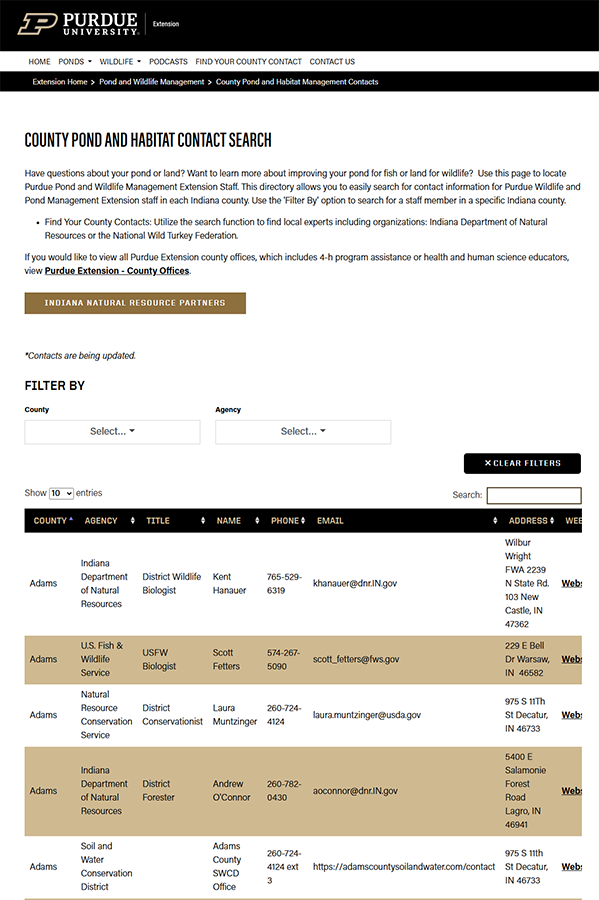 The Purdue Extension Pond and Wildlife Management website has been updated with a contact search function to better help you find the right professional biologist or conservationist in your county to serve your needs.
The newly created County and Habitat Management Contacts page allows individuals to search for experts within their county by simply selecting it from a dropdown menu. Within each individual county is a listing of Indiana Department of Natural Resources contacts, extension specialists and more.
In addition, the contacts page lists various agencies and services that can also help with questions about pond or habitat management. These resources include the Indiana DNR, the National Wild Turkey Federation, the Natural Resources Conservation Service (NRCS), Pheasants and Quail Forever, Purdue Extension, the U.S. Fish and Wildlife Service (USFWS), the Soil and Water Conservation Districts and event private consultants.
As fishing, hunting and other wildlife recreation continues to be popular in Indiana, Purdue Extension has developed this new program to help Indiana landowners manage their ponds and wildlife.
Along with the search features to help you find professional contacts, you will also find these topics and resources on the website:
- The Pond Ecosystem
- Fish Population Management
- Pond Construction and Maintenance
- Aquatic Vegetation Management
- Evaluating Your Property
- Forest Management
- Grassland Management
- Habitat Management Planning
To better understand and manage pond ecosystems in Indiana for fishing and wildlife habitat this website provides detailed information to help you reach your goals.
Resources:
Salmon and Trout of the Great Lakes: A Visual Identification Guide, The Education Store, Purdue Extension Resource Center
Pond Management: Stocking Fish in Indiana Ponds, The Education Store
The Nature of Teaching: Adaptations for Aquatic Amphibians, The Education Store
Illinois & Indiana Sea Grant, using research, outreach, and education to bring the latest science to communities and their residents
How to Score Your White-tailed Deer, Video, The Education Store
How to Build a Plastic Mesh Deer Exclusion Fence, The Education Store
Assessing Your Land’s Potential for Wildlife, The Education Store
Jarred Brooke, Extension Wildlife Specialist
Purdue Department of Forestry and Natural Resources
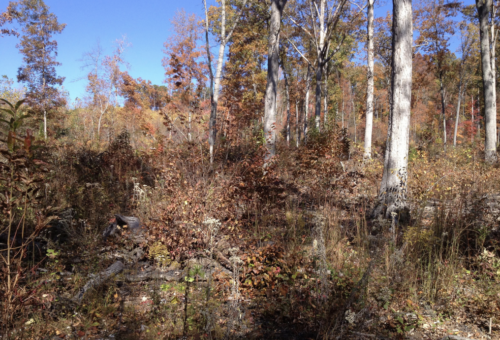
Many woodland landowners are interested in improving their properties for one of Indiana’s most abundant game animals, white-tailed deer. This publication titled Managing Your Woods for White-Tailed Deer outlines different options landowners have to enhance white-tailed deer habitat in their woodlands. Learn the pros and cons of mature forests vs. young forest stands along with finding answers to these and other questions you may have:
- Can mature forests cause less forage?
- What does lacking oak trees mean for managing deer?
- Which plants do deer eat?
This 16-page publication filled with plants and forest photos is a free download from the Purdue Extension resource center, The Education Store. View other deer publications and video resources as you place keywords in the search field located on The Education Store website.
Resources
Renovating native warm-season grass stands for wildlife: A Land Manager’s Guide, The Education Store, Purdue University
Bovine Tuberculosis in Wild White-tailed Deer, The Education Store
How to Score Your White-tailed Deer, Video, The Education Store
How to Build a Plastic Mesh Deer Exclusion Fence, The Education Store
Frost Seeding to Establish Wildlife Food Plots and Native Grass and Forb Plantings, Video
Jarred Brooke, Extension Wildlife Specialist
Purdue Department of Forestry and Natural Resources
Cities and towns in the U.S. contain more than 130 million acres of forests. These forests vary extensively in size and locale. An urban forest can describe an urban park such as Central Park in New York City, NY, street trees, nature preserves, extensive gardens, or any trees collectively growing within a suburb, city, or town. Urban forestry is the name given to the care and maintenance of those ecosystem areas that remain after urbanization. Data from the 2010 census indicated more than 80% of Americans live in urban centers with a population increase greater than 12%. The population of Indiana represents only 2.1% of the nation. In the last 8 years, IN has had an influx of 200,000 people which represents a population increase of 3.0%!
Urban forests, which help filter air and water, control storm water runoff, help conserve energy and provide shade and animal habitat must be maintained. As our nation becomes more urbanized, appreciate those urban foresters working to ensure we have save urban forest spaces to enjoy. These precious resources add more than curb appeal and economic value, they improve our quality of life.
What does an urban forester do? Here’s a quick answer:
References:
Purdue Urban Forestry & Arboriculture, Purdue Forestry and Natural Resources
USDA Forest Service Urban Forests, United States Department of Agriculture
US Census Bureau, United States Census Bureau
Interested in Purdue Urban Forestry? Contact:
Lindsey Purcell, Chapter Executive Director
Indiana Arborist Association
Ben McCallister, Urban Forestry Specialist
Forestry and Natural Resources
Resources:
Tree Support Systems, The Education Store, Purdue Extension Resource Center
Corrective Pruning for Deciduous Trees, The Education Store
Tree Installation: Process and Practices, The Education Store
What plants can I landscape with in area that floods with hard rain?, Got Nature? Blog, Purdue University Forestry and Natural Resources Extension
Question: This little guy lives around our house. We see him almost daily. Do you know what he is? Salamander? Skink? Lizard?
The animal pictured is both a lizard and a skink – specifically, a Common Five-lined Skink. More than 1,200 species of skinks are distributed worldwide. Most are medium-sized lizards with body lengths typically ranging 4-12 centimeters. Skinks are active and alert lizards covered with smooth overlapping scales on the sides and back.
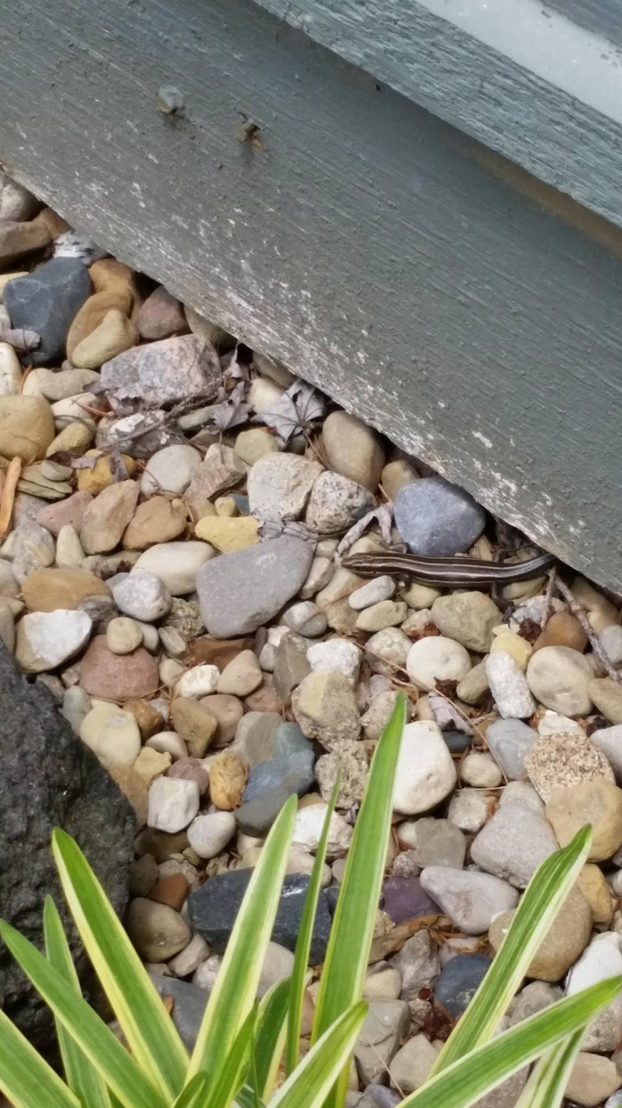
Common Five-lined Skinks are usually 5-7 centimeters in body length(12-21 cm total length) and have smooth overlapping scales. Their heads are distinct from their necks and ear openings are smaller than the eyes. Physical characteristics of Common Five-lined Skinks vary by sex and age. Juveniles have bright blue tails and shiny black bodies marked with five yellow longitudinal stripes. Adult males are uniformly brown and develop wider heads, with red to orange coloration on the snout and jaws. Very faint stripes also might be visible on some adult males. Adult females have brownish bodies marked with five yellowish to cream longitudinal stripes and sometimes have a hint of bluish tail.
Throughout most of Indiana, Common Five-lined Skinks are a common species of open woodlands and edges where stumps, logs, woody debris, and rock piles are present. Porches and rock cover around homes and driveways offer good habitat for these lizards. Areas like these offer hiding places, areas to bask in the sun, and food. Most activity occurs on or near the ground, although they occasionally will climb trees. Their active season extends from April to October. Five-lined Skinks actively pursue a variety of invertebrates including insects, spiders and millipedes.
Resources:
Snakes and Lizards of Indiana, The Education Store, Purdue Extension’s resource center
How can I tell if a snake is venomous, Purdue Extension-Forestry and Natural Resources
Brian MacGowan, Extension Wildlife Specialist
Department of Forestry & Natural Resources, Purdue University

Recent Posts
- Opportunities for Prescribed and Wildland Fire Training
Posted: November 4, 2026 in Forestry, How To, Wildlife, Woodlands - Wildlife Issues and Solutions: A New Online Series
Posted: in Forestry, How To, Wildlife, Woodlands - Burning for Benefits: Where Fire Belongs in Indiana
Posted: in Forestry, Safety, Wildlife, Woodlands - Residents, Alumni Invited to Share Indiana Natural Resource, Spaces, Species Memories
Posted: in Forestry, Forests and Street Trees, Gardening, Urban Forestry, Wildlife - Now Is The Time To Control Non-Native Bush Honeysuckle
Posted: October 30, 2026 in Forestry, How To, Invasive Plant Species, Woodlands - Help Strengthen the Future of Indiana Maple Syrup
Posted: October 29, 2026 in Forestry, How To, Woodlands - Popular Landscape Shrub is Invasive
Posted: October 15, 2026 in Alert, Forestry, Forests and Street Trees, Invasive Plant Species, Plants, Woodlands - Purdue Extension’s Regional Teams Are Here: Connecting Communities with Expertise and Opportunity
Posted: October 14, 2026 in Community Development, Forestry, Forests and Street Trees, Gardening, How To, Timber Marketing, Urban Forestry, Wildlife, Woodlands - Why Do Our Trees Go From Green Leaves to Different Colors?
Posted: in Forestry, Forests and Street Trees, Urban Forestry, Woodlands - Deer and Turkey Archery Seasons Opening Soon, MyDNR
Posted: October 13, 2026 in Alert, Safety, Wildlife
Archives
Categories
- Alert
- Aquaculture/Fish
- Aquatic/Aquaculture Resources
- Ask the Expert
- Christmas Trees
- Community Development
- Disease
- Drought
- Forestry
- Forests and Street Trees
- Gardening
- Got Nature for Kids
- Great Lakes
- How To
- Invasive Animal Species
- Invasive Insects
- Invasive Plant Species
- Land Use
- Natural Resource Planning
- Nature of Teaching
- Plants
- Podcasts
- Ponds
- Publication
- Safety
- Spiders
- Timber Marketing
- Urban Forestry
- Webinar
- Wildlife
- Wood Products/Manufacturing
- Woodland Management Moment
- Woodlands