 Purdue University - Extension - Forestry and Natural Resources
Got Nature? Blog
Morning AgClips: Have you seen a bald eagle recently? I still marvel when I see one soaring in flight. It’s exciting to see them swoop down near the surface of a river and snatch a fish. You may have even taken advantage of watching “eagle cams,” 24-hour video feeds of an eagle’s nest. You may have participated in an “Eagle Watch” event, hosted by the Indiana Department of Natural Resources (DNR). Or, perhaps you have seen and kept an eye on an eagle’s nest near you!
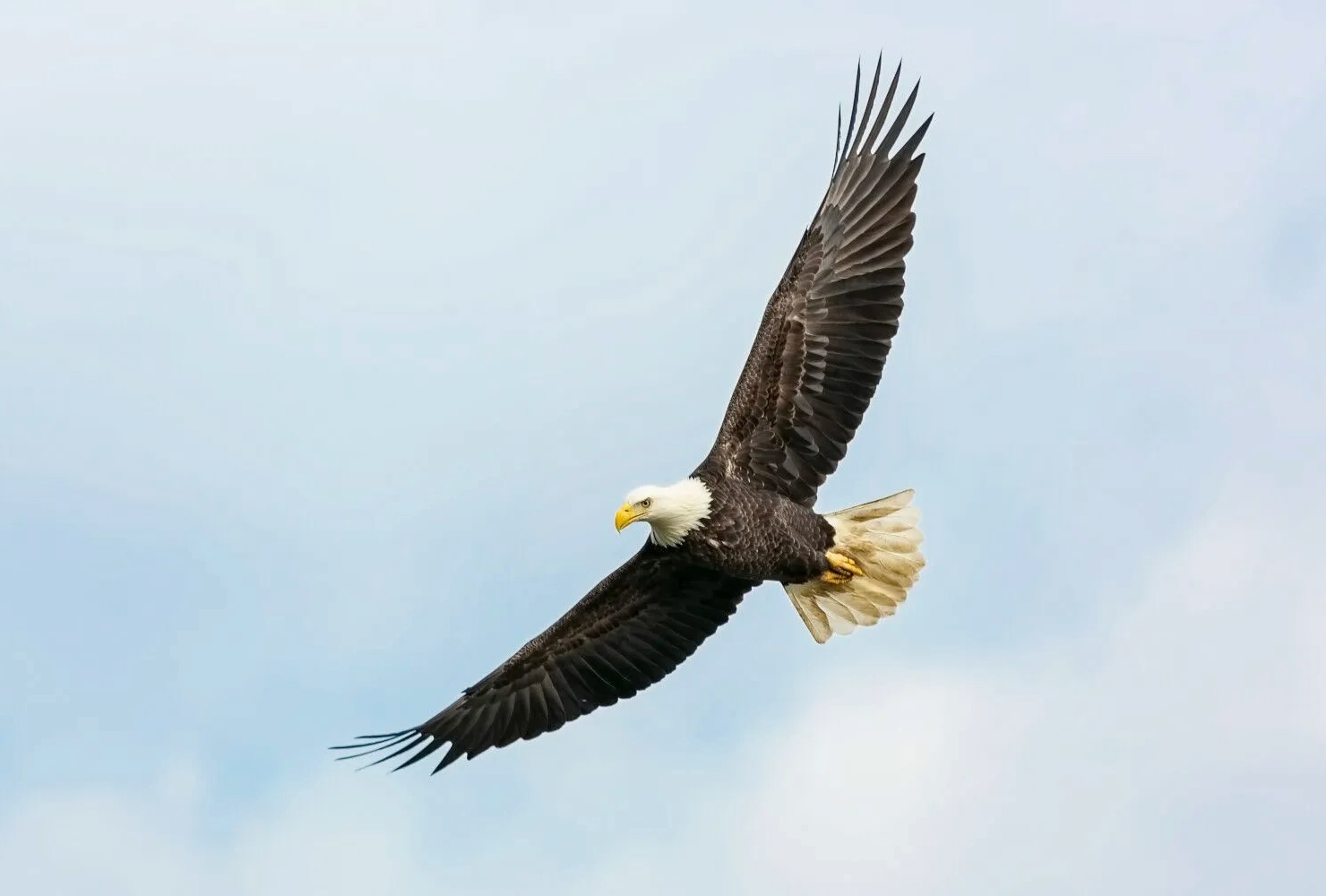
Mathew Schwartz, Unsplash
The bald eagle (Haliaeetus leucocephalus) has been the national bird of the United States since 1782, when it was adopted as a core element in the Great Seal of the United States.
Apparently, a long-standing and frequently perpetuated myth in American history is that Benjamin Franklin preferred the turkey to the eagle as a national symbol. According to Harvard University, his tongue-in-cheek comments berating the eagle while extolling the turkey were taken out of context. Evidently, they were meant as a joke regarding the insignia of the Society of the Cincinnati, in which Franklin thought the bird depicted looked more like a turkey than an eagle. (I’m not a historian; you can do your own research and decide for yourself.)
Once a federal- and state-endangered species, due to hunting and use of certain pesticides (now banned), the bald eagle has recovered quite well.
Brian MacGowan, Purdue Extension wildlife specialist, said that bald eagles were once listed under the Endangered Species Act. “However, their populations recovered to a level where they were delisted,” he said. “Even so, Bald Eagles are still offered some level of protection under the Bald and Golden Eagle Protection Act and Migratory Bird Treaty Act.”
Indiana DNR reported that in 2020, there were more than 350 nesting territories in Indiana. Bald eagles have been sighted in almost every Indiana county.
You might assume that springtime is bald eagle breeding season, but bald eagles breed in the winter. “Winter is a time when Bald Eagles build nests in large trees or snags near sources of food – rivers, streams, and lakes,” said MacGowan. “The nests they construct are very large (4-6 feet in diameter) and can weigh more than 1,000 pounds.” He said they also construct alternate nests within their territory and will usually return to the same nesting territory year after year.
The Indiana Department of Natural Resources (DNR) website offers more facts on bald eagles and their young. They write that wintering eagles prefer mature trees along large, open bodies of water for daytime perches. At night, large trees in sheltered valleys and ravines are preferred for roosting, and it is common for eagles to roost in small groups during winter.
Indiana DNR further states that eagle eggs have a 35-day incubation period and that young eagles leave the nest or “fledge” at 11-12 weeks old. Adult eagles do not begin to nest until they are 4 or 5 years old. Eagles mate for life and return each year to the same location to nest and breed, selecting nest sites close to where they were raised as young.
View Morning AgClips full article for more interesting facts of bald eagles: Have You Seen A Soaring Eagle Lately?
To subscribe and receive the Morning AgClips Newsletter by email view, Subscribe to Our Daily Newsletter.
Resources:
Bald Eagle Breeding Season is Upon Us, Purdue Extension – Forestry & Natural Resources (FNR) Got Nature? Blog
Indiana Department of Natural Resources Shares Bald Eagle Successfully Recovered, MyDNR, Indiana’s Outdoor News
Bald Eagle, Indiana Department of Natural Resources (IN DNR)
Forestry for the Birds Virtual Tour, Purdue Extension – Pond and Wildlife
Breeding Birds and Forest Management: the Hardwood Ecosystem Experiment and the Central Hardwoods Region, The Education Store, Purdue Extension resource center
Forest Birds, The Education Store
Managing Woodlands for Birds, The Education Store
Managing Woodlands for Birds Video, Purdue Extension – FNR YouTube Channel
Breeding Birds and Forest Management: the Hardwood Ecosystem Experiment and the Central Hardwoods Region, The Education Store
The Birders’ Dozen, Profile: Baltimore Oriole, Indiana Woodland Steward
Ask An Expert: Birdwatching, Playlist, Purdue Extension – FNR YouTube channel
Birds and Residential Window Strikes: Tips for Prevention, The Education Store
No Room at the Inn: Suburban Backyards and Migratory Birds, The Education Store
John E. Woodmansee, Extension Educator – Agriculture and Natural Resources (ANR)
Purdue Extension – Whitely County
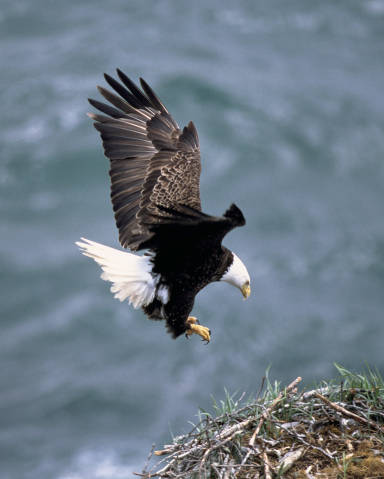 MyDNR – Indiana’s Outdoor News, Indiana Department of Natural Resources (IDNR): The Natural Resources Commission (NRC) recently removed the bald eagle from Indiana’s list of state endangered and special concern species due to evidence of successful recovery.
The recovery of the bald eagle is one of the greatest conservation success stories in Indiana. Habitat loss, the hat-making trade, and persecution once caused dramatic declines in eagle numbers, leading to the last eagle nest being found in Indiana in 1897. Nationwide, bald eagle populations continued to decline throughout the 1950s and 60s because pesticides, like DDT, interfered with their ability to reproduce.
A combination of legislative changes and conservation efforts put bald eagles on the road to recovery. The U.S. Congress passed the Bald Eagle Protection Act in 1940 to prevent the killing of bald eagles. DDT was banned nationwide in 1972. In 1973, bald eagles were one of the first species listed as federally endangered under the Endangered Species Act. State agencies began restoration efforts to meet conservation goals for eagles as a result of this listing.
Indiana DNR reintroduced bald eagles to the state from 1985–1989. During this time, 73 eaglets from Wisconsin and Alaska were raised and released at Monroe Lake to restore a breeding population in Indiana. The first successful nesting occurred in 1991.
By 2007, the U.S. national symbol was declared recovered and removed from the federal endangered species list. Indiana followed suit in 2008, upgrading the bald eagle from a state-endangered species to a species of special concern after reaching a goal of 50 nesting pairs. This was a significant achievement—no eagles were known to have nested in the state from around 1900–1988.
In just 35 years, the bald eagle went from extirpated in Indiana to a thriving population statewide. This year, biologists estimated Indiana supported about 300 nesting pairs across 84 counties. In the last five years, at least one bald eagle nest has been documented in 88 of Indiana’s 92 counties. Chick production was also up by 11% from 2019 to 2020.
The bald eagle reintroduction program was the first endangered species restoration project in Indiana. This project and ongoing research would not be possible without donations to the Indiana Nongame Wildlife Fund, the main funding source of all nongame and endangered species research and management.
You can donate to this fund online.
Although bald eagles are no longer listed as an endangered species, they remain protected by other state and federal laws, including the Bald and Golden Eagle Protection Act. If you see bald eagles in Indiana, observe the birds, their nests, and roosts from a distance of 330 feet, which is roughly the length of a football field. Photography enthusiasts should take photos of eagles with a telephoto lens instead of getting close to them. All should foster a climate of respect for wildlife by sharing these guidelines with friends.
Learn more about bald eagles at Indiana Department of Natural Resources.
To subscribe for the monthly newsletter view: MyDNR Email Newsletter.
Resources
Bald Eagles, Indiana Department of Natural Resources (IDNR)
Bald Eagle Breeding Season Is Upon Us, Got Nature? Blog, Purdue Extension – Forestry and Natural Resources
Breeding Birds and Forest Management: the Hardwood Ecosystem Experiment and the Central Hardwoods Region, The Education Store, Purdue Extension resource center
Indiana Department of Natural Resources (IDNR)
Photo Credit: Dave Menke/USFWS
While most of us think of spring as the bird breeding season, several species get a jump start during the winter. Bald Eagles are one of those species. Winter is a time when Bald Eagles build nests in large trees or snags near sources of food – rivers, streams and lakes. The nests they construct are very large (4-6 feet in diameter) and can weigh more than 1,000 pounds. They also construct alternate nests within their territory and will usually return to the same nesting territory year after year.
Bald Eagles were once listed under the Endangered Species Act. However, their populations recovered to a level where they were delisted. Even so, Bald Eagles are still offered some level of protection under the Bald and Golden Eagle Protection Act and Migratory Bird Treaty Act. Almost all birds in Indiana and the U.S. are protected under the MBTA. In fact, under the MBTA, it is unlawful to “take, possess, transport, sell, purchase, barter or offer for sale any migratory bird or the parts, nests or eggs of such bird.” The MBTA also protects nests from destruction while they have eggs or dependent young (i.e., prior to fledging).
For Bald Eagles, I think most people know you can’t directly harm them. But I do receive questions about what activities can be done around Bald Eagles and especially their nests – Bald Eagles are quick to abandon a nest in the presence of disturbance. The MBTA provides protection from harming an eagle or a nest with eggs or young. The Bald and Golden Eagle Protection Act provides additional protection during the breeding season as well as the nest.
According to the Bald and Golden Eagle Protection Act, it is unlawful to disturb eagles during the breeding season. In this case,
“Disturb means to agitate or bother a bald or golden eagle to a degree that causes, or is likely to cause, based on the best scientific information available 1) injury to an eagle, 2) a decrease in its productivity by substantially interfering with normal breeding, feeding or sheltering behavior or 3) nest abandonment by substantially interfering with normal breeding, feeding or sheltering behavior.”
To minimize the risk of disturbing eagles, the guidelines suggest a buffer between a nest and the activity, but it depends on the category activity, according to the guidelines. For example, Timber Operations and Forestry Practices list a distance of 330 feet from the nest at any time. They suggest avoiding harvesting operations within 660 feet of the nest during the breeding season.
The management guidelines are downloadable from the link provided below in the Resources. If you have questions about Bald Eagles and their protection, contact the U.S. Fish and Wildlife Service at their Bloomington Field Office.
Resources:
National Bald Eagle Management Guidelines (2007), U.S. Fish and Wildlife Service/South Dakota
Indiana Eagle Watch Events, Indiana Department of Natural Resources (INDNR)
Have You Seen a Soaring Eagle Lately, Morning AgClips, Purdue Extension – Forestry & Natural Resources (FNR) Got Nature? Blog
Indiana Department of Natural Resources Shares Bald Eagle Successfully Recovered, MyDNR, Indiana’s Outdoor News
Bald Eagle, Indiana Department of Natural Resources (IN DNR)
Forestry for the Birds Virtual Tour, Purdue Extension – Pond and Wildlife
Breeding Birds and Forest Management: the Hardwood Ecosystem Experiment and the Central Hardwoods Region, The Education Store, Purdue Extension resource center
Forest Birds, The Education Store
Managing Woodlands for Birds, The Education Store
Managing Woodlands for Birds Video, Purdue Extension – FNR YouTube Channel
Breeding Birds and Forest Management: the Hardwood Ecosystem Experiment and the Central Hardwoods Region, The Education Store
The Birders’ Dozen, Profile: Baltimore Oriole, Indiana Woodland Steward
Ask An Expert: Birdwatching, Playlist, Purdue Extension – FNR YouTube channel
Birds and Residential Window Strikes: Tips for Prevention, The Education Store
No Room at the Inn: Suburban Backyards and Migratory Birds, The Education Store
Dr. Brian MacGowan, Extension Wildlife Specialist
Department of Forestry & Natural Resources, Purdue University

Recent Posts
- Disease May Cause Wilting and Eventual Death of Certain Trees and Shrubs, Purdue Landscape Report
Posted: October 5, 2026 in Disease, Forestry, Plants - October Is Firewood Month: Protect Indiana’s Forests by Making Smart Choices
Posted: October 1, 2026 in Forestry, Forests and Street Trees, How To, Invasive Insects, Urban Forestry - Minecraft Meets the Hellbender
Posted: September 22, 2026 in Aquaculture/Fish, Aquatic/Aquaculture Resources, Wildlife - Is It Too Early to Think About Christmas Tree Pests?
Posted: in Christmas Trees, Invasive Insects, Safety - What You Plant Matters to Wildlife
Posted: September 16, 2026 in Plants, Urban Forestry, Wildlife - Woodland Flowers of Late Summer
Posted: September 14, 2026 in Forestry, Gardening, Wildlife, Woodlands - Heavy August Rains Bring More Mosquitoes to Indiana
Posted: September 9, 2026 in How To, Invasive Insects, Safety, Wildlife - Question: Why Did the Shagbark Hickories Survive the Tornado?
Posted: August 27, 2026 in Forests and Street Trees, How To, Urban Forestry - New Indiana Woodland Steward Newsletter
Posted: August 12, 2026 in Forestry, Urban Forestry, Wildlife, Woodlands - Indiana Fall Hunting Licenses on Sale and New Mobile App Available
Posted: in Forestry, How To, Wildlife
Archives
Categories
- Alert
- Aquaculture/Fish
- Aquatic/Aquaculture Resources
- Ask the Expert
- Christmas Trees
- Community Development
- Disease
- Drought
- Forestry
- Forests and Street Trees
- Gardening
- Got Nature for Kids
- Great Lakes
- How To
- Invasive Animal Species
- Invasive Insects
- Invasive Plant Species
- Land Use
- Natural Resource Planning
- Nature of Teaching
- Plants
- Podcasts
- Ponds
- Publication
- Safety
- Spiders
- Timber Marketing
- Urban Forestry
- Webinar
- Wildlife
- Wood Products/Manufacturing
- Woodland Management Moment
- Woodlands