 Purdue University - Extension - Forestry and Natural Resources
Got Nature? Blog
Morning AgClips: Have you seen a bald eagle recently? I still marvel when I see one soaring in flight. It’s exciting to see them swoop down near the surface of a river and snatch a fish. You may have even taken advantage of watching “eagle cams,” 24-hour video feeds of an eagle’s nest. You may have participated in an “Eagle Watch” event, hosted by the Indiana Department of Natural Resources (DNR). Or, perhaps you have seen and kept an eye on an eagle’s nest near you!
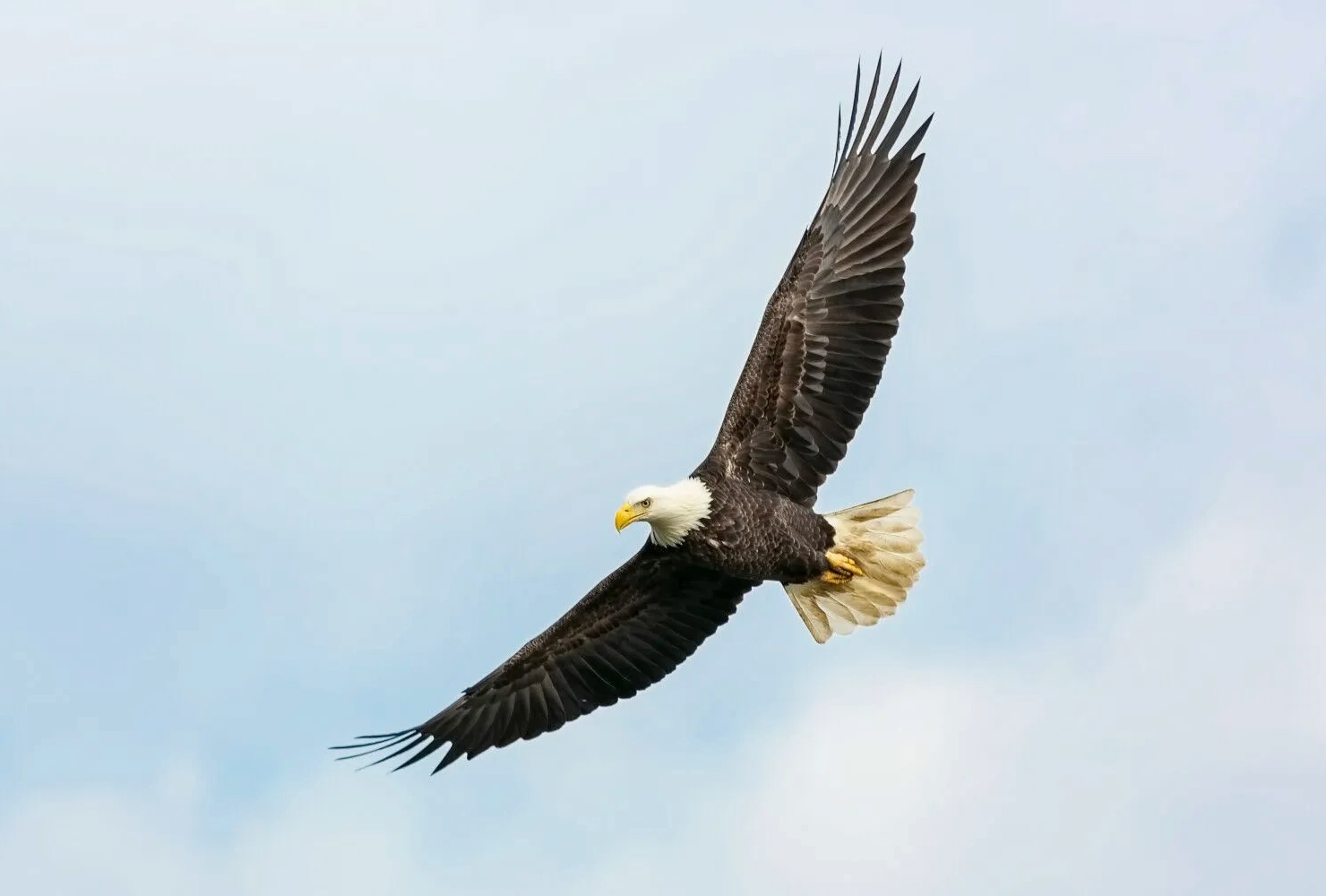
Mathew Schwartz, Unsplash
The bald eagle (Haliaeetus leucocephalus) has been the national bird of the United States since 1782, when it was adopted as a core element in the Great Seal of the United States.
Apparently, a long-standing and frequently perpetuated myth in American history is that Benjamin Franklin preferred the turkey to the eagle as a national symbol. According to Harvard University, his tongue-in-cheek comments berating the eagle while extolling the turkey were taken out of context. Evidently, they were meant as a joke regarding the insignia of the Society of the Cincinnati, in which Franklin thought the bird depicted looked more like a turkey than an eagle. (I’m not a historian; you can do your own research and decide for yourself.)
Once a federal- and state-endangered species, due to hunting and use of certain pesticides (now banned), the bald eagle has recovered quite well.
Brian MacGowan, Purdue Extension wildlife specialist, said that bald eagles were once listed under the Endangered Species Act. “However, their populations recovered to a level where they were delisted,” he said. “Even so, Bald Eagles are still offered some level of protection under the Bald and Golden Eagle Protection Act and Migratory Bird Treaty Act.”
Indiana DNR reported that in 2020, there were more than 350 nesting territories in Indiana. Bald eagles have been sighted in almost every Indiana county.
You might assume that springtime is bald eagle breeding season, but bald eagles breed in the winter. “Winter is a time when Bald Eagles build nests in large trees or snags near sources of food – rivers, streams, and lakes,” said MacGowan. “The nests they construct are very large (4-6 feet in diameter) and can weigh more than 1,000 pounds.” He said they also construct alternate nests within their territory and will usually return to the same nesting territory year after year.
The Indiana Department of Natural Resources (DNR) website offers more facts on bald eagles and their young. They write that wintering eagles prefer mature trees along large, open bodies of water for daytime perches. At night, large trees in sheltered valleys and ravines are preferred for roosting, and it is common for eagles to roost in small groups during winter.
Indiana DNR further states that eagle eggs have a 35-day incubation period and that young eagles leave the nest or “fledge” at 11-12 weeks old. Adult eagles do not begin to nest until they are 4 or 5 years old. Eagles mate for life and return each year to the same location to nest and breed, selecting nest sites close to where they were raised as young.
View Morning AgClips full article for more interesting facts of bald eagles: Have You Seen A Soaring Eagle Lately?
To subscribe and receive the Morning AgClips Newsletter by email view, Subscribe to Our Daily Newsletter.
Resources:
Bald Eagle Breeding Season is Upon Us, Purdue Extension – Forestry & Natural Resources (FNR) Got Nature? Blog
Indiana Department of Natural Resources Shares Bald Eagle Successfully Recovered, MyDNR, Indiana’s Outdoor News
Bald Eagle, Indiana Department of Natural Resources (IN DNR)
Forestry for the Birds Virtual Tour, Purdue Extension – Pond and Wildlife
Breeding Birds and Forest Management: the Hardwood Ecosystem Experiment and the Central Hardwoods Region, The Education Store, Purdue Extension resource center
Forest Birds, The Education Store
Managing Woodlands for Birds, The Education Store
Managing Woodlands for Birds Video, Purdue Extension – FNR YouTube Channel
Breeding Birds and Forest Management: the Hardwood Ecosystem Experiment and the Central Hardwoods Region, The Education Store
The Birders’ Dozen, Profile: Baltimore Oriole, Indiana Woodland Steward
Ask An Expert: Birdwatching, Playlist, Purdue Extension – FNR YouTube channel
Birds and Residential Window Strikes: Tips for Prevention, The Education Store
No Room at the Inn: Suburban Backyards and Migratory Birds, The Education Store
John E. Woodmansee, Extension Educator – Agriculture and Natural Resources (ANR)
Purdue Extension – Whitely County

Recent Posts
- Bovine Tuberculosis in Wild White-tailed Deer: Background and Frequently Asked Questions
Posted: July 20, 2026 in Disease, Natural Resource Planning, Wildlife - ID That Tree: Carolina Buckthorn
Posted: July 15, 2026 in Forestry, Wildlife, Woodlands - Bat Roost Reporting Tool
Posted: July 8, 2026 in Alert, Community Development, Invasive Animal Species, Wildlife - Pruning Highlight; Espalier Pruning: Training Trees into Living Patterns
Posted: in Forestry, Forests and Street Trees, Gardening - Thank You, Turkey Trackers! Your Brood Counts Make a Difference – MyDNR
Posted: in Alert, Community Development, Wildlife - Identifying Evergreens
Posted: June 24, 2026 in Forestry, Wildlife, Woodlands - Celebrate Pollinator Week With Flowers of June Tour
Posted: June 15, 2026 in Forestry, Gardening, How To, Wildlife - Pruning Highlight-Pollarding Trees: A Traditional Pruning Practice with Modern Uses
Posted: June 11, 2026 in Forestry, Forests and Street Trees, Urban Forestry, Wildlife, Woodlands - Danielle Howard Hired as FNR Extension Prescribed Fire Specialist
Posted: June 10, 2026 in Forestry, Wildlife, Woodlands - Flat-Faced Longhorn Beetle Found in Hardwood Logs – IDNR Division of Entomology
Posted: June 8, 2026 in Alert, Forestry, Forests and Street Trees, Invasive Insects, Urban Forestry, Wildlife, Woodlands
Archives
Categories
- Alert
- Aquaculture/Fish
- Aquatic/Aquaculture Resources
- Ask the Expert
- Christmas Trees
- Community Development
- Disease
- Drought
- Forestry
- Forests and Street Trees
- Gardening
- Got Nature for Kids
- Great Lakes
- How To
- Invasive Animal Species
- Invasive Insects
- Invasive Plant Species
- Land Use
- Natural Resource Planning
- Nature of Teaching
- Plants
- Podcasts
- Ponds
- Publication
- Safety
- Spiders
- Timber Marketing
- Urban Forestry
- Webinar
- Wildlife
- Wood Products/Manufacturing
- Woodland Management Moment
- Woodlands