Join Purdue Extension wildlife specialists Brian MacGowan and Rod Williams as they clear up what is fact and fiction when it comes to wildlife. They burst the bubble on some commonly heard “facts” about snapping turtles, hellbenders, coyotes, snakes and more.
 Purdue University - Extension - Forestry and Natural Resources
Subscribe to our Got Nature? Newsletter


Got Nature? Blog
If you have any questions regarding wildlife, or other natural resource topics, feel free to contact us by using our Ask an Expert web page.
Ask an Expert, Playlist, Purdue Extension – Forestry and Natural Resources Youtube Channel
Wildlife, Playlist
Wildlife, Playlist
Reptiles: Turtles, Snakes, and Lizards, Purdue Nature of Teaching
Coyotes are on the Move, Got Nature? Blog, Purdue FNR Extension
Help the Hellbender, Website
Indiana Amphibian and Reptile ID Package (4 softcover books), The Education Store, Purdue Extension resource center
Coyotes are on the Move, Got Nature? Blog, Purdue FNR Extension
Help the Hellbender, Website
Indiana Amphibian and Reptile ID Package (4 softcover books), The Education Store, Purdue Extension resource center
Brian MacGowan, Wildlife Extension Specialist
Purdue Forestry and Natural Resources
Purdue Forestry and Natural Resources
Rod Williams, Professor of Wildlife Science
Purdue Forestry and Natural Resources
Purdue Forestry and Natural Resources
Purdue Landscape Report: Now that we’ve reach midsummer, many people tending to small plants and bushes may notice small odd round grey objects attached to their plants that are made by potter wasps. Do you need to do anything about them? Do these nests help or harm your plants? And are they dangerous to people?
What do they look like?
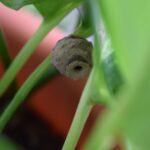
You are more likely to notice the nests of potter wasps than the adults. Potter wasp nests often look, like the name suggests, like a small grey pot (figure 1). They are rounded with a small opening that looks like the neck of a vase and are about the size of a cherry tomato. These wasps will attach their nests to many different surfaces but tend to prefer plant and bush stems. Potter wasp nests are often found hidden behind foliage in bushes.
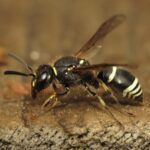
Potter wasp adults come in a variety of colors but all of them look like small hornets. The most common species found in Indiana are mostly black with pale yellow bands around their abdomen (figure 2).
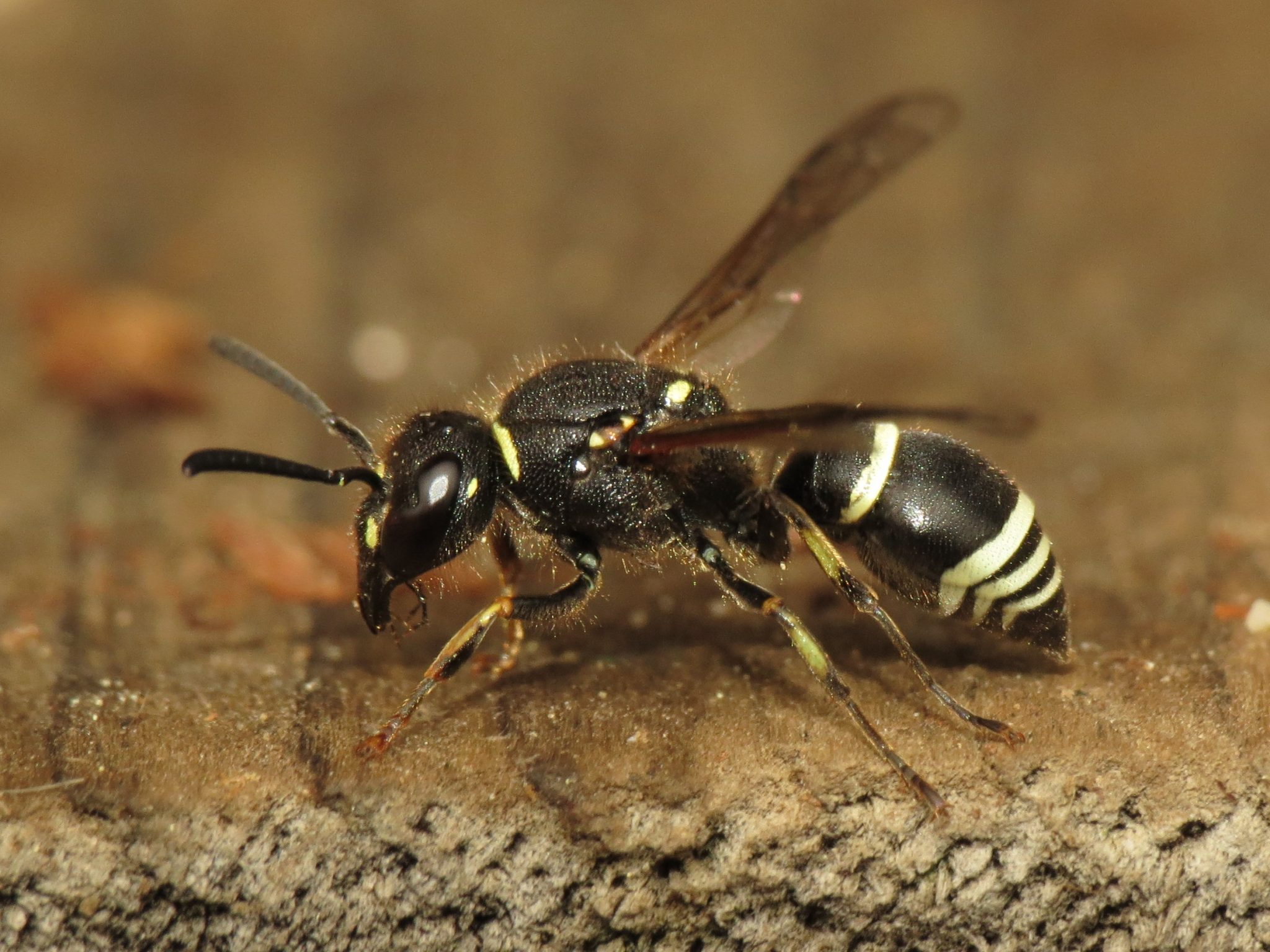
Figure 2. An adult potter wasp resting. This is just one of many different species of potter wasps. Photo by Fyn Kynd on flickr
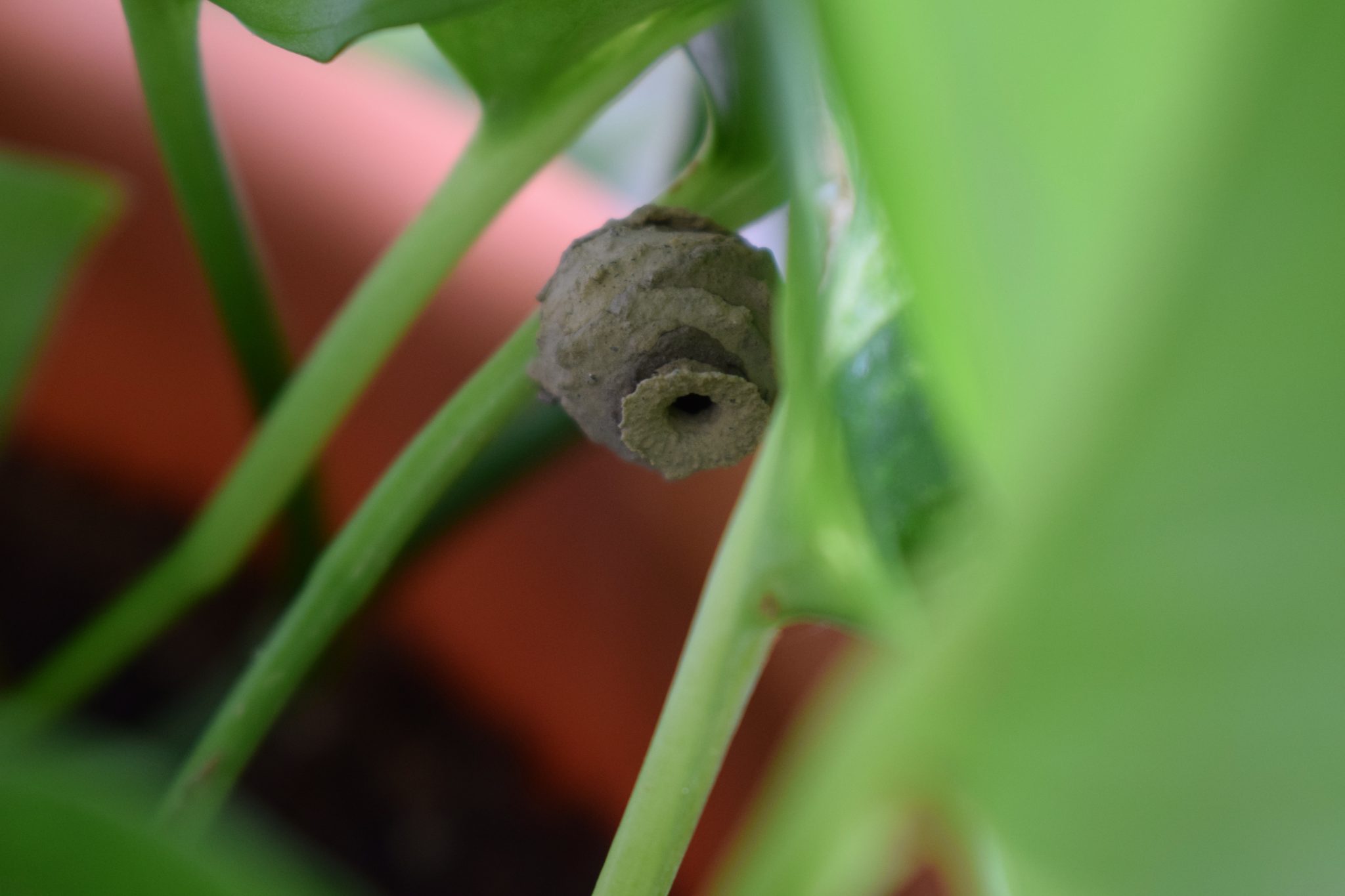
Figure 1. Close up of a potter wasp nest attached to the stem of a house plant. Photo by Elizabeth Barnes, Department of Entomology, Purdue University.
How do they help plants?
Each “pot” that the wasps build is a tiny nursery for a single wasp. Adult potter wasps lay a single egg in each “pot” and then fill it with paralyzed caterpillars and small beetle larvae. When the wasp egg hatches it has all the food it needs to develop into an adult contained in the pot. Each wasp does a small part to keep down the number of caterpillars in the landscape which can reduce the amount of leaf damage on nearby plants.
Will they hurt me?
Probably not! Potter wasps don’t defend their nests and are generally not aggressive. Unless you actively try to bother them they will probably not bother you. If you need to remove one of their nests, you can simply pull it off the plant or object that it’s attached to. However, since they help with pest control, you may want to either leave the nest be or relocate it to a different section of the landscape.
Does anything else look like the “pots”?
Although the “pots” have a very distinct shape there are a few other things that could be confused with them at first glance. Mantis egg masses (ootheca) and some types of galls are both about the same size as potter wasp nests and also often grey. However, they both lack the vase neck-like opening that potter wasp nests have.
What should I do if I see one?
Let it be! Since these wasps rarely sting and help keep caterpillar populations down leave them alone so that they can continue to act as biocontrol agents. If you think you’ve seen a potter wasp or one of their nests and would like help identifying it, take a picture and either upload it to a community science project like iNaturalist or send a picture to the author of this article.
Resources
Social Bees and Wasps, The Education Store, Purdue Extension resource center
Parasitic Wasps, The Education Store
Mud Daubers, The Education Store
Cicada Killers, The Education Store
Industrial, Institutional, Structural and Health-Related Pest Management, The Education Store
Elizabeth E Barnes, Exotic Forest Pest Educator
Purdue University Department of Entomology
Posted on July 23rd, 2020 in Forestry, How To, Plants, Timber Marketing, Webinar, Woodlands | No Comments »
Join Purdue Extension forestry specialist Lenny Farlee and John Woodmansee, extension educator, as they share:
– Why should I sell timber?
– Getting help from a professional forester
– Common concerns when selling timber
– Best management practices loggers use
– Types of tree sales, pros and cons of each
– Tax considerations
– Potential cost sharing opportunities through USDA
– Where to get additional information
Several resources are listed at the end of the webinar for those who may be considering timber sales or for those who may be thinking of purchasing land in the future, or may inherit land with woodlands. These resources will guide you as you meet your goals.
Resources
Woodland Stewardship for Landowners: Sealed Bid (FNR 592 WV), Video, Purdue Extension – Forestry and Natural Resources Youtube channel
Woodland Stewardship for Landowners: EQIP (FNR 587 WV), Video, Purdue Extension – Forestry and Natural Resources Youtube channel
Forest/Timber, Playlist, Purdue Extension – Forestry and Natural Resources Youtube channel
A Woodland Management Moment, Playlist, Purdue Extension – Forestry and Natural Resources Youtube channel
Find an Indiana Forester
Marketing Timber, The Education Store, Purdue Extension resource center
Determining Tax Basis of Timber, The Education Store, Purdue Extension resource center
Lenny Farlee, Sustaining Hardwood Extension Specialist
Purdue University Department of Forestry and Natural Resources
John Woodmansee, Extension Educator, Whitely County
Purdue Extension
Purdue extension forester Lenny Farlee explains how to tell identify black maple and how to tell it apart from its cousin, sugar maple.
If you have any questions regarding trees, forests, wildlife, wood products or other natural resource topics, feel free to contact us by using our Ask an Expert web page.
Resources
ID That Tree, Playlist, Purdue Extension – Forestry and Natural Resources Youtube Channel
A Woodland Management Moment, Playlist, Purdue Extension – Forestry and Natural Resources Youtube Channel
Investing in Indiana Woodlands, The Education Store
Tree Appraisal and the Value of Trees, The Education Store
Forest Improvement Handbook, The Education Store
Lenny Farlee, Sustaining Hardwood Extension Specialist
Purdue University Department of Forestry and Natural Resources
In this tree identification episode, Purdue Extension forester Lenny Farlee will talk about how American elm leaves have jagged edges with a large tooth and then smaller teeth like edges on top of it. Find out why these trees are not as easy to find as they used to be.
If you have any questions regarding trees, forests, wildlife, wood products or other natural resource topics, feel free to contact us by using our Ask an Expert web page.
Resources
Elm, The Education Store, Purdue Extension resource center
American Elm, The Purdue Arboretum Explorer
ID That Tree, Playlist, Purdue Extension – Forestry and Natural Resources Youtube Channel
A Woodland Management Moment, Playlist, Purdue Extension – Forestry and Natural Resources Youtube Channel
Investing in Indiana Woodlands, The Education Store
Tree Appraisal and the Value of Trees, The Education Store
Forest Improvement Handbook, The Education Store
Lenny Farlee, Sustaining Hardwood Extension Specialist
Purdue University Department of Forestry and Natural Resources
Posted on July 13th, 2020 in Forestry, Land Use, Natural Resource Planning, Plants, Ponds, Woodlands | No Comments »
Join Mike Saunders and Charlotte Owings of the Hardwood Ecosystem Experiment as they share about the 100-year old project that aims to study and regenerate the oak-hickory population in Indiana and beyond.
Resources
Hardwood Ecosystem Experiment (HEE), Playlist, Purdue Extension – Forestry and Natural Resources Youtube Channel
Ask The Expert, Purdue Extension-FNR YouTube Channel-Playlist
Hardwood Ecosystem Experiment, Website
The Hardwood Ecosystem Experiment: 2006-2016, The Education Store, Purdue Extension resource center
Hardwood Ecosystem Experiment – Wildlife Responses to Timber Harvesting, Purdue Extension
Hardwood Ecosystem Experiment – Sustaining Our Oak-Hickory Forests, Purdue Extension
The Hardwood Ecosystem Experiment: Indiana Forestry and Wildlife, The Education Store
Mike Saunders, Associate Professor of Ecology and Natural Resources
Purdue University Department of Forestry and Natural Resources
Charlotte Owings, Hardwood Ecosystem Experiment Project Coordinator
Purdue University Department of Forestry and Natural Resources
Posted on July 13th, 2020 in Forestry, Forests and Street Trees, How To, Land Use, Plants | No Comments »
Purdue Extension forester Lenny Farlee tells you a little about how to identify Silver Maple trees and differentiate them from other species of maple.
If you have any questions regarding trees, forests, wildlife, wood products or other natural resource topics, feel free to contact us by using our Ask an Expert web page.
Resources
ID That Tree, Playlist, Purdue Extension – Forestry and Natural Resources Youtube Channel
A Woodland Management Moment, Playlist, Purdue Extension – Forestry and Natural Resources Youtube Channel
Investing in Indiana Woodlands, The Education Store
Tree Appraisal and the Value of Trees, The Education Store
Forest Improvement Handbook, The Education Store
Lenny Farlee, Sustaining Hardwood Extension Specialist
Purdue University Department of Forestry and Natural Resources
Posted on July 13th, 2020 in Aquaculture/Fish, Aquatic/Aquaculture Resources, How To, Ponds | No Comments »
FNR Extension Wildlife Specialist Jarred Brooke and Dr. Mitch Zischke teach you how to better manage your land and ponds for fish and wildlife. They provide tips and also answer all of your land management and pond management questions in the video below.
Resources
Pond and Wildlife Management
Need help with pond or wildlife management? Looking for a professional to contact for help?, Got Nature? Blog, Purdue FNR extension
Salmon and Trout of the Great Lakes: A Visual Identification Guide, The Education Store, Purdue Extension resource center
Pond Management: Stocking Fish in Indiana Ponds, The Education Store
Pond Management: Managing Fish Populations, The Education Store
A Pond Management Plan Template, The Education Store
Jarred Brooke, Extension Wildlife Specialist
Purdue Department of Forestry and Natural Resources
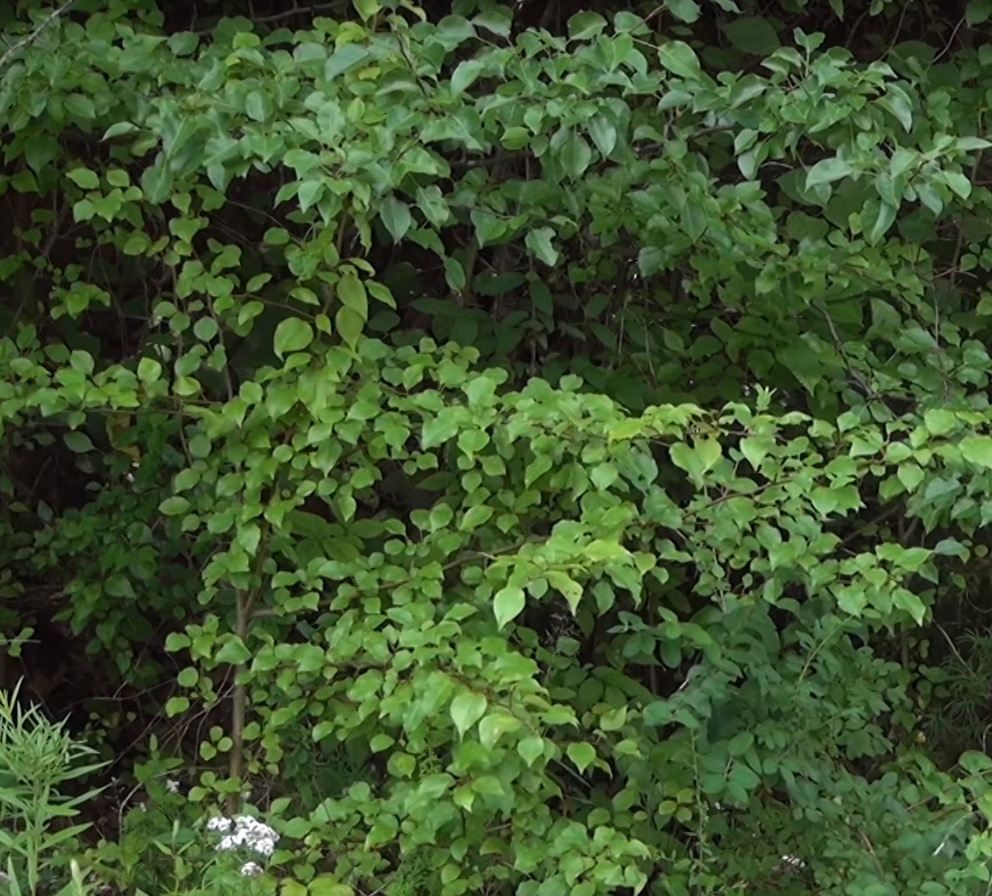
Callery Pear
Question: We have a customer with an ornamental pear tree that is sprouting shoots throughout their entire front lawn. Do you have any recommendations regarding control, other than removing the tree?
Answer: Hello, and thanks for reaching out with your tree questions. It sounds like the seedlings from ornamental callery pear. For many years, the cultivar Bradford dominated the landscape and was not self-fruiting. But as newer, improved cultivars were introduced to landscapes, they were cross-fruitful with Bradford pears.
So now “volunteer” callery pear trees are seeding themselves in alarming numbers and from their roots as suckers even where they were not planted, helped along by birds. These seedling pears are extremely vigorous and quite precocious, coming into bloom and fruit at a very young age. The Indiana Invasive Species Council has listed this species as highly invasive in Indiana.
Remove seedling trees immediately or keep them mowed very low to prevent flowering and fruiting. Usually, the ordinary broadleaf weed sprays for turf will keep them down. If you have ornamental pear trees in your landscape, keep a close watch for fruit set. If your existing landscape specimens bore fruit this year, you can spray next spring with fruit inhibitor hormone (e.g., ethephon, Florel® fruit inhibitor) to reduce fruit set. Note that timing and thorough coverage is critical. The spray must be applied when plants are in the early stage of full bloom, before fruit sets. Typically, ornamental pear is in bloom for 10 to 14 days. It will be difficult to provide thorough coverage on larger specimens. Be sure to read and follow all label directions.
Below we have several resources that also expands upon the Callery Pear trees.
Resources
Invasive Plant Species: Callery Pear, Video, Purdue Extension
Now is the Time to Identify Callery Pear, Purdue Landscape Report
A “Perfect” Nightmare, Purdue Extension’s Indiana Yard and Garden
What are invasive species and why should I care?, Got Nature? Blog, Purdue FNR Extension
Invasive Species, Playlist, Purdue Extension – Forestry and Natural Resources Youtube Channel
Lindsey Purcell, Chapter Administrator & Master Arborist
Indiana Arborist Association
Posted on July 13th, 2020 in Disease, Drought, Forestry, Forests and Street Trees, Gardening, Plants, Urban Forestry | No Comments »
Purdue Landscape Report: Hot, dry summers are not that unusual in the Midwest, but 2020’s hot dry spell started considerably earlier than usual, before summer even officially began! To make it a triple whammy, the hard freeze in early May caused some landscape plants to burn up more stored carbohydrate reserves to produce a second round of foliage.
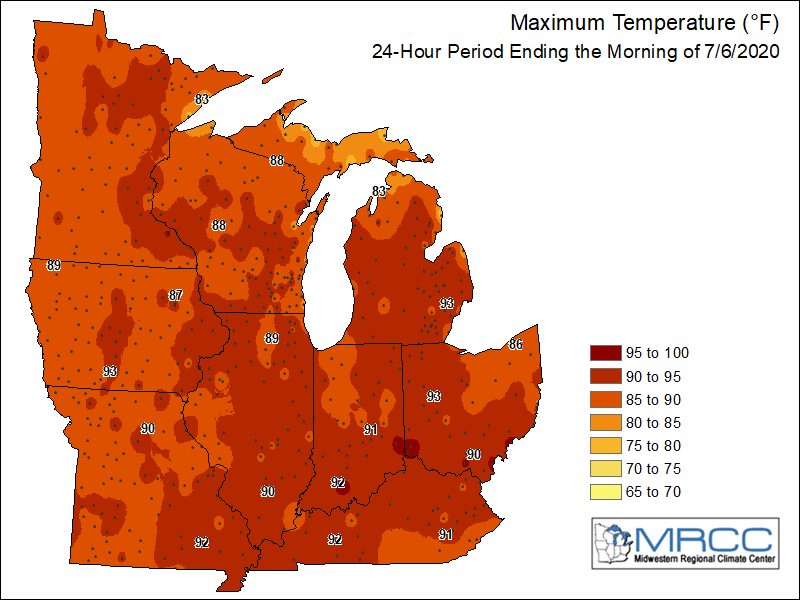
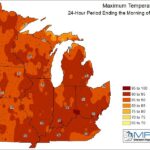
(Figure 2) July Heat Map
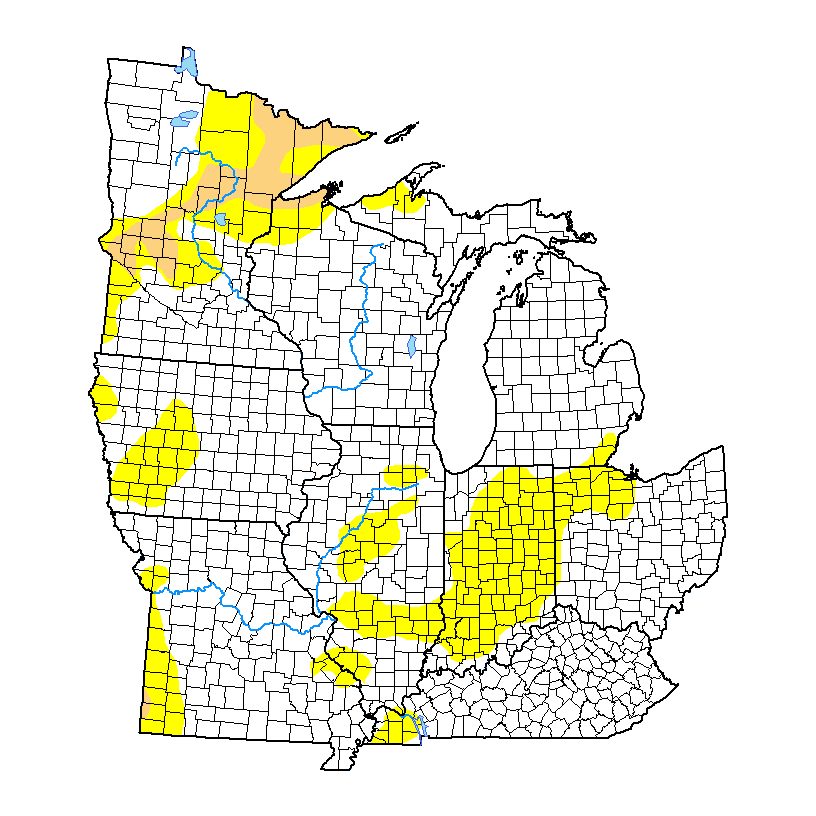
(Figure 1) US Drought Monitor
I’m sure I don’t have to point out that most of Indiana is currently experiencing abnormally hot, dry conditions. Although recent rains have brought relief to some areas, any respite is sure to be temporary. Seasonal thunderstorms may deluge some landscapes with water while other areas, even those close by, may stay fairly dry. Much of the area has experienced highs in the upper 80’s to over 90º F over the past month.
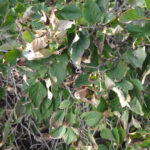
Leaf scorch on trees and shrubs, appearing as a browning along the edges of the leaves, is very common in dry summers. While minor cases of leaf scorch are not very harmful, prolonged lack of moisture can spell disaster for landscape plants.
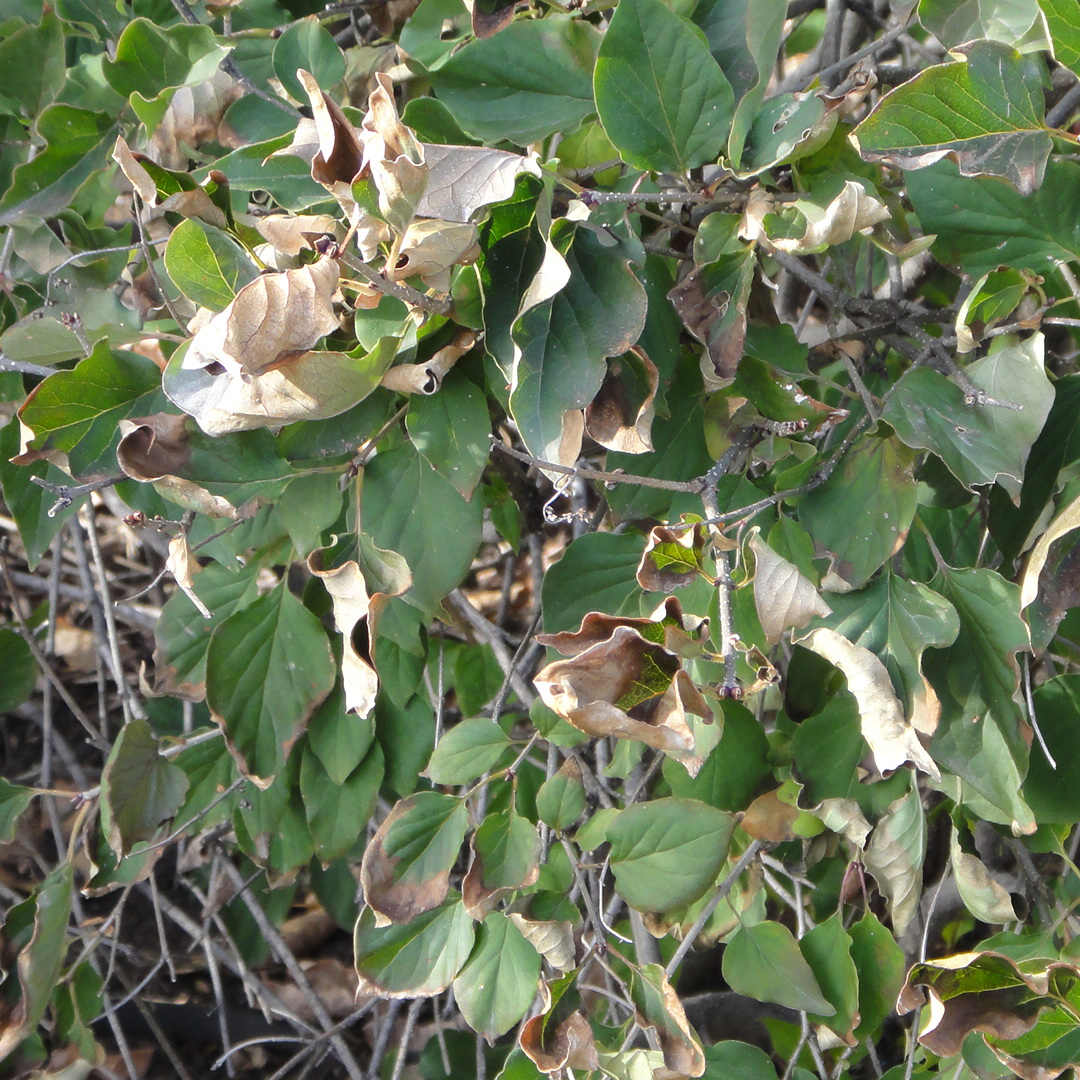
Leaf Scorch on Lilac
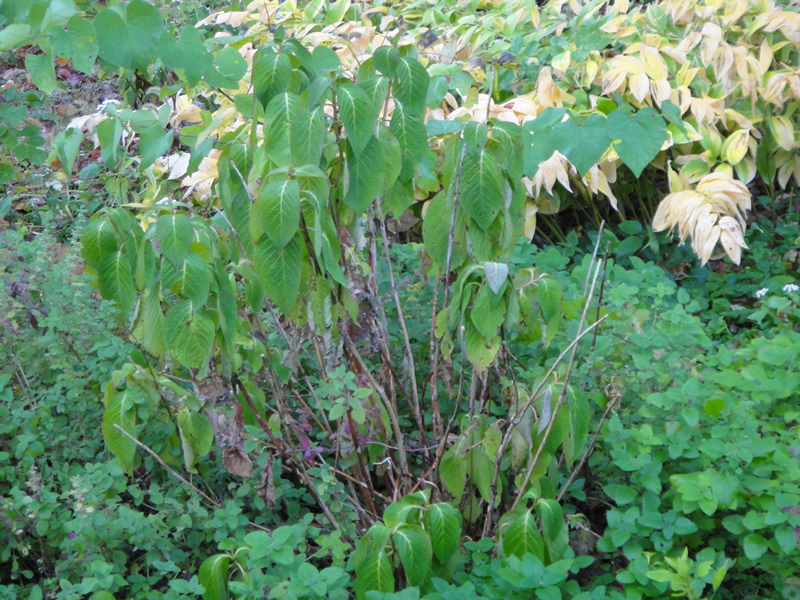
Hydrangea wilting
Young and newly established plants are most susceptible to the dry conditions, but even established plants may reach a critical point during prolonged drought. If the heat and drought continue this summer, branch dieback, combined with eventual root death, will make plants more susceptible to winter injury. Plants that were already under stress from other factors may succumb to severely dry soils.
The intense heat makes it difficult for plants to keep up with water and cooling requirements, even in areas where moisture is adequate. One of the ways that plants cool themselves is through transpiration, which allows water to evaporate from the foliage. Plant leaves have pores called stomata that can open and close to allow water vapor and gas exchange with the environment. During extreme heat and/or drought, stomata will nearly close, thus reducing transpiration and exchange of carbon dioxide and oxygen. The end result is seen as wilting foliage and leaf scorch. But not so obvious is that reduced water uptake and gas exchange also leads to reduced production of carbohydrates through photosynthesis and reduced uptake of soil nutrients, having longer term impact on plant health.
There is still plenty of summer yet to get through to see the further challenges ahead. Meanwhile, we can mitigate some of the stress by watering landscape plants as needed where feasible.
Resources
US Drought Monitor
Indiana – Purdue Rural Emergency Preparedness, Purdue Extension website
In Times of Drought, Indiana Yard and Garden, Purdue Consumer Horticulture
Drought? Don’t Forget the Trees, The Education Store, Purdue Extension resource center
Turfgrass Disease Profiles: Summer Patch, The Education Store
Iron Chlorosis of Trees and Shrubs, The Education Store
, Extension Consumer Horticulturist
Purdue University Department of Horticulture and Landscape Architecture

Recent Posts
- Urban Tree Spotlight: Planting Deciduous Shade Trees, Purdue Landscape Report
Posted: March 25, 2026 in Forests and Street Trees, Urban Forestry, Woodlands - Beetle that attacks Tree-of-Heaven found in Indiana, Purdue Landscape Report
Posted: March 20, 2026 in Invasive Insects, Wildlife, Woodlands - ID That Tree: Dwarf Chinkapin Oak
Posted: in Forestry, Urban Forestry, Wildlife, Woodlands - IN-PREPared: Essential Resources for Indiana’s Severe Weather Season
Posted: March 11, 2026 in How To, Safety - DNR Hiring for Indiana Conservation Officer Positions, MyDNR
Posted: March 9, 2026 in Urban Forestry, Wildlife, Woodlands - ID That Tree: Shumard Oak
Posted: in Plants, Urban Forestry, Wildlife, Woodlands - A Woodland Management Moment: Windbreak Around Walnut Plantings
Posted: March 3, 2026 in Forestry, Urban Forestry, Woodland Management Moment - Getting Certified as an Indiana Certified Prescribed Burn Manager
Posted: March 2, 2026 in How To, Urban Forestry, Woodlands - Uniting Indiana Residents Against Invasive Species
Posted: February 27, 2026 in Community Development, Invasive Insects, Wildlife - Have You Seen a Soaring Eagle Lately? Morning Ag Clips
Posted: February 25, 2026 in Urban Forestry, Wildlife
Archives
Categories
- Alert
- Aquaculture/Fish
- Aquatic/Aquaculture Resources
- Ask the Expert
- Christmas Trees
- Community Development
- Disease
- Drought
- Forestry
- Forests and Street Trees
- Gardening
- Got Nature for Kids
- Great Lakes
- How To
- Invasive Animal Species
- Invasive Insects
- Invasive Plant Species
- Land Use
- Natural Resource Planning
- Nature of Teaching
- Plants
- Podcasts
- Ponds
- Publication
- Safety
- Spiders
- Timber Marketing
- Uncategorized
- Urban Forestry
- Webinar
- Wildlife
- Wood Products/Manufacturing
- Woodland Management Moment
- Woodlands