 Purdue University - Extension - Forestry and Natural Resources
Got Nature? Blog
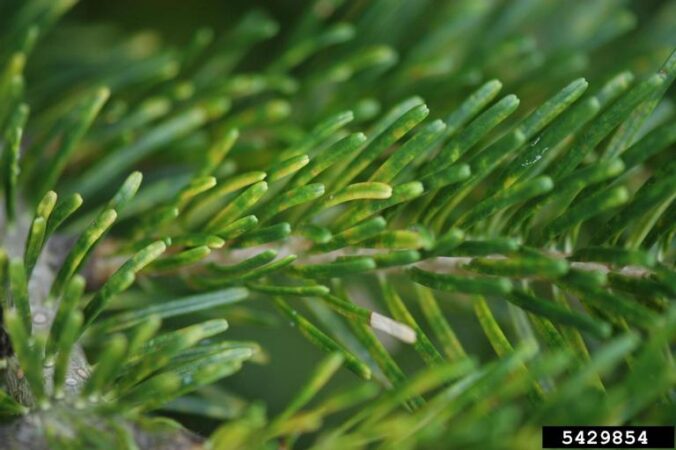
Fig. 1. Yellowing mottling damage due to scale feeding. Image: Brian Kunkel, University of Delaware.
Purdue Landscape Report: Christmas tree growers have been struggling with an invasive scale pest called Cryptomeria scale (Aspidiotus cryptomeriae), which is a serious pest of conifers. The scales infest the undersides of the needles and extract plant juices with their piercing-sucking mouthparts. Economic losses are due to the unsightly yellow discoloration and needle drop that occurs from the insect feeding (Fig. 1).
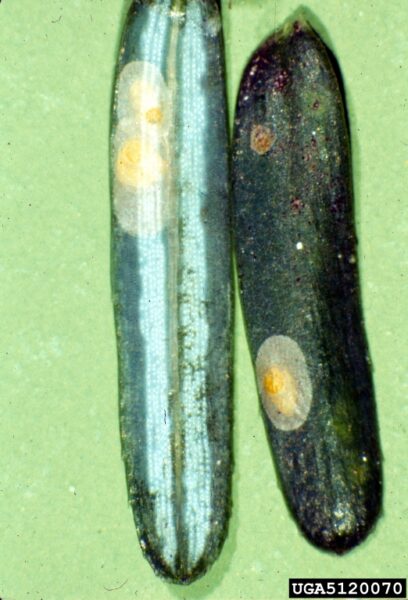
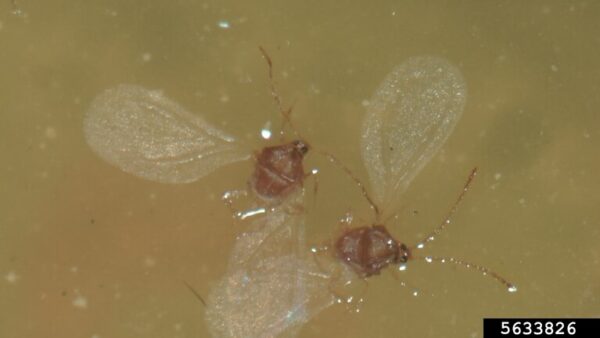
Life cycle: Cryptomeria scale has two generations per year. It overwinters as second-instar nymphs on the undersides of the needles, and in spring (March-April) the nymphs begin feeding again and continue development. They reach maturity by late spring. The adult females are flightless and remain stationary. They have a “fried egg” appearance of a white oval shape with a yellow center (Fig. 2). The adult males are alate, meaning they have wings (Fig. 3). Males fly in the summer, typically in July. They will mate with the females and die shortly after. The females lay eggs in the weeks following the mating flight. Egg hatch occurs around late August. These newly-hatched nymphs are called “crawlers”, because they are mobile and will disperse across the plant to find a new spot to settle and feed. Cryptomeria scale nymphs may not move very far from the female; many settle close to the female. The crawler stage is over by early September, when most have established a feeding site. They will develop through the fall into second-instars and overwinter until the following spring.
Management: Scout for the scale in the late winter when the scales are overwintering and prune infested branches, or remove the entire tree if heavily infested. Lady beetles and parasitic wasps will feed on Cryptomeria scale, so use biorational insecticides to maintain populations of beneficial insects which help control Cryptomeria scale and other pests.
Since Cryptomeria scales are armored scales, horticultural oils are recommended instead of insecticidal soaps for effective management (Quesada et al. 2017). Apply oils before bud break to target overwintering scales. Make sure to saturate the needles fully, especially the undersides of the needles, to smother the scales. For a more aggressive solution, dinotefuran can be applied for control of Cryptomeria scale. Basal bark applications of dinotefuran applied just after bud break were shown to significantly reduce scale populations and actually improved the rate of parasitism from parasitic wasps (Cowles 2010).
Not sure if you Cryptomeria scale or something else? Reach out to the Plant Pest and Diagnostics Lab for identification services!
View the original article on the Purdue Landscape Report website: Cryptomeria scale on Christmas trees.
Subscribe and receive the newsletter: Purdue Landscape Report Newsletter.
A Choose-and-Cut Pine and Fir Christmas Tree Case Study, The Education Store, Purdue Extension’s resource center
Living Christmas Trees For The Holidays and Beyond, The Education Store
Tips for First-Time Buyers of Real Christmas Trees, The Education Store
Growing Christmas Trees, The Education Store
Selecting an Indiana-Grown Christmas Tree, The Education Store
Winterize Your Trees, The Education Store
Tree Installation: Process and Practices, The Education Store
What do Treed Do in the Winter?, Got Nature? Blog, Purdue Extension – Forestry and Natural Resources (FNR)
Forest/Timber Playlist, subscribe to Purdue Extension – Forestry and Natural Resources (FNR) YouTube Channel
Ask the Expert: Holidays in the Wild, Purdue Extension – FNR YouTube Channel
ID That Tree: Balsam Fir, Purdue Extension – FNR YouTube Channel
ID That Tree: Scotch Pine, Purdue Extension – FNR YouTube Channel
To identify other pine trees view ID That Tree, Purdue Extension – FNR YouTube Channel
Report Invasive, Purdue Extension
Purdue Plant Doctor, Purdue Extension
Purdue Extension – Entomology

Recent Posts
- Why Is My Tree Dying?
Posted: April 14, 2026 in Forestry, Urban Forestry, Woodlands - Replace Invasives with Natives: 2026 Plant Swap Program
Posted: April 13, 2026 in Invasive Plant Species, Urban Forestry - Publication – Planting Forest Trees and Shrubs in Indiana
Posted: April 8, 2026 in Forests and Street Trees, Urban Forestry, Wildlife, Woodlands - ID That Tree: Virgin’s Bower Clematis
Posted: April 6, 2026 in Urban Forestry, Wildlife, Woodlands - It’s Timberdoodle Time!
Posted: April 3, 2026 in Got Nature for Kids, How To, Wildlife - Keep An Eye Out for Hammerhead Worms, Purdue Landscape Report
Posted: April 2, 2026 in Invasive Animal Species, Wildlife, Woodlands - When is the Peak Migration For Hummingbirds and How Can You Attract Them?
Posted: in How To, Wildlife - ID That Tree Featured in National Woodland Owners Association Newsletter
Posted: April 1, 2026 in Urban Forestry, Wildlife, Woodlands - New 2026 Indiana Woodland Steward Newsletter
Posted: March 30, 2026 in Urban Forestry, Wildlife, Woodlands - A Woodland Management Moment: Why Aspect Matters
Posted: in Urban Forestry, Woodland Management Moment, Woodlands
Archives
Categories
- Alert
- Aquaculture/Fish
- Aquatic/Aquaculture Resources
- Ask the Expert
- Christmas Trees
- Community Development
- Disease
- Drought
- Forestry
- Forests and Street Trees
- Gardening
- Got Nature for Kids
- Great Lakes
- How To
- Invasive Animal Species
- Invasive Insects
- Invasive Plant Species
- Land Use
- Natural Resource Planning
- Nature of Teaching
- Plants
- Podcasts
- Ponds
- Publication
- Safety
- Spiders
- Timber Marketing
- Uncategorized
- Urban Forestry
- Webinar
- Wildlife
- Wood Products/Manufacturing
- Woodland Management Moment
- Woodlands