 Purdue University - Extension - Forestry and Natural Resources
Got Nature? Blog
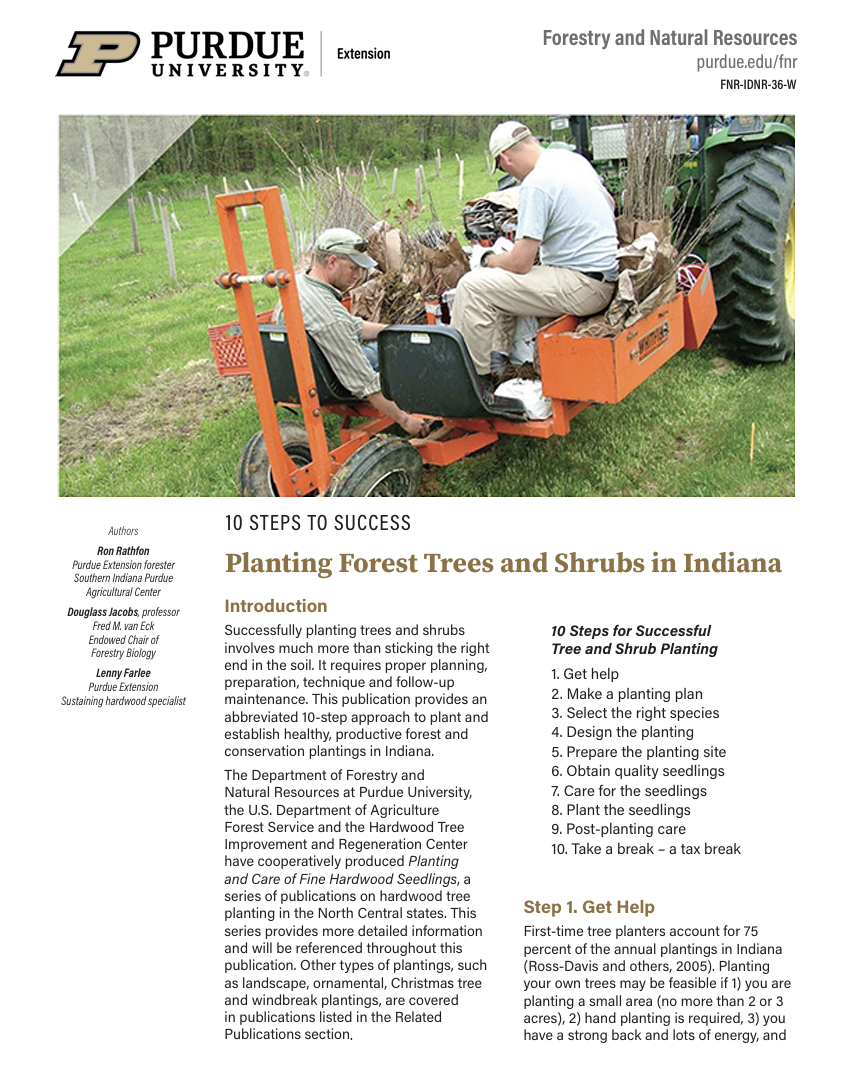 Discover the essential guide for anyone looking to plant forest trees or shrubs in Indiana. Whether you’re a first‑time landowner or an experienced conservationist, Planting Forest Trees and Shrubs in Indiana walks you through the 10 proven steps for establishing healthy, resilient plantings that thrive for generations. From choosing the right species to preparing your site, planting with confidence and ensuring long‑term success, this publication distills expert forestry knowledge into clear, practical advice. Ready to transform your landscape and leave a lasting legacy?
This publication provides an abbreviated 10-step approach to plant and establish healthy, productive forest and conservation plantings in Indiana. Successfully planting trees and shrubs involves much more than sticking the right end in the soil.
To receive the free download, visit the Purdue Extension’s resource center: The Education Store – Planting Forest Trees and Shrubs in Indiana.
Resources:
Control Management of Poison Hemlock, Got Nature? Blog, Purdue Extension – Forestry & Natural Resources (FNR)
Publication: Invasive Plant Series-Tree of Heaven, Got Nature? Blog, Purdue Extension – FNR
Publication – Invasive Plant Series: Swallow-worts, Got Nature? Blog, Purdue Extension – FNR
Question: What is the best management process with cut invasive brush tops?, Got Nature? Blog, Purdue Extension – FNR
Planting Your Tree Part 1: Choosing Your Tree, Purdue Extension YouTube Channel
Tree Pruning Essentials, The Education Store
Tree Pruning Essentials Video, Purdue Extension YouTube Channel
Surface Root Syndrome, The Education Store
District Forester, Indiana Department of Natural Resources, 10+ acres
Directory of Professional Foresters, Indiana Forestry & Woodland Owners Association (IFWOA)
Find an Arborist video, Trees are Good-International Society of Arboriculture (ISA)
Indiana Invasive Species Council
ID That Tree, Playlist, Purdue Extension – FNR YouTube Channel (Invasive White Mulberry, Siberian Elm, Tree of Heaven)
Fifty Common Trees of Indiana
An Introduction to Trees of Indiana
Native Trees of the Midwest, The Education Store
Subscribe – Purdue Extension-FNR YouTube Channel
Ron Rathfon, Regional Extension Forester, Southern Indiana Purdue Agriculture Center (SIPAC)
Purdue Forestry and Natural Resources
In this edition of ID That Tree, Purdue Extension Forester Lenny Farlee introduces us to Virgin’s Bower clematis, a native vining plant found in Indiana that’s especially noticeable when it blooms later in the growing season. Often seen climbing over nearby vegetation or spreading across open spaces, this species adds both beauty and ecological value to the landscape. Learn where Virgin’s Bower is typically found, how to recognize it and how it compares to a similar invasive look-alike. Whether you’re a student, landowner or simply curious about native vines, this video offers a quick introduction to this attractive and useful Indiana species.
If you have any questions regarding wildlife, trees, forest management, wood products, natural resource planning or other natural resource topics, feel free to contact us by using our Ask an Expert web page.
Resources:
ID That Tree – Video Playlist, Purdue Extension – Forestry and Natural Resources (FNR) YouTube Channel
Purdue Arboretum Explorer
Conservation Tree Planting: Steps to Success, Purdue Extension – FNR YouTube Channel
A Woodland Management Moment, Playlist, Purdue Extension – FNR YouTube Channel
Woodland Stewardship for Landowners, Playlist, Purdue Extension – FNR YouTube Channel
Fifty Common Trees of Indiana, Purdue Extension – FNR
Indiana Invasive Species Council
Cooperative Invasive Species Management Area (CISMA)
Report Invasive, Purdue Extension
Habitat University, Episode 12 – Exploring the challenges of Invasive Species, Habitat University-Natural Resource University
Shrubs and Woody Vines of Indiana and the Midwest, Purdue University Press
Native Trees of the Midwest, Purdue University Press
Professional Forester, Indiana Forestry Woodland Owners Association
District Forester, Indiana Department of Natural Resources, 10+ acres
Find an Arborist, International Society of Arboriculture
Forest Improvement Handbook, The Education Store
Lenny Farlee, Extension Forester
Hardwood Tree Improvement and Regeneration Center
Purdue Department of Forestry & Natural Resources
Purdue Landscape Report: When talking about invasive species, specialists are most commonly talking about some kind of plant or insect that is making an impact on landscape plants, soil, or hardwood. Most of these species are relatively easy to understand, with a biology that typically resembles that of a native counterpart. Wood-boring insects, vining plants, and fast-growing shrubs all have similar native species that landowners deal with on a regular basis. And then, some invasive species are just plain weird, like the invasive hammerhead worm!
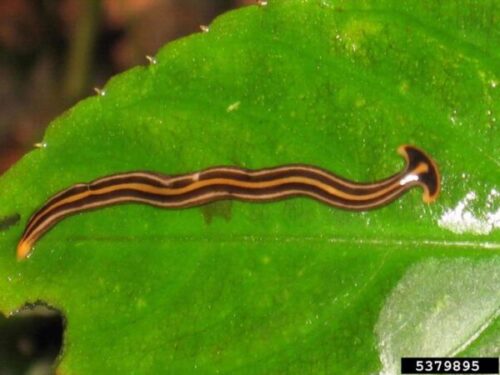
Hammerhead worm (photo from Arun T P, Bugwood.org)
Hammerhead worms, sometimes called shovel-headed garden worms, are a type of land planarian, or flatworm. Flatworms are worm-like organisms that lack the segmentation of earthworms and have the ability to regenerate from parts and pieces. Hammerhead worms belong to a subset of planarians, the genus Bipalium; while there are a few native species of Bipalium, most are from tropical regions. It is believed that hammerhead worms have been present in North America for long time, preferring environments that stay warm and moist through most of the year. Hammerhead worms are named for their spade-shaped head and typically have bright colors with dark lines running the length of their bodies. They are often found in indoor spaces and greenhouses that are temperature controlled and maintain humid conditions. Hammerhead worms can also be found living under rocks, fallen trees, or anywhere that can maintain a high enough relative humidity. While some flatworms are able to live in drier conditions, Bipalium need moisture in order to survive.
Members of Bipalium are predatory, consuming invertebrates like earthworms, snails, slugs, and some soft-bodied insects. Once they capture a prey item, they envelop it in a mouth-like organ located on the underside of their bodies. The primary issue with hammerhead worms is the potential damage they can do by preying on beneficial organisms that maintain soil and plant health. Hammerhead worms, and all other planarians, lack a closed body plan that uses a one-way digest system. Once they eat something, it is digested and waste is excreted through that same mouth-like opening. Some members of Bipalium can also use a toxin called tetrodotoxin to subdue their prey; however, they only produce a small amount and lack a way to use it on a larger organism. While they are often confused for more dangerous species, the Bipalium in North America do not represent a human health concern. Just keep any pets or children away from them, and if found, and use gloves if you’re forced to handle them.
As mentioned above, one of the more unique traits of Bipalium, and planarians in general, is their capacity to regenerate new individuals from parts and pieces. A piece as small as 1/279th of the whole can regenerate into a new individual. Do not attempt to chop up or crush hammerhead worms, or you may be dealing with several dozen when new worms develop in two weeks. However, even though it seems like hammerhead worms could reproduce very quickly, it’s still fairly uncommon to see one. If found, place it in a bag or bucket with either salt, alcohol, or vinegar until the worm is dead. As long as you do not cut or chop up the worms, it is very unlikely you’ll have to deal with more than one at any given time. Just keep your eyes open and remember to report any sightings to 1-866-NOEXOTICS!
View the original article on the Purdue Landscape Report website: Keep an eye out for hammerhead worms!.
Subscribe and receive the newsletter: Purdue Landscape Report Newsletter.
Resources:
Gardeners Asked to be Vigilant This Spring for Invasive Jumping Worm, Purdue Extension – FNR Got Nature? Blog
Fall webworms: Should you manage them?, Purdue Landscape Report
Mimosa Webworm, The Education Store, Purdue Extension resource center
Sod Webworms, Turf Science at Purdue University
Bagworm caterpillars are out feeding, be ready to spray your trees, Purdue Extension Forestry & Natural Resources (FNR) Got Nature? Blog
Landscape & Ornamentals: Bagworms, The Education Store
Purdue Plant Doctor, Purdue Extension-Entomology
Find an Arborist website, Trees are Good, International Society of Arboriculture (ISA)
ID That Tree – Video Playlist, Purdue Extension – Forestry and Natural Resources (FNR) YouTube Channel
Fifty Common Trees of Indiana, Purdue FNR web page list
Indiana Department of Natural Resources: Invasive Species
Indiana Invasive Species Council
Cooperative Invasive Species Management Area (CISMA)
Report Invasive, Purdue Extension
Native Trees of the Midwest, Purdue University Press
Report INvasive Facebook
Subscribe – Purdue Extension – FNR YouTube Channel
Bob Bruner, Exotic Forest Pest Educator
Purdue Entomology
Purdue Extension – Forestry and Natural Resources’ ID That Tree video series was recently highlighted in the National Woodland Owners Association’s (NWOA) Woodland Word Newsletter, recognizing the value of this Purdue FNR extension resource for woodland owners nationwide.

Hosted by Purdue Extension – Forestry and Natural Resources Forester Lenny Farlee, ID That Tree is a video series created to help viewers identify forest trees, shrubs and invasive plants through short, easy-to-follow lessons. With more than 150 videos in the playlist, the series offers a practical resource for woodland owners, land managers, outdoor enthusiasts and natural resource professionals interested in learning more about the plants and trees in their woodlands and surrounding landscapes. The ID That Tree playlist can be viewed on the Purdue Extension Forestry and Natural Resources YouTube channel.
In the March 25, 2026 issue of Woodland Word, NWOA featured the playlist in its “Knowledge, Inspiration, and Humor” section, describing it as a helpful tool for woodland owners seeking tree identification assistance.
Connecting National Resources to Indiana Woodland Owners
The National Woodland Owners Association (NWOA) is a nonprofit organization supporting woodland owners through education, advocacy, and stewardship resources across the U.S. To learn more about the opportunities and resources available view Join NWOA.
Here in Indiana, that national mission is carried forward locally through the Indiana Forestry & Woodland Owners Association (IFWOA), an official affiliate of NWOA.
IFWOA provides Indiana woodland owners with:
- Local networking and peer learning
- Educational programs and field tours
- Connections to Purdue Extension resources
- A voice for woodland owners at the state level
Resources:
Purdue Arboretum Explorer
Conservation Tree Planting: Steps to Success, Purdue Extension – FNR YouTube Channel
A Woodland Management Moment, Playlist, Purdue Extension – FNR YouTube Channel
Woodland Stewardship for Landowners, Playlist, Purdue Extension – FNR YouTube Channel
Fifty Common Trees of Indiana, Purdue Extension – FNR
Episode 11 – Exploring the challenges of Invasive Species, Habitat University-Natural Resource University
Shrubs and Woody Vines of Indiana and the Midwest, The Education Store
Native Trees of the Midwest, The Education Store
Professional Forester, Indiana Forestry Woodland Owners Association
Forest Improvement Handbook, The Education Store
Professional Forester, Indiana Forestry Woodland Owners Association (IFWOA)
District Forester, Indiana Department of Natural Resources, 10+ acres
Find an Arborist, International Society of Arboriculture
Indiana Invasive Species Council
Cooperative Invasive Species Management Area (CISMA)
Indiana Department of Natural Resources: Invasive Species
Report Invasive, Purdue Extension
Diana Evans, Extension & Web Communications Specialist
Purdue University Department of Forestry and Natural Resources
Explore the latest newsletter updates on the Indiana Woodland Steward website. Stay up-to-date with forestry news and receive their free e-newsletter by subscribing at IWS Subscribe.
Highlights from the new Newsletter include:
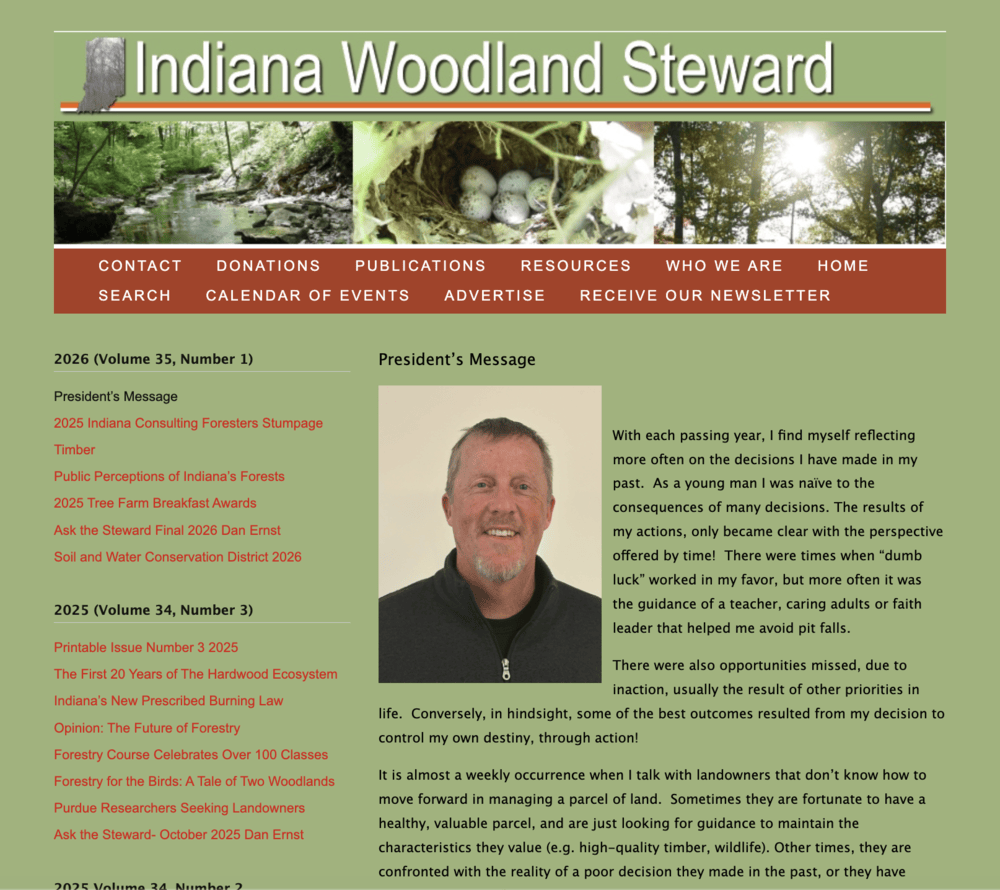
- President’s Message
By Dan McGuckin
“With each passing year, I find myself reflecting more often on the decisions I have made in my past…” - 2025 Indiana Consulting Foresters Stumpage Timber Price Report
“This report is provided annually and is intended to be used as a general indicator of timber stumpage prices and activity in Indiana…” - Public Perceptions of Indiana’s Forests and Woodlands: Insights from a Statewide Survey
By Erica Kronenberger, Zhao Ma, and Cynthia Longmire
“Public opinion plays a critical role in natural resource management. Natural resource agencies and organizations increasingly recognize that achieving and maintaining public approval…” - 2025 Tree Farm Breakfast Awards
By Ken Day
“Kline Contracting is the 2025 Indiana Logger of the Year. Mike Kline is third generation, and Miles Kline is a fourth generation Kline to operate the logging business…” - Ask the Steward – Final Column
by Dan Ernst
“‘Ask the Steward’ began as a Q&A column in the very first issue of Woodland Steward in 1992, with goals of being both informative and entertaining…“ - Soil and Water Conservation District 2026
“Thank you to all the supporting SWCD’s. Supporting the Woodland Steward Newsletter puts timely, relevant and science-based information…”
The Indiana Woodland Steward Newsletter is a resource offering a wealth of valuable information for foresters, woodland owners, timber marketing specialists, woodland and wildlife enthusiasts. The Indiana Woodland Steward Institute (IWS) is an entity made from 11 organizations within the state including Purdue University, Indiana Department of Natural Resources (DNR), and Indiana Hardwood Lumbermen’s Association (IHLA), that works to promote best usage practices of Indiana’s woodland resources through their Woodland Steward publication.
Resources
Hardwood Ecosystem Experiment (HEE) website
Hardwood Ecosystem Experiment – Wildlife Responses to Timber Harvesting, Purdue Extension
Forest Improvement Handbook, The Education Store
Invasive plants: impact on environment and people, The Education Store
Managing Your Woods for White-Tailed Deer, The Education Store
Shrubs and Woody Vines of Indiana and the Midwest, Purdue University Press
Virtual Tour Brings Forest Management for Birds to Life, Got Nature? Blog Post, Purdue Extension – Forestry and Natural Resources (FNR)
Breeding Birds and Forest Management: the Hardwood Ecosystem Experiment and the Central Hardwoods Region, The Education Store
Deer Impact Toolbox, Purdue Extension
Grassland Management Series, Purdue Extension Pond and Wildlife Management
Birdfeeder tips, The National Audubon Society
Explore the Rich World of Oaks with Purdue FNR Extension & Partners, Purdue Extension – FNR
Managing Woodlands for Birds Video, Purdue Extension-Forestry and Natural Resources YouTube Channel
Subscribe: Deer, Forest Management, ID That Tree, Woodland Management Moment, Invasive Species and many other topic video playlists Purdue Extension-Forestry and Natural Resources YouTube Channel
Dan McGuckin, President
Indiana Woodland Steward
Dr. Brian MacGowan, Extension Wildlife Specialist
Department of Forestry & Natural Resources, Purdue University
In this episode of “A Woodland Management Moment”, Purdue Extension forester Lenny Farlee discusses the influence of a topographic characteristic on the landscape and that is aspect: the direction that a slope faces. There are some significant implications on the moisture levels of a site and thus, the tree species that could thrive on that site. The video outlines how aspect can affect factors in an environment and how best to utilize this information as a landowner. Watch to learn about site growth and species information as a casual viewer or a landowner!
If you have any questions regarding trees, forests, wildlife, wood products, or other natural resource topics, feel free to contact us by using our Ask an Expert web page.
Resources:
A Woodland Management Moment, Playlist, Purdue Extension – Forestry and Natural Resources (FNR) YouTube Channel
Explore the Rich World of Oaks with Purdue FNR Extension & Partners, Purdue Extension – FNR Got Nature? Blog
Conservation Tree Planting: Steps to Success, Purdue Extension – FNR YouTube Channel
It’s Not Too Late to Order Trees for Spring Planting, Purdue Extension – FNR Got Nature? Blog
Shrubs and Woody Vines of Indiana and the Midwest, Purdue University Press
Native Trees of the Midwest, Purdue University Press
ID That Tree, Playlist, Purdue Extension – FNR YouTube Channel
Investing in Indiana Woodlands, The Education Store
Woodland Stewardship for Landowners Video Series, Playlist, Indiana Department of Natural Resources YouTube Channel
District Forester, Indiana DNR Division of Forestry, for over 10 acres of woodlands
Professional Forester, Indiana Forestry & Woodland Owners Association (IFWOA)
Forest Improvement Handbook, The Education Store
Purdue Arboretum Explorer
Lenny Farlee, Extension Forester
Hardwood Tree Improvement and Regeneration Center
Purdue Department of Forestry & Natural Resources
Purdue Landscape Report: An unfortunate question I am sometimes asked is similar to this: “I lost my prized shade tree! What can I plant that will grow fast and give me shade?” While there is no instant fix to this scenario, let’s review a few trees that might be better choices here in northern Indiana.
One obstacle to consider is that many of the fast-growing trees are also fast-dying, meaning that, relatively speaking, they are not long-lived for trees. We’re already behind the 8-ball in our highly manipulated landscapes because we know that trees in landscapes tend to live much shorter lives than trees in their unmanipulated natural habitats.
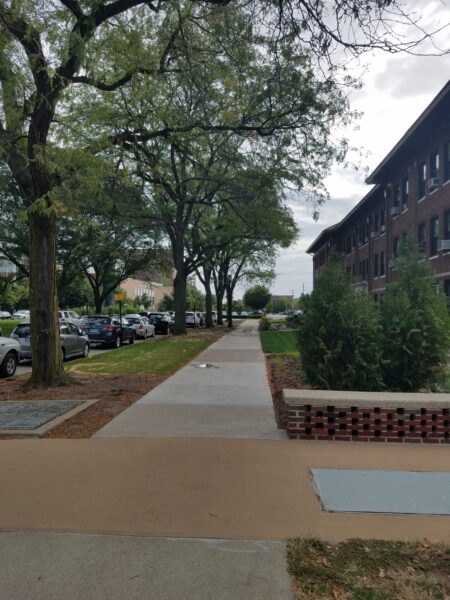
Figure 1. Honeylocust is a fast growing tree that performs well in urban plantings (Image from Purdue Landscape Report)
That said, here are a few trees to consider. I would still encourage homeowners to invest some time in researching the trees that they are considering. There are pros and cons to almost every tree, and there isn’t room in this article to fully explore all the advantages and disadvantages of each tree. Additionally, I will not be getting into detail about all the cultivars available.
Let’s start with our state tree, the Tuliptree (a.k.a Tulip-poplar or Yellow-poplar). Tuliptrees can become quite large and offer a pretty yellow fall color. They prefer deep, rich, well-drained soils.
If maples are on your mind, a couple of options would be Red maple and Freeman maple (a hybrid cross of Silver maple and Red maple). Red maple has more moderate growth. The Freeman maple is a faster grower and has stronger wood than one of its parents, the Silver maple. These maples do best in well-drained, slightly acid soils, but will tolerate a variety of soil conditions.
Northern catalpa is a fast grower, but dealing with the fruit litter, a long seed pod, may be a deterrent for some locations. It has large, heart-shaped leaves. It would grow well in moist sites.
Common hackberry is a fast grower, but it is susceptible to galls on the leaves (from a n insect), and limbs can become susceptible to wind and ice damage. It tolerates a wide variety of soil conditions. Thornless honeylocust is widely adapted to different soil types. Honeylocusts in the wild produce large thorns. The Thornless honeylocust is adapted to landscapes and allows dappled sunlight to reach turfgrass, so that it thrives more than it would under a tree that provides heavy shade.
Sweetgum is also a fast-growing shade tree with brilliant fall colors. It has a star-shaped leaf. One drawback of sweetgum is the spiny seed capsule. This fallen fruit can make walking in the yard barefoot a painful experience.
Eastern cottonwood is the tree on record for the fastest growth rate of any tree native to the U.S. However, those with cottonwoods in their yard can tell you that the cottony seed mass shed in the spring sticks everywhere. It can be a mess. Plus, cottonwood can shed limbs frequently, especially after storms. This tree is commonly found along rivers and streams, so it not surprisingly prefers moist soils.
Also found along rivers and streams, American sycamore is a fast-growing tree in some landscapes. However, it can be a messy landscape tree, shedding bark, leaves, limbs, and fruit nearly year-round. The large fallen leaves can smother grass if not mowed or raked. It is also sensitive to a spring disease called anthracnose, which can cause defoliation and twig death.
Wild black cherry may be another good choice. Although it may not be available in some nurseries, it can be grown from seed. It prefers rich, moist, well-drained soils.
A couple of faster-growing oaks to consider are Pin oak and Northern red oak. Pin oak would be better suited to slightly wetter spots, while Red oak would work on a wider variety of soils, preferring rich, moist, well-drained sites. Pin oak is susceptible to iron chlorosis (yellowing leaves) on alkaline soils.
Finally, American basswood also prefers rich, moist, well-drained soils and is somewhat shade-tolerant. This tree can grow quite tall and provide excellent shade.
In your research, find out how large the tree you will be purchasing will get. One common planting mistake is locating trees too close to structures. Consider the mature size when placing it in the landscape.
Time your spring planting near Arbor Day, the last Friday in April.
Original article posted: Fast-Growing Trees for the Landscape.
Subscribe and receive the newsletter: Purdue Landscape Report Newsletter.
Resources:
Fifty Common Trees of Indiana
An Introduction to Trees of Indiana
Native Trees of the Midwest, The Education Store
Shrubs and Woody Vines of Indiana and the Midwest, The Education Store
Tree Installation: Process and Practices, The Education Store
Wildlife Habitat Hint YouTube Playlist, Purdue Extension – FNR
Invasive Species YouTube Playlist, Purdue Extension – FNR
Report Invasive Species, Purdue Invasive Species
Find an Arborist video, Trees are Good-International Society of Arboriculture (ISA)
ID That Tree, Purdue Extension-FNR YouTube playlist
Purdue Plant and Pest Diagnostic Laboratory
Trees and Storms – The Education Store, Purdue Education’s resource center
Planting Your Tree, video, Purdue Extension
Subscribe Purdue Extension – Forestry and Natural Resources YouTube Channel
John Woodmansee, Extension Educator, Whitely County
Purdue Extension
Purdue Landscape Report: Spring is just around the corner, green spaces are beginning to wake from their winter slumber, Earth Day and Arbor Day are a little over a month away, and people are ready to get outside with planting on their minds. But before you go and get your tree(s) for planting, there is quite a lot to think about. Every tree is an investment, and if properly cared for, will outlast us and potentially future generations. So, what goes into planting trees, especially large trees?
One important note for successfully planting any tree is thinking about your goals, or what you want out of a new tree. In the case of large trees, the first thing that usually comes to mind is shade. Having a large shade tree to block the sun on your home in hot summers can significantly reduce power consumption from air conditioning. Large shade trees also give us great locations to play, picnic, or relax outside in our backyard, at local playgrounds, or parks. Given the space and care to grow, they can create wonderful local environments and beautiful aesthetics, driving down neighborhoods and city streets. The right species can benefit local wildlife with food production and habitat improvement.
When you know what you want, you can begin to assess your site to see if you have the right space for your future tree. Large trees require larger spaces. If your tree survives to a mature size, will it interfere with anything else around it? Are there utility lines above or below your planting site? What is the proximity to homes, buildings, or other structures? Will it obstruct road signs, lights, or line of sight? Will falling leaves, nuts, or fruits adversely affect anything around the tree? What is the quality of the soil: pH, well-drained, wet, clay, loam, or sand? A poorly assessed planting site could lead to a doomed planting project by placing the wrong tree in the wrong place.
Once you have your goals in mind and know what type of site you have, you can begin to consider what species you may want to plant. A couple of good resources for considering species selection in the Midwest include your local extension offices, reputable nurseries, and online resources like the Morton Arboretum. In the case of large shade trees, we all would like to have our shade now, but trees take time to reach mature heights. That being said, some species grow a little faster than others. Faster-growing trees that grow well in urban settings include:
- Tuliptree or tulip-poplar, Liriodendron tulipifera, the state tree of Indiana, can withstand varying light exposure, acidic soil that is moist to well-drained, is moderately sensitive to drought, and can reach heights up to 70-90 feet. It is susceptible to ice damage and has weaker wood than other species.
- Northern catalpa, Catalpa speciosa, is slightly smaller at about 60 feet in good conditions, thrives in full sun, and a little more alkaline soil that is moist to well-drained. Large leaves and long bean-like seed pods can be messy, and the wood and structure are on the weaker side.
- Dawn redwood, Metasequoia glyptostroboides, is a deciduous conifer (drops its foliage every fall) that can reach heights of 70-100 feet. A non-native tree, it does very well in urban settings without competing with native trees, and can survive full sun in acidic, moist to well-drained soils. It is tolerant of some drought and flooding as well as road salt during the winter.
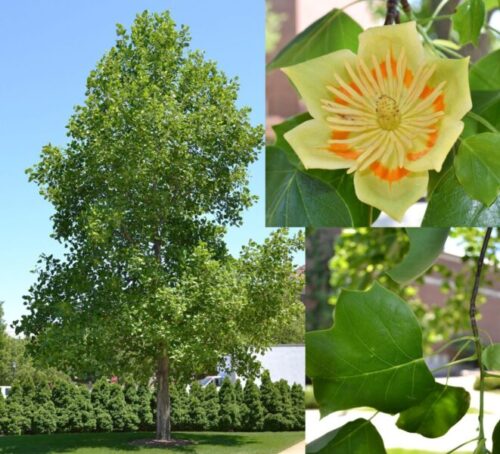
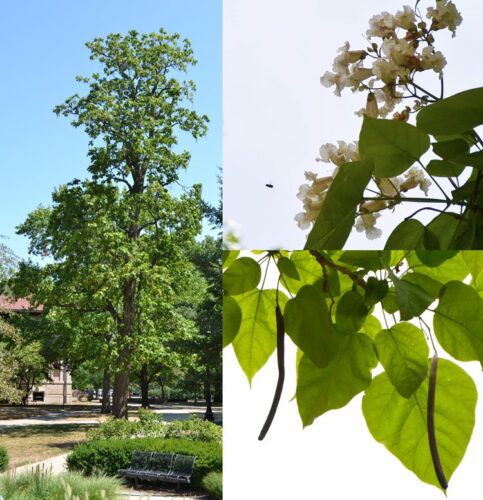
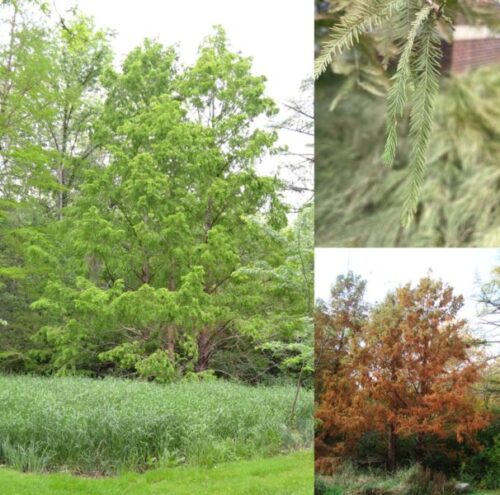
Next, we have some examples of trees slowing down to moderate growth:
- Silver linden, Tilia tomentosa, another non-native, is a common street tree that can reach heights up to 70 feet. Surviving in full sun to shade, it does well in moist to well-drained soils and is tolerant of some drought, alkaline soils, and road salt. Leaves that are dark green on top and silvery on the bottom, and flowers that can benefit some pollinators.
- Northern red oak, Quercus rubra, is one of my favorite native trees and reaches mature heights up to 75 feet. Preferring acidic, moist to well-drained soils, they can tolerate some drought as well as alkaline soils and clay soils. Leaves are dark green in summer and a beautiful red in the fall, with acorn production and interesting branch structure that benefits native birds and small mammals.
- Bald-cypress, Taxodium distichum, is similar to the dawn redwood. A deciduous conifer that loses its needles after the fall and can grow up to 70 feet. It can survive many soil types, but thrives in acidic, wet soils. In wetter sites, one thing to take into consideration is that it can send up “knee-like” roots well above the soil line to improve structural support and gas exchange. If these appear in lawn situations, they can both damage and be damaged by mowing operations. Extending mulch beds can reduce these negative interactions.
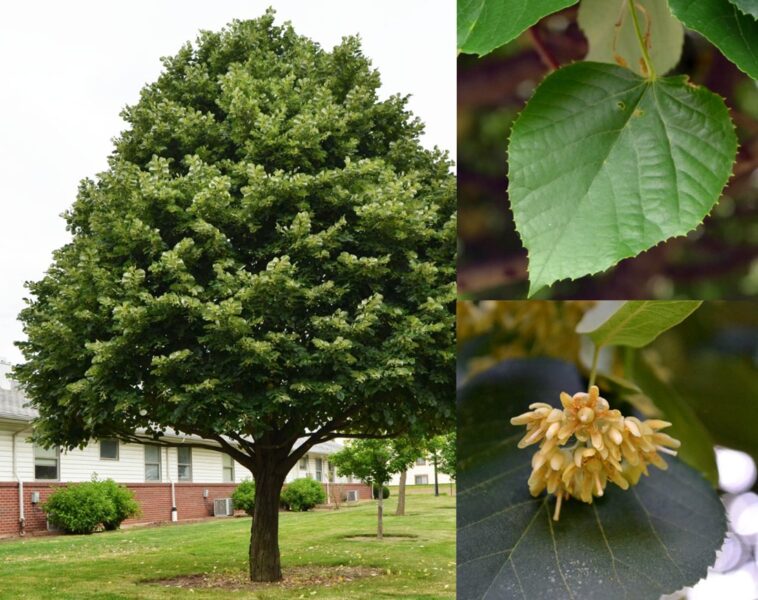
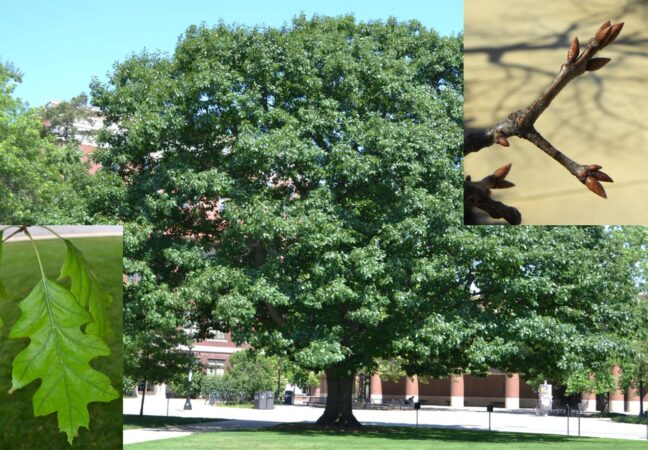
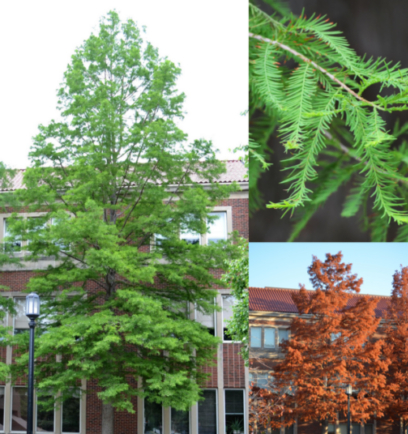
These suggestions are a small sample of large shade trees that can grow well in different urban settings. Remember to think of what the overall goal is for your planting and to assess your site to make informed species choices. With proper forethought, you can make a resilient landscape that your trees will be able to survive in for years and years. If you still have questions, you can contact your local extension office or find an ISA Certified Arborist at Find an ISA-Credentialed Arborist.
Subscribe and receive the newsletter: Purdue Landscape Report Newsletter.
Resources:
Re-mulch Your Trees, Purdue Landscape Report
Find an Arborist video, Trees are Good-International Society of Arboriculture (ISA)
Trees and Storms – The Education Store, Purdue Education’s resource center
Why Is My Tree Dying? – The Education Store
Tree Risk Management – The Education Store
Tree Pruning Essentials, Publication & Video, The Education Store
Trees and Electric Lines – The Education Store
Southwest Damage, Scalding or Frost Cracking, Got Nature? Blog, Purdue Extension – Forestry and Natural Resources (FNR)
Tree Defect Identification, The Education Store
Planting Your Tree, video, Purdue Extension
Tree Installation, The Education Store
Tree Wound and Healing, Got Nature? Blog, Purdue Extension – FNR
Subscribe – Purdue Extension-FNR YouTube Channel
Ben McCallister, Urban Forestry Specialist
Purdue Forestry & Natural Resources
Purdue Landscape Report: We are often the bearers of bad news when a new exotic insect species is discovered in Indiana. This time, however, we have some good news to share. Agrilus smaragdifrons, a beetle that feeds exclusively on Tree-of-Heaven (Ailanthus altissima), was detected in Indiana last year in Allen County.
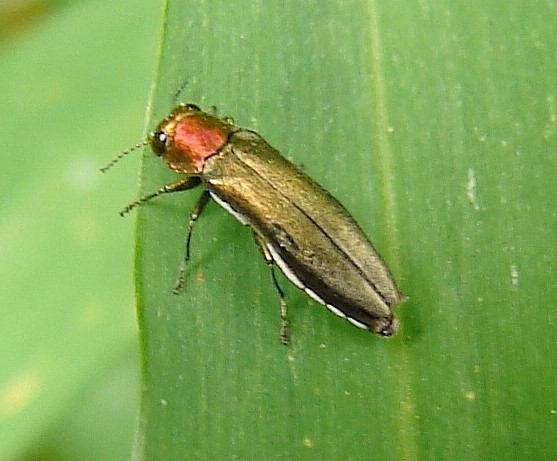
Figure 1. Agrilus smaragdifrons adult (Photograph by Dave Eib, iNaturalist)
You might notice that this beetle belongs to the same genus as the infamous Emerald Ash Borer (Agrilus planipennis) (EAB). Indeed, the two species look quite similar, although there are subtle differences in their striking metallic coloration. While Emerald Ash Borer is a vibrant green from head to wing, A. smaragdifrons has a golden-red head and thorax with green to black-green wings (Fig. 1).
This beetle has been present in the United States for several years, with the earliest record dating back to 2011 from a photograph taken in New Jersey that was uploaded to BugGuide.net. Subsequent detections occurred in several neighboring eastern states, often as bycatch during Emerald Ash Borer surveys (Hoebeke et al. 2017).
The life cycle of A. smaragdifrons also shares many similarities with Emerald Ash Borer. Although its life cycle under North American conditions has not yet been formally described, Hoebeke et al. (2017) summarize the beetle’s biology in its native Asian range based on Chinese literature (Xu and Yang 2007).
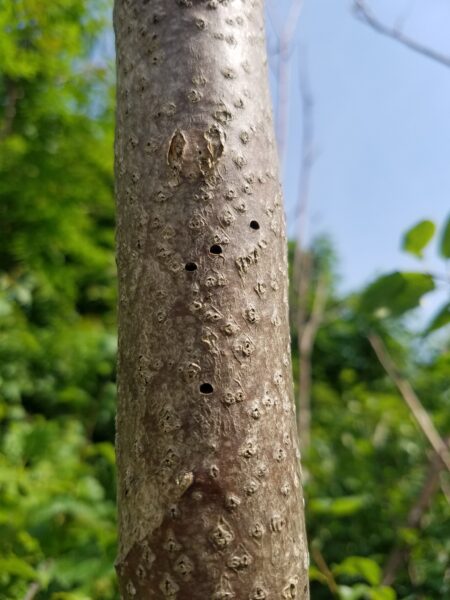
Figure 2. Agrilus smaragdifrons exit holes in Ailanthus altissima (Photograph by Patrick Perish, iNaturalist)
Females lay eggs in bark crevices during mid- to late summer, and newly hatched larvae burrow into the tree. The larvae overwinter within galleries beneath the bark and resume feeding the following spring. Pupation occurs in early summer, around June, and adult mating flights take place from June through July. When adults emerge, they leave characteristic “D”-shaped exit holes in the bark (Fig. 2; Photograph by Patrick Perish, iNaturalist).
It is not yet known whether A. smaragdifrons will function as a biological control agent for Tree-of-Heaven. Additional research and field observations are needed to determine its impact on its host. However, reports from Beijing Forestry University indicate that attacks by A. smaragdifrons can lead to decline and eventual death of Tree-of-Heaven (Hoebeke et al. 2017).
Scientists with the Indiana Department of Natural Resources and Purdue University are interested in tracking the distribution of A. smaragdifrons across the state. The next time you encounter a Tree-of-Heaven, keep an eye out for the distinctive D-shaped exit holes. In late summer, you may also observe adults feeding on the leaves.
See something? Report it Identifying and Reporting Pests at just as you would any other invasive species!
Original article posted: Beetle that attacks Tree-of-Heaven found in Indiana.
Subscribe and receive the newsletter: Purdue Landscape Report Newsletter.
Resources:
Ask the Expert: Pests in Your Woods, Purdue Extension – Forestry & Natural Resources (FNR) YouTube Channel
Report Spotted Lanternfly, Purdue Landscape Report
Invasive Species Playlist, Purdue Extension – FNR YouTube Channel
Indiana Department of Natural Resources: Invasive Species
Indiana Invasive Species Council
Cooperative Invasive Species Management Area (CISMA)
Report Invasive, Purdue Extension
What are invasive species and why should I care?, Got Nature? Blog, Purdue Extension – FNR
Purdue Plant Doctor, Purdue Extension
An Introduction to Trees of Indiana, The Education Store, Purdue Extension’s resource center
Fifty Common Trees of Indiana, Forestry & Natural Resources
ID That Tree, Playlist, Purdue Extension – FNR YouTube Channel
A Woodland Management Moment, Playlist, Purdue Extension – FNR YouTube Channel
Woodland Stewardship for Landowners, Playlist, Purdue Extension – FNR YouTube Channel
Native Trees of the Midwest, Purdue University Press
Forest Improvement Handbook, The Education Store
Alicia Kelley, Cooperative Agricultural Pest Survey (CAPS) Coordinator
Purdue Extension – Entomology
In this edition of ID That Tree, Purdue Extension Forester Lenny Farlee introduces us to dwarf chinkapin oak, an uncommon oak species found in far northern Indiana. Unlike many oaks that grow into large forest trees, this species often takes on a different form. Learn about the types of sites where dwarf chinkapin oak is typically found, how it compares to its relative the chinkapin oak and why it plays an important role in supporting wildlife. Whether you’re a student, landowner or simply curious about Indiana’s native trees and shrubs, this video offers a quick introduction to this unique and lesser-known oak species.
If you have any questions regarding wildlife, trees, forest management, wood products, natural resource planning or other natural resource topics, feel free to contact us by using our Ask an Expert web page.
Resources:
ID That Tree – Video Playlist, Purdue Extension – Forestry and Natural Resources (FNR) YouTube Channel
Purdue Arboretum Explorer
Conservation Tree Planting: Steps to Success, Purdue Extension – FNR YouTube Channel
A Woodland Management Moment, Playlist, Purdue Extension – FNR YouTube Channel
Woodland Stewardship for Landowners, Playlist, Purdue Extension – FNR YouTube Channel
Fifty Common Trees of Indiana, Purdue Extension – FNR
Indiana Invasive Species Council
Cooperative Invasive Species Management Area (CISMA)
Report Invasive, Purdue Extension
Habitat University, Episode 12 – Exploring the challenges of Invasive Species, Habitat University-Natural Resource University
Shrubs and Woody Vines of Indiana and the Midwest, Purdue University Press
Native Trees of the Midwest, Purdue University Press
Professional Forester, Indiana Forestry Woodland Owners Association
District Forester, Indiana Department of Natural Resources, 10+ acres
Find an Arborist, International Society of Arboriculture
Forest Improvement Handbook, The Education Store
Lenny Farlee, Extension Forester
Hardwood Tree Improvement and Regeneration Center
Purdue Department of Forestry & Natural Resources

Recent Posts
- Publication – Planting Forest Trees and Shrubs in Indiana
Posted: April 8, 2026 in Forests and Street Trees, Urban Forestry, Wildlife, Woodlands - ID That Tree: Virgin’s Bower Clematis
Posted: April 6, 2026 in Urban Forestry, Wildlife, Woodlands - Keep An Eye Out for Hammerhead Worms, Purdue Landscape Report
Posted: April 2, 2026 in Invasive Animal Species, Wildlife, Woodlands - ID That Tree Featured in National Woodland Owners Association Newsletter
Posted: April 1, 2026 in Urban Forestry, Wildlife, Woodlands - New 2026 Indiana Woodland Steward Newsletter
Posted: March 30, 2026 in Urban Forestry, Wildlife, Woodlands - A Woodland Management Moment: Why Aspect Matters
Posted: in Urban Forestry, Woodland Management Moment, Woodlands - Fast-Growing Trees for the Landscape, Purdue Landscape Report
Posted: March 26, 2026 in Forestry, Urban Forestry, Woodlands - Urban Tree Spotlight: Planting Deciduous Shade Trees, Purdue Landscape Report
Posted: March 25, 2026 in Forests and Street Trees, Urban Forestry, Woodlands - Beetle that attacks Tree-of-Heaven found in Indiana, Purdue Landscape Report
Posted: March 20, 2026 in Invasive Insects, Wildlife, Woodlands - ID That Tree: Dwarf Chinkapin Oak
Posted: in Forestry, Urban Forestry, Wildlife, Woodlands
Archives
Categories
- Alert
- Aquaculture/Fish
- Aquatic/Aquaculture Resources
- Ask the Expert
- Christmas Trees
- Community Development
- Disease
- Drought
- Forestry
- Forests and Street Trees
- Gardening
- Got Nature for Kids
- Great Lakes
- How To
- Invasive Animal Species
- Invasive Insects
- Invasive Plant Species
- Land Use
- Natural Resource Planning
- Nature of Teaching
- Plants
- Podcasts
- Ponds
- Publication
- Safety
- Spiders
- Timber Marketing
- Uncategorized
- Urban Forestry
- Webinar
- Wildlife
- Wood Products/Manufacturing
- Woodland Management Moment
- Woodlands