 Purdue University - Extension - Forestry and Natural Resources
Got Nature? Blog
In this third of five prescribed fire ignition technique videos, Purdue Extension wildlife specialist Jarred Brooke describes a strip head fire and how this technique differs from other options.
If you have any questions regarding trees, forests, wildlife, wood products or other natural resource topics, feel free to contact us by using our Ask an Expert web page.
Resources
Wildlife Habitat Hint, Playlist, Purdue Extension – Forestry and Natural Resouces YouTube channel
Wildlife Habitat Hint: Late Growing Season Prescribed Fire, Video
Renovating Native Warm-Season Grass Stands for Wildlife: A Land Manager’s Guide, The Education Store, Purdue Extension resource center
Prescribed fire: 6 things to consider before you ignite, Got Nature? Blog, Purdue Extension – 4Forestry and Natural Resources
Jarred Brooke, Wildlife Extension Specialist
Purdue Department of Forestry and Natural Resources
You can improve the taste and enjoyment of your wild venison by following a few important tips that our extension specialists and educators shared in the FNR Facebook LIVE session from November 12th.
Many easy step by step resources are available and were shared in the video including How to Score Your White-tailed Deer to Cutting, Grinding & Packaging. More Purdue Extension – Forestry and Natural resources:
Video Series:
Handling Harvested Game: Episode 1, Field Dressing
Handling Harvested Game: Episode 2, Hanging & Skinning
Handling Harvested Game: Episode 3, Deboning
Handling Harvested Game: Episode 4, Cutting, Grinding & Packaging
Feel free to continue to send in your deer questions to the Ask an Expert web page. If you have any other questions regarding trees, forest management, wildlife, wood products or natural resource be sure to submit those questions by utilizing the Ask an Expert.
Publications and More Videos:
White-Tailed Deer Post Harvest Collection, video, The Education Store, Purdue Extension resource center
Deer Harvest Data Collection, Got Nature? Blog, Purdue Extension-Forestry & Natural Resources (FNR)
Age Determination in White-tailed Deer, video
How to Build a Plastic Mesh Deer Exclusion Fence, The Education Store
Indiana Hunting & Trapping Season 2020-2021 (pdf), Indiana Department of Natural Resources, Department of Fish & Wildlife
Indiana Hunting & Trapping Guide, IN DNR, Department of Fish & Wildlife
Jarred Brooke, Wildlife Extension Specialist
Purdue Department of Forestry and Natural Resources
Jonathan Ferris, Wayne County Extension Director
Purdue Extension
Dave Osborne, County Extension Director
Purdue Extension
Rod N Williams, Professor of Wildlife Science
Purdue University Department of Forestry and Natural Resources
In this first of five prescribed fire ignition technique videos, Purdue Extension wildlife specialist Jarred Brooke describes a backing fire. A backing fire is what we use to start most prescribed fires as it gives a result of a slow moving fire, one with short flame lengths that is easy to control compared to other firing techniques.
If you have any questions regarding wildlife, trees, forest management, wood products, natural resource planning or other natural resource topics, feel free to contact us by using our Ask an Expert web page.
Resources
Wildlife Habitat Hint, Playlist, Purdue Extension – Forestry and Natural Resouces YouTube channel
Wildlife Habitat Hint: Late Growing Season Prescribed Fire, Video
Renovating Native Warm-Season Grass Stands for Wildlife: A Land Manager’s Guide, The Education Store, Purdue Extension resource center
Prescribed fire: 6 things to consider before you ignite, Got Nature? Blog, Purdue Extension – 4Forestry and Natural Resources
Jarred Brooke, Wildlife Extension Specialist
Purdue Department of Forestry and Natural Resources
The 100 year study, Hardwood Ecosystem Experiment (HEE), brings pertinent forest management data to many in Indiana. HEE Extension publications continue to share topics including: Wildlife Responses to Timber Harvesting, Sustaining our Oak-Hickory Forests, Forest Birds and more.
To learn more about this 100 year forest management plan and see its impacts, check out the Hardwood Ecosystem Experiment (HEE) website.
Resources
Hardwood Ecosystem Experiment (HEE), Playlist, Purdue Extension – Forestry and Natural Resources
A Woodland Management Moment, Playlist
Woodland Stewardship for Landowners, Playlist
The Hardwood Ecosystem Experiment: Indiana Forestry and Wildlife, The Education Store, Purdue Extension resource center
Resources and Assistance Available for Planting Hardwood Seedlings, The Education Store
Charlotte Owings, Hardwood Ecosystem Experiment Project Coordinator
Purdue University, Department of Forestry and Natural Resources
 Calling all teachers and parents: Do you need some new ideas on how to get students out in nature or teach them science lessons?
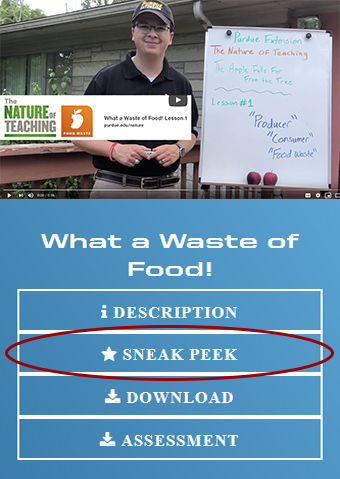
We’ve got you covered with our Nature of Teaching program. We’ve created more than 40 sneak peek videos that introduce you to our lesson plans, offering a quick way for teachers and other K-12 leaders to view the lessons as well as the related activities.
Many of the lesson plans meet state specifications for Next Generation Science Standards and/or Core Standards, while also offering informal curriculum items and fun activities for all K-12 leaders.
The Nature of Teaching program offers three areas of formal and informal activity-based curricula centered around getting youth outside: wildlife, health and wellness, and food waste.
Sneak Peeks videos include topics ranging from producers, consumers and natural resources and food waste from farm to fork, to exploring nature with your senses and emotional vocabulary exploration, to trees of the Midwest and healthy water/happy home.
Subscribe to the Nature of Teaching YouTube Channel for more Wildlife, Food Waste, and Health and Wellness information.
Resources
Nature of Teaching Website
Nature of Teaching YouTube Channel
Nature of Teaching Program Receives Environmental Education Award, College of Agriculture, Purdue University
Resourceful Animal Relationships, The Education Store, Purdue Extension resource center
The Nature of Teaching: Food Waste Solutions, The Education Store
Benefits of Connecting with Nature, The Education Store
Rod N Williams, Professor of Wildlife Science
Purdue University Department of Forestry and Natural Resources
The Nature of Teaching, a Purdue Extension signature program, was honored as the third place finisher in the central region for the Environmental Education Award presented by the National Extension Association of Family and Consumer Science (NEAFCS).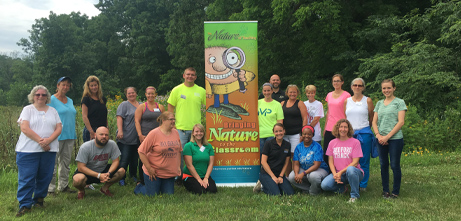 The Nature of Teaching team includes:
- Deb Arseneau, HHS Educator, Newton County
- Jarred Brooke, extension wildlife specialist
- Jay Christiansen, health and human sciences extension educator for Vigo County
- Robert Cordes, Maine Department of Inland Fisheries and Wildlife (MDIFW) wildlife special projects coordinator
- Molly Hoag, health and human sciences extension educator for Wells County
- Molly Hunt, health and human sciences extension educator for Delaware County
- Rebecca Koetz, urban ag/home horticulture extension educator for Lake County
- Tami Mosier, 4-H youth development extension educator
- Kelsie Muller, health and human sciences extension educator for Benton County
- Dr. Rod Williams, professor of wildlife science
- Brad Zitske, Maine Department of Inland Fisheries and Wildlife (MDIFW) assistant regional wildlife biologist
Nature of Teaching
Nature of Teaching YouTube Channel
Transporting Food Waste, The Education Store, Purdue Extension resource center
Resourceful Animal Relationships, The Education Store
Benefits of Connecting with Nature, The Education Store
Small mammals, such as chipmunks and mice aren’t just cute to look at, they actually serve a purpose in our forest ecosystems. Check out what small mammals are found on the Hardwood Ecosystem Experiment and the mutually beneficial relationship they have with the forest.
If you have any questions regarding trees, forests, wildlife, wood products or other natural resource topics, feel free to contact us by using our Ask an Expert web page.
Resources
Hardwood Ecosystem Experiment (HEE), Playlist, Purdue Extension – Forestry and Natural Resources
Hardwood Ecosystem Experiment, Website
Hardwood Ecosystem Experiment – Wildlife Responses to Timber Harvesting, Purdue Extension – Forestry and Natural Resources
The Hardwood Ecosystem Experiment: Indiana Forestry and Wildlife, The Education Store
The Nature of Teaching: Unit 4, Mammals and Ecosystems, The Education Store
Charlotte Owings, Hardwood Ecosystem Experiment Project Coordinator
Purdue University, Department of Forestry and Natural Resources
Have you ever picked up a log and found a salamander underneath it? This is an every day occurrence on the Hardwood Ecosystem Experiment as researchers count and identify species in the fall and spring to see how they react to the various woodland treatments on the HEE. Project director Charlotte Owings shares more.
If you have any questions regarding trees, forests, wildlife, wood products or other natural resource topics, feel free to contact us by using our Ask an Expert web page.
Resources
Hardwood Ecosystem Experiment (HEE), Playlist, Purdue Extension – Forestry and Natural Resources
Help the Hellbender, Playlist
Ask an Expert: Hardwood Ecosystem Experiment (HEE) Birds and Salamander Research, Video
Hardwood Ecosystem Experiment, Website
Help the Hellbender, Website
Hardwood Ecosystem Experiment – Wildlife Responses to Timber Harvesting, Purdue Extension – Forestry and Natural Resources
The Hardwood Ecosystem Experiment: Indiana Forestry and Wildlife, The Education Store
Charlotte Owings, Hardwood Ecosystem Experiment Project Coordinator
Purdue University, Department of Forestry and Natural Resources
Join Charlotte Owings, project coordinator on the Hardwood Ecosystem Experiment, as she shares about one of the study subjects on the Hardwood Ecosystem Experiment (HEE), moths.
If you have any questions regarding trees, forests, wildlife, wood products or other natural resource topics, feel free to contact us by using our Ask an Expert web page.
Resources
Hardwood Ecosystem Experiment (HEE), Playlist, Purdue Extension – Forestry and Natural Resources
Hardwood Ecosystem Experiment, Website
Gypsy Moth In Indiana, Website
Hardwood Ecosystem Experiment – Wildlife Responses to Timber Harvesting, Purdue Extension – Forestry and Natural Resources
The Hardwood Ecosystem Experiment: Indiana Forestry and Wildlife, The Education Store
Charlotte Owings, Hardwood Ecosystem Experiment Project Coordinator
Purdue University, Department of Forestry and Natural Resources
Bats are often overlooked but data gathered by the Hardwood Ecosystem Experiment (HEE) 100 year, large-scale experimental study reminds us the key role they have in our forests as they eat insects and pests including mosquitoes, spiders and more.
Learn about the bat research that is happening as part of the HEE.
If you have any questions regarding trees, forests, wildlife, wood products or other natural resource topics, feel free to contact us by using our Ask an Expert web page.
Resources
Hardwood Ecosystem Experiment (HEE), Playlist, Purdue Extension – Forestry and Natural Resources
Hardwood Ecosystem Experiment, Website
Hardwood Ecosystem Experiment – Wildlife Responses to Timber Harvesting, Purdue Extension – Forestry and Natural Resources
The Hardwood Ecosystem Experiment: Indiana Forestry and Wildlife, The Education Store
Ask An Expert: Bats on the Hardwood Ecosystem Experiment, Video, Purdue Extension – Forestry and Natural Resources Facebook
Charlotte Owings, Hardwood Ecosystem Experiment Project Coordinator
Purdue University, Department of Forestry and Natural Resources

Recent Posts
- Beetle that attacks Tree-of-Heaven found in Indiana, Purdue Landscape Report
Posted: March 20, 2026 in Invasive Insects, Wildlife, Woodlands - ID That Tree: Dwarf Chinkapin Oak
Posted: in Forestry, Urban Forestry, Wildlife, Woodlands - DNR Hiring for Indiana Conservation Officer Positions, MyDNR
Posted: March 9, 2026 in Urban Forestry, Wildlife, Woodlands - ID That Tree: Shumard Oak
Posted: in Plants, Urban Forestry, Wildlife, Woodlands - Uniting Indiana Residents Against Invasive Species
Posted: February 27, 2026 in Community Development, Invasive Insects, Wildlife - Have You Seen a Soaring Eagle Lately? Morning Ag Clips
Posted: February 25, 2026 in Urban Forestry, Wildlife - Register for Natural Resources Teacher Institute’s Class of 2026
Posted: February 19, 2026 in Forestry, Wildlife, Woodlands - ID That Tree: Fragrant Sumac
Posted: February 4, 2026 in Plants, Urban Forestry, Wildlife - Woodsy Owl Edition for Educational Learning, USDA – U.S. Forest Service
Posted: January 21, 2026 in Forestry, Forests and Street Trees, Got Nature for Kids, Urban Forestry, Wildlife - Opt-in to the Deer Management Survey, MyDNR
Posted: January 12, 2026 in Forestry, Wildlife
Archives
Categories
- Alert
- Aquaculture/Fish
- Aquatic/Aquaculture Resources
- Ask the Expert
- Christmas Trees
- Community Development
- Disease
- Drought
- Forestry
- Forests and Street Trees
- Gardening
- Got Nature for Kids
- Great Lakes
- How To
- Invasive Animal Species
- Invasive Insects
- Invasive Plant Species
- Land Use
- Natural Resource Planning
- Nature of Teaching
- Plants
- Podcasts
- Ponds
- Publication
- Safety
- Spiders
- Timber Marketing
- Uncategorized
- Urban Forestry
- Webinar
- Wildlife
- Wood Products/Manufacturing
- Woodland Management Moment
- Woodlands