 Purdue University - Extension - Forestry and Natural Resources
Got Nature? Blog
Dr. Rado Gazo, professor of wood processing and industrial engineering who has been a part of the Purdue Forestry and Natural Resources faculty since 1997, has been named as the 2025 recipient of the Wood Engineering Achievement Award – Lifetime Achievement by the Forest Products Society.

“I joined the Forest Products Society as a graduate student in 1990 and have actively participated in various roles ever since,” Gazo said. “While I did not seek this award, now that I have received it, I am very humbled by the recognition of my colleagues and peers.”
The Forest Products Society is a premier international not-for-profit technical association founded in 1947. The award recognizes accomplishments and innovations in the discipline of wood engineering including structures, structural elements, building codes, consensus standards, design procedures and education.
According to the FPS announcement,
“Gazo has educated students, industry professionals and the public about the applications of industrial engineering and operation research techniques to problems in primary and secondary wood products manufacturing industries. His research and development activities have focused on evaluating tree, log, and lumber quality using CT, laser, and image scanning techniques. His efforts led to the first commercially available industrial-grade CT scanner and related optimization software, as well as the first successful automated hardwood lumber grading system. Dr. Gazo also created Hardwood University for the continued education of hardwood industry professionals and landowners in the Central Hardwood Region.”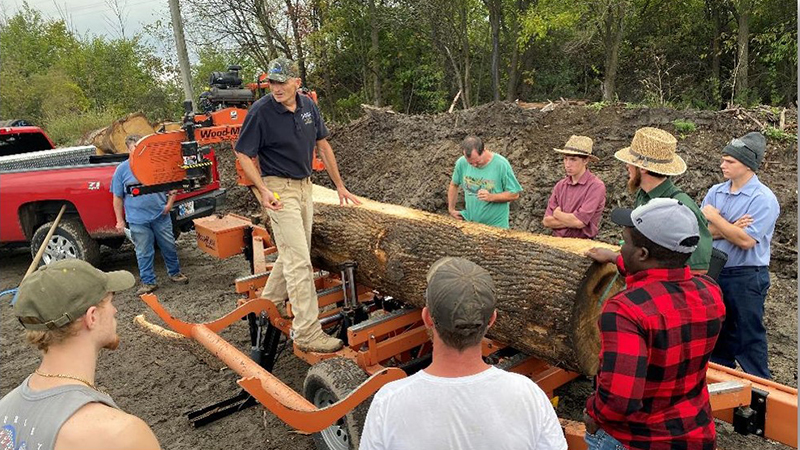
In 2020, Gazo created Hardwood University, a self-sustaining collaborative program with the Indiana Hardwood Lumbermen’s Association, which aims to provide hardwood industry professionals and landowners in the Central Hardwood region with cutting-edge information and training. Gazo is one of the primary instructors for the program, which trains around 200 professionals annually.
Hardwood University, which consists of 10 sessions annually, is intended for new employees in the hardwood industry as well as those preparing for advancement or cross-training. The program, which takes place monthly at various Indiana hardwood plants and Purdue agricultural centers, offers informational and technical sessions on topics ranging from forest taxation to tree and log scaling and grading; log bucking; marketing hardwood veneer, stave and sawlogs; grade-sawing lumber; air drying and kiln drying lumber; hardwood lumber grading; lean manufacturing and logistics; and sawmill efficiency and quality control.
In addition, Gazo has worked with more than 130 companies, providing technical assistance, troubleshooting and consulting services as well as implementation of manufacturing best practices.
Most recently, Gazo was named among Purdue researchers working on the Indiana Wood Utilization Team, which will aim to create and implement a strategic plan to increase awareness of the benefits of using forest resources in the state, after gathering input from an industry advisory board and a series of roundtable discussions across the state.
Gazo has authored or co-authored more than 320 publications and has given more than 450 presentations in his field.
In 2017, he received the Southern Regional Extension Forestry Award for Excellence for the online book chapter “Critical Factors Affecting Supply Chain Management: A Case Study in the US Pallet Industry,” coauthored with Dr. Henry Quesada and Scarlett Sanchez.
To view this article along with other news and stories posted on the Purdue Forestry and Natural Resources website view: Rado Gazo Receives Lifetime Achievement Award from Forest Products Society.
Resources:
Wood Products Manufacturing Technology Minor, FNR Minor
Hardwoods of the Central Midwest, The Purdue Arboretum
Wood Products, Purdue Extension – Forestry & Natural Resources (FNR)
Wood is Best Video, Forestry and Natural Resources YouTube Channel, Woodisbest.org
An Introduction to Trees of Indiana, The Education Store, Purdue Extension resource center
Native Trees of the Midwest, Purdue University Press
Shrubs and Woody Vines of Indiana and the Midwest, Purdue University Press
ID That Tree, Playlist, Subscribe to Purdue Extension – Forestry and Natural Resources YouTube Channel
A Woodland Management Moment, Playlist, Purdue Extension – FNR YouTube Channel
Investing in Indiana Woodlands, The Education Store
Forest Improvement Handbook, The Education Store
Finding help from a professional forester, Indiana Forestry & Woodland Owners Association
District Foresters for 10 plus acres, Indiana Department of Natural Resources
Hardwood Tree Improvement & Regeneration Center (HTIRC)
Wendy Mayer, FNR Communications Coordinator
Purdue University Department of Forestry and Natural Resources
With rainfall well below average, watering your trees is more important than ever. Indiana typically receives around 3.14 inches of rain in September, but as of 2025, only 1.31 inches have fallen—making this month even drier than last year. These conditions can lead to dry, wilted leaves and stress for trees across the state, especially during prolonged heat. To see how drought is affecting your area, visit the U.S. Drought Monitor for Indiana-specific maps.
In this video, Lindsey Purcell, Executive Director of the Indiana Arborist Association, explains why consistent watering is critical and shares practical tips to help your trees stay healthy through dry spells.
Extreme heat can have a major impact on tree health and survival. Water is the most limiting ecological resource for a tree, and without adequate moisture, decline and death are imminent. It reduces carbohydrate production, significantly lowering energy reserves and production of defense chemicals in the tree. Check out this publication titled Drought? Don’t Forget the Trees! to learn what to look for for any weakening issues including pests that like the dry conditions.
If you have any questions regarding wildlife, trees, forest management, wood products, natural resource planning or other natural resource topics, feel free to contact us by using our Ask an Expert web page.
More Extreme Heat Resources:
Climate and Drought Maps, Purdue Indiana State Climate Office
Summer Tree Care, Purdue Landscape Report
Drought? Don’t Forget the Trees!, The Education Store, Purdue Extension resource center
Extreme Heat Including Fact Sheets, Purdue Extension – IN-PREPared
Extreme Heat – Resources, Extension Disaster Education Network (EDEN)
Drought Information, Indiana Department of Natural Resources
Planting Your Tree Part 1: Choosing Your Tree, Purdue Extension YouTube Channel
Tree Selection for the “Un-natural” Environment, The Education Store
Tree Pruning Essentials Video, Purdue Extension YouTube Channel
Tree Defect Identification, The Education Store
Tree Wound and Healing, Got Nature? Blog, Purdue Extension – Forestry and Natural Resources
Surface Root Syndrome, The Education Store
Submit Sample, Purdue Plant & Pest Diagnostic Lab
Find an Arborist, Indiana Arborist Association
Ben McCallister, Urban Forestry Specialist
Purdue Forestry & Natural Resources
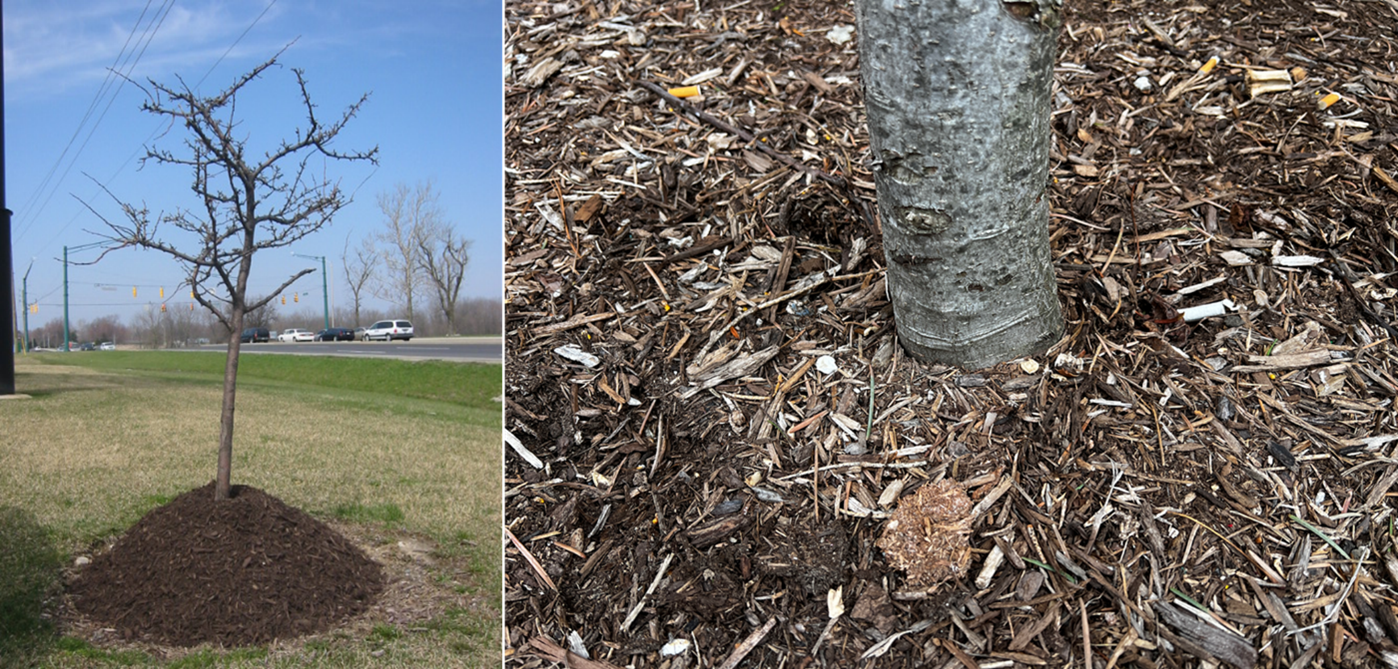
Figure 1: Examples of volcano mulching (PLR)
Purdue Landscape Report: Tree care, in many cases, can be expensive if you require the assistance of an arborist for pruning or removals. Extreme weather events, characterized by extensive rain and wind, can cause damage to the canopy or, in worst-case scenarios, lead to tree failure. In cases of failures, weather is often the final push to already existing issues. One cause that can lead to decay, decline, and failure if applied incorrectly can also extend the life of your tree with proper application.
Mulch is the double-edged sword that can promote healthy growth by maintaining soil moisture and temperature through extreme heat, cold, and drought, enrich the soil in the critical root zone, maintain a safety area from mechanical damage from lawn care tools, and add a nice aesthetic.
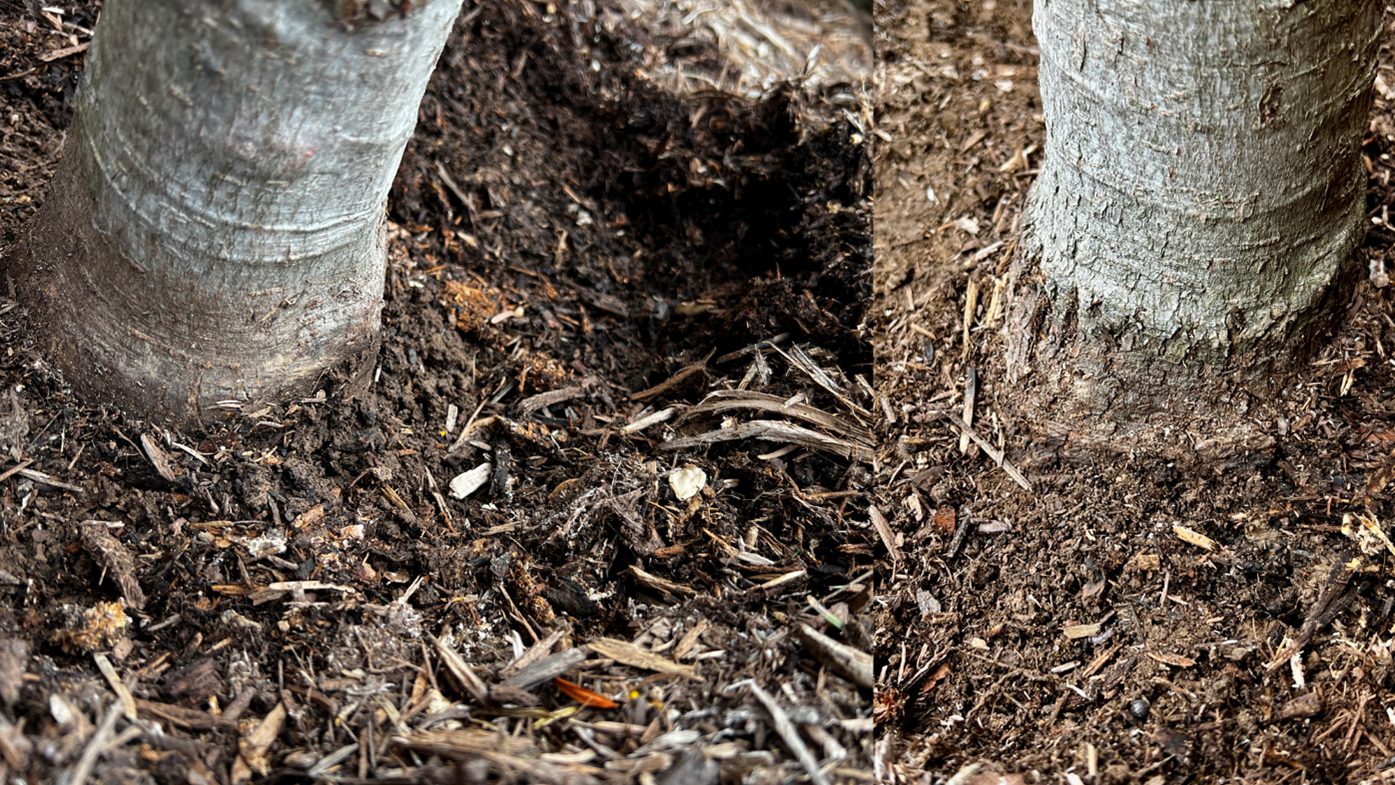
Figure 2: Digging out and exposing the root flare (PLR)
But it can also cause decay through excess moisture to the root flare, damage from pests like mice and insects that can live in mulch, expose the tree to pathogens, and promote unnecessary root growth and/or stem girdling roots that cut off nutrient supply between the root system and the rest of the tree.
The application is the same if it’s the first time mulching a tree or a re-application. Add enough mulch so there is a 2–3-inch layer sloping away from the tree with at least a 3–5-foot radius around the stem (older, larger trees can benefit from larger mulch rings). No volcano mulching, make sure you also have around a 1-2-inch gap between the stem and the start of the mulch ring.
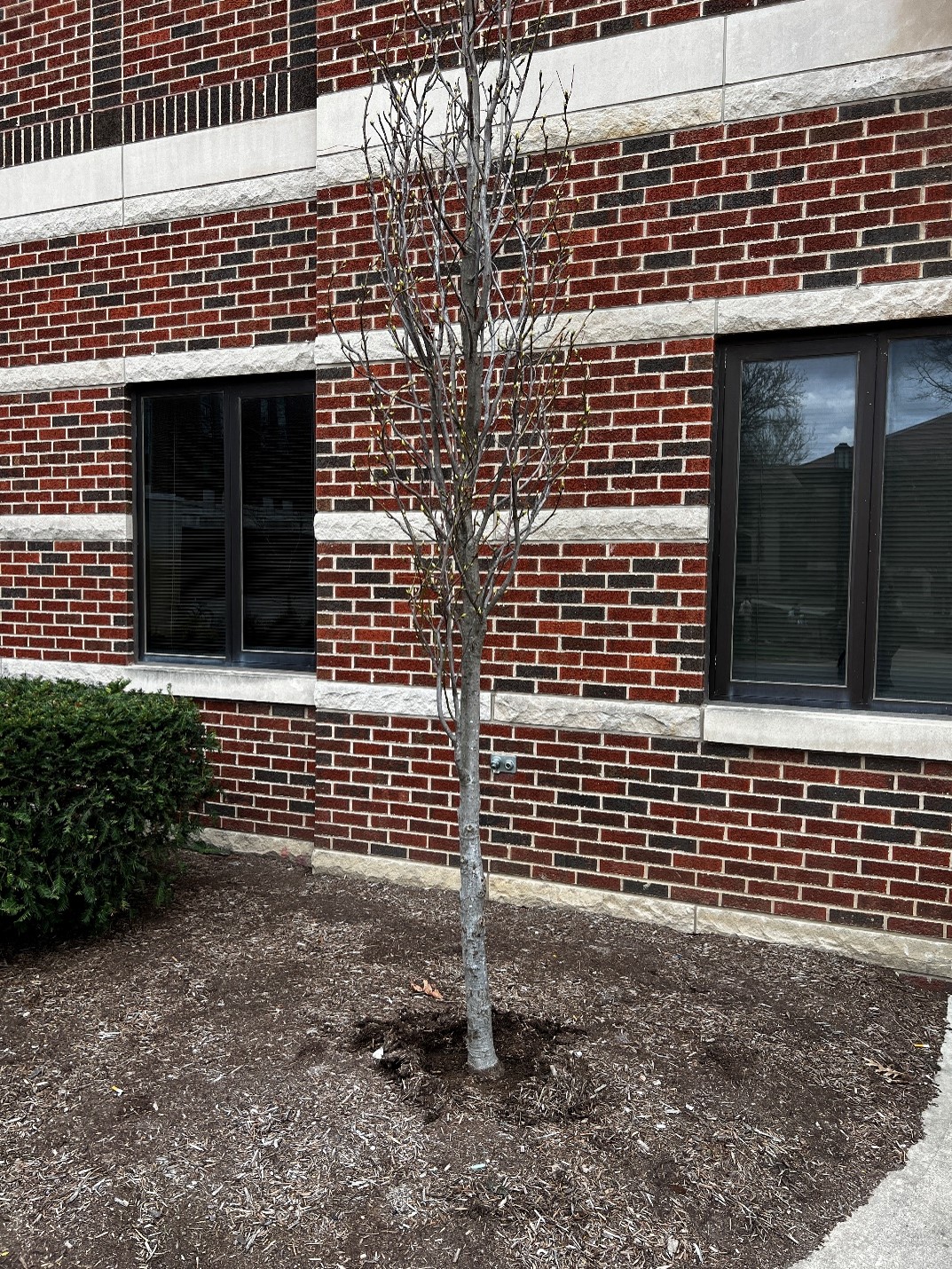
Figure 3: Creating a 1–2-inch space between the root flare and the mulch.
If you are reapplying mulch, first rake the old mulch to even the layer and mix some into the soil if possible. If your tree has already been mulched and has been volcano mulched, simply dig out the excess, exposing the root flare and creating that 1-2-inch gap between the stem and the mulch.
This simple act is relatively inexpensive, does not require a lot of time, and will help keep your tree healthy, extending its life. If you notice any other issues with your trees, hiring an ISA Certified arborist is the next step in managing your trees’ health. To find an arborist near you and verify credentials, use the link at Find an Arborist, Trees are Good, International Society of Arboriculture (ISA).
View the original article on the Purdue Landscape Report website: Simple Steps to Care for Your Tree: Mulching.
Subscribe and receive the newsletter: Purdue Landscape Report Newsletter.
Resources:
Re-mulch Your Trees, Purdue Landscape Report
Find an Arborist video, Trees are Good-International Society of Arboriculture (ISA)
Trees and Storms – The Education Store, Purdue Education’s resource center
Moist soil and rotten roots makes it easy for trees to come crashing down – Fox 59 News
Expert: Some storm damage can be easily prevented – Fox 59
Why Is My Tree Dying? – The Education Store
Tree Risk Management – The Education Store
Tree Pruning Essentials, Publication & Video, The Education Store
Mechanical Damage to Trees: Mowing and Maintenance Equipment – The Education Store
Trees and Electric Lines – The Education Store
Tree Defect Identification, The Education Store
Planting Your Tree, video, Purdue Extension
Tree Installation, The Education Store
Tree Wound and Healing, Got Nature? Blog, Purdue Extension – Forestry and Natural Resources
Subscribe – Purdue Extension-FNR YouTube Channel
Ben McCallister, Urban Forestry Specialist
Purdue Forestry & Natural Resources
Purdue Landscape Report: Recently, there has been an uptick in questions related to one of Indiana’s most notorious invasive pests: the emerald ash borer. Homeowners, businesses, even professionals have asked if ash trees are still present in Indiana, and if the insect is still a threat to our ecosystem. Emerald ash borer wreaked significant havoc among Indiana’s hardwoods, and a person could be forgiven for believing that there are no ash trees at all in our state, but this is simply not true. Ash still survives in Indiana and can be found both as ornamental plantings and in untended woodlots; unfortunately, emerald ash borer is also still present and just as deadly to them as ever. The question of protecting ash versus removal them is complex, but entomologists and tree specialists have learned from this insect’s invasion.
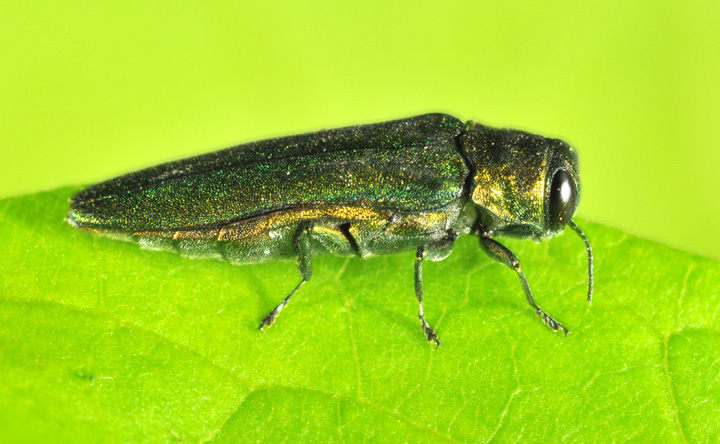
Figure 1. Side view of EAB, John Obermeyer
The emerald ash borer (Agrilus planipennis), a wood-boring insect native to Asia, is responsible for decimating ash (Fraxinus spp.) throughout the United States and elsewhere. In Indiana, this insect’s presence was confirmed in 2004, though it had probably been in the state for some time before then. Since its arrival, Hoosiers have been forced to watch as ash trees have rapidly declined and died due to the insect’s feeding and life cycle. The insect lays its eggs in crevices in the bark of an ash that is 8 to 10 years old, and after hatching, the new larvae begin to bore through the tree’s cambium tissue. The tree relies on its cambium tissue to transport water and nutrients and supply cells for new growth. Often, the only signs of the insect’s presence are a reduction in canopy coverage and D-shaped exit holes in the bark, indicating adult emergence. As time goes on, however, the tree will continue to lose canopy, experience limb death, and often have large chunks of bark detach. Unprotected trees will typically die within 2 to 5 years of infestation. Dead and dying ash trees represent a serious hazard to health and property as infestation will leave them extremely brittle. Brittle ash will often fall during weather events or even collapse over time as limbs fall off.
While emerald ash borer did significant damage to ash tree populations in Indiana, they did not destroy the population entirely. While virtually all untreated trees will eventually become infested, saplings with a trunk diameter of ½ to 1 inch will remain untouched, allowing annual replacement of trees to continue. Since the initial invasion killed so many trees, the borer’s populations have been proportionally reduced as well due to a lack of a food source. This combination of factors has created a cycle of growth and infestation that allows both populations to survive, but at significantly lower levels as compared to the period of the initial infestation. Unfortunately, this also means that emerald ash borer is now a permanent fixture in the hardwood ecosystem in Indiana.

Figure 2. This photo illustration shows three ash trees in Bloomington, Indiana, with different levels of canopy lost to the emerald ash borer. (Purdue Tree Doctor app illustration/Cliff Sadof)
While many may believe ash trees are a total loss, there are still options to protect ash tree and even rescue ash that have already been infested. The first step in this process is to determine the extent of damage in a given tree. As the cambium tissue is consume by ash borer larvae, the tree will experience a steady loss of canopy and limb death. The proportion of lost canopy makes a great indicator for treatment viability. For example, a tree that has only lost 10% of its canopy will normally respond well to treatment. As more canopy is lost, recovery is more challenging, until the tree has lost %30 of canopy coverage. After that point, there is very little chance that a rescue treatment will be successful, and removal will most likely be necessary. It is also important to remember that limb death may occur; these limbs will not recover and will need to be removed to avoid any potential hazards.
There are several insecticides with varying ranges of efficacy that can be used to manage emerald ash borer. These include imidacloprid, dinotefuran, azadirachtin, and emamectin benzoate. Several studies have been conducted to find the best combination of chemical and application type, such as the difference between using a soil drench compared to a trunk injection. While all of the above chemicals can be effective against the insect, the combination of emamectin benzoate applied through a trunk injection offers the best, longest lasting protection from infestation. This combination has a durable effect lasting for two years under dense infestations. However, the reduction in emerald ash borer populations have spread the distribution of the insect thinner, and longer intervals between treatments are possible. A ten-year study conducted by Purdue University demonstrated that treating trees once every three years provided sufficient protection from the beetles, while also showing that 4 to 5 years after last treatment coincided with an increase in damage to the trees. This same study also found that by six years post-treatment, the trees would decline to the point of making removal a necessity. This research concluded that increasing time between intervals after three years increased the risk of catastrophic damage due to emerald ash borer activity, thus the recommendation for three-year intervals.
Ultimately, many will see this as a financial issue: the cost of treatment over time against the cost of removal to avoid potential damages. The above study estimated the cost of treating a single tree with an emamectin benzoate injection at $300 per treatment. Since treatment only needs to happen once every three years, the cost per year per tree would be $100, approximately. Tree removal was estimated between $1800 and $3600, depending on tree location and other factors. Also consider replacement costs if you wanted to continue to grow ash in that area, and how long the tree would need to grow to match the size of the tree you just replaced. Additionally, add in any treatment costs to make sure it survives infestation. When looked at from this angle, maintaining regular treatment on rescuable trees would appear to be the most cost-effective route for managing ash. Any treatment plan should be discussed with a professional, such as a certified arborist.
Read the original article posted in the Purdue Landscape Report April 2025 Newsletter: Revisiting Ash Tree Protection.
Subscribe and receive the newsletter: Purdue Landscape Report Newsletter.
Resources:
New Hope for Fighting Ash Borer, Got Nature? Purdue Extension-FNR
Invasive Pest Species: Tools for Staging and Managing EAB in the Urban Forest, Got Nature?
Emerald Ash Borer, Purdue Extension-Entomology
Emerald Ash Borer Tools & Resources – Purdue Extension Entomology
Planting Your Tree Part 1: Choosing Your Tree, Purdue Extension YouTube Channel
Tree Planting Part 2: Planting a Tree, Purdue Extension – Forestry and Natural Resources YouTube Channel
Indiana Invasive Plant List, Indiana Invasive Species Council, Purdue Entomology
Landscape Report Shares Importance of Soil Testing, Purdue FNR Extension
Find an Arborist website, Trees are Good, International Society of Arboriculture (ISA)
Tree Risk Management – The Education Store, Purdue Extension’s resource center
ID That Tree – Video Playlist, Purdue Extension – Forestry and Natural Resources (FNR) YouTube Channel
Purdue Arboretum Explorer
Conservation Tree Planting: Steps to Success, Purdue Extension – FNR YouTube Channel
A Woodland Management Moment, Playlist, Purdue Extension – FNR YouTube Channel
Woodland Stewardship for Landowners, Playlist, Purdue Extension – FNR YouTube Channel
Indiana Department of Natural Resources: Invasive Species
Indiana Invasive Species Council
Cooperative Invasive Species Management Area (CISMA)
Report Invasive, Purdue Extension
Native Trees of the Midwest, Purdue University Press
Professional Forester, Indiana Forestry Woodland Owners Association
Forest Improvement Handbook, The Education Store
Bob Bruner, Exotic Forest Pest Educator
Purdue Entomology
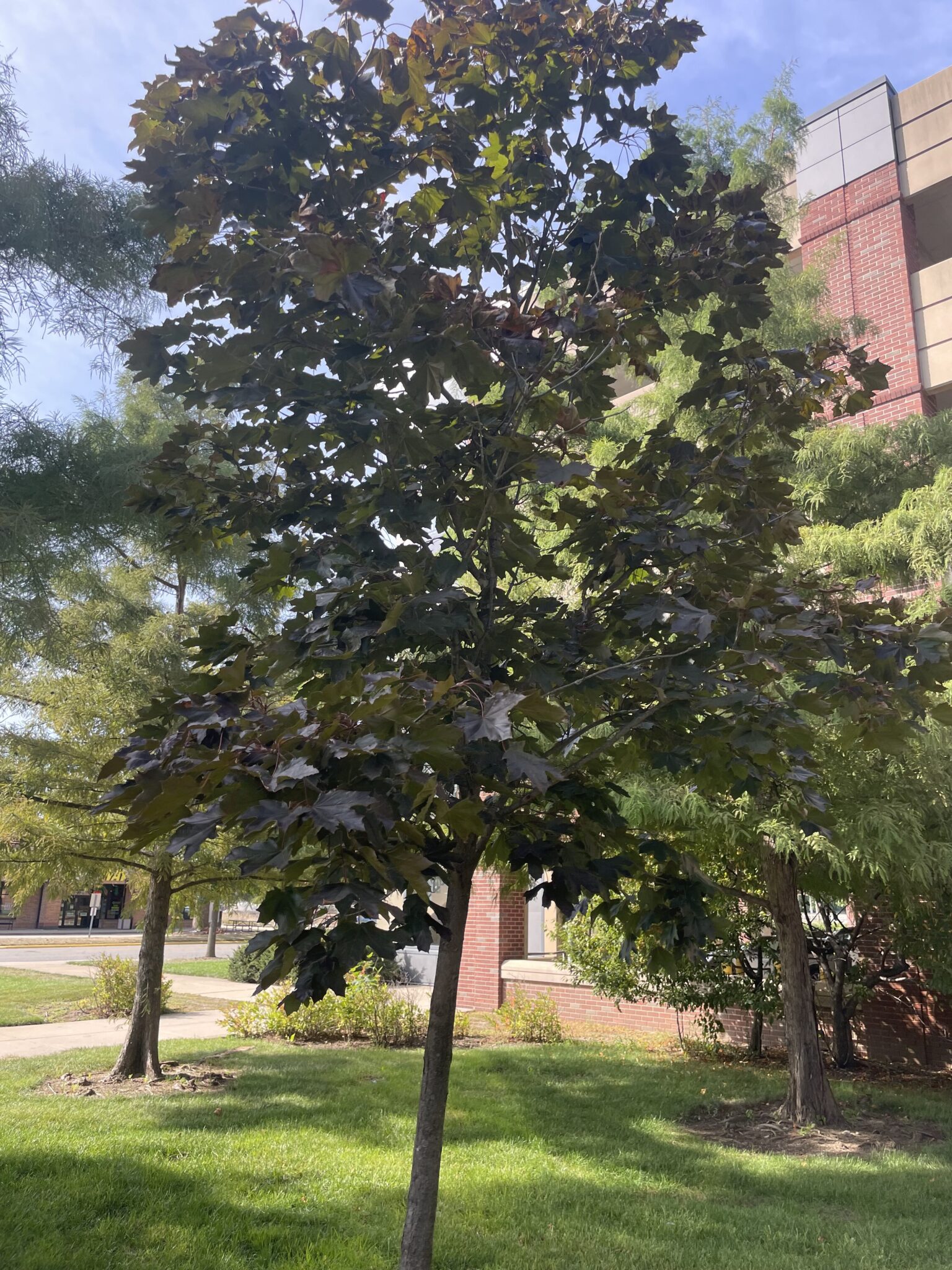
Figure 1. Norway maple is an invasive species that can resemble black and sugar maple. Photo by Purdue Arboretum.
Purdue Landscape Report: These three maples have somewhat similar-looking leaves. On the surface, you may think this is simply an academic exercise. But if you care about invasive plants and local ecology, this distinction is an important one.
Norway maple is an invasive tree species, while sugar and black maples are native tree species (sometimes called hard maples). Sugar and black maples are even more beloved for their gift of delicious sugary sap that can be made into maple syrup and similar products. They also make great shade trees. Note that there are other native and non-native maple species.
One way to distinguish between Norway (Acer platanoides), sugar (Acer saccharum), and black (Acer nigrum) maples is to count the number of lobes on the leaves. Lobes are large areas of the leaf that stick out, like an ear lobe, although that is not the clearest analogy. Norway maples typically have 5-7 lobes (commonly 7), sugar maples typically have 5, and black maples typically have 3-5. Black maple’s bottom two lobes are so much less prominent than sugar maple that it often looks like 3 main lobes. Additionally, black maple leaves droop on the sides, almost like they are starting to wilt from lack of water.
Another way to distinguish Norway maples from native maples (sugar and black) is to look at the winged seeds, called samaras. Children may call these “helicopters,” as they twirl on their way to the ground. The Norway maple has paired samaras arranged like a handlebar mustache. Sugar and black maple samara pairs look more like a Fu Manchu mustache, pointing downward rather than the near horizontal arrangement of Norway maple samaras.

Figure 2c. Black maple leaf. Photo by Purdue Arboretum.
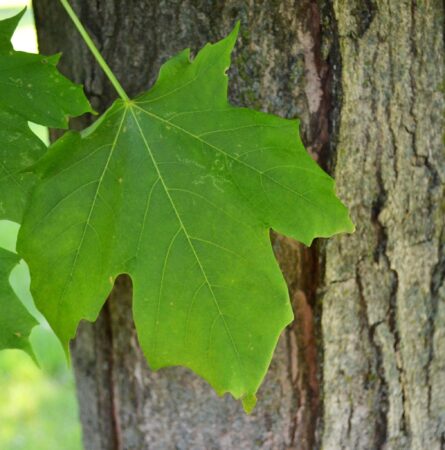
Figure 2b. Sugar maple leaf. Photo by Purdue Arboretum.

Figure 2a. Norway maple leaf. Photo by Purdue Arboretum.
A third way to distinguish Norway maples from native maples is to snap off the long leaf stem (petiole). Norway maples have a milky latex sap that exudes if you squeeze or pinch a petiole, while native maples have clear sap.
There are a few other identification nuances between these species. For example, black maples have stipules (leaf-like growths) at the base of their petioles (absent on sugar maple). They also have pubescence or hairiness on the underside of the leaves. Norway maple has hairs in the axils of leaf veins. Norway maple’s leaves are generally broader than long. Other differences may be seen in the bark, twigs, buds, and fall coloring.
Although Norway maple is an invasive species, it has been a long-time landscaping favorite of homeowners, especially cultivars like ‘Crimson King’ that retain their deep red color all year. This attribute has made Norway maple a popular choice because few other options exist to offer that color feature for the landscape. Other varieties or cultivars exhibit the normal green leaf color. Native to northern Europe, the tree was introduced in America in the late 1700s. George Washington reportedly purchased two trees in 1792 to plant at Mount Vernon.
For full article: Distinguishing Between Norway, Sugar, and Black Maples, Purdue Landscape Report.
Resources:
ReportINvasive, Purdue College of Agriculture
What are Invasive Species and Why Should I Care?, Got Nature? Blog, Purdue Extension – Forestry and Natural Resources
Large Spots on Maple Leaves that Look Like Tar, Purdue Extension News
Find an Arborist, International Society of Arboriculture
Fifty Common Trees of Indiana
An Introduction to Trees of Indiana
Native Trees of the Midwest, The Education Store
Shrubs and Woody Vines of Indiana and the Midwest, The Education Store
Tree Installation: Process and Practices, The Education Store
Planting Your Tree Part 1: Choosing Your Tree, Video, Purdue Extension – Forestry & Natural Resource (FNR) YouTube Channel
Investing in Indiana Woodlands, The Education Store
Forest Improvement Handbook, The Education Store
ID That Tree, Purdue Extension-FNR YouTube playlist
Purdue Plant and Pest Diagnostic Laboratory
John E. Woodmansee, Extension Educator – Agriculture and Natural Resources (ANR)
Purdue Extension – Whitely County
Purdue Landscape Report: April showers bring May Flowers. Many of us were taught this little rhyme to describe the weather of Spring. April has arrived along with the beginning of the Spring storm season and damage to and from trees is a topic of concern on many minds. Depending on the intensity of the storms and the condition of the trees, damage from high winds, heavy rainfall, and lightning can be quite severe. Cracked or broken branches, stem failure, and root failure are some of the main concerns, but also the risk and liability of damage to people and property.

Storm season is upon us. There are a number of resources from Purdue to help dealing with storm-damaged trees.
If your tree is damaged, there are some steps to deal with the situation. First and foremost, consider the safety of yourself and others around you. Inspect the tree from a distance first, looking for the following:
- Heaving of the ground, indicating potential root failure
- Damage to limbs and/or the trunk of the tree
- Hanging branches can fall to the ground, resulting in injury or death
- Be aware of utility and power lines. Trees can become charged by coming in contact with live wires. All utility lines should be considered energized and dangerous.
If you find your trees damaged from a storm hiring an International Society of Arboriculture (ISA) Certified Arborist to perform a risk assessment will help guide your decision of how to manage your tree. To find an arborist near you and verify credentials, use the link at Find an Arborist, Trees are Good, International Society of Arboriculture (ISA). For more information, you can also view the publication Trees and Storms, located in The Education Store, Purdue Extension’s resource center.
Subscribe and receive the newsletter: Purdue Landscape Report Newsletter.
Resources:
Find an Arborist video, Trees are Good-International Society of Arboriculture (ISA)
Trees and Storms – The Education Store, Purdue Education’s resource center
Caring for storm-damaged trees/How to Acidify Soil in the Yard – In the Grow, Purdue Extension
Why Is My Tree Dying? – The Education Store
Tree Risk Management – The Education Store
Mechanical Damage to Trees: Mowing and Maintenance Equipment – The Education Store
Trees and Electric Lines – The Education Store
Tree Defect Identification, The Education Store
Planting Your Tree, video, The Education Store
Tree Installation, The Education Store
Tree Wound and Healing, Got Nature? Blog, Purdue Extension – Forestry and Natural Resources
Ask an Expert: Tree Selection and Planting, Purdue Extension – Forestry and Natural Resources (FNR) YouTube Channel
Tree Pruning Essentials, Purdue Extension – FNR YouTube Channel
Subscribe – Purdue Extension-FNR YouTube Channel
Ben McCallister, Urban Forestry Specialist
Purdue Forestry & Natural Resources
Join Purdue Extension forester Lenny Farlee in this episode of “A Woodland Management Moment” as he explores the unique ecosystem of bottomlands. These flat, moisture-rich environments are home to a diverse array of species, shrubs, and trees. Watch the video to discover the key features and characteristics of these fascinating sites.
If you have any questions regarding trees, forests, wildlife, wood products, or other natural resource topics, feel free to contact us by using our Ask an Expert web page.
Resources:
A Woodland Management Moment, Playlist, Purdue Extension – Forestry and Natural Resources (FNR) YouTube Channel
The Nature of Oaks Webinar, Purdue Extension-FNR YouTube Channel, Shared from Indiana Forestry & Woodland Owners Association
Conservation Tree Planting: Steps to Success, Purdue Extension – FNR YouTube Channel
Shrubs and Woody Vines of Indiana and the Midwest, Purdue University Press
Native Trees of the Midwest, Purdue University Press
ID That Tree, Playlist, Purdue Extension – FNR YouTube Channel
Investing in Indiana Woodlands, The Education Store
Woodland Stewardship for Landowners Video Series, Playlist, Indiana Department of Natural Resources YouTube Channel
Ask an Expert: Tree Selection and Planting, Purdue Extension – FNR YouTube Channel
Forest Improvement Handbook, The Education Store
Find an Indiana Professional Forester, Indiana Forestry & Woodland Owners Association (IFWOA)
Purdue Arboretum Explorer
Lenny Farlee, Extension Forester
Hardwood Tree Improvement and Regeneration Center
Purdue Department of Forestry & Natural Resources
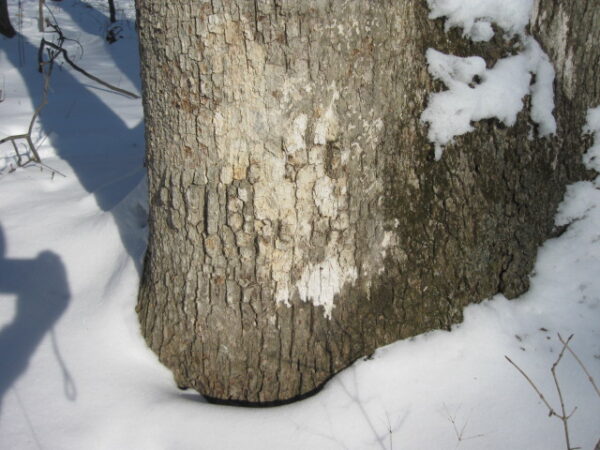
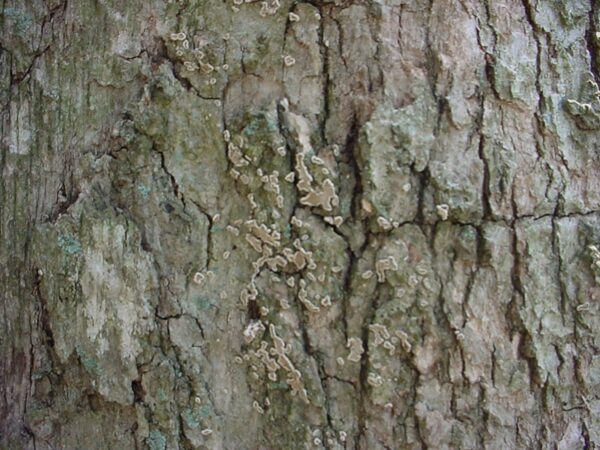
Purdue Landscape Report: These oak trees are showing the symptoms of smooth patch ( see below Figures 1, 2, 3). This condition is the result of a fungal infection that is restricted to the outer bark, causing it to slough off. The bark layer remaining is smoother and lighter in color than uninfected, normal bark.
Patches can vary from a few inches to a foot or more in diameter and may occur on branches as well as the trunk. Several fungi can cause this condition. A common species, Aleurodiscus oakesii, produces clusters of flat, disc-like spore-bearing structures on the surface of the smooth bark. These structures are gray or beige in color and are usually less than 1⁄2 inch in diameter (Figure 4).
The best time to see this interesting phenomenon in the forest is during wet periods in late winter before new spring growth begins, when the light gray bark stands out in the light penetrating the canopy. The fungal structures shrink when dry so will be more apparent following rainy weather.
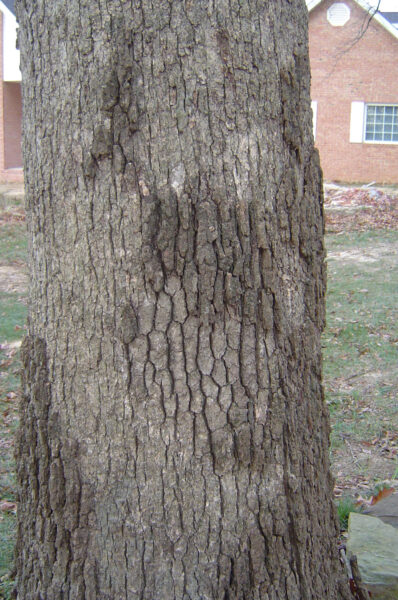

The fungal structures may be mistaken for wood decay fungi, but because smooth patch fungi invade only the nonliving, outer bark tissues, they do not affect the health of the tree. No control measures are needed.
The fungal structures may be mistaken for wood decay fungi, but because smooth patch fungi invade only the nonliving, outer bark tissues, they do not affect the health of the tree. No control measures are needed.
Resources:
Indiana Forestry & Woodland Owners Association (IFWOA) YouTube Channel
District Forester, Indiana DNR Division of Forestry, for over 10 acres of woodlands
Directory of Professional Foresters, Indiana Forestry & Woodland Owners Association (IFWOA)
Indiana Woodland Steward E-newsletters, Eleven Member Organization
The Nature of Oaks Webinar, Purdue Extension-FNR YouTube Channel, Shared from Indiana Forestry & Woodland Owners Association
Purdue Arboretum Explorer
Native Trees of the Midwest, Purdue University Press
A Woodland Management Moment, Playlist, Purdue Extension – Forestry and Natural Resources (FNR) YouTube Channel
Conservation Tree Planting: Steps to Success, Purdue Extension – FNR YouTube Channel
Forest Improvement Handbook, The Education Store
Woodland Stewardship for Landowners, Playlist, Purdue Extension – FNR YouTube Channel
ID That Tree – Video Playlist, Purdue Extension – Forestry and Natural Resources (FNR) YouTube Channel
Invasive Species, Playlist, Purdue Extension – FNR YouTube Channel
Invasive Plant Species Identification, Video, Purdue Extension – FNR YouTube Channel
Report Invasive Species, Purdue Invasive Species
Subscribe – Purdue Extension-FNR YouTube Channel
Tom Creswell, Plant & Pest Diagnostic Laboratory Director
Purdue Botany and Plant Pathology
Welcome to ID That Tree! In this video, Purdue forester Lenny Farlee examines one of Indiana’s most troublesome invasive shrubs: Amur honeysuckle. This aggressive species, along with other Asian honeysuckle varieties, is widespread across the state. It’s easily identified by its long, pointed leaves, smooth edges, and fine fuzz. Watch the video to learn more about its distinguishing features and the impact on Indiana’s ecosystems!
If you have any questions regarding wildlife, trees, forest management, wood products, natural resource planning or other natural resource topics, feel free to contact us by using our Ask an Expert web page.
Resources:
ID That Tree – Video Playlist, Purdue Extension – Forestry and Natural Resources (FNR) YouTube Channel
Purdue Arboretum Explorer
Conservation Tree Planting: Steps to Success, Purdue Extension – FNR YouTube Channel
A Woodland Management Moment, Playlist, Purdue Extension – FNR YouTube Channel
Woodland Stewardship for Landowners, Playlist, Purdue Extension – FNR YouTube Channel
Indiana Department of Natural Resources: Invasive Species
Indiana Invasive Species Council
Cooperative Invasive Species Management Area (CISMA)
Report Invasive, Purdue Extension
Fifty Common Trees of Indiana, Purdue Extension – FNR
Episode 11 – Exploring the challenges of Invasive Species, Habitat University-Natural Resource University
Shrubs and Woody Vines of Indiana and the Midwest, The Education Store
Native Trees of the Midwest, The Education Store
Professional Forester, Indiana Forestry Woodland Owners Association
Forest Improvement Handbook, The Education Store
Find an Arborist, International Society of Arboriculture
Lenny Farlee, Extension Forester
Hardwood Tree Improvement and Regeneration Center
Purdue Department of Forestry & Natural Resources
In this episode of A Woodland Management Moment, Purdue Extension forester Lenny Farlee shares expert tips for regenerating heavy-seeded hardwoods like oak, hickory, and walnut after a timber harvest. Using a real-world example, we walk through the entire process of seeding into slash piles to maximize growth and create the ideal woodland habitat. Tune in to learn how to ensure successful regeneration and a thriving forest for years to come!
If you have any questions regarding trees, forests, wildlife, wood products or other natural resource topics, feel free to contact us by using our Ask an Expert web page.
Resources:
A Woodland Management Moment, Playlist, Purdue Extension – Forestry and Natural Resources (FNR) YouTube Channel
The Nature of Oaks Webinar, Purdue Extension-FNR YouTube Channel, Shared from Indiana Forestry & Woodland Owners Association
Conservation Tree Planting: Steps to Success, Purdue Extension – FNR YouTube Channel
Shrubs and Woody Vines of Indiana and the Midwest, Purdue University Press
Native Trees of the Midwest, Purdue University Press
ID That Tree, Playlist, Purdue Extension – FNR YouTube Channel
Investing in Indiana Woodlands, The Education Store
Woodland Stewardship for Landowners Video Series, Playlist, Indiana Department of Natural Resources YouTube Channel
Ask an Expert: Tree Selection and Planting, Purdue Extension – FNR YouTube Channel
Forest Improvement Handbook, The Education Store
Find an Indiana Professional Forester, Indiana Forestry & Woodland Owners Association (IFWOA)
Purdue Arboretum Explorer
Lenny Farlee, Extension Forester
Hardwood Tree Improvement and Regeneration Center
Purdue Department of Forestry & Natural Resources

Recent Posts
- Tree Silvics and Succession Webinar: A Biological Basis for Management
Posted: January 30, 2026 in Forests and Street Trees, Urban Forestry, Woodlands - Woodsy Owl Edition for Educational Learning, USDA – U.S. Forest Service
Posted: January 21, 2026 in Forestry, Forests and Street Trees, Got Nature for Kids, Urban Forestry, Wildlife - ID That Tree: Trumpet Creeper
Posted: January 20, 2026 in Forests and Street Trees, Urban Forestry, Woodlands - A Woodland Management Moment: Black Walnut in Pine Plantation
Posted: December 19, 2025 in Forestry, Forests and Street Trees, Urban Forestry, Woodlands - A Woodland Management Moment: Butternut Disease and Breeding
Posted: December 1, 2025 in Forestry, Forests and Street Trees, Woodland Management Moment, Woodlands - Why Do Our Trees Go From Green Leaves to Different Colors?
Posted: November 4, 2025 in Forestry, Forests and Street Trees, Urban Forestry, Woodlands - October Is Firewood Month: Protect Indiana’s Forests by Making Smart Choices
Posted: October 13, 2025 in Forestry, Forests and Street Trees, How To, Invasive Insects, Urban Forestry - Help Your Trees Transition Into Autumn, Purdue Landscape Report
Posted: October 7, 2025 in Forests and Street Trees, Urban Forestry, Woodlands - Marssonina Leaf Spot and Blotch of Poplar, Purdue Landscape Report
Posted: October 1, 2025 in Disease, Forests and Street Trees, Urban Forestry, Woodlands - Discover the Rich World of Oaks with Purdue Extension – FNR
Posted: September 26, 2025 in Ask the Expert, Forests and Street Trees, Wildlife, Woodlands
Archives
Categories
- Alert
- Aquaculture/Fish
- Aquatic/Aquaculture Resources
- Ask the Expert
- Christmas Trees
- Community Development
- Disease
- Drought
- Forestry
- Forests and Street Trees
- Gardening
- Got Nature for Kids
- Great Lakes
- How To
- Invasive Animal Species
- Invasive Insects
- Invasive Plant Species
- Land Use
- Natural Resource Planning
- Nature of Teaching
- Plants
- Podcasts
- Ponds
- Publication
- Safety
- Spiders
- Timber Marketing
- Uncategorized
- Urban Forestry
- Webinar
- Wildlife
- Wood Products/Manufacturing
- Woodland Management Moment
- Woodlands