 Purdue University - Extension - Forestry and Natural Resources
Got Nature? Blog
The classic and trusted book “Fifty Common Trees of Indiana” by T.E. Shaw was published in 1956 as a user-friendly guide to local species. Nearly 70 years later, the publication has been updated through a joint effort by the Purdue Department of Forestry and Natural Resources, Indiana 4-H, and the Indiana Department of Natural Resources, and reintroduced as “An Introduction to Trees of Indiana.”
The full publication is available for download for $7 in the Purdue Extension Education Store. The field guide helps identify common Indiana woodlot trees.
Each week, the Intro to Trees of Indiana web series will offer a sneak peek at one species from the book, paired with an ID That Tree video from Purdue Extension forester Lenny Farlee to help visualize each species as it stands in the woods. Threats to species health as well as also insight into the wood provided by the species, will be provided through additional resources as well as the Hardwoods of the Central Midwest exhibit of the Purdue Arboretum, if available.
This week, we meet Sycamore or Platanus occidentalis
The large leaves of this species have three to five lobes and loosely resemble that of maples, but are significantly larger and are alternately held, versus the opposite leaf arrangement of maples. The bright green, broadly toothed leaves and stems are slightly fuzzy to the touch.
The bark on the lower part of the tree is scaly and brown, while the upper trunk and limbs are smooth, shiny and white. The bark peels revealing patches of white, gray and green.
The fruit of the Sycamore is a soft, one-inch brown ball-like seed head, which hangs on a long stem. The seeds shatter during winter months.
Sycamore trees, which grow 75 to 100 feet tall, are among Indiana’s largest deciduous trees. They are often found on stream or creek bottoms and other moist soil areas. This species is tolerant of clay soil, occasional flooding and road salt.
The natural range of the sycamore is the central and eastern United States. It extends from eastern Texas and Oklahoma and Kansas west across Iowa Illinois, Indiana, Ohio and up into southern Michigan and parts of New York and Massachusetts. It extends down the Atlantic coast to southern Georgia and across Alabama, Mississippi and Louisiana, but do not reach the Gulf coast.
The Morton Arboretum warns that sycamores are best planted in full sun as it does not tolerate shady sites and should not be grown near septic fields. This species can be affected by anthracnose, leaf spots, aphids, plant bugs, scale insects, bagworms and borers and is also susceptible to frost cracks.
For full article with additional photos view: Intro to Trees of Indiana: Sycamore, Forestry and Natural Resources’ News.
If you have any questions regarding wildlife, trees, forest management, wood products, natural resource planning or other natural resource topics, feel free to contact us by using our Ask an Expert web page.
Other Resources:
ID That Tree: Sycamore
Morton Arboretum: Sassafras
Hardwood Lumber and Veneer Series: Sycamore, The Education Store
Purdue Arboretum Explorer
Sycamore-Native Trees of Indiana Riverwalk, Purdue Fort Wayne
The Woody Plant Seed Manual, U.S. Forest Service
Fifty Common Trees of Indiana
An Introduction to Trees of Indiana
Native Trees of the Midwest, The Education Store
Shrubs and Woody Vines of Indiana and the Midwest, The Education Store
Investing in Indiana Woodlands, The Education Store
Forest Improvement Handbook, The Education Store
ID That Tree, Purdue Extension-Forestry & Natural Resources (FNR) YouTube playlist
Woodland Management Moment , Purdue Extension-FNR YouTube playlist
Wendy Mayer, FNR Communications Coordinator
Purdue University Department of Forestry and Natural Resources
Lenny Farlee, Sustaining Hardwood Extension Specialist
Purdue University Department of Forestry and Natural Resources
Among the steel and concrete that make up the urban environment, trees provide welcome relief from heat and potentially unfavorable sights and smells. Trees provide value from ecosystem services, which can refer to any of the benefits humans obtain from nature. Trees in the built environment provide many benefits, such as storing carbon, reducing air temperature and air conditioning costs, filtering air and water pollutants, intercepting rainwater to reduce flooding, and increasing aesthetic value.
The Preparing Indiana’s Urban Forest for Climate Change is an overview of choosing species of trees that will thrive in urban settings has always required careful consideration, but climate change is making that task even more important. In this paper, Purdue and other researchers provide tools to help urban foresters, arborists and planners adapt so that the ecosystem services that trees provide can be maintained.
To receive the free download for the Preparing Indiana’s Urban Forest for Climate Change please visit The Education Store.
Resources:
Urban Forestry, Playlist, Purdue Extension – Forestry and Natural Resources (FNR) YouTube Channel
Community Development, Purdue Extension
How to Find an Arborist Near You!, Purdue Extension – FNR Got Nature? Blog
Storms Can Cause Damage and Tree Cleanup, What You Need to Know, Purdue Extension – FNR Got Nature? Blog
Purdue Landscape Report, Purdue Science-Based Midwest Landscaping
Forest Improvement Handbook, The Education Store, Purdue Extension’s resource center
Investing in Indiana Woodlands, The Education Store
Woodland Wildlife Management, The Education Store
ID That Tree, Playlist, Purdue Extension – Forestry & Natural Resources (FNR) YouTube Channel
Julie McAulay, Undergraduate Research Assistant in Environmental and Ecological Engineering
Purdue Department of Forestry and Natural Resources
Lenny Farlee, Sustaining Hardwood Extension Specialist
Purdue University Department of Forestry and Natural Resources
Brady Hardiman, Associate Professor for Environmental and Ecological Engineering
Purdue University Department of Forestry and Natural Resources
The classic and trusted book “Fifty Common Trees of Indiana” by T.E. Shaw was published in 1956 as a user-friendly guide to local species. Nearly 70 years later, the publication has been updated through a joint effort by the Purdue Department of Forestry and Natural Resources, Indiana 4-H, and the Indiana Department of Natural Resources, and reintroduced as “An Introduction to Trees of Indiana.”
The full publication is available for download for $7 in the Purdue Extension Education Store. The field guide helps identify common Indiana woodlot trees.
Each week, the Intro to Trees of Indiana web series will offer a sneak peek at one species from the book, paired with an ID That Tree video from Purdue Extension forester Lenny Farlee to help visualize each species as it stands in the woods. Threats to species health as well as also insight into the wood provided by the species, will be provided through additional resources as well as the Hardwoods of the Central Midwest exhibit of the Purdue Arboretum, if available. 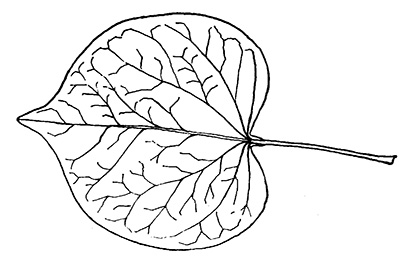
This week, we meet the Redbud or Cercis canadensis.
The alternately held leaves of this small tree are heart-shaped with smooth edges and that measure three to five inches long. Leaves changes from a dark green to a yellow or yellow green in the fall. The leaves are held on twigs that grow in a zig-zag pattern. The bark on redbud is reddish brown and flaky with the older, darker bark shedding to reveal the red inner bark.
The clusters of pink, lavender and even magenta flowers of this species appear in the early spring before the leaves open. The redbud is in the broad legume family and, as such, its fruit is a small pea-pod, approximately three inches long, which is flat with a very thin skin.
Redbud trees, which grow 20 to 30 feet tall, are often found along the edge of woodlands and open fields and brushy areas, but are also planted ornamentally for their beauty. This species grows best in partial sun and in moist, well-drained soils, but is tolerant of alkaline soil and clay. The natural range of the redbud is the central and eastern United States, from southern Iowa across to Pennsylvania to the north and south into northern Florida. It also extends west to Kansas, Oklahoma and Texas and east to Florida and up the Atlantic coast.
The Morton Arboretum states that redbud is susceptible to borers, canker disease and verticillium wilt. It also suffers in full sun or extreme summer heat. It is noted that the trees have a shallow root system, which must be protected, and the tree is relatively short-lived, with only a 20 to 25 year life span.
For full article with additional photos view: Intro to Trees of Indiana: Redbud, Forestry and Natural Resources’ News.
If you have any questions regarding wildlife, trees, forest management, wood products, natural resource planning or other natural resource topics, feel free to contact us by using our Ask an Expert web page.
Other Resources:
ID That Tree: Redbud
ID That Tree: Redbud Spring Bloom Edition
Morton Arboretum: Redbud
Eastern Redbud, Purdue Fort Wayne Native Trees of Indiana River Walk
ID That Tree Spring Bloom Editions, Got Nature Blog
The Woody Plant Seed Manual, U.S. Forest Service
Fifty Common Trees of Indiana
An Introduction to Trees of Indiana
Native Trees of the Midwest, The Education Store
Shrubs and Woody Vines of Indiana and the Midwest, The Education Store
Investing in Indiana Woodlands, The Education Store
Forest Improvement Handbook, The Education Store
ID That Tree, Purdue Extension-Forestry & Natural Resources (FNR) YouTube playlist
Woodland Management Moment , Purdue Extension-FNR YouTube playlist
Wendy Mayer, FNR Communications Coordinator
Purdue University Department of Forestry and Natural Resources
Lenny Farlee, Sustaining Hardwood Extension Specialist
Purdue University Department of Forestry and Natural Resources
The classic and trusted book “Fifty Common Trees of Indiana” by T.E. Shaw was published in 1956 as a user-friendly guide to local species. Nearly 70 years later, the publication has been updated through a joint effort by the Purdue Department of Forestry and Natural Resources, Indiana 4-H, and the Indiana Department of Natural Resources, and reintroduced as “An Introduction to Trees of Indiana.”
The full publication is available for download for $7 in the Purdue Extension Education Store. The field guide helps identify common Indiana woodlot trees.
Each week, the Intro to Trees of Indiana web series will offer a sneak peek at one species from the book, paired with an ID That Tree video from Purdue Extension forester Lenny Farlee to help visualize each species as it stands in the woods. Threats to species health as well as also insight into the wood provided by the species, will be provided through additional resources as well as the Hardwoods of the Central Midwest exhibit of the Purdue Arboretum, if available.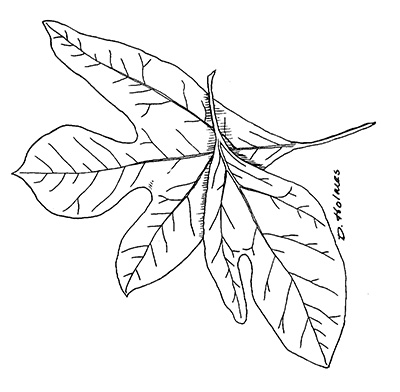
This week, we meet Sassafras or Sassafras albidum.
The alternately held leaves of this species can be tricky. While all have untoothed margins and smooth leaf surfaces, they may be variable in shape, ranging from no lobes or two or three lobes, and all three variations may even be found on the same branch. The leaves turn from a medium green in the spring to showy yellows, oranges and reds in the fall.
The bark is strongly ridged and brown or gray in color, but when sliced into, it has a brownish orange color underneath. When the leaves are crushed or the bright green twigs are scraped or the bark is sliced into, it produces a spicy aroma.
In the spring, the sassafras produces clusters of small yellow flowers. In the fall, the species produces a dark blue or purple berry-like fruit, which is held on bright red or orange stems.
Sassafras trees, which grow 30 to 60 feet tall, are often found along the edge of fields, waste areas and areas with a history of disturbance, but may often also be found as a larger tree in the rich woodland soils of forest interiors. This species prefers acidic and moist, well-drained soil, but can tolerate alkaline soil and dry sites.
The natural range of the sassafras is the central and eastern United States. It extends from eastern Texas and Oklahoma and Missouri west across Illinois, Indiana, Ohio and up into southern Michigan and parts of New York and Massachusetts. It extends down the Atlantic coast to northern Florida and across the Gulf coast to Louisiana.
The Morton Arboretum warns that sassafras is best planted in the spring and that the species is a thicket-forming plant that may require more maintenance due to suckering. Sassafras also is susceptible to Japanese beetles, powdery mildew, leaf spots and cankers.
Sassafras is known for the tea made from the bark on its roots, and also was a key ingredient in root beer historically.
The Morton Arboretum states that redbud is susceptible to borers, canker disease and verticillium wilt. It also suffers in full sun or extreme summer heat. It is noted that the trees have a shallow root system, which must be protected, and the tree is relatively short-lived, with only a 20 to 25 year life span.
For full article with additional photos view: Intro to Trees of Indiana: Sassafras, Forestry and Natural Resources’ News.
If you have any questions regarding wildlife, trees, forest management, wood products, natural resource planning or other natural resource topics, feel free to contact us by using our Ask an Expert web page.
Other Resources:
ID That Tree: Sassafras
ID That Tree: Sassafras Spring Bloom Edition
Morton Arboretum: Sassafras
Sassafras, Purdue Fort Wayne Native Trees of Indiana River Walk
ID That Tree Spring Bloom Editions, Got Nature Blog
Hardwood Lumber and Veneer Series: Sassafras, The Education Store
Purdue Arboretum Explorer
The Woody Plant Seed Manual, U.S. Forest Service
Fifty Common Trees of Indiana
An Introduction to Trees of Indiana
Native Trees of the Midwest, The Education Store
Shrubs and Woody Vines of Indiana and the Midwest, The Education Store
Investing in Indiana Woodlands, The Education Store
Forest Improvement Handbook, The Education Store
ID That Tree, Purdue Extension-Forestry & Natural Resources (FNR) YouTube playlist
Woodland Management Moment , Purdue Extension-FNR YouTube playlist
Wendy Mayer, FNR Communications Coordinator
Purdue University Department of Forestry and Natural Resources
Lenny Farlee, Sustaining Hardwood Extension Specialist
Purdue University Department of Forestry and Natural Resources
 Question: I’m interested in doing regeneration planting of oaks and hickories on my property, and have made attempts with both direct seeding, as well as starting in Rootmaker containers and then planting the seedlings after one year of growth. I have been having a major problem with voles, despite my best attempts at barriers, and am wondering if there is anyone who would be able to advise me?
As an example, I had a black oak seedling, one year old, with great growth, about 18″ tall and with a root ball of comparable size, which I planted this fall. After 2-3 months, in December, the entire root system was eaten and all that remained of the seedling was the stalk, with clear gnaw-marks where it had been chewed off at the base. It was protected by a wire mesh enclosure that covered all sides plus the top, and was set about four inches into the ground. The mesh was finer than the standard chicken wire; the openings were about dime-size.
I would appreciate any guidance your experts can share.
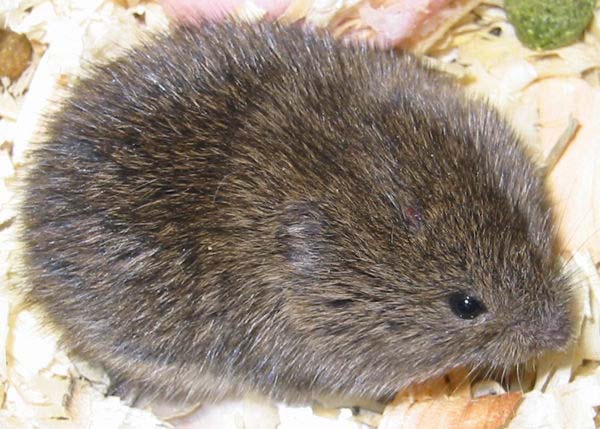
Answer: Based on your description, it certainly sounds like pine (=woodland) voles, Microtus pinetorum, although trapping would be needed to confirm. I am no longer doing work on voles, but earlier work, Selective Feeding of Pine Voles on Roots of Seedlings, showed that they really do like roots of oak seedlings.
When I want to exclude small mammals, I use ¼ inch mesh size or smaller. One other approach I’ve used with success is to create an “apron” of hardware cloth underground and extending outward several inches from the cylinder. Since pine voles create tunnels below the ground surface, this isn’t a guarantee of exclusion, but it certainly should discourage them.
If the problem is too severe for you to tolerate, a rodenticide bait such as zinc phosphide is another option. Thiram is a repellent that could be used – like all repellents, it has variable and short-term effectiveness (but still tends to be better than other commercial products).
The following link offers some practical tips on voles and vole control, including trapping to verify that voles are present, and methods of scouting and treating with rodenticide to reduce exposure risk to other nontarget wildlife and pets, Controlling Voles in Horticulture Plantings and Orchards in Missouri, University of Missouri Extension.
Resources:
Voles!, Purdue Extension-Agronomy
Voles (remember the V), Turfgrass Science, Purdue Horticulture & Landscape Architecture
Dealing with Mole Damage in Your Yard video, Purdue Extension-Forestry & Natural Resources YouTube Channel
Orphaned Wildlife, Got Nature? blog
A Template for Your Wildlife Habitat Management Plan, The Education Store, Purdue Extension resource center
Forest Improvement Handbook, The Education Store
Wildlife Habitat Hint, Purdue Extension – Forestry & Natural Resources (FNR) YouTube Playlist
Conservation Tree Planting: Steps to Success, Purdue Extension – FNR YouTube Video
Woodland Stewardship for Landowners, Purdue Extension – FNR YouTube Playlist
Woodland Management Moment, Purdue Extension – FNR YouTube Playlist
Rob Swihart, Professor of Wildlife Ecology
Department of Forestry and Natural Resources, Purdue University
The classic and trusted book “Fifty Common Trees of Indiana” by T.E. Shaw was published in 1956 as a user-friendly guide to local species. Nearly 70 years later, the publication has been updated through a joint effort by the Purdue Department of Forestry and Natural Resources, Indiana 4-H, and the Indiana Department of Natural Resources, and reintroduced as “An Introduction to Trees of Indiana.”
The full publication is available for download for $7 in the Purdue Extension Education Store. The field guide helps identify common Indiana woodlot trees.
Each week, the Intro to Trees of Indiana web series will offer a sneak peek at one species from the book, paired with an ID That Tree video from Purdue Extension forester Lenny Farlee to help visualize each species as it stands in the woods. Threats to species health as well as also insight into the wood provided by the species, will be provided through additional resources as well as the Hardwoods of the Central Midwest exhibit of the Purdue Arboretum, if available. 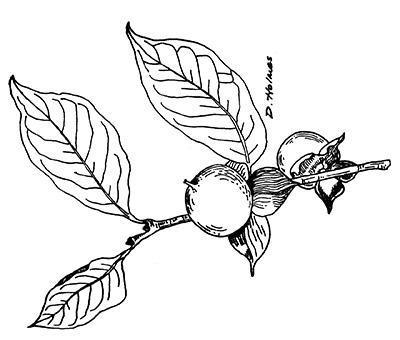
This week, we meet the persimmon or Diospyros virginiana, one of Indiana’s fruit producing trees.
The alternately held leaves of persimmon are oval shaped with smooth margins, with no lobes or teeth. The thick dark green leaves turn yellow or reddish-purple in the fall. The buds are dark colored, while leaf stems are light brown.
The bark resembles alligator hide with deep broken ridges, often with an orange coloring between the ridges.
The fruit, a pumpkin orange colored fleshy plum-like fruit, is a standout characteristic and is favored by both wildlife and humans. Once it ripens and falls from the tree, persimmon is soft and sweet. If picked from the tree, this fruit can be green, very hard, gummy in texture and acidic. The seed count in persimmon is variable with some seedless varieties and some with as many as 10 seeds.
Persimmon trees, which grow 35 to 60 feet tall, are native to southern Indiana but can be found planted across the state. This species grows best in full sun and in moist, well-drained soils, but are tolerant of alkaline soil, clay, dry sites, and occasional drought. The natural range of the persimmon is the lower Midwest and southeastern United States reaching up into southern Illinois.
For full article with additional photos view: Intro to Trees of Indiana: Persimmon, Forestry and Natural Resources’ News.
If you have any questions regarding wildlife, trees, forest management, wood products, natural resource planning or other natural resource topics, feel free to contact us by using our Ask an Expert web page.
Other Resources:
Hardwoods of the Central Midwest: Persimmon
ID That Tree: Persimmon
Morton Arboretum: Persimmon
Persimmons, The Education Store
Persimmon, Native Trees of Indiana River Walk, Purdue Fort Wayne
The Woody Plant Seed Manual, U.S. Forest Service
Fifty Common Trees of Indiana
An Introduction to Trees of Indiana
Native Trees of the Midwest, The Education Store
Shrubs and Woody Vines of Indiana and the Midwest, The Education Store
Investing in Indiana Woodlands, The Education Store
Forest Improvement Handbook, The Education Store
ID That Tree, Purdue Extension-Forestry & Natural Resources (FNR) YouTube playlist
Woodland Management Moment , Purdue Extension-FNR YouTube playlist
Wendy Mayer, FNR Communications Coordinator
Purdue University Department of Forestry and Natural Resources
Lenny Farlee, Sustaining Hardwood Extension Specialist
Purdue University Department of Forestry and Natural Resources
The classic and trusted book “Fifty Common Trees of Indiana” by T.E. Shaw was published in 1956 as a user-friendly guide to local species. Nearly 70 years later, the publication has been updated through a joint effort by the Purdue Department of Forestry and Natural Resources, Indiana 4-H, and the Indiana Department of Natural Resources, and reintroduced as “An Introduction to Trees of Indiana.”
The full publication is available for download for $7 in the Purdue Extension Education Store. The field guide helps identify common Indiana woodlot trees.
Each week, the Intro to Trees of Indiana web series will offer a sneak peek at one species from the book, paired with an ID That Tree video from Purdue Extension forester Lenny Farlee to help visualize each species as it stands in the woods. Threats to species health as well as also insight into the wood provided by the species, will be provided through additional resources as well as the Hardwoods of the Central Midwest exhibit of the Purdue Arboretum, if available.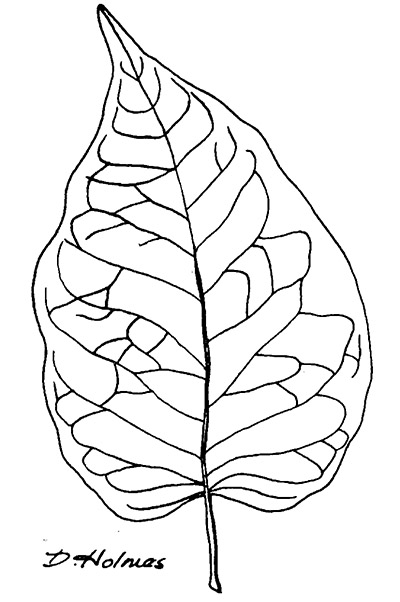
This week, we meet the Osage Orange or Maclura pomifera, also known as the hedge apple. While this species is not native to Indiana, it is found throughout the state, where it was planted for fence rows and fence post plantings due to its decay resistant wood.
The leaves of Osage orange are oval shaped with pointed tips held alternately on slender twigs. The dark, glossy green leaves have smooth margins and no lobes. The twigs will often have sharp thorns more than half an inch long that are found where the leaves emerge and where the buds are located.
The bark of this species has a light gray surface with an orange undercoloring, which is distinctly furrowed and has a somewhat fibrous appearance. Osage orange is often multi-stemmed and spreads out over a large area.
The fruit of Osage orange, produced by female trees, also is a key identifying characteristic, as it resembles a large yellow-green-colored bumpy orange or a bumpy green apple. The fruit is four to six inch in diameter and has many folds, bumps and crevices, which has led to the description of it looking like a brain. Osage oranges have a sticky, milky sap on the inside.
Osage orange trees, which grow to 20 to 40 feet tall, are found in moist, well-drained soils, but are tolerant of alkaline soil, clay, dry sites, occasional drought and flooding. The natural range of the Osage orange is Arkansas, Texas, Oklahoma and the region surrounding the Ozark mountains, although it has been planted in nearly every one of the lower 48 states.
For full article with additional photos view: Intro to Trees of Indiana: Osage Orange, Forestry and Natural Resources’ News.
If you have any questions regarding wildlife, trees, forest management, wood products, natural resource planning or other natural resource topics, feel free to contact us by using our Ask an Expert web page.
Other Resources:
Fruit Like a Brain and Wood Like Steel – Got Nature article
You Say Hedge-Apple, I Say Osage Orange!, Indiana Yard and Garden – Purdue Consumer Horticulture.
Osage Orange, The Wood Database
Hardwoods of the Central Midwest: Osage orange
ID That Tree: Osage orange
Morton Arboretum: Osage orange
The Woody Plant Seed Manual, U.S. Forest Service
Fifty Common Trees of Indiana
An Introduction to Trees of Indiana
Native Trees of the Midwest, The Education Store
Shrubs and Woody Vines of Indiana and the Midwest, The Education Store
Investing in Indiana Woodlands, The Education Store
Forest Improvement Handbook, The Education Store
ID That Tree, Purdue Extension-Forestry & Natural Resources (FNR) YouTube playlist
Woodland Management Moment , Purdue Extension-FNR YouTube playlist
Wendy Mayer, FNR Communications Coordinator
Purdue University Department of Forestry and Natural Resources
Lenny Farlee, Sustaining Hardwood Extension Specialist
Purdue University Department of Forestry and Natural Resources
The classic and trusted book “Fifty Common Trees of Indiana” by T.E. Shaw was published in 1956 as a user-friendly guide to local species. Nearly 70 years later, the publication has been updated through a joint effort by the Purdue Department of Forestry and Natural Resources, Indiana 4-H, and the Indiana Department of Natural Resources, and reintroduced as “An Introduction to Trees of Indiana.”
The full publication is available for download for $7 in the Purdue Extension Education Store. The field guide helps identify common Indiana woodlot trees.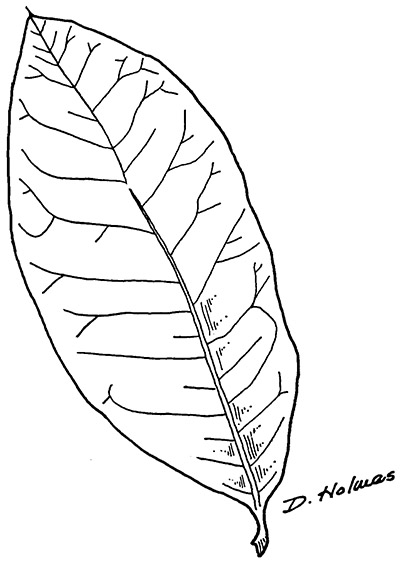
Each week, the Intro to Trees of Indiana web series will offer a sneak peek at one species from the book, paired with an ID That Tree video from Purdue Extension forester Lenny Farlee to help visualize each species as it stands in the woods. Threats to species health as well as also insight into the wood provided by the species, will be provided through additional resources as well as the Hardwoods of the Central Midwest exhibit of the Purdue Arboretum, if available.
This week, we take a look at the ninth and final of our featured oak varieties in Indiana, the Shingle Oak or Quercus imbricaria.
The leaves of shingle oak are oblong and have entire leaf margins, without lobes or teeth, unlike all other Indiana oaks. This species also retains its shiny, bristle-tipped leaves further into the winter than other oaks. The leaves turn from a dark green in the summer to yellow and brown in the fall.
The bark is dark gray and blocky, with long running ridges. Shingle oak tends to keep its lower dead limbs attached to the tree.
The fruit is a small, rounded acorn with a thin cap that covers a third to half of the acorn. The acorns turn dark in color before losing their caps, although some may drop off the tree with their caps in tact.
Shingle oaks, which grow to 50 to 60 feet tall and are found in moist, well-drained soil along streams and on hillsides, but can occasionally be found on dry sites. The natural range of the shingle oak is the midwestern United States, including the Appalachian mountain region, Ohio, and the central Mississippi River valley.
The Morton Arboretum states that shingle oak is fairly salt tolerant and tolerant of black walnut toxicity, and despite the fact that it has a taproot, this species can be easier to transplant than some other oaks.
Shingle oak, however, can be plagued with pests such as scale insects and two-lined chestnut borer. As with other oaks, the shingle oak should be pruned in the dormant season to avoid attracting beetles that may carry oak wilt, which can be a potential disease problem.
Shingle oaks get their name, because traditionally the species was sectioned out and made into wood shingles.
For full article with additional photos view: Intro to Trees of Indiana: Shingle Oak, Forestry and Natural Resources’ News.
If you have any questions regarding wildlife, trees, forest management, wood products, natural resource planning or other natural resource topics, feel free to contact us by using our Ask an Expert web page.
Other Resources:
ID That Tree: Shingle Oak
ID That Tree: Red Oak Group
Hardwood Lumber and Veneer Series: Red Oak Group
Morton Arboretum: Shingle Oak
Fifty Common Trees of Indiana
An Introduction to Trees of Indiana
Native Trees of the Midwest, The Education Store
Shrubs and Woody Vines of Indiana and the Midwest, The Education Store
Investing in Indiana Woodlands, The Education Store
Forest Improvement Handbook, The Education Store
ID That Tree, Purdue Extension-Forestry & Natural Resources (FNR) YouTube playlist
Woodland Management Moment , Purdue Extension-FNR YouTube playlist
Wendy Mayer, FNR Communications Coordinator
Purdue University Department of Forestry and Natural Resources
Lenny Farlee, Sustaining Hardwood Extension Specialist
Purdue University Department of Forestry and Natural Resources
The classic and trusted book “Fifty Common Trees of Indiana” by T.E. Shaw was published in 1956 as a user-friendly guide to local species. Nearly 70 years later, the publication has been updated through a joint effort by the Purdue Department of Forestry and Natural Resources, Indiana 4-H, and the Indiana Department of Natural Resources, and reintroduced as “An Introduction to Trees of Indiana.”
The full publication is available for download for $7 in the Purdue Extension Education Store. The field guide helps identify common Indiana woodlot trees.
Each week, the Intro to Trees of Indiana web series will offer a sneak peek at one species from the book, paired with an ID That Tree video from Purdue Extension forester Lenny Farlee to help visualize each species as it stands in the woods. Threats to species health as well as also insight into the wood provided by the species, will be provided through additional resources as well as the Hardwoods of the Central Midwest exhibit of the Purdue Arboretum, if available.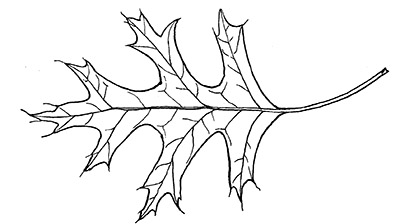
This week, we take a look at the eighth of our featured oak varieties in Indiana, the Pin Oak or Quercus palustris.
The leaves of pin oak are multi-lobed, with lobes coming out at nearly a 90-degree angle from the center of the leaves, and feature bristle tips like all members of the red/black oak family. On the pin oak, the alternately held leaves typically have less lobes than other members of the red/black oak group. In the fall, leaves change from medium green to a red to reddish brown color.
One key characteristic of pin oak are the branches, which angle downward especially on the lower part of the tree. The pin oak tends to keep its lower branches for a long period of time, which can create pin knots in the wood.
The trunk of pin oak is typically straight and single stemmed, while the bark is smooth and gray and may develop dark fissures with age.
The fruit is a rounded acorn with a relatively flat top with smooth scales, which covers only about one quarter of the nut.
Pin oaks, which grow to 60 to 70 feet tall and are relatively fast growing, are found mostly in moist to wet areas, such as streams, lakes and other wetlands, oftentimes in soils that have a medium to high acidity. Pin oaks also have been planted in many sites for landscape purposes.
The natural range of the pin oak is in bottomlands and imperfectly drained soils from New Jersey south to Virginia and west to Eastern Kansas and Oklahoma as well as south into North Carolina, Tennessee and Arkansas.
The Morton Arboretum states that pin oak suffers greatly from chlorosis or yellowing of the leaves in soils with high pH. As with other oaks, the pin oak should be pruned in the dormant season to avoid attracting beetles that may carry oak wilt, which can be a potential disease problem along with oak blister.
For full article with additional photos view: Intro to Trees of Indiana: Pin Oak, Forestry and Natural Resources’ News.
If you have any questions regarding wildlife, trees, forest management, wood products, natural resource planning or other natural resource topics, feel free to contact us by using our Ask an Expert web page.
Other Resources:
ID That Tree: Pin Oak
ID That Tree: Red Oak Group
Hardwood Lumber and Veneer Series: Red Oak Group
Morton Arboretum: Pin Oak
Pin Oak, Native Trees of Indiana River Walk, Purdue Fort Wayne
Fifty Common Trees of Indiana
An Introduction to Trees of Indiana
Native Trees of the Midwest, The Education Store
Shrubs and Woody Vines of Indiana and the Midwest, The Education Store
Investing in Indiana Woodlands, The Education Store
Forest Improvement Handbook, The Education Store
ID That Tree, Purdue Extension-Forestry & Natural Resources (FNR) YouTube playlist
Woodland Management Moment , Purdue Extension-FNR YouTube playlist
Wendy Mayer, FNR Communications Coordinator
Purdue University Department of Forestry and Natural Resources
Lenny Farlee, Sustaining Hardwood Extension Specialist
Purdue University Department of Forestry and Natural Resources
In 1978, Dan Cassens purchased a 10-acre plot of land close to the Purdue campus on which he planted a few Christmas trees as a side project. That plot of land developed into a family Christmas tree farm that Cassens and his wife Vicki have run for more than 40 years.
As the years passed, Dan, now a professor emeritus in the Department of Forestry and Natural Resources after retiring in 2017 following a more than 40-year career at Purdue, enlisted the help of students within the department for both seasonal work and longer-term work on the farm and within his small lumber business.
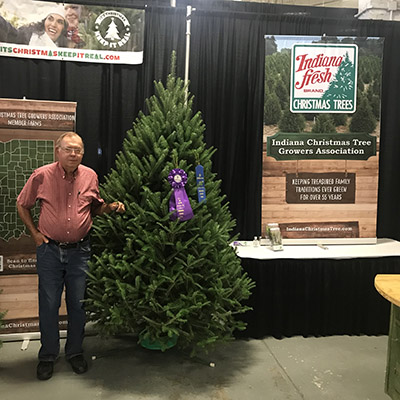
What started as a few extra hands around the tree farm has turned into a hands-on learning opportunity for more than 20 FNR students each year, teaching workers skills from cutting and handling trees to customer service.
“I don’t remember how it got started; I guess I needed somebody to help me and I probably knew a couple of students that were anxious to work,” Cassens said. “I don’t know how many years it has been going on now, but it keeps getting bigger. Last year at Christmas time we had 20 some students helping us part time with the trees. It’s a good group because they have hard, physical work to do, but then they’ve also got time to sit and talk too.”
The work begins in October to prepare the tree farm for its opening on the Saturday before Thanksgiving, a date determined by customer demand over the years. Cassens Tree Farm has both choose-and-cut and pre-cut trees in species ranging from Canaan fir, Fraser fir and Concolor (White) fir to Scotch pine and white pine and Norway spruce. Once cut, trees have to be shook to remove dead needles, have a fresh cut on the butt of the tree to ensure they stand straight on a tree stand, and many get baled or wrapped, which condenses a tree, making it easier to handle and preventing damage to limbs that may occur in transit.
Cassens does not have prerequisite skills for students who work on the farm, save a willingness to work hard, although there are plenty of jobs on the tree farm that require specialized skills.
“We can use anybody that wants to work hard and has time available,” Cassens said. “We try to find out what their abilities are, because we do need people that can drive trucks and use chainsaws. Chainsaw experience is absolutely critical in part of the operation, but other than that, anybody can work in the barn. It doesn’t require much skill, just hard work. It’s hard to get it all sorted out with 20 students with different hours that they can work and different abilities, but we try to find out their abilities and schedules and try to get them placed. Once we get it going, it’s good.”
Daniel Warner, a 2011 alumnus in wood products manufacturing technology, said Cassens was very understanding when it came to lack of knowledge and miscues.
“My first day helping with the tree farm, I didn’t even know why we were planting these little pine trees (I was thinking lumber not Christmas),” Warner recalled. “I was also recruited for the mortar removal on several tons of vintage bricks. On one hatchet wielding, mortar removing day, I managed to get my truck stuck in Dan’s yard in the mud. Needless to say, the fact that we are still good friends shows that there was a great deal of forgiveness.”
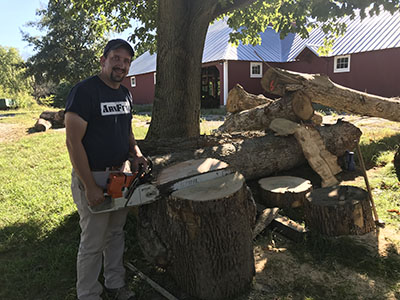
Many of the students who work at Cassens farm are juniors or seniors, but some come back two or three years in a row once a part of the workforce, and often bring friends along to join the crew.
2018 forestry alumnus Ed Oehlman helped at Cassens Trees for five years, beginning the spring of his freshman year.
“I met Dan my freshman year at Purdue and that spring he invited me out to the farm to help him plant Christmas trees and that started my adventure,” Oehlman said. “I got the pleasure of seeing the whole process, from helping him plant trees, spending many hours mowing, sheering trees, spraying and treating trees, and lasting helping sell trees. Selling Christmas Trees is to this day one of the best jobs I’ve ever had. You couldn’t work for better people than Dan and Vicki. The days could be long and active, especially Thanksgiving weekend, but they always made sure you were taken care with little snacks or pizza, sometimes even home made soup. It made the time go by so quick, you’d just get started and before you knew it we were shutting up shop. The best was the fun little gamble we did at the end of the day to guess how many trees we had sold that day, which always made work fun! Working with and for Dan was a great learning experience, and not just about wood/lumber or Christmas trees. I learned so many great life and business skills!”
Charlie Warner, 2021 forestry alumnus and current master’s degree student, worked at Cassens Farm for three and a half years as an undergraduate student and has helped out five seasons overall after being introduced to Cassens and the job his freshman year thanks to Damon McGuckin (sustainable biomaterials 2018) and Oehlman.
“Both Ed and Damon worked for Dan at the tree farm throughout their time at Purdue and told me about him and how he was as both a boss and a professor,” Warner said. “Unfortunately, Dan retired from teaching before I had a chance to take his classes but I made up for it when I started working for him. I started working on the tree farm helping Dan with various jobs, whether it was sawing lumber with his Wood-Mizer, loading and unloading his dry kilns where he dried lumber, cutting down trees and bucking the logs to get them ready for the sawmill and many other jobs and mechanical work around the farm. I learned so much from my few years working for Dan. In fact, he was one of the strongest voices urging me to continue my studies and work towards a master’s degree. Not only did Dan teach me everything there is to know about the wood products industry and more, but he also taught me how to communicate with industry employers. He gave me the skills to make myself extremely marketable to a few of my internship opportunities. Furthermore, he taught me many life lessons.”
Additional Resources
Root Rot in Landscape Plants, The Education Store
Ask The Expert: Tree Inspection, Purdue Extension- FNR YouTube Channel
Ask The Expert: Tree Selection and Planting, Purdue Extension- FNR YouTube Channel
Surface Root Syndrome, The Education Store, Purdue Extension resource center
The Nature of Teaching: Trees of the Midwest, The Education Store
Tree Appraisal and the Value of Trees, The Education Store
Construction and Trees: Guidelines for Protection, The Education Store
ID That Tree: Northern Red Oak
ID That Tree: Red Oak Group
Hardwood Lumber and Veneer Series: Red Oak Group
Morton Arboretum: Northern Red Oak
Red Oak, Native Trees of Indiana River Walk, Fort Wayne Purdue
Fifty Common Trees of Indiana
An Introduction to Trees of Indiana
Native Trees of the Midwest, The Education Store
Shrubs and Woody Vines of Indiana and the Midwest, The Education Store
Investing in Indiana Woodlands, The Education Store
Forest Improvement Handbook, The Education Store
ID That Tree, Purdue Extension-Forestry & Natural Resources (FNR) YouTube playlist
Woodland Management Moment, Purdue Extension-FNR YouTube playlist
Wendy Mayer, FNR Communications Coordinator
Purdue University Department of Forestry and Natural Resources

Recent Posts
- Tree Silvics and Succession Webinar: A Biological Basis for Management
Posted: January 30, 2026 in Forests and Street Trees, Urban Forestry, Woodlands - Woodsy Owl Edition for Educational Learning, USDA – U.S. Forest Service
Posted: January 21, 2026 in Forestry, Forests and Street Trees, Got Nature for Kids, Urban Forestry, Wildlife - ID That Tree: Trumpet Creeper
Posted: January 20, 2026 in Forests and Street Trees, Urban Forestry, Woodlands - A Woodland Management Moment: Black Walnut in Pine Plantation
Posted: December 19, 2025 in Forestry, Forests and Street Trees, Urban Forestry, Woodlands - A Woodland Management Moment: Butternut Disease and Breeding
Posted: December 1, 2025 in Forestry, Forests and Street Trees, Woodland Management Moment, Woodlands - Why Do Our Trees Go From Green Leaves to Different Colors?
Posted: November 4, 2025 in Forestry, Forests and Street Trees, Urban Forestry, Woodlands - October Is Firewood Month: Protect Indiana’s Forests by Making Smart Choices
Posted: October 13, 2025 in Forestry, Forests and Street Trees, How To, Invasive Insects, Urban Forestry - Help Your Trees Transition Into Autumn, Purdue Landscape Report
Posted: October 7, 2025 in Forests and Street Trees, Urban Forestry, Woodlands - Marssonina Leaf Spot and Blotch of Poplar, Purdue Landscape Report
Posted: October 1, 2025 in Disease, Forests and Street Trees, Urban Forestry, Woodlands - Discover the Rich World of Oaks with Purdue Extension – FNR
Posted: September 26, 2025 in Ask the Expert, Forests and Street Trees, Wildlife, Woodlands
Archives
Categories
- Alert
- Aquaculture/Fish
- Aquatic/Aquaculture Resources
- Ask the Expert
- Christmas Trees
- Community Development
- Disease
- Drought
- Forestry
- Forests and Street Trees
- Gardening
- Got Nature for Kids
- Great Lakes
- How To
- Invasive Animal Species
- Invasive Insects
- Invasive Plant Species
- Land Use
- Natural Resource Planning
- Nature of Teaching
- Plants
- Podcasts
- Ponds
- Publication
- Safety
- Spiders
- Timber Marketing
- Uncategorized
- Urban Forestry
- Webinar
- Wildlife
- Wood Products/Manufacturing
- Woodland Management Moment
- Woodlands