 Purdue University - Extension - Forestry and Natural Resources
Got Nature? Blog
Purdue Landscape Report: In the last newsletter, an article on triclopyr brought up much discussion on the Roundup brands now containing multiple active ingredients other than glyphosate. Professionals in the industry may encounter a client with herbicide damage symptoms that mimic growth-regulator injury instead of typical glyphosate damage symptoms. While the client may have used Roundup, they didn’t necessarily use glyphosate. Going forward, it’s important to keep in mind that Roundup no longer means glyphosate in the consumer market.
Roundup has been one of the most used herbicides for many different weed control applications. Roundup, with the active ingredient glyphosate, was first registered with the EPA in 1974. When Roundup went off patent in 2000, glyphosate started being sold under many different names. According to the National Pesticide Information Center there are currently over 750 products containing glyphosate. Formulations may differ with salt carriers, adjuvants, concentrations, and mixed with other herbicides.
Recently, Bayer announced glyphosate would be phased out of consumer Roundup products. In its place, consumer Roundup products include other active ingredients. This can lead to confusion in the consumer market. It’s important to note that professional-use Roundup (turf and ornamental, agronomic crops, etc.) still contains glyphosate.
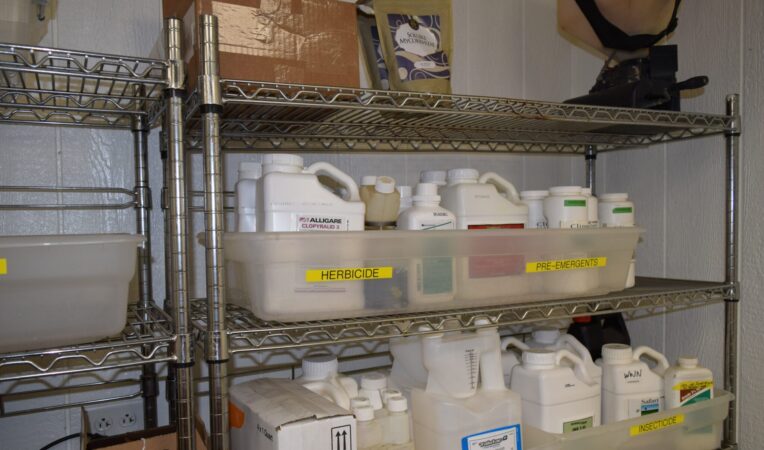
Figure 1. Consumer versions of Roundup are no longer glyphosate. Pay close attention to the active ingredients on labels to prevent unwanted plant injury.
Within the consumer Roundup product line, there are many different formulations designed for specific purposes, which include Roundup Weed and Grass Killer, Roundup for Lawns, Roundup for Lawns: Crabgrass Destroyer, Roundup Dual Action Weed and Grass Killer, Roundup Poison Ivy and Tough Brush Killer, among others. Each of these products contains distinct active ingredients that target different types of weeds.
Roundup Weed and Grass Killer: Glyphosate as the Active Ingredient
The original Roundup herbicide contains glyphosate as its primary active ingredient. Glyphosate is a systemic, non-selective herbicide, meaning it is absorbed by the plant and translocated throughout the vascular system, ultimately leading to the plant’s death. Glyphosate works by inhibiting the enzyme 5-enolpyruvylshikimate-3-phosphate synthase (EPSPS), which is a key component of the shikimic acid pathway—a pathway critical for the synthesis of aromatic amino acids in plants.
Active Ingredient:
- Glyphosate: The ‘traditional’ version of Roundup that controls many different weeds. Can take 10-14 days to kill weeds.
- Pelargonic Acid: A contact herbicide that quickly breaks down cell walls. This is added to provide a quick burndown of the weed.
Roundup Dual Action Weed and Grass Killer Plus 4 Month Preventer: Multiple modes of action
Round Dual Action is a formulation that includes four very different herbicides that is intended for use in areas with limited vegetation (i.e. sidewalks, driveways, mulched beds). In addition to postemergence herbicides, this product includes two preemergence active ingredients.
Active Ingredients:
- Triclopyr: Systemic herbicide that mimics auxins. Very effective herbicide for woody plants, which is used frequently in invasive species treatments.
- Fluazifop: Grass-specific herbicide (graminicide) that controls several annual and perennial grasses.
- Diquat: Contact herbicide that exhibit symptoms rapidly. Good for annual weeds.
- Imazapic: Pre- and Postemergence control of several grasses and broadleaf weeds.
Roundup for Lawns: A Combination of Selective Herbicides
Roundup for Lawns is a specialized formulation designed for residential use, particularly for controlling broadleaf weeds in lawns. Unlike traditional Roundup, which contains glyphosate, Roundup for Lawns contains a combination of selective herbicides, including MCPA, quinclorac, dicamba, and sulfentrazone. These ingredients are chosen for their ability to target broadleaf weeds and grassy weeds without harming most turfgrass species. This product is similar to the traditional ‘three-way’ herbicides that are commonly used in turf.
Active Ingredients:
- MCPA: MCPA is a selective herbicide that mimics the action of natural plant hormones known as auxins. When absorbed by broadleaf weeds, it causes uncontrolled growth, leading to the plant’s death.
- Quinclorac: Quinclorac is effective against grassy weeds, primarily used for crabgrass control in turf. It can be similar to auxin herbicides, causing epinasty, curling, and a change of color.
- Dicamba: Similar to MCPA, dicamba disrupts the growth of broadleaf weeds by mimicking natural plant hormones.
- Sulfentrazone: Pre- and postemergence activity in turf. Very effective on nutsedge.
Roundup for Lawns: Crabgrass Destroyer
Roundup for Lawns: Crabgrass Destroyer is a product designed to control grassy weeds and several broadleaf weeds in cool-season turf. In addition to crabgrass, other grassy weeds and some broadleaves can be controlled.
Active Ingredients:
- Topramezone: Very effective herbicide for several annual and perennial grassy weeds and some common broadleaf weeds.
Roundup Poison Ivy and Tough Brush Killer: Triclopyr for Tough Woody Plants
Roundup Brush Killer is formulated to tackle tough, woody plants, such as brush, brambles, and small trees. The active ingredient in this product is triclopyr, a selective herbicide that targets broadleaf plants with less damage to grasses. This product can be effective on invasive woody plants.

Figure 2. Glyphosate damage to sycamore.
Active Ingredients:
- Triclopyr: Systemic herbicide that mimics auxins. Very effective herbicide for woody plants, which is used frequently in invasive species treatments.
- Glyphosate: The ‘traditional’ version of Roundup that controls many different weeds. Can take 10-14 days to kill weeds.
Conclusion
All of the consumer Roundup products contain unique active ingredients tailored to specific weed control needs. There can be understandable confusion around these products due to the historical uses of glyphosate. The Green Industry needs to be aware of the confusion around these products to better inform their clients. Understanding the active ingredients and mechanisms of action of these herbicides is crucial for their effective and safe use in various settings.
View the original article here: When Roundup Isn’t Roundup: Clearing up the confusion between products
Subscribe and receive the newsletter: Purdue Landscape Report Newsletter.
Resources:
Beyond Roundup: Alternatives to consider adding to your weed management plan, Purdue Landscape Report
Diagnosing Herbicide Injury on Garden and Landscape Plants, The Education Store, Purdue Extension’s resource center
Herbicide Injury, Purdue Plant Doctor
Find an Arborist video, Trees are Good-International Society of Arboriculture (ISA)
ID That Tree, Playlist, Purdue Extension – FNR YouTube Channel
Invasive Species Playlist, Playlist, Purdue Extension – FNR YouTube Channel
A Woodland Management Moment, Playlist, Purdue Extension – FNR YouTube Channel (Against Invasives, Garlic Mustard, Autumn Olive)
Woodland Stewardship for Landowners, Playlist, Purdue Extension – FNR YouTube Channel (Common Buckthorn, Japanese Barberry)
Report Invasive Species, Purdue Invasive Species
The GLEDN Phone App – Great Lakes Early Detection Network
EDDMaps – Early Detection and Distribution Mapping System
Episode 11 – Exploring the challenges of Invasive Species, Habitat University-Natural Resource University
What Are Invasive Species and Why Should I Care?, Purdue Extension-FNR Got Nature? Blog
Emerald Ash Borer Information Network, Purdue University and Partners
Aquatic Invasive Species, Illinois-Indiana Sea Grant (IISG)
Invasive plants: impact on environment and people, The Education Store
Subscribe Purdue Extension-Forestry and Natural Resources YouTube Channel
Kyle Daniel, Commercial Landscape and Nursery Crops Extension Specialist
Purdue Horticulture & Landscape Architecture
Lenny Farlee, sustaining hardwood Extension specialist for Purdue’s Department of Forestry and Natural Resources (FNR), has been named a 2024 Fellow of the Society of American Foresters (SAF). The SAF Fellow Award, one of the highest honors bestowed on an SAF member by their peers, recognizes long-standing service to forestry at the local, state, regional and national levels.
Farlee was honored with the award during the 2024 SAF National Convention, which took place in Loveland, Colorado from Sept. 17-20.

Zhao Ma accepts the 2024 Family Forests Education Award on behalf of Lenny Farlee and the other project team members.
“Being named a Fellow of the Society of American Foresters is particularly meaningful to me since it originates from a nomination by my peers at the state level,” Farlee said. “I am very grateful that my colleagues in forestry here in Indiana considered my service worthy of recognition, and I owe much of the credit to them for their support of me through my career. It has been my privilege to serve the people and the profession as an Extension forester here at Purdue.”
Farlee educates people about forestry in many ways, including through the popular Extension YouTube series “ID That Tree,” which has over 100,000 views.
Farlee was also recognized at the convention with the 2024 Family Forests Education Award. The National Woodland Owners Association (NWOA) and the National Association of University Forestry Resources Programs (NAUFRP) gave an award to Farlee, project lead, and his team for their course “Forest Management for the Private Woodland Owner.”
Farlee, Ronald Rathfon, Don Carlson, Jonathan Ferris, Dave Osborne and Phil Woolery worked together to develop the course. The course introduces forest landowners to the biology and management of forests and what resources and professional assistance are available. According to survey results from 2021 participants, “94.4% stated that the information was useful to help them make future decisions and 92.5% stated that the information was useful to help act to manage their property objectives.”
“We in FNR, along with forestry professionals in Indiana and the landowners who have communicated with Lenny and his colleagues through the ‘Forest Management for the Private Woodland Owner’ course, know how valuable this program has been to sustainable forest management in Indiana,” said Zhao Ma, interim department head and professor of forestry and natural resources. “So it is absolutely wonderful when others outside of our FNR community and beyond Indiana also recognize the excellent work that Lenny and his colleagues have been doing…, I would also like to share one more note about Lenny – not only has Lenny been a highly valued and respected member of FNR and the forestry profession for many years, but he is also one of the nicest people I have met. He is knowledgeable yet humble, effective yet gentle, serious about his work yet able to have fun, very busy yet always willing to help others and try to be present. We are lucky to have Lenny as our colleague in FNR.”
To view this article along with other news and stories posted on the Purdue Forestry and Natural Resources website view: Purdue FNR Extension specialist receives national recognition for work in forestry
Resources:
ID That Tree – Video Playlist, Purdue Extension – Forestry and Natural Resources (FNR) YouTube Channel
Purdue Arboretum Explorer
Conservation Tree Planting: Steps to Success, Purdue Extension – FNR YouTube Channel
A Woodland Management Moment, Playlist, Purdue Extension – FNR YouTube Channel
Woodland Stewardship for Landowners, Playlist, Purdue Extension – FNR YouTube Channel
Indiana Department of Natural Resources: Invasive Species
Indiana Invasive Species Council
Cooperative Invasive Species Management Area (CISMA)
Report Invasive, Purdue Extension
Shrubs and Woody Vines of Indiana and the Midwest, The Education Store
Native Trees of the Midwest, The Education Store
Professional Forester, Indiana Forestry Woodland Owners Association
Forest Improvement Handbook, The Education Store
Find an Arborist, International Society of Arboriculture
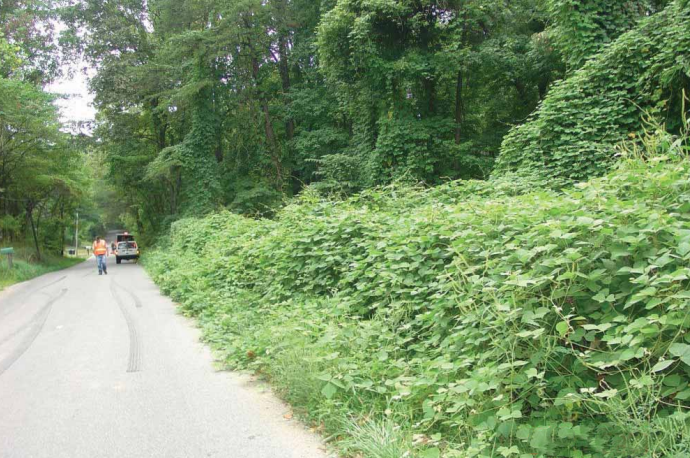
Photo by Division of Entomology & Plant Pathology, Indiana Department of Natural Resources.
Weekly Review, Division of Entomology & Plant Pathology, Indiana DNR: Will Drews, Indiana Department of Natural Resources (DNR) Nursery Inspector & Compliance Officer with the DNR Division of Entomology & Pathology shares in September Weekly Review e-newsletter how staff will continue to help coordinate kudzu control throughout the state and expands upon the state funded kudzu control program.
As some of you may know, kudzu (Pueraria montana var. lobata) is an invasive woody vine that can now be found throughout the state of Indiana. It is referred to colloquially as “the vine that ate the south,” and if you took a drive through some southern states (e.g. Tennessee, Georgia, the Carolinas, etc.) right now, you’d see why. Kudzu has tremendous growth potential, sometimes as much as 1 foot per day. Some vines reach lengths of up to 100 feet. Because of this it is a detriment to Indiana’s natural resources, kudzu has been listed as a prohibited invasive plant under the DNR’s Administrative Code as per 312 IAC 18-3-16 Control of kudzu.
While part of the language includes that the landowner “must take efforts to eliminate this species in such a manner as is consistent with federal and state law,” the Division of Entomology & Plant Pathology have been leading a state funded control program where sites are treated on a rotating, priority basis to eradicate or suppress further spread with no cost to the landowner. Over the last month, around 40 kudzu sites in Indiana have been treated and we have seen some great progress from last year.
If you think you have seen a new kudzu population, please send me that information (photos and GPS coordinates or address) at my email address provided below. A couple of the sites treated this year are new reports from last year that we were able to address. With your help, we can try to reduce the impact of this incredibly invasive vine and protect our natural resources.
For more information regarding this invasive vine Kudzu see the Indiana Department of Natural Resources, Division of Entomology & Plant Pathology, Kudzu.
Subscribe: Entomology Weekly Review.
Resources:
Indiana Department of Natural Resources-Division of Entomology & Plant Pathology
Indiana Department of Natural Resources-Natural Resources Conservation Service Plants Profile
Indiana Department of Natural Resources-National Invasive Species Information Center
Indiana Department of Natural Resources-Kudzu Information
Invasive Species, Playlist, Purdue Extension – FNR YouTube Channel
Report Invasive Species, Purdue Invasive Species
What are invasive species and why should I care?, Got Nature? Blog, Purdue Extension – Forestry and Natural Resources
Indiana Department of Natural Resources: Invasive Species
Invasive Plant Species Identification, Video, Purdue Extension – FNR Youtube Channel
Mile-a-minute Vine, The Education Store
Invasive Plant Series: Swallow-worts, The Education Store
Will Drews, Nursery Inspector & Compliance Officer, Division of Entomology & Plant Pathology, WDrews@dnr.IN.gov
Indiana Department of Natural Resources (IN DNR)
Purdue Landscape Report: As summer comes to a close, plants are rapidly releasing seeds and the most noticeable are the flying fluffy type. Thistles, asters and milkweed are just a few of the summer-flowering plants that depend on the wind to disperse their seeds, sometimes carrying them miles away to potentially suitable locations, though seeds typically land within a few meters of the mother plant. This may not be a concern if it’s a desirable plant, but can become extremely problematic when that seed comes from Canada Thistle (Cirsium arvense) (Fig. 1).
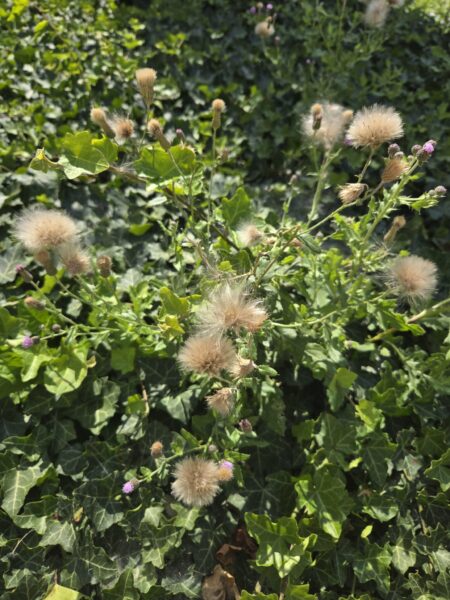
Figure 1. Canada thistle (Cirsium arvense), growing amongst common ivy (Hedera helix), produces a fluffy seed that is dispersed by wind.
Canada thistle is found on the list of Indiana Noxious Weeds (IC 15-16-7-2), which mandates that landowners take necessary steps to control and contain the spread of this highly invasive species. Formal enforcement of this Indiana Code falls to Township Trustees, though weed control is a responsibility that is often overlooked. Landowners and homeowners shouldn’t wait for a notice, or knock at the door, from a Township Trustee to begin controlling Canada thistle. It’s listed as a noxious weed for good reason.
Canada thistle is a perennial plant that can reproduce from seed or rhizomes making it difficult to control and contain. Each plant can produce thousands of wind-blown seeds that may remain viable for up to 20 years in the soil. Rhizomes are horizontal underground stems that can grow several feet and put out new shoots (Fig. 2). To add insult to injury, if a rhizome is cut or tilled, a separate plant may grow from each piece of rhizome.
Mechanical and cultural control options for Canada thistle are limited and may reduce plant density, but are not effective at eradicating large, established populations in a landscape. A new population, without an established root system, may be controlled with frequent mowing to deplete food reserves and prevent seed production.Small, isolated populations may be controlled with hand-pulling, but this will need to be repeated every few weeks.

Figure 2. Canada thistle (Cirsium arvense) reproduces by growing horizontal underground stems called rhizomes. Rhizomes can send up new shoots several feet from the mother plant.
Chemical control options include pre- and post-emergent herbicides and, in many cases, applications of both types are needed for complete eradication. A pre-emergent herbicide, with an active ingredient of dichlobenil, is effective at preventing seed from germinating, but will not control established plants. A post-emergent herbicide with the active ingredient of clopyralid is the most effective option for home gardeners. Clopyralid is a selective herbicide for broadleaf weeds, but most vegetable and ornamental plants are susceptible. Precautions should be taken to avoid off-target damage. Read and understand the herbicide label before use. The label is the law.
Regardless of the method used, complete control of an established Canada thistle population will take persistence over multiple seasons. If the fluffy seed is beginning to fly from your thistle patch, it will likely take many more seasons to rid the garden of this pest, but it is possible. To win the battle against Canada thistle, it takes serious grit and an effective herbicide, or a good realtor.
View the original article here: What the Fluff?!
Subscribe and receive the newsletter: Purdue Landscape Report Newsletter.
Resources:
ID That Tree, Playlist, Purdue Extension – FNR YouTube Channel
Find an Arborist video, Trees are Good-International Society of Arboriculture (ISA)
A Woodland Management Moment, Playlist, Purdue Extension – FNR YouTube Channel (Against Invasives, Garlic Mustard, Autumn Olive)
Woodland Stewardship for Landowners, Playlist, Purdue Extension – FNR YouTube Channel (Common Buckthorn, Japanese Barberry)
Planting Your Tree, Video, The Education Store
Tree Installation, The Education Store
Indiana Invasive Species Council
Indiana Department of Natural Resources: Invasive Species
Purdue Extension Pond and Wildlife Management Website
Control of Canada Thistle in CRP and Other Noncrop Acreage, The Ed Store
Invasive Thistles
Report Invasive Species, Purdue Invasive Species
Understanding and Controlling Thistle in the Nursery and Landscape, Purdue Landscape Report
Subscribe – Purdue Extension-FNR YouTube Channel
Karen Mitchell, Consumer Horticulture Extension Specialist
Purdue Horticulture & Landscape Architecture
Purdue Landscape Report: Early June, we received a white pine sample at the Purdue University Plant and Pest Diagnostic Lab that showed early season needle loss lower in the tree canopy (Figure 1, 2). The majority of conifers hold onto their needles for multiple years, so loss of needles, even in the fall, can come as a shock to homeowners. In this particular case, we found multiple fungi that could be contributing to needle blight or needlecast.


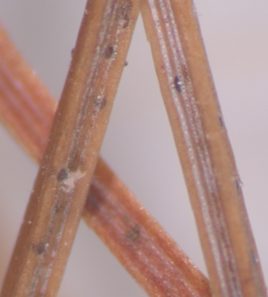
Figure 3: Black fungal structures developing on dead needles with white sporulation exuding from the top.
White pine needle damage/defoliation (WPND) was first observed in the state of Maine in 2010 and was attributed to three needle blight diseases, including Lecanosticta, and has since been observed throughout the Northeast US. However, researchers eventually determined that a new fungus, Septorioides strobi, was also found consistently in blighted needles and could be contributing to WPND.
This is the first time we have found this fungus in the state of Indiana, though it has been present for longer than a single season. We do not know how it will react to our climate nor if it will cause significant damage to affected trees. Like other needle blight pathogens, Septorioides has been observed to sporulate around the same time during humid, wet weather, but symptoms may not develop until the following year. White pines are the primary host for this needle cast disease, but it can also develop on 2, 3, and 5 needle pines. While we see white pine decline is a major problem, Septorioides will not likely be the final nail in the coffin for white pines in Indiana, though it certainly will not help us keep them healthy.
Original article posted: Septorioides Needle Blight of Pine.
Subscribe and receive the newsletter: Purdue Landscape Report Newsletter.
Resources:
ID That Tree: Virginia Pine
ID That Tree, Purdue Extension – FNR YouTube playlist
Borers of Pines and Other Needle Bearing Evergreens in Landscapes, The Education Store, Purdue Extension’s resource center
Tree Diseases: White Pine Decline in Indiana, The Education Store
Managing the Zimmerman Pine Moth, The Education Store
Purdue Arboretum Explorer
The Woody Plant Seed Manual, U.S. Forest Service
Native Trees of the Midwest, The Education Store
Root Rot in Landscape Plants, The Education Store, Purdue Extension resource center
Dead Man’s Fingers, Purdue Landscape Report
An Introduction to Trees of Indiana, The Education Store
Subscribe, Purdue Extension – FNR YouTube Channel
Tree Defect Identification, The Education Store
Tree Wound and Healing, Got Nature? Blog, Purdue Extension – FNR
Shrubs and Woody Vines of Indiana and the Midwest, The Education Store
Ask an Expert: Tree Selection and Planting, Purdue Extension – FNR YouTube playlist
Invasive Species, Playlist, Purdue Extension – FNR YouTube Channel
Report Invasive Species, Purdue Invasive Species
Find an Arborist, International Society of Arboriculture
John Bonkowski, Lead Extension Administrator
Purdue Department of Botany and Plant Pathology
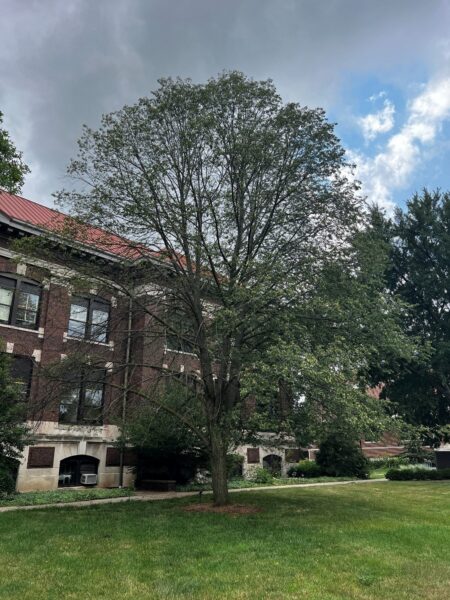
Figure 1: Drought stress can cause decline and, in some cases, death in trees.
Purdue Landscape Report: With recent rain storms across the state, watering may not be at the forefront of everyone’s minds. But as we head deeper into summer it is food to remember most of Indiana is in a state of abnormal dryness to moderate drought, continuing similar conditions from previous years. With that in mind, we should be thinking about the health of our trees (Fig. 1).
Understanding what drought is and its effects on trees can help to bolster care plans. Drought is an extended time with little to no precipitation and can slow growth, reducing photosynthesis, and depleting energy reserves trees need to survive dormancy in winter. Drought conditions can stress trees, making them susceptible to pests and diseases, reducing their ability to produce defensive chemicals, and in severe situations resulting in death (Fig. 2).
One simple task to protect your trees is watering. This is especially important in young and newly transplanted trees. A good industry guideline is the 5-plus-5 rule.
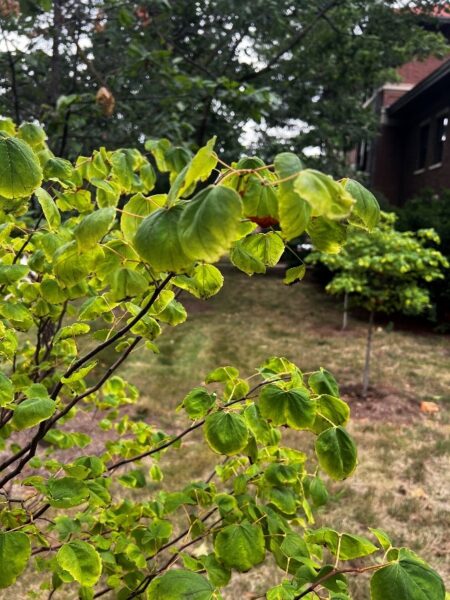
Figure 2a: Wilting in leaves and dieback in parts of the tree can indicate drought stress.
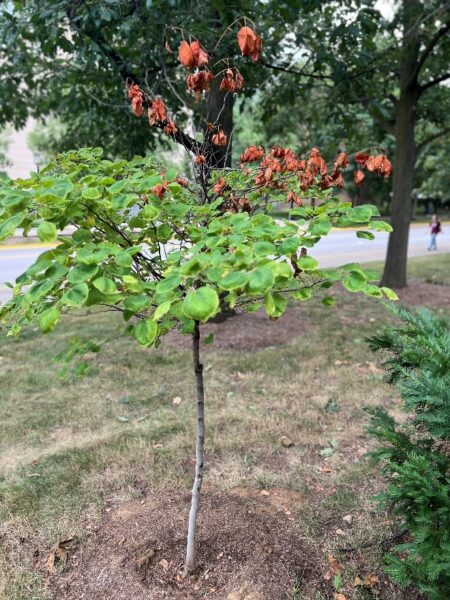
Figure 2b: Wilting in leaves and dieback in parts of the tree can indicate drought stress.
Apply 5 gallons of water plus 5 gallons for every diameter inch of the trunk. For example, a 4-inch tree would require about 25 gallons of water as needed. A good tactic to reduce water runoff from the hose is to take a large bucket and drill enough small holes to create a slow drip watering system. Also check moisture levels in your soil to see if conditions are dry, moist, or saturated.
Another way to maintain soil moisture is to mulch around the tree. Mulch rings should be at least 3 feet in diameter and 2-3 inches deep with a 2–3-inch space between the base of the trunk and the inner mulch ring. Mulching up to the trunk is called volcano mulching and causes issues like stem girdling root production and decay. Mulching reduces evaporation from the soil and helps maintain moderate soil temperatures. It also reduces competition with surrounding lawn and landscaping plants while protecting the trunk from mechanical damage caused by mowing and lawn care practices.
These little steps can go a long way to protect your trees, extending their life spans and your enjoyment with a healthy canopy. For a more detailed look at drought and trees, please have a look at the Purdue extension store here.
Original article posted: Summer Tree Care: Watering Your Trees.
Subscribe and receive the newsletter: Purdue Landscape Report Newsletter.
Resources:
Planting Your Tree Part 1: Choosing Your Tree, Purdue Extension YouTube Channel
Tree Planting Part 2: Planting a Tree, Purdue Extension YouTube Channel
Tree Installation: Process and Practices, The Education Store
Tree Pruning Essentials, The Education Store
Tree Pruning Essentials Video, Purdue Extension YouTube Channel
Drought Information, Indiana Department of Natural Resources
Drought? Don’t forget the trees!, The Education Store
Tree Defect Identification, The Education Store
Tree Wound and Healing, Got Nature? Blog, Purdue Extension – Forestry and Natural Resources
Surface Root Syndrome, The Education Store
Find an Arborist video, Trees are Good-International Society of Arboriculture (ISA)
Trees and Storms – The Education Store, Purdue Education’s resource center
Indiana Invasive Species Council
ID That Tree, Playlist, Purdue Extension – FNR YouTube Channel (Invasive White Mulberry, Siberian Elm, Tree of Heaven)
Fifty Common Trees of Indiana
An Introduction to Trees of Indiana
Native Trees of the Midwest, The Education Store
Subscribe – Purdue Extension-FNR YouTube Channel
Ben McCallister, Urban Forestry Specialist
Purdue Forestry & Natural Resources
In this edition of ID That Tree, Purdue Extension forester Lenny Farlee goes over leaf characteristics to look for when attempting to identify broadleaved deciduous trees in Indiana. He shares the features of both single and compound leaves while outlining the differences between tree leaves. He takes you through a thorough guide on analyzing the leaflets, leaves, stems and buds, while increasing your knowledge of your surroundings.
If you have any questions regarding wildlife, trees, forest management, wood products, natural resource planning or other natural resource topics, feel free to contact us by using our Ask an Expert web page.
Resources:
ID That Tree – Jack Pine, Scotch Pine, Red Pine, Virginia Pine, Eastern White Pine, Video Playlist, Purdue Extension – Forestry and Natural Resources (FNR) YouTube Channel
Beat Back Borers Attacking Pines and Other Cone Bearing Trees, Purdue Landscape Report
Tree Diseases: White Pine Decline in Indiana, The Education Store, Purdue Extension Resource Center
Purdue Arboretum Explorer
Conservation Tree Planting: Steps to Success, Purdue Extension – FNR YouTube Channel
A Woodland Management Moment, Playlist, Purdue Extension – FNR YouTube Channel
Woodland Stewardship for Landowners, Playlist, Purdue Extension – FNR YouTube Channel
Indiana Department of Natural Resources: Invasive Species
Indiana Invasive Species Council
Cooperative Invasive Species Management Area (CISMA)
Report Invasive, Purdue Extension
Episode 11 – Exploring the challenges of Invasive Species, Habitat University-Natural Resource University
Shrubs and Woody Vines of Indiana and the Midwest, The Education Store
Native Trees of the Midwest, The Education Store
Professional Forester, Indiana Forestry Woodland Owners Association
Forest Improvement Handbook, The Education Store
Lenny Farlee, Extension Forester
Hardwood Tree Improvement and Regeneration Center
Purdue Department of Forestry & Natural Resources
Purdue Landscape Report: Recently a homeowner in Hamilton County posted on the Indiana Native Plant Society Facebook page with concerns about aphids, mites, and apple scab in her maple and oak trees. She asked for a second opinion and treatment options for these pests. I reached out to the homeowner and requested permission to collect samples from the trees. Let’s look at what I found (or didn’t find) and discuss when and if these issues should be treated.
Apple Scab on Maples?
First, we can eliminate the concern about apple scab because maple and oak trees are not hosts for this pathogen. Apple scab is caused by the fungus Venturia inaequalis, and hosts include apples, crabapples, hawthorn, mountain ash, firethorn, and loquat. There are other fungal diseases which cause leaf spotting in maples, such as Anthracnose, tar spot, and Phyllosticta leaf spot. To diagnosis these diseases, homeowners can submit a sample to the Purdue Plant & Pest Diagnostic Lab, or hire a certified arborist to assess the tree. However, all these diseases are primarily aesthetic issues. A healthy tree will not die from these pathogens and does not require treatment. You can find more information about maple diseases in this publication: Diseases in Hardwood Tree Plantings. You can also find a previous article on Tar Spot in Maple in the Purdue Landscape Report (Issue 18-12).

Fig. 1. Severe spider mite damage on maple leaves. (Photo: S. D. Frank, North Carolina State University)
Spider Mites
The next pest concern on these trees is spider mites. Out of the dozens of leaves I collected, I found only two immature mites on a couple of maple leaves I examined. This is a very small mite presence, and it is not recommended to treat for spider mites unless the populations threaten the health or appearance of the tree. Limiting pesticide usage will conserve the natural enemies, which are vital to keeping mite populations in check. In fact, improper pesticide applications can kill these important natural enemies and worsen mite infestations.
When do you know if the mite population is large enough to merit intervention? Check your trees for signs of heavy feeding damage, such as leaf stippling (Fig. 1), or dense webbing on the leaves. Mites can also be monitored by placing a sheet of paper (8.5×11”) beneath a branch and striking the limb. Chemical treatments should be considered when you count ≥24 mites per strike. You can find detailed management recommendations and a full list of pesticide options in this Purdue Extension publication: Spider Mites on Ornamentals.

Fig. 2: Adult painted maple aphids found on maple in Hamilton Co, Indiana. (Photo: Andrew Johnston, Purdue University).
Aphids
The aphids I found on the homeowner’s maple trees are Drepanaphis acerifoliae, or the painted maple aphid (Fig. 2). This species only feeds on maple trees, and is not a threat to the oak tree on this homeowner’s property. Painted maple aphid is a very common aphid in our region. I found only a few aphids on one of the maple trees I sampled, which is not enough to require treatment. In addition, one of the aphids was a “mummy”, or a carcass left behind from a parasitoid wasp. This indicates that natural enemies are already at work managing the aphid population. Aphids may rarely require chemical control if their numbers grow large enough to produce significant amounts of honeydew, which can result in sooty mold outbreaks.
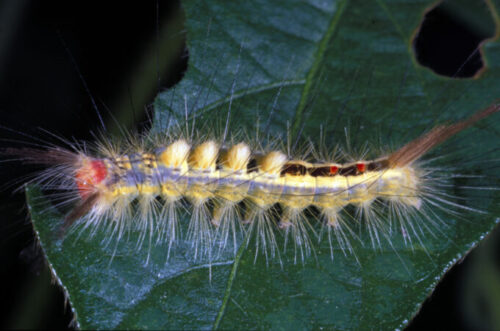
Fig. 3: White-marked tussock moth caterpillar. (Photo: John Obermeyer, Purdue University).
Tussock Moth
The only insect I found on the oak tree was a white-marked tussock moth caterpillar, Orgyia leucostigma (Fig. 3). This is the likely culprit for the minor feeding damage I noticed. These are not significant pests and do not require treatment. Don’t touch them, though! The setae of this caterpillar are irritating and may cause allergic reactions.
Overall, the pests I found were minimal and non-threatening to the trees. It’s normal to find some insect pressure in the landscape. Knowing when and if to treat requires accurate diagnosis and monitoring of pest levels. Check out PurduePlantDoctor.com for an easy-to-use diagnostic aid and treatment recommendations.
Original article posted: Purdue Landscape Report.
Subscribe and receive the newsletter: Purdue Landscape Report Newsletter.
Resources:
Large Spots on Maple Leaves that Look Like Tar, Purdue Extension News
Find an Arborist, International Society of Arboriculture
Diseases in Hardwood Tree Plantings, The Education Store, Purdue Extension’s resource center
Fifty Common Trees of Indiana
An Introduction to Trees of Indiana, The Education Store
Shrubs and Woody Vines of Indiana and the Midwest, The Education Store
Tree Installation: Process and Practices, The Education Store
Forest Improvement Handbook, The Education Store
Invasive Species, Playlist, Purdue Extension – FNR YouTube Channel
Report Invasive Species, Purdue Invasive Species
What are invasive species and why should I care?, Got Nature? Blog, Purdue Extension – Forestry and Natural Resources
Indiana Department of Natural Resources: Invasive Species
Indiana Invasive Species Council
ID That Tree, Purdue Extension-FNR YouTube playlist
Tree Defect Identification, The Education Store
Tree Wound and Healing, Got Nature? Blog, Purdue Extension – Forestry and Natural Resources
Alicia Kelley, Cooperative Agricultural Pest Survey (CAPS) Coordinator
Purdue Extension – Entomology
Familiar with surprise lilies? Indiana has a native surprise onion!
Many yards where I grew up in southern Indiana were graced with surprise lilies. These plants grew long narrow leaves in the spring, which faded and died by early summer. After a pause with no evidence of the plant, long stems with pink lily-like flowers emerged, with no leaves to be seen.

Ramps foliage is often found in clusters or patches in early spring. These leaves will die before summer.
While these plants are not a native species, we do have a native with similar habits that is a distant relative of the surprise lily. That plant is ramps, also known as wild leek and a variety of other local names. There are two species of ramps recognized now – the more common broad-leaved ramps, Allium tricoccum, and the narrow-leaved ramps, Allium burdickii. Ramps are related to onions and garlic and have odor and taste reminiscent of those plants. Ramps foliage emerges early in the spring and was one of the earliest green edibles available to First Nations people and early European settlers.
Many communities developed festivals or celebrations centered on the emergence of ramps as a sign of spring and some fresh greens to eat. The bright green leaves emerge before the tree leaves and fade before summer, but by the first half of June expect to see thin stems with a rounded cluster of small white flowers emerge – our surprise onion! It may take a ramps plant seven to ten years from seed to produce a flower, so this is a slow-growing and long-lived forest perennial. The flowers are pollinated by insects and produce round black seeds that may stay on the stalk through winter.
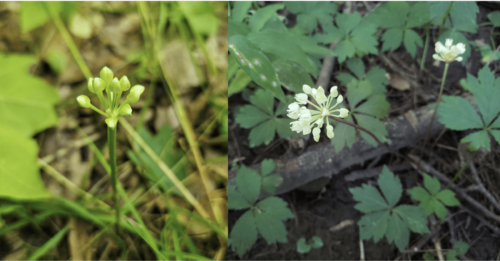
Newly emerged flower stem and buds and the blooming flowers of ramps.
Look for ramps in well-shaded forest areas with moist soils. They have a scattered distribution across Indiana, so you won’t find them in every woodland. The leaves and bulbs are edible, but absolute certainty of ID is essential as there are some toxic plants that look similar. Check ID references and spend some time with experienced foragers before eating any wild plants. The onion/garlic odor of ramps is a good indicator for positive ID.
Since this is a slow growing plant with a limited distribution, over-collection is a threat. A responsible harvesting technique is to harvest one leaf from mature plants, leaving the other leaves and the bulb. If you harvest the whole plant, take less than 5 percent of the plants in a patch, allowing seeding and bulb division to repopulate the area. Seed or bulbs can also be used to plant new patches. So keep you eyes open for our local surprise flowers this June – ramps!
Resources:
ID That Tree, Playlist, Purdue Extension – Forestry and Natural Resources (FNR) YouTube Channel
A Woodland Management Moment, Playlist, Purdue Extension – FNR YouTube Channel (Against Invasives, Garlic Mustard, Autumn Olive)
Woodland Stewardship for Landowners, Playlist, Purdue Extension – FNR YouTube Channel (Common Buckthorn, Japanese Barberry)
Indiana Department of Natural Resources: Invasive Species
Indiana Invasive Species Council
Cooperative Invasive Species Management Area (CISMA)
Episode 11 – Exploring the challenges of Invasive Species, Habitat University-Natural Resource University
What are invasive species and why should I care?, Got Nature? Blog, Purdue Extension – FNR
Shrubs and Woody Vines of Indiana and the Midwest, The Education Store, Purdue Extension Resource Center
Planting Your Tree Part 1: Choosing Your Tree, video, The Education Store
Find an Arborist website, Trees are Good, International Society of Arboriculture (ISA
Lenny Farlee, Extension Forester
Hardwood Tree Improvement and Regeneration Center
Purdue Department of Forestry & Natural Resources
Deer are an important part of Indiana woodlands and represent a true conservation success story. Many Hoosiers spent time in the woods pursuing deer during hunting season or marveling at them during walks in their woodlands. But as recently as the 1930s deer were absent from Indiana woodlands. Restocking efforts led by the Indiana Department of Natural Resources helped reestablish deer populations across the state. However, deer populations have rebounded beyond what the land can support in many areas, leading to issues like crop damage, deer-vehicle collisions, and damage to woodlands.
Deer overabundance can pose a threat to the future health of many Indiana woodlands. Deer are considered a “keystone” species, which means their feeding habits (browsing) can shape our woodlands’ look and their plant and wildlife communities. This publication will outline some of the impacts deer can have on Indiana woodlands and what signs and symptoms to look for in your woods.
Learn more about the amount of impact in this new publication:
Low Impact: When deer have little impact on your woodlands, you often see a high diversity of plants. An abundance of preferred species like trillium (picture) can also be a sign of low deer impact.
Moderate Impact: When sprouts of preferred species are “hedged” or kept short by deer browse and browse on less preferred species is noticeable, then deer impact may be moderate.
High Impact: If invasive species like Japanese stiltgrass and garlic mustard are common in your woodland, it may be a sign that deer are overbrowsing native plants.
High Impact: If invasive species like Japanese stiltgrass and garlic mustard are common in your woodland, it may be a sign that deer are overbrowsing native plants.
Very High Impact: Browse lines indicate a severe deer problem and appear when deer browse all plants within their reach (<6 feet).
You can read this full publication for free at Introduction to White-tailed Deer Impacts on Indiana Woodlands.
View the Deer Impact Toolbox for more resources and videos.
Resources:
Purdue Extension Pond and Wildlife Management
Introduction to White-tailed Deer Impacts on Indiana Woodlands
Understanding White-tailed Deer and Their Impact on Indiana Woodlands, The Education Store
Monitoring White-tailed Deer and Their Impact on Indiana Woodlands, The Education Store
Managing White-tailed Deer Impacts on Indiana Woodlands, The Education Store
Ask an Expert: Wildlife Food Plots, video, Purdue Extension – FNR YouTube Channel
How to Build a Plastic Mesh Deer Exclusion Fence, The Education Store
Managing Your Woods for White-Tailed Deer, The Education Store
Bovine Tuberculosis in Wild White-tailed Deer, The Education Store
Handling Harvested Game: Episode 1, Field Dressing, video, Purdue Extension – FNR YouTube Channel
Deer Harvest Data Collection, Got Nature? Blog, Purdue Extension – FNR
How to Score Your White-tailed Deer, video, The Education Store, Purdue Extension Resource Center
White-Tailed Deer Post Harvest Collection, video, The Education Store
Age Determination in White-tailed Deer, video, The Education Store
Handling Harvested Deer Ask an Expert? video, Purdue Extension – FNR YouTube Channel
Subscribe to Purdue Extension-Forestry & Natural Resources YouTube Channel, Wildlife Playlist
Jarred Brooke, Wildlife Extension Specialist
Purdue Department of Forestry and Natural Resources

Recent Posts
- ID That Tree: Shumard Oak
Posted: March 9, 2026 in Plants, Urban Forestry, Wildlife, Woodlands - ID That Tree: Fragrant Sumac
Posted: February 4, 2026 in Plants, Urban Forestry, Wildlife - It’s Not Too Late to Order Trees for Spring Planting
Posted: January 13, 2026 in Forestry, How To, Plants - Red in Winter – What Are Those Red Fruits I See?
Posted: December 1, 2025 in Forestry, Plants, Urban Forestry, Wildlife, Woodlands - Untangling and Identifying Vines, Purdue Landscape Report
Posted: September 29, 2025 in Invasive Plant Species, Plants, Wildlife - Control Management of Poison Hemlock
Posted: May 7, 2025 in Invasive Plant Species, Plants, Wildlife, Woodlands - Top 10 Spring Flowering Shrubs, Purdue Landscape Report
Posted: April 28, 2025 in Gardening, Plants, Urban Forestry - PPDL’s 2024 Annual Report – Enhancing Plant Health
Posted: March 21, 2025 in Forestry, Invasive Insects, Invasive Plant Species, Plants, Wildlife - What Are Invasive Species and Why Should I Care?
Posted: February 24, 2025 in Forestry, How To, Invasive Plant Species, Plants, Woodlands - Ask An Expert: Holidays in the Wild
Posted: December 9, 2024 in Christmas Trees, Forestry, Forests and Street Trees, How To, Plants, Wildlife, Woodlands
Archives
Categories
- Alert
- Aquaculture/Fish
- Aquatic/Aquaculture Resources
- Ask the Expert
- Christmas Trees
- Community Development
- Disease
- Drought
- Forestry
- Forests and Street Trees
- Gardening
- Got Nature for Kids
- Great Lakes
- How To
- Invasive Animal Species
- Invasive Insects
- Invasive Plant Species
- Land Use
- Natural Resource Planning
- Nature of Teaching
- Plants
- Podcasts
- Ponds
- Publication
- Safety
- Spiders
- Timber Marketing
- Uncategorized
- Urban Forestry
- Webinar
- Wildlife
- Wood Products/Manufacturing
- Woodland Management Moment
- Woodlands