In this spring bloom edition of ID That Tree, meet a rare find in Indiana, the yellowwood tree, a species native to Brown County. This species is recognizable by clusters of white flowers that bloom in May/June, compound leaves and smooth gray bark that resembles American beech.
 Purdue University - Extension - Forestry and Natural Resources
Got Nature? Blog
Purdue Landscape Report: Water covers approximately 71% of Earth’s surface, yet only 3% of the 326 million cubic miles of water on the planet is suitable for growing crops, such as trees. It can be said that water is the single most limiting ecological factor in tree growth and survival. It is a vital “nutrient” that must be available in adequate supply or plants decline and eventually die.
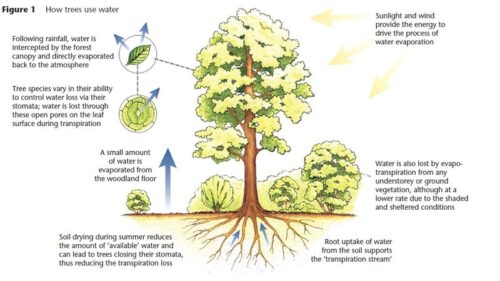
How trees use water is essential to determine water needs.
Trees use or lose water by two separate processes. First, water is taken up by tree roots from the soil and evaporated through the pores or stomata on the surface of leaves. Transpiration is a physiological process responding to soil and atmospheric factors. It is a passive movement of water through the tree system which allows columns of water to move great heights. Water movement through a tree is controlled by the tug-of-war between water availability and water movement in soil versus water loss from leaves. For example, water movement in a ring porous tree like a red oak is 92 ft/hr, in a diffuse porous tree like a basswood is 11 ft/hr, and for a pine tree is 6 ft/hr. Trees can absorb between 10 and 150 gallons of water daily, yet of all the water absorbed by plants, less than 5% remains in the plant for growth. They rely on available water in the soil to “rehydrate” during the nighttime hours, replacing the water loss during the daytime hours.
The second process is the interception of water by the surfaces of leaves, branches and trunks during rainfall, and its following evaporation. Together, these two processes are often referred to as evapotranspiration. Both transpiration and evaporation are strongly affected by the amount of sunlight, the temperature and humidity of the air, as well as wind speed as trees turn water into mist when it releases nearly 95% of the water it absorbs.
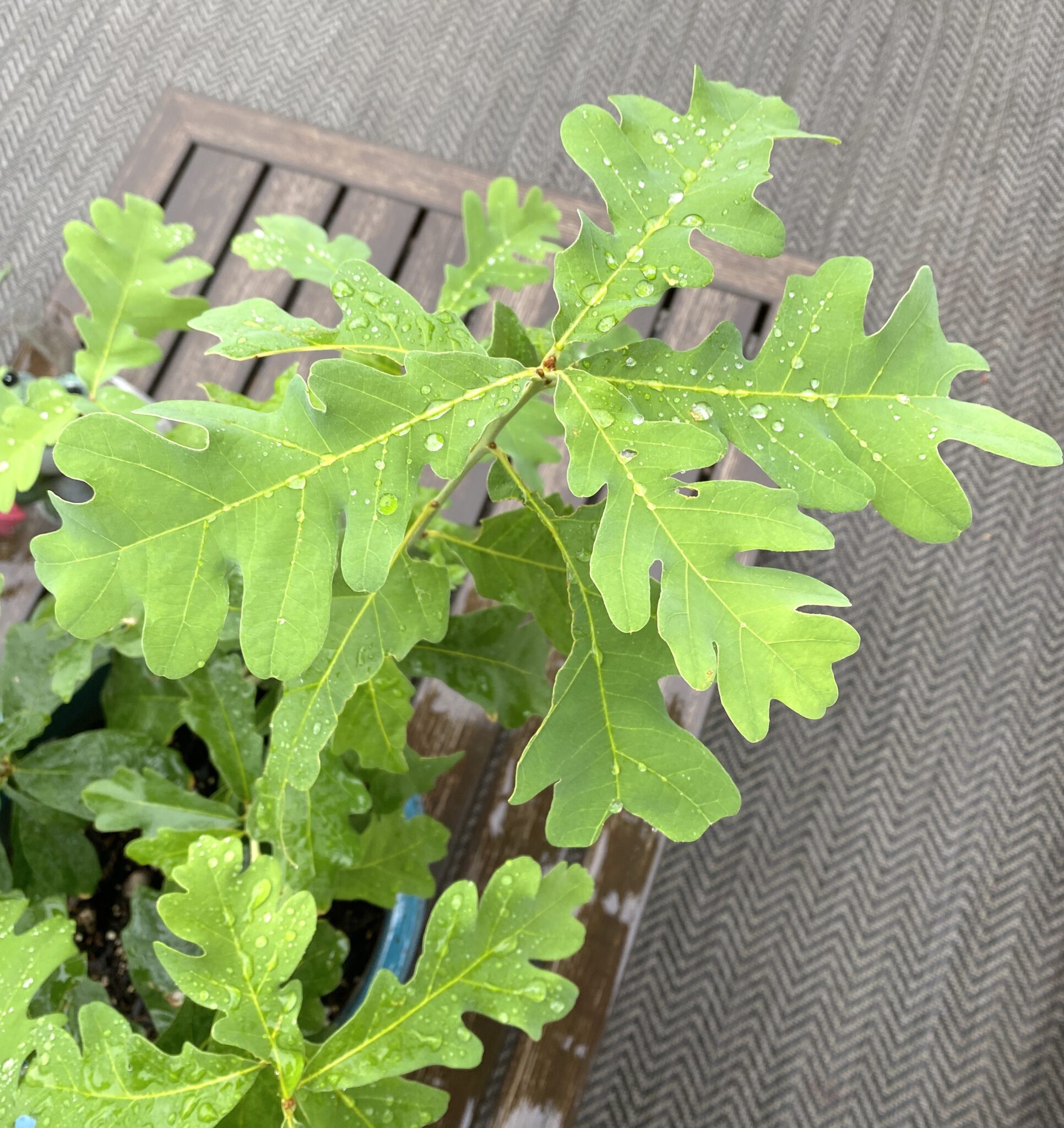
Leaves intercept water to help with stormwater management and cooling.
Just why does a tree need water? Well, nearly every plant process such as photosynthesis, respiration and transpiration rely on water to function properly. Water is an essential element as important if not more than other nutrients because it is required to put all our other elements into a form usable by the plant. Almost all essential elements are ionic forms dissolved in water, giving them the ability to move to stems, branches, and leaves for energy.
The goal of proper tree management is to prevent or reduce the impacts of water loss. If adequate soil moisture is available, water loss will go unnoticed as it is replaced naturally. Typically, we experience prolonged dry periods without rain, resulting in drought. Drought conditions are the result of long periods of time without natural rainfall. During dry conditions, soil moisture content is reduced to the point where tree roots can no longer pull the water molecules from the soil. This results in responses from the plant such as wilting, early fall color, scorching and other symptoms. Anytime there is a week without significant rainfall of at least one inch, most likely trees will need some assistance from us to supply the much-needed water for a healthy tree.
Resources:
Water Your Trees, Purdue Extension-Forestry and Natural Resources (FNR) Got Nature? blog
Summer Tree Care, Purdue Landscape Report
Drought? Don’t Forget the Trees!, The Education Store, Purdue Extension resource center
Extreme Heat, Purdue Extension – IN-PREPared
Drought Information, Indiana Department of Natural Resources
Planting Your Tree Part 1: Choosing Your Tree, Purdue Extension-FNR YouTube Channel
Tree Selection for the “Un-natural” Environment, The Education Store
Tree Pruning Essentials Video, Purdue Extension YouTube Channel
Tree Defect Identification, The Education Store
Surface Root Syndrome, The Education Store
Lindsey Purcell, Chapter Executive Director
Indiana Arborist Association
On this episode of ID That Tree, meet the Northern Catalpa, native to southern Indiana along the Ohio River bottoms. This species, which provides rot resistant wood great for outdoor usage, features beautiful flower clusters in early summer, huge heart shaped leaves in whirled formation, and long bean-like fruit pods.
If you have any questions regarding wildlife, trees, forest management, wood products, natural resource planning or other natural resource topics, feel free to contact us by using our Ask an Expert web page.
Resources:
ID That Tree, Playlist, Purdue Extension – Forestry and Natural Resources Youtube Channel
A Woodland Management Moment, Playlist, Purdue Extension – FNR Youtube Channel
Shrubs and Woody Vines of Indiana and the Midwest, Purdue University Press
Native Trees of the Midwest, Purdue University Press
Investing in Indiana Woodlands, The Education Store
Forest Improvement Handbook, The Education Store
Northern Catalpa, The Purdue Arboretum Explorer
Lenny Farlee, Sustaining Hardwood Extension Specialist
Purdue University Department of Forestry and Natural Resources
Posted on August 27th, 2021 in Forestry, Forests and Street Trees, Plants, Urban Forestry, Woodlands | No Comments »
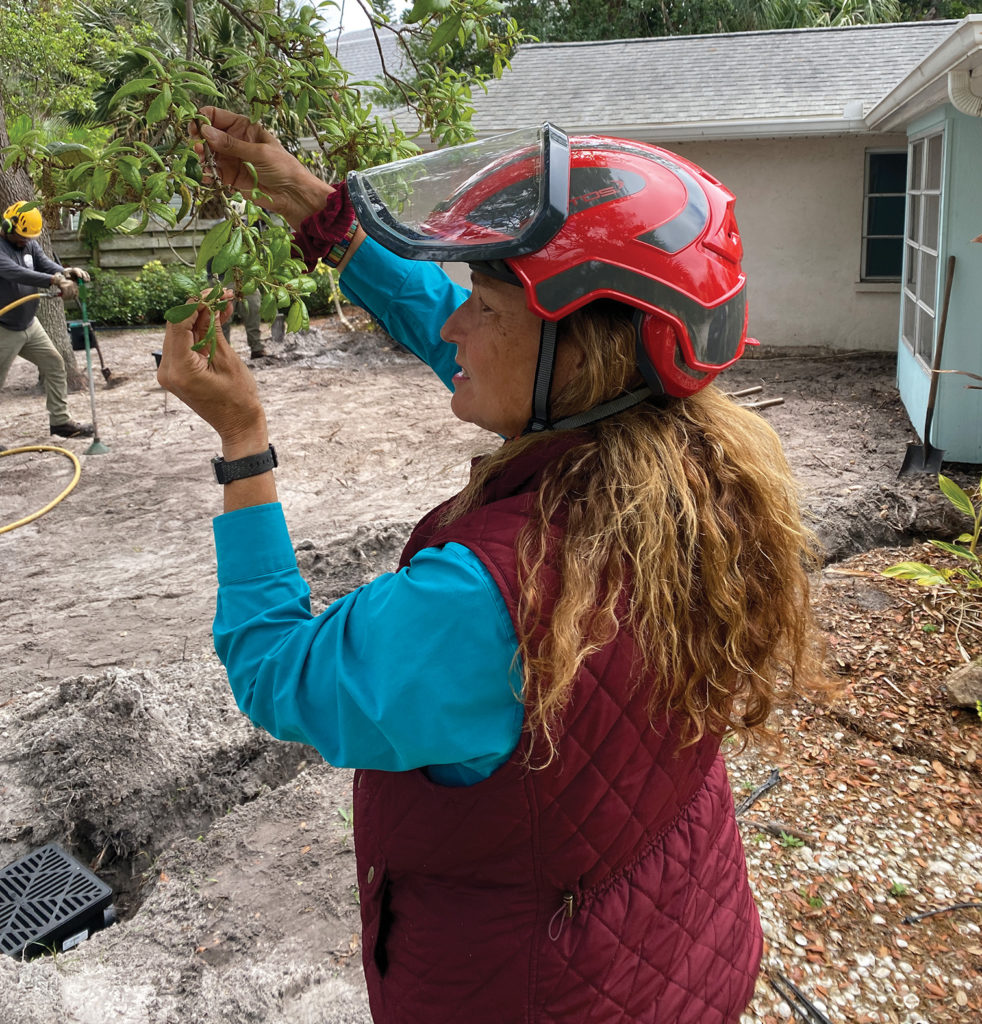
Scouting is the essential first step of an IPM program. Shown here is Tammy Kovar, owner of Biological Tree Services, a nine-year TCIA member company based in Sarasota, Florida. All photos and graphics courtesy of the author.
Tree Care Industry (TCI) Magazine: Plant health care (PHC) is the science and practice of understanding and overcoming the succession of biotic and abiotic factors limiting plants from achieving their full genetic potential in our landscapes and urban forests. Plant health care has been practiced as long as modern arboriculture itself and, as a science-based concept, is an important component in overall integrated pest management (IPM).
Pest management in our urban forests is a moving target and sometimes is overwhelming, especially for those early-career professionals. I remember from my early days in the field the overwhelming thought of needing to know every pest for every tree! I literally had a truckload (back seat of a king cab) of university publications, bulletins and articles ripped out of magazines for reference in the event I couldn’t figure it out quickly and on site. Just that fear of not knowing was often very stressful. Well, that has changed significantly.
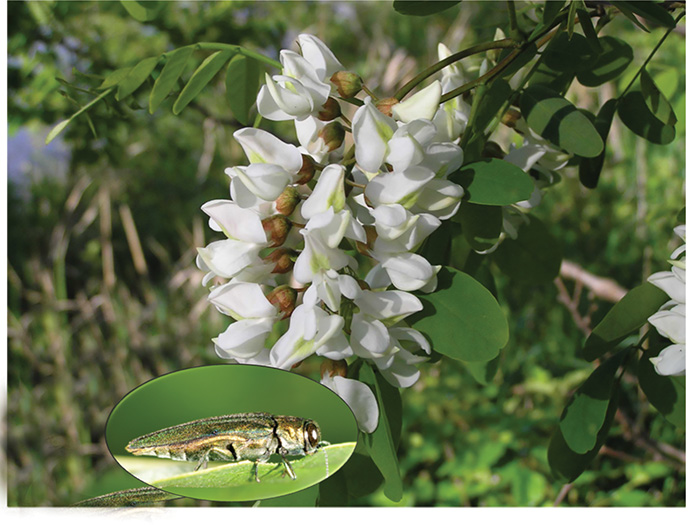
Adult emerald ash borers typically take flight about the same time that black locust trees bloom, indicating a good time for treatment.
The point is that first, you don’t have to know everything, and second, resources now are easily and readily available. Today, the smartphone and computing opportunities available on mobile platforms, apps such as the Purdue Tree Doctor and other web-based apps have improved diagnostics significantly, making it simpler for the technician to get a better idea of their pest issue and easier to find a control strategy.
One of the basic and most important keys when starting a PHC program is just learning to recognize the concerns for common trees already in your care. Tree identification is critically important to determine whether the tree is even a host for any given disease or insect. As a technician, you don’t need to know every tree in North America; just focus on those that are commonly found and that you are called upon to investigate for pest issues with your clients and customers. Few things are as awkward as misidentification of a tree and the corresponding application. Recommendations for treating emerald ash borer on a European mountain ash (Sorbus aucuparia), which is not susceptible to EAB infestation, could be fairly damaging to your credibility and your company!
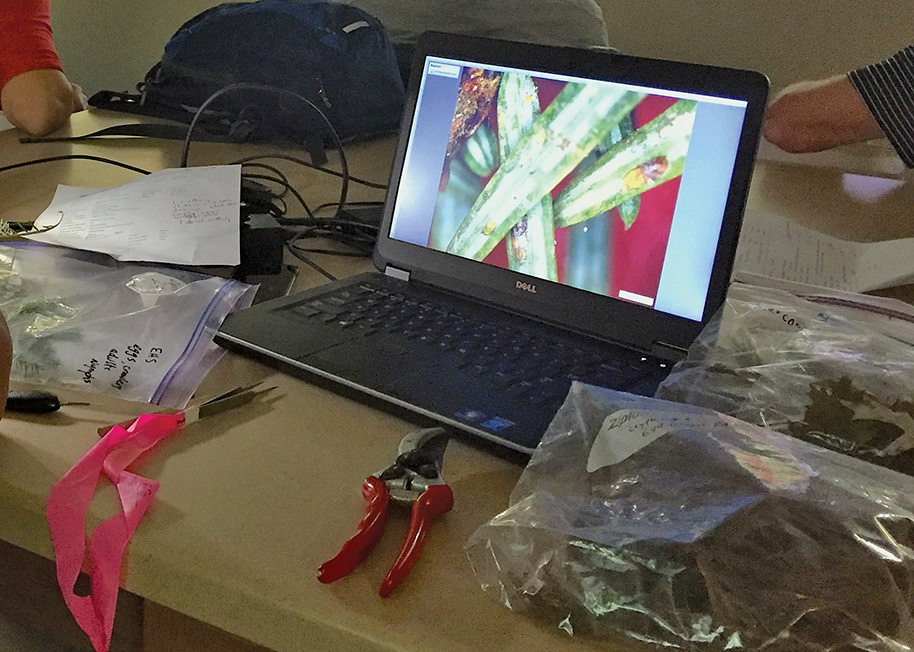
Each state has a land-grant college with resources to assist PHC technicians.
Get some help
All there is to know and what you need to know can be mind-boggling; however, it is more manageable when we are able to discover the resources available. Often overlooked, local extension services from state land-grant colleges provide a tremendous collection of experts trained and educated in pest management. They often have plant and pest diagnostic laboratories assisting with identification of those challenging diseases or insects, usually at a very economical cost, along with the appropriate management strategy to apply for control.
Resources:
Planting Your Tree Part 1: Choosing Your Tree, Purdue Extension YouTube Channel
Tree Installation: Process and Practices, The Extension Store, Purdue Extension resource center
Ask an Expert: Tree Selection and Planting, Purdue FNR Extension YouTube Channel
Webinar: How to Identify Trees in Indiana, Got Nature? Post, Purdue Extension – Forestry and Natural Resources
Shrubs and Woody Vines of Indiana and the Midwest, Purdue University Press
Native Trees of the Midwest, Purdue University Press
ID That Tree, Purdue Extension – Forestry and Natural Resources YouTube Playlist
Purdue Plant and Pest Diagnostic Lab
Emerald Ash Borer Information from Purdue
Lindsey Purcell, Urban Forestry Specialist
Purdue Department of Forestry and Natural Resources
On this edition of ID That Tree, Purdue Extension forester Lenny Farlee introduces you to the swamp white oak, a native Indiana species typically found in bottomlands and wet sites. This member of the white oak group has rounded lobed leaves that are dark on top and light colored on the flip side, and produces acorns that are held on long stems.
If you have any questions regarding wildlife, trees, forest management, wood products, natural resource planning or other natural resource topics, feel free to contact us by using our Ask an Expert web page.
Resources:
ID That Tree, Playlist, Purdue Extension – Forestry and Natural Resources Youtube Channel
A Woodland Management Moment, Playlist, Purdue Extension – FNR Youtube Channel
Shrubs and Woody Vines of Indiana and the Midwest, Purdue University Press
Native Trees of the Midwest, Purdue University Press
Investing in Indiana Woodlands, The Education Store
Forest Improvement Handbook, The Education Store
Swamp White Oak, The Purdue Arboretum Explorer
Lenny Farlee, Sustaining Hardwood Extension Specialist
Purdue University Department of Forestry and Natural Resources
In this spring bloom edition of ID That Tree, meet the bladdernut, which features clusters of tiny white/yellow flowers in the spring. Learn more about this small shrub from Purdue Extension forester Lenny Farlee inside.
If you have any questions regarding wildlife, trees, forest management, wood products, natural resource planning or other natural resource topics, feel free to contact us by using our Ask an Expert web page.
Resources:
ID That Tree, Playlist, Purdue Extension – Forestry and Natural Resources Youtube Channel
A Woodland Management Moment, Playlist, Purdue Extension – FNR Youtube Channel
Shrubs and Woody Vines of Indiana and the Midwest, Purdue University Press
Native Trees of the Midwest, Purdue University Press
Investing in Indiana Woodlands, The Education Store
Forest Improvement Handbook, The Education Store
Lenny Farlee, Sustaining Hardwood Extension Specialist
Purdue University Department of Forestry and Natural Resources
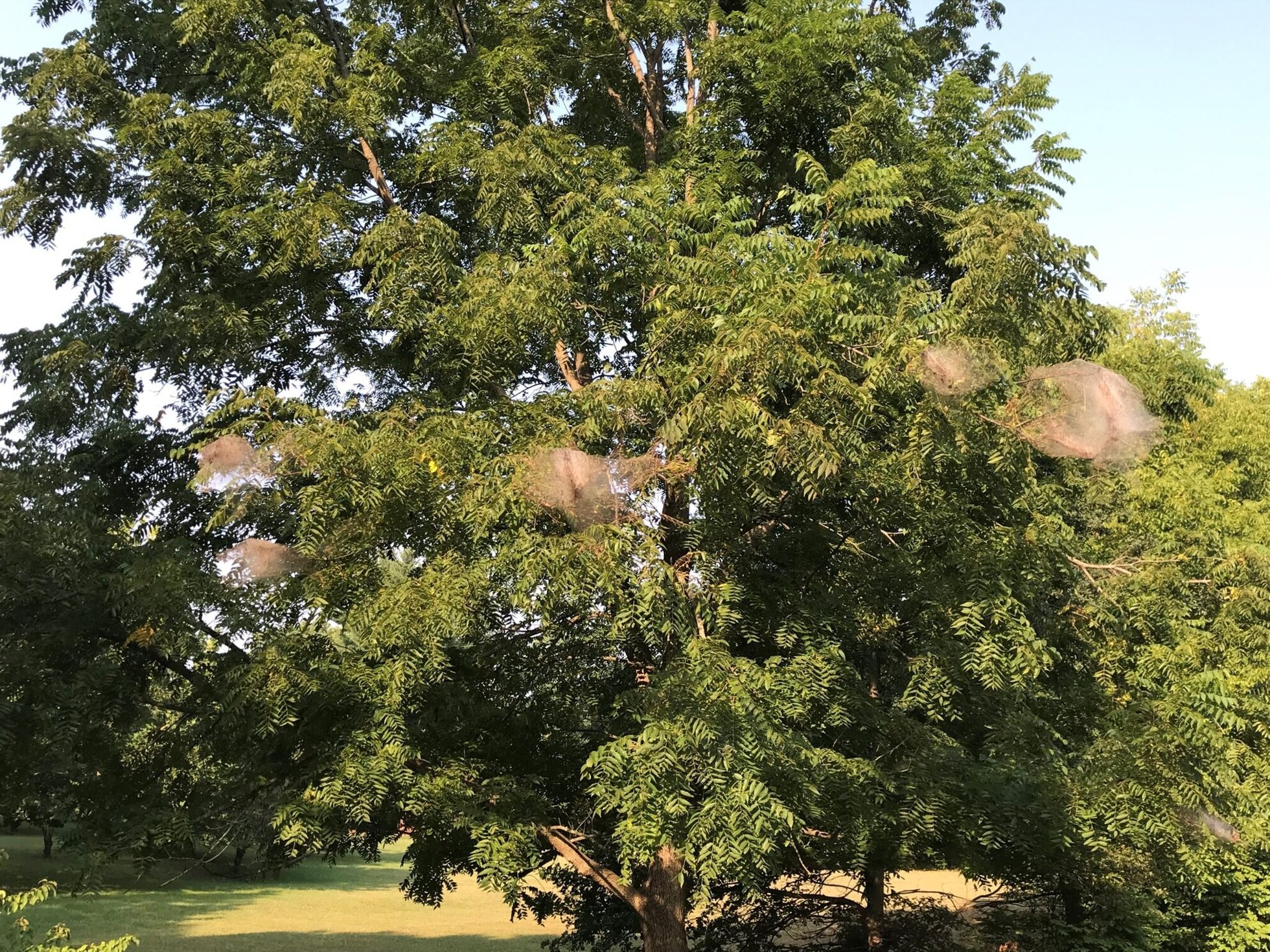
Figure 1. White webs of fall webworm are a common site along roadsides and forest edges.
Purdue Landscape Report: Just after the browned leaves on branches of trees attacked by periodical cicadas began to disappear from view, webworms and their associated browning started to spread through the landscape. Two of the more common webworms I have been seeing are the mimosa and the fall webworm. While neither of them can outright kill trees, they are unsightly, especially at the end of the summer when substantial portions of the tree are disfigured. Treatment late in the summer does little to reduce injury, because it can be difficult to penetrate the webs with insecticides, and because most of the damage has already been done. The best course of action is to plan on managing these insects next year, when they are more easily controlled with insecticides.
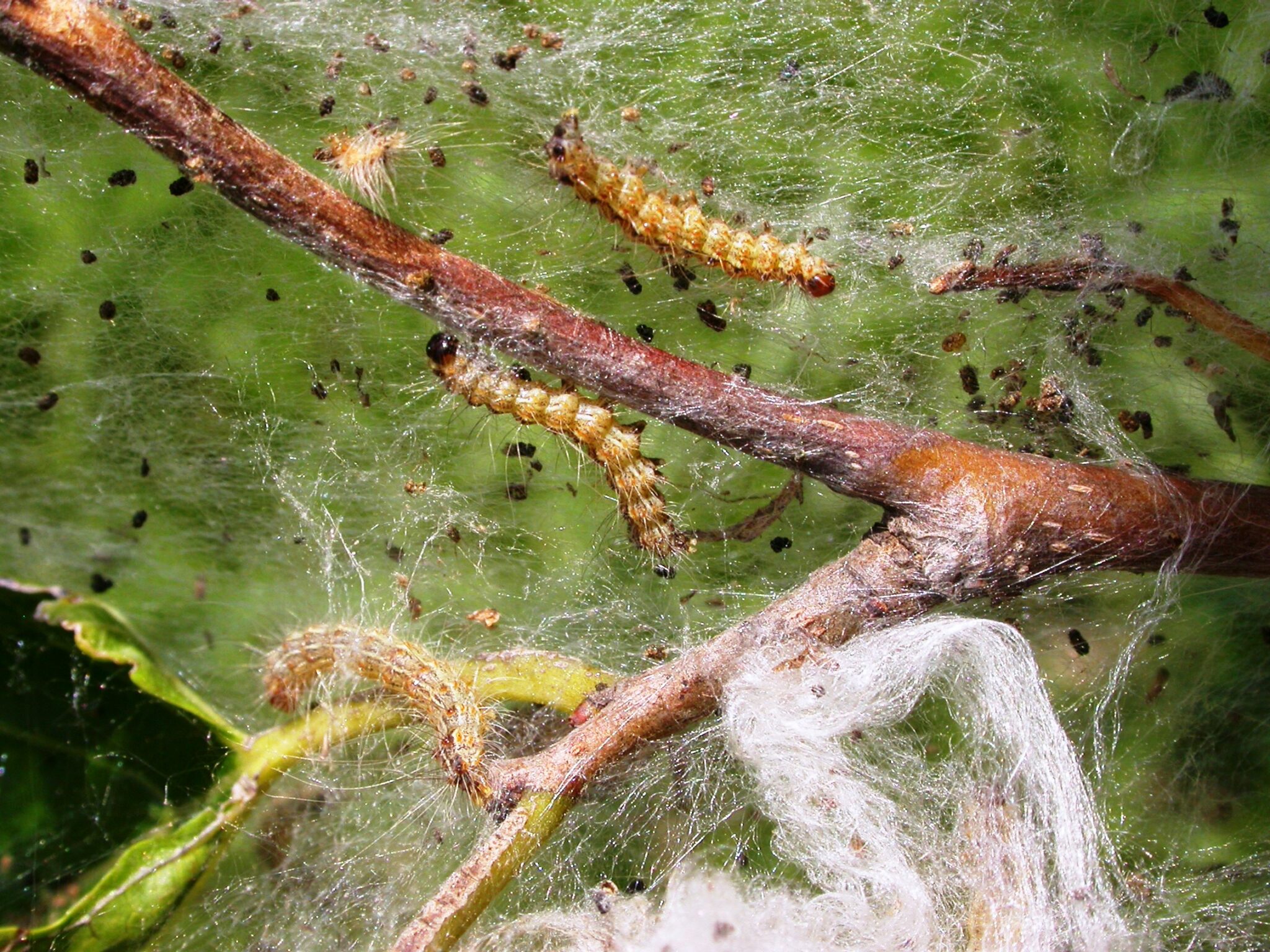
Figure 2. Fall webworms and fecal pellets feeding in web.
Fall webworm attacks a wide range of deciduous trees including flowering fruit trees, black walnuts, elm, hickory and bald cypress. They are most common in suburban areas, roadsides and forest edges that lack the predators and parasites the webworms encounter in the forest. In June adults emerge from wintering sites to lay eggs in the canopy. Eggs hatch into caterpillars that encase branches in webs as they feed. By the end of the second generation in late August webs can cover substantial portions of trees. Caterpillars are yellowish-green with black spots and long white hairs, and grow up to 1.5″. Caterpillar feces falling from trees can be a problem during heavy infestations.
Figure 3. Brown webbing caused by the mimosa webworm is extensive on honeylocust plantings throughout the state.
Unlike fall webworm, the mimosa webworm only attacks honeylocust and mimosa trees. Leaves on ends of branches become webbed together and turn brown as lime-green caterpillars skeletonize leaf tissue. Heavily infested trees appear frosted brown. In early June, adults emerge and lay eggs on trees. First webs can be seen on ends of branches in mid-June when oak leaf hydrangea and tree lilac are in bloom. The second generation of adults fly and lay eggs starting in late July. A third generation occurs in the fall. The dangling caterpillars can be a nuisance under heavily infested trees. We are seeing an uptick in the abundance of this pest because the last two winters have not been cold enough to kill them.
Resources:
Purdue Landscape Report
Ask an Expert, Purdue Extension – Forestry and Natural Resources
Purdue Plant Doctor App Suite, Purdue Extension – Entomology
Landscape & Ornamentals: Bagworms, The Education Store, Purdue Extension
Bagworm caterpillars are out feeding, be ready to spray your trees, Got Nature? Post, Purdue Extension – Forestry and Natural Resources
Fall Webworms: Should You Manage Them, Got Nature? Post, Purdue Extension – Forestry and Natural Resources
On this edition of ID That Tree, meet the American hornbeam, also known as the musclewood or the water or blue beech. This native Indiana understory tree stands out due to its gray bark and striations that resemble muscles and sinews as well as its doubly toothed leaves.
If you have any questions regarding wildlife, trees, forest management, wood products, natural resource planning or other natural resource topics, feel free to contact us by using our Ask an Expert web page.
Resources:
ID That Tree, Playlist, Purdue Extension – Forestry and Natural Resources Youtube Channel
A Woodland Management Moment, Playlist, Purdue Extension – FNR Youtube Channel
Shrubs and Woody Vines of Indiana and the Midwest, Purdue University Press
Native Trees of the Midwest, Purdue University Press
Investing in Indiana Woodlands, The Education Store
Forest Improvement Handbook, The Education Store
American Hornbeam, The Purdue Arboretum Explorer
Lenny Farlee, Sustaining Hardwood Extension Specialist
Purdue University Department of Forestry and Natural Resources
Posted on August 4th, 2021 in Forestry, Forests and Street Trees, Plants, Wildlife, Woodlands | No Comments »
In this edition of ID That Tree, Purdue Extension forester Lenny Farlee introduces you to a member of the Indiana maple family that doesn’t follow the rest of its family’s traditions. Learn about the boxelder and its unique traits inside.
If you have any questions regarding wildlife, trees, forest management, wood products, natural resource planning or other natural resource topics, feel free to contact us by using our Ask an Expert web page.
Resources:
ID That Tree, Playlist, Purdue Extension – Forestry and Natural Resources Youtube Channel
A Woodland Management Moment, Playlist, Purdue Extension – FNR Youtube Channel
Shrubs and Woody Vines of Indiana and the Midwest, Purdue University Press
Native Trees of the Midwest, Purdue University Press
Investing in Indiana Woodlands, The Education Store
Forest Improvement Handbook, The Education Store
Boxelder, The Purdue Arboretum Explorer
Lenny Farlee, Sustaining Hardwood Extension Specialist
Purdue University Department of Forestry and Natural Resources
If you have any questions regarding wildlife, trees, forest management, wood products, natural resource planning or other natural resource topics, feel free to contact us by using our Ask an Expert web page.
Resources:
ID That Tree, Playlist, Purdue Extension – Forestry and Natural Resources Youtube Channel
A Woodland Management Moment, Playlist, Purdue Extension – FNR Youtube Channel
Shrubs and Woody Vines of Indiana and the Midwest, Purdue University Press
Native Trees of the Midwest, Purdue University Press
Investing in Indiana Woodlands, The Education Store
Forest Improvement Handbook, The Education Store
Yellowwood, The Purdue Arboretum Explorer
Lenny Farlee, Sustaining Hardwood Extension Specialist
Purdue University Department of Forestry and Natural Resources
Posted on July 28th, 2021 in Forestry, Gardening, Invasive Plant Species, Plants, Urban Forestry, Woodlands | No Comments »
In this episode of A Woodland Management Moment, Purdue Extension forester Lenny Farlee talks about a variety of hand tools you can use to assist with invasive species control and timber stand improvement on your property if you choose not to use power tools.
If you have any questions regarding trees, forests, wildlife, wood products or other natural resource topics, feel free to contact us by using our Ask an Expert web page.
Resources:
A Woodland Management Moment, Playlist, Purdue Extension – Forestry and Natural Resources (FNR) YouTube Channel
Shrubs and Woody Vines of Indiana and the Midwest, Purdue University Press
Native Trees of the Midwest, Purdue University Press
Investing in Indiana Woodlands, The Education Store
Forest Improvement Handbook, The Education Store
Woodland Stewardship for Landowners Video Series, Playlist, Indiana Department of Natural Resources YouTube Channel
Lenny Farlee, Sustaining Hardwood Extension Specialist
Purdue University Department of Forestry and Natural Resources

Recent Posts
- ID That Tree: Nannyberry Viburnum
Posted: July 22, 2026 in Forestry, Plants, Wildlife, Woodlands - ID That Tree: Eastern Swamp Privet
Posted: in Forestry, Plants, Wildlife, Woodlands - Indiana Monarch and Pollinator Conservation
Posted: June 1, 2026 in Forestry, Forests and Street Trees, Gardening, How To, Natural Resource Planning, Plants, Urban Forestry, Wildlife - ID That Tree: Shumard Oak
Posted: March 9, 2026 in Plants, Urban Forestry, Wildlife, Woodlands - ID That Tree: Fragrant Sumac
Posted: February 4, 2026 in Plants, Urban Forestry, Wildlife - It’s Not Too Late to Order Trees for Spring Planting
Posted: January 13, 2026 in Forestry, How To, Plants - Red in Winter – What Are Those Red Fruits I See?
Posted: December 1, 2025 in Forestry, Plants, Urban Forestry, Wildlife, Woodlands - Fall Tree Care Tips
Posted: September 20, 2025 in Forestry, Forests and Street Trees, Gardening, How To, Land Use, Plants, Safety, Timber Marketing, Urban Forestry, Wood Products/Manufacturing, Woodlands - Top 10 Spring Flowering Shrubs, Purdue Landscape Report
Posted: April 28, 2025 in Gardening, Plants, Urban Forestry - Protecting Spring Plants From Wildlife Damage Using Repellents
Posted: April 14, 2025 in How To, Plants, Wildlife
Archives
Categories
- Alert
- Aquaculture/Fish
- Aquatic/Aquaculture Resources
- Ask the Expert
- Christmas Trees
- Community Development
- Disease
- Drought
- Forestry
- Forests and Street Trees
- Gardening
- Got Nature for Kids
- Great Lakes
- How To
- Invasive Animal Species
- Invasive Insects
- Invasive Plant Species
- Land Use
- Natural Resource Planning
- Nature of Teaching
- Plants
- Podcasts
- Ponds
- Publication
- Safety
- Spiders
- Timber Marketing
- Urban Forestry
- Webinar
- Wildlife
- Wood Products/Manufacturing
- Woodland Management Moment
- Woodlands