 Purdue University - Extension - Forestry and Natural Resources
Got Nature? Blog
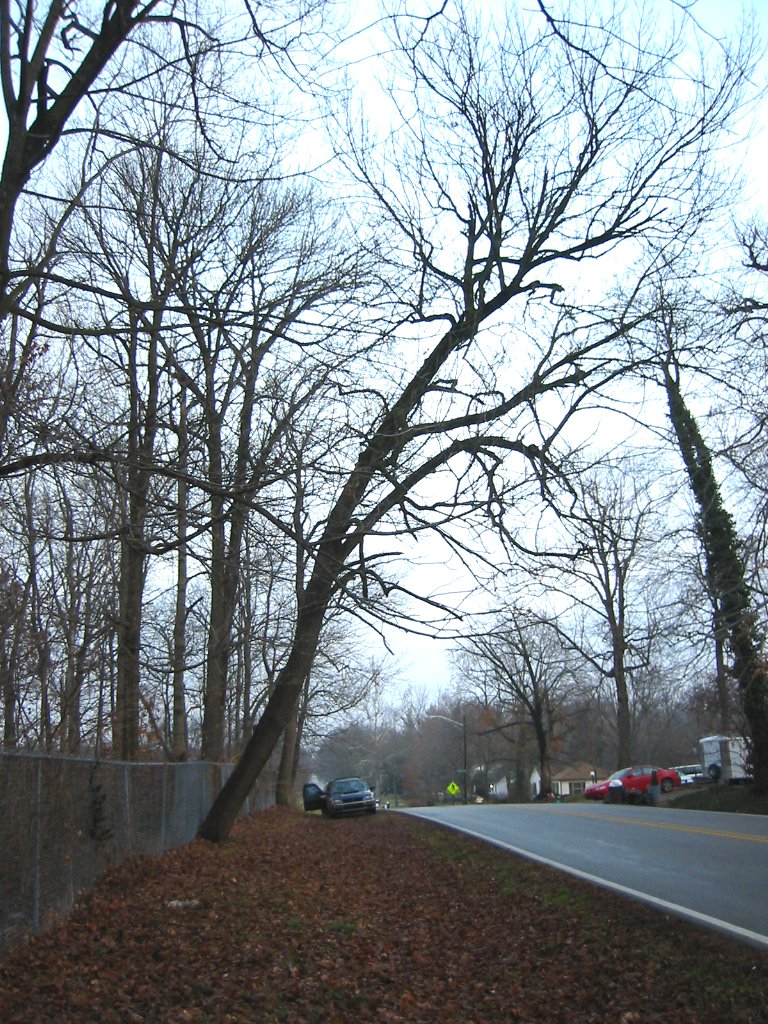
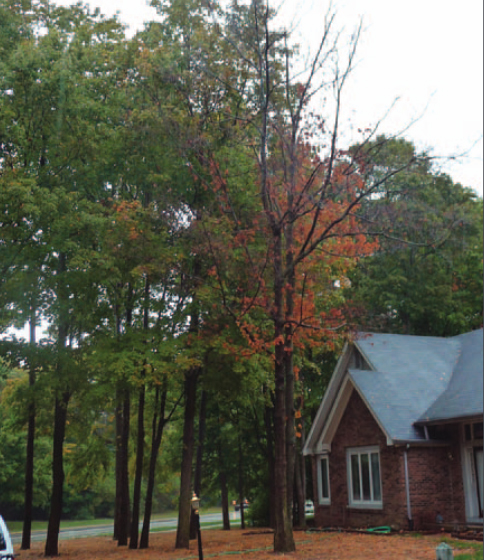
Leaning trees can be a risk to neighboring property owners.
Purdue Landscape Report: I hear this complaint or issue more frequently, “what can I do about the neighbor’s tree?” or “my neighbor just butchered my tree!”. Often, we see issues with a neighboring tree that may threaten safety or appears to be an elevated risk. For example, from the view of your window, you see your neighbor’s tree dropping dead branches all over your driveway. Or, you can’t see a favorable view at all because of that tree or unruly hedge. Or you are certain that the neighbor’s tree will eventually fall onto your garage.
Before you take any action, establish ownership of the tree, and find out if you have rights to work on the offending vegetation. Otherwise, it can land you into a contentious legal situation.
Some questions to consider include:
When tree limbs or even the trunk of the tree crosses property line, are you within your rights to prune or remove it?
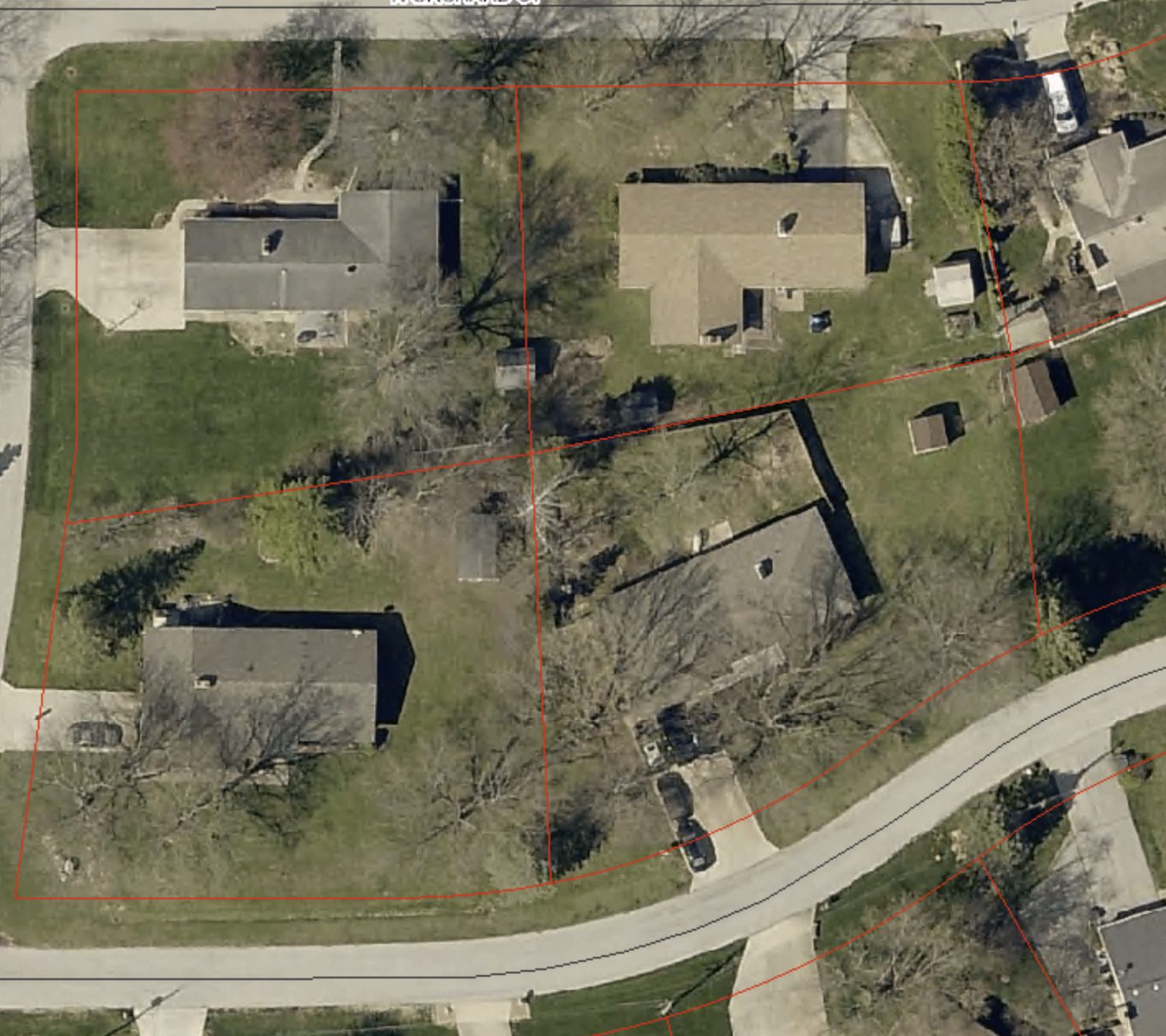
Check with local government websites for property maps which can help identify boundaries.
Boundary laws vary with every state. Often the boundary lines are uncertain or assumed based on local information. However, in contentious situations that may result in major modifications to a tree, it is advised to get a survey to establish exactly who owns the tree.
Rights are determined by who owns the tree. Check with your town, city, county and state municipalities for regulations about trees and property lines. The rights and responsibility for care and maintenance of trees are assigned to its owner, and ownership is determined by the location of the tree’s trunk. If the trunk is located entirely on the neighbor’s land even if its limbs or branches overhang onto your land, the neighbor is the tree’s owner. The neighbor has the sole right to preserve the tree or cut it down. This is true regardless of the neighbor’s motivation or the impact the tree removal would have on your land.
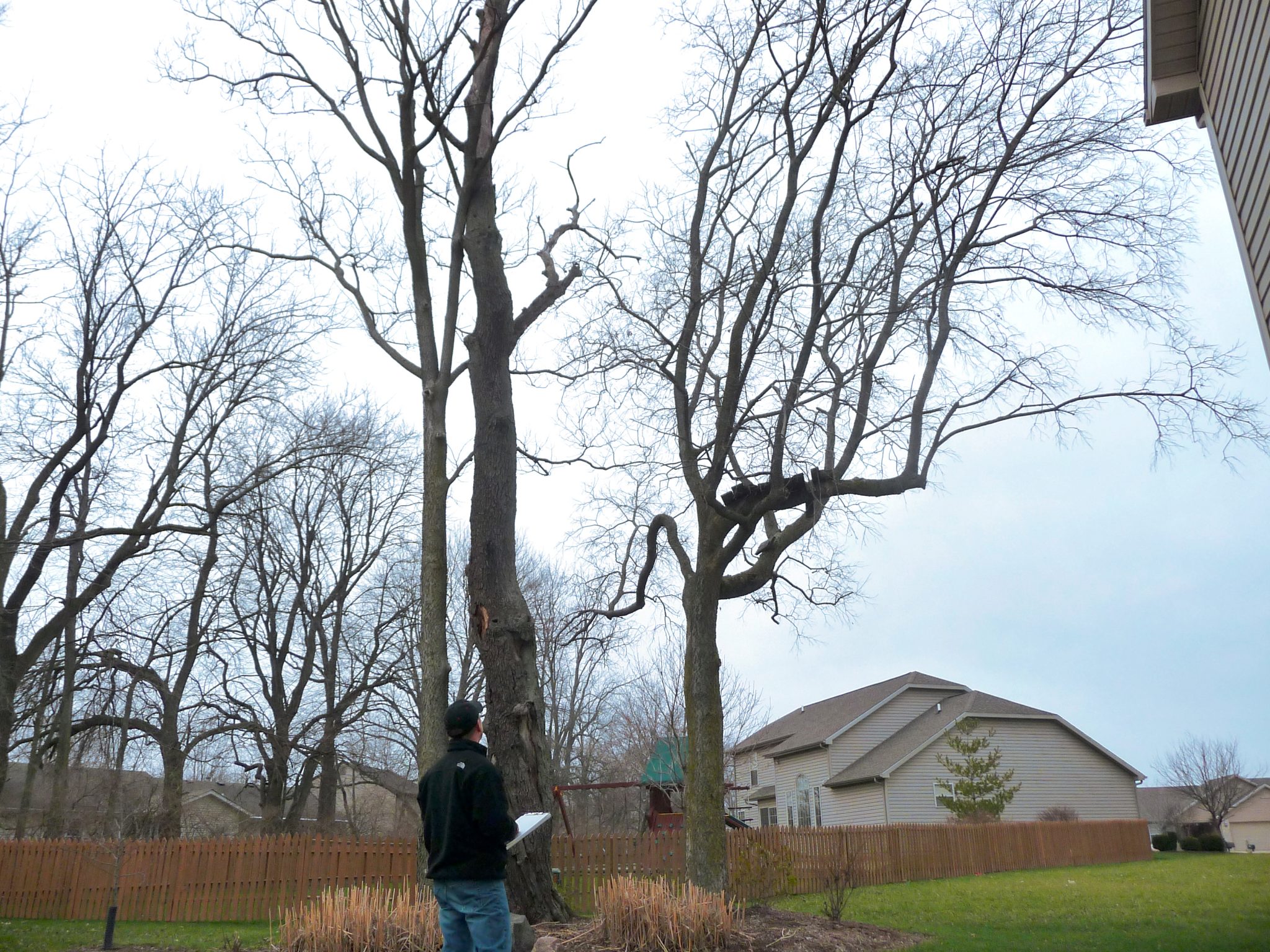
An ISA certified arborist can provide mitigation options that are best for the tree and helpful for the tree owner.
It is always best practice and considerate to first ask your neighbor if you can arrange to have it removed or pruned. They might actually appreciate it.
When tree work is required to remove or prune the tree and neighbor conflict exists, have a qualified tree care provider determine the work specifications on exactly how the tree issue should be mitigated. It is usually a bit more complex than simply stating, “cut limbs back to property line.” The work order must reference the ANSI A300 tree pruning standards to assure the procedures being proposed take into consideration the tree’s future health. Ensure that your tree care provider has a copy of their current liability insurance policy on hand. Check their references as well, not all tree care companies are guaranteed to provide the best results for you or your tree.
The best advice is to hire a tree care professional with the experience, expertise, and equipment to assess and safely prune, remove or otherwise care for your or your neighbors’ trees. Search for a tree care provider in your area. Also, consider hiring an ISA Certified Arborist which can be found here.
According to most attorneys, open-minded communications with the neighbor can result in an acceptable resolution for any situation. This will help to avoid contentious, expensive, time consuming, and unpredictable lawsuits.
Resources
Find An Arborist, Trees are Good
Tree Pruning Essentials, video and publication, The Education Store, Purdue Extension Forestry and Natural Resources
Construction and Trees: Guidelines for Protection, The Education Store
Question: Can tree roots cause damage to a home’s foundation?, Got Nature? Blog, Purdue Extension – Forestry and Natural
Lindsey Purcell, Urban Forestry Specialist
Purdue University, Department of Forestry and Natural Resources
In this special fall color edition of ID That Tree, Purdue Extension forester Lenny Farlee introduces you to the range of colors produced by the sugar maple.
If you have any questions regarding wildlife, trees, forest management, wood products, natural resource planning or other natural resource topics, feel free to contact us by using our Ask an Expert web page.
Resources
Hard or Sugar Maple, The Education Store, Purdue Extension – Forestry and Natural Resources
Sugar Maple, Purdue Arboretum Explorer
Sugar Maple, Native Trees of Indiana River Walk, Purdue – Fort Wayne
Fall Color Pigments, Video, Purdue Extension – Forestry and Natural Resources Youtube Channel
ID That Tree, Playlist
A Woodland Management Moment, Playlist
Investing in Indiana Woodlands, The Education Store
Forest Improvement Handbook, The Education Store
Lenny Farlee, Sustaining Hardwood Extension Specialist
Purdue University Department of Forestry and Natural Resource
The 100 year study, Hardwood Ecosystem Experiment (HEE), brings pertinent forest management data to many in Indiana. HEE Extension publications continue to share topics including: Wildlife Responses to Timber Harvesting, Sustaining our Oak-Hickory Forests, Forest Birds and more.
To learn more about this 100 year forest management plan and see its impacts, check out the Hardwood Ecosystem Experiment (HEE) website.
Resources
Hardwood Ecosystem Experiment (HEE), Playlist, Purdue Extension – Forestry and Natural Resources
A Woodland Management Moment, Playlist
Woodland Stewardship for Landowners, Playlist
The Hardwood Ecosystem Experiment: Indiana Forestry and Wildlife, The Education Store, Purdue Extension resource center
Resources and Assistance Available for Planting Hardwood Seedlings, The Education Store
Charlotte Owings, Hardwood Ecosystem Experiment Project Coordinator
Purdue University, Department of Forestry and Natural Resources
 Calling all teachers and parents: Do you need some new ideas on how to get students out in nature or teach them science lessons?
We’ve got you covered with our Nature of Teaching program. We’ve created more than 40 sneak peek videos that introduce you to our lesson plans, offering a quick way for teachers and other K-12 leaders to view the lessons as well as the related activities.
Many of the lesson plans meet state specifications for Next Generation Science Standards and/or Core Standards, while also offering informal curriculum items and fun activities for all K-12 leaders.

The Nature of Teaching program offers three areas of formal and informal activity-based curricula centered around getting youth outside: wildlife, health and wellness, and food waste.
Sneak Peeks videos include topics ranging from producers, consumers and natural resources and food waste from farm to fork, to exploring nature with your senses and emotional vocabulary exploration, to trees of the Midwest and healthy water/happy home.
Subscribe to the Nature of Teaching YouTube Channel for more Wildlife, Food Waste, and Health and Wellness information.
Resources
Nature of Teaching Website
Nature of Teaching YouTube Channel
Nature of Teaching Program Receives Environmental Education Award, College of Agriculture, Purdue University
Resourceful Animal Relationships, The Education Store, Purdue Extension resource center
The Nature of Teaching: Food Waste Solutions, The Education Store
Benefits of Connecting with Nature, The Education Store
Rod N Williams, Professor of Wildlife Science
Purdue University Department of Forestry and Natural Resources
The Purdue Landscape Report, a blog which provides science-based, timely information regarding Midwest landscapes to commercial growers, garden centers, landscapers, arborists and the general public, was recognized with the Extension Division Education Materials Award for Outstanding Blog at the American Society of Horticultural Science convention in August.
The Purdue Landscape Report is a collaborative effort between Purdue Extension specialists and diagnosticians in the areas of horticulture, entomology, plant pathology, urban forestry and turf science. Articles cover everything from tree maintenance to pest and disease problems and management to plant selection.
“Our Purdue Green Industry Team brings together many disciplines and expertise for the industry and homeowners as well as any other university in the country,” Nursey and Landscape Outreach Specialist Kyle Daniel said. “The research and outreach efforts of each member of the team contributes to helping the industry be more sustainable, efficient, environmentally conscious, and profitable. The Purdue Landscape Report is one way that we present science-based information to our stakeholders around the state. In addition to this information being distributed locally, there are many subscribers from across the country.”
The PLR team includes:
 Kyle Daniel – Nursey and Landscape Outreach Specialist, Purdue Horticulture and Landscape Architecture
- Rosie Lerner – Extension Consumer Horticulturist, Purdue Horticulture and Landscape Architecture
- Cliff Sadof – Professor, Entomology Extension Specialist
- Tom Creswell – Clinical Engagement Professor, Director of the Plant & Pest Diagnostic Laboratory; Purdue Botany and Plant Pathology
- Janna Beckerman – Professor of Botany and Plant Pathology
- John Bonkowski – Clerk, Purdue Botany and Plant Pathology
- Lindsey Purcell – Purdue Extension urban forester, Purdue Forestry and Natural Resources
- Gail Ruhl – Visiting Scholar, Purdue Biological Sciences
- Elizabeth Barnes – Exotic Forest Pest Educator, Purdue Entomology
- Todd Abrahamson – Purdue Plant & Pest Diagnostic Lab Secretary
- Lori Jolly-Brown – Extension Events and Communications Coordinator, Purdue Horticulture and Landscape Architecture
- Kirby Kalbaugh – Application and Systems Administrator, Purdue Horticulture and Landscape Architecture

Since launching in February 2018, the Purdue Landscape Report has included more than 144 articles. The website boasted more than 75,000 unique article downloads in 2019. PLR is also sent out in a bi-weekly email newsletter to more than 4,000 subscribers nationwide. The blog has brought in 137,000 unique visitors thus far in 2020.
In August, the Purdue Landscape Report staff also began a live, virtual series every other Wednesday, which addresses articles and hot topics. In just two months, that series has had more than 1,100 views.
Resources
Purdue Landscape Report Team Begins New Virtual Series, Got Nature? Blog, Purdue Extension – Forestry and Natural Resources
The Purdue Landscape Report Issues, Purdue Landscape Report
Tree wounds and healing, Got Nature? Blog
Fall webworms: Should you manage them, Got Nature? Blog
Purdue Landscape Report Facebook Page
There are so many gorgeous showings of fall foliage out right now. In this video, Purdue Extension forester Lenny Farlee introduces you to this beautiful vine – the Virginia Creeper, also known as the five-leaved ivy. Virginia Creeper has five leaflets unlike the three of poison ivy and has less toothy leaves. Learn more inside.
If you have any questions regarding trees, forests, wildlife, wood products or other natural resource topics, feel free to contact us by using our Ask an Expert web page.
Resources
Virginia Creeper, Purdue Arboretum Explorer
Fall Color Pigments, Video, Purdue Extension – Forestry and Natural Resources Youtube Channel
ID That Tree, Playlist
A Woodland Management Moment, Playlist
Poison Ivy, The Education Store, Purdue Extension – Forestry and Natural Resources
Investing in Indiana Woodlands, The Education Store
Tree Appraisal and the Value of Trees, The Education Store
Forest Improvement Handbook, The Education Store
Lenny Farlee, Sustaining Hardwood Extension Specialist
Purdue University Department of Forestry and Natural Resource
The Nature of Teaching, a Purdue Extension signature program, was honored as the third place finisher in the central region for the Environmental Education Award presented by the National Extension Association of Family and Consumer Science (NEAFCS).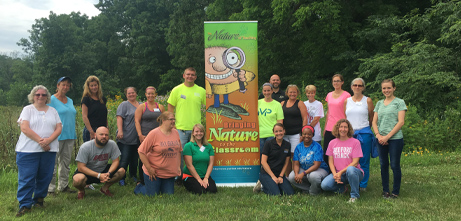 The Nature of Teaching team includes:
- Deb Arseneau, HHS Educator, Newton County
- Jarred Brooke, extension wildlife specialist
- Jay Christiansen, health and human sciences extension educator for Vigo County
- Robert Cordes, Maine Department of Inland Fisheries and Wildlife (MDIFW) wildlife special projects coordinator
- Molly Hoag, health and human sciences extension educator for Wells County
- Molly Hunt, health and human sciences extension educator for Delaware County
- Rebecca Koetz, urban ag/home horticulture extension educator for Lake County
- Tami Mosier, 4-H youth development extension educator
- Kelsie Muller, health and human sciences extension educator for Benton County
- Dr. Rod Williams, professor of wildlife science
- Brad Zitske, Maine Department of Inland Fisheries and Wildlife (MDIFW) assistant regional wildlife biologist
Nature of Teaching
Nature of Teaching YouTube Channel
Transporting Food Waste, The Education Store, Purdue Extension resource center
Resourceful Animal Relationships, The Education Store
Benefits of Connecting with Nature, The Education Store
 Question: Can tree roots cause damage to a home’s foundation? I have a 3’ in diameter pin oak tree that is within 10 feet of my house. A certified arborist took a look at it and said that he would like to use an Air Knife to expose the roots near the foundation (a walkout basement) to determine if the roots are causing damage and/or need to be pruned, or whether the tree needs to be removed since it is situated too close to the house. Before I spend $500 for them to use the Air Knife, I wondered if you thought it would be worthwhile or not necessary.
Answer: Tree roots can damage a house foundation, with an invitation to do so. Tree roots are very opportunistic and will only grow and penetrate where it is easiest to grow such as friable soils and mulch. Typically, when roots encounter solid, impervious surfaces such as pipes, sidewalks, curbs and foundations, they are redirected laterally or up and over. However, if there is a breach or a crack nearby, they can and will exploit those voids in search of moisture. Such as sewer pipes aren’t damaged by the roots, they are just very capable of finding those leaks and moving into the moist and often nutrient-rich pipe.
Roots normally grow horizontally and not very far beneath the soil surface. Sometimes when roots encounter the looser backfill soil near the foundation, they can abruptly start growing down. You may be able to locate these roots, if they exist, by excavating a foot or two down within a few feet of the foundation. If you find a suspect root, cut it off. Unfortunately, in some cases excavation down to the base of the foundation may be necessary. This may have to be done anyway to repair and stabilize it. Cutting the roots should prevent future problems, especially if a root barrier is installed to prevent re-growth.
Resources
Surface Root Syndrome, The Education Store, Purdue Extension resource center
The Nature of Teaching: Trees of the Midwest, The Education Store
Tree Appraisal and the Value of Trees, The Education Store
Construction and Trees: Guidelines for Protection, The Education Store
Lindsey Purcell, Urban Forestry Specialist
Purdue University, Department of Forestry and Natural Resources
Purdue Extension forester Lenny Farlee says we can thank wildlife, especially birds, for the spread of wild black cherry trees. This tree-sized cherry tree has shiny, elongated leaves with finely toothed margins, and a very dark, flaky bark to go with tiny berries.
If you have any questions regarding trees, forests, wildlife, wood products or other natural resource topics, feel free to contact us by using our Ask an Expert web page.
Resources
Black Cherry, The Education Store, Purdue Extension resource center
Beware of Black Cherry Toxicity; It’s Weedy, Too, Indiana Yard and Garden – Purdue Consumer Horticulture
Black Cherry, Native Trees of Indiana River Walk, Purdue Fort Wayne
Investing in Indiana Woodlands, The Education Store
Tree Appraisal and the Value of Trees, The Education Store
Forest Improvement Handbook, The Education Store
ID That Tree, Playlist, Purdue Extension – Forestry and Natural Resources Youtube Channel
A Woodland Management Moment, Playlist
Lenny Farlee, Sustaining Hardwood Extension Specialist
Purdue University Department of Forestry and Natural Resource
In this video, Purdue Wildlife Extension Specialist Jarred Brooke will talk about some of the reasons why you might consider a late growing season burn as opposed to a dormant season prescribed fire.
If you have any questions regarding wildlife, trees, forest management, wood products, natural resource planning or other natural resource topics, feel free to contact us by using our Ask an Expert web page.
Resources
Wildlife Habitat Hint, Playlist, Purdue Extension – Forestry and Natural Resouces
A Woodland Management Moment, Playlist
Woodland Stewardship for Landowners, Playlist
Renovating Native Warm-Season Grass Stands for Wildlife: A Land Manager’s Guide, The Education Store, Purdue Extension resource center
Prescribed fire: 6 things to consider before you ignite, Got Nature? Blog, Purdue Extension – 4Forestry and Natural Resources
Jarred Brooke, Wildlife Extension Specialist
Purdue Department of Forestry and Natural Resources

Recent Posts
- Purdue Extension: Empowering Indiana Through Innovation, Education and Community Impact
Posted: January 28, 2026 in Community Development, How To, Invasive Insects, Invasive Plant Species, Natural Resource Planning, Woodlands - Forest Landowners: Share Your Experience with Regeneration and Restoration
Posted: January 27, 2026 in Forestry, How To, Timber Marketing, Woodlands - It’s Not Too Late to Order Trees for Spring Planting
Posted: January 13, 2026 in Forestry, How To, Plants - Now Is The Time To Control Non-Native Bush Honeysuckle
Posted: October 30, 2025 in Forestry, How To, Invasive Plant Species, Woodlands - October Is Firewood Month: Protect Indiana’s Forests by Making Smart Choices
Posted: October 13, 2025 in Forestry, Forests and Street Trees, How To, Invasive Insects, Urban Forestry - ID That Tree: Smooth Sumac
Posted: October 2, 2025 in Forestry, How To, Wildlife - ID That Tree: Wild Grape Vine
Posted: August 12, 2025 in Forestry, How To, Urban Forestry, Wildlife - Publication – Sericea Lespedeza Control
Posted: July 7, 2025 in Forestry, How To, Invasive Plant Species, Wildlife - How to ID Asian Jumping Worms, Purdue Landscape Report
Posted: July 2, 2025 in How To, Invasive Insects, Wildlife - Alert – Water Your Trees, Watch Video
Posted: June 20, 2025 in Alert, Drought, Forests and Street Trees, How To, Urban Forestry, Wildlife, Woodlands
Archives
Categories
- Alert
- Aquaculture/Fish
- Aquatic/Aquaculture Resources
- Ask the Expert
- Christmas Trees
- Community Development
- Disease
- Drought
- Forestry
- Forests and Street Trees
- Gardening
- Got Nature for Kids
- Great Lakes
- How To
- Invasive Animal Species
- Invasive Insects
- Invasive Plant Species
- Land Use
- Natural Resource Planning
- Nature of Teaching
- Plants
- Podcasts
- Ponds
- Publication
- Safety
- Spiders
- Timber Marketing
- Uncategorized
- Urban Forestry
- Webinar
- Wildlife
- Wood Products/Manufacturing
- Woodland Management Moment
- Woodlands