 Purdue University - Extension - Forestry and Natural Resources
Got Nature? Blog
Emerald Ash Borer University will be providing webinars on the wood-boring pest, the Emerald Ash Borer, along with other pests and disease threats. These live sessions will allow participants to ask questions to the session presenter and moderators. The webinars will last from October to December 2014. To view the webinars, visit the Emerald Ash Borer website.
Resources
Emerald Ash Borer, Purdue Extension
Emerald Ash Borer, Indiana DNR
Invasive Species, Got Nature?
Arrest That Pest! – Emerald Ash Borer in Indiana, Purdue Extension
Cliff Sadof, Professor-Ornamental & Pest Management
Purdue Department of Entomology
For the first time in history, the majority of people reside in cities. For a species that evolved to live in small, primate tribes on the African Savanna, such a migration marks a dramatic shift. In recent years, it’s become clear that such unnatural surroundings have important implications for our mental and physical health and can powerfully alter how we think.
Enter the urban forest. This article, titled How The City Hurts Your Brain by Jonah Lehrer on Boston.com, shares some insight on healthy living in urban areas. Because of the huge migration to city life, urban forests and park spaces have become an integral part of living a healthy life. The good news is that even slight alterations, such as planting more trees in the inner city or creating urban parks with a greater variety of plants, can significantly reduce the negative side effects of city life.
To view more information, see the Urban Forests post from the National Association of State Foresters (NASF).
 Trees are cultivated in public and private landscapes in and around cities and towns. They are grown for the tremendous contributions they make both to the environment and the quality of people’s lives. In this urban forest, trees must be removed when they die or for reasons of health, safety or necessary changes in the landscape. The wood from these felled landscape trees could potentially be salvaged and used to manufacture wood products but not in the same way as forest-grown trees. This publication describes some key differences between wood products from traditional forests and those available from urban forests.
Urban Wood and Traditional Wood: A Comparison of Properties and Uses is available at The Education Store as a free download.
Resources
Lumber from Hardwood Trees, The Education Store
Winterize Your Trees, The Education Store
Lumber from Urban and Construction-Site Trees, The Education Store
Indiana’s Urban Woodlots, The Education Store
Dan Cassens, Professor of Wood Products and Extension Specialist
Department of Forestry and Natural Resources
Edith Makra, Chairman
Illinois Emerald Ash Borer Wood Utilization Team
 One of the most dangerous pests of trees is humans, especially humans with equipment. Lawn mowers and weed trimmers can cause injuries that can create a hazard when an injury leads to tree disease or death. This publication explains why the damage is so dangerous and suggests ways to protect your trees.
View Lindsey Purcell’s new publication, Mechanical Damage to Trees: Mowing and Maintenance Equipment, today at The Education Store.
Resources
Indiana’s Urban Woodlots, The Education Store
Tree Installation: Process and Practices, The Education Store
Lindsey Purcell, Urban Forestry Specialist
Department of Forestry and Natural Resources
The National Association of State Foresters (NASF) has now provided a Forest Action Plan for Indiana. With our dependency on forests, from clean air and timber to water and wildlife habitat, the sustainability of the forest resources was in question. The Indiana Forest Action Plan recognizes important issues that threaten the sustainability and ecological capacity of Indiana’s forests to provide for all Hoosier citizens.
The Forest Action Plan assessment and strategy can be found on the Forest Action Plans website.
Resources
Forest Action Plan, Indiana Department of Natural Resources
Forest Ecosystem Management in Indiana, The Education Store
Importance of Hardwood Tree Planting, The Education Store
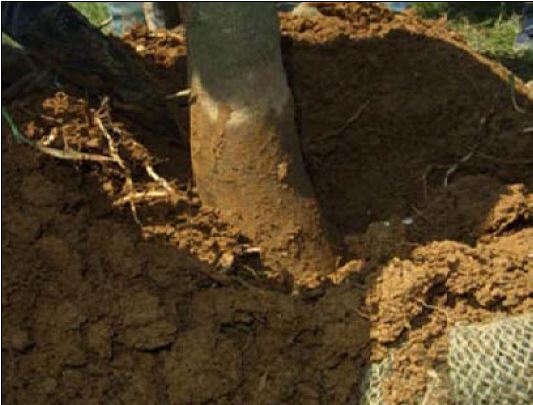 Full Question: I have removed six Silver Maple trees (12″ – 16″ diameter) from my yard because of root intrusion and roots surfacing. Can I treat the stumps by drilling and applying copper sulfate and not be concerned with the existing roots “leaching” to newly planted trees? If there is leaching from the existing roots, how long a period must I wait before replanting a better species of tree(s)? My plans are to replant from approx. 5-6′ from the stump location of the trees that were removed.
Answer: The best treatment for stump and roots left behind from removals is grinding and time. Treating with chemicals is typically not a good solution, nor does it really speed up the process. In fact, copper sulfate is a very caustic chemical. It can cause illness and injury if inhaled or if it comes in contact with your skin. Also do not use copper sulfate if your tree stump is near a water source or if you have children or domestic animals that may accidentally come into contact with the treated area. The copper sulfate that comes into contact with the surrounding landscape can also kill grass, plants and other trees. So caution should be used if you feel the need to use it. However, grinding the stumps and planting into good soil outside the area of the woody debris from the stump is the best course of action. The roots should not cause any issues except depressions in the lawn as they decompose.
Resources:
Tree Installation: Process and Practices, The Education Store, Purdue Extension’s resource center
Tree Pruning Essentials, The Education Store
Tree Appraisal, The Education Store
Tree Installation: Process and Practices, The Education Store
Debrushing, Indiana Department of Natural Resources
Find an Arborist, Trees are Good
Tree wounds and healing, Got Nature? Blog
Ask an Expert: Tree Selection and Planting, Purdue Extension – Forestry and Natural Resources (FNR) YouTube Channel
Planting Your Tree Part 1: Choosing Your Tree, Purdue Extension-FNR YouTube Channel
Subscribe to Purdue Extension-FNR YouTube Channel
Lindsey Purcell, Chapter Executive Director
Indiana Arborist Association
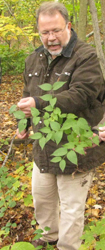
Lenny Farlee pointing out invasive Jet Bead at a Purdue Extension invasive plant training program.
If you have ever taken a walk through a forest, a woodland or a park, then you have likely encountered exotics plants. What may be difficult to distinguish, however, is whether or not those exotic plants are invasive. Unfortunately, most of us think that if it’s green, it’s good, but being green could be misleading. Invasive exotic plants are consuming growing space at an alarming rate and replacing our native species. These changes in plant species can have dramatic impacts, both economically and ecologically, to landowners and the ecosystem. Invasive species are such a problem that we are devoting an entire Podcast series to this topic.
In Part I of the Got Nature? Podcast mini-series on Invasive species, our host, Rod Williams, will be interviewing Lenny Farlee, an extension forester with the Hardwood Tree Improvement and Regeneration Center at Purdue University. Lenny will be the first expert in a series of podcasts devoted to the topic of invasive species, both terrestrial and aquatic. Lenny will be introducing our listeners to the topic of invasive species, identifying which species pose the greatest threats to the woodlands within Indiana and discussing the ecological and economic impacts that invasive plants pose to landowners. This podcast will also highlight methods that can be used to manage woodlands infested with invasive plants.
Resources
Midwest Invasive Plant Network
Indiana “Most Unwanted” Invasive Plant Pests
Purdue Extension Agriculture & Natural Resources
iTunes-Got Nature?
Got Nature? Podcasts
Lenny Farlee, Sustaining Hardwood Extension Specialist
Department of Forestry and Natural Resources, Purdue University
Rod Williams, Associate Professor of Wildlife Science
Department of Forestry and Natural Resources, Purdue University

Although fresh chips from tree pruning and removals look great for mulch and compost, there are some hidden issues. First, fresh wood chips can be very acidic (sometimes down around a pH of 4) which can be detrimental to plant growth. Also fresh chips have a high C:N (carbon to nitrogen ratio), and it must borrow nitrogen from the soil to help the decomposing process. So mixing the chips with the soil can actually reduce fertility for a while. Both of those can be problems for plants trying to grow in a bed mulched or mixed with fresh chips. Ideally, the newly ground chips should compost properly for a full year. If nitrogen fertilizer is added to the soil/mulch mix, it can speed up the process.
The effects of wood chips as mulch involve mainly the surface of the soil, which means it’s mainly shallow-rooted plants like perennial and annual flowers that would run into fresh wood chip trouble. This includes serious chlorosis and other health issues involving establishment and development. Deeper-rooted trees and shrubs are less likely to be affected as much; however, they are subject to the effects of the poor C:N ratio. I would suggest removing as much of the chips as possible, piling them for composting and replacing with proper soil for perennial growth unless you can wait for a full year to allow the decomposition cycle to be completed. This may help eliminate issues with new plants going into that location.
Resources
Mulching Conserves Soil Moisture, Department of Horticulture and Landscape Architecture
Growing Perennial Flowers, The Education Store (Search keywords to find the resources you need)
Collecting Soil Samples for Testing, The Education Store
Soil and Water Conservation Districts, Indiana State Department of Agriculture
Certified Soil Testing Laboratories, Purdue Department of Agronomy/Extension
Lindsey Purcell, Urban Forestry Specialist
Department of Forestry and Natural Resources
Many trees and plants in Indiana suffer from iron deficiency, chlorsis, induced by high (alkaline) soil pH. A symptom from the iron deficiency is the leaf yellowing. Plants suffering from iron chlorosis will often exhibit dieback and poor growth. Chlorosis is especially a problem with trees planted along streets and around homes where the original topsoil was removed or mixed with subsoil. The lime content of many of these subsoils is high. Most likely, the best course of action would be to conduct a soil test for mineral deficiencies and perhaps tissue analysis.
Resources
Iron Chlorosis of Trees and Shrubs, The Education Store
Collecting Soil Samples for Testing, The Education Store
Soil and Water Conservation Districts, Indiana State Department of Agriculture
Certified Soil Testing Laboratories, Purdue Department of Agronomy/Extension
Certified Arborists, International Society of Arboriculture (ISA)
Lindsey Purcell, Urban Forestry Specialist
Department of Forestry and Natural Resources, Purdue University
 This appears to be Northern Tooth Fungus, but I would need to look at it more closely for certain identification. This fungus causes a heart rot on maples and other trees. In most cases, the tree has to be tested for the extent of the decay. Presence alone of the fruiting bodies is usually not reason for removal; however, it should be reviewed by a certified arborist for risk assessment.
Resources
Northern Tooth Fungus-Climacodon septentrionale, Department of Biology, University of Wisconsin
Indiana Certified Arborists, International Society of Arboriculture
Lindsey Purcell, Urban Forestry Specialist
Department of Forestry and Natural Resources, Purdue University

Recent Posts
- Popular Landscape Shrub is Invasive
Posted: October 15, 2026 in Alert, Forestry, Forests and Street Trees, Invasive Plant Species, Plants, Woodlands - Purdue Extension’s Regional Teams Are Here: Connecting Communities with Expertise and Opportunity
Posted: October 14, 2026 in Community Development, Forestry, Forests and Street Trees, Gardening, How To, Timber Marketing, Urban Forestry, Wildlife, Woodlands - Why Do Our Trees Go From Green Leaves to Different Colors?
Posted: in Forestry, Forests and Street Trees, Urban Forestry, Woodlands - Distinguishing Dogwoods
Posted: October 13, 2026 in Forestry, Urban Forestry, Wildlife, Woodlands - It’s Not Too Early To Start Planning For Spring Tree Planting
Posted: in Forestry, How To - Can I Plant Trees in the Fall?
Posted: October 12, 2026 in Forestry, How To, Land Use, Plants, Urban Forestry, Wildlife - Burning for Benefits: Why Fire Belongs in Indiana
Posted: in Forestry, Safety, Woodlands - Disease May Cause Wilting and Eventual Death of Certain Trees and Shrubs, Purdue Landscape Report
Posted: October 5, 2026 in Disease, Forestry, Plants - October Is Firewood Month: Protect Indiana’s Forests by Making Smart Choices
Posted: October 1, 2026 in Forestry, Forests and Street Trees, How To, Invasive Insects, Urban Forestry - Woodland Flowers of Late Summer
Posted: September 14, 2026 in Forestry, Gardening, Wildlife, Woodlands
Archives
Categories
- Alert
- Aquaculture/Fish
- Aquatic/Aquaculture Resources
- Ask the Expert
- Christmas Trees
- Community Development
- Disease
- Drought
- Forestry
- Forests and Street Trees
- Gardening
- Got Nature for Kids
- Great Lakes
- How To
- Invasive Animal Species
- Invasive Insects
- Invasive Plant Species
- Land Use
- Natural Resource Planning
- Nature of Teaching
- Plants
- Podcasts
- Ponds
- Publication
- Safety
- Spiders
- Timber Marketing
- Urban Forestry
- Webinar
- Wildlife
- Wood Products/Manufacturing
- Woodland Management Moment
- Woodlands