 Purdue University - Extension - Forestry and Natural Resources
Got Nature? Blog
There are so many gorgeous showings of fall foliage out right now. In this video, Purdue Extension forester Lenny Farlee introduces you to this beautiful vine – the Virginia Creeper, also known as the five-leaved ivy. Virginia Creeper has five leaflets unlike the three of poison ivy and has less toothy leaves. Learn more inside.
If you have any questions regarding trees, forests, wildlife, wood products or other natural resource topics, feel free to contact us by using our Ask an Expert web page.
Resources
Virginia Creeper, Purdue Arboretum Explorer
Fall Color Pigments, Video, Purdue Extension – Forestry and Natural Resources Youtube Channel
ID That Tree, Playlist
A Woodland Management Moment, Playlist
Poison Ivy, The Education Store, Purdue Extension – Forestry and Natural Resources
Investing in Indiana Woodlands, The Education Store
Tree Appraisal and the Value of Trees, The Education Store
Forest Improvement Handbook, The Education Store
Lenny Farlee, Sustaining Hardwood Extension Specialist
Purdue University Department of Forestry and Natural Resource
 The Nature of Teaching, a Purdue Extension signature program, was honored as the third place finisher in the central region for the Environmental Education Award presented by the National Extension Association of Family and Consumer Science (NEAFCS).
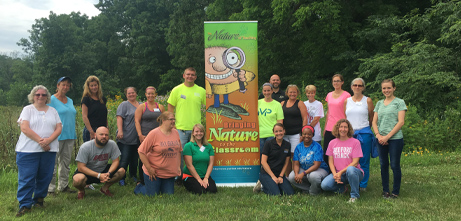 The Nature of Teaching team includes:
- Deb Arseneau, HHS Educator, Newton County
- Jarred Brooke, extension wildlife specialist
- Jay Christiansen, health and human sciences extension educator for Vigo County
- Robert Cordes, Maine Department of Inland Fisheries and Wildlife (MDIFW) wildlife special projects coordinator
- Molly Hoag, health and human sciences extension educator for Wells County
- Molly Hunt, health and human sciences extension educator for Delaware County
- Rebecca Koetz, urban ag/home horticulture extension educator for Lake County
- Tami Mosier, 4-H youth development extension educator
- Kelsie Muller, health and human sciences extension educator for Benton County
- Dr. Rod Williams, professor of wildlife science
- Brad Zitske, Maine Department of Inland Fisheries and Wildlife (MDIFW) assistant regional wildlife biologist
Nature of Teaching
Nature of Teaching YouTube Channel
Transporting Food Waste, The Education Store, Purdue Extension resource center
Resourceful Animal Relationships, The Education Store
Benefits of Connecting with Nature, The Education Store
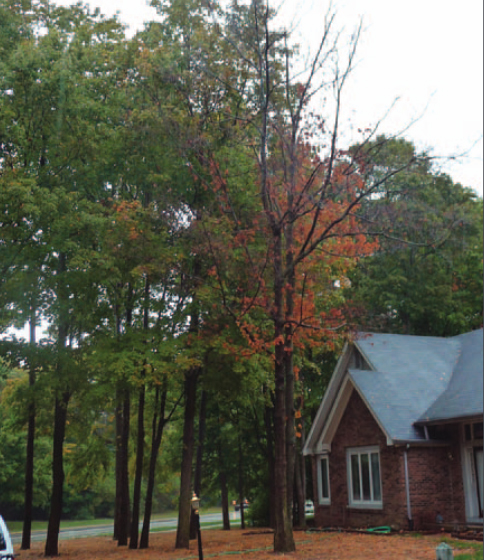 Question: Can tree roots cause damage to a home’s foundation? I have a 3’ in diameter pin oak tree that is within 10 feet of my house. A certified arborist took a look at it and said that he would like to use an Air Knife to expose the roots near the foundation (a walkout basement) to determine if the roots are causing damage and/or need to be pruned, or whether the tree needs to be removed since it is situated too close to the house. Before I spend $500 for them to use the Air Knife, I wondered if you thought it would be worthwhile or not necessary.
Answer: Tree roots can damage a house foundation, with an invitation to do so. Tree roots are very opportunistic and will only grow and penetrate where it is easiest to grow such as friable soils and mulch. Typically, when roots encounter solid, impervious surfaces such as pipes, sidewalks, curbs and foundations, they are redirected laterally or up and over. However, if there is a breach or a crack nearby, they can and will exploit those voids in search of moisture. Such as sewer pipes aren’t damaged by the roots, they are just very capable of finding those leaks and moving into the moist and often nutrient-rich pipe.
Roots normally grow horizontally and not very far beneath the soil surface. Sometimes when roots encounter the looser backfill soil near the foundation, they can abruptly start growing down. You may be able to locate these roots, if they exist, by excavating a foot or two down within a few feet of the foundation. If you find a suspect root, cut it off. Unfortunately, in some cases excavation down to the base of the foundation may be necessary. This may have to be done anyway to repair and stabilize it. Cutting the roots should prevent future problems, especially if a root barrier is installed to prevent re-growth.
Resources
Surface Root Syndrome, The Education Store, Purdue Extension resource center
The Nature of Teaching: Trees of the Midwest, The Education Store
Tree Appraisal and the Value of Trees, The Education Store
Construction and Trees: Guidelines for Protection, The Education Store
Lindsey Purcell, Urban Forestry Specialist
Purdue University, Department of Forestry and Natural Resources
Purdue Extension forester Lenny Farlee says we can thank wildlife, especially birds, for the spread of wild black cherry trees. This tree-sized cherry tree has shiny, elongated leaves with finely toothed margins, and a very dark, flaky bark to go with tiny berries.
If you have any questions regarding trees, forests, wildlife, wood products or other natural resource topics, feel free to contact us by using our Ask an Expert web page.
Resources
Black Cherry, The Education Store, Purdue Extension resource center
Beware of Black Cherry Toxicity; It’s Weedy, Too, Indiana Yard and Garden – Purdue Consumer Horticulture
Black Cherry, Native Trees of Indiana River Walk, Purdue Fort Wayne
Investing in Indiana Woodlands, The Education Store
Tree Appraisal and the Value of Trees, The Education Store
Forest Improvement Handbook, The Education Store
ID That Tree, Playlist, Purdue Extension – Forestry and Natural Resources Youtube Channel
A Woodland Management Moment, Playlist
Lenny Farlee, Sustaining Hardwood Extension Specialist
Purdue University Department of Forestry and Natural Resource
In this video, Purdue Wildlife Extension Specialist Jarred Brooke will talk about some of the reasons why you might consider a late growing season burn as opposed to a dormant season prescribed fire.
If you have any questions regarding wildlife, trees, forest management, wood products, natural resource planning or other natural resource topics, feel free to contact us by using our Ask an Expert web page.
Resources
Wildlife Habitat Hint, Playlist, Purdue Extension – Forestry and Natural Resouces
A Woodland Management Moment, Playlist
Woodland Stewardship for Landowners, Playlist
Renovating Native Warm-Season Grass Stands for Wildlife: A Land Manager’s Guide, The Education Store, Purdue Extension resource center
Prescribed fire: 6 things to consider before you ignite, Got Nature? Blog, Purdue Extension – 4Forestry and Natural Resources
Jarred Brooke, Wildlife Extension Specialist
Purdue Department of Forestry and Natural Resources
Small mammals, such as chipmunks and mice aren’t just cute to look at, they actually serve a purpose in our forest ecosystems. Check out what small mammals are found on the Hardwood Ecosystem Experiment and the mutually beneficial relationship they have with the forest.
If you have any questions regarding trees, forests, wildlife, wood products or other natural resource topics, feel free to contact us by using our Ask an Expert web page.
Resources
Hardwood Ecosystem Experiment (HEE), Playlist, Purdue Extension – Forestry and Natural Resources
Hardwood Ecosystem Experiment, Website
Hardwood Ecosystem Experiment – Wildlife Responses to Timber Harvesting, Purdue Extension – Forestry and Natural Resources
The Hardwood Ecosystem Experiment: Indiana Forestry and Wildlife, The Education Store
The Nature of Teaching: Unit 4, Mammals and Ecosystems, The Education Store
Charlotte Owings, Hardwood Ecosystem Experiment Project Coordinator
Purdue University, Department of Forestry and Natural Resources
On this edition of ID That Tree, Purdue Extension forester Lenny Farlee introduces you to American beech. You can identify this shade-tolerant species by its simple leaves with veins running parallel out to small teeth on the edge of the leaf, as well as smooth gray bark.
If you have any questions regarding trees, forests, wildlife, wood products or other natural resource topics, feel free to contact us by using our Ask an Expert web page.
Resources
American Beech, Native Trees of Indiana River Walk, Purdue Fort Wayne
Beech, The Education Store, Purdue Extension resource center
American Beech, Purdue Arboretum Explorer
Investing in Indiana Woodlands, The Education Store
Tree Appraisal and the Value of Trees, The Education Store
Forest Improvement Handbook, The Education Store
ID That Tree, Playlist, Purdue Extension – Forestry and Natural Resources Youtube Channel
A Woodland Management Moment, Playlist
Lenny Farlee, Sustaining Hardwood Extension Specialist
Purdue University Department of Forestry and Natural Resources
Have you ever picked up a log and found a salamander underneath it? This is an every day occurrence on the Hardwood Ecosystem Experiment as researchers count and identify species in the fall and spring to see how they react to the various woodland treatments on the HEE. Project director Charlotte Owings shares more.
If you have any questions regarding trees, forests, wildlife, wood products or other natural resource topics, feel free to contact us by using our Ask an Expert web page.
Resources
Hardwood Ecosystem Experiment (HEE), Playlist, Purdue Extension – Forestry and Natural Resources
Help the Hellbender, Playlist
Ask an Expert: Hardwood Ecosystem Experiment (HEE) Birds and Salamander Research, Video
Hardwood Ecosystem Experiment, Website
Help the Hellbender, Website
Hardwood Ecosystem Experiment – Wildlife Responses to Timber Harvesting, Purdue Extension – Forestry and Natural Resources
The Hardwood Ecosystem Experiment: Indiana Forestry and Wildlife, The Education Store
Charlotte Owings, Hardwood Ecosystem Experiment Project Coordinator
Purdue University, Department of Forestry and Natural Resources
 Purdue Extension: Sycamore and Tulip Poplar tree seeds orbited the Earth on the US space shuttle Atlantis STS more than 30 years ago, from December 2-6, 1988, as part of a Purdue Extension 4-H project with Astronaut Jerry Ross.
The seeds were grown into saplings on Purdue University’s campus and one was donated to each county Extension Office in Indiana in 1989 to celebrate the diamond anniversary of Purdue Extension Service. These trees continue to grow in many Indiana communities, today.
Kristi Whitacre, Purdue Extension Educator, and Daniel Walker, Purdue Community Planning Extension Specialist, have documented the story and gathered information on the remaining trees in an interactive story map.
Visit Space Tree Story Map (STS-M) to view the map, to learn about the history of the project, receive tips on harvesting the seeds and to learn more about astronaut Jerry Ross.
Resources
Purdue Extension
Sycamore, The Education Store, Purdue Extension resource center
Tree Planting Part 1: Choosing a Tree, video
Tree Planting Part 2: Planting Your Tree, video
State tree a popular landscape choice, Morning AgClips, Got Nature? Blog, Purdue Extension – Forestry and Natural Resources
The Tree from Space at Fox Island, Purdue Extension
Jesica Hollinger, Extension Communication Specialist
Purdue Extension
Learn about research on the Hardwood Ecosystem Experiment (HEE) about the effects of overstory on oak and hickory growth and the animals the habitat houses.
If you have any questions regarding trees, forests, wildlife, wood products or other natural resource topics, feel free to contact us by using our Ask an Expert web page.
Resources
Hardwood Ecosystem Experiment (HEE), Playlist, Purdue Extension – Forestry and Natural Resources
Wildlife Habitat Hint: Oak Shelterwood, Video
Hardwood Ecosystem Experiment, Website
Hardwood Ecosystem Experiment – Sustaining Our Oak-Hickory Forests, The Education Store, Purdue Extension – Forestry and Natural Resources
The Hardwood Ecosystem Experiment: Indiana Forestry and Wildlife, The Education Store
Charlotte Owings, Hardwood Ecosystem Experiment Project Coordinator
Purdue University, Department of Forestry and Natural Resources

Recent Posts
- ID That Tree: Sugarberry
Posted: December 12, 2025 in Forestry, Wildlife, Woodlands - Powering Rural Futures: Purdue’s Agrivoltaics Initiative for Sustainable Growth
Posted: December 9, 2025 in Community Development, Wildlife - Learn How to Control Reed Canarygrass
Posted: December 8, 2025 in Forestry, Invasive Plant Species, Wildlife - Benefits of a Real Christmas Tree, Hoosier Ag Today Podcast
Posted: December 5, 2025 in Christmas Trees, Forestry, Woodlands - Succession Planning Resource: Secure your Future
Posted: December 2, 2025 in Community Development, Land Use, Woodlands - A Woodland Management Moment: Butternut Disease and Breeding
Posted: December 1, 2025 in Forestry, Forests and Street Trees, Woodland Management Moment, Woodlands - Controlling Introduced Cool-Season Grasses
Posted: in Forestry, Invasive Plant Species, Wildlife - Red in Winter – What Are Those Red Fruits I See?
Posted: in Forestry, Plants, Urban Forestry, Wildlife, Woodlands - Managing Common and Cut Leaved Teasel
Posted: November 24, 2025 in Forestry, Invasive Plant Species, Wildlife - Extension Team Wins Family Forests Comprehensive Education Award
Posted: November 21, 2025 in Forestry, Urban Forestry, Wildlife, Woodlands
Archives
Categories
- Alert
- Aquaculture/Fish
- Aquatic/Aquaculture Resources
- Ask the Expert
- Christmas Trees
- Community Development
- Disease
- Drought
- Forestry
- Forests and Street Trees
- Gardening
- Got Nature for Kids
- Great Lakes
- How To
- Invasive Animal Species
- Invasive Insects
- Invasive Plant Species
- Land Use
- Natural Resource Planning
- Nature of Teaching
- Plants
- Podcasts
- Ponds
- Publication
- Safety
- Spiders
- Timber Marketing
- Uncategorized
- Urban Forestry
- Webinar
- Wildlife
- Wood Products/Manufacturing
- Woodland Management Moment
- Woodlands