 Purdue University - Extension - Forestry and Natural Resources
Got Nature? Blog
Kristol from Tippecanoe County, IN, sent in question to the Purdue Extension-Forestry and Natural Resources experts (Ask an Expert ) asking what resources are available to help with landscaping for a front yard and sidewalk area that accumulates water after a hard rain. She also asked for resources to improve drainage.
Purdue Extension has several articles and resources to help with this type of situation.
The resources in our Rainscaping and Master Gardeners Program shares several neat options:
Rain Gardens Go with the Flow, Indiana Yard and Garden, Purdue Horticulture
Rainscaping Program
Master Gardeners Program
Don’t miss the publications located in the Purdue Extension resource center, The Education Store, relating to the topic:
Tree Installation: Process and Practices
Planting Forest Trees and Shrubs in Indiana
Climate Change: How will you manage stormwater runoff?
For Midwest Landscapes, have a look at the Purdue Landscape Report:
Purdue Landscape Report
Check out upcoming workshops available for land and woodland owners, to talk with an expert:
Purdue Extension-Forestry and Natural Resources Calendar
Check out our Got Nature? posts as well, as this is always a great resource for new information:
Got Nature?, Forestry and Natural Resources-Purdue Extension
These resources give you lots of options that match what your looking for along with experts in the field to contact if needed.
We always appreciate the questions coming in, so keep them coming. Our experts will respond quickly and give you the guidance you need for your next steps.
Diana Evans, Extension Information Coordinator
Purdue Forestry and Natural Resources
This looks to be shaping up as a tough winter for us and our trees. Lots of snow and ice are predicted for the Hoosier state and this can be a challenge for our trees and shrubs.
After a heavy snowfall, protect your trees and property with these simple tips:
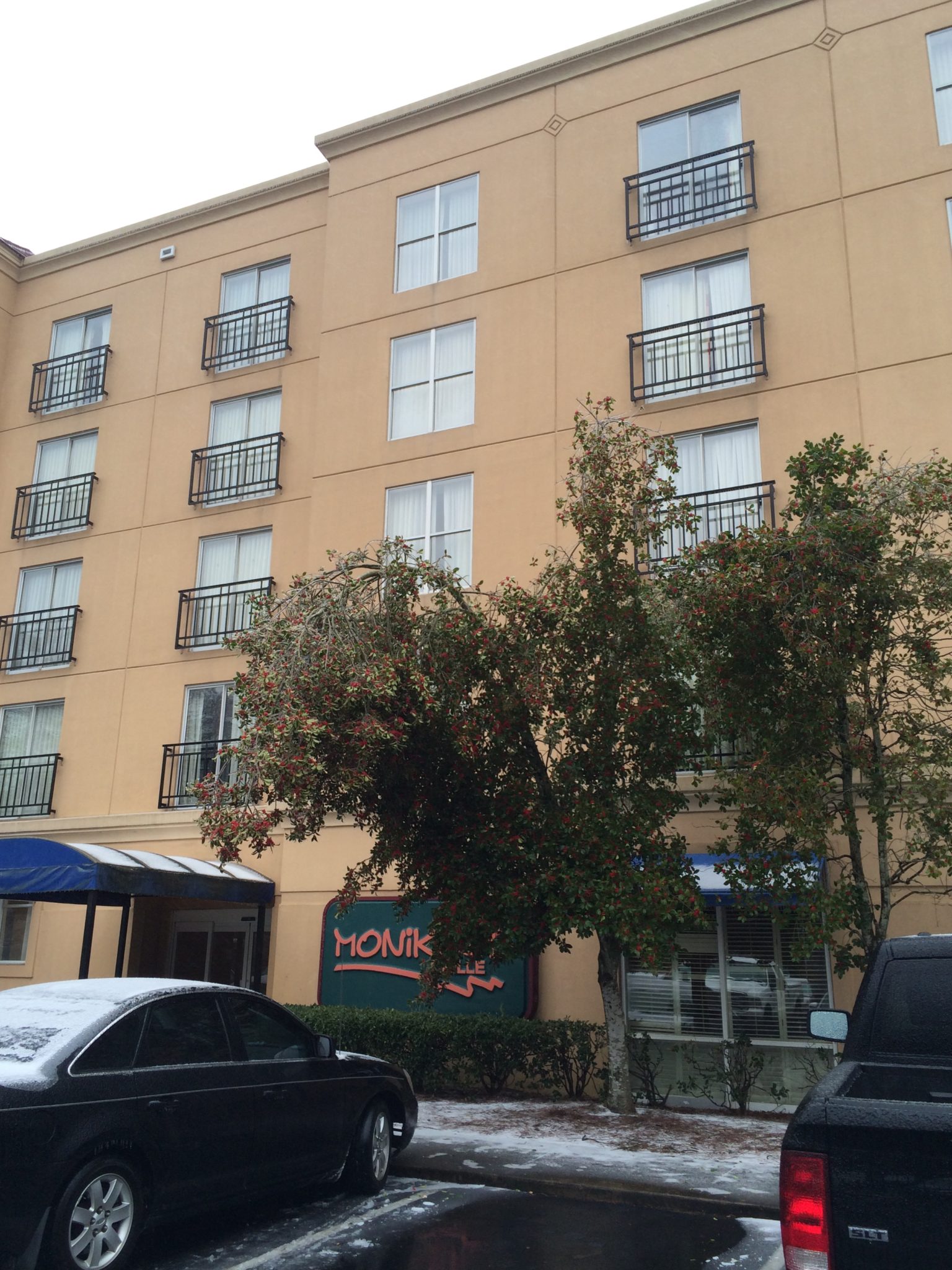
Limbs bending from ice loading.
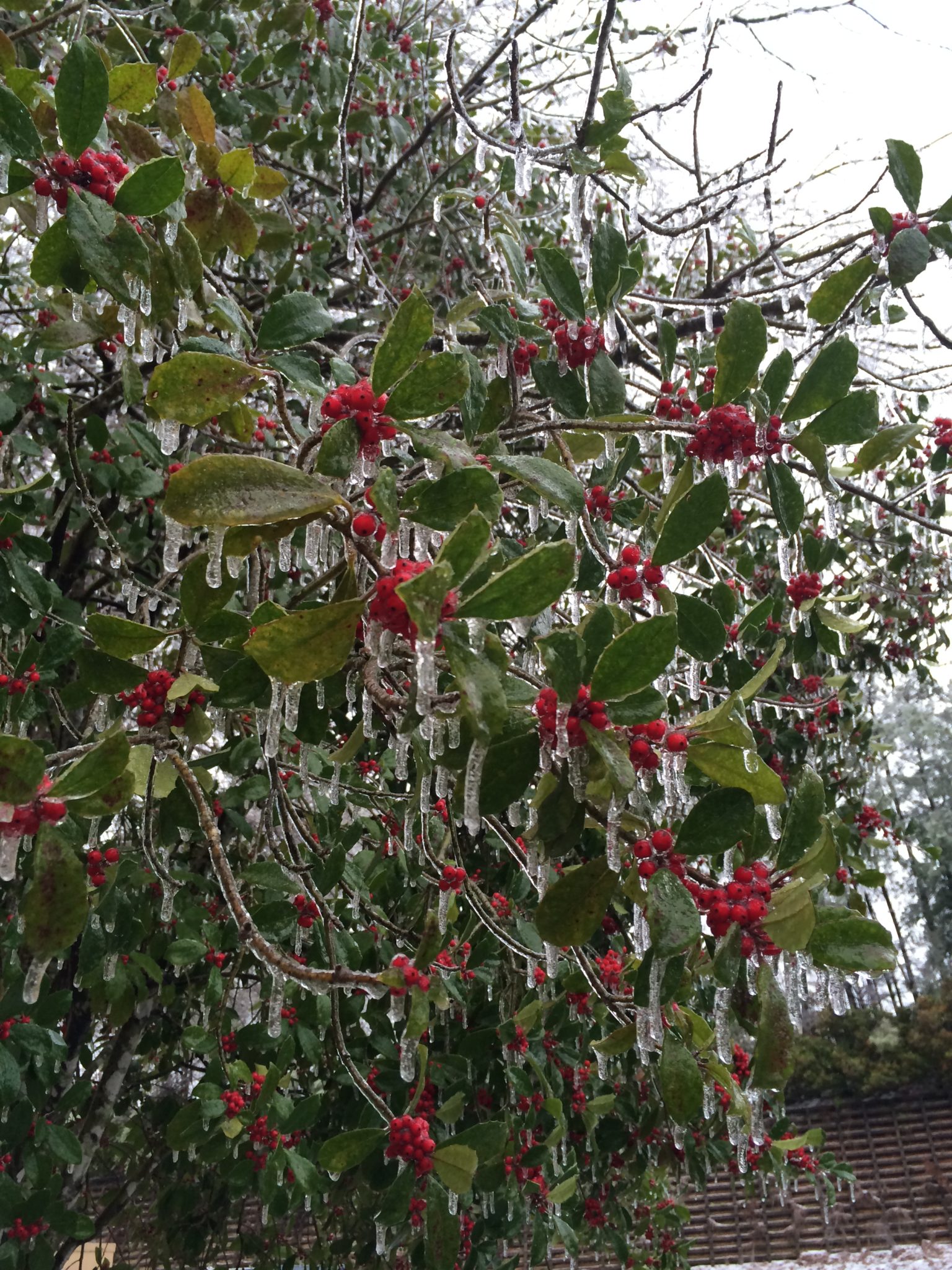
Ice accretion on hawthorn branches.
Do not shake limbs to try to remove snow or ice.
When you find your trees are bending or drooping as a result of ice or snow accumulation, your first instinct is probably to shake the branches or knock the weight off with a broom or something similar. This may cause worse damage or actually cause the branch to snap off. Stop right there! Healthy tree branches are flexible, so knocking off the accumulation of snow or ice accretion may cause them to “snap” back, potentially damaging their food and water transport system. The results of the damage may not be evident until next spring.
Trees that tend to suffer the worst damage as a result of snow and ice are upright evergreens, like arborvitae and juniper, and clump trees, like birch. And, when it comes to ice, age does not make a tree stronger; younger trees are better at actually overcoming damage in ice storms.
Hire a Professional.
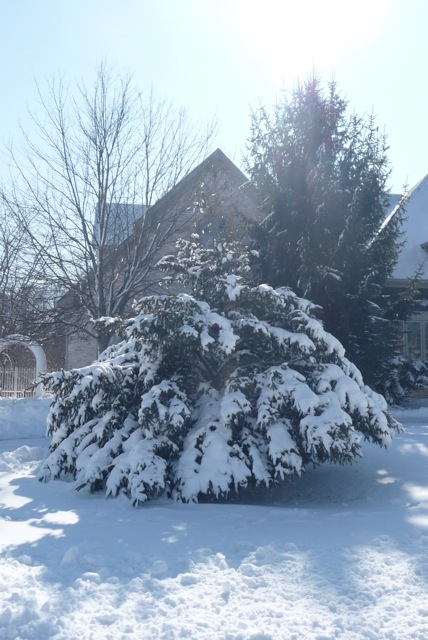
Snow weighing down spruce branches.
Safely remove broken limbs.
Broken and hanging branches can be a threat to people and property. If a limb breaks off from the weight of ice or snow and remains in the tree canopy, have it removed and the remaining stub properly pruned to the branch collar as soon as weather allows. The tree will recover better when properly pruned. For undamaged limbs bending under the weight of ice or snow, don’t prune as a means of correcting the situation. Be patient. It takes time for wood fibers in the limbs to return to its natural position.
Always be mindful of walking or parking under branches loaded down by snow or ice as they may snap and fall, causing injury or damage. If a limb breaks and becomes entangled in power lines, notify your utility company immediately. Never approach a downed power line or a branch touching a utility line.
If there is substantial damage to your tree, have an arborist examine damaged branches and limbs for signs of weakness and injury for reparations. It is best to always hire an ISA Certified Arborist. To find an arborist in your area, visit the website, www.treesaregood.org
How can you help prevent ice damage to trees? Proper pruning is one way. Particularly important is the removal of poor branch attachments and weak branch structure in the tree, prior to winter. For more information on pruning, download the publication, Tree Pruning Essentials.
Full article published in the Purdue Landscape Report.
Resources
Avoid Deadly Risk of Dying Ash Trees with Timely Tree Removal, Got Nature? Purdue Extension-FNR
New Hope for Fighting Ash Borer, Got Nature? Purdue Extension-FNR
Invasive Pest Species: Tools for Staging and Managing EAB in the Urban Forest, Got Nature?
Emerald Ash Borer, Purdue Extension-Entomology
Emerald Ash Borer Tools & Resources – Purdue Extension Entomology
Corrective Pruning for Deciduous Trees, The Education Store, Extension Publications
Lindsey Purcell, Chapter Executive Director
Indiana Arborist Association

Recent Posts
- ID That Tree: Sugarberry
Posted: December 12, 2025 in Forestry, Wildlife, Woodlands - Powering Rural Futures: Purdue’s Agrivoltaics Initiative for Sustainable Growth
Posted: December 9, 2025 in Community Development, Wildlife - Learn How to Control Reed Canarygrass
Posted: December 8, 2025 in Forestry, Invasive Plant Species, Wildlife - Benefits of a Real Christmas Tree, Hoosier Ag Today Podcast
Posted: December 5, 2025 in Christmas Trees, Forestry, Woodlands - Succession Planning Resource: Secure your Future
Posted: December 2, 2025 in Community Development, Land Use, Woodlands - A Woodland Management Moment: Butternut Disease and Breeding
Posted: December 1, 2025 in Forestry, Forests and Street Trees, Woodland Management Moment, Woodlands - Controlling Introduced Cool-Season Grasses
Posted: in Forestry, Invasive Plant Species, Wildlife - Red in Winter – What Are Those Red Fruits I See?
Posted: in Forestry, Plants, Urban Forestry, Wildlife, Woodlands - Managing Common and Cut Leaved Teasel
Posted: November 24, 2025 in Forestry, Invasive Plant Species, Wildlife - Extension Team Wins Family Forests Comprehensive Education Award
Posted: November 21, 2025 in Forestry, Urban Forestry, Wildlife, Woodlands
Archives
Categories
- Alert
- Aquaculture/Fish
- Aquatic/Aquaculture Resources
- Ask the Expert
- Christmas Trees
- Community Development
- Disease
- Drought
- Forestry
- Forests and Street Trees
- Gardening
- Got Nature for Kids
- Great Lakes
- How To
- Invasive Animal Species
- Invasive Insects
- Invasive Plant Species
- Land Use
- Natural Resource Planning
- Nature of Teaching
- Plants
- Podcasts
- Ponds
- Publication
- Safety
- Spiders
- Timber Marketing
- Uncategorized
- Urban Forestry
- Webinar
- Wildlife
- Wood Products/Manufacturing
- Woodland Management Moment
- Woodlands